Moderate
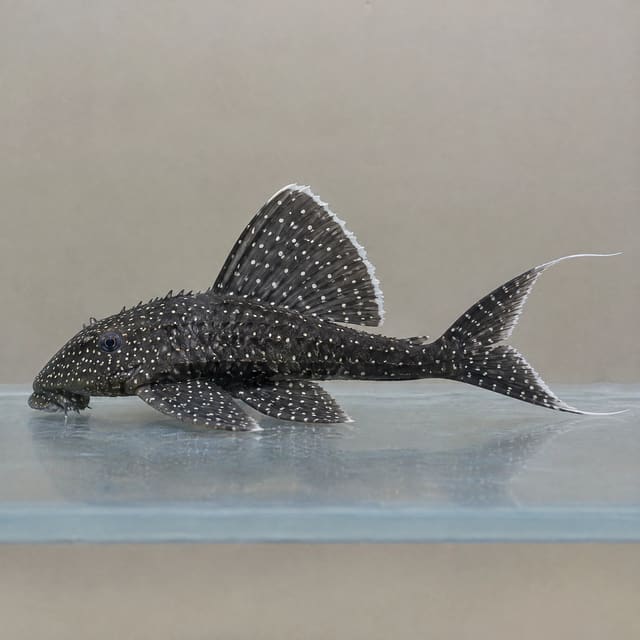
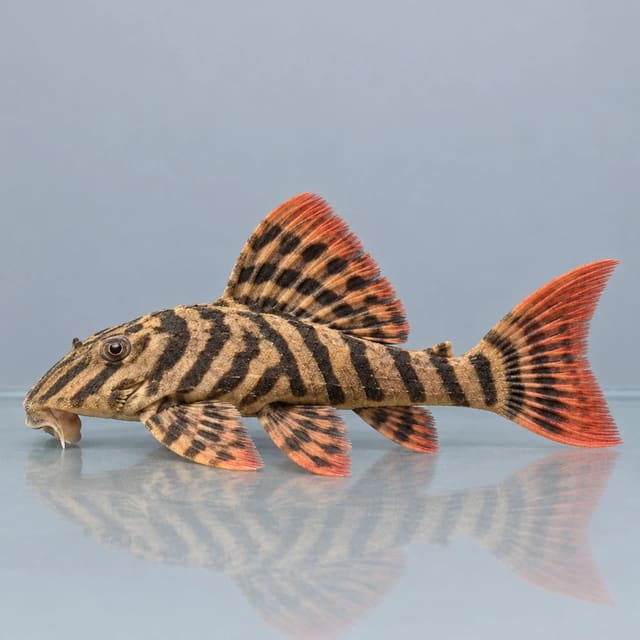
L076 Orange Seam Pleco (Peckoltia sp. L076)
25–29°C · pH 5.5–7.5
£46.09
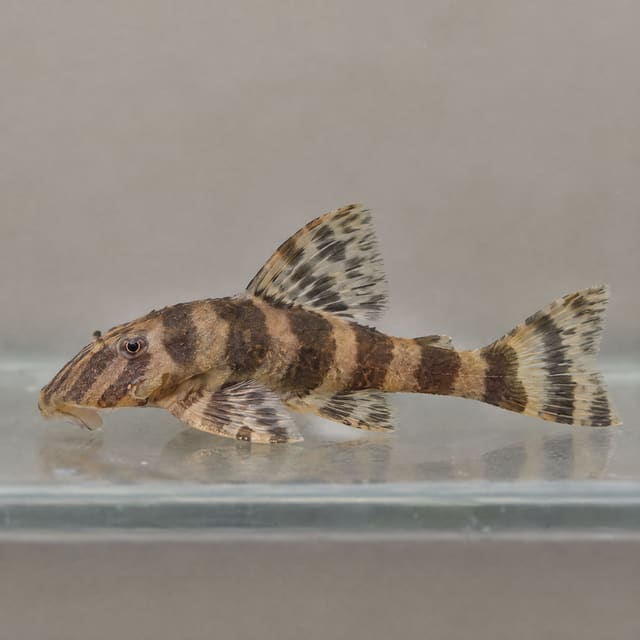
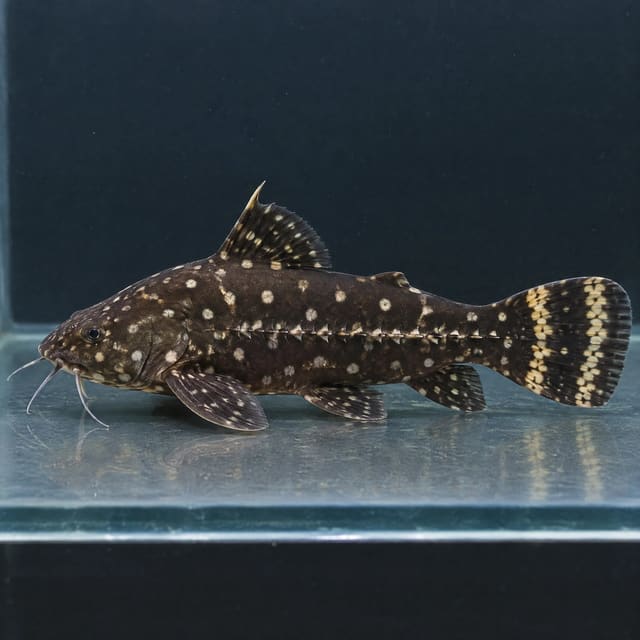
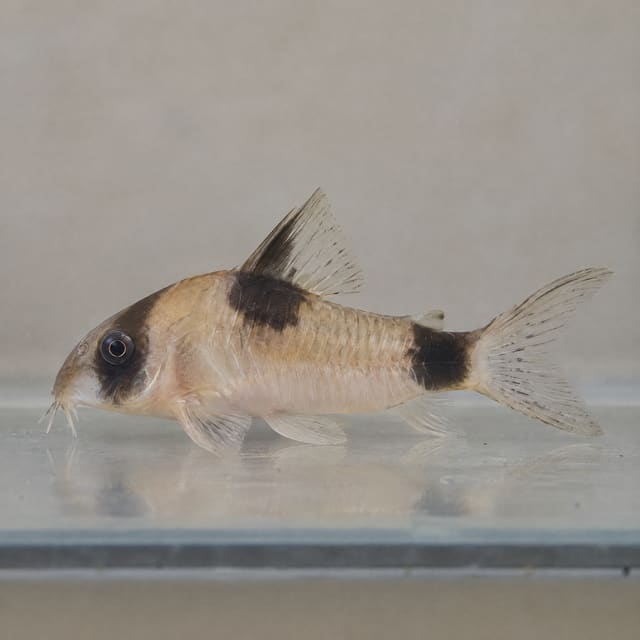
The L127 Marble Pleco is Peckoltia lujani, a medium-sized suckermouth catfish from the Orinoco and Meta rivers of Colombia and Venezuela, light tan with dark brown marbling and saddles. It grows to about 12 cm, suits a community aquarium with a 120 × 30 cm base or more at 23–27°C, and is safe with small fish and shrimp. One live fish per purchase.
Peckoltia lujani
The L127 Marble Pleco is Peckoltia lujani, a medium-sized suckermouth catfish from the Orinoco and Meta rivers of Colombia and Venezuela, light tan with dark brown marbling and saddles. It grows to about 12 cm, suits a community aquarium with a 120 × 30 cm base or more at 23–27°C, and is safe with small fish and shrimp. One live fish per purchase.
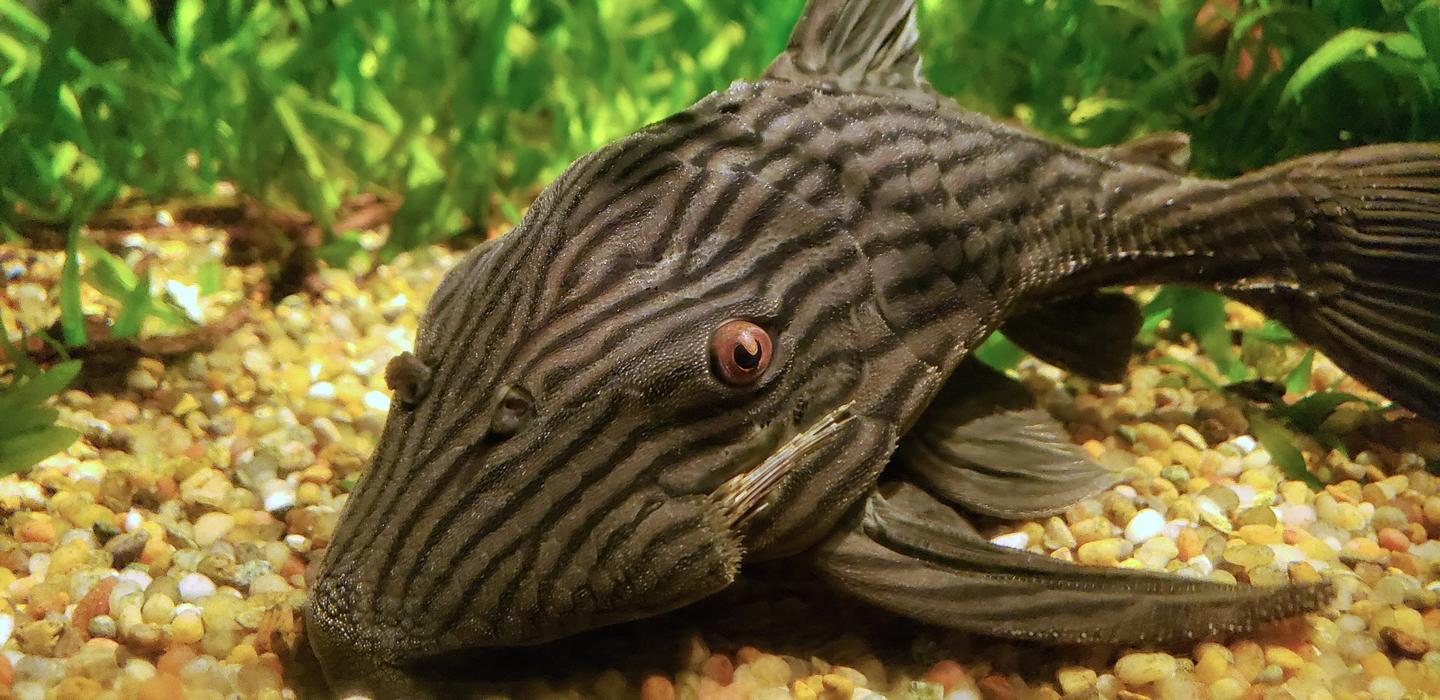
‘Pleco’ is a loose aquarium-trade label, not one species or one care sheet. Before buying, confirm the scientific name or defensible L-number, adult size and measurement method, required footprint, temperature and water, diet, social plan and source. No universal pleco tank size, menu or algae result is honest.
Read the full care guidance when planning conditions for your aquarium.
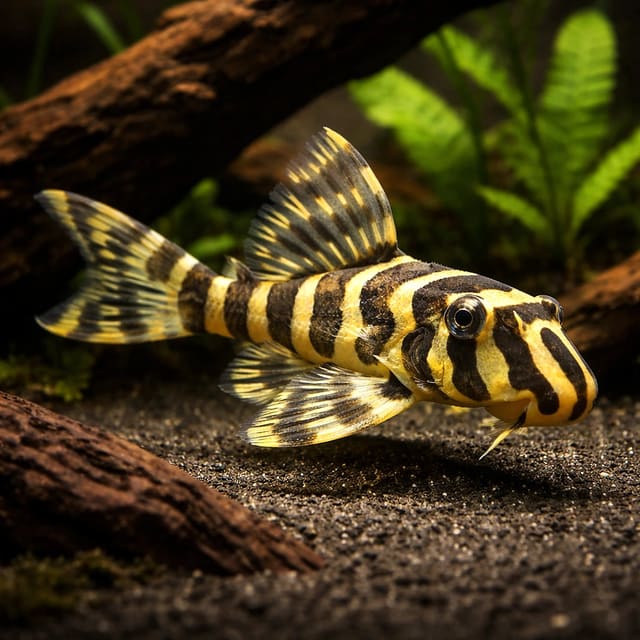
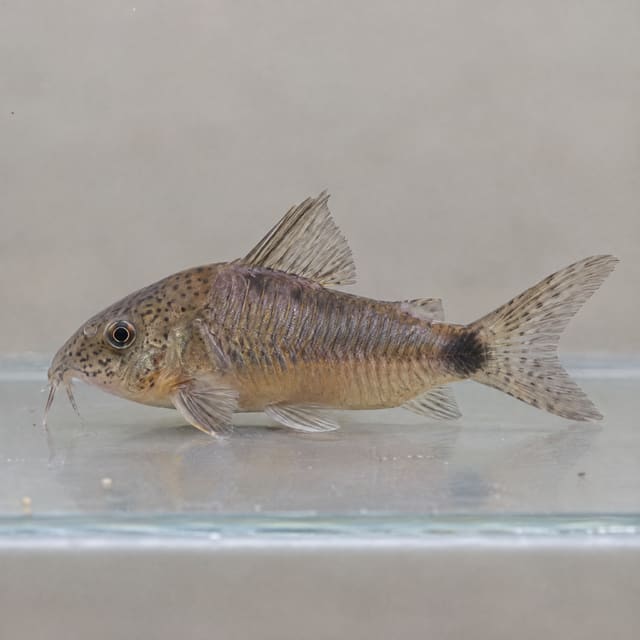
The L127 pleco, sold as the L127 Marble Pleco, is Peckoltia lujani: a medium-sized suckermouth catfish from the Orinoco river system in Colombia and Venezuela. It has a light tan body covered in dark brown to black marbling, with four darker saddles across the back and banded fins. ScotCat places the first saddle below the middle of the dorsal fin, the second just behind it, the third near the small adipose fin and the fourth at the base of the tail. It is a hardy, unfussy fish that spends the day around rocks and wood and becomes more active as the lights dim.
This fish waited a long time for its name. It was first shown with the number L127 in the German magazine DATZ in 1993, and again as L207 in 1996; ScotCat confirms the two numbers are one species. Because it shared features with several genera it was traded for years as "Ancistrinae sp. L127", and some shops still call it a Hemiancistrus or Hypancistrus. In 2015 Armbruster, Werneke and Tan described it formally as Peckoltia lujani, naming it after the ichthyologist Dr Nathan Lujan, who collected the best specimens known at the time.
Planet Catfish gives its range as the Meta drainage near Villavicencio and the Orinoco from the mouth of the Meta to around Ciudad Bolívar. The type specimens came from the río Orinoco at Paso Ganado, 38 km north-north-west of San Fernando de Atabapo, where the river forms the border, so some sources file the locality under Colombia and others under Venezuela. The IUCN Red List assesses the species as Least Concern (2020).
| Name or number | What it means |
|---|---|
| L127 | The first L-number for this fish, DATZ 05/1993 |
| L207 | A second number for the same species, DATZ 03/1996 |
| Ancistrinae sp. (L127) | The placeholder name used before the 2015 description |
| Peckoltia lujani | The scientific name since 2015 |
| Marble Pleco, Lujan's Pleco | Common trade names; some shops also say "false zebra" pleco |
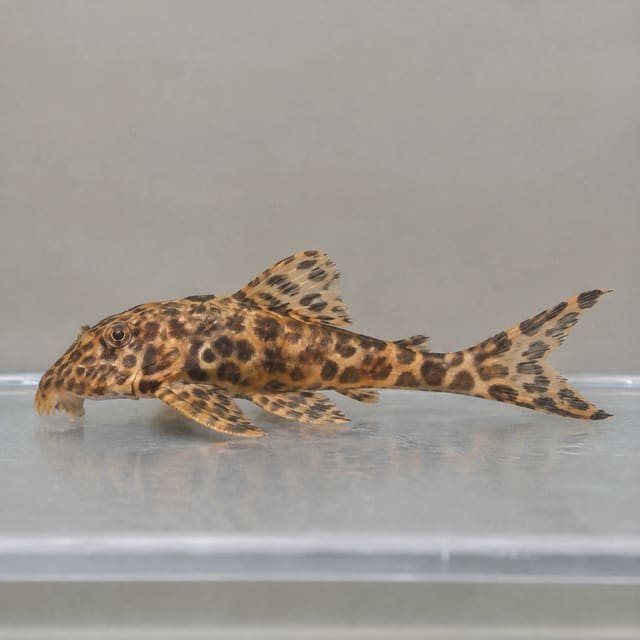
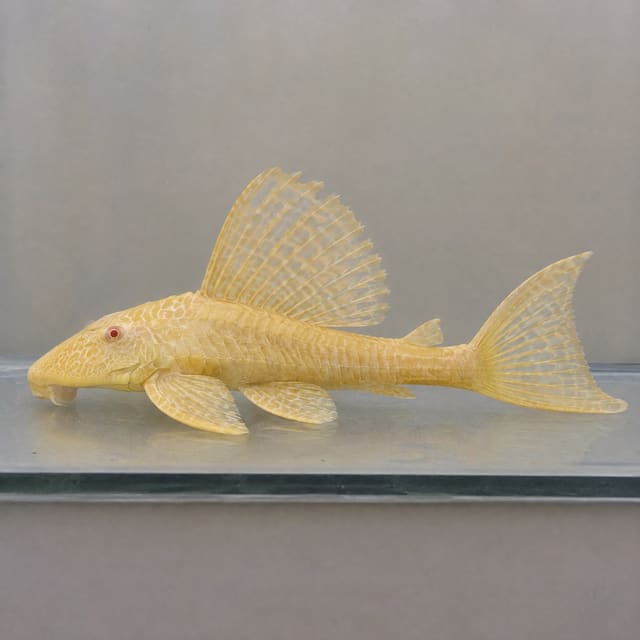
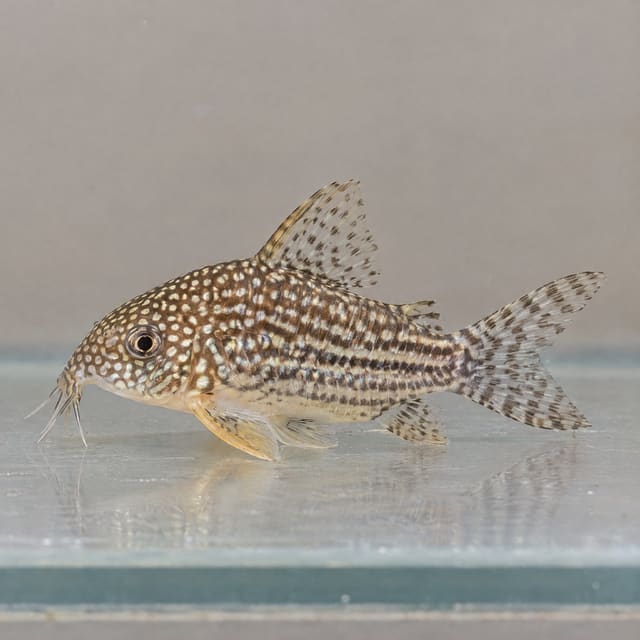
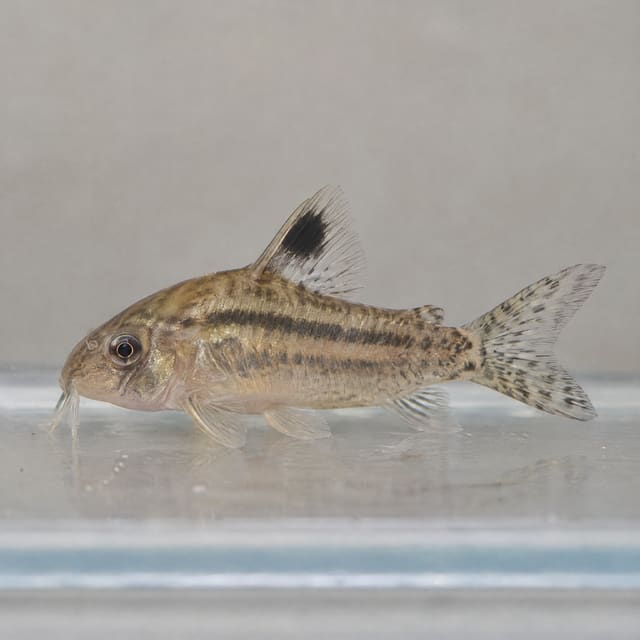
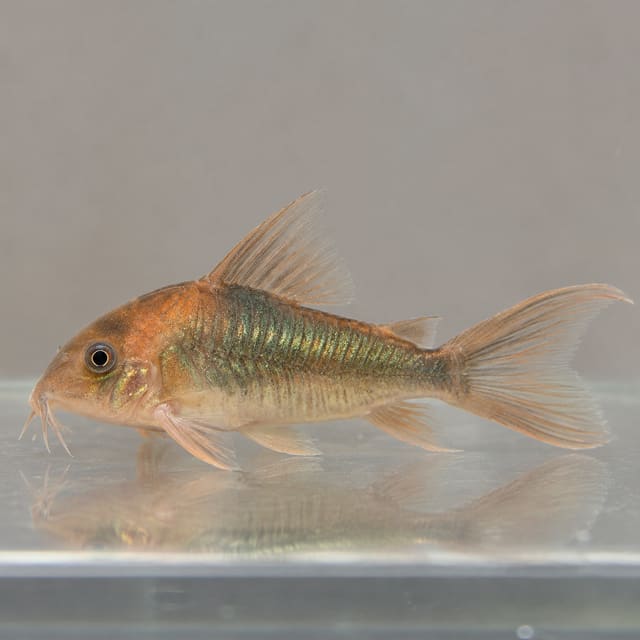
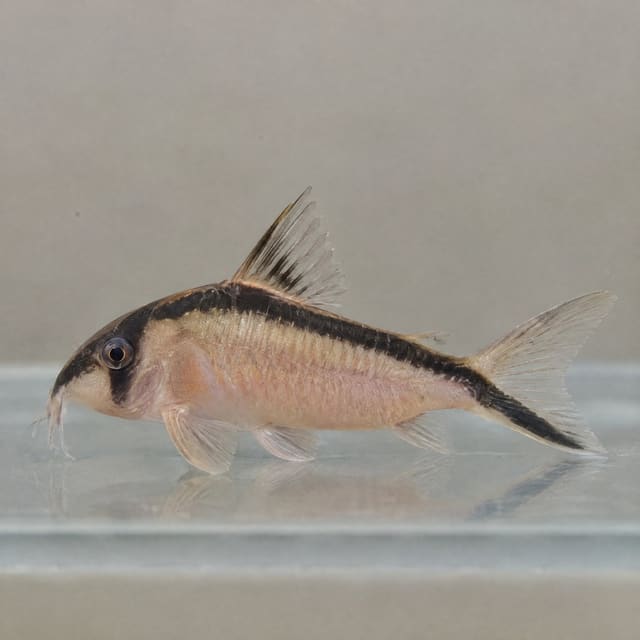
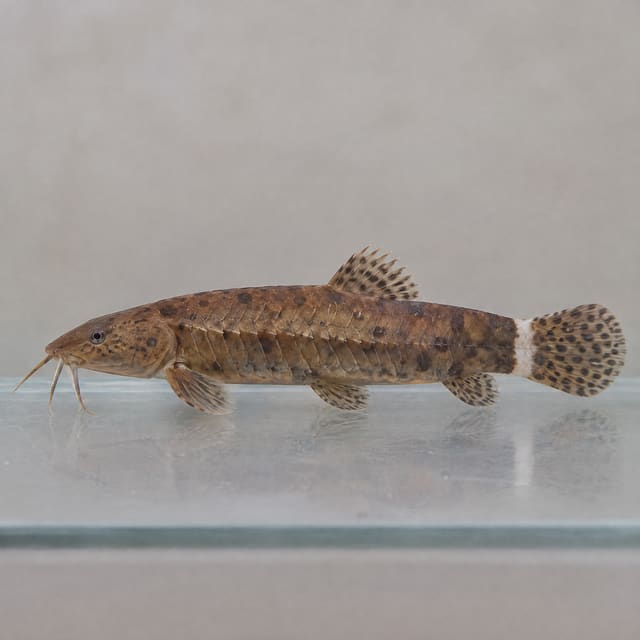
One purchase supplies one live L127 Marble Pleco in the standard size we receive. Sex is not specified. Every fish has its own arrangement of marbling, and juveniles often look paler and more contrasting than adults, so the gallery images show the type of fish, not the individual you will receive. The images are prepared from a reference photograph.
Read our delivery and Live Arrival Guarantee policy before you order, and have the aquarium running and tested before the fish arrives.
Planet Catfish gives a maximum of 120 mm standard length, measured without the tail fin, and ScotCat agrees on 12 cm. FishBase lists a much smaller 7.5 cm, taken from the specimens it used, so we plan for the larger figure. Some shops quote even more; we stay with the published sizes.
No care profile publishes a minimum tank for this species. As a comparison, Seriously Fish gives a 120 × 30 cm base for two other Peckoltia of the same 120 mm size, including P. wernekei from the upper Orinoco. We recommend at least a 120 × 30 cm base for one L127, and 120 × 45 cm if you plan two or more fish or other bottom dwellers. Floor area matters more than height for a fish that lives on rocks and wood.
Planet Catfish recommends rock piles and wood tangles and notes that plants are not vital. Build the layout so it gives the fish cover by day and broken lines of sight, so it can rest out of view of its neighbours.
| Zone | What to use | Why |
|---|---|---|
| Caves | Clay pleco caves, pipes, ceramic pots or flat stones built up into gaps | ScotCat gives each fish its own cave; this is also where breeding happens |
| Wood | Several pieces of hard, cleaned aquarium wood | Cover, grazing surfaces and soft wood the fish rasps at |
| Rocks | Smooth, stable rock piles resting on the tank floor, not on the sand | Planet Catfish's preferred décor; secure them so digging cannot topple them |
| Floor | Fine sand or smooth fine gravel | OATA advises soft substrates for catfish barbels and mouths |
| Plants | Optional; tough, rooted or wood-tied plants | ScotCat says it does not seem to harm plants, and plants help use up nitrate |
Keep the lighting moderate and leave a shaded area under wood. The fish will come out more in the evening.
ScotCat gives 23–27°C and pH 6.5–7.2, and notes that the species tolerates other conditions if it is acclimatised slowly. It also warns that it does not like nitrate rising too high. The OATA guidance for catfish sets the limits that apply to any tank: ammonia and nitrite at zero, and nitrate no more than 20 mg per litre above your tap water.
| Value | Target | Source |
|---|---|---|
| Temperature | 23–27°C | ScotCat |
| pH | 6.5–7.2 | ScotCat |
| Ammonia | 0 mg/l | OATA |
| Nitrite | 0 mg/l | OATA |
| Nitrate | No more than 20 mg/l above tap water | OATA |
Many UK homes have harder, more alkaline tap water than this range, especially in the south and east. Test your tap water for pH and hardness before the fish arrives. If your pH is a little above 7.2, a slow, steady adjustment is better than a quick change, and ScotCat's note that it adapts when acclimatised slowly means stability matters more than hitting a single number. Always treat new water with a tap water conditioner to remove chlorine and chloramine. Our water chemistry guide explains pH, hardness and buffering in plain terms.
Plecos eat steadily and produce a lot of waste for their size, and this species dislikes rising nitrate. Choose a filter rated for more than your tank volume, with good mechanical media to trap fine debris and plenty of biological media. A gentle current along the floor helps carry waste to the intake. Our guide to aquarium filtration covers filter types and media.
If nitrate keeps climbing, ScotCat's advice is to increase water changes or add more plants.
ScotCat describes the L127 as an omnivore that takes vegetable foods, tablets and pellets, insect larvae, zooplankton and soft wood. Its favourites are courgette, half-cooked, sliced and frozen, and peas now and then, along with algae wafers, tablet food and frozen bloodworm. It is not a strong algae eater compared with Chaetostoma plecos, so it must be fed every day rather than left to graze. OATA advises washing vegetables well, or buying organic, because pesticide residues can harm fish.
| Part of the meal | Example | How often |
|---|---|---|
| Vegetable | A thin slice of blanched courgette, or a few peas | Most evenings; remove leftovers the next morning |
| Prepared food | One or two sinking algae wafers or pleco tablets | Most evenings |
| Meaty food | A small portion of thawed frozen bloodworm | Two or three times a week |
| Wood | Soft wood left in the tank to rasp | Always available |
Feed after the main lights go off, close to its cave, so faster fish do not take everything. Adjust the portion so almost nothing is left after a few hours.
Set up and mature the aquarium first: OATA advises checking that ammonia and nitrite are at zero before adding fish, and adding fish slowly so the filter bacteria can keep up. Catfish travel double-bagged because their spines can puncture a single bag. On arrival, switch off the tank lights, float the bag for about 10 minutes to match temperature, then add small amounts of tank water over up to 20 minutes before netting the fish into the tank. Our guide to acclimatising new fish shows each step.
| Day | Check | Action |
|---|---|---|
| 1 | The fish finds a cave or shaded gap | Leave lights low and do not move the décor |
| 2–3 | It comes out after dark | Offer a small piece of courgette and one wafer near the cave |
| 4–5 | Food is being eaten overnight | Test ammonia and nitrite; both should read zero |
| 7 | Belly looks rounded, fins open | Do your first routine water change and settle into the weekly plan |
Take care when netting: like most catfish, plecos have spiny fin rays that tangle in nets, so OATA recommends careful handling. Guide the fish into a container rather than lifting it out in a fine net where possible.
A healthy L127 rests in or near its cave during the day, comes out in the evening to feed, and has a rounded belly and clear eyes. OATA lists clamped fins, flicking against décor, shimmying and fast breathing as warning signs in any fish.
| What you see | What to do |
|---|---|
| Sunken belly | Feed after dark, closer to the cave, and check tank mates are not taking all the food |
| Fish out in the open all day, breathing fast | Test the water at once and increase flow and surface movement |
| Two fish chasing at a cave | Add another cave or more wood to break lines of sight |
| Rising nitrate | Increase water changes and remove leftover food sooner |
| White patches, frayed fins | Test the water and seek fish-health advice before treating |
For more on keeping plecos healthy, read our pleco care guide.
Planet Catfish calls this a medium-sized pleco that can be combined with a very wide range of tank mates thanks to its unfussy nature. It is perfectly safe with small fishes and shrimp, yet robust enough to withstand the attention of all but the largest cichlids. ScotCat calls it an ideal community catfish.
| Suits | Avoid |
|---|---|
| Small, peaceful shoaling fish such as tetras and rasboras | The largest, most boisterous cichlids |
| Shrimp | Overcrowding the floor with too many cave-dwelling fish |
| Medium community fish and many cichlids | Fish that need water far outside 23–27°C |
| Other plecos, if each has its own cave | Very fast, greedy bottom feeders that take all the food |
For other mid-sized plecos with similar care, see the L134 Leopard Frog Pleco, the L006 Pleco (Peckoltia oligospila), the L103 Pleco and the L128 Blue Phantom Pleco. Browse all our Peckoltia plecos, the wider range of L-number plecos and South American catfish, or everything in our catfish and plecos range. Check any mix with our tank mates tool before you buy.
The L127 is a cave spawner, and Planet Catfish holds two hobbyist breeding reports with photographs of captive-bred fry. ScotCat calls breeding difficult: good water quality and timely water changes help, the eggs are laid inside a cave or pipe, and the male guards them for about 10 days. A diet rich in courgette and peas is said to be a precondition for spawning in the genus. To tell the sexes apart, Planet Catfish notes that mature males develop small tooth-like odontodes on the leading pectoral-fin rays and over the rear half of the body, plus an unusual bristly growth on the cheeks; ScotCat adds odontodes behind the gill plates and on the tail-fin rays. Females stay smooth, are darker and less colourful, and look wider behind the pectoral fins when seen from above.
L127 is Peckoltia lujani, described by Armbruster, Werneke and Tan in 2015. For many years it was sold as an unnamed "Ancistrinae sp." The number L207, issued in 1996, is the same species.
Planet Catfish and ScotCat give 12 cm standard length, measured without the tail fin. FishBase lists a smaller 7.5 cm, taken from the specimens it used, so plan the tank for a 12 cm adult.
No profile publishes a minimum for this species. Seriously Fish gives a 120 × 30 cm base for other Peckoltia of the same 12 cm size, and we recommend at least that, with more floor space if you keep more than one.
ScotCat gives 23–27°C and pH 6.5–7.2, and says it adapts to other water if acclimatised slowly. Keep ammonia and nitrite at zero and nitrate low.
Only a little. ScotCat notes it is not a strong algae eater. It is an omnivore that needs vegetables such as courgette, sinking tablets and some frozen foods such as bloodworm.
Yes, in a tank with enough floor space. Males may spar, but ScotCat says this is usually harmless when each fish has its own cave.
Planet Catfish describes it as perfectly safe with small fishes and shrimp, and robust enough to live with all but the largest cichlids.
Mature males grow small tooth-like odontodes on the leading pectoral-fin rays and the rear half of the body, and a bristly growth on the cheeks. Females stay smooth and look wider behind the pectoral fins when seen from above.
No reviews for this item yet. Bought one? Honest reviews only, good or bad.
What customers say about ordering from us
Easy website plenty of info on fish your buying great to pick a time slot
TRACEY DURRANT · 7 Oct 2026
Got some lovely fish thank you
Kevin Mackie · 7 Oct 2026
Reviews of our shop, collected by Judge.me, an independent third-party review collector. Newest first.
Moved by UK carriers licensed to handle live animals
Hand-packed with oxygen bags, poly box, heat pack
Email photos the same day; an optional unboxing video helps us review problems faster — claim terms apply
Klarna & PayPal Pay in 3 at checkout