Horseman Cory (Corydoras eques)
24–26°C · pH 6–8 · 81L
£6.99

Buy Acanthicus adonis, a bold moderate-care pleco for larger aquariums. Ideal for experienced keepers seeking a standout catfish with UK delivery.
Adult size is the maximum length this species reaches at full maturity (scientific sources). The livestock you receive will be younger and smaller — pick a size above for the actual shipping size. Product-photo provenance and any image-specific limitations are stated on the listing.
Acanthicus adonis
Confirm your email, then we’ll send an availability message for this exact item if it returns within 180 days.
This request is only for this product—no newsletter or other promotions. A mail-provider retry may very rarely duplicate the same availability message. Unconfirmed addresses are removed after 48 hours. See our privacy policy.
Buy Acanthicus adonis, a bold moderate-care pleco for larger aquariums. Ideal for experienced keepers seeking a standout catfish with UK delivery.
Adult size is the maximum length this species reaches at full maturity (scientific sources). The livestock you receive will be younger and smaller — pick a size above for the actual shipping size. Product-photo provenance and any image-specific limitations are stated on the listing.
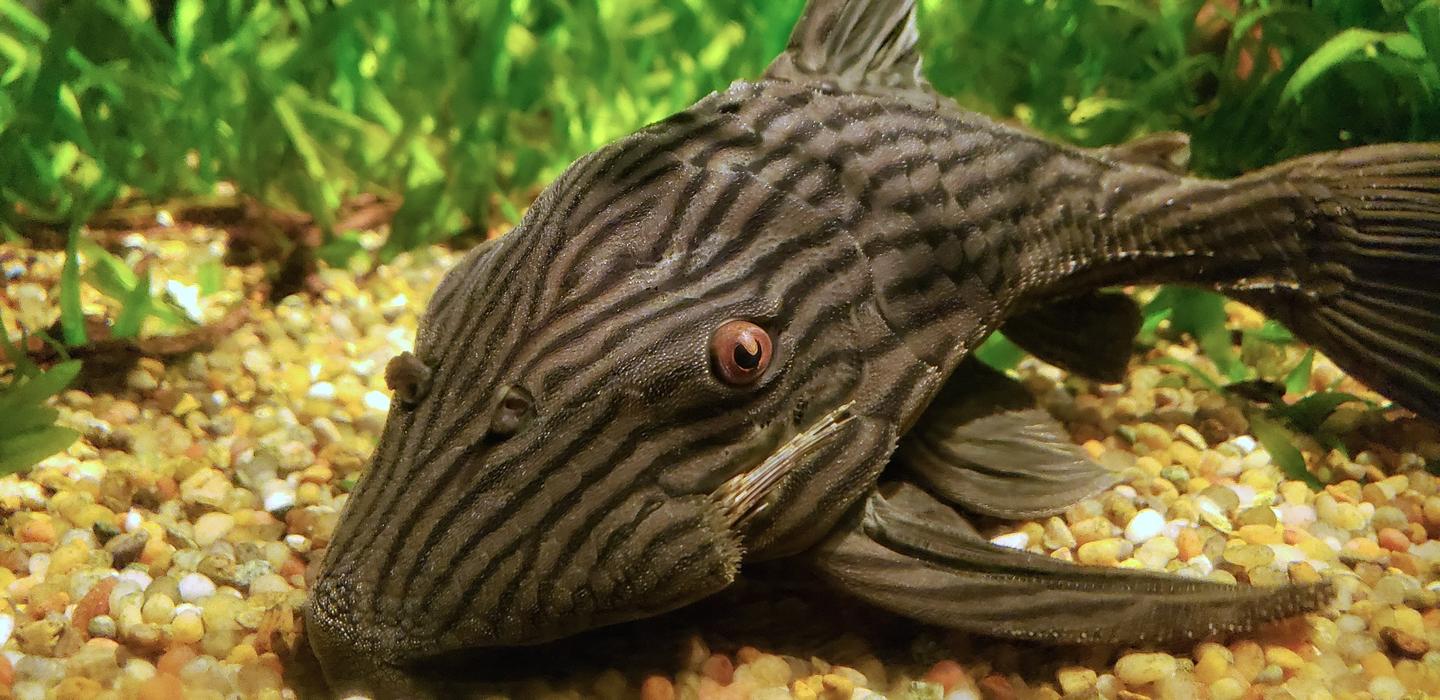
‘Pleco’ is a loose aquarium-trade label, not one species or one care sheet. Before buying, confirm the scientific name or defensible L-number, adult size and measurement method, required footprint, temperature and water, diet, social plan and source. No universal pleco tank size, menu or algae result is honest.
Maintain these water conditions for optimal health and vibrant colors
If you are searching for a truly dramatic pleco for sale UK hobbyists will remember, Acanthicus adonis is one of the most striking choices in the trade. Commonly called the Adonis Pleco or polka dot lyre-tail pleco, this huge South American catfish combines a jet-dark body, bright white spotting when young, and a long, elegant tail shape that gives it real show-fish presence. It is not a pleco for small aquarium setups, and it is not the best pleco for beginners, but for keepers with space and strong filtration, it is an unforgettable aquarium pleco UK option. Native to the Tocantins system in Brazil, this South American catfish UK favourite can exceed 60 cm in adulthood, lives up to 15 years, and develops a bold, semi-aggressive personality as it matures.
Many aquarists first look for a pleco algae eater or one of the best algae eating fish, then discover that Adonis Plecos are far more than simple cleaners. They are powerful omnivores with very specific pleco aquarium requirements, clear pleco temperature requirements, and a need for a serious pleco tank setup. See our detailed photos showing the long lyre tail, heavy armoured body, and spotted juvenile pattern in this exceptional catfish for sale UK listing. For advanced fishkeepers wanting a rare, large, conversation-starting specimen, this is a standout freshwater pleco for sale UK choice that brings character, movement, and genuine presence to a large display aquarium.
Acanthicus adonis belongs to the armoured catfish family, the Loricariidae, a group famous for sucker mouths, bony plating, and bottom-dwelling habits. In the aquarium hobby it is considered one of the more imposing large plecos, valued for its juvenile spotting and dramatic adult size. It sits alongside other sought-after loricariids, from compact bristlenose species to specialist wood-eating panaques and highly patterned Hypancistrus.
The natural pleco habitat of Acanthicus adonis is South America, especially the Tocantins River basin in Brazil. Reports of similar fish also come from Amazonian Peru, but the species is most strongly associated with large, warm tropical river systems. These are not still ponds or tiny streams. They are broad waterways with current, oxygen-rich zones, submerged wood, rockwork, and seasonal shifts in food availability.
Understanding that wild setting helps explain why this fish needs more than a basic community tank. In nature, Adonis Plecos spend much of their time on the bottom, sheltering under structure by day and foraging at dusk or after dark. Juveniles may graze surfaces more actively, which is why some keepers initially group them with algae eater fish care topics or ask what eats hair algae freshwater. In reality, adults become opportunistic omnivores and rely on a wider diet than many hobbyists expect from a typical algae grazer.
This species comes from warm, soft to moderately hard waters, so pleco water hardness and stable temperature matter from the start. The natural environment also explains its heavy body armour, strong pectoral spines, and territorial nature around caves and floor space. If you are comparing types of algae eaters, this is not a gentle, tiny cleaner like a siamese algae eater. It is a large, commanding loricariid built for river life.
Because the fish grows so large, it is often discussed by keepers looking for a large pleco for sale uk rather than a standard community species. It is also part of the broader interest in rare pleco species and specialist freshwater catfish UK stock. In the hobby, its appeal comes from that combination of unusual looks, impressive scale, and authentic South American river character.
Mimicking the natural river-style pleco habitat with strong filtration, driftwood, shaded retreats, and open floor space improves feeding response, reduces stress, and brings out more natural nocturnal behaviour.
A proper pleco tank setup for Acanthicus adonis starts with one honest fact: this species gets enormous. The stated minimum is 600 litres, but that is a practical floor for a juvenile or subadult, not an ideal forever home for a fully grown specimen. For long-term success, many experienced keepers prefer 900 litres or more, especially if the fish is housed with other large species. This is not remotely comparable to an Albino Polka Dot Lyre Tail Pleco minimum tank size search phrase used for smaller plecos online; Adonis Plecos need serious swimming room, turning space, and enough bottom territory to prevent constant conflict.
The fish reaches around 60 cm, produces heavy waste, and is muscular enough to shift decor. That means the best pleco aquarium requirements include a wide footprint, not just height. A tank at least 180 cm long is strongly recommended, with more length preferred as the fish matures. If you are looking for peaceful bottom dwellers for aquarium displays in modest tanks, choose another species. This fish is for very large systems only.
The core pleco temperature requirements are 24-30°C, with 25-28°C being a comfortable working range for most captive setups. Keep pH between 5.5 and 7.5. Acceptable pleco water hardness is around 2-15 dGH. Stability matters more than chasing an exact number. Despite odd search terms such as Albino Polka Dot Lyre Tail Pleco water temperature, Albino Polka Dot Lyre Tail Pleco water parameters, Albino Polka Dot Lyre Tail Pleco pH level, and Albino Polka Dot Lyre Tail Pleco ideal water conditions, the practical goal is simple: warm, clean, well-oxygenated water with low nitrate and no ammonia or nitrite.
This species needs oversized filtration. A large external canister, sump, or dual-filter system is ideal. Aim for total turnover of at least 6-10 times tank volume per hour, depending on stocking and feeding intensity. Because this fish is a heavy eater, under-filtering quickly leads to dirty substrate, rising nitrate, and oxygen stress. Strong current is useful, but avoid a layout where all resting areas are blasted by flow.
For support equipment, pair the tank with a dependable heater and serious filtration. If you are planning a large pleco display, compare species such as the L090 Papa Panaque - Panaque Bathyphilus to understand how other large loricariids also demand robust systems.
The best pleco substrate preference is smooth sand or rounded fine gravel. Sharp gravel can damage the belly and fin bases, especially in a fish that spends nearly all its time on the bottom. Dark substrate often improves contrast and makes juvenile spotting stand out more clearly in photos. Keep the layout stable, because large plecos can bulldoze loose decor while feeding.
Can you keep this species as a pleco for planted tank centrepiece? Sometimes, but only with realistic expectations. Delicate plants often get uprooted. Tough species attached to wood or rock, such as Anubias, Java fern, and Bolbitis, are far more practical. Use heavy driftwood, large caves, and broad shaded areas. Open swimming lanes matter just as much as shelter. For keepers who want a more plant-friendly pleco, the Lemon Bristlenose Pleco - Ancistrus Sp. or Long Fin Guama Bristlenose Pleco are easier options.
Moderate lighting works well. Bright light is fine if there are shaded retreats, but this fish is naturally more active in dimmer periods. A day length of 7-9 hours is usually enough in large displays. Excessively bright tanks with no cover can make the fish reclusive.
Always cycle the tank for 4-6 weeks before adding a large pleco. Because Adonis Plecos are heavy waste producers, an immature filter that might cope with small fish can fail very quickly once this species starts feeding properly.
Acanthicus adonis is an omnivore with a strong leaning toward protein-rich foods as it matures. Many buyers start with the idea that every pleco is mainly an algae cleaner, but the real pleco algae eating ability of this species is only part of the picture. Juveniles may browse biofilm and soft algae, so they sometimes appear in conversations about best algae eating fish or what eats hair algae freshwater. Adults, however, need a varied menu built around sinking carnivore and omnivore foods.
The best staple diet includes high-quality sinking pellets, carnivore wafers, and large bottom-feeder sticks. This is the foundation of a reliable algae eater food plan, even though the fish is not a dedicated algae specialist in adulthood. Offer enough food that the pleco can feed after lights dim, but remove obvious leftovers the next morning.
Supplement with mussel, prawn, white fish, earthworm-based foods, and occasional vegetable matter such as courgette or cucumber. In the wild, this species is an opportunistic feeder, so variety improves condition and growth. Among the many types of algae eaters, Adonis Plecos are one of the clearest examples of why species-specific feeding matters.
Treats can include chopped shrimp, mussel meat, and frozen foods once or twice weekly. Do not rely on treats alone. If you want a smaller algae-focused species, compare with the Blue Phantom Pleco - Hemiancistrus Sp. or a more compact Ancistrus. Shoppers browsing terms like algae eater petsmart often see generic advice, but large loricariids need a more serious plan than chain-store feeding labels suggest.
| Time | Food | Amount |
|---|---|---|
| Morning | Small portion of sinking omnivore pellets | Only what is eaten within 10-15 minutes |
| Evening | Primary feeding: pellets plus prawn, mussel, or fish | Moderate portion based on body size and waste output |
Feed juveniles daily, sometimes twice daily in small portions. Large adults can be fed once daily with one lighter day per week. Watch the belly line: a healthy fish looks solid and well-fleshed, not pinched. This species is often sold as a tropical catfish UK specimen and should be fed accordingly in warm water, not treated like one of the algae eating fish for ponds sometimes discussed in broad online searches.
Overfeeding causes ammonia spikes, cloudy water, and dirty substrate very quickly in large pleco tanks. This species is a heavy-bodied catfish with a heavy bioload, so feed for condition, not for constant activity.
The appeal of Acanthicus adonis starts with its shape. It has an elongated, armoured body, a broad sucker mouth, thick pectoral fins with strong spines, and a long lyre-shaped tail that gives the fish its common name. Juveniles are especially eye-catching, with a dark brown to black base colour covered in crisp white polka dots. This contrast is what makes the species so popular in product photos and display tanks.
As the fish matures, the spotting often changes in intensity and distribution. Adults usually become darker and more subdued overall, though still imposing and beautiful. The body develops a heavier, more muscular profile, and the fins become broader and more powerful. Our photos show the dramatic juvenile patterning and body armour that make this fish stand out among aquarium bottom dwellers UK listings.
Sexual dimorphism is subtle. Mature males may appear broader in the head and more robust through the pectoral region, but venting and breeding condition are more reliable than colour alone. There are no common hobby morphs in the way you see with bristlenose strains. If you are looking for the most colourful pleco, there are brighter yellow or orange options, but few match the Adonis for size, contrast, and presence.
Good diet, dark substrate, and low-stress housing help maintain strong colour contrast. Clean water is just as important as food. A stressed fish often looks washed out, hides constantly, or shows clamped fins rather than the bold, confident posture expected from a settled specimen.
The big question many buyers ask is whether this species suits a community tank. The honest answer is: only a very large, carefully planned one. Albino Polka Dot Lyre Tail Pleco tank mates searches often assume this fish behaves like a smaller Ancistrus, but adult Adonis Plecos are territorial, especially toward other bottom-dwellers and other plecos. That means Albino Polka Dot Lyre Tail Pleco for community tank setups need size, structure, and the right companions.
The safest companions are large, confident midwater or upper-level fish that will not compete for caves and floor space. Large cichlids, robust characins, and similarly sized catfish can work in very spacious aquariums. If you are comparing plecos, the Blue Phantom Pleco - Hemiancistrus Sp., L134 Leopard Frog Pleco - Peckoltia, L333 Maze Zebra Pleco - Hypancistrus, and L226 Iquitos Tiger Pleco - Panaqolus are all attractive species, but they are not ideal roommates for a mature Adonis in most tanks because of territorial overlap.
Avoid small tetras, dwarf cichlids, delicate bottom fish, shrimp, and most other plecos. This is not one of the peaceful bottom dwellers for aquarium categories suitable for mixed nano communities. It is also not a sensible choice if your main goal is a calm algae crew. A siamese algae eater is much more community-friendly, though the siamese algae eater size and behaviour are completely different from a giant loricariid.
In a 900-litre aquarium, one Adonis Pleco can work with a group of large silver dollars and a few robust cichlids if caves are arranged to break lines of sight. In a 1200-litre setup, one specimen may coexist with large datnoids, severums, or similarly sized open-water fish. Bottom crowding is the main mistake. Even if a juvenile seems calm, the Albino Polka Dot Lyre Tail Pleco behaviour changes with size and confidence.
| Species | Compatible? | Notes |
|---|---|---|
| Lemon Bristlenose Pleco - Ancistrus Sp. | ⚠️ Caution | Only in very large systems; territorial conflict likely as Adonis matures |
| Blue Phantom Pleco - Hemiancistrus Sp. | ⚠️ Caution | Possible competition for caves and floor space |
| Small shrimp and tiny bottom fish | ❌ Avoid | Too delicate and easily stressed in a large predatory-style setup |
Questions like Albino Polka Dot Lyre Tail Pleco with other fish and best pleco species comparison come up often because people see the juvenile and underestimate the adult. Compared with a bristlenose, this fish is bigger, stronger, and more territorial. Compared with a common pleco, it is often more visually dramatic when young and more specialist in terms of housing. If you want to buy pleco UK stock for a mixed community, smaller species are usually easier.
Always quarantine new arrivals for 2-4 weeks and rearrange caves before introducing them to a large pleco tank. Changing the layout helps reduce established territorial claims.
Breeding Acanthicus adonis in home aquaria is considered difficult and remains uncommon. This is not like keeping a bristlenose pleco for sale uk pair and waiting for cave spawning. Because the fish reaches such a large adult size, breeding requires huge quarters, mature specimens, and excellent conditioning. Most hobbyists interested in breeding plecos start with species such as zebra pleco for sale uk, l046 zebra pleco for sale uk, l236 pleco for sale uk, or Ancistrus varieties before attempting giant loricariids.
A breeding setup would need a very large tank or indoor pond-style system with warm water, heavy filtration, strong oxygenation, and oversized caves. Stable conditions around 26-29°C, soft to moderately soft water, and excellent feeding are likely important. Searches such as Albino Polka Dot Lyre Tail Pleco breeding and Albino Polka Dot Lyre Tail Pleco feeding guide often overlap because conditioning is central to any chance of success.
Like many loricariids, cave use is expected to play a role, with the male likely guarding eggs once spawning occurs. However, reliable hobby reports are limited. Seasonal simulation with larger water changes, stronger current, and heavy conditioning foods may help trigger reproductive behaviour. This species is far less predictable than common breeding plecos like super red bristlenose pleco for sale uk strains.
If spawning occurs, the male would typically fan and guard the eggs. Fry would need immaculate water, fine powdered foods or crushed specialist fry foods at first, then gradually larger sinking foods. Growth is relatively slow at first, then becomes substantial once juveniles establish a strong feeding response. The Albino Polka Dot Lyre Tail Pleco growth rate can accelerate under warm, well-fed conditions, which quickly increases space demands.
The main barriers are sexing, obtaining mature unrelated fish, and providing enough space to reduce aggression. This is why many keepers instead focus on species more often offered as breeding stock, such as zebra pleco breeding pair for sale uk, green phantom pleco for sale uk, blue phantom pleco for sale uk, golden nugget pleco for sale uk, gold nugget pleco for sale uk, or leopard frog pleco for sale uk.
If you ever attempt this species, prioritise floor area over height, use multiple oversized caves with only one narrow entrance, and condition heavily on mixed protein foods while keeping nitrate very low. In giant loricariids, space and water quality are often the limiting factors long before diet becomes the issue.
Comparison matters because many aquarists search for a pleco fish for sale uk listing based on looks, then realise too late that adult size and temperament vary enormously. The Adonis Pleco is often compared with bristlenose plecos and common plecos, but those are very different fish in practice.
| Feature | Acanthicus adonis | Bristlenose Pleco |
|---|---|---|
| Max Size | 60 cm | 12-15 cm |
| Care Level | Expert | Easy to moderate |
| Temperature | 24-30°C | 23-27°C |
| Price | £95.80 | Varies by strain |
| Best For | Very large display aquariums | Community and medium tanks |
| Feature | Acanthicus adonis | Common Pleco |
|---|---|---|
| Pattern | Juvenile white polka dots, lyre tail | More uniform mottled brown |
| Temperament | Semi-aggressive, territorial | Variable, often robust |
| Tank Need | 600L minimum, larger preferred | Very large tank also required |
| Visual Appeal | Highly distinctive juvenile form | Less dramatic overall |
| Best Buyer | Experienced keeper seeking statement fish | Keeper needing a hardy large pleco |
The phrase Albino Polka Dot Lyre Tail Pleco vs bristlenose pleco highlights the biggest difference: manageability. Bristlenoses fit many community tanks and are often the best pleco for beginners. The phrase Albino Polka Dot Lyre Tail Pleco vs common pleco is more useful if you already keep large fish and want something less ordinary. If you want a specialist but smaller patterned pleco, look at the L333 Maze Zebra Pleco - Hypancistrus or L134 Leopard Frog Pleco - Peckoltia. If you want a wood-focused giant, compare with the L090 Papa Panaque - Panaque Bathyphilus.
Choose Adonis if you want a true showcase fish, have the filtration and floor space to support it, and understand that this is not a casual algae cleaner. Choose a bristlenose or smaller L-number species if your tank is under 600 litres or you want easier compatibility.
The best sign of Albino Polka Dot Lyre Tail Pleco health is a fish that rests confidently, feeds strongly after dark, shows a full body profile, and has intact fins and clear eyes. Healthy specimens grip surfaces firmly, respond to food quickly, and do not breathe heavily at the surface. Because this species is armoured, early issues can be missed unless you watch behaviour closely.
The most frequent issues are linked to water quality rather than rare disease. Dirty substrate, high nitrate, and low oxygen can cause lethargy, poor appetite, fin damage, and secondary bacterial infections. Newly imported fish may also show stress, hollow belly, or parasite-related flashing. Abrasions can happen if decor is unstable or substrate is too rough for the fish's bottom-dwelling habits.
Prevention starts with the right pleco tank setup, strong filtration, and controlled feeding. Weekly maintenance should include large water changes, detritus removal from caves, and checking heater and filter performance. Quarantine all new fish before introduction. If treatment is needed, use medications carefully and confirm they are suitable for catfish. Large loricariids can be sensitive to overdosing.
Never assume a pleco is “fine because it is hiding.” Adonis Plecos are naturally secretive, but prolonged refusal to feed, rapid gill movement, pale colour, or repeated surface visits usually point to water-quality stress or disease that needs immediate action.
One common customer question is, “Why is my pleco not eating?” With this species, the answer is often stress, bright lighting, poor acclimation, or unsuitable foods rather than simple pickiness. Another is, “Do plecos need driftwood?” While Adonis Plecos are not classic wood-eaters like some panaques, wood still helps create shelter and natural grazing surfaces. A third frequent question is, “Will this fish clean my whole tank?” No fish replaces maintenance; this species contributes some browsing when young, but it is not a substitute for water changes and manual cleaning.
Albino Polka Dot Lyre Tail Pleco behaviour changes noticeably with age. Juveniles are often shy but visible, especially around feeding time. Adults become more territorial, more nocturnal, and more assertive around caves and preferred resting spots. This is why a young specimen can seem manageable for months, then suddenly start dominating the lower levels of the tank.
The species is solitary by nature in captivity and is best kept singly unless the system is exceptionally large. It spends most of its time on the bottom, under wood, beside rocks, or inside shelters. At night it becomes far more active, patrolling the substrate and investigating food. If you want to encourage natural behaviour, provide multiple shaded zones, reduce sudden light changes, and feed after dusk.
Another common question is, “Are plecos aggressive?” With Adonis Plecos, the accurate answer is that they are not random attackers, but they do defend space strongly. Their pectoral spines and body armour make them formidable in disputes. This is one more reason they are not among the best catfish for freshwater aquarium beginners seeking a peaceful mixed setup.
Buying a giant loricariid is different from buying a small community fish. When customers look for pleco UK stock, buy pleco online UK options, or a specialist pleco fish for sale near me alternative, the key concerns are condition, feeding response, and safe transport. For Acanthicus adonis, we focus on those details because this species can arrive stressed if handled casually.
Our Adonis Plecos are assessed for body fullness, fin condition, and feeding before listing. We do not treat them like generic algae eaters. Each fish is held, observed, and stabilised so buyers seeking live pleco delivery UK, pleco for sale UK, or catfish for sale UK can order with a clearer idea of how the fish is actually performing. This matters especially with large bottom-dwellers that may hide stress better than open-water fish.
For dispatch, fish are packed in insulated boxes with appropriate bagging, oxygen, and seasonal heat packs where needed. Tracked delivery reduces time in transit, and the fish is packed to minimise movement injury from pectoral spines. Customers looking to buy pleco UK, order Albino Polka Dot Lyre Tail Pleco online UK, or arrange Albino Polka Dot Lyre Tail Pleco delivery UK want confidence that the fish has been prepared for UK conditions, not rushed out immediately after import.
We also help buyers compare options honestly. If this is too large for your setup, a smaller pleco may suit you better, such as the Super Red Long Fin Bristlenose Pleco, Lemon Bristlenose Pleco - Ancistrus Sp., or Blue Phantom Pleco - Hemiancistrus Sp.. If you are specifically searching pleco UK listings for a statement fish, though, Adonis delivers a look few species can match. Order your Acanthicus adonis today with confidence if you have the space, filtration, and experience this remarkable fish deserves.
If you are building a specialist pleco collection, consider the L333 Maze Zebra Pleco - Hypancistrus for bold pattern in a much smaller size, or the L134 Leopard Frog Pleco - Peckoltia for a highly attractive medium pleco. The L226 Iquitos Tiger Pleco - Panaqolus is another excellent choice for keepers who enjoy striped L-number species.
For more familiar community-friendly alternatives, the Long Fin Guama Bristlenose Pleco and Super Red Long Fin Bristlenose Pleco are easier to house and feed. If you want another bold large catfish comparison, the L090 Papa Panaque - Panaque Bathyphilus is well worth a look. You can also browse our wider pleco for sale UK collection to compare sizes, patterns, and care needs before choosing.
No reviews for this item yet. Bought one? Honest reviews only, good or bad.
What customers say about ordering from us
I have a small group of long finned mountain minnows. So was delighted to be able to order ten of this variety to increase the genetics in my tank . The ones I recieved are healthy but it’s to early to give a verdict on wether they are of a long finned type since they are small currently.
Gordon Walker · 23 Sept 2026
100% success travel and "installation". Pleased with quality of purchase. The Siamese fighter a bit "shy" so have not yet seen him at his best yet but looking good. Happy customer. GG
George E Garratt · 21 Sept 2026
Reviews of our shop, collected by Judge.me, an independent third-party review collector. Newest first.