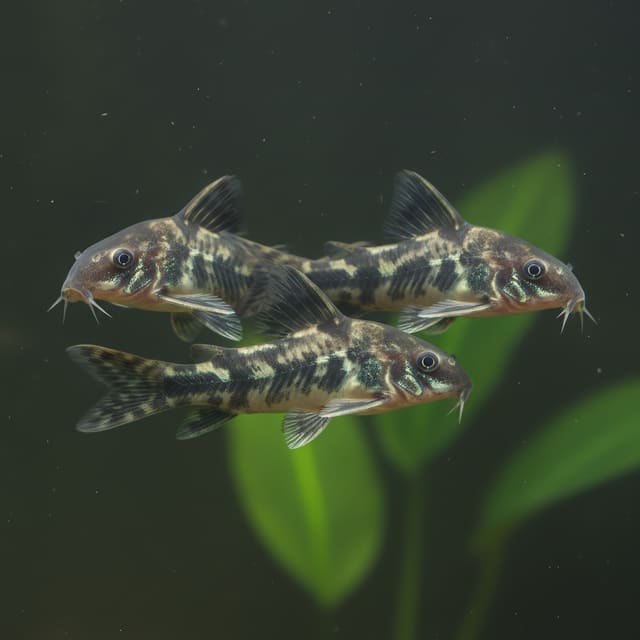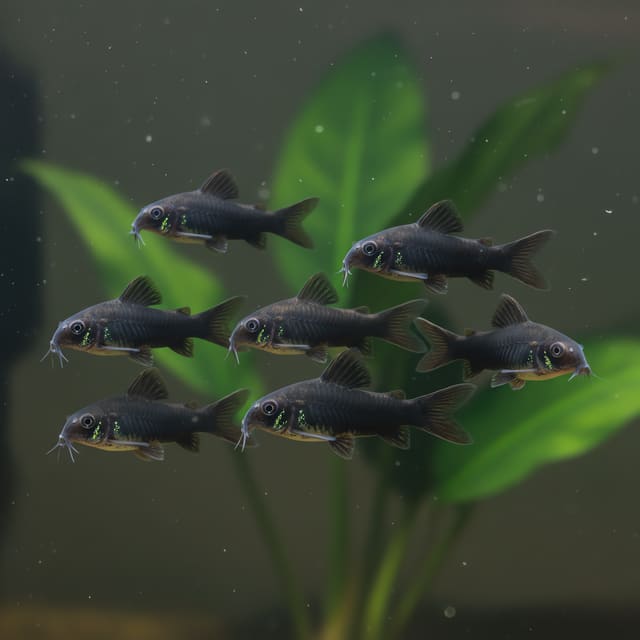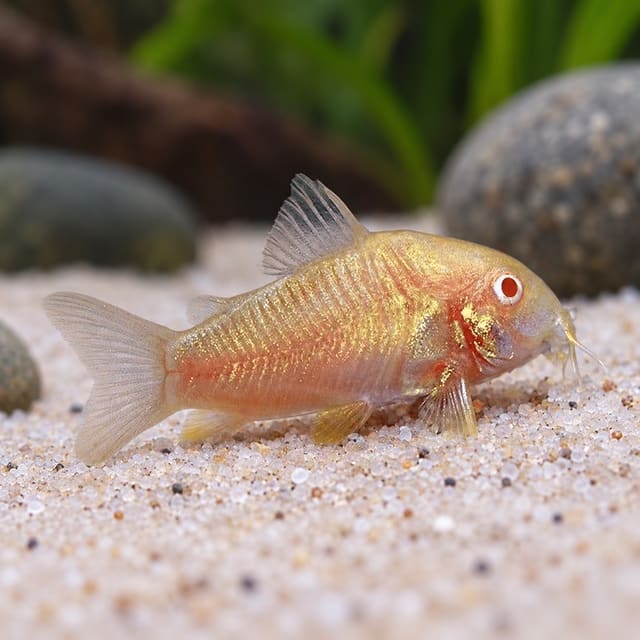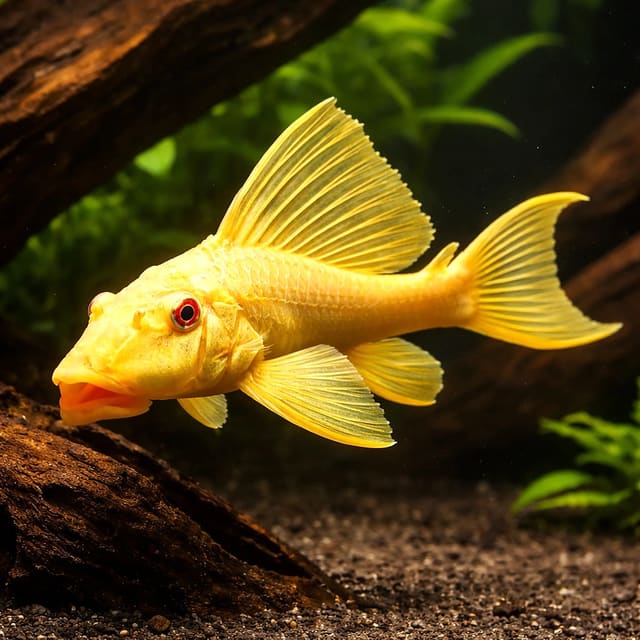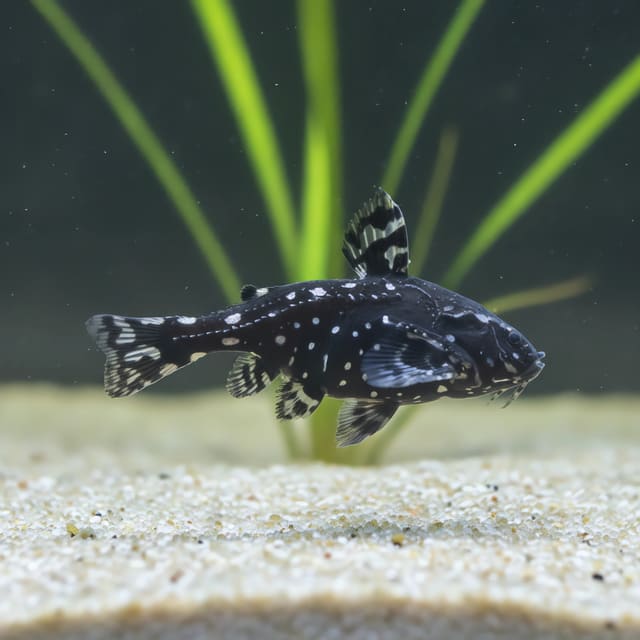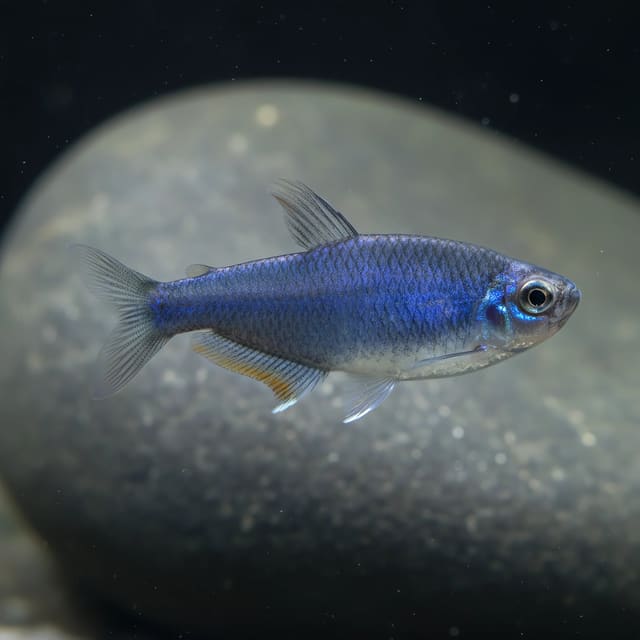
3 × Hoplo Cats (Hoplosternum thoracatum)
18–28°C · pH 6–8
£12.99

Lanceolate Whiptail Catfish (Rineloricaria lanceolata): two peaceful fish for an established tropical aquarium with sand, shelter and calm companions. Feed both directly; do not rely on algae alone.
Adult size is the maximum length this species reaches at full maturity (scientific sources). The livestock you receive will be younger and smaller. Product-photo provenance and any image-specific limitations are stated on the listing.
Rineloricaria lanceolata
Lanceolate Whiptail Catfish (Rineloricaria lanceolata): two peaceful fish for an established tropical aquarium with sand, shelter and calm companions. Feed both directly; do not rely on algae alone.
Adult size is the maximum length this species reaches at full maturity (scientific sources). The livestock you receive will be younger and smaller. Product-photo provenance and any image-specific limitations are stated on the listing.
Maintain these water conditions for optimal health and vibrant colors
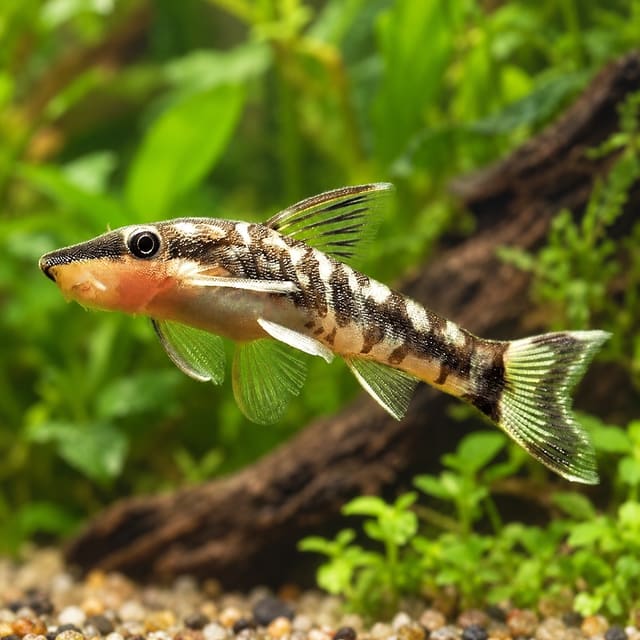
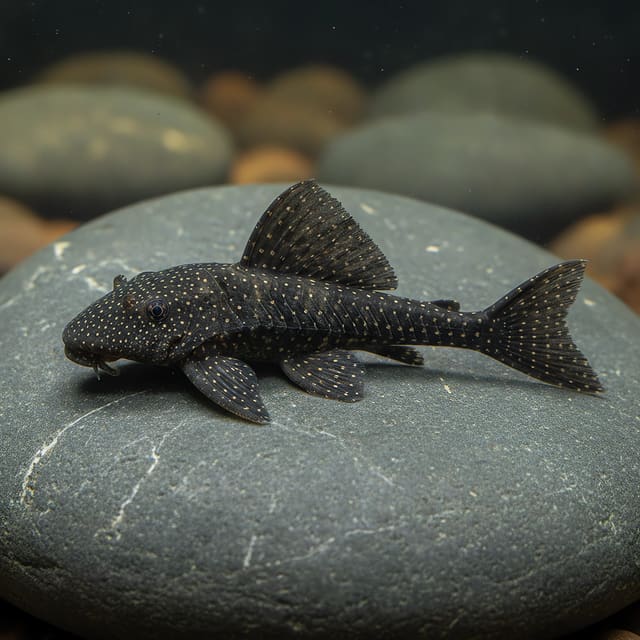
The lanceolate whiptail catfish, Rineloricaria lanceolata, is a slender, peaceful South American bottom dweller. This purchase supplies two live fish. They need a mature, filtered aquarium with usable floor space, shelter and a keeper willing to make sure each one gets food. Their quiet behaviour is appealing in a calm community, but a busy tank full of fast feeders can leave them hidden and hungry. A pair is a starting quantity for this offer; it is not a promised male and female or a guaranteed breeding pair.
| What you receive | Two live lanceolate whiptail catfish; one fish appears in the gallery |
|---|---|
| Best home | A mature, sheltered aquarium with sand and calm companions |
| Feeding | Varied sinking food with direct access for both fish |
| Planning size | Plan space for adults; ask for a current size check if needed |
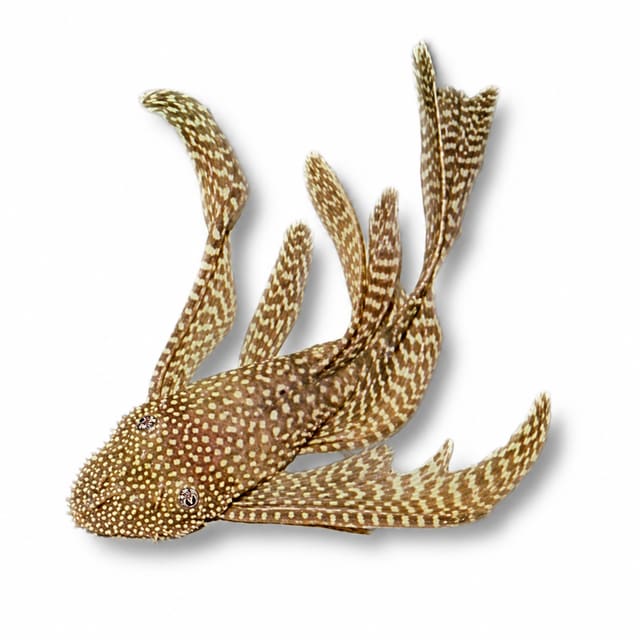
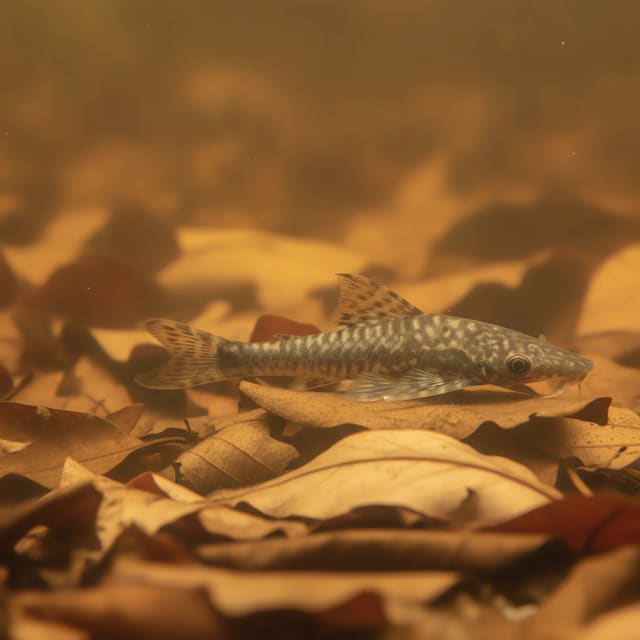
This purchase supplies two lanceolate whiptails. Their current individual lengths have not been verified, so ask us for a size check if size affects compatibility. The fish in the gallery is one animal; it does not show both fish included in a purchase. FishBase also records the vernacular name Chocolate-colored catfish, while the accepted scientific name used here remains Rineloricaria lanceolata. The similar-sounding Red Lizard Whiptail name does not identify this offer.
Expect an elongated body, a narrow tail and an unhurried way of moving over the substrate and resting surfaces. Rather than acting as a cleaning tool, this is an animal with a varied diet. In nature it takes aufwuchs and small aquatic crustaceans; in an aquarium it accepts appropriate sinking foods, vegetable matter and some live or frozen fare. Allow a quiet feeding place and check that both fish are eating. A mature aquarium can contain growth on surfaces, but that is no substitute for deliberate meals.
Sex is guaranteed only when the selected option explicitly states male or female. This 2 × Lanceolate Whiptail Catfish listing has no sex-guaranteed option.
For ordinary aquarium planning, the species profile at Seriously Fish gives 25–28°C, pH 6.0–8.0 and 5–20°dGH. Its example for a pair is a 45 × 37.5 × 30 cm aquarium, about 53 litres, with larger quarters for a group. These dimensions are a lower example for a pair, not an all-purpose recommendation for any community. Consider the actual tank footprint, the other residents, shelter and clear feeding space. If you hope to keep a larger group, plan the larger aquarium before adding more fish.
A soft sand base, dried leaves, branches, rounded stones and wood or rock shelter suit the species profile. A planted arrangement works too, with shaded areas rather than very bright lighting. Arrange a mixture of cover and accessible open sand so the fish can settle without disappearing from every feeding opportunity. The filter must be established and maintained; ammonia and nitrite should read zero before adding fish. A fresh tank that has merely been running for a fixed number of weeks is not automatically ready.
The two fish can live alongside peaceful species when the aquarium is large enough and competition is controlled. The profile mentions small characins, Apistogramma, Corydoras and quiet loricariids as possible types in suitable setups, but every proposed companion still needs its own water, space and feeding check. Vigorous or aggressive fish are poor choices because they can make the whiptails retreat and lose food. A calm community is a more useful goal than a long list of supposedly universal tank mates.
Adult size is the useful guide for long-term aquarium planning. FishBase records a maximum of 12.3 cm total length for male or unsexed fish; the species profile lists 95 mm standard length. Standard length excludes the tail fin, so these numbers should not be treated as rival measurements of the same thing. Leave room for adult fish, not only the size they may be when first supplied. The care and compatibility sections below explain how to build that space and maintain it over time.
Whiptails use the bottom of the aquarium and sheltered resting places. For this pair, start with the species profile's 45 × 37.5 × 30 cm, approximately 53-litre example only as a minimum illustration of what could house a pair. Its own guidance calls for larger quarters for a group. A community needs more again because other bottom dwellers may occupy the same surfaces, caves or feeding patches. A tall tank with a small base cannot be assumed to offer the same usable territory as a longer one of equal volume.
Before purchase, picture the adult fish on the floor of your actual aquarium. Is there open sand where each can reach food? Are there more sheltered resting positions than fish, with a way to withdraw from traffic? Can you see enough of the feeding area to tell whether the less assertive animal eats? Those questions make the litre figure useful. Plan space for adult fish, and ask us for a current size check if either fish's size matters for your aquarium.
This species is described as best kept in a small group rather than inherently solitary. The retail pack contains two, which can be kept together with adequate room and feeding access, but a larger group requires an appropriately larger aquarium. Buying two also gives no assurance of a breeding pair. If you already keep bottom dwellers, assess the complete stocking plan rather than counting this pair in isolation. A quiet fish can occupy the same level as an otherwise peaceful neighbour and still miss its meals.
The species account describes a simple natural-style layout of sand with dried leaves, branches and occasional rounded stones. Rock or wood caves and suitable narrow shelter add protected places. A planted aquarium is also suitable, provided there are shaded areas because the species does not appreciate very bright lighting. You do not need to copy a river scene exactly; the practical aims are a comfortable substrate, retreat, moderate light and accessible feeding ground.
Place cover so that each fish can rest without being pushed into the same corner. A few pieces of wood or branching material can break up a bare line of sight, while open patches of sand let you place food and observe feeding. Keep decorations stable and leave space around the filter intake and for routine cleaning. When adding dried leaves or plant matter, monitor their effect on cleanliness and remove material that is breaking down faster than the aquarium can manage. The object is shelter in clean water, not an accumulation of waste.
A whiptail may spend time resting in a sheltered position and move more confidently when the aquarium is quiet. Do not assume that a fish staying out of sight needs brighter lighting or stronger flow. First check whether it has suitable cover, whether active tank mates keep displacing it, and whether it emerges to feed. Sand and a few accessible resting surfaces offer more useful choices than a crowded display that leaves no clear place to put sinking food.
The species profile allows potential spawning caves such as narrow tubes, but a buyer need not set up a breeding system to keep these two fish well. Ordinary shelter and an easy-to-clean layout matter first. If you use a tube or cave, make sure it is a safe fit for the animals and remains accessible for observation and maintenance. Do not rely on a single hidden space for both fish, especially while they settle into a new aquarium.
For routine captive care, Seriously Fish lists 25–28°C, pH 6.0–8.0 and hardness of 5–20°dGH for R. lanceolata. Aim for steady water within these aquarium ranges rather than chasing a single ideal point. The broad OATA freshwater-catfish sheet gives 22–27°C and 4–18°dGH for a diverse group; it is general guidance, not a reason to replace the species-specific aquarium values. FishBase reports 5–19°dH in its environmental summary. Such environmental records describe occurrence; they do not define a narrower routine aquarium target than the species husbandry profile.
Check the readings in your own aquarium before buying. Temperature, pH and general hardness together tell more than the label on a bottle or a guessed local tap-water value. If you are unsure what the measurements mean, the water chemistry guide explains the common tests, and the water matcher can help compare measured values with the stated range. Use those tools to understand your aquarium, then keep changes measured and gradual.
A working biological filter is essential. The RSPCA's aquarium guidance explains how filter bacteria process toxic ammonia through nitrite into nitrate. The OATA catfish care sheet calls for zero ammonia and zero nitrite before adding fish, regular testing and gradual stocking as the filter adjusts to more waste. A tank that looks clear can still have unsafe chemistry; test it. Likewise, waiting a fixed four to six weeks is not a substitute for confirming that the filter is ready.
There is no reviewed exact flow-rate or oxygen target for this species in the supplied care account. Maintain effective filtration and arrange the aquarium so the fish can rest under cover away from the most disruptive current. If a fish seems unable to settle, investigate water quality and the layout before treating one equipment setting as the whole answer. Maintain the filter according to its instructions while protecting the biological media that supports it.
OATA's general maintenance advice recommends a partial water change of about 25% at least weekly and regular tests. Treat replacement tap water with a suitable conditioner and match conditions carefully so maintenance does not produce sharp swings. Siphon waste from accessible areas, including where food can lodge. If filter media needs cleaning, OATA advises rinsing it lightly in water removed from the aquarium rather than chlorinated tap water. The practical aim is stable, clean conditions over months, not a perfect number on one day.
The species eats aufwuchs and small aquatic crustaceans in nature. In aquaria it accepts a varied omnivorous diet: sinking prepared foods, vegetable matter and live or frozen foods such as bloodworm or daphnia. Blanched spinach, courgette and kale are examples in the species profile. These are options to combine sensibly, not a prescribed brand, rigid timetable or promise that tank algae will sustain the fish. Feed food suited to the animals in front of you and remove leftovers before they foul the water.
Place sinking food in an area both whiptails can reach. In a community, watch whether faster fish intercept it before it reaches the bottom. Feeding in more than one accessible spot can help you observe both animals, provided the portions remain modest. If one fish repeatedly hangs back, change where and how you offer food, and check for competition or stress. Visible grazing on a surface is interesting behaviour but does not prove that the fish has eaten a complete diet.
Vegetables and meaty foods can provide variety. A piece of blanched courgette, spinach or kale can be offered in a manageable portion; appropriate frozen or live foods can be used as part of the diet. Vary portions according to what the fish actually eat. OATA warns that overfeeding creates waste, so monitor what is consumed and take away uneaten food. In a mature tank, food can disappear under leaves or wood. Check those places during maintenance rather than assuming all offered food was eaten.
Do not buy this fish as a substitute for cleaning an aquarium. There is no supported algae-control guarantee, and the animal's needs continue even if the glass looks clean. A dedicated feeding routine also makes it easier to notice early changes: a fish that used to reach a meal but stops may be facing water-quality trouble, harassment or another health issue. Test the water and observe the whole aquarium before jumping to a treatment.
Prepare the destination tank before delivery: functioning filter, zero ammonia and nitrite, appropriate temperature and pH, and sheltered places ready for both fish. The first tropical tank guide is useful when checking whether a new system has matured. Increase livestock gradually as the filter adapts; do not add this pair to an already crowded bottom zone simply because its water tests currently look good.
Be present to receive live fish and inspect the parcel on the day it arrives. Follow Tropical Fish Co's current delivery and Live Arrival Guarantee policy for packing, courier arrangements and claim terms. The store advises slow acclimatisation, including floating the bag for 20–30 minutes before release, and not pouring transport water into the aquarium. Avoid unnecessary handling while the fish adjust to their new surroundings.
If you need to make a Live Arrival Guarantee claim, the current policy calls for contacting the store on arrival day with the order number and a continuous unboxing video showing the still-sealed parcel, its opening and the fish in the sealed bag. This is claim evidence. It does not replace preparing the aquarium or observing the animals once released. Check the policy itself for the applicable terms, as delivery arrangements and guarantee wording may change.
During the first days, observe breathing, body condition and feeding without repeatedly disturbing hiding places. Check for fin or skin damage and watch for an unusual change in colour or behaviour. A whiptail taking time to settle is not automatically ill, but persistent refusal to feed, rapid breathing or marked physical changes call for prompt water testing and advice. The broad OATA catfish guide identifies these observations as useful warning signs; it does not establish a species-specific disease diagnosis or medication recipe.
FishBase records Rineloricaria lanceolata in the upper Amazon basin and places it in the family Loricariidae. It gives a maximum of 12.3 cm total length for male or unsexed fish. Seriously Fish lists 95 mm standard length, which excludes the tail fin. These are two measures with different endpoints; neither tells you the exact size of a supplied animal. These adult measurements do not establish the current size of either fish supplied. Plan the aquarium for adult proportions and the whole community, not a precise growth date.
The common name describes the long, tapering form well. This fish may rest against wood, leaves or the substrate, then move to another sheltered area or feeding patch. It is comparatively quiet rather than a showy constant swimmer. A suitable layout and calm companions can make that behaviour easier to see. Avoid interpreting a peaceful temperament as an ability to withstand bullying: the species account specifically warns that vigorous fish can make it retreat and lose food.
The species profile describes mature males developing odontodes on the head and pectoral spines, and it describes cave spawning with male care of eggs. Those adult breeding traits are not a way to assign sex to two fish from this offer. For aquarists who later plan breeding, the account suggests raising a group of at least six juveniles to improve the chance of obtaining a pair, with larger accommodation and suitable narrow caves. It also cautions that fry can be difficult to raise. The retail pair should therefore be chosen for keeping, not on the assumption of a sexed breeding project.
Rineloricaria lanceolata is described as exceptionally peaceful, which makes it a possible resident of a carefully planned community. Peaceful does not mean compatible with every fish sold for a tropical aquarium. The most immediate concerns are aggression, incessant activity and competition for food at the bottom. A whiptail that can retreat indefinitely may still be losing the resources it needs. Check the size and habits of existing fish, their preferred water conditions, and where they feed before adding this pair.
The species profile gives small characins, Apistogramma, Corydoras and other quiet loricariids as possible companion types in appropriate setups. These are examples, not blanket approvals for every species or individual within those groups. A cichlid that defends a particular cave, an active bottom feeder that intercepts all food, or an aquarium with little remaining floor space may change the decision. Match temperature and water chemistry for the complete community, and allow the extra footprint and hiding options its full population requires.
Avoid vigorous or aggressive fish that chase the whiptails, dominate shelter or prevent them from reaching food. Rather than judging only by whether an attack occurs, watch the quieter fish: does each one emerge, find a safe resting place and feed? If the fish repeatedly retreats whenever a companion appears, the mix may need changing. A generous tank and several shelters can reduce competition, but they do not make an incompatible temperament safe.
Other bottom dwellers deserve particular thought. Two whiptails may share an aquarium with suitable peaceful neighbours, yet every additional fish adds demand on the floor, filter and feeding routine. Do not count algae or scraps as a separate food supply for the whiptails. Put deliberate meals where they can reach them and observe both fish. If you cannot tell whether each animal feeds, make feeding more visible before adding further residents.
The species account says this whiptail is best kept in a small group and is not ordinarily territorial unless spawning. The two fish sold here can be a beginning, but neither their sex nor a bond between them is guaranteed. If expanding the group later, provide larger quarters first and reassess how the whole aquarium uses the bottom. A pair chosen for a peaceful display is a different decision from assembling a breeding group.
Do not use a photograph or the colour of one fish to predict compatibility with shrimp, fry or any particular named retail species. When a proposed companion is important to your plan, research its adult needs and behaviour separately, compare those with this whiptail's 25–28°C aquarium range and calm feeding style, and allow a way to change the stocking if either animal is stressed.
Make the final decision from the aquarium that will house them, rather than from a list of fish names. A group of small, peaceful swimmers may leave plenty of room below, while a smaller number of assertive bottom feeders may make the same floor crowded. Check where each resident sleeps and eats, whether caves can be shared without conflict, and whether food reaches the whiptails after lights and activity change through the day. If you already have a territorial fish, observe its behaviour around the intended shelter before introducing another bottom dweller. Do not assume that adding more caves alone will remove competition for the same food. Leave enough open space to monitor the pair and act early if one becomes consistently withdrawn or loses condition.
FishBase records 12.3 cm total length for male or unsexed Rineloricaria lanceolata, while Seriously Fish lists 95 mm standard length, which excludes the tail fin. Neither adult figure gives the current measured length of either fish supplied; ask us for a size check if needed.
Seriously Fish gives 45 × 37.5 × 30 cm, about 53 litres, as a possible pair example and says a group needs larger quarters. Plan additional floor space for any community and make room for sand, shelter and feeding areas.
The species profile says Rineloricaria lanceolata is best kept in a small group. This purchase supplies two fish; a larger group needs a larger aquarium. Two supplied fish are not guaranteed to be a male and female pair.
It can suit a keeper prepared to maintain a mature filtered tank, check the water and feed each fish deliberately. The species profile calls it suitable for someone new to loricariids, but it is a poor choice as an automatic algae cleaner or for a hectic, newly started aquarium.
In an aquarium offer varied sinking foods, suitable vegetable matter such as blanched courgette, spinach or kale, and some live or frozen foods such as bloodworm or daphnia. Watch both fish eat and remove uneaten food. Algae in the tank is not a complete feeding plan.
Seriously Fish gives 25–28°C and pH 6.0–8.0 for aquarium care, with hardness of 5–20°dGH. Keep conditions stable and test your own aquarium rather than treating a broad catfish range or a wild environmental record as a new optimum.
The species profile describes this whiptail as very peaceful and generally non-territorial outside spawning. It is more likely to retreat and miss food when housed with vigorous or aggressive fish than to dominate them.
Seriously Fish gives small characins, Apistogramma, Corydoras and quiet loricariids as possible companion types in suitable aquariums. Check each proposed species' adult needs, temperament, water requirements and food access; none is an unconditional tank-mate guarantee.
Tropical Fish Co's current delivery policy describes insulated packing and a licensed tracked live-animal courier. Be present to receive the parcel, inspect it on arrival day and read the policy for current timing and Live Arrival Guarantee terms.
For species-level identity, distribution and total length, consult FishBase: Rineloricaria lanceolata. For aquarium dimensions, layout, diet, behaviour, water values and breeding notes, see Seriously Fish: Rineloricaria lanceolata. The OATA freshwater-catfish sheet gives broader group care and maintenance advice; the RSPCA aquarium environment guide explains why a mature biological filter matters. Group-wide advice should be read alongside the species profile. The store's delivery page gives current fulfilment and guarantee terms.
No reviews for this item yet. Bought one? Honest reviews only, good or bad.
What customers say about ordering from us
I have a small group of long finned mountain minnows. So was delighted to be able to order ten of this variety to increase the genetics in my tank . The ones I recieved are healthy but it’s to early to give a verdict on wether they are of a long finned type since they are small currently.
Gordon Walker · 23 Sept 2026
100% success travel and "installation". Pleased with quality of purchase. The Siamese fighter a bit "shy" so have not yet seen him at his best yet but looking good. Happy customer. GG
George E Garratt · 21 Sept 2026
Reviews of our shop, collected by Judge.me, an independent third-party review collector. Newest first.