−15%
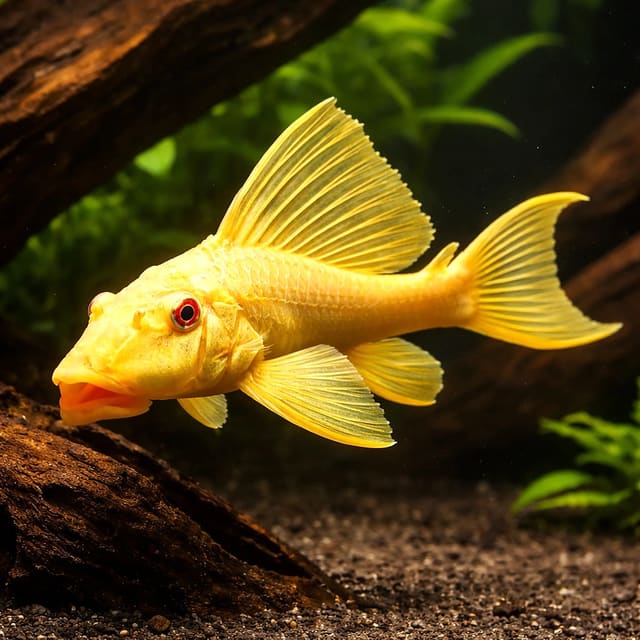
Suckermouth Catfish Gold (Hypostomus plecostomus)
22–27°C · pH 6.2–8
£8.49£9.99

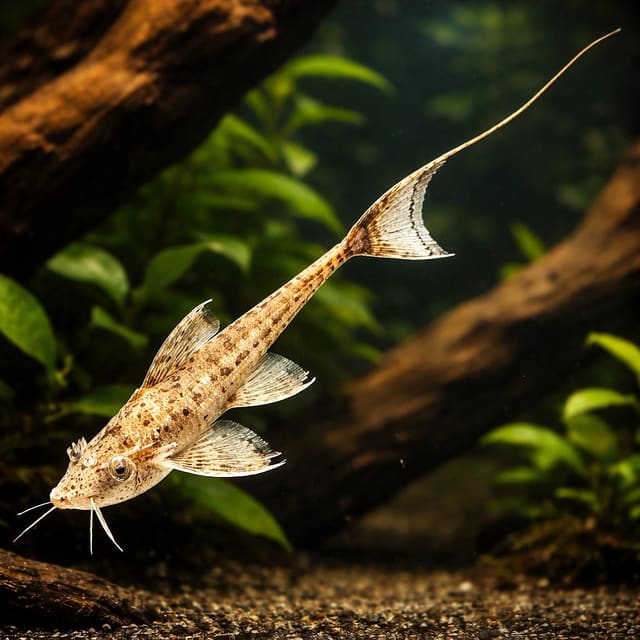
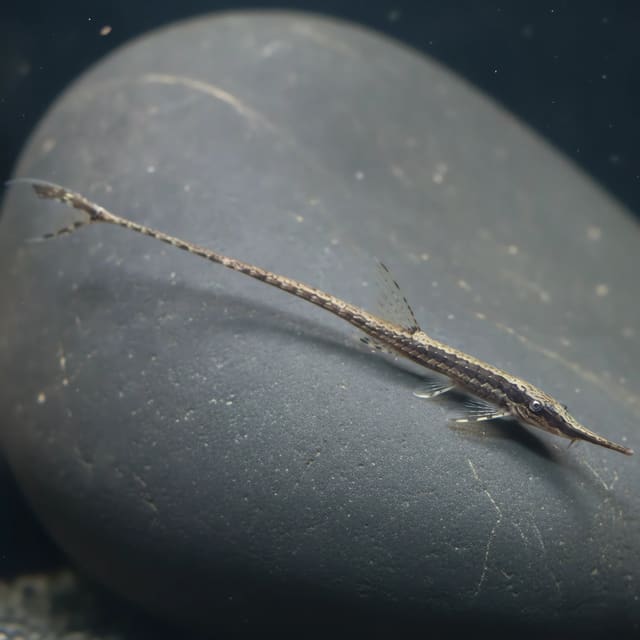
Royal Whiptail Catfish (Sturisomatichthys panamensis) is a long-bodied loricariid for a mature aquarium with clean water, shelter and unhurried access to sinking food. One purchase supplies one fish in the selected size; this is not a sexed offer.
Adult size is the maximum length this species reaches at full maturity (scientific sources). The livestock you receive will be younger and smaller — pick a size above for the actual shipping size. Product-photo provenance and any image-specific limitations are stated on the listing.
Sturisomatichthys panamensis
Royal Whiptail Catfish (Sturisomatichthys panamensis) is a long-bodied loricariid for a mature aquarium with clean water, shelter and unhurried access to sinking food. One purchase supplies one fish in the selected size; this is not a sexed offer.
Adult size is the maximum length this species reaches at full maturity (scientific sources). The livestock you receive will be younger and smaller — pick a size above for the actual shipping size. Product-photo provenance and any image-specific limitations are stated on the listing.
Royal Whiptail Catfish (Sturisomatichthys panamensis) is a long-bodied loricariid for an established aquarium with clean water, sheltered resting surfaces and a feeding place that faster fish cannot monopolise. One purchase supplies one live fish in the selected dispatch size. The size choices are 4–5 cm, 7–8 cm, 8–10 cm and XXL; check the live selector for the choices that can be ordered. The size you select is the size supplied, not the adult size. Sex is guaranteed only when the selected option explicitly states male or female. This Royal Whiptail Catfish listing has no sex-guaranteed option.
The accepted scientific name is Sturisomatichthys panamensis. The supplier uses the older trade combination Sturisoma panamense and calls it Royal Farowella or Royal Whip. Those names help you recognise the fish in older books and trade lists, but the accepted name gives a clear starting point for biological information. This whiptail is a member of Loricariidae, the armoured catfish family. It is not an ordinary short-bodied bristlenose and should not be sized or housed as though it were one.
FishBase records a maximum of 26 cm standard length for a male or unsexed fish. Standard length runs to the base of the tail, not to the tip of the caudal fin, so a tank must allow more room than the centimetres in a juvenile size option suggest. This is a recorded species length, not a claim that every fish will reach exactly that number. Give a grown fish a generous horizontal layout with suitable resting surfaces, clear routes between them and enough access for cleaning. A small fish today still needs an adult plan.
The supplier's XXL grade has no numeric length attached, and it would be misleading to convert it into a precise centimetre range. Likewise, the 4–5 cm, 7–8 cm and 8–10 cm labels tell you the supplied size, not the animal's age, sex or future temperament. Choose among those offers by the fish you are prepared to receive and the space that will remain appropriate as it grows. Do not buy a smaller grade as a permanent small catfish.
OATA's catfish guidance calls for a working filter, zero ammonia and zero nitrite, and steady maintenance. The RSPCA explains how a mature biological filter converts fish waste through the nitrogen cycle. A long whiptail can spend much of its time close to wood, glass, leaves or smooth rock; it needs those surfaces to be clean enough to rest and graze on. Clear water alone cannot prove that the filter is mature. Test it, maintain it and add livestock gradually.
Royal Whiptail Catfish is best enjoyed as an animal with its own needs, rather than bought to clear unwanted algae. Catfish vary in diet, and OATA warns that their reputation as scavengers is misleading: give an appropriate sinking food and watch that this fish actually reaches it. In an active community, a wafer disappearing from the floor does not show that the slowest fish ate any. Plan a quiet feeding place near shelter, then check the result.
FishBase places this species in river drainages of Panama, Colombia and Ecuador on the Pacific side and Colombia on the Caribbean side. That natural range does not tell you the conditions of an individual trade fish or set a universal aquarium temperature. Use the measured aquarium values and the fish's condition when making care decisions. A stable, well-filtered tank with compatible residents and reliable feeding is a better starting point than copying a wild environmental endpoint into a heater setting.
The shape is part of this fish's appeal. It can rest against hard surfaces and move quietly through an aquarium that gives it room. A cluttered floor with too few accessible surfaces, competing bottom fish and food that vanishes immediately will make the fish harder to keep well. A spacious layout, regular observation and patient feeding let you enjoy the whiptail without pressing it into a role as a household cleaning tool.
Plan the aquarium around a fish that can reach a recorded 26 cm standard length. A long tank offers more horizontal movement and more separated resting places than a tall tank with the same volume. There is no species-specific litre minimum in FishBase, and OATA's 80-litre example concerns smaller catfish such as Corydoras or smaller plecos. Use the adult length, existing stock, floor area and filtration load together. If the bottom already holds several large catfish or territorial cave users, buying a juvenile whiptail does not create new adult space.
Build a layout with a few secure places to rest and broad areas that remain easy to clean. Aquarium wood, smooth rock and plants can offer shade and structure. Leave open routes along the length of the tank, and make sure heavier hardscape cannot shift if a fish explores underneath. A dense collection of ornaments may look sheltered from above while leaving little usable area for a long fish. Check the openings and gaps as it grows; an entrance that fits a 4–5 cm juvenile may not remain safe.
Do not sacrifice water circulation for a pleasing arrangement of wood. A filter must move water through its biological media and the tank needs effective gas exchange. Provide areas with movement as well as quieter resting sites, then watch where the fish chooses to settle. Choose equipment that can support the full stocking load, maintain it properly and adjust the outlet without leaving waste to collect behind decorations.
Plants can give shade and visual breaks, but keep some surfaces accessible to feeding and maintenance. If your aquarium is heavily planted, leave a route through it for a fish with a long body. If it is sparsely planted, use safe wood or other suitable cover rather than forcing the whiptail to rest under constant bright light. OATA notes that shy catfish can benefit from cover and that wood, pots or caves may provide shelter. The useful layout is one the animal can actually enter, leave and use without being displaced.
OATA gives 22–27 °C, pH 6.0–8.0, general hardness 4–18 °dH and carbonate hardness 3–15 °dKH as general freshwater-catfish guidance. Those are broad group figures, not a measured optimum for Sturisomatichthys panamensis. FishBase records 20–22 °C, pH 6.5–7.2 and hardness up to 25 °dH in its environmental data for the species; these are wild-record values, not an instruction to set an aquarium at every extreme. For routine care, keep the fish in stable, suitable water, compare its needs with existing residents and seek specific advice when your setup sits near an edge of the broad group range.
Do not treat the overlapping endpoints as proof that a single exact temperature suits every Royal Whiptail. A sudden heater change can stress fish even when the final number appears on a reference page. Measure at the aquarium, check for daily variation and avoid a hot community merely because other fish tolerate it. If a tank runs warmer than the general OATA range or is subject to frequent swings, resolve that before adding a whiptail. The aquarium water-chemistry guide helps you understand the readings, and the water matcher can help compare them with care guidance.
OATA states that ammonia and nitrite must each be zero mg per litre. Its freshwater-catfish sheet also says nitrate should not exceed 20 mg per litre above the normal tap-water level. Test your tap and tank rather than interpreting a nitrate number in isolation. A rise after feeding, a blocked filter or an increased fish load calls for action even if the tank still looks clear. Keep test kits usable and note your usual results so that a deviation is easy to see.
OATA strongly recommends a 25% partial water change at least once every week for freshwater catfish, together with regular testing. Treat replacement tap water to remove chlorine or chloramine. If filter media needs cleaning, rinse it lightly in water removed from the aquarium, rather than under the tap, to protect the biological bacteria. Adjust maintenance to the actual tank and fish load, but do not let the appearance of clean glass replace water testing or waste removal.
The RSPCA's description of biological filtration explains why stocking slowly matters. Every new fish and every extra feed adds material that bacteria must process. Put a Royal Whiptail into a tank whose filter is already working, then watch water tests after introduction. If ammonia or nitrite appears, investigate the load and filter promptly. Avoid adding several animals at once in the hope that a filter will immediately catch up.
Catfish are not a uniform feeding group. OATA advises giving the appropriate sinking food and allowing some grazing species more time than quick eaters. Begin with a food suitable for the individual fish and its established feeding history, and make sure it reaches a location the whiptail can use. Do not assume that surface algae, a plant leaf or another fish's leftovers are a complete diet. Watch the catfish take food over several feeding periods.
A calm feeding routine matters more than a long list of foods. Offer a modest sinking ration, observe which fish takes it and clear what remains before it decays. Some grazing catfish may need up to about 30 minutes with their food, according to OATA; this is a reason to give a quiet opportunity, not to leave excess food overnight. In a lively tank, place a feeding point near a sheltered surface after activity has eased. If other bottom fish rush the same point, separate the ration rather than simply adding more.
Look for consistent access rather than a single dramatic meal. A fish may move slowly, settle on a surface and return later. If it is repeatedly displaced, change where food is placed or reconsider the mix of tank mates. If the belly or overall condition seems to change, check water quality and feeding competition promptly. Avoid attributing every change to one cause without observing the aquarium.
Ask a knowledgeable retailer about suitable foods for this grazing loricariid if its current feeding history is unclear. Introduce new foods in small amounts and remove leftovers. A balanced routine is easier to monitor when you know what went in, what the whiptail ate and what was taken by other fish.
Smooth resting surfaces and stable hardscape reduce avoidable hazards. Check that narrow ornaments do not trap a long fish and that moving one piece of wood will not bring rockwork down. Keep access for a siphon around the places where food lands. A pleasing aquascape should still let you see and remove waste. When maintenance is due, move carefully around a fish resting under wood rather than lifting its refuge without checking.
If the aquarium has a lid, inspect openings around equipment and maintain it as the setup changes. Keep cables, heater guards and intake fittings suitable for the fish and its size. The smallest offered grade deserves particular attention to openings that a grown fish would not enter.
Observe behaviour at consistent quiet times. Resting on wood or a plant does not by itself mean the fish is unwell; a change from its usual breathing, movement, feeding or colour deserves attention. OATA advises watching for abnormal swimming, faster or slower gill movement, changes in weight and reduced interest in food. Begin with water tests and a check of the tank's social situation, then seek qualified help if concerns remain.
As the Royal Whiptail grows, revisit the whole plan. Its resting spot may become too narrow, its feeding point may be taken by an established fish, or the filter may be carrying more load than it did when the whiptail was small. A periodic check of space and access keeps a well-intentioned juvenile setup from becoming cramped adult housing.
Prepare the tank before delivery: filter mature, water tested, temperature stable and cover ready. The first tropical tank guide is useful if you are still building that foundation. When the fish arrives, follow the shop's current acclimatisation instructions and give it a quiet place to settle. Avoid rearranging the aquarium repeatedly to make it visible on its first day.
The Tropical Fish Co delivery policy explains the current packing, licensed live-animal courier, receipt and Live Arrival Guarantee process. Be present to receive the parcel and inspect it the day it arrives. For a claim, the policy asks for a continuous video showing the sealed parcel being opened and the fish still in its bag, with your order number. Contact the shop the same day if something appears wrong. That evidence process is separate from everyday care: after inspection, make the fish's safe introduction the priority.
For the first few days, check water and watch whether food can reach the fish. A quiet whiptail may take time to become comfortable in a new layout. Give it cover, avoid chasing it out of a refuge and offer a modest feed near a surface it can use. If it cannot feed or shows persistent abnormal behaviour, investigate promptly instead of assuming transport shyness explains everything.
A water reading is most useful when you know how it behaves over time. Measure temperature at the place the fish lives, not only beside the heater display. During warmer weather, check whether the aquarium is creeping above its usual range, whether the filter outlet still disturbs the surface and whether the fish's breathing changes. The FishBase environmental record and OATA aquarium guidance have different purposes; neither makes a sudden jump in temperature a good husbandry step. Maintain stability and seek specific advice if your aquarium repeatedly sits outside the broad care range.
Likewise, pH and hardness should be interpreted together with the source water and the other occupants. Test tap water as well as the aquarium before making a large correction. A single pH measurement does not show whether the tank swings during the day or after a water change. If you use a conditioner or other routine preparation, keep that process consistent. The aim is a dependable environment for the whole community, with the whiptail able to feed and rest, rather than the pursuit of a printed endpoint.
For a young whiptail, inspect filter intakes and tight gaps before arrival. Place a refuge near a feeding surface, but leave space to inspect the fish without disturbing it each time. Avoid adding another fish immediately afterwards. This makes it easier to see how the newcomer responds and how the filter copes with the changed load. Record the first water readings and repeat them over the next few days.
A larger size choice deserves the same preparation. It may need a wider entrance and more room to turn than a small grade. Check that wood and rockwork leave clear routes through the aquarium. If an established resident claims the only useful shelter, rearrange the layout before the whiptail is released, when every fish has a chance to settle again. Do not wait for persistent chasing before creating a second refuge.
Keep the siphon path clear enough to remove food fragments near the feeding area. Clean around wood and plants in sections so that maintenance does not strip every familiar resting place at once. When rinsing filter media in removed tank water, check the impeller and outlet for blockages as OATA advises. Restore circulation before leaving the aquarium, then observe the fish at a quiet time. A routine that can be repeated each week is more dependable than an occasional major clean that sharply changes its environment.
Use a simple log of feeding, tests and water changes if several people care for the tank. It helps reveal whether a fish stopped eating after a new companion arrived, a filter was cleaned or the weather warmed. Record what actually happened instead of attributing a change to a single cause from memory. If behaviour or body condition remains worrying, share those observations and water results with a qualified aquatic professional. Clear records are useful without turning the fish's care into an experiment.
Handling should be gentle and limited. OATA warns that some catfish have spines that can catch in nets or injure hands. Prepare a suitable container and take advice if the fish must be moved; avoid chasing it around a crowded aquascape. Check where it is resting before lifting wood. The safest move is often the one you have prepared calmly, with cover and water ready at the destination.
OATA notes that catfish vary widely in behaviour and that some smaller plecos can be part of community aquariums. That broad statement does not guarantee a particular combination for every Royal Whiptail. Choose residents whose water conditions and adult size can fit the same aquarium, then ask whether the whiptail can rest and feed without being chased. Space along the bottom and calm access to sinking food matter even when midwater fish appear peaceful.
A long-bodied fish can be stressed by a tank that is busy at every level. Active feeders may take the food before the whiptail reaches it; territorial bottom dwellers may occupy the useful shelters. Watch at feeding time rather than relying only on a species name or a compatibility label. If the catfish retreats whenever food is offered, a separate sheltered feeding point may help. If another fish persistently blocks that area, change the stocking or layout.
Predatory or overtly aggressive fish are poor companions for a fish that needs unhurried feeding and safe resting space. The same caution applies to a crowded collection of large catfish, regardless of whether they are sold as different kinds. Give each animal a route and a refuge; do not count one length of wood as separate space for every fish that might rest on it.
There is no species-specific group number for this whiptail in the supplied biological record. Do not interpret the absence of a shoaling instruction as proof that any number is suitable. One fish can be planned as an individual purchase. If considering more, allow additional horizontal space, separate resting surfaces and feeding points, and observe them as they mature. The offer is not sexed, so a buyer cannot select a male-female combination from these options.
The catfish and pleco collection can help you compare other animals, but a related product is not automatically a tank mate. Check the requirements of both fish and the usable space of the aquarium before combining them. A quiet community works when all residents can meet their needs, not merely when no chasing is visible in the first hour.
FishBase records a maximum of 26 cm standard length for Sturisomatichthys panamensis. Standard length excludes the tail fin. Plan a long, roomy aquarium rather than using the dispatch size as the adult size.
Give it a mature filtered aquarium with generous horizontal room for a fish recorded at 26 cm standard length, plus accessible resting and feeding surfaces. OATA's 80-litre example is for smaller catfish, so plan from this animal's grown size and your existing stock.
One fish can be planned as an individual purchase. If keeping more, provide additional length, separate resting surfaces and feeding places, then watch how they share them. This offer does not guarantee a male or female.
It suits a keeper ready to maintain a mature biological filter, test water and check that the fish actually eats. Prepare the aquarium and a quiet feeding point before bringing it home.
Offer suitable sinking food and watch the fish take it; do not rely on tank algae or other fish's leftovers. OATA warns that catfish are not simply scavengers and that some grazing fish need extra feeding time.
OATA's broad freshwater-catfish guidance gives 22–27 °C and pH 6.0–8.0. FishBase's 20–22 °C and pH 6.5–7.2 are environmental records for the species, not routine aquarium targets. Keep water stable and compare the whole community's needs.
Plan it with calm residents and enough room to rest and feed. OATA says catfish behaviour varies, so observe individuals rather than assuming every bottom fish will share one shelter peacefully.
Choose peaceful fish with compatible water needs and feeding behaviour. Avoid predators, persistent harassers and a crowded bottom layer that stops the whiptail reaching food or cover.
Tropical Fish Co says it packs live fish in oxygenated bags and an insulated box, with a heat pack when conditions call for it, and sends them by a licensed live-animal courier. Follow the current delivery policy for receipt, acclimatisation and Live Arrival Guarantee steps.
FishBase records the accepted name, distribution, environmental observations and 26 cm standard-length maximum. OATA freshwater-catfish guidance gives broad aquarium care and water values. RSPCA aquarium advice explains the biological filter and water-quality basics.
No reviews for this item yet. Bought one? Honest reviews only, good or bad.
What customers say about ordering from us
I have a small group of long finned mountain minnows. So was delighted to be able to order ten of this variety to increase the genetics in my tank . The ones I recieved are healthy but it’s to early to give a verdict on wether they are of a long finned type since they are small currently.
Gordon Walker · 23 Sept 2026
100% success travel and "installation". Pleased with quality of purchase. The Siamese fighter a bit "shy" so have not yet seen him at his best yet but looking good. Happy customer. GG
George E Garratt · 21 Sept 2026
Reviews of our shop, collected by Judge.me, an independent third-party review collector. Newest first.