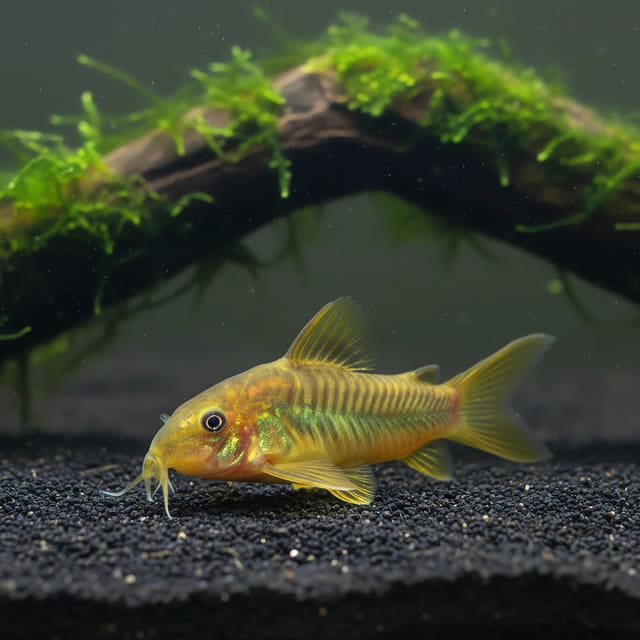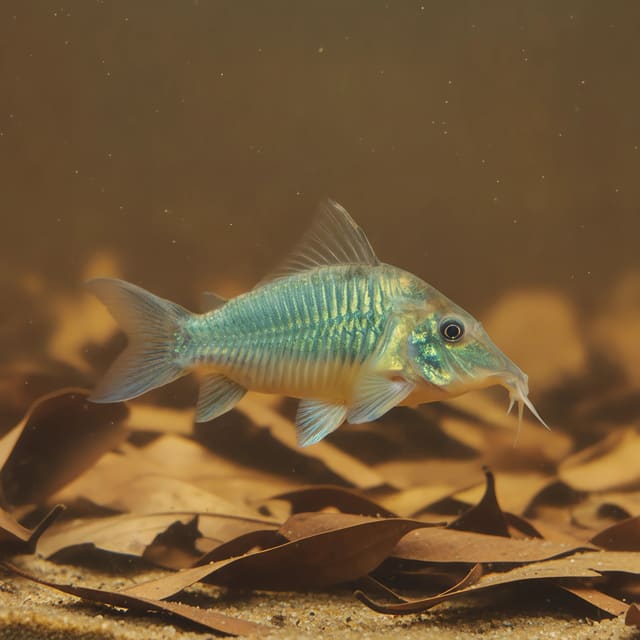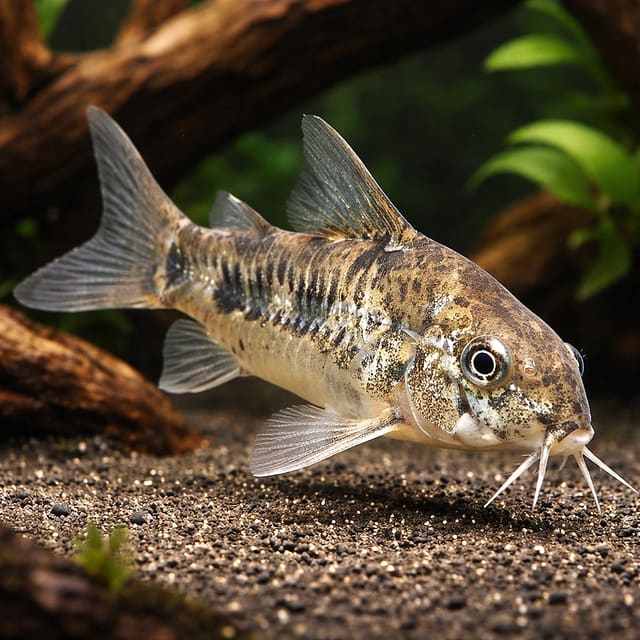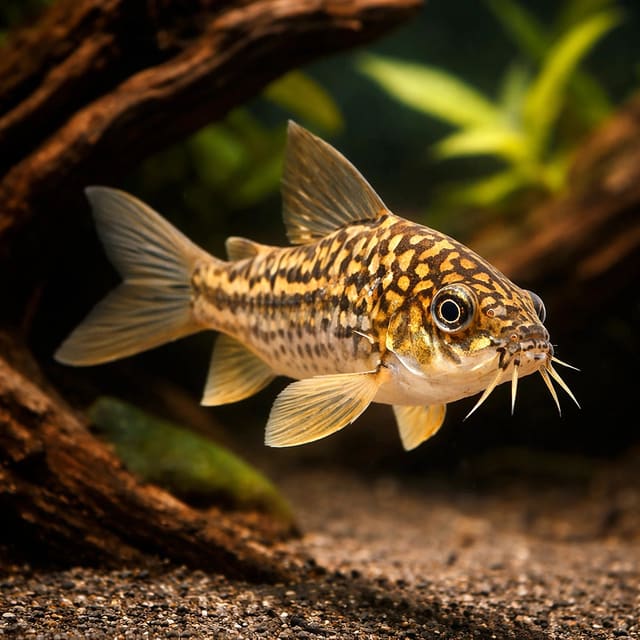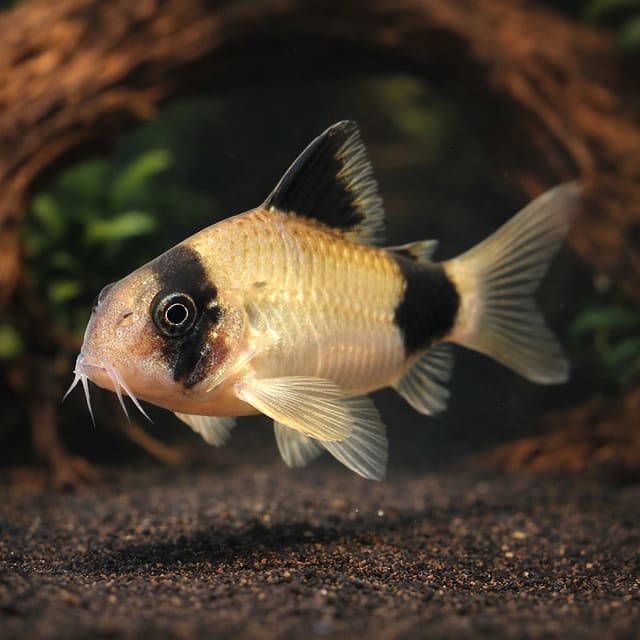
Panda Cory Catfish (Corydoras panda)
22–25°C · pH 6–7.4
From £8.69Some sizes on sale

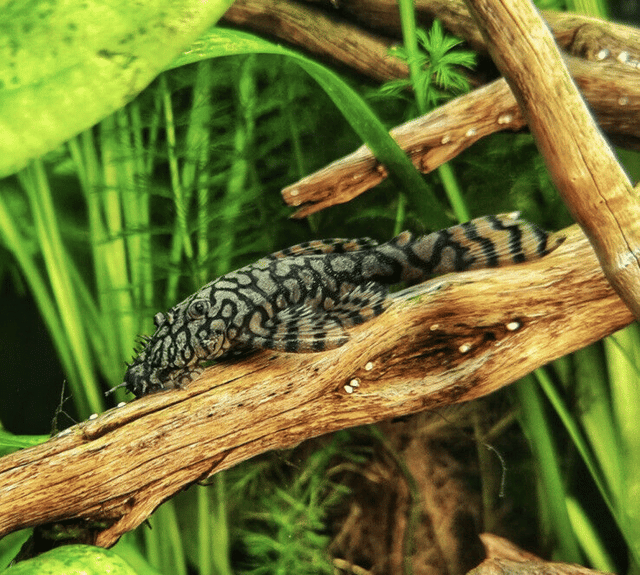
The Chocolate Whiptail Catfish (Rineloricaria lanceolata) is an armoured catfish from South America’s upper Amazon River basin that reaches 12.3 cm. It suits attentive beginners with a mature, peaceful aquarium; the FishBase, Seriously Fish and OATA overlap is 25–27°C, pH 6.0–8.0 and 5–18 dGH, and it is best kept in a small group. Sold individually in 4-6 cm, 6-7 cm and XL dispatch sizes.
Adult size is the maximum length this species reaches at full maturity (scientific sources). The livestock you receive will be younger and smaller — pick a size above for the actual shipping size. Product-photo provenance and any image-specific limitations are stated on the listing.
Rineloricaria lanceolata
The Chocolate Whiptail Catfish (Rineloricaria lanceolata) is an armoured catfish from South America’s upper Amazon River basin that reaches 12.3 cm. It suits attentive beginners with a mature, peaceful aquarium; the FishBase, Seriously Fish and OATA overlap is 25–27°C, pH 6.0–8.0 and 5–18 dGH, and it is best kept in a small group. Sold individually in 4-6 cm, 6-7 cm and XL dispatch sizes.
Adult size is the maximum length this species reaches at full maturity (scientific sources). The livestock you receive will be younger and smaller — pick a size above for the actual shipping size. Product-photo provenance and any image-specific limitations are stated on the listing.
Maintain these water conditions for optimal health and vibrant colors
The Chocolate Whiptail Catfish (Rineloricaria lanceolata) is a freshwater, bottom-living member of the Loricariidae family from South America’s upper Amazon River basin. FishBase records a maximum length of 12.3 cm total length. This is the adult planning figure, so allow for a slender catfish substantially larger than the 4-6 cm and 6-7 cm dispatch grades.
It suits an attentive beginner or experienced keeper who can provide a mature filter, calm companions and deliberate feeding at the bottom. Seriously Fish describes it as one of the most peaceful catfish and an excellent introduction to Loricariids. Its restrained activity and retiring response to unsuitable companions make careful stocking more important than simply choosing fish described as community species.
Keep routine water at 25–27°C, pH 6.0–8.0 and 5–18 dGH. These values are the overlap of the FishBase and Seriously Fish species ranges with OATA’s freshwater-catfish guidance. OATA gives 22–27°C, pH 6.0–8.0 and 4–18 dGH for the wider group, while both species profiles give 25–28°C and begin at 5 dGH. The overlap keeps routine care within every named range.
Plan a pair around an aquarium of at least 53 litres and also account for FishBase’s 80 cm minimum aquarium-length reference. A small group needs larger quarters. The combination of adult length, floor area, shelters and feeding access matters more than volume alone.
One purchase supplies one Chocolate Whiptail Catfish. Use the live size selector to choose 4-6 cm, 6-7 cm or XL. The size you select is the size supplied, not the adult size. Plan the aquarium for 12.3 cm from the beginning rather than treating a smaller dispatch fish as a permanently small animal.
Sex is guaranteed only when the selected option explicitly states male or female. This Chocolate Whiptail Catfish listing has no sex-guaranteed option.
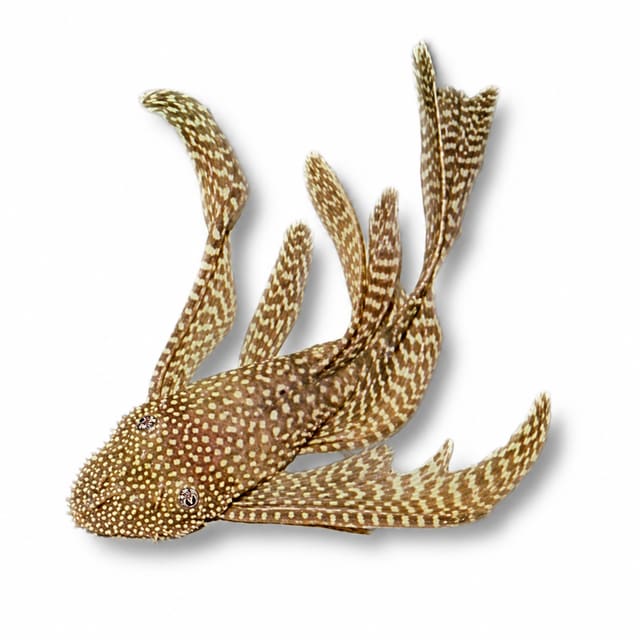
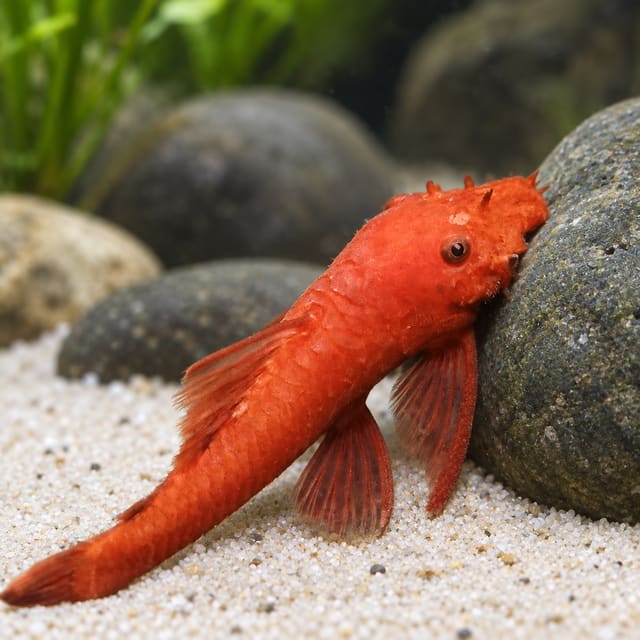
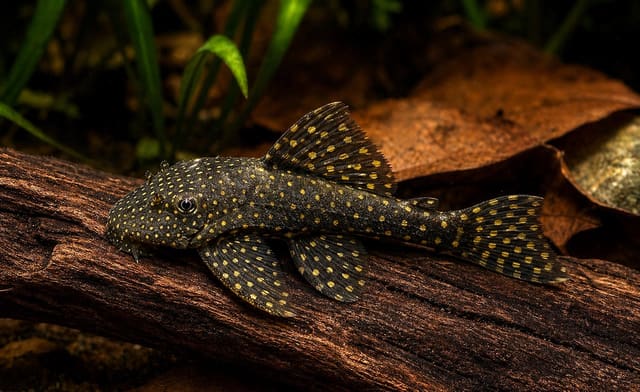
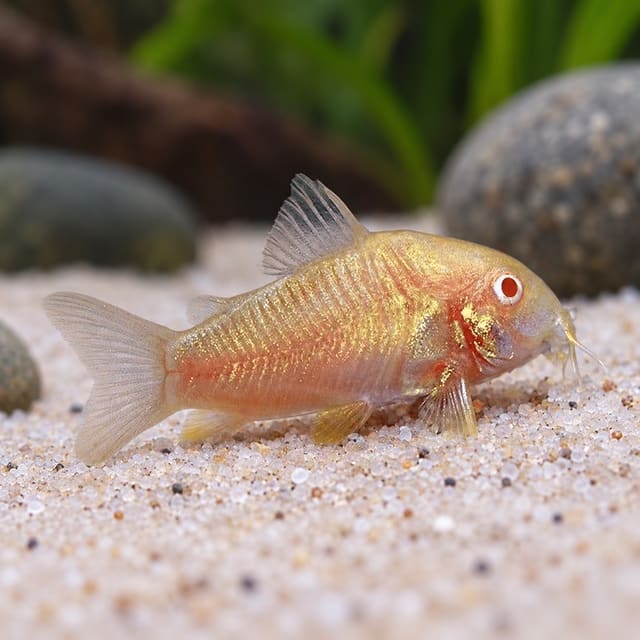
The gallery images are representative of this type of animal rather than photographs of the exact animal supplied, so colours can look slightly different from the live animal.
Dispatch size helps you assess introductions and feeding access, but it does not establish sex, maturity or origin. Check the selector label itself for the grade supplied; 4-6 cm and 6-7 cm are measured grades, while XL carries no measurement, then base long-term space, water and companion decisions on the adult fish.
If you are still comparing bottom-dwelling fish, browse the catfish and plecos collection. Compare adult size, temperament, diet and water requirements rather than choosing by present body length alone.
This whiptail is a strong match for a quiet, established aquarium where food can reach the bottom without a rush from forceful tank mates. It can live in a planted layout or a natural arrangement of sand, leaves, branches, rounded stones and shelters. Avoid very bright lighting and provide shaded resting areas.
| Suits | Not suited to |
|---|---|
| Mature, biologically filtered freshwater aquariums | New or unfiltered aquariums with unstable waste levels |
| Peaceful community fish and quiet bottom dwellers | Anything too vigorous or aggressive |
| A small-group plan with enough floor area and shelters | A group placed in the 53-litre pair reference |
| Sand, leaf litter, branches, caves and planted layouts | Very bright layouts without shaded retreats |
| Keepers who will deliver a varied diet to the bottom | Aquariums where faster fish take every sinking feed |
The care assessment is easy for an attentive keeper because the species is peaceful, accepts varied aquarium foods and has broad pH tolerance. That assessment assumes the aquarium is mature, the water remains within the stated overlap and the stocking plan protects this retiring fish from feeding competition.
Before deciding, measure the aquarium length, confirm its volume, test the water and identify where each fish will feed. A suitable plan meets all four checks rather than relying on a single label such as community, planted or beginner.
For a pair, use at least 53 litres and provide an aquarium length that meets FishBase’s 80 cm reference. Seriously Fish gives 45 × 37.5 × 30 cm, or 53 litres, as a size in which a pair could be kept, while stating that a group requires larger quarters. Using an 80 cm aquarium for a pair respects the longer planning reference and gives more floor area for shelters and separate feeding points.
For a small group, move beyond the pair reference. Add floor area, caves and feeding positions together; extra height alone does not resolve bottom-level crowding. A workable group layout lets fish rest without blocking one another from food or shelter.
Keep temperature at 25–27°C, pH at 6.0–8.0 and general hardness at 5–18 dGH. Measure the aquarium rather than relying on regional tap-water assumptions. Our water chemistry guide explains the values to test, and the water matcher can compare those readings with this range.
| Reading | Action |
|---|---|
| Below 25°C or above 27°C | Correct the cause gradually and check heater operation before adding fish. |
| pH outside 6.0–8.0 | Review source water and aquarium stability before changing stocking. |
| Hardness outside 5–18 dGH | Choose an appropriate water plan before purchase rather than making abrupt changes later. |
| Ammonia or nitrite detected | Pause livestock additions, test again and restore biological-filter performance. |
Stable readings do not replace maintenance. They show whether the aquarium is ready for the fish and help reveal a filter or stocking problem before behaviour and appetite change.
Test the aquarium on different days before adding the whiptail. A single result shows conditions at one moment; repeated results show whether the heater, source water and biological filter are keeping the system steady. Record temperature, pH, hardness, ammonia and nitrite together so a later change can be compared with a clear starting point.
Use the same checks after adding fish. If the temperature remains within 25–27°C but ammonia appears, act on the waste problem rather than changing water chemistry that is already within range. If pH changes between tests, check the source water and recent maintenance before making another adjustment. This separates the reading that needs attention from values that should be left stable.
Use sand as the main base, then create a mixture of open feeding areas and covered resting places. Seriously Fish describes a simple biotope-style arrangement using sand, dried leaves, twisted branches and occasional rounded stones. Oak and beech leaves are named as non-toxic choices in that profile.
Provide rock or wood caves, or lengths of PVC pipe, which Seriously Fish suggests as potential spawning sites and which also serve as retreats. Place shelters in more than one part of the aquarium so a pair or group does not depend on a single structure. Keep entrances clear of collapsing leaves and make sure routine siphoning can reach nearby waste without dismantling the whole layout.
This fish does not appreciate very bright lighting. Create shaded areas with planting, branches, leaves or appropriately positioned shelters while retaining enough access to observe body condition and feeding. A planted aquarium can work well, but the practical requirement is a calm floor plan with cover rather than any particular plant species.
Do not judge the layout only by how many ornaments fit. A successful arrangement gives the catfish a direct route between shelter and food, lets water circulate around solid structures and remains practical to clean.
Before introducing the fish, place a small sinking portion at each intended feeding point and watch where it settles. Food that disappears behind an inaccessible structure cannot be monitored, while food that collects in one exposed corner may draw every bottom fish to the same place. Adjust branches, caves or open sand until at least two feeding areas remain visible and reachable.
Run normal maintenance with the finished layout in place. Confirm that a siphon can remove settled waste, the filter flow is not blocked by leaves and each shelter entrance stays open. A layout that can be cleaned without repeatedly moving every retreat is easier to keep stable and causes less disturbance during weekly care.
Use a well-established biological filter before adding the fish. The RSPCA explains that filtration supports bacteria which convert toxic ammonia to nitrite and then to safer nitrate. A filter must remain set up, maintained and capable of handling the aquarium’s full livestock load.
If this is your first aquarium, follow our first tropical tank guide to prepare and mature the system before livestock arrives. Add fish gradually because every addition increases waste and the established bacterial population must respond to the increased load.
When filter media needs cleaning, do not rinse it under the tap. Rinse it lightly in aquarium water removed during the partial water change. This reduces the loss of beneficial bacteria while clearing debris that can restrict flow.
If ammonia or nitrite rises above zero, stop adding livestock and reduce the source of accumulating waste. Check for overfeeding, a blocked filter or a rapid stocking increase, then repeat the test after corrective maintenance. Watch breathing, swimming and appetite while the aquarium stabilises.
The maintenance target is consistency: a functioning filter, zero ammonia, zero nitrite and controlled nitrate. Clear-looking water alone cannot show whether toxic dissolved waste is present, so visual inspection and water testing perform different jobs.
This order connects each maintenance action with a measured reason. Testing first preserves the pre-change reading, while the written comparison shows whether waste is gradually increasing even when each individual result appears close to the previous one.
Feed a varied combination of sinking dried food, vegetable matter and small crustacean-based foods. Seriously Fish records that this species eats aufwuchs and small aquatic crustaceans in nature. In aquariums it accepts sinking dried foods, blanched spinach, courgette and kale, together with live, frozen or freeze-dried foods such as bloodworm and daphnia. FishBase also notes feeding on plants and roots in aquarium keeping.
This is an omnivorous grazer, not a fish that should be expected to live on whatever remains after other fish have eaten. Deliver food to the bottom where the whiptail can reach it and use more than one feeding point when companions gather around the first portion.
OATA’s freshwater-catfish guidance recommends feeding once a day and limiting the portion to what the fish can consume within a few minutes. A grazing species may require up to 30 minutes. Start with a modest portion, observe what remains and adjust the next feed rather than adding more immediately.
| Food role | Suitable choices |
|---|---|
| Regular sinking food | A quality dried omnivore food that reaches the aquarium floor |
| Vegetable variety | Blanched spinach, courgette or kale |
| Small animal food | Bloodworm or daphnia in live, frozen or freeze-dried form |
| In the wild | Aufwuchs and small aquatic crustaceans (Seriously Fish); in the aquarium, feed the foods above. |
Food disappearing does not show which fish ate it. Watch whether the whiptail reaches a portion before faster companions take everything. If it remains behind cover while food vanishes, move one portion closer to its retreat or reassess the companion mix.
Remove persistent leftovers before they decay and review the next portion. Excess food adds waste, increases pressure on the filter and can push ammonia, nitrite or nitrate away from the maintenance targets.
A feeding plan is working when the fish can be seen reaching food, persistent leftovers are absent and weekly waste readings stay controlled. If the whiptail misses several feeds, solve access first by changing placement or companion pressure rather than increasing the total amount throughout the aquarium.
Prepare the aquarium and confirm its water readings before the parcel arrives. Someone must be present to receive live fish, and the parcel must be opened and inspected on the day it arrives.
Read the current delivery and Live Arrival Guarantee policy before arrival so the required receiving and video steps are clear.
OATA advises watching swimming behaviour, colour, temperament, breathing, appearance, body condition and feeding. A newly introduced whiptail may use cover, so judge it through repeated calm observations rather than moving shelters to force it into view.
| Checkpoint | What to do |
|---|---|
| First water test | Confirm ammonia and nitrite remain at zero after the livestock load changes. |
| First feeds | Place a modest sinking portion where the fish can reach it and observe access. |
| First week | Test at least weekly, check the filter and note changes in breathing or appetite. |
| Further additions | Increase stocking slowly so the biological filter can adjust to extra waste. |
If behaviour or appearance changes, test the water first. Correct any measurable water-quality problem promptly and contact our team for further guidance.
Keep the aquarium ready at 25–27°C with ammonia and nitrite at zero before delivery day. Have the order details and a device capable of continuous recording to hand so filming can begin while the parcel remains sealed. The person receiving the fish should know where the aquarium is and how the bag will be floated without delaying the required inspection.
After release, record the first water test and feeding observation rather than relying on memory. If a later change occurs, those notes show whether the fish initially fed, whether waste readings changed after introduction and whether the filter continued operating normally.
Plan for an adult maximum of 12.3 cm total length, as recorded by FishBase. Seriously Fish gives 9.5 cm standard length, which is a different measurement. Use 12.3 cm throughout aquarium planning because it is the complete-fish figure.
Measure growth only when it can be done without chasing or handling the fish. The practical objective is not a precise growth rate but a fish that maintains body condition, reaches food and behaves consistently within its normal routine.
OATA recommends monitoring swimming, colour, temperament, breathing, appearance, condition and feeding. Check for hanging at the surface, erratic swimming, a marked increase in hiding, unusually fast or slow gill movement, white spots, fluffy growths, damaged fins or scales, a change in body weight and reduced interest in food.
| If you see | Do this first |
|---|---|
| Reduced feeding | Confirm food reaches the bottom, then test ammonia and nitrite. |
| Faster breathing | Test water quality and check that the filter is operating normally. |
| More hiding than usual | Review lighting, aggression and competition at feeding points. |
| Loss of condition | Observe an entire feed and separate portions so the fish can eat. |
| White spots, growths or damaged tissue | Test the water and seek prompt guidance before choosing any treatment. |
Mature males develop odontodes on the head and pectoral spines, which females lack. Treat those as adult characteristics, not as a way to infer the sex of a dispatch fish from size, colour or a gallery image.
Keep a short record of weekly tests, feeding response and visible changes. A record helps distinguish a gradual feeding problem from a sudden water-quality event and gives useful context when further guidance is needed.
Write down the date, water readings, whether the fish reached food and any change in breathing, hiding or body condition. Use the same observation points each week so comparisons remain consistent. A note such as “ate at the left feeding point” is more useful than a general impression because it links appetite to a location and companion behaviour.
Review several entries together. A gradual decline in feeding alongside stable water points towards food access or companion pressure, while a sudden behavioural change with detectable ammonia directs attention to filtration and waste. Acting on the matching pattern avoids changing several parts of the aquarium at the same time.
Choose peaceful companions: settled with the right tankmates this bottom-feeder is by no means shy, but vigorous fish make it very retiring. Seriously Fish names small characins, Apistogramma, Corydoras and other quiet Loricariids as suitable examples in an appropriate setup. It can also be kept in most communities of peaceful fish.
Avoid anything too vigorous or aggressive. With such fish the whiptail will become very retiring and will easily be out-competed for food. The screening rule therefore has two parts: the companion must behave calmly, and the whiptail must still reach a complete sinking diet.
| Potential companion | Decision rule |
|---|---|
| Small characins | Suitable when calm and matched to the aquarium’s water. |
| Apistogramma | Assess space, shelters and behaviour in the complete setup. |
| Corydoras | Provide enough bottom area and food for both kinds of catfish. |
| Quiet Loricariids | Check adult space and prevent competition around shelters and food. |
| Vigorous or aggressive fish | Avoid: with them the whiptail will become very retiring and will easily be out-competed for food. |
Watch a complete feeding period and note which fish arrives first, whether the whiptail leaves cover and whether it can remain at a portion long enough to eat. Repeat the observation at more than one feed because a single calm moment does not show the continuing pattern.
If a companion repeatedly blocks shelter entrances, displaces the whiptail from food or drives it into prolonged hiding, the combination is not working even when the water values match. Change the stocking arrangement or separate the fish rather than compensating by scattering excessive food, which adds waste without guaranteeing access.
Ask us to assess the full stocking plan if you are combining several bottom-dwelling species. Include the aquarium dimensions, water readings, current livestock and intended group sizes so the decision reflects the complete setup.
Keep this species in a small group, following Seriously Fish’s recommendation. Its 53-litre example applies to a pair, and larger quarters are required for a group. Choose the group only after accounting for aquarium length, floor area, shelters, filtration and the needs of existing fish.
For a pair, begin with the 53-litre pair reference and an aquarium that meets the 80 cm length reference. Add at least two distinct shelters and more than one place where sinking food can be delivered. If the aquarium cannot meet those conditions after existing livestock and decor are included, reduce the stocking plan or use a larger aquarium.
For a small group, do not multiply the pair volume as though volume alone settles compatibility. Instead, map where each fish can rest and eat. A longer floor plan with separated shelters may solve a conflict that extra height cannot.
| Observation | Response |
|---|---|
| One fish reaches every portion first | Separate feeding points and watch the whole feeding period. |
| A whiptail remains hidden while food disappears | Move a portion near its shelter and reassess vigorous companions. |
| Several fish gather at one cave | Add or redistribute shelters while retaining usable floor area. |
| A fish becomes territorial while spawning | Increase separation around shelters and monitor access routes. |
| Waste readings rise after adding fish | Pause additions and restore zero ammonia and nitrite. |
If one checkpoint fails, address that specific pressure before adding more fish. More shelters can improve separation only when usable floor area remains; more food can help only when each fish can reach it; and a larger aquarium still requires filtration capable of processing the total waste load.
Compatibility remains conditional because individual aquarium layouts and companion behaviour differ. The dependable rule is to combine calm fish, shared water requirements, adequate adult space and observable food access.
FishBase records a maximum of 12.3 cm total length. Plan the aquarium, shelters and companion stocking around that complete adult length rather than the fish’s dispatch size.
Seriously Fish says a pair could be kept in 53 litres measuring 45 × 37.5 × 30 cm, with larger quarters required for a group. FishBase also gives an 80 cm minimum aquarium-length reference, so use at least 80 cm for a pair.
Keep a small group, as Seriously Fish recommends. Its 53-litre reference is for a pair, while a small group needs larger quarters with additional floor area, shelters and feeding positions.
Yes, for an attentive beginner with a mature biological filter, calm companions and a consistent sinking-food routine. Seriously Fish describes it as an excellent introduction to Loricariids, and our care assessment is easy under those conditions.
Feed sinking dried food, blanched spinach, courgette or kale, plus live, frozen or freeze-dried bloodworm or daphnia. Offer only what it can eat within a few minutes once daily, allowing up to 30 minutes for grazing.
Keep it at 25–27°C and pH 6.0–8.0, with hardness of 5–18 dGH. These are the overlap of the FishBase and Seriously Fish species ranges with OATA’s freshwater-catfish guidance.
Seriously Fish describes it as one of the most peaceful catfish and says it is not territorial unless spawning. Keep it away from anything too vigorous or aggressive, because it will become very retiring and will easily be out-competed for food.
Suitable kinds named by Seriously Fish include small characins, Apistogramma, Corydoras, other quiet Loricariids and peaceful community fish. Screen each combination for shared water, adult space, calm behaviour and feeding access.
Tropical Fish Co hand-bags live fish in pure oxygen and uses an insulated poly box, with a heat pack when weather calls for it. Be present to receive the parcel, film continuously from the sealed box, and float the bag for 20–30 minutes before release.
No reviews for this item yet. Bought one? Honest reviews only, good or bad.
What customers say about ordering from us
I have a small group of long finned mountain minnows. So was delighted to be able to order ten of this variety to increase the genetics in my tank . The ones I recieved are healthy but it’s to early to give a verdict on wether they are of a long finned type since they are small currently.
Gordon Walker · 23 Sept 2026
100% success travel and "installation". Pleased with quality of purchase. The Siamese fighter a bit "shy" so have not yet seen him at his best yet but looking good. Happy customer. GG
George E Garratt · 21 Sept 2026
Reviews of our shop, collected by Judge.me, an independent third-party review collector. Newest first.