Moderate
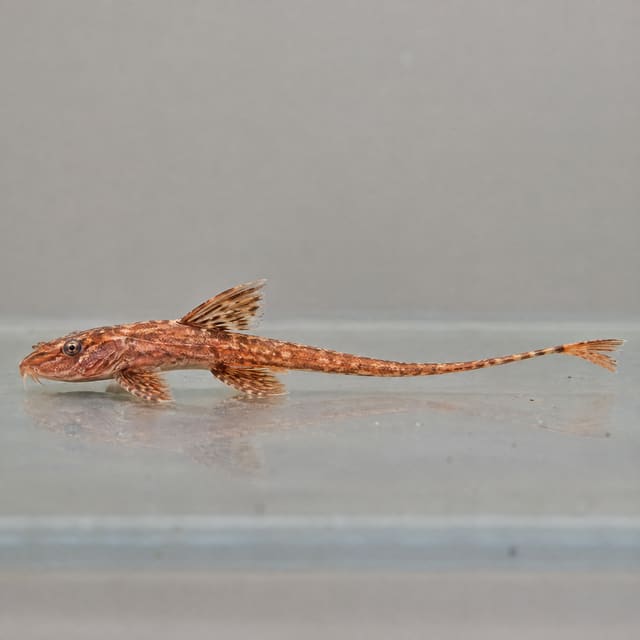
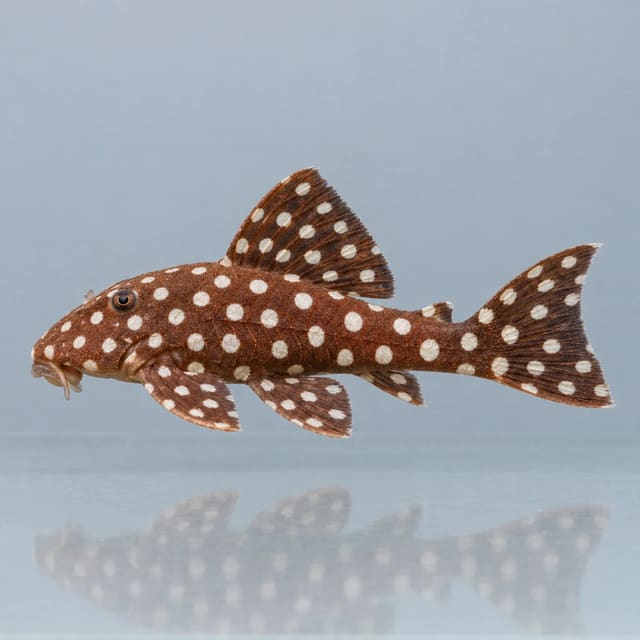
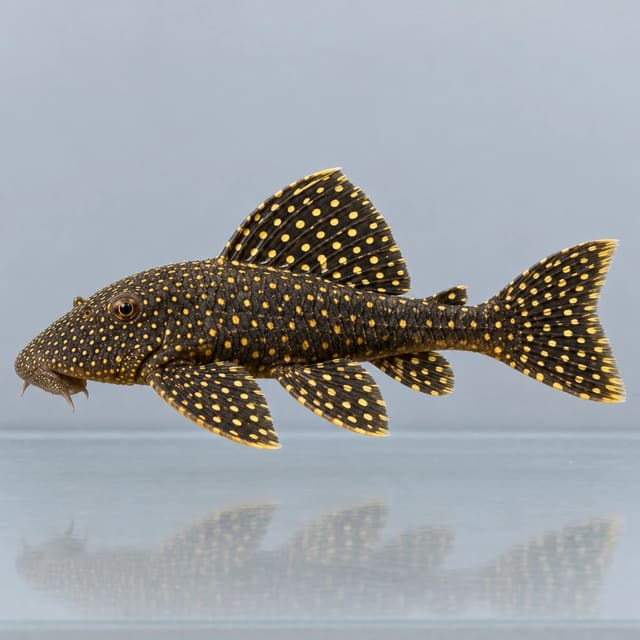
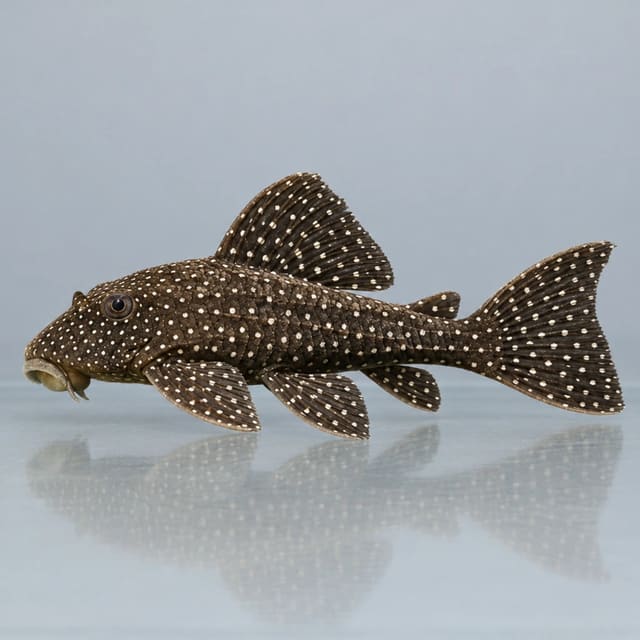
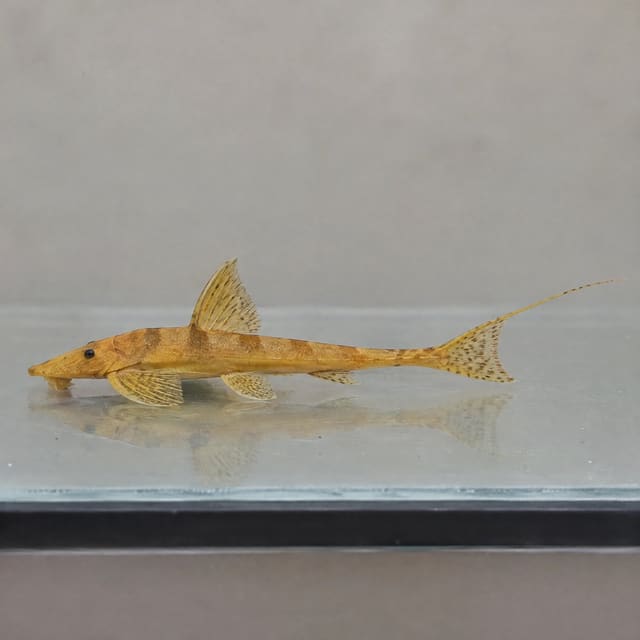
Gold Whiptail Catfish (Rineloricaria parva) 5-6 cm
20–25°C · pH 6–7.5 · 100L
£34.99
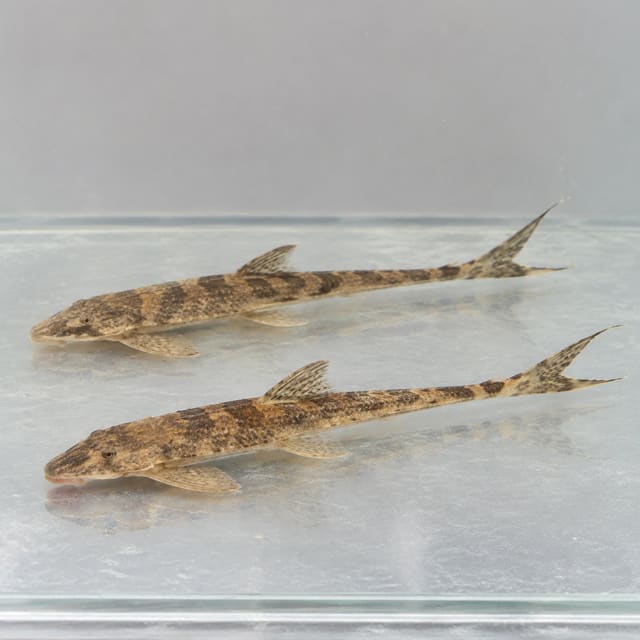
The Fallax Whiptail Catfish (Rineloricaria fallax) is a slim, sand-coloured armoured catfish from Guyana and Brazil that grows to about 15.5 cm standard length. It is one of the most peaceful catfish for a sandy community aquarium with a 90 × 30 cm base, kept at about 22–25°C. Sold individually as one live fish.
Rineloricaria fallax
The Fallax Whiptail Catfish (Rineloricaria fallax) is a slim, sand-coloured armoured catfish from Guyana and Brazil that grows to about 15.5 cm standard length. It is one of the most peaceful catfish for a sandy community aquarium with a 90 × 30 cm base, kept at about 22–25°C. Sold individually as one live fish.
Read the full care guidance when planning conditions for your aquarium.
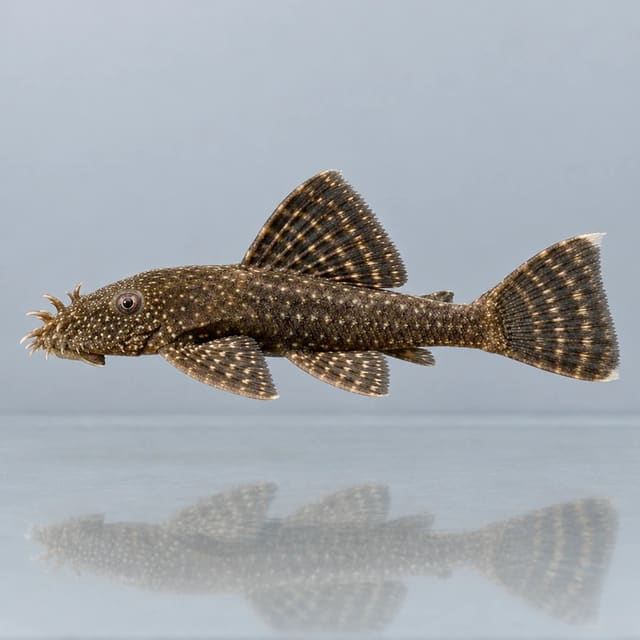
The Fallax Whiptail Catfish (Rineloricaria fallax) is a slim, flattened armoured catfish from the upper Rupununi and Branco river basins of Guyana and Brazil. Like other whiptail catfish it has a long, tapering tail stem, a sucker mouth under the head and bony plates instead of scales. Its sandy browns and fawns match the sand and fallen leaves it lives among in the wild.
It belongs to the armoured suckermouth catfish family, Loricariidae, in the whiptail subfamily Loricariinae. Seriously Fish describes it as one of the most common species sold as "whiptail catfish" and one of the most peaceful catfish around. That makes the Fallax Whiptail Catfish a sensible first whiptail for a calm community tank, provided its companions are just as gentle.
| Name | What it means |
|---|---|
| Fallax whiptail, whiptail catfish | Common names used by UK shops |
| Rineloricaria fallax | The current scientific name |
| Hemiloricaria fallax | A genus name used briefly from 2002; older labels still show it |
| Loricaria fallax | An older combination listed as a synonym |
The genus name joins Greek and Latin words for nose and leather armour, a nod to the plates that cover the body. Be aware that whiptails are hard to tell apart. Neale Monks, writing in Tropical Fish Hobbyist, notes that names such as R. fallax, R. lanceolata and R. parva have been applied loosely in the trade. Basic care is consistent across the genus, so this does not change how you keep it. Compare it with our Chocolate Whiptail Catfish and browse the other Rineloricaria whiptails we keep.
One purchase supplies one live Fallax Whiptail Catfish. The size option is "Standard": the fish is sent at the size currently available, which is smaller than the adult size. Sex is not chosen or guaranteed.
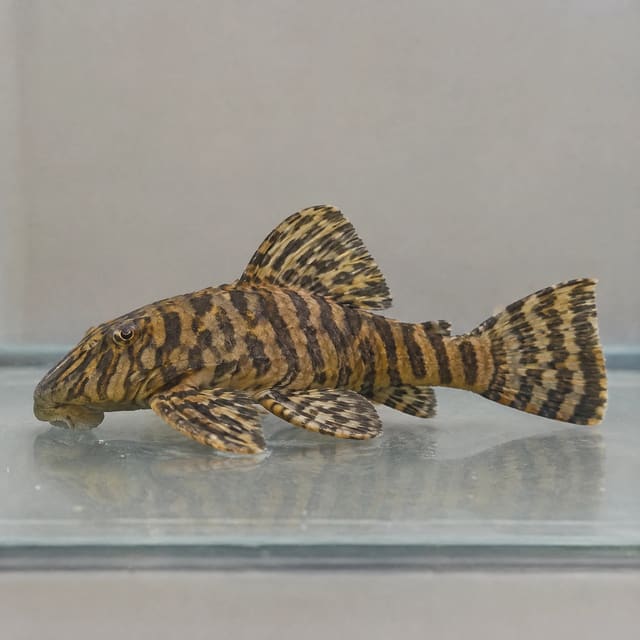
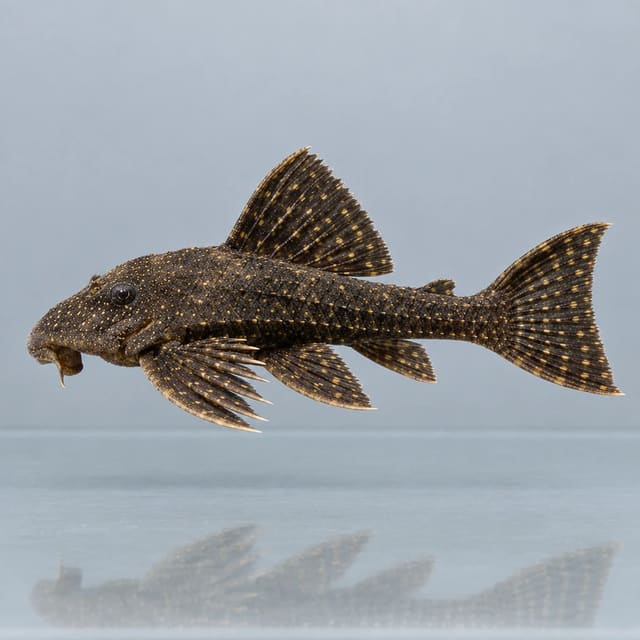
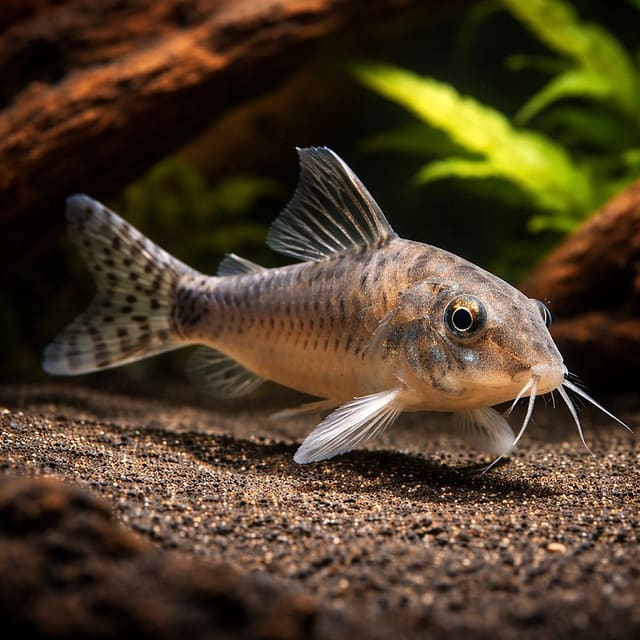
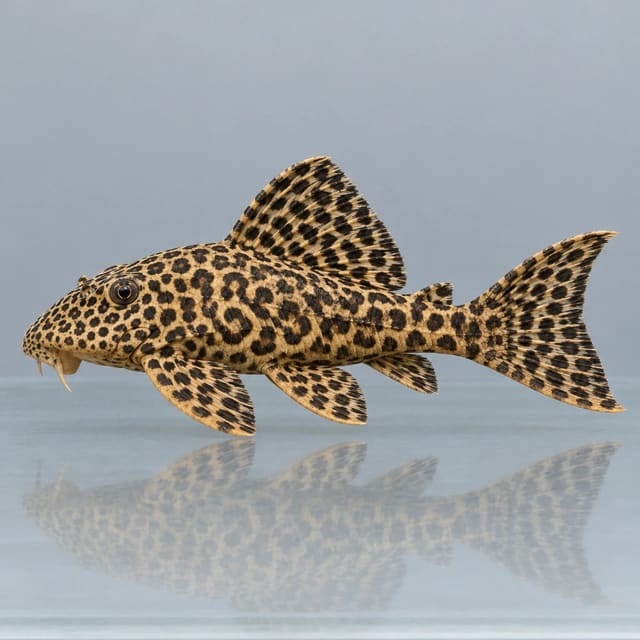
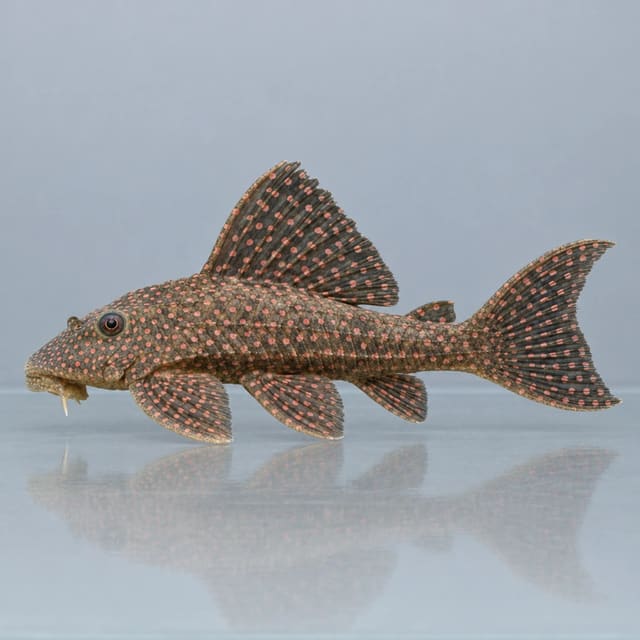
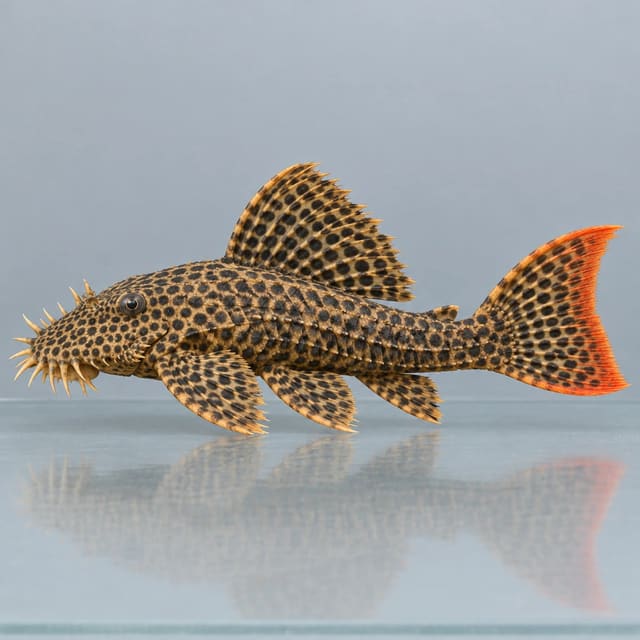
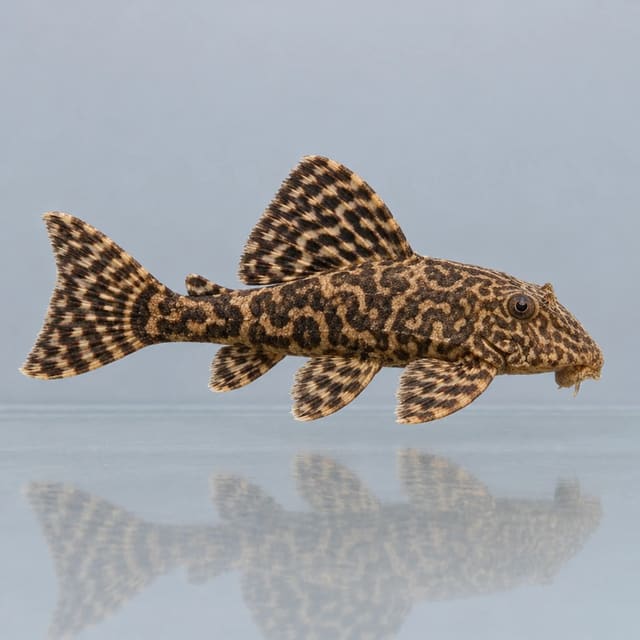
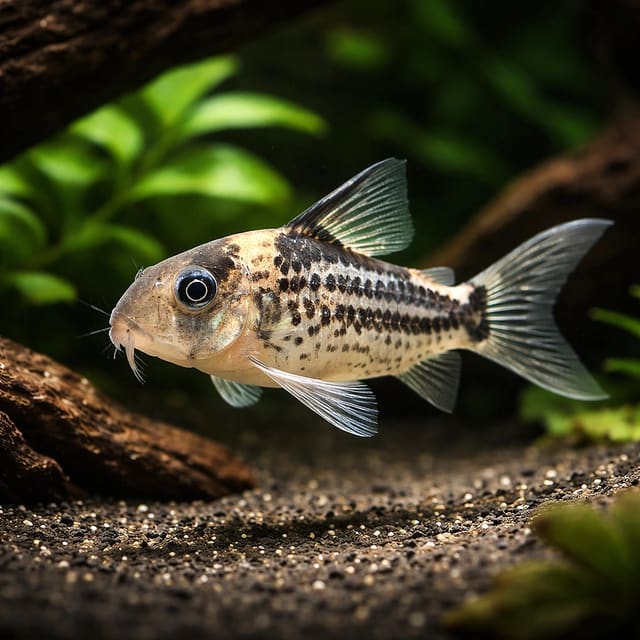
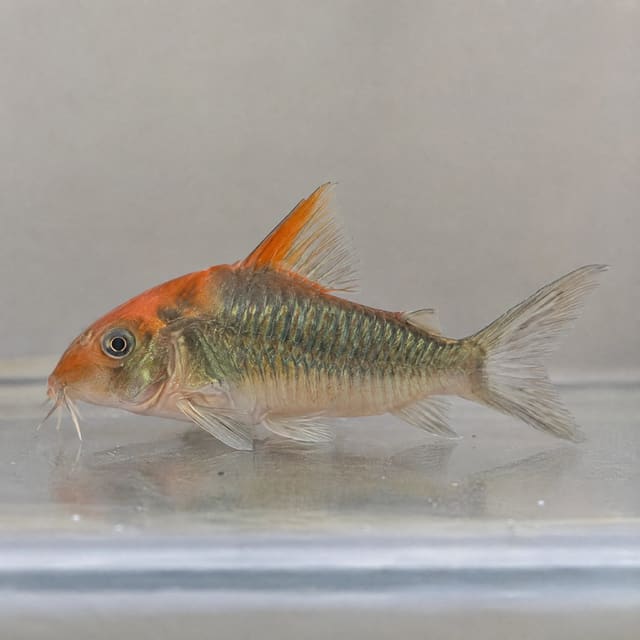
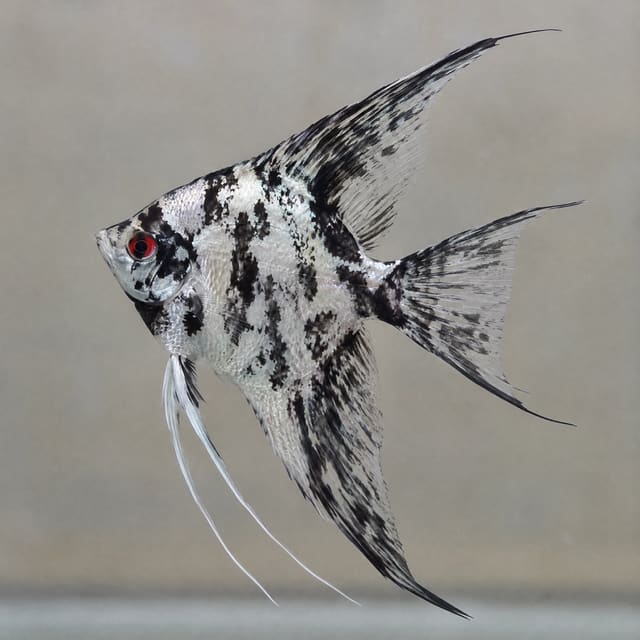
The photographs show the type of fish, not the individual you will receive. Whiptails vary in shade and pattern, and their colour also shifts with the substrate, the lighting and their mood, so expect some difference from the pictures.
Mature males develop small bristles, called odontodes, on the head and on the pectoral fin rays; females lack them. Young fish cannot be sexed reliably, which is why a group gives the best chance of a pair. Before you order, read our delivery and Live Arrival Guarantee information and have the aquarium ready and matured.
Seriously Fish gives a maximum of 155 mm standard length, and FishBase and Planet Catfish give 15.7 cm. Standard length runs from the snout to the base of the tail, so the tail fin and its filament add more. Plan every decision around the adult, not the size that arrives.
The minimum base Seriously Fish recommends is 90 × 30 cm, roughly 81 litres in a 30 cm-tall tank. Floor area matters more than volume for this fish: a whiptail spends its life on the bottom, so a long, wide tank gives it more usable space than a tall one holding the same number of litres.
Place the aquarium away from radiators, windows and draughts. OATA's catfish care sheet recommends this to keep the temperature steady, and a heater is needed all year round. Fit a lid as you would for any tropical tank.
Seriously Fish reports that in the wild this whiptail is almost always found among leaf litter over sandy ground in shallow, flowing water. Copying that is simple and suits the fish well: a layer of soft sand, dried leaves scattered over part of it, a few twisted branches and the occasional rounded stone. Oak and beech leaves are non-toxic and work well, and beech branches are a good choice too.
A well-planted aquarium suits it equally well. Whichever style you choose, avoid very bright lighting, which this species does not appreciate. Floating plants or a lower light setting soften it.
| Area | Purpose |
|---|---|
| Open sand | Foraging space where sinking food lands |
| Leaf litter | Cover, camouflage and a natural surface to graze |
| Wood, rock caves or tubes | Daytime retreats and possible spawning sites |
| Low plants at the sides | Shade and broken sight lines without covering the floor |
Use smooth sand or fine gravel. OATA points out that catfish have sensitive barbels and need a soft bottom to avoid injury, and a whiptail rests its whole underside on the substrate. Replace leaves as they break down and remove any that turn slimy, so the litter adds cover without adding waste.
Leave the front of the tank open enough to siphon. Waste collects in the same sheltered corners the fish likes, and you need to reach it during water changes without lifting every piece of wood.
Seriously Fish and FishBase both give 15–25°C and pH 5.8–7.8, with a wide hardness range (Seriously Fish 1–25 dGH; FishBase up to 20 dH). Seriously Fish adds that it does not do well at higher temperatures. Planet Catfish, however, lists 25–29°C, and the Tropical Fish Hobbyist article suggests about 22–26°C for whiptails of this group. Because the sources disagree, we suggest the overlap: 22–25°C. That suits a heated community tank and stays clear of the high temperatures Seriously Fish warns against.
| Reading | Target |
|---|---|
| Temperature | 22–25°C (published figures run from 15°C to 29°C) |
| pH | 5.8–7.8 |
| General hardness | Up to about 20 dGH; soft to fairly hard water is fine |
| Ammonia | 0 mg/l |
| Nitrite | 0 mg/l |
| Nitrate | No more than 20 mg/l above your tap water |
The ammonia, nitrite and nitrate limits come from OATA's catfish guidance. If your tap water already falls inside the pH and hardness range, use it as it is: a stable value is better than one you keep adjusting with chemicals. Treat every water change with a conditioner, because water companies add chlorine or chloramine that harms fish and filter bacteria. Your water company's postcode checker shows how hard your supply is, our water matcher compares your readings with this fish's range, and our water chemistry guide explains each reading.
Wild fish live in shallow, flowing water, and Monks notes that most whiptails need well-oxygenated water and appreciate a current. Seriously Fish suggests a filter turning over four to five times the tank volume each hour, which for its 81-litre baseline is roughly 325–405 litres per hour. Point the outlet so that it moves water along the tank and ripples the surface without blasting the leaf litter away.
Add fish gradually. OATA explains that filter bacteria must grow each time stocking and feeding increase; stocking too quickly raises ammonia and nitrite and causes "new tank syndrome". Clear water is not proof of safe water, so keep testing even when the tank looks perfect.
In the wild it feeds on aufwuchs, the film of algae and tiny animals on surfaces, and on small aquatic crustaceans. In the aquarium Seriously Fish describes it as omnivorous: it takes sinking dried foods, vegetables such as blanched spinach, courgette and kale, and live or frozen foods such as bloodworm and daphnia. Planet Catfish calls it a confident bottom feeder that quickly accepts prepared foods reaching the floor.
The risk is competition, not fussiness. Seriously Fish warns that it is easily out-competed for food, and Monks makes the same point about whiptails in general: they are slow feeders, so pushy bottom feeders such as loaches and common plecos are poor companions.
Watch the belly. A well-fed whiptail has a gently rounded underside. If it looks hollow after a few weeks, change where and when you feed rather than simply adding more food, which only fouls the water.
Only add the fish to a filtered aquarium that has run long enough to process waste. Check that ammonia and nitrite are zero and the temperature is in range before it arrives. Our first tropical tank guide explains how to mature a new aquarium.
OATA recommends acclimatising with the aquarium lights off: float the sealed bag for about 10 minutes to match the temperature, then add small amounts of aquarium water to the bag over up to 20 minutes, and release the fish with as little bag water as possible. Our guide on how to acclimatise new fish goes through each step.
| Checkpoint | What to do |
|---|---|
| Before arrival | Test the water, lay the leaf litter and caves, and lower the lighting |
| Arrival | Acclimatise, release and leave the lights off for the rest of the day |
| First evening | Offer a small sinking portion after lights-out |
| Days 2–7 | Check where it rests, that the belly stays rounded and that leftovers are removed |
| End of week | Retest ammonia, nitrite and nitrate and do the usual water change |
Expect it to keep still at first. Whiptails rely on camouflage and often lie motionless on the sand or a leaf, which is normal. A fish that hangs at the surface, breathes rapidly or lies on its side is not.
For a biotope tank Seriously Fish suggests small characins, Apistogramma dwarf cichlids, Corydoras and other quiet loricariids, and it adds that the species can live in most communities of peaceful fish. It is not territorial except when spawning. Monks recommends docile midwater fish such as tetras, rasboras and danios, and warns that a whiptail's habit of freezing when threatened makes it an easy target for nippy fish.
| Suits | Avoid |
|---|---|
| Small characins such as many tetras | Fin-nippers such as tiger barbs and serpae tetras |
| Corydoras catfish | Pufferfish |
| Apistogramma and other peaceful dwarf cichlids | Vigorous or aggressive fish, which make it retiring |
| Other quiet whiptails and small loricariids | Loaches and large plecos that compete hard for food |
| Fish comfortable at 22–25°C | Warm-water fish such as discus and cardinal tetras |
Corydoras are a natural pairing: see our Corydoras care guide and the Peppered Corydoras. Our guide to Apistogramma dwarf cichlids covers the gentler cichlid option. For more whiptails, the Small-Scaled Whiptail Catfish and the Gold Whiptail Catfish need similar care. Check any planned mix with our tank mates tool, and browse all catfish and plecos or the wider range of South American catfish.
OATA describes a healthy fish as having clear eyes, undamaged fins, no ulcers or bumps, normal swimming and steady breathing. Learn what normal looks like for your whiptail in the first month, including where it rests and how quickly it comes to food.
| If you see | Do this |
|---|---|
| A hollow belly | Feed after dark, close to its retreat, and review competition from other bottom fish |
| Rapid breathing or hanging near the surface | Test ammonia, nitrite and temperature at once and check the filter flow |
| Frayed fins or a missing tail filament | Watch for a nipping tank mate and remove the cause |
| White spots or fluffy patches | Test the water and seek fish-health advice before treating |
| Scratches or red marks on the underside | Check the substrate and décor for sharp edges |
| Not seen for several days | Look with a dim torch after lights-out and count your fish |
Do not diagnose from a single sign. Many changes in behaviour follow a water-quality problem, so test first, note the readings and any recent changes, and then decide what to do.
Seriously Fish describes R. fallax as an excellent species for a newcomer to breeding loricariids, and says well-kept fish breed quite easily, although the fry can be tricky to raise. Planet Catfish, in contrast, records no aquarium breeding, so results may vary with the fish you have. FishBase notes that the female lays in caves 3–4 cm wide and about 20 cm long, and that the male tends the clutch.
If nothing happens, Seriously Fish suggests a large (50–70%) change with cooler water, repeated every few days, to mimic the rainy season. Fry need constant access to soft food: soaking kale or spinach for a couple of days softens it while keeping more nutrients than boiling.
It is Rineloricaria fallax, a slim armoured suckermouth catfish (family Loricariidae) from the upper Rupununi and Branco river basins of Guyana and Brazil. It lives among leaf litter over sand and is one of the most peaceful catfish kept in aquariums.
About 15.5 to 15.7 cm standard length, measured from the snout to the base of the tail. The tail and its filament add to that, so plan for a fish longer than the standard length suggests.
Seriously Fish recommends a base of at least 90 × 30 cm, about 81 litres. Give more floor space if you keep a group or share the sand with Corydoras.
Seriously Fish and FishBase give 15–25°C and Planet Catfish gives 25–29°C, so the sources disagree. We suggest 22–25°C, which overlaps the general whiptail range in Tropical Fish Hobbyist and avoids the higher temperatures Seriously Fish warns against.
Not reliably. It grazes surfaces, but it also needs sinking foods, vegetables and small frozen foods such as bloodworm. Buy it as a peaceful bottom dweller, not as an algae remover.
Yes. Seriously Fish lists small characins, Corydoras, Apistogramma and other quiet loricariids as good companions. Avoid fin-nippers, pufferfish and fast bottom feeders that take all the food.
Seriously Fish says it breeds quite easily in caves, with the male guarding the eggs, although Planet Catfish records no aquarium breeding. Start with six or more young fish to get a pair.
One live fish of the standard size currently available. Add more to the basket for a group.
No reviews for this item yet. Bought one? Honest reviews only, good or bad.
What customers say about ordering from us
Easy website plenty of info on fish your buying great to pick a time slot
TRACEY DURRANT · 7 Oct 2026
Got some lovely fish thank you
Kevin Mackie · 7 Oct 2026
Reviews of our shop, collected by Judge.me, an independent third-party review collector. Newest first.
Moved by UK carriers licensed to handle live animals
Hand-packed with oxygen bags, poly box, heat pack
Email photos the same day; an optional unboxing video helps us review problems faster — claim terms apply
Klarna & PayPal Pay in 3 at checkout