Advanced
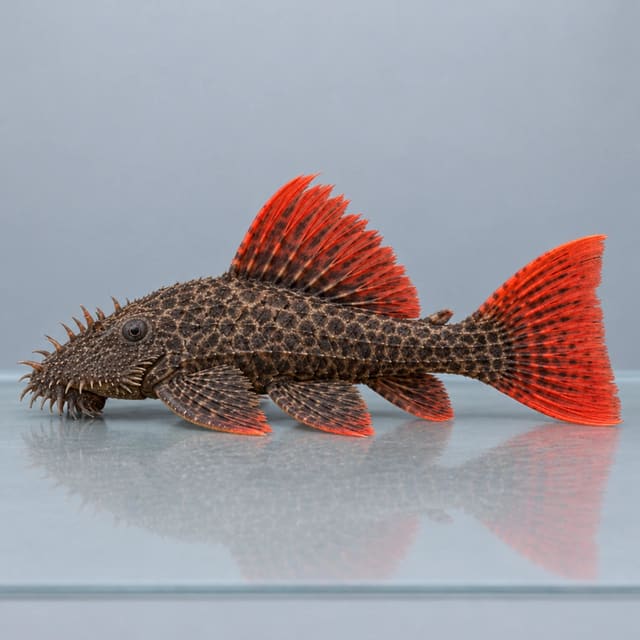
L025 Scarlet Cactus Pleco (Pseudacanthicus pirarara)
pH 6–7.4
£230.89
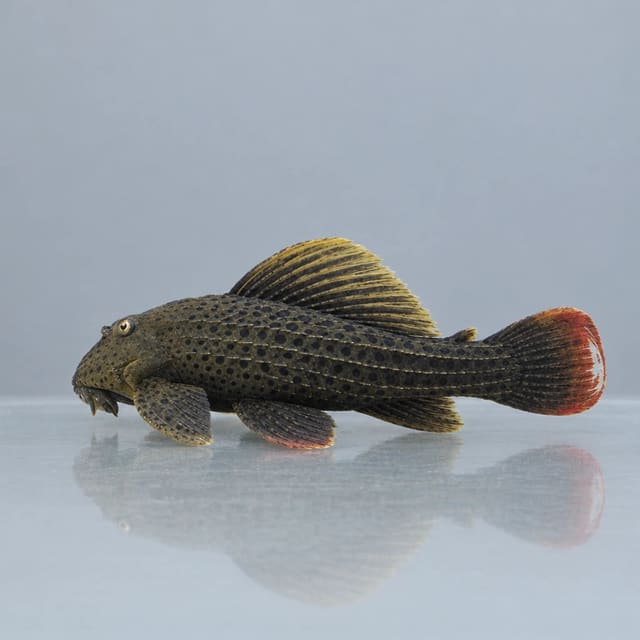
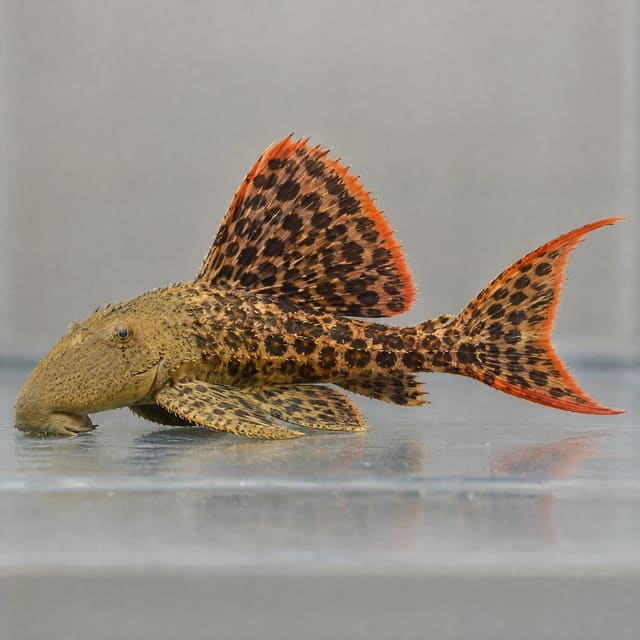
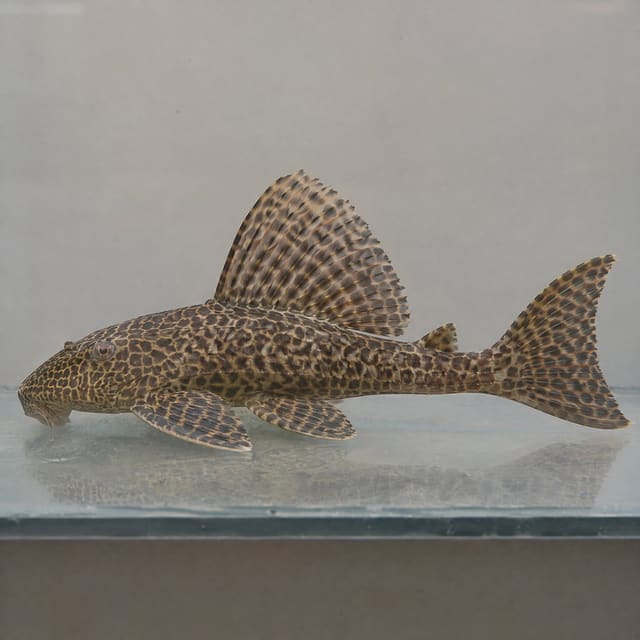
The L600 Leopard Cactus Pleco is Pseudacanthicus leopardus, a large, spiny suckermouth catfish from Guyana and the Rio Branco in Brazil, covered in brown spots with orange-red edges on the dorsal and tail fins. It grows to about 30 cm standard length, needs a tank of at least 180 × 60 cm at 25–29°C, and eats prawn, mussel and other meaty foods. One live fish per purchase.
Pseudacanthicus leopardus
The L600 Leopard Cactus Pleco is Pseudacanthicus leopardus, a large, spiny suckermouth catfish from Guyana and the Rio Branco in Brazil, covered in brown spots with orange-red edges on the dorsal and tail fins. It grows to about 30 cm standard length, needs a tank of at least 180 × 60 cm at 25–29°C, and eats prawn, mussel and other meaty foods. One live fish per purchase.
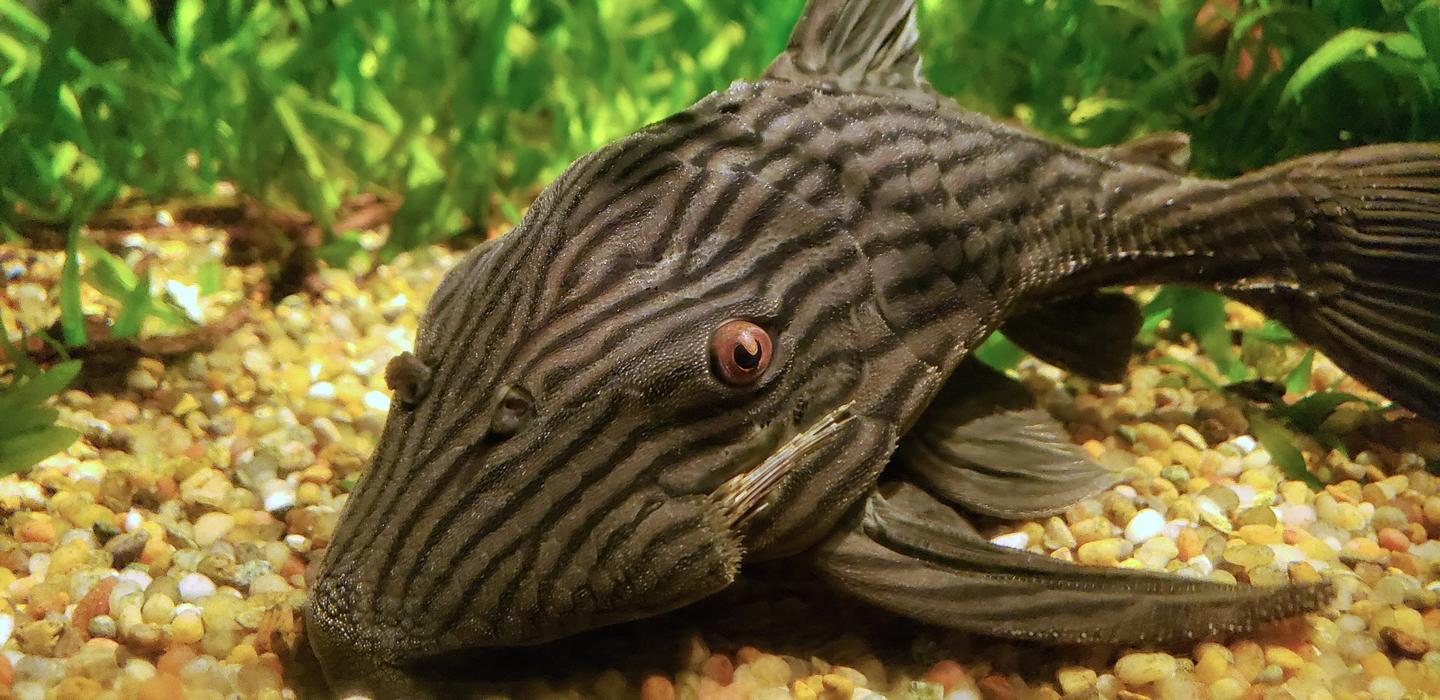
‘Pleco’ is a loose aquarium-trade label, not one species or one care sheet. Before buying, confirm the scientific name or defensible L-number, adult size and measurement method, required footprint, temperature and water, diet, social plan and source. No universal pleco tank size, menu or algae result is honest.
Read the full care guidance when planning conditions for your aquarium.
The L600 Leopard Cactus Pleco is Pseudacanthicus leopardus, a large, heavily armoured suckermouth catfish from the rivers of Guyana and northern Brazil. Its sandy to greenish-brown body is covered from head to tail in round brown spots, and in this form the dorsal and tail fins carry an orange-red edge. German keepers call the genus the "cactus plecos", and the name fits: rows of sharp, pointed odontodes run along the sides of the body, and enlarged odontodes line the edge of the snout. It is a fish to build a big tank around, not one to add to a busy community.
The name Pseudacanthicus means "false Acanthicus", because the genus resembles the giant Acanthicus plecos without being one of them, and leopardus refers to its spots. Fowler described the species in 1914 from the Rupununi River in Guyana. Planet Catfish's April 2021 Catfish of the Month adds that it also lives in the Rio Takutu and Rio Branco across the border in Brazil, and that most of the fish in the trade come from there. Planet Catfish lists the extra trade code LDA073 and the synonym Stoneiella leopardus; FishBase lists the species as Least Concern on the IUCN Red List (assessed 2020).
One point needs to be clear before you buy: "L600" is not an official L-number. Planet Catfish notes that the German magazine DATZ, which issues L-numbers, never assigned it, and the April 2021 article traces it to the Asian hobby around 2003. It is a trade name for the true P. leopardus, and it has stuck.
We also sell the L114 Leopard Cactus Pleco. The two are close relatives, sometimes treated as one fish (ScotCat and Planet Catfish both note that older books equate them), but the specialist sources keep them apart by origin and appearance:
| Feature | L600, P. leopardus | L114, P. cf. leopardus |
|---|---|---|
| Where it comes from | Rupununi in Guyana; exported mostly from the Rio Takutu and Rio Branco | Rio Demini, a tributary of the Rio Negro in Brazil |
| Spots on the head | Clearly smaller than the body spots, getting finer with age | Coarser, about the same size as the body spots |
| Base colour | Light brown to slightly greenish | More brownish |
| Body shape | Relatively flat and elongated | Somewhat taller and more compact |
| Orange-red fin edges | Dorsal and tail fin fringed; some fish also on paired fins | Usually less intense, varying with food and water |
| Published size | 320 mm SL (Planet Catfish) | 240–250 mm SL (Planet Catfish, Seriously Fish) |
Colour varies between individuals and with age, so no single feature settles every fish; head-spot size is the check the sources lean on most.
One purchase supplies one live L600 Leopard Cactus Pleco in the standard size we receive. Sex is not specified. Planet Catfish notes that juveniles show vivid yellow-orange unpaired fins and that, as they grow, the body spots spread further onto the fins, so a young fish will not look exactly like an adult. The gallery images are prepared from a reference photograph and show the type of fish, not the individual you will receive.
Read our delivery and Live Arrival Guarantee policy before you order, and have the aquarium running and tested before the fish arrives.
Planet Catfish gives a maximum of 320 mm standard length, measured without the tail fin, and ScotCat 30 cm. FishBase still lists 15 cm, an older figure from a regional checklist, which is far below what keepers see. Some sellers quote 30–40 cm including the tail; we plan for an adult of around 30 cm standard length with a heavy, wide body.
No profile publishes a minimum tank for P. leopardus itself. Seriously Fish gives a base of 180 × 60 cm, about 648 litres, for the smaller L114, and ScotCat recommends a tank of 6 ft (180 cm) or more for this species. OATA's guidance on very large fish says such species often need well over 500 litres. Treat 180 × 60 cm as the minimum and go larger if you can.
Planet Catfish recommends proportionally sized bogwood and pipes of matching size, and notes the fish does not seem to like rockwork much. Plants are a nuisance: they are not eaten, but a big cactus pleco batters them as it moves. Seriously Fish suggests a tank set up like a flowing river, with sand, fine gravel, water-worn stones and driftwood arranged into nooks and shaded spots that break lines of sight. Planet Catfish adds that the related L114 prefers a dimmer tank.
| Zone | What to use | Why |
|---|---|---|
| Main cave | A large clay or slate cave or a wide pipe the adult can turn in | Its daytime retreat and the centre of its territory |
| Wood | Big, heavy pieces of bogwood with gaps beneath | Planet Catfish's preferred décor; shade and grazing surfaces |
| Floor | Sand with some fine gravel and a few smooth stones | OATA advises soft substrates for catfish; easy to clean |
| Open water | A clear area towards the front | Room for midwater tank mates and for the pleco to move |
| Plants | Few, tough, fixed to wood, or none | Soft plants get flattened |
Fix every heavy piece so it cannot shift: a large pleco can push décor around, and nothing should be able to fall against the glass.
Planet Catfish and ScotCat both give 25–29°C, and FishBase 24–27°C, so 25–27°C sits inside all three. ScotCat gives a pH of 6.0–7.5 and notes that this is a black-water fish that prefers soft, acidic water. For the Rio Demini L114, Planet Catfish gives pH 5.6–7.0 and Seriously Fish 1–15 dGH, figures that show how soft these rivers can be.
| Value | Target | Source |
|---|---|---|
| Temperature | 25–29°C (25–27°C fits every source) | Planet Catfish, ScotCat; FishBase 24–27°C |
| pH | 6.0–7.5, softer and slightly acidic preferred | ScotCat |
| Ammonia and nitrite | 0 mg/l | OATA |
| Nitrate | No more than 20 mg/l above tap water | OATA |
Much of the UK has hard, alkaline tap water. Test your tap water first; our water matcher shows how it compares with this fish's range. In hard-water areas, keepers often blend tap water with reverse-osmosis water to bring hardness and pH down, but change the mix slowly and keep it the same at every water change, because steady water matters more than a perfect number. Our water chemistry guide explains pH, hardness and buffering.
Planet Catfish is blunt: Pseudacanthicus are big, messy carnivores, and like all large plecos they produce vast amounts of waste. Seriously Fish suggests a filter turnover of four to five times the tank volume an hour for the L114, which in a 648-litre tank means two filters of around 1,300–1,600 litres per hour each. OATA advises that very large fish may need several large filters, or even a pond filter, to deal with the solid waste. Our guide to aquarium filtration explains how to size and combine filters.
Planet Catfish describes it as a carnivore although not a predator: prawns and chopped mussel are favourites that promote good growth, with some vegetable food to balance the diet. ScotCat adds cooked mussels and prawns for adults, courgette, frozen bloodworm and tablet food. For the L114, Seriously Fish lists sinking dried foods, frozen daphnia, mosquito larvae, bloodworm and prawn, plus some fruit and parboiled potato, and suggests home-made gel foods that combine vegetables, spirulina and meaty ingredients.
| Part of the meal | Example | How often |
|---|---|---|
| Main seafood | Pieces of prawn or chopped mussel, sized to its mouth | Most evenings |
| Prepared food | Sinking carnivore pellets or tablets | Most evenings, alongside the seafood |
| Frozen food | Bloodworm or other frozen insect larvae | Two or three times a week |
| Vegetable | A slice of courgette, washed well | Once or twice a week |
Feed after the lights go out, near its cave, and give only what is eaten within a few hours. Overfeeding a large carnivore is the quickest way to spoil the water.
OATA advises adding fish only when ammonia and nitrite read zero, and adding them slowly so the filter bacteria can keep up. Spiny catfish travel double-bagged, because odontodes and fin spines can puncture a single bag. Switch off the tank lights, float the bag for about 10 minutes, then add small amounts of tank water over up to 20 minutes before releasing the fish with as little bag water as possible. Our guide to acclimatising new fish covers each step.
| Day | Check | Action |
|---|---|---|
| 1 | The fish moves into its cave or under wood | Keep the lights off or low and leave it alone |
| 2–3 | It explores after dark | Offer a small piece of prawn or mussel near the cave |
| 4–5 | Food is taken | Test ammonia and nitrite; remove leftovers each morning |
| 7 | Belly rounded, fins spread at rest | Start the full weekly routine |
Handle it as little as possible. OATA warns that most catfish carry spines on the pectoral fins and behind the gills, and a cactus pleco's odontodes snag in nets and on fingers. Use a solid container to move it, never your bare hands.
A settled L600 spends the day in its cave or under wood and patrols its territory after dark. OATA lists clamped fins, flicking against décor, shimmying and fast breathing as early warning signs in any fish.
| What you see | What to do |
|---|---|
| Hollow belly | Feed later, closer to its cave, and check other fish are not taking the food |
| Fish out in the open, breathing fast | Test the water at once and increase oxygen and flow |
| Chasing other bottom fish | Add caves and wood, or rehome the other bottom fish |
| Cloudy, smelly water | Cut the portion size and remove leftovers sooner |
| Damaged fins or white patches | Test the water and seek fish-health advice before treating |
For more on large plecos, read our pleco care guide.
Planet Catfish describes cactus plecos as generally peaceful but territorial from a young age, and some large specimens become aggressively territorial and cause problems with other large, night-active fish. ScotCat agrees that small fish can live in a community but adults can become quite aggressive. Planet Catfish's advice is to treat the pleco as the centrepiece and stock medium-sized, preferably omnivorous fish around it; all sizes of barbs work surprisingly well. Keeping it with big, brutish fish such as large cichlids is possible in theory but needs enormous filtration for the combined waste.
| Suits | Avoid |
|---|---|
| Barbs, from medium to large | Other large plecos, including other cactus plecos |
| Medium-sized, preferably omnivorous midwater fish | Other big, night-active bottom fish |
| Robust fish that share 25–29°C | Slow, delicate fish that would be pushed around |
From our range, the Denison Barb and, in a very large tank, the Tinfoil Barb are the kind of barbs Planet Catfish means; check their own water needs overlap before mixing. If you like the cactus plecos, compare the L273 Titanicus Pleco, the giant Adonis Pleco in our Acanthicus plecos category, and the L264 Sultan Pleco, each for its own tank. Browse all our L-number plecos, South American catfish and the full catfish and plecos range.
Planet Catfish records that P. leopardus has been spawned in captivity as a cave spawner, with four breeding reports, and that the closely related L114 has also been bred and matures at about 170 mm standard length. Mature males carry considerably more odontodes on most fin rays, especially the pectorals, while females fill out noticeably compared with the slender males. Breeding needs a pair of adults, a large cave each, and the very large tank described above.
They are close relatives, and some books treat them as one. "L600" is a trade name for Pseudacanthicus leopardus, described from the Rupununi in Guyana and mostly exported from the Rio Branco area. L114 is Pseudacanthicus cf. leopardus from the Rio Demini in Brazil, with coarser spots on the head, a browner base colour and a taller, more compact body.
No. Planet Catfish notes that "L600" was never issued by the German magazine DATZ, which assigns L-numbers. It is a trade name that stuck, and the fish is also listed as LDA073.
Planet Catfish gives 320 mm standard length and ScotCat 30 cm, so expect a heavy fish of around 30 cm or more without the tail. FishBase lists 15 cm, an older figure from a regional checklist.
Plan a long tank of at least 180 × 60 cm. Seriously Fish gives that base, about 648 litres, for the smaller L114, and ScotCat recommends 6 ft (180 cm) or more for this species.
Planet Catfish and ScotCat give 25–29°C, and ScotCat a pH of 6.0–7.5 with a preference for soft, acidic water. Keep ammonia and nitrite at zero and nitrate low with strong filtration and large water changes.
It is a carnivore but not a hunter. Prawns and chopped mussel are favourites, with frozen bloodworm, sinking tablets and some vegetables such as courgette to balance the diet.
Yes, with care. It is territorial from a young age and large adults can be aggressive towards other big, night-active fish. Medium-sized, preferably omnivorous fish make the best company, and Planet Catfish says barbs work surprisingly well.
Carefully. Cactus plecos are covered in sharp odontodes and catch easily in nets. Guide it into a container instead of lifting it in a net, and expect it to travel double-bagged.
Yes. It spawns in caves and Planet Catfish holds four breeding reports. The closely related L114 matures at about 170 mm standard length.
No reviews for this item yet. Bought one? Honest reviews only, good or bad.
What customers say about ordering from us
Easy website plenty of info on fish your buying great to pick a time slot
TRACEY DURRANT · 7 Oct 2026
Got some lovely fish thank you
Kevin Mackie · 7 Oct 2026
Reviews of our shop, collected by Judge.me, an independent third-party review collector. Newest first.
Moved by UK carriers licensed to handle live animals
Hand-packed with oxygen bags, poly box, heat pack
Email photos the same day; an optional unboxing video helps us review problems faster — claim terms apply
Klarna & PayPal Pay in 3 at checkout