Chocolate Cherry Shrimp (Neocaridina davidi)
18–26°C · pH 6.5–8 · 30L

Captive-bred Schultzei black-form Corydoras for peaceful communities. Keep at least six over smooth sand; one quantity buys one unsexed fish in the selected size.
Corydoras schultzei (black form; taxonomic status uncertain)
Black Venezuelan Corydoras are a shoaling species — they need 6+ to feel safe and show their full colour.
Captive-bred Schultzei black-form Corydoras for peaceful communities. Keep at least six over smooth sand; one quantity buys one unsexed fish in the selected size.

Identify the exact cory catfish before choosing care. Our starting policy for many common medium species is six compatible conspecifics, a mature 60 x 30 cm aquarium of about 60 litres, smooth fine sand and measured species-appropriate water.
Maintain these water conditions for optimal health and vibrant colors
The Black Venezuelan Corydoras is the dark, captive-bred Schultzei form that aquarists often call the Black Cory. Despite the established trade name, it is not the orange or red-shouldered Venezuelan aquarium form historically named Corydoras venezuelanus. The current Catalog of Fishes treats both schultzei and venezuelanus as names within the Osteogaster aenea complex, so this is a useful aquarium-trade distinction rather than a claim that they are two accepted species. It is a peaceful, social bottom-dwelling catfish best kept as a same-form group over a smooth sand bed in a mature freshwater aquarium.
One basket quantity buys one fish in the size option you select. The live selector above is the authority for the sizes, prices and availability offered today. Build a group rather than planning to keep a single fish, and compare the selected dispatch size with the adult size before deciding how many your aquarium can support.
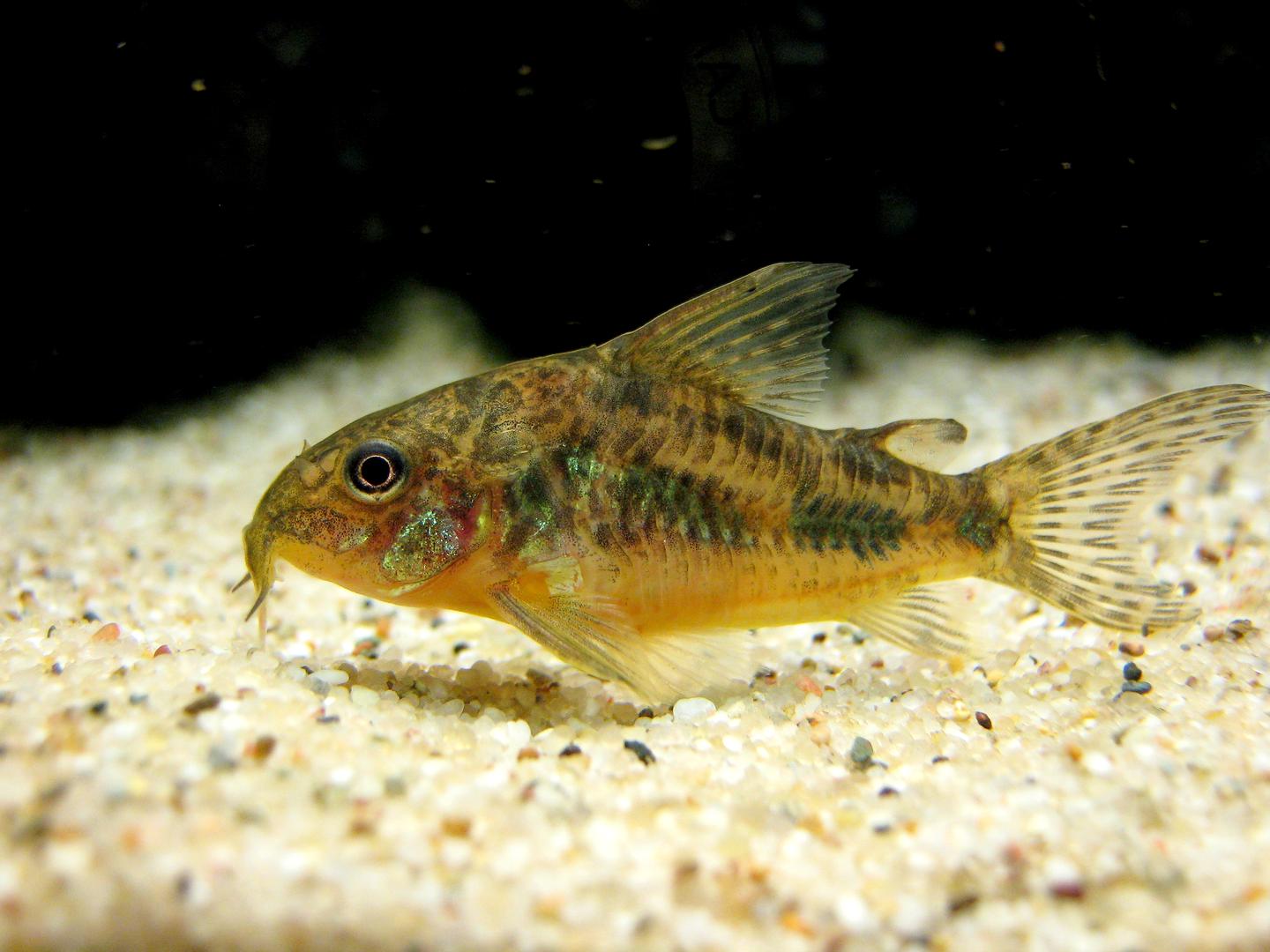
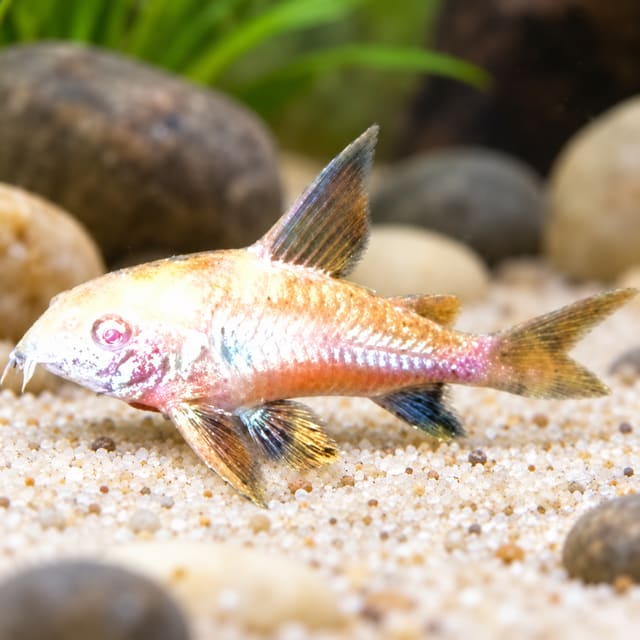
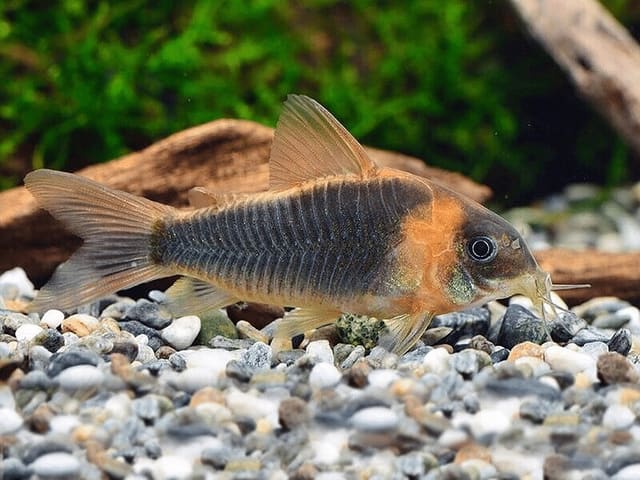
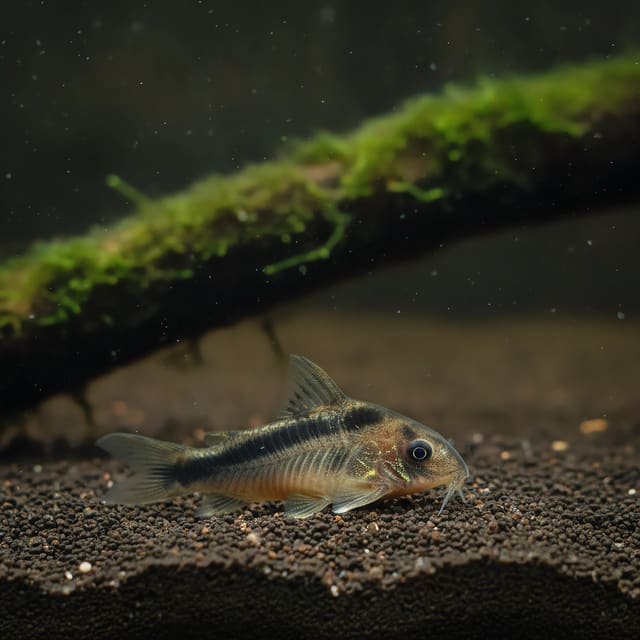
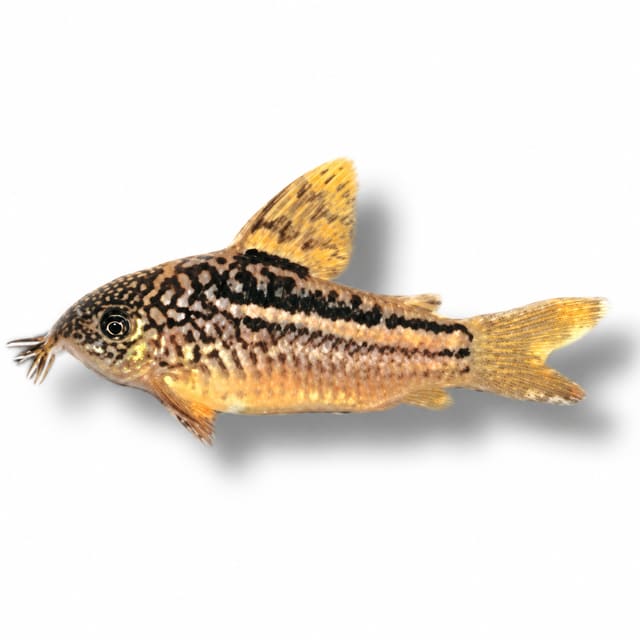
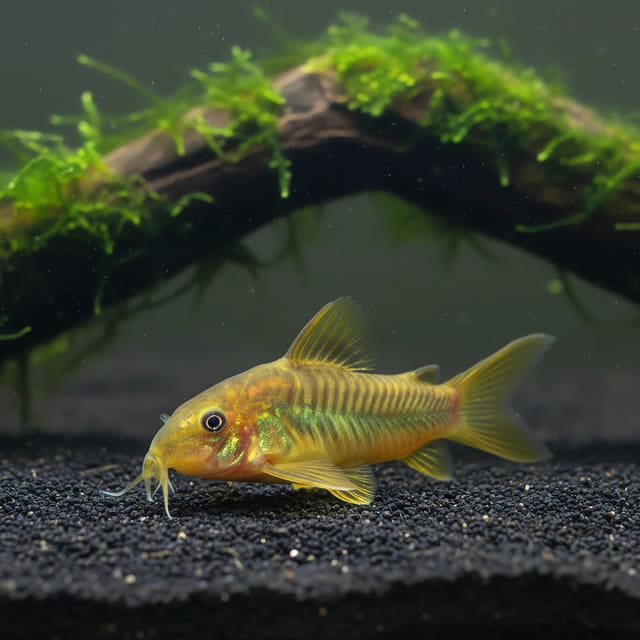
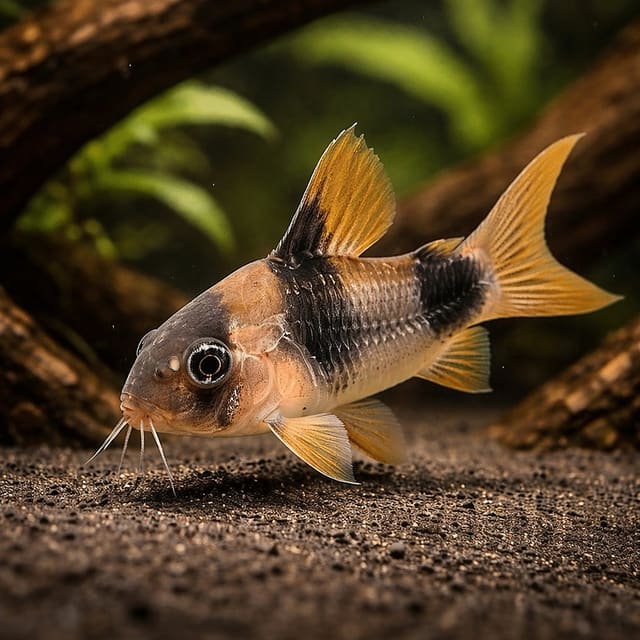
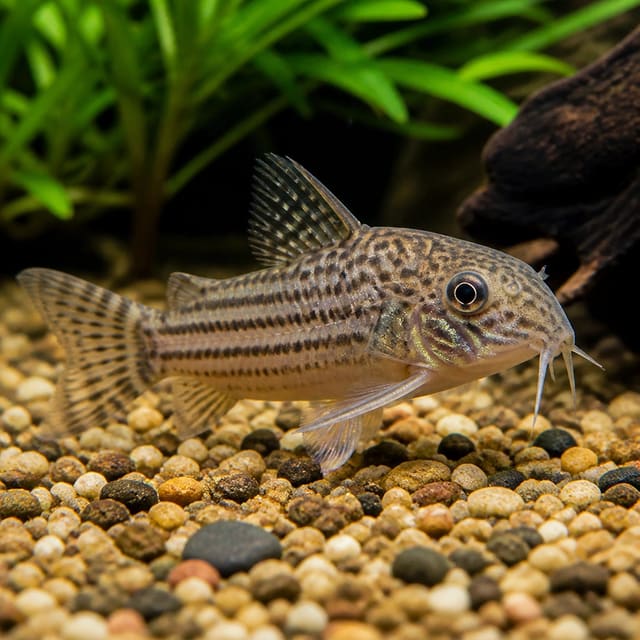
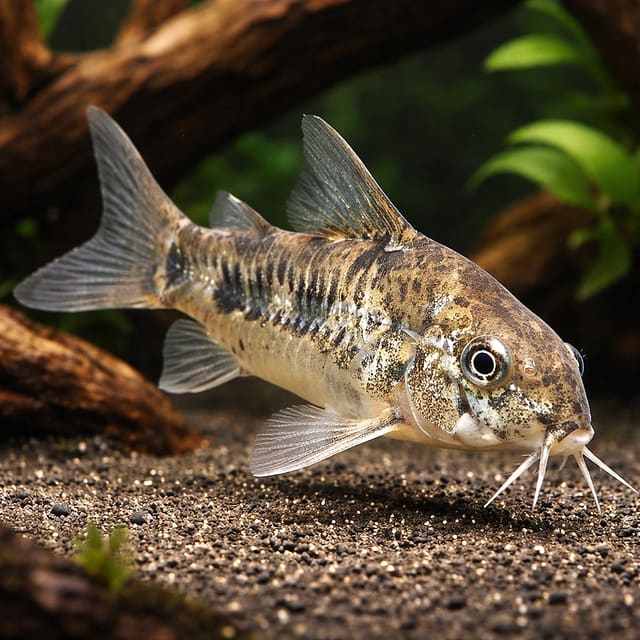
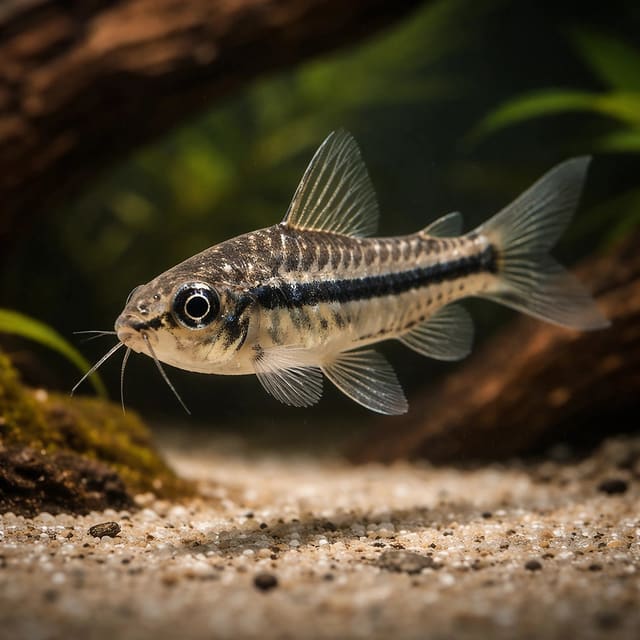
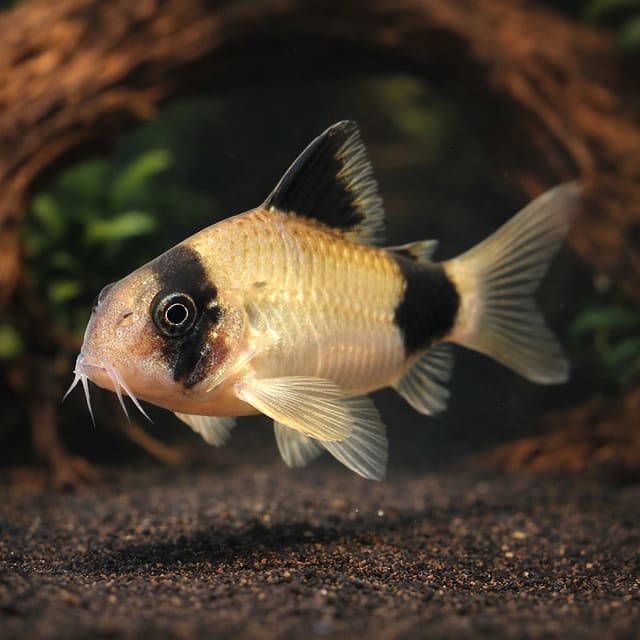
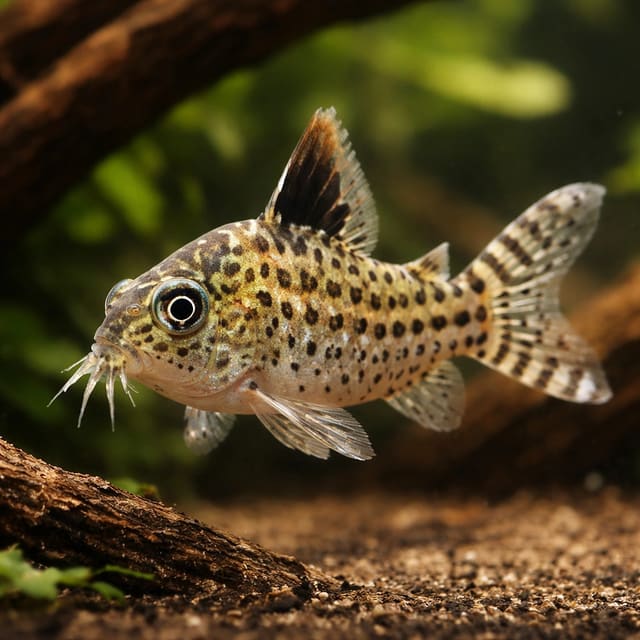
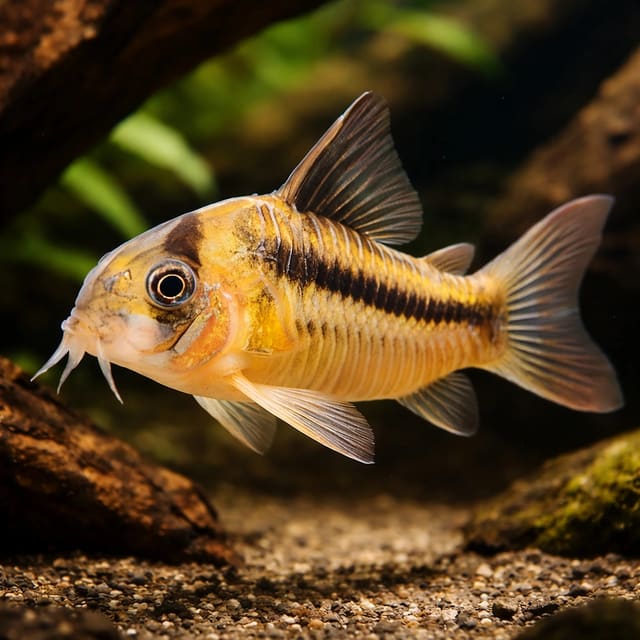
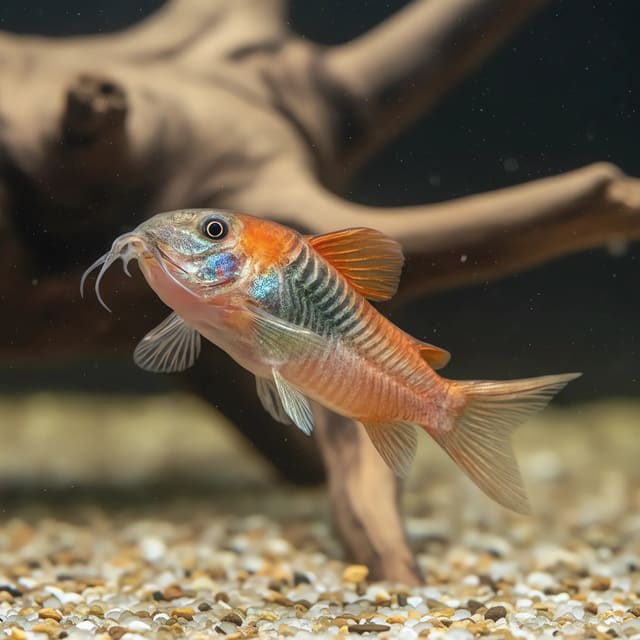
The gallery image is an illustrative Corydoras image and does not show the exact black form supplied. Colour, body fullness, fin tone and markings also vary naturally between individual live fish and with age, lighting and settling time.
| Trade names | Black Venezuelan Corydoras, Black Cory, Schultzei Black |
|---|---|
| Identity used in the hobby | Schultzei black form; often written Corydoras schultzei or, under the revised genus, Osteogaster schultzei |
| Taxonomic caution | The name schultzei has uncertain status and has also been treated within the aeneus complex |
| Adult size | Approximately 6.5-7.5 cm standard length; mature females are usually the broader, larger sex |
| Social need | At least 6 of the same form; 8 or more is preferable when floor space and filtration allow |
| Temperament | Peaceful and social; unsuitable with fish large enough to eat it or persistently aggressive bottom dwellers |
| Conservative care range | 22-26°C, pH 6.0-7.5, roughly 5-15 dGH, with stability more important than chasing an exact number |
| Diet | Omnivorous; feed complete sinking foods plus suitable frozen or live variety |
| Best substrate | Clean, smooth fine sand with open feeding areas |
"Black Venezuelan" is a firmly established aquarium trade name, but it is misleading if read as a claim of wild origin. Specialist cory keeper Ian Fuller documented the fish as a black line developed in Germany from aquarium stock known as Corydoras schultzei. Czech breeders then helped establish and distribute the strain. It is therefore better understood as a selectively bred black Schultzei form, not as a wild black population collected in Venezuela.
This distinction still matters in the aquarium hobby. The Orange Venezuelan Cory is the orange or red-shouldered Venezuelan form historically described as Corydoras venezuelanus, while this product is the line-bred black Schultzei form. Current taxonomy treats venezuelanus as a synonym of Osteogaster aenea, not as a separately accepted species. Even so, the differently identified hobby stocks should not be merged in a care record or breeding project simply because their shop names share the word "Venezuelan". If you are maintaining breeding lines, label the black form accurately and do not cross it deliberately with another Corydoras type.
The scientific name needs a qualification too. Older aquarium sources use Corydoras schultzei. A major revision of the Corydoradinae resurrected the genus Osteogaster for the lineage containing the familiar bronze cory and its close relatives, so newer sources may use Osteogaster schultzei. Eschmeyer's Catalog of Fishes currently records the status of that name as uncertain and notes its historical treatment as a synonym of O. aenea. This listing retains "Schultzei black form" as the useful hobby identity while making that uncertainty visible rather than presenting a disputed name as settled fact.
Well-coloured adults are deep charcoal to black across much of the head, flanks and fins, often with a subtle metallic sheen. Young fish can show warmer red or orange tones in the fins before the black pigmentation becomes stronger. That juvenile colour is part of the strain's development and does not by itself mean the fish is an Orange Venezuelan Cory.
Dark colour is affected by background, substrate, stress, diet, age and aquarium lighting. A newly transported fish may look washed out, hold its fins closer to the body or spend more time under cover. Give it a quiet settling period and judge long-term colour only after normal feeding and group behaviour have returned. No retailer can promise that every individual will have identical black coverage.
Specialist records put adult males at about 6.5 cm standard length and adult females around 7.5 cm standard length. Standard length excludes the tail fin, so total nose-to-tail measurement may appear longer. These figures are useful planning guides, not a guarantee that every captive individual will reach exactly the same measurement.
Adult females are commonly longer and visibly broader through the abdomen when viewed from above, while males tend to be slimmer. Sex differences are unreliable in small juveniles. Unless a size option expressly says otherwise, fish are sold unsexed and a particular male-to-female ratio is not guaranteed.
Corydoras are social fish. A practical minimum is six of the same form, with eight or more giving a stronger opportunity for normal group foraging and resting behaviour when the aquarium has enough floor area and biological capacity. A lone fish may survive, but survival is not the same as providing the social conditions in which the fish can behave normally.
Other Corydoras nearby do not reliably replace a same-form group. Different species may mingle, especially in a community aquarium, yet they still recognise and preferentially associate with their own kind. If you already have two Black Corys, adding four more of the same form is usually more useful than adding one individual from four unrelated species.
Use the quantity control to build toward the group you need, remembering that each quantity is one fish. Stock can change between visits, so the buy box rather than body text is the live record of what can be ordered. If only part of your intended group is available, consider whether your existing fish already provide a suitable group or whether it is better to wait for enough matching fish.
A larger group also produces more waste. Do not treat the social minimum as permission to exceed the aquarium's floor space, filter capacity or mature stocking level. The right number is the intersection of social welfare and available habitat, not whichever number looks most impressive in a shoal.
For bottom-dwelling fish, usable floor area matters more than a tall column of water. FishBase cites a 60 cm minimum aquarium length for the closely related bronze cory, but that should be treated as a lower planning boundary rather than a universal promise that every nominal 60-litre tank can hold a full adult group. Shape, internal footprint, other bottom residents and filter capacity all change what the aquarium can support.
For a group expected to reach 6.5-7.5 cm standard length, a rectangular aquarium around 75 cm long or larger offers a more forgiving feeding and foraging area. A 90 cm footprint is better where the cory group shares the bottom with other fish. Short, tall aquariums can carry a large litre figure while providing little extra substrate, so compare actual dimensions rather than relying on volume alone.
Leave connected open areas where the group can forage together. Dense planting can frame those areas, but an aquarium in which every centimetre of substrate is blocked by stone, wood or rooted plants reduces usable space. Create several feeding positions so shy individuals are not excluded by faster fish.
A secure lid is sensible. Corys routinely rise to the surface to gulp air and return to the bottom; that facultative air-breathing behaviour is normal. Repeated frantic surfacing, persistent hanging at the surface or a sudden change across the whole group can also signal poor oxygen or water quality, so observe the context rather than assuming every surface visit is harmless.
A conservative everyday target for this captive black form is 22-26°C, pH 6.0-7.5 and roughly 5-15 dGH. These are care targets, not claims about an exact wild collecting locality. The related aeneus complex is recorded across a broader chemistry range, but a broad tolerance record is not an invitation to move fish abruptly between extremes.
| Factor | Planning target | Why it matters |
|---|---|---|
| Temperature | 22-26°C | Compatible with many temperate-tropical community fish without pushing the Black Cory toward a permanently hot setup |
| pH | 6.0-7.5 | A practical mildly acidic to mildly alkaline range; avoid rapid correction |
| General hardness | About 5-15 dGH | Moderately soft to moderately hard water suits the captive form; match the source water gradually |
| Ammonia and nitrite | 0 mg/L | Both are toxic and indicate that the biological system cannot yet process the load |
| Nitrate | Keep low and stable | Use test results, stocking and water changes rather than one universal schedule |
| Oxygen | Well oxygenated | Warm water holds less oxygen, and a busy bottom zone benefits from good circulation |
Use a liquid test kit or another reliable method to understand the aquarium's normal pH, hardness and nitrogen cycle. Do not add fish to a system with measurable ammonia or nitrite. There is no honest fixed number of weeks that proves a tank is cycled: a system is ready when testing shows it can process the expected waste load consistently.
Avoid repeatedly dosing products to force an exact pH. A stable value within a suitable range is generally safer than a target number produced by abrupt chemical swings. If your tap water is far outside the working range, plan and monitor any blending or remineralisation process before the fish arrive.
Fine, smooth sand is the preferred substrate because it allows Corydoras to push their snouts into the surface and sift for food without meeting sharp edges. This is both a welfare choice and one of the best ways to see natural feeding behaviour. Keep the surface clean enough that food and waste do not become trapped around the barbels.
Rounded fine gravel can be used only when it is genuinely smooth, easy to clean and does not trap food out of reach. Avoid sharp gravel, crushed stone and abrasive decorative material. Barbel damage is not caused by one factor alone: dirty substrate, persistent poor water quality and unsuitable surfaces can all contribute, so changing the gravel without improving hygiene may not solve a problem.
Plants, wood and smooth stone can provide shade and visual security. Keep every piece stable because the group will investigate underneath edges while feeding. Leave open sand in front of cover rather than making the fish choose between safety and access to food. Broad leaves and shaded margins are useful resting places, while floating plants can soften very bright lighting.
Botanical materials such as leaf litter may be used when they are aquarium-safe and compatible with the desired chemistry, but they are optional. The captive strain does not need a staged "Venezuelan river" display, and presenting one as its natural habitat would repeat the trade-name error. A clean, mature planted community aquarium is a more honest and practical goal.
Use a filter sized for the aquarium's real stocking load, with enough biological media to keep ammonia and nitrite at zero. Moderate circulation is normally appropriate. The bottom should not be a stagnant pocket, but fish should also have calm areas where they can rest without constantly bracing against a jet.
Protect powerful intakes with a suitable guard or sponge, especially while fish are small. Direct the return so it moves surface water and distributes oxygen without blasting the substrate into dunes. Extra aeration can be useful in warm weather, heavily stocked aquariums or during treatment, but it does not replace maintenance or biological filtration.
Base water changes on test results, feeding, stocking and the stability of the system. A regular partial change is usually preferable to neglect followed by a very large corrective change. Match replacement water for temperature and avoid sudden chemistry shifts. Vacuum accessible waste gently, paying attention to food that collects under wood, stones and plant edges.
Rinse mechanical filter media in removed aquarium water when flow declines; do not sterilise all biological media at once. Keep a record of unusual behaviour, water results and recent changes. When several fish act differently on the same day, test the environment before assuming that each has developed an unrelated disease.
These fish are omnivorous bottom feeders, not algae specialists and not a substitute for aquarium maintenance. They may find edible scraps, but relying on leftovers creates two risks: the Corys may receive an incomplete diet, while excess food decomposes in the substrate. Feed them deliberately with food that reaches the bottom in a condition they can eat.
A complete sinking pellet, granule or wafer formulated for omnivorous bottom fish makes a useful staple. Add variety with appropriately sized frozen or live foods such as bloodworm, brine shrimp, daphnia or similar safe cultured foods. The aim is a varied diet, not daily heavy feeding of rich treats.
| Food role | Examples | How to use it |
|---|---|---|
| Complete staple | Sinking omnivore pellets, granules or wafers | Offer portions at several points so the whole group can feed |
| Animal-protein variety | Frozen or live bloodworm, daphnia and brine shrimp | Use clean, correctly sized foods in moderation |
| Plant component | Included in a balanced prepared food | Useful as part of an omnivorous formulation; do not assume visible algae is adequate |
| Observation | Rounded but not persistently swollen abdomen, active group feeding | Adjust quantity to fish condition and remove uneaten food |
Feed after faster mid-water fish have taken their share, or place food in more than one location. Check that timid and smaller individuals actually reach it. Night feeding is not mandatory, but a small feed near lights-out can help in a busy community aquarium when food is otherwise intercepted.
There is no universal "two-minute" portion for every pellet size and group. Start modestly, watch how much is eaten, inspect fish condition and check for residue later. A Cory with a sunken abdomen, weak feeding response or repeated exclusion needs investigation rather than simply more food dumped into the tank.
A settled group spends much of its time searching the substrate, pausing together under cover and making short coordinated movements across the bottom. Individual fish may rest in surprisingly still positions. Periodic trips to the surface for air are a normal physiological ability of Corydoras.
New arrivals may hide, breathe faster or show pale colour while they recover from transport. Improvement should follow quiet surroundings, suitable water and access to food. Persistent isolation, clamped fins, loss of balance, gasping, skin damage, rapid weight loss or refusal to eat deserves prompt attention.
Interpret behaviour at group level. If every bottom fish becomes restless after a filter stops, suspect the environment. If one fish is repeatedly displaced at feeding time, change food placement. If surface trips become far more frequent during hot weather, check oxygen, temperature and water quality rather than assuming the group has suddenly become playful.
Corys can make soft clicking sounds and may dash briefly during social or spawning activity. A darker body is attractive, but colour alone is not a complete health indicator. Use posture, breathing, appetite, barbel condition and interaction with the group together.
The Schultzei black form is peaceful and usually fits a calm community aquarium whose inhabitants share its temperature and chemistry. Suitable companions include many small to medium tetras, rasboras, peaceful livebearers and similarly non-predatory fish. Match adult size and behaviour, not just the juvenile size displayed in a shop.
Avoid fish large enough to swallow a Cory, strongly territorial cichlids that defend the substrate, and aggressive bottom dwellers that prevent the group from feeding. Very fast or boisterous fish can also be a poor match if they consume every sinking food before it reaches the floor. Permanently hot discus-style conditions are not the default choice for this form; choose a Corydoras whose verified range overlaps the planned temperature.
Corydoras have defensive fin spines, but those do not make them safe with predators. A predator can injure itself and the Cory in the same interaction. Do not use them as "cleaners" in a large cichlid tank or as a disposable answer to uneaten food.
Adult ornamental shrimp may coexist in a well-structured aquarium, but tiny shrimplets and other bite-sized animals can be eaten opportunistically. Snails are generally ignored, although Corys may investigate food around them. No community combination is guaranteed; provide enough space, monitor feeding and have a separation plan if a tank mate becomes aggressive.
The Black Cory is a good choice when you want a medium-sized, dark-bodied group for a standard tropical community. It should not be selected only because the current image or a search result looks dramatic. Compare adult size, group needs, temperature and the actual fish identity.
| Fish | Visual character | Planning distinction |
|---|---|---|
| Schultzei black form | Charcoal to black captive-bred strain | Medium-sized same-form group; do not confuse this line with the orange/red-shouldered Venezuelan hobby form, although current taxonomy places both names within the aenea complex |
| Panda Cory | Pale body with bold dark patches | Smaller species that is generally planned for a slightly cooler community |
| Bronze Cory form | Bronze or greenish aeneus-type body | Familiar robust community option; long-fin individuals need especially calm companions |
| Gold Laser Cory | Dark body with a bright metallic dorsal stripe | Distinct collector form; do not buy as a same-form substitute for a Black Cory group |
| Rusty Cory | Warm brown or rusty tones | Another peaceful medium Cory, but a separate species group |
If you already keep a different Corydoras, add enough of that same species before creating a collection of singletons. General Corydoras advice is only a starting point: return to the exact product page for species-specific differences and current availability.
Prepare the aquarium before delivery: test the water, make sure the filter is operating, confirm the group has sheltered and open areas, and have suitable sinking food available. Avoid a major rescape on arrival day. Dim lighting reduces disturbance and helps new fish orient themselves.
Follow the current instructions supplied with your order and use a method appropriate to the difference between bag and aquarium water. Temperature matching is important, but prolonged time in an opened transport bag can also change water chemistry. Work steadily, keep handling gentle and avoid pouring transport water into the display aquarium.
Once released, allow the fish to settle without repeated netting or tapping on the glass. Offer a small feed after they have had time to orient, then confirm that each fish is upright, breathing evenly and able to join the group. Do not expect full black colour immediately after transport.
A separate observation or quarantine system can reduce disease transfer when it is mature, correctly heated and managed without creating another source of instability. There is no single calendar duration that makes every quarantine safe. The quality of observation, biosecurity, testing and response to symptoms matters more than repeating a fixed number of weeks.
Prevention starts with a mature aquarium, stable chemistry, clean substrate, adequate oxygen, a complete diet and a suitable group. Inspect the mouth and barbels when the fish are visible. Shortening, redness or erosion can be associated with abrasive surfaces, trapped waste, poor water conditions or infection and should prompt a full environmental check.
Watch for white spots, abnormal mucus, ulcers, fin damage, persistent redness, swelling, wasting, rapid breathing and loss of balance. These signs can have more than one cause. Test temperature, ammonia, nitrite, nitrate and pH, review recent additions and seek an evidence-based diagnosis before selecting medication.
Corydoras are armoured catfish, not literally scaleless, but they can still react poorly to unsuitable dosing. Use only a treatment labelled for the species and aquarium situation, calculate the true water volume and follow the product or aquatic-veterinary instructions. Do not combine medications casually or assume a half dose is automatically safer.
Move a sick fish only when the hospital system is ready and the transfer itself is justified. Correct environmental causes for the whole aquarium even when one individual shows the first visible symptom. A replacement fish should never be used to conceal an unresolved water-quality or aggression problem.
Mature females are usually larger and broader through the body, particularly when viewed from above. Males tend to be slimmer and may mature at a smaller standard length. Juveniles cannot be sexed reliably from colour alone, and the selected sale size may be too young for confident assessment.
A breeding group needs excellent condition, a balanced diet and stable clean water before any spawning trigger is considered. Corydoras often respond to a water change that resembles seasonal change, but no particular change guarantees spawning. Abruptly chilling or destabilising an aquarium in pursuit of eggs can harm the fish.
During spawning, Corydoras commonly perform the characteristic T-position. The female holds eggs between her pelvic fins and places them on glass, plants or other surfaces. Adults may eat eggs, so breeders often move the eggs or use a dedicated setup. Any moved eggs need gentle circulation and close observation without sudden chemistry change.
Keep the black line correctly labelled. The shared trade history around "Venezuelan" already causes identification problems; crossing this form with bronze, orange Venezuelan or another Corydoras would make future identification harder. This product is not sold as a guaranteed breeding pair, and the sex ratio is not promised.
Fertile eggs gradually develop while opaque or fungused eggs should be separated with clean tools. Hatching time depends on temperature and development; records for the related bronze cory describe hatching over several days rather than at one fixed hour. Keep water clean and oxygenated without directing a strong current at newly hatched larvae.
Newly hatched fry first use their yolk reserves. Begin feeding only when they are free-swimming and ready to take food. Offer very small live or prepared fry foods that match mouth size, then progress to microworms, newly hatched brine shrimp or finely crushed complete food as growth permits.
Small frequent feeds create waste quickly. Use gentle filtration protected by a sponge, remove residue carefully and make small matched water changes. Fry need both food access and water quality; solving one by sacrificing the other is a common cause of losses.
Record parent identity, spawning date and development. Cull no fish casually and distribute juveniles only when healthy, feeding reliably and correctly labelled. Breeding information is included for planning, not as a promise that purchased juveniles will form a productive pair.
Check the live option selector for the dispatch sizes currently offered. One quantity represents one fish, so choose a quantity that complements your existing same-form group or creates an appropriate new group. Prices and stock are deliberately not repeated in this permanent description because the live buy box is more accurate.
Live fish are individual animals rather than identical manufactured units. The selected size is a dispatch band, not an exact measurement to the millimetre. Sex, precise shade, body fullness and fin tone are not guaranteed unless an option explicitly says so.
Tropical Fish Co sends live animals under the terms shown on the current Delivery and Live Arrival Guarantee page. That page is the authority for postcode coverage, dispatch windows, packing, receiving requirements and claim evidence. Read it before ordering and make sure someone can receive the fish on the confirmed day.
You can continue browsing the wider freshwater fish range, but choose tank mates by adult compatibility and shared water requirements rather than appearance alone. If you are unsure whether your aquarium can support the group, ask before dispatch with the tank dimensions, temperature, pH, hardness, current stock and recent ammonia/nitrite results.
Confirm the aquarium is ready for the adult group rather than only the juveniles shown in the selected option. Measure the tank's length and width, count every existing bottom-dwelling fish, and decide where the Corys can feed together without being crowded. A large litre figure does not compensate for a floor covered by territories, ornaments or other catfish.
Keep recent test results and tank details close to hand if you ask for compatibility help. Useful details include aquarium dimensions, temperature, pH, GH, current livestock, the number of each social species, filter type and any recent illness or treatment. "Community tank" or "60 litres" alone does not provide enough information for a responsible stocking answer.
Finally, make sure the identity is the fish you actually want. This is the captive-bred Schultzei black form sold under the Black Venezuelan trade name, not the orange/red-shouldered Venezuelan hobby form. Those are aquarium-trade distinctions within a taxonomically complicated aenea complex, not a claim that each is a currently accepted species. The retained gallery image is illustrative rather than exact, so base the decision on the written identity, selected size and care requirements. If any of those points are unsuitable, choosing a different Corydoras before dispatch is better for both the aquarium and the fish.
Identity and breeding history were checked against Ian Fuller's Catfish Study Group account and his Practical Fishkeeping article. Taxonomic context was checked against Eschmeyer's Catalog of Fishes and published Corydoradinae revision work. General aeneus-lineage biology and recorded measurements were cross-checked with FishBase. Aquarium targets on this page are conservative husbandry recommendations for the captive black form, not a claim that it occupies one documented Venezuelan habitat.

18–26°C · pH 6.5–8 · 30L

23–27°C · pH 7.4–8.4 · 1000L

20–24°C · pH 7–8 · 45L

24–28°C · pH 6.5–7.5 · 2000L

24–28°C · pH 5.5–7 · 60L

18–28°C · pH 6.5–8 · 20L

24–27°C · pH 7.5–8.8 · 150L


22–26°C · pH 6–7.5 · 60L

24–28°C

24–28°C · pH 7.5–8.5 · 500L

28–30°C · pH 5.5–7.5 · 300L

22–26°C · pH 6–7.5 · 150L

22–26°C · pH 6–7.5 · 200L

22–28°C · pH 7–8.5 · 10L

23–27°C · pH 5.5–7.5 · 80L