
 By Hannah Nielsen
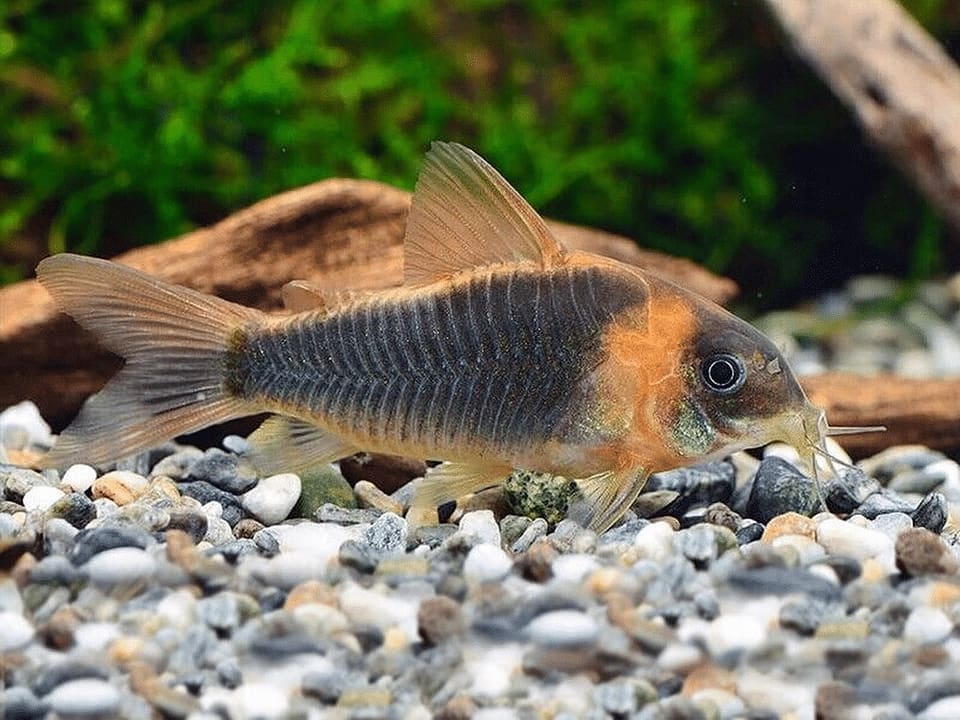
Bronze catfish (Corydoras aeneus long fin)
25–27°C · pH 6–8 · 72L
£4.99
Corydoras · Buying Guide
UK bronze corydoras guide — shoal size, the smooth-sand rule, the 'cleaner fish' myth busted, hard-water care and in-stock cories. Read or listen.
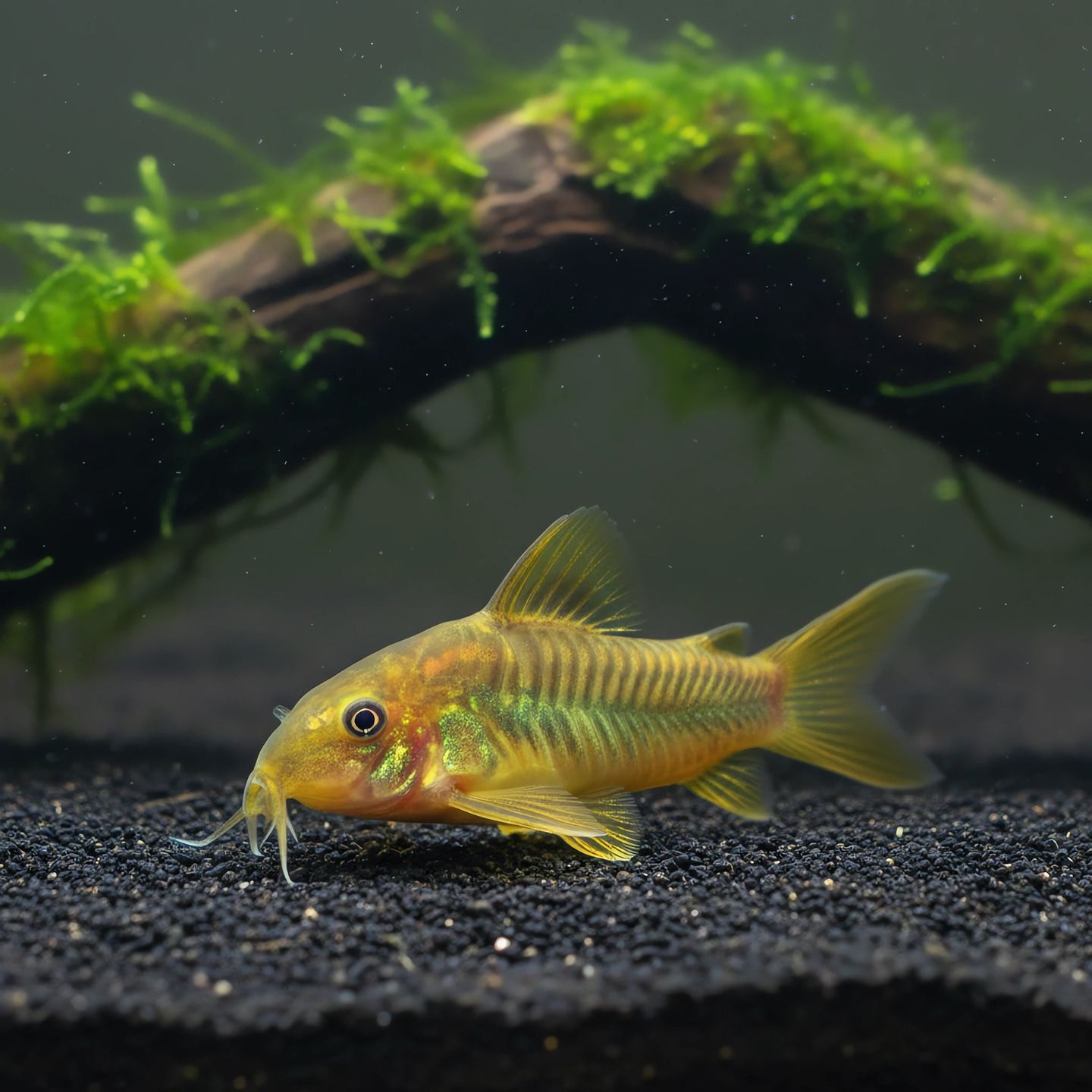
10 products in stock today
Live prices and stock. Every fish covered by our Live Arrival Guarantee.
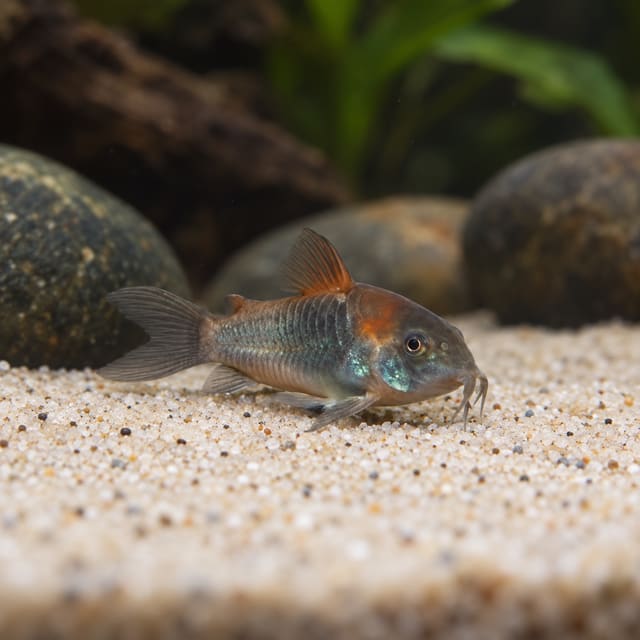
25–27°C · pH 6–8 · 72L
25–27°C · pH 6–8 · 72L
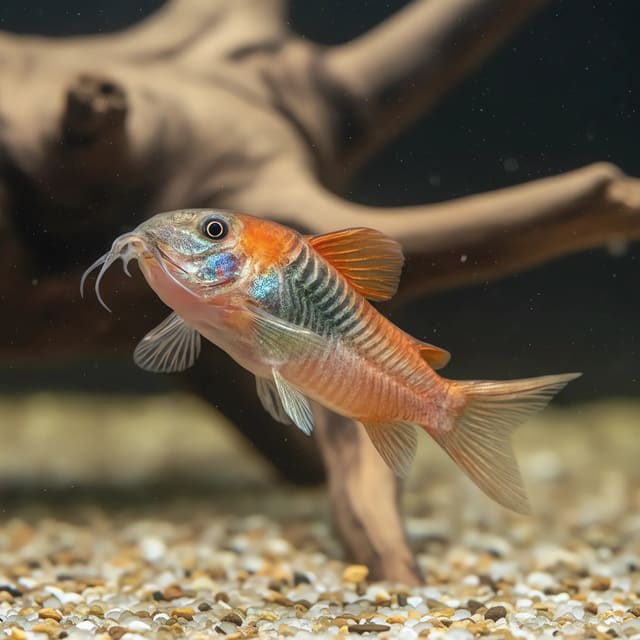
25–27°C · pH 6–8

21–25°C · pH 5–7
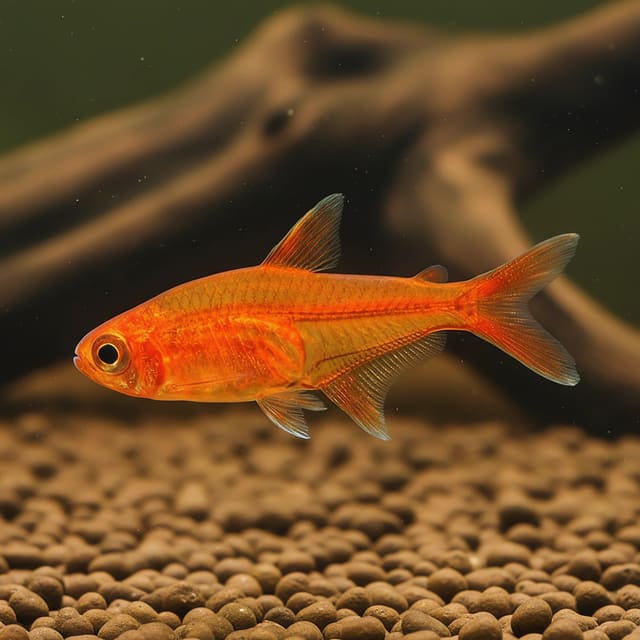
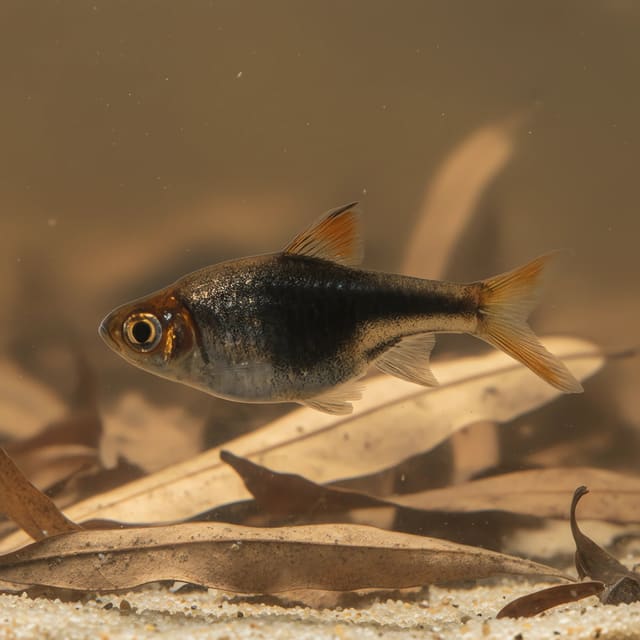
22–25°C · pH 5–7 · 60L
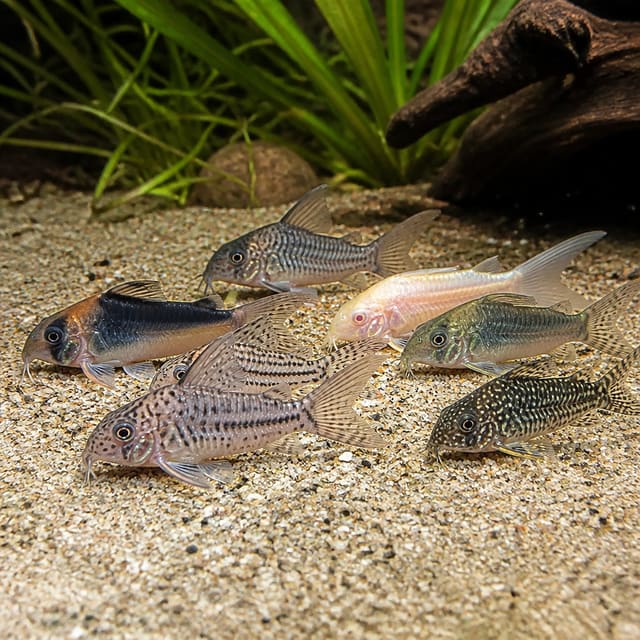
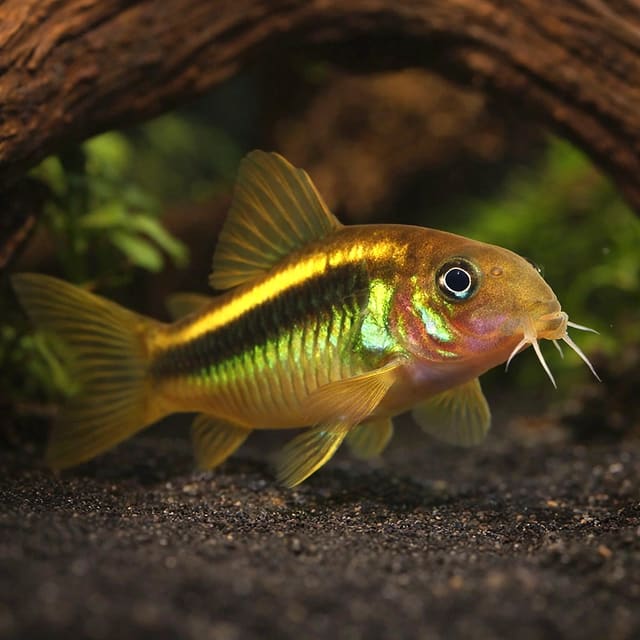
22–27°C · pH 6–8

16–24°C · pH 5.5–7.5 · 243L
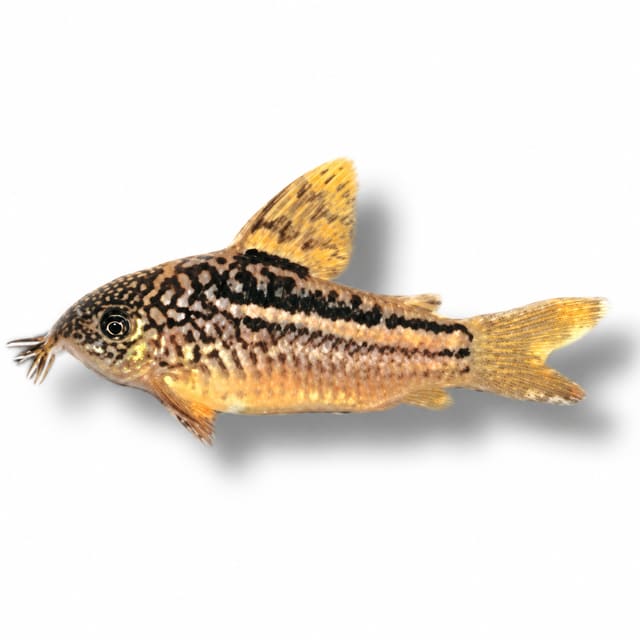
22–26°C · pH 6–7.5
The shaded band shows the range bronze corydoras is comfortable in. Match it to your tap water before you buy.
Our trained assistant knows this bronze corydoras page inside out. Ask it anything — water parameters, tank mates, how many to buy — or have it read the guide aloud while you set up your tank.
You searched "bronze corydoras", and I'd bet good money you've already been handed the worst advice in the hobby: "get a couple of cories, they'll keep the bottom clean." That single sentence is responsible for more slowly starved, barbel-worn, lonely catfish than almost anything else I see.
I'm Hannah Nielsen — I photograph and write our planted-community and shoaling-fish guides from my flat and studio in Cambridge, and a group of bronze cories has lived along the bottom of one of my display tanks for years. They're the first bottom-dweller I recommend to anyone, and the one most often kept badly through no fault of the keeper. This guide is the honest version: how many to buy, what they actually eat, why the substrate under them matters more than almost anything, and which cories we currently have in stock.
"Corydoras" covers dozens of species in the trade, and they are not interchangeable — size and substrate footprint vary a lot. Here's the honest comparison between the bronze and the other cories you'll meet most often.
| What matters | Bronze (C. aeneus) | Albino (aeneus strain) | Panda (C. panda) | Pygmy (C. pygmaeus) |
|---|---|---|---|---|
| Adult size | ~6.5 cm | ~6.5 cm | ~5 cm | ~2.5 cm |
| Look | Coppery-green flank | Pink-white body, pink eyes | White with black patches | Tiny, silver, mid-water |
| Tank size | 60 L+ | 60 L+ | 60 L+ | 40 L+ (nano) |
| Hardiness | Very hardy | Very hardy | Slightly more sensitive | Hardy but tiny |
| Best for | First bottom-dweller | First bottom-dweller | Cooler planted tanks | Nano shoals |
If you want the toughest, most forgiving starter cory, the bronze (or its albino form) is the one. Want something smaller for a nano tank? Go pygmy. All share the same core care — group of six, smooth sand, their own food [4].
The bronze and its close Venezuelan relatives are the everyday workhorses — hardy, sociable and happy in hard UK water. These are our current in-stock bronze-type cories:
The long-fin and Venezuelan-orange forms are the same easy fish underneath — you're choosing a look, not a harder animal. If this is your first bottom-dweller, any of them will do beautifully.
Bronze cories are not a clean-up crew, and they do not live on the food other fish miss. They are omnivores that need their own sinking food delivered to the bottom every day [4]. Treating them as a self-feeding tank gadget is the number-one welfare mistake — you'll see hollow, sunken bellies and a short, unhappy life. Feed them properly and they thrive for years.
Bronze cories are shoaling fish in the truest sense — research on the species shows familiar individuals actively coordinate how the group moves and feeds [3]. The practical upshot: keep six or more of the same species, and ideally more. A pair or trio spends its life hiding; a proper group is out in the open, patrolling the sand together, often resting in companionable little piles.
A six-fish starter shoal in a 60-litre tank is a lovely, balanced setup. Floor space matters far more than height for a bottom-dweller, so a longer, shallower tank beats a tall narrow one every time [4].
For a first cory shoal I run a 60-litre with a smooth sand bed (pool-filter sand or fine play sand, rinsed well), a few smooth pebbles and some Java fern and Anubias on wood for cover. Fill with dechlorinated hard tap water, heater set to 23–24 °C, gentle filter. Add six bronze cories and feed a sinking wafer or some frozen bloodworm to the bottom each evening after the mid-water fish have settled. That's it — no special chemistry, no fuss.
This is the bit most beginner setups get wrong. Cories feed by taking mouthfuls of substrate, sifting out the food, and rooting around with the delicate sensory barbels at the corners of the mouth. On smooth sand this works perfectly. On sharp, coarse gravel — especially in a tank where detritus builds up — those barbels abrade and wear down over time [4], and a cory that can't feel its food can't feed efficiently.
If you're setting up specifically for cories, choose smooth sand. If you've already got rounded gravel and don't want to strip the tank, keep it scrupulously clean and watch the barbels — but for a new tank, sand is the clear winner.
A bronze cory occupies the bottom zone most community fish ignore, which makes it one of the most compatible fish in the hobby. These are companions I keep with cories and trust:
Avoid: large or aggressive cichlids and fin-nippers that could harass a slow, peaceful, bottom-bound catfish [4].
Transcript / what you're seeing (0:00–0:20): corydoras methodically sift the substrate and graze across leaves and wood in a planted tank, occasionally darting up toward the surface. That surface dash is the air-breathing behaviour [2] — normal, not distress. Notice how the fish work the bottom as a loose group rather than scattering: that out-in-the-open, coordinated pottering is the tell-tale of a settled, properly sized shoal.
Sexing is straightforward once they mature: females are noticeably larger, rounder and broader across the body — viewed from above the difference is obvious — while males stay slimmer and a touch smaller. Bronze cories are one of the easier egg-layers to breed at home: a well-fed group often spawns after a cool water change, the females carrying clutches of eggs in a "pouch" formed by the pelvic fins and pressing them onto glass, plants and wood [6]. No intervention is needed to trigger it beyond good food and stable conditions.
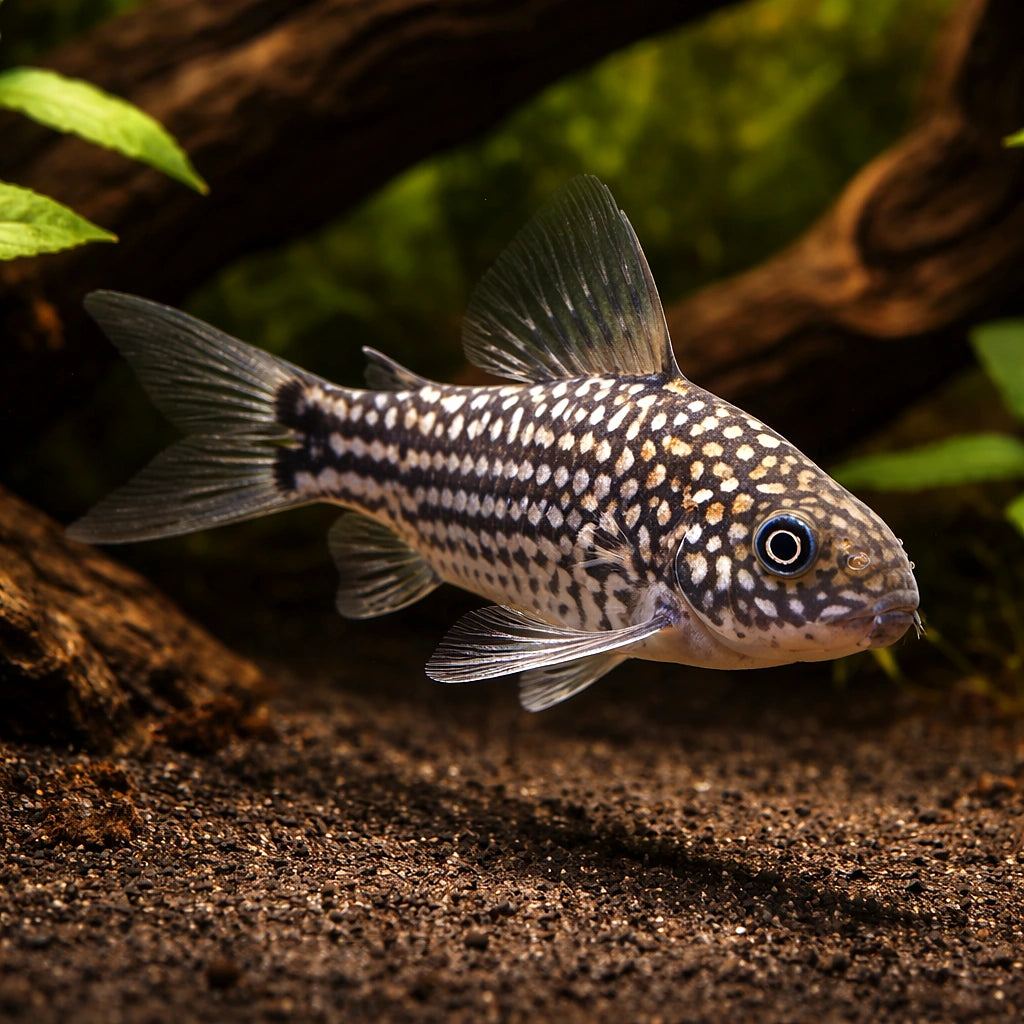
A corydoras feeding with its barbels down against the substrate. This is exactly the rooting behaviour smooth sand protects — and sharp gravel slowly ruins. Product photo · our warehouse.
Whether you buy from us or anyone else, these are the welfare markers that separate a healthy cory from a problem one:
Corydoras have a passionate, knowledgeable UK following, and the best place to learn species ID and source rarer lines is the hobby itself, not a shop shelf:
Bronze cories are hardy and forgiving, but as a bottom-dweller they can't dart to a different water layer to escape a sudden change — so take the drip gently, especially moving into hard UK tap water [5]:
Visual route into the rest of our UK live-fish range.
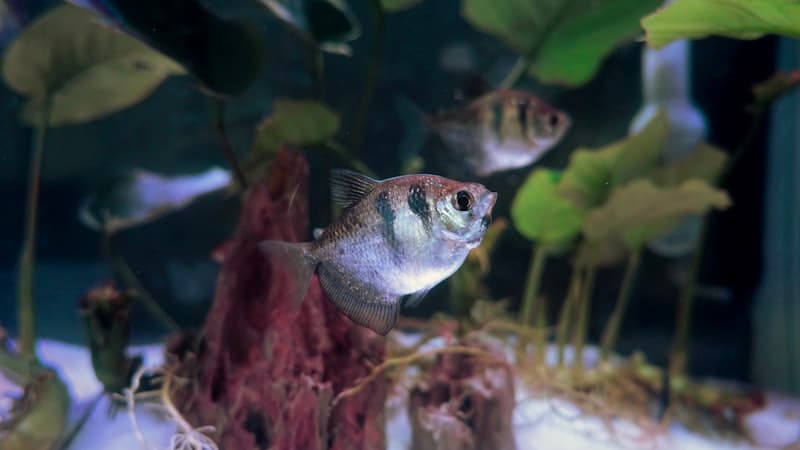
Shop current Corydoras catfish listings in the UK. Compare scientific identity, size and sale unit, with price and availability shown per product.
Corydoras, Bristlenose, L-number plecos, Synodontis and Otocinclus for clean-up and character — supplied and adult size on each listing so the tank fits.
Material factual claims cite the sources below; store policy and cautious inference are labelled in the article. Sources are grouped by type so you can judge their weight at a glance.
Peer-reviewed evidence that C. aeneus is a facultative air-breather, gulping surface air and absorbing oxygen through a modified intestine.
Peer-reviewed study of shoaling and group coordination in bronze corydoras — the basis for the keep-6+ rule.
Used for taxonomy, max size, distribution and water-parameter ranges of Corydoras aeneus.
Independent cross-check of size, water parameters, substrate, diet and group size.
Practical video walk-through of corydoras care — group size, substrate, diet and behaviour.
UK authority confirming much of southern England is hard to very hard water.
Fishkeeping moves fast and we want every guide spot-on. If you think something here is wrong, out of date, or could be clearer, tell us — our team reads every message and updates the page.
Suggest an editShop current Corydoras catfish listings in the UK. Compare scientific identity, size and sale unit, with price and availability shown per product.
Corydoras, Bristlenose, L-number plecos, Synodontis and Otocinclus for clean-up and character — supplied and adult size on each listing so the tank fits.
Corydoras care for UK aquariums: compare popular cory catfish by adult size and temperature, then check tank, group, substrate, food and tank mates.
Pleco fish guide for UK keepers: compare types, adult sizes, diets, tank planning, water and buying checks before choosing a suckermouth catfish.
Planted-Tank Photographer & Writer · 10+ years in the hobby
Hannah is a Cambridge-based aquarium photographer and writer whose planted-tank work has appeared in Practical Fishkeeping and the ADA Aqua Journal digital edition. She writes Tropical Fish Co's deep species guides on schooling tetras and planted-tank communities — always accompanied by her own photography, never stock imagery.