Panda Cory Catfish (Corydoras panda)
22–25°C · pH 6–7.4
From £8.69Some sizes on sale

Gold Laser Cory (Osteogaster sp.) is a small shoaling catfish traded under the aquarium code CW010, sold as one live fish per purchase at 2–2.5 cm, 2.5–3 cm or 3–4 cm. Keep at least five in a mature, filtered community aquarium; OATA suggests at least 80 litres for a shoal of Corydoras-type catfish.
Osteogaster sp.
Shoaling fish: kept in a group they feel safer, stay calmer and show their best colour.
Gold Laser Cory (Osteogaster sp.) is a small shoaling catfish traded under the aquarium code CW010, sold as one live fish per purchase at 2–2.5 cm, 2.5–3 cm or 3–4 cm. Keep at least five in a mature, filtered community aquarium; OATA suggests at least 80 litres for a shoal of Corydoras-type catfish.
Identify the exact cory catfish before choosing care. Our starting policy for many common medium species is six compatible conspecifics, a mature 60 x 30 cm aquarium of about 60 litres, smooth fine sand and measured species-appropriate water.
Maintain these water conditions for optimal health and vibrant colors
The Gold Laser Cory is a small freshwater catfish traded under the aquarium code CW010 and now placed in the genus Osteogaster. Each purchase is one live fish, in a choice of three dispatch sizes: 2–2.5 cm, 2.5–3 cm or 3–4 cm. It is a shoaling bottom-dweller, so the deciding question is space: OATA recommends at least 80 litres for a shoal of Corydoras-type catfish and a group of at least five, in an aquarium whose filter is already mature. Its appeal is a shoal moving together across the floor of a planted community aquarium, and that is the picture to plan for.
| Suits | A mature community aquarium with room for a shoal of five or more small catfish |
|---|---|
| Sold as | One live fish per purchase |
| Sizes supplied | 2–2.5 cm, 2.5–3 cm or 3–4 cm |
| Scientific label | Osteogaster sp., trade code CW010 |
| Group | At least five, following OATA's advice for Corydoras |
| Aquarium | At least 80 litres for a shoal of the smaller catfish, from OATA's catfish sheet |
| Water planning range | 22–27°C, pH 6.0–8.0, 4–18 °dH, from OATA's guidance for freshwater catfish as a group |
| Diet | Omnivorous; appropriate sinking foods, once a day |
The size you select is the size supplied, not the adult size. Whichever size you choose, set the aquarium up for fully grown fish from the start: each needs the same water, the same space and the same company as the adult shoal it will join. Choose the size that suits your plans for the group rather than expecting a larger fish to need less care.
This fish has been sold as Corydoras sp. CW010, and the trade name Gold Laser Cory comes from the aquarium trade. CW010 is a code for a recognisable aquarium form, not a species name. A primary classification paper in the Zoological Journal of the Linnean Society, available through its record on Zenodo, shows the same coded form, written there as CW10, in its Figure 20 as Osteogaster sp. That is why the scientific name on this page stops at the genus.
The exact species has not been identified, so the care advice here follows the genus Osteogaster and its care group. In practice, that care group is the one OATA's freshwater catfish sheet covers, and the sheet names Corydoras directly when it gives advice on shoal size, tank size and diet. Shops and supplier lists often still use the Corydoras label, so you will see both names used for this fish.
One purchase supplies one live Gold Laser Cory of the size you choose, so the quantity in your basket is the number of fish that will arrive. Each size is a separate option, and the product page shows which sizes can be ordered at the time you buy. If you are comparing this fish with other catfish before deciding, our Corydoras collection brings the related fish together in one place.
Sex is guaranteed only when the selected option explicitly states male or female. This Gold Laser Cory listing has no sex-guaranteed option. OATA notes that sexing catfish can be difficult, and young fish of this size are not sold by sex, so a group bought together has no set balance of males and females.
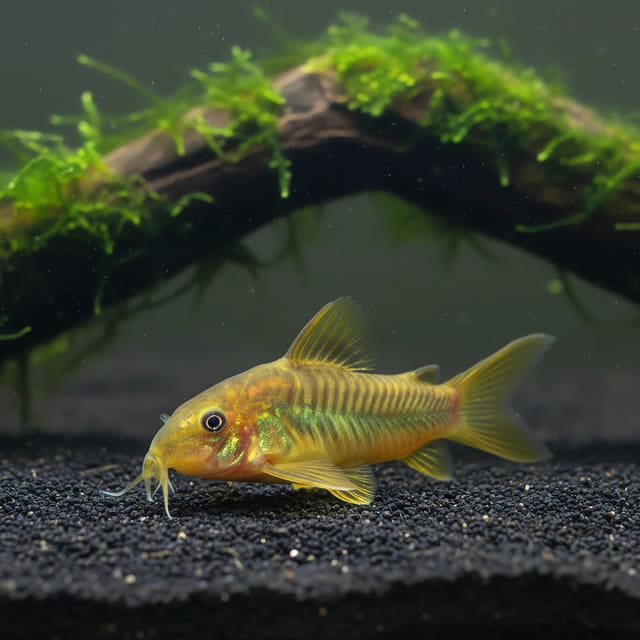
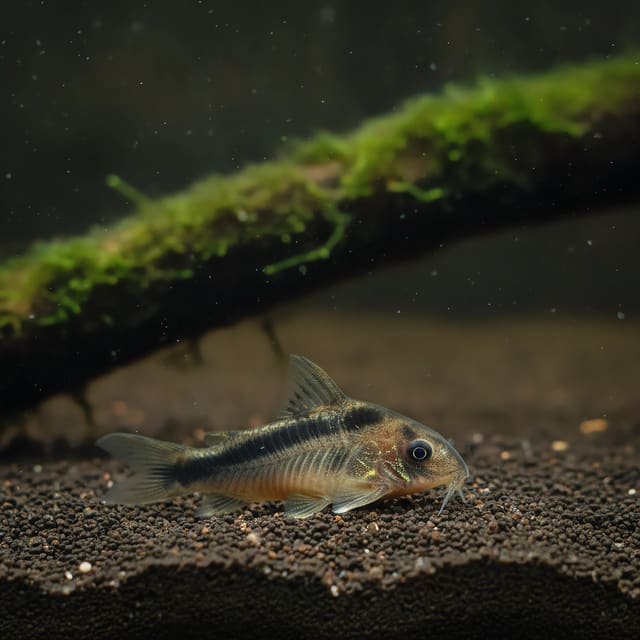
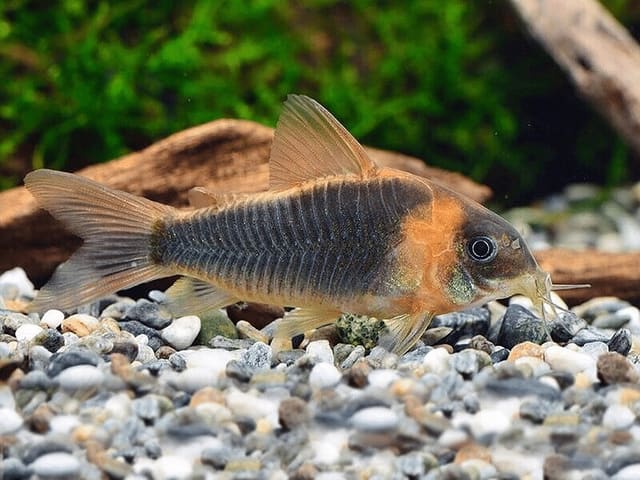
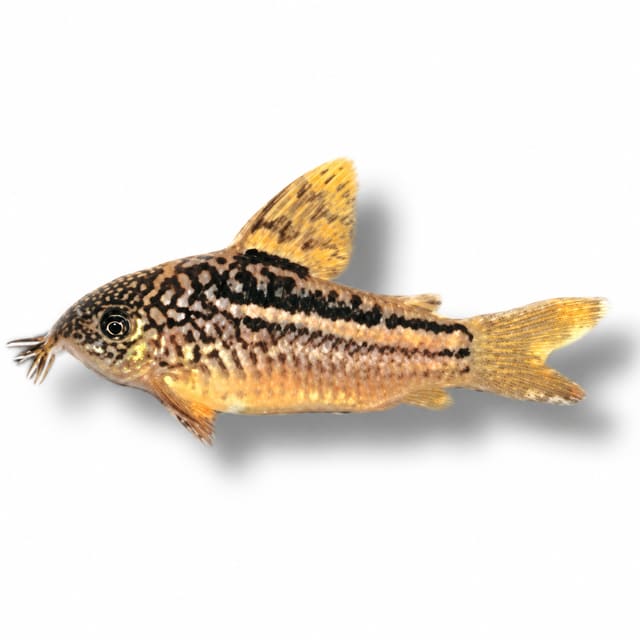
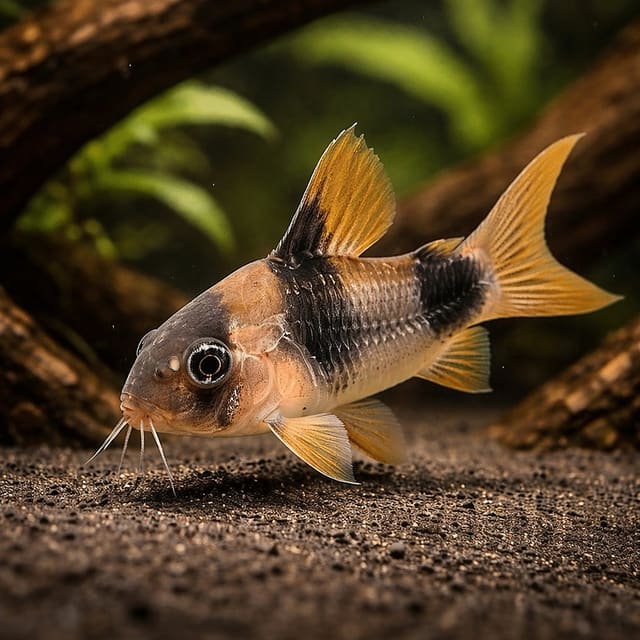
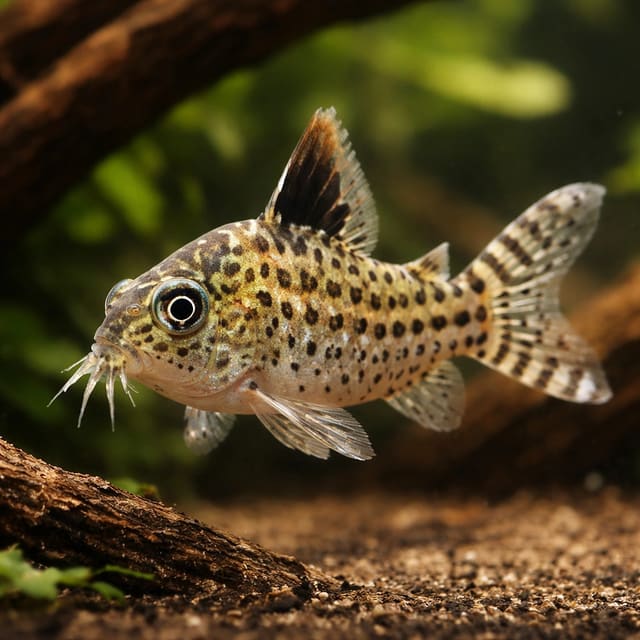
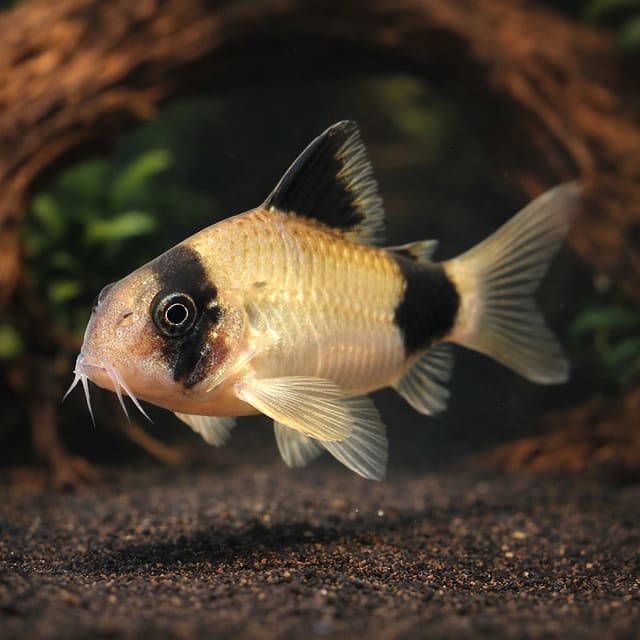
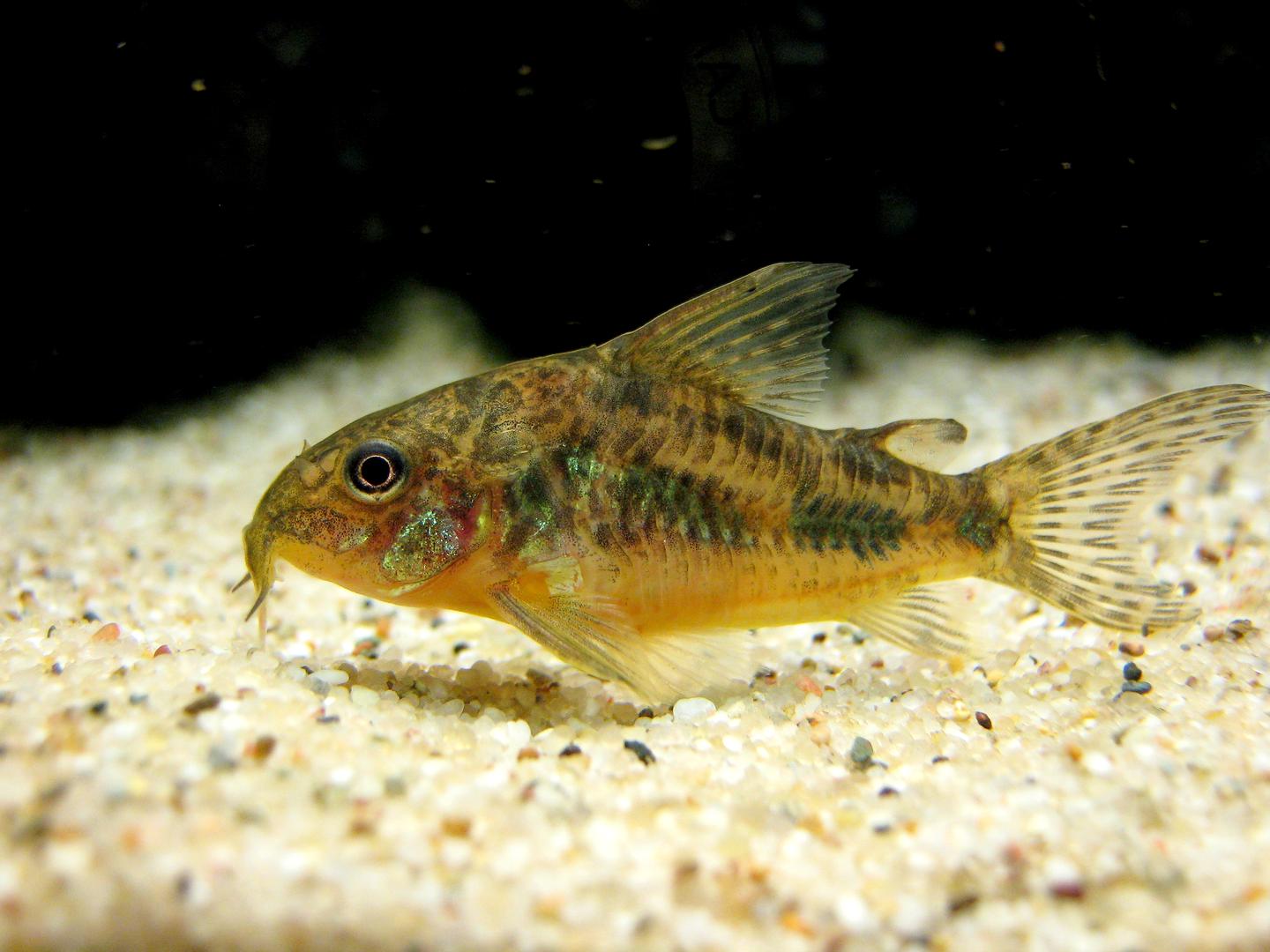
Gallery images have been digitally enhanced to improve image quality. Natural colour, pattern, size and maturity can vary between live animals. The gallery shows the gold stripe along the upper body that gives the fish its trade name, above a dark band and paler underside. Individual fish will differ from the pictures in brightness and markings.
A shoal of small catfish needs floor space, clean water and somewhere to rest out of view. Get those three right before the first fish arrives and the rest of the care becomes routine.
OATA's care sheet for freshwater catfish recommends buying an aquarium as large as is reasonably possible and suggests at least 80 litres for a shoal of the smaller species, such as Corydoras or the smaller plecos. Bigger catfish need much larger tanks, which is one reason OATA asks buyers to check a catfish's needs before purchase. The larger the aquarium, the more stable its temperature and water quality will be.
Think about the bottom of the tank as well as its volume. These are fish that live and feed near the floor, so the area left open once wood, rock and plants are in place is the space the shoal will actually use. A long aquarium with an open front area gives a group room to move and feed together.
A filter is always essential. The RSPCA's guidance on the aquarium environment explains that a working biological filter allows beneficial bacteria to grow and break down waste naturally: ammonia is converted to nitrite, which is also toxic, and then to the safer nitrate. A filter only reaches that state once the bacteria have established, which is why the aquarium should show zero ammonia and nitrite on test before any catfish are added. Our guide to setting up a first tropical tank takes you through filling, maturing and testing a new aquarium step by step.
OATA also advises care when handling catfish, because most have spines. Move a Gold Laser Cory gently and avoid lifting it in a fine net where the spines can catch; guiding it into a container is kinder than chasing it round the tank.
OATA describes catfish as usually undemanding of water chemistry, and its care sheet for freshwater catfish gives the planning ranges below. They are broad guidance for catfish as a group, written to cover many species, so treat them as the outer limits of a stable aquarium rather than a target to move between.
| Measure | OATA guidance for freshwater catfish |
|---|---|
| Temperature | 22–27°C |
| pH | 6.0–8.0 |
| Ammonia | Zero mg per litre |
| Nitrite | Zero mg per litre |
| Nitrate | No more than 20 mg per litre above normal tap water levels |
| General hardness | 4–18 °dH |
| Carbonate hardness | 3–15 °dKH |
OATA's maintenance advice warns that some catfish can be stressed by even the smallest amounts of ammonia. For a fish that spends its life close to the substrate, where uneaten food and waste collect, that makes regular testing and careful feeding part of basic care rather than an extra. If a test ever shows ammonia or nitrite above zero, stop and find the cause before adding more fish or food.
OATA's nitrate figure is relative rather than absolute: nitrate should not exceed 20 mg per litre above your normal tap water level. That means testing the tap water for nitrate as well as the aquarium. If the tap reads 10 mg per litre, for example, the aquarium should stay at or below 30 mg per litre. Weekly partial water changes, careful feeding and a sensible number of fish are what keep it there.
A 22–27°C range is warmer than many UK rooms, so a correctly sized aquarium heater with a thermostat is normally part of the set-up. Pick one steady temperature inside the range that suits every fish in the tank, check it with a thermometer you can read at a glance, and watch for summer heat as well as winter cold.
Measure your aquarium rather than assuming your tap water fits. Our guide to aquarium water parameters explains what each test tells you, and the water parameter matcher lets you set your readings against the planning ranges above, which is especially useful when you are choosing tank mates for a shared aquarium.
OATA describes Corydoras as omnivorous, and it is clear about one common misunderstanding: although catfish have a reputation as scavengers, they should be fed appropriate sinking foods so their nutritional needs are met. A Gold Laser Cory is not a clean-up crew that lives on scraps; it needs its own food, delivered to the bottom where it feeds.
OATA's catfish sheet advises feeding only what the fish can eat within a few minutes, once a day, and taking care not to overfeed. Uneaten food breaks down and releases toxic waste into the water, and on the floor of the aquarium it sits exactly where a shoal of bottom-dwellers spends its time. If in doubt, OATA suggests asking your retailer about feeding levels for the particular fish.
Body condition is a good guide over weeks. A fish that is steadily losing weight, or showing less interest in food, matches two of the warning signs OATA lists, and it is worth testing the water and reviewing how food is reaching the bottom before anything else.
OATA sums this up simply: good husbandry is essential. A steady, repeatable routine protects a shoal far better than an occasional major clean.
All fish vary slightly in behaviour and appearance, but OATA lists changes that help identify a problem before it becomes a real health issue:
If you are concerned about any of your fish, OATA's first step is to test your water quality and then seek further guidance from your retailer. Record what you see with dates and photographs; a clear record makes it far easier to work out whether a change is spreading through the group or affects a single fish.
OATA says that catfish, whatever their size, can live for several years in a well-matured set-up with good water quality. That is guidance for the whole group rather than a promised lifespan for this fish, but it is a fair picture of the commitment involved in keeping a shoal.
Because OATA advises keeping Corydoras in groups of at least five, the real purchase is a shoal rather than a single fish. Plan the finished group first, then work out how to reach it without overloading the aquarium.
OATA recommends increasing the number of fish only slowly, because the beneficial bacteria in a matured filter need to increase every time more fish are added and feeding goes up. Overstocking, or stocking too quickly, can result in “new tank syndrome”: there are not enough nitrifying bacteria to cope with the extra waste, ammonia and nitrite rise to unhealthy levels, and fish can become ill or die. Test the water after each addition and wait for zero readings before the next.
OATA's description of a healthy fish is a useful checklist when new catfish arrive: clear, bright eyes, undamaged fins, no ulcerations or bumps, and appropriate swimming behaviour. Compare each newcomer with that list over the first days, and with the fish already in your group.
OATA's warning is direct: Corydoras kept singly, or in groups that are too small, will often become stressed. If you can only buy part of the shoal at first, keep the gap short and make sure the aquarium can take the full group before starting.
Stress is not always dramatic. The early warning signs OATA lists, such as hiding more than normal, turning paler or darker, losing interest in food or losing condition, are also the ones to watch when a group is too small or the tank does not suit it. If several fish show them at once, test the water first, then look at group size, cover and feeding.
Our team hand-packs every order. Each fish is bagged in pure oxygen and packed in an insulated poly box, with a heat pack added when the weather calls for it. The parcel travels with a licensed live-animal courier on a tracked service, and we email the tracking number and your confirmed delivery date so that you know when to be at home. The full conditions sit on our delivery and Live Arrival Guarantee page.
New arrivals may look for cover at first, so make sure the shelter described above is in place before they arrive. Hold back on food for newcomers until they are moving about, then feed lightly and remove leftovers. Keep testing through the first weeks, especially if the new fish have taken the group to its full size, and compare each fish with OATA's list of healthy signs.
OATA's catfish sheet puts Corydoras among the catfish that make excellent additions to community aquariums, and that is the natural home for a Gold Laser Cory: a shoal working the floor of a peaceful mixed tank. The same sheet is a reminder of why checking still matters. Catfish as a whole range from small and peaceful to large and predatory, some species can be extremely predatory and should be mixed with caution, and OATA advises consulting your retailer before adding catfish to a community aquarium.
| Kind of tank mate | What to consider |
|---|---|
| Peaceful midwater community fish | A shared water range, and whether they eat so quickly that little food reaches the bottom |
| Otocinclus and smaller plecos | Named by OATA as good community catfish, but they share the floor and sinking food |
| Predatory species | OATA advises mixing them only with caution |
| Large catfish | Need much larger aquariums than a Corydoras shoal, according to OATA |
OATA names Otocinclus and smaller plecos alongside Corydoras as catfish that make excellent additions to community aquariums. That does not make every catfish a suitable partner. Plecos and other bottom-dwellers compete for the same floor and food, and larger or predatory catfish belong in a different kind of aquarium altogether. Treat any mixed catfish community as a question of space and feeding as much as temperament.
The simplest successful plan is a mature, planted community aquarium with the Gold Laser Cory shoal on the bottom, peaceful fish that share its water above, and a feeding routine that gets sinking food to the floor. Watch the tank closely whenever a new species is added, and have a plan for moving fish if behaviour changes.
Watch the catfish closely for the first weeks after any new tank mate goes in. Warning signs include the shoal hiding far more than before, fish losing weight because food never reaches them, or damage such as loss of fins, which OATA lists among the signs of a health problem. If you see them, act early: change how you feed, add cover, or move the fish causing the problem to another aquarium.
Its adult length is not something we can confirm, because the fish is known only by an aquarium code and its exact species has not been identified. OATA counts Corydoras among the smaller catfish, so plan the aquarium for a shoal of small adult bottom-dwelling catfish rather than for the size of the fish that arrive.
OATA recommends an aquarium of at least 80 litres for a shoal of the smaller catfish species, such as Corydoras. A larger tank keeps temperature and water quality more stable, and a filter is essential whatever the size. Plan the space for the adult shoal and every other fish you intend to keep, not for the first few arrivals.
Keep a group of at least five. OATA describes Corydoras as shoaling fish and warns that those kept singly or in groups that are too small will often become stressed. Build the group in stages so the filter can keep up.
It can suit a newer keeper whose community aquarium is already mature, with measured zero ammonia and nitrite, and who has room for a proper shoal. The harder parts are planning enough space for five or more and making sure sinking food reaches the bottom, not the water chemistry itself.
OATA describes Corydoras as omnivorous. Despite the scavenger reputation, feed appropriate sinking foods so the fish meets its nutritional needs, giving only what the group can eat within a few minutes, once a day, and removing anything left over. If faster fish share the tank, feed them first so the sinking food reaches the bottom.
OATA's broad guidance for freshwater catfish is 22–27°C, pH 6.0–8.0 and a general hardness of 4–18 °dH, with ammonia and nitrite at zero. These are group-level planning ranges, so choose stable conditions inside them that also suit every other fish in the tank. In most UK homes that temperature range needs a thermostatic heater.
No. OATA names Corydoras among the catfish that make excellent additions to community aquariums. The problems to plan for run the other way: quicker fish can take food before it sinks, and predatory species need caution.
Peaceful community fish that share its water range are the usual choice, and OATA names Otocinclus and smaller plecos alongside Corydoras as good community catfish. Catfish as a group range from small and peaceful to large and predatory, so check any predatory species with care before mixing.
It is hand-bagged in pure oxygen and packed in an insulated poly box, with a heat pack when the weather calls for it, then carried by a licensed live-animal courier on a tracked service. Be in to receive it, record one continuous unboxing video from the sealed parcel to the fish still in the bag, and float the sealed bag for 20–30 minutes before releasing. Any Live Arrival Guarantee issue needs that video and your order number on the day of arrival.
You may meet this fish under several labels in shops and supplier lists. They all point to the same aquarium form, but each tells you something different.
| Name or label | What it means |
|---|---|
| Gold Laser Cory | The trade name used in shops, including ours |
| Corydoras sp. CW010 | The long-standing trade label, still used by suppliers |
| Osteogaster sp. | The genus-level scientific name, following the classification paper's placement of the coded form |
| CW010 or CW10 | Two ways of writing the same aquarium code, which marks a recognisable form rather than a named species |
Trade names can vary from shop to shop, so when you compare fish from different sellers, match the code as well as the common name. It is the simplest way to be sure you are looking at the same form, and to keep a shoal made up of one kind of fish.
These public sources support the identity and care details on this page. OATA's figures cover freshwater catfish as a group and are presented that way above.
No reviews for this item yet. Bought one? Honest reviews only, good or bad.
What customers say about ordering from us
I have a small group of long finned mountain minnows. So was delighted to be able to order ten of this variety to increase the genetics in my tank . The ones I recieved are healthy but it’s to early to give a verdict on wether they are of a long finned type since they are small currently.
Gordon Walker · 23 Sept 2026
100% success travel and "installation". Pleased with quality of purchase. The Siamese fighter a bit "shy" so have not yet seen him at his best yet but looking good. Happy customer. GG
George E Garratt · 21 Sept 2026
Reviews of our shop, collected by Judge.me, an independent third-party review collector. Newest first.