Panda Cory Catfish (Corydoras panda)
22–25°C · pH 6–7.4
From £8.69Some sizes on sale

The Elegant Cory (Corydoras elegans) is a peaceful armoured catfish from the Upper Amazon River basin that reaches 5.1 cm standard length. It suits a mature, filtered community aquarium: keep at least six, with the Seriously Fish and OATA overlap giving 22–26°C, pH 6.0–7.5 and 4–15 dGH. Sold individually in dispatch sizes from 2.5–3 cm to >4 cm.
Adult size is the maximum length this species reaches at full maturity (scientific sources). The livestock you receive will be younger and smaller — pick a size above for the actual shipping size. Product-photo provenance and any image-specific limitations are stated on the listing.
Corydoras elegans
Shoaling fish: kept in a group they feel safer, stay calmer and show their best colour.
The Elegant Cory (Corydoras elegans) is a peaceful armoured catfish from the Upper Amazon River basin that reaches 5.1 cm standard length. It suits a mature, filtered community aquarium: keep at least six, with the Seriously Fish and OATA overlap giving 22–26°C, pH 6.0–7.5 and 4–15 dGH. Sold individually in dispatch sizes from 2.5–3 cm to >4 cm.
Adult size is the maximum length this species reaches at full maturity (scientific sources). The livestock you receive will be younger and smaller — pick a size above for the actual shipping size. Product-photo provenance and any image-specific limitations are stated on the listing.
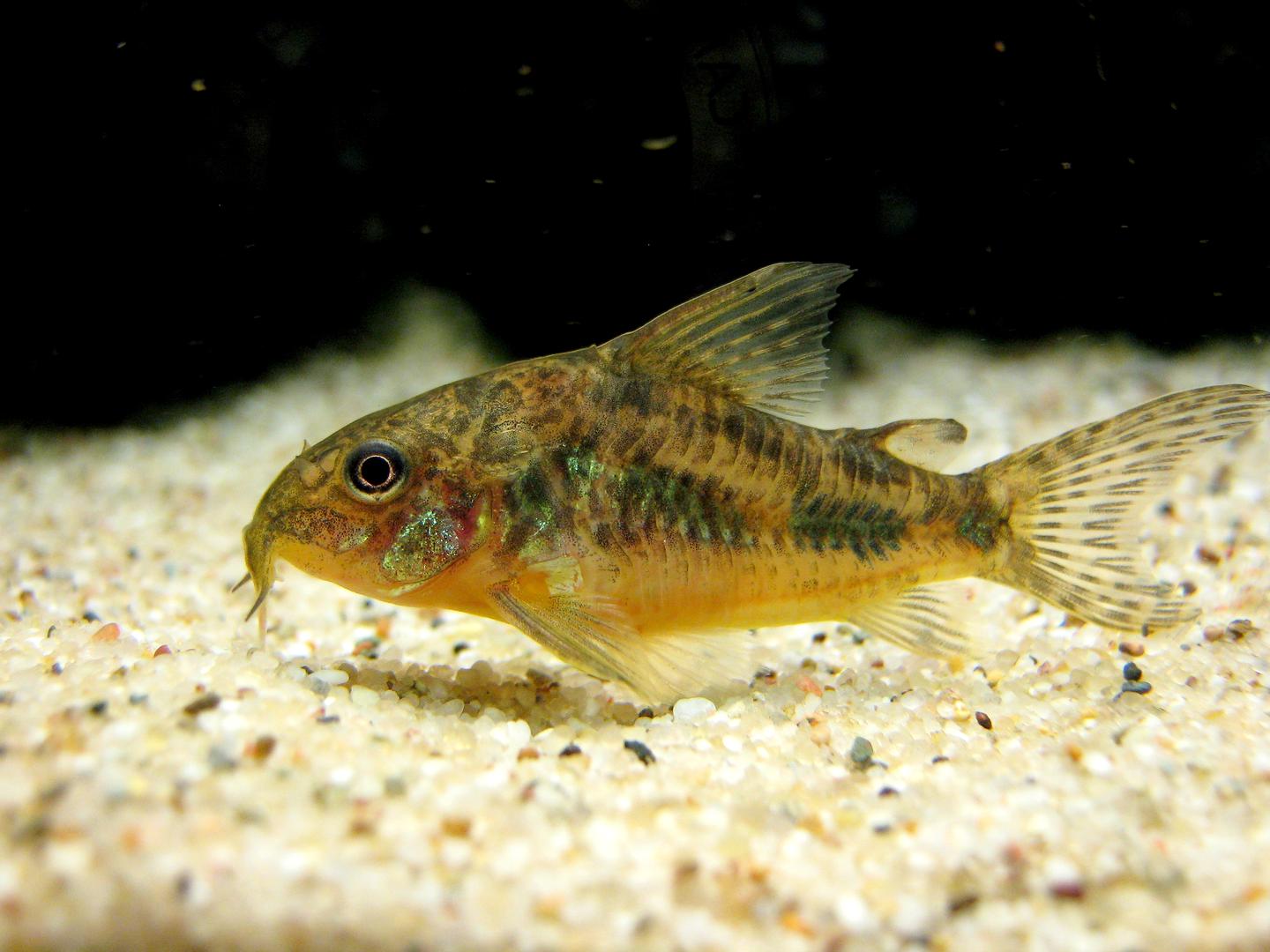
Identify the exact cory catfish before choosing care. Our starting policy for many common medium species is six compatible conspecifics, a mature 60 x 30 cm aquarium of about 60 litres, smooth fine sand and measured species-appropriate water.
Maintain these water conditions for optimal health and vibrant colors
The Elegant Cory (Corydoras elegans) is a peaceful freshwater armoured catfish from the Upper Amazon River basin that reaches 5.1 cm standard length. It suits a keeper planning a mature, filtered community aquarium with room for at least six fish, smooth foraging substrate and water kept at 22–26°C, pH 6.0–7.5 and 4–15 dGH. FishBase records it in the family Callichthyidae. FishBase now lists it as Gastrodermus elegans.
Aquarium planning should allow for the recorded 5.1 cm adult length rather than treating a small dispatch size as its finished size. Seriously Fish lists 5.5 cm standard length and describes this cory as peaceful, gregarious and suitable for a community set-up. It also notes that the species may spend a fair amount of time away from the substrate and form groups in midwater. That makes open lower-water swimming space useful alongside the sandy foraging area.
This is not a solitary clean-up fish. Seriously Fish advises a group of at least four to six, while OATA advises at least five for Corydoras as a group. Plan for at least six Elegant Corys so the aquarium meets the upper end of the species guidance and the group can forage, rest and move together. A larger group may be considered only where the aquarium’s floor area, filtration and other occupants leave sufficient capacity.
| Suits | Not suited to |
|---|---|
| A mature, filtered community aquarium | An aquarium without an established biological filter |
| A group of at least six Elegant Corys | Solitary keeping or a group that is too small |
| Fine sand or scrupulously clean rounded gravel | A layout without accessible foraging space |
| Peaceful companions that pass compatibility screening | Companions that prevent the group from feeding or resting |
| Routine water at 22–26°C, pH 6.0–7.5 and 4–15 dGH | An aquarium outside the shared routine water range |
FishBase describes the wild animal as freshwater, demersal and capable of facultative air breathing. A brief, purposeful visit to the surface can therefore fit its biology. Sustained surface hanging, changed gill movement or unusual swimming needs a water-quality check because OATA identifies those changes as possible signs of a health problem.
One purchase supplies one animal of the selected option. Use the live size selector to choose the dispatch label that suits your stocking plan: 2.5-3 cm, 3 - 3,5 cm or > 4 cm. The size you select is the size supplied, not the adult size.
Compare every choice with the same adult planning figure. A smaller size still needs the group, aquarium capacity and long-term water conditions described here. A larger dispatch size is not a different species, a promised life stage or an indication of sex. Select by the size you are prepared to receive and plan the aquarium around adult group needs from the outset.
Sex is guaranteed only when the selected option explicitly states male or female. This Elegant Cory listing has no sex-guaranteed option.
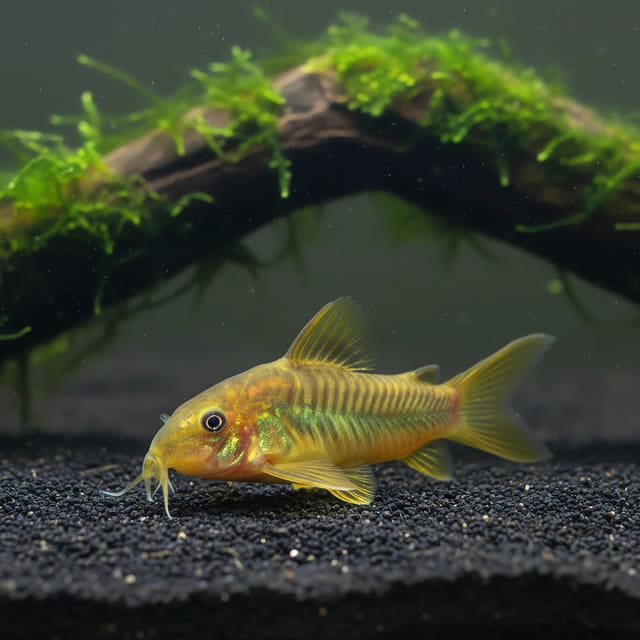
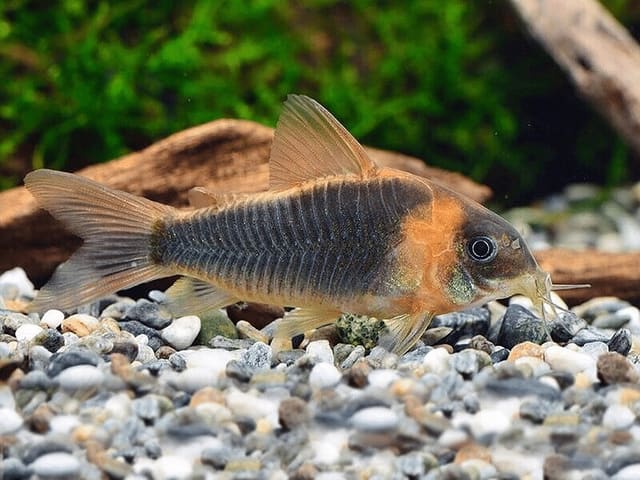
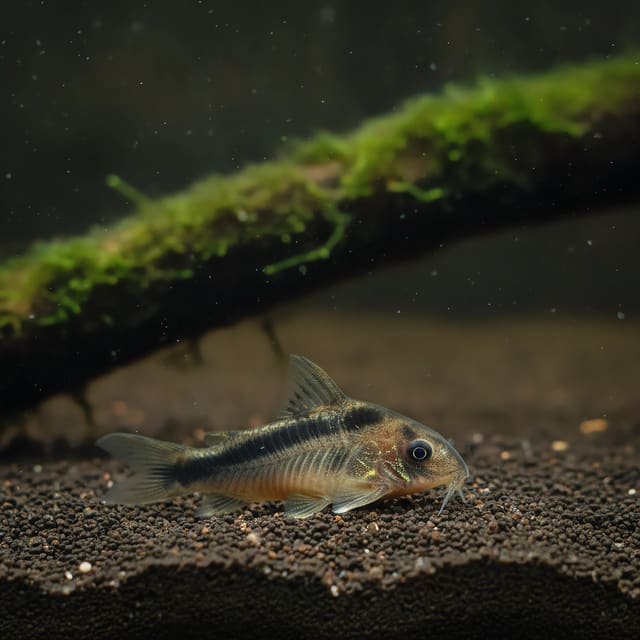
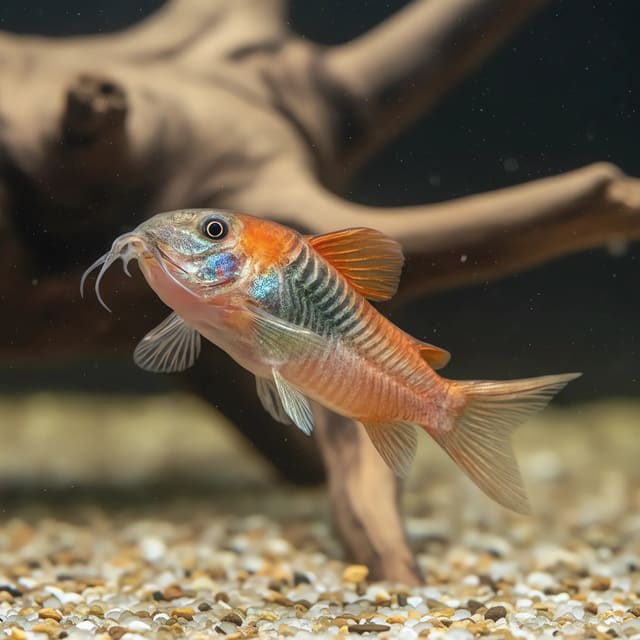
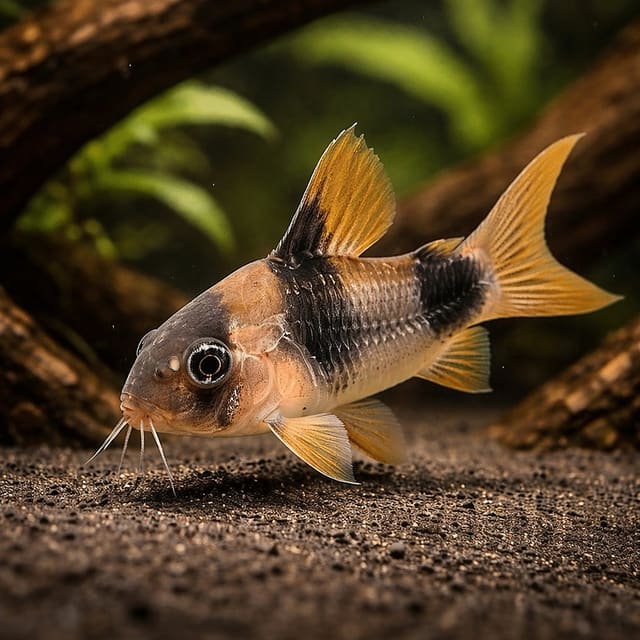
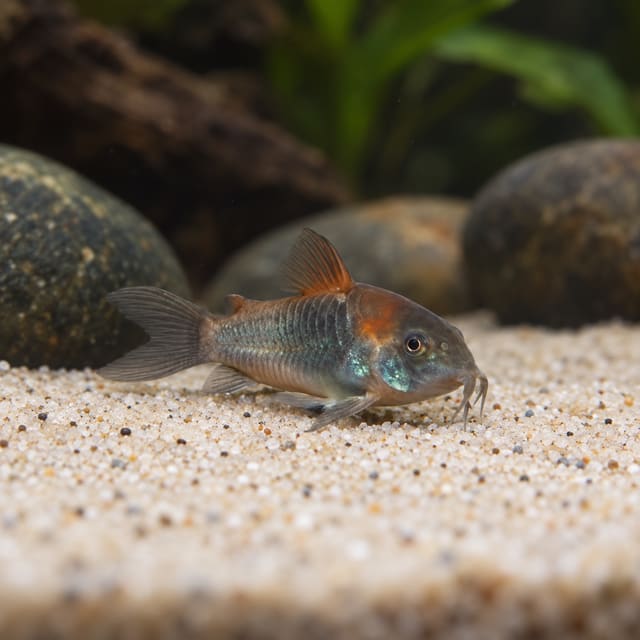
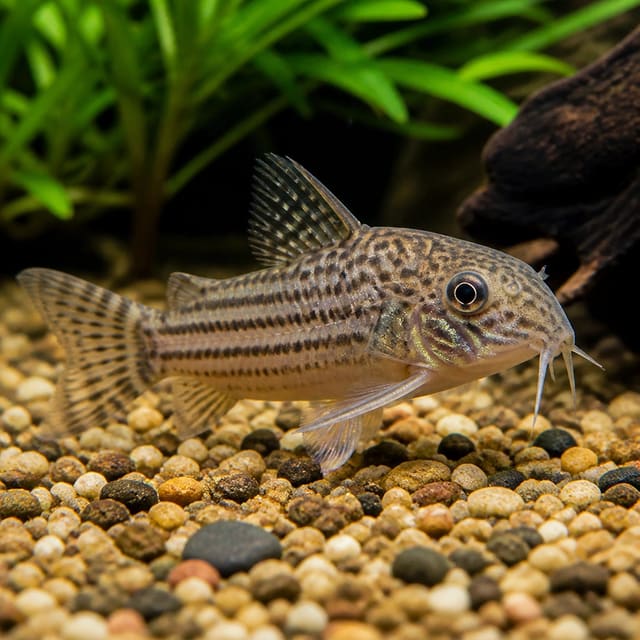
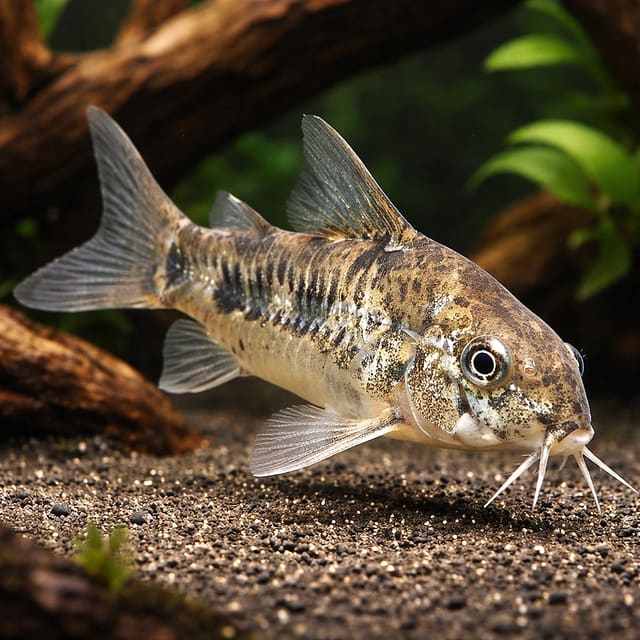
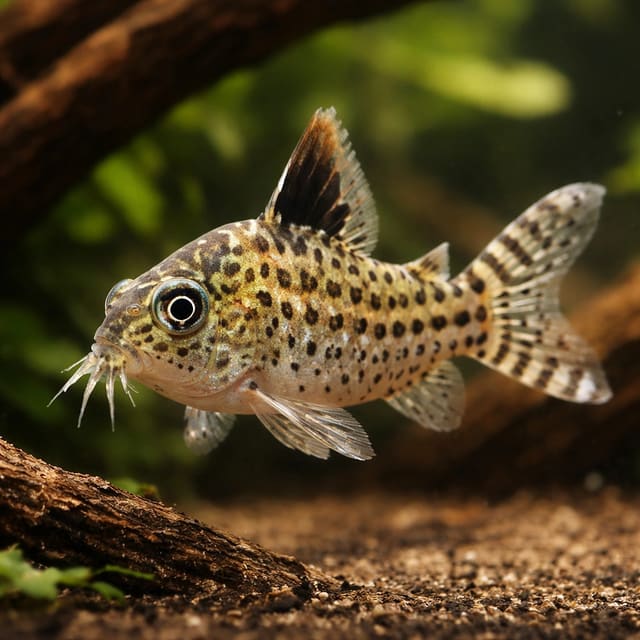
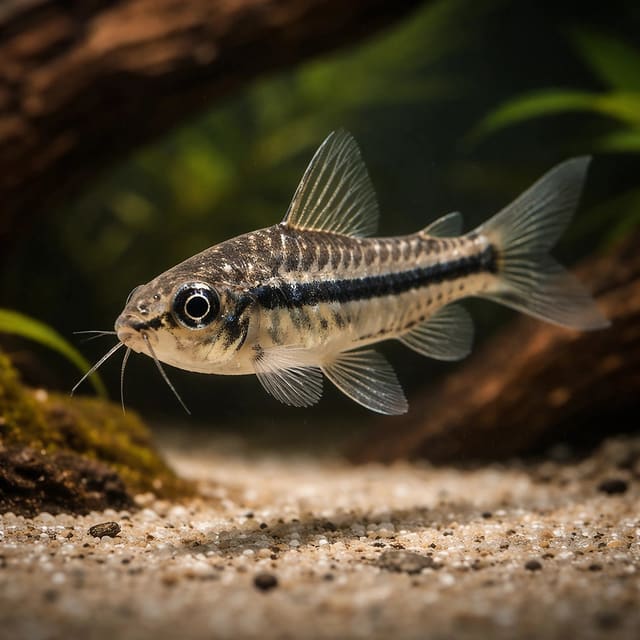
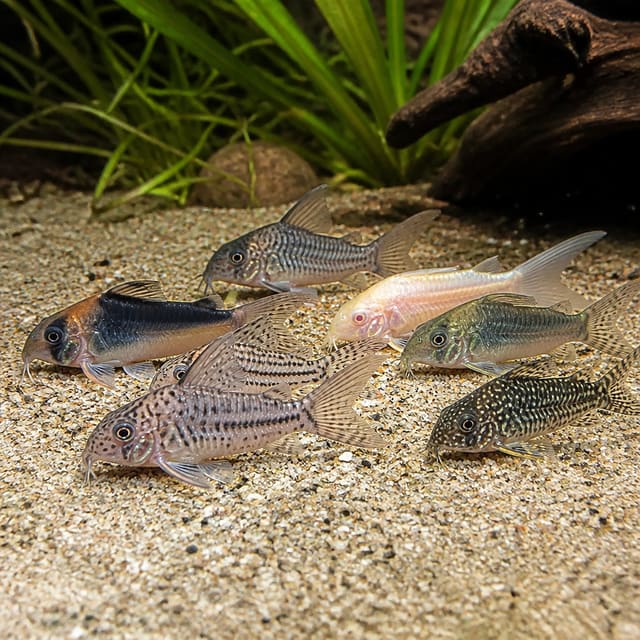
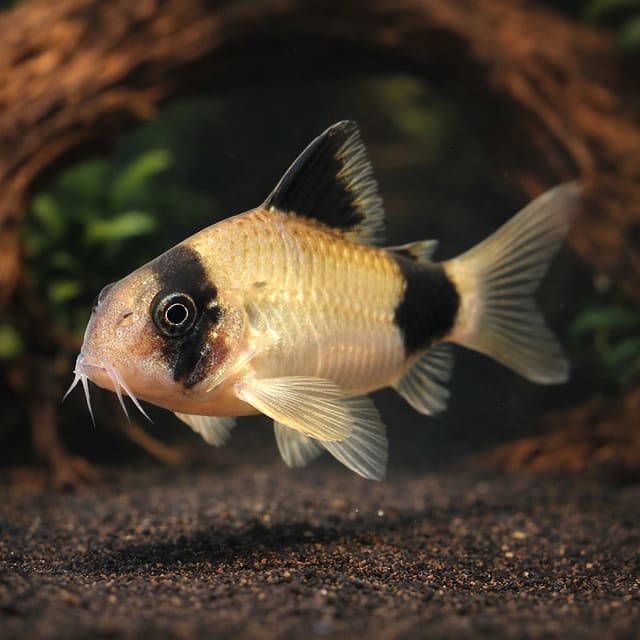
The gallery images are representative, based on reference photographs of this species, so colours can look slightly different from the live animal.
The gallery illustrates characteristic cory body form, barbels and patterned flanks in several scenes, including a planted setting and a plain background. Use it as a general visual guide rather than for choosing sex or expecting one individual to reproduce every illustrated marking exactly. If you are comparing this fish with another cory before choosing, browse the current Corydoras collection and compare each animal’s adult size, social needs and water range.
OATA’s freshwater-catfish sheet recommends an aquarium of at least 80 litres for a shoal of smaller species such as Corydoras. This is group guidance rather than an Elegant Cory minimum, so use 80 litres as the starting planning volume and then assess the aquarium’s footprint, other occupants and filtration load.
Volume matters because a larger body of water is generally more stable, but litres alone do not describe the usable habitat. Elegant Corys need open substrate where the whole group can forage without repeatedly colliding with ornaments. Their tendency to move into the lower and middle water also makes a balanced layout preferable to one filled completely with tall, solid décor.
| If your plan includes | Make this decision |
|---|---|
| Only one or two Elegant Corys | Increase the planned group to at least six. |
| A tall, narrow aquarium | Check that the base still leaves a useful open foraging area. |
| A busy community | Allow extra capacity for waste and feeding competition. |
| Heavy decoration | Keep continuous routes across the lower aquarium. |
Do not calculate capacity from dispatch size. Six fish selected at 2.5-3 cm are still an adult group requiring the same long-term plan as six fish selected at a larger size. Equally, an 80-litre aquarium is not automatically suitable if it is already heavily occupied or offers little accessible substrate.
A filter is essential in every size of aquarium. Choose the aquarium and stocking level together so the biological filter can process the waste produced by the complete community, not just the initial Elegant Cory purchase.
Use fine sand as the preferred substrate. Seriously Fish recommends fine sand for this species and accepts rounded gravel as an alternative when it is kept scrupulously clean. The important choice is therefore not simply sand versus gravel: it is whether the surface is smooth, accessible and maintained well enough for a foraging cory.
Barbels bring the mouth into close contact with the substrate as the fish searches for food. A dirty surface traps waste where the group feeds, while sharp or unsuitable material works against the recommended smooth foraging area. If rounded gravel is already in place, inspect it for sharp pieces and make substrate cleaning part of the weekly water-change routine.
Seriously Fish advises providing cover to give the fish security, while OATA recommends live plants for smaller or shy catfish and also identifies wood, pots and caves as useful shelter for many catfish. Choose aquarium-safe pieces that sit securely and do not create narrow traps. Plants can be placed around the edge of the foraging area so roots and leaves provide cover without taking over the entire base.
| Substrate choice | Required response |
|---|---|
| Fine sand | Keep open areas clear of accumulated food and solid waste. |
| Rounded gravel | Confirm it is smooth and keep it scrupulously clean. |
| Dense planted base | Retain an accessible feeding lane for the whole group. |
| Wood, pots or caves | Secure them and preserve cleaning access around them. |
Décor is largely a matter of personal choice once these practical needs are met. Prioritise smooth substrate, cover, clear feeding access and an uncluttered lower-water route rather than trying to copy a particular wild scene.
For routine aquarium care, use 22–26°C, pH 6.0–7.5 and 4–15 dGH. Seriously Fish gives this species 20–26°C, pH 6.0–7.5 and 1–15 dGH. OATA gives freshwater catfish 22–27°C, pH 6.0–8.0 and 4–18 dGH, so the working figures are the overlap of those sources and remain inside the species ranges. FishBase separately records 22–26°C, pH 6.0–8.0 and 2–25 dH for the wild environment.
| Value | Routine aquarium range |
|---|---|
| Temperature | 22–26°C |
| pH | 6.0–7.5 |
| General hardness | 4–15 dGH |
| Ammonia | 0 mg/l |
| Nitrite | 0 mg/l |
| Nitrate | No more than 20 mg/l above the normal tap-water level |
Test the aquarium rather than choosing a target from the middle of a range by guesswork. Our water chemistry guide explains what the principal readings mean, while the water matcher lets you compare measured values with the working range above.
Consistency supports feeding and normal group behaviour. Do not chase small day-to-day differences by making repeated abrupt adjustments. Record the same values at the same point in the maintenance cycle so each result can be compared meaningfully with the previous week.
The RSPCA explains that a working biological filter provides a home for beneficial bacteria that convert toxic ammonia to nitrite and then to the safer nitrate. Elegant Corys should therefore enter a mature, filtered aquarium where ammonia and nitrite test at 0 mg/l.
Filter maturation is a biological process, not simply a period during which equipment has been switched on. Confirm it through water testing before adding fish. If this is your first aquarium, follow our first tropical tank guide to prepare the aquarium and mature the filter before livestock arrives.
OATA advises increasing fish numbers slowly because the population of beneficial bacteria must grow when more fish and more food are added. Adding too many fish too quickly can lead to new tank syndrome, with ammonia or nitrite rising beyond what the filter can process.
| Observation | Action |
|---|---|
| Ammonia or nitrite above zero | Stop further stocking and address water quality. |
| Reduced filter flow | Check the filter for a blockage. |
| Filter media needs cleaning | Rinse it lightly in removed aquarium water; do not run it under the tap. |
| Stocking and feeding increase | Test more closely while the filter population adjusts. |
The filter must remain in operation and receive routine checks. Treat replacement water with tap-water conditioner before adding it to the aquarium, and preserve the established filter media during cleaning.
Elegant Corys are foraging omnivores. Seriously Fish recommends a varied aquarium diet based on sinking dried foods with small live and frozen foods such as bloodworm and Tubifex. Quality dried food and freeze-dried bloodworm are also identified as suitable choices. Rotate compatible foods rather than depending on a single product.
Food must reach the group directly. This fish should not be expected to survive on scraps missed by other occupants and should never be treated as the aquarium’s cleaner. Foraging behaviour shows how it searches; it does not mean enough balanced food is reaching every individual.
OATA advises feeding catfish once a day and offering only what they can eat within a few minutes. Place a modest amount of sinking food in the open foraging zone, watch the whole group and stop adding food once the meal is complete. Remove obvious uneaten food because it breaks down and adds waste to the water.
| Feeding decision | Practical response |
|---|---|
| Daily staple | Use an appropriately sized sinking dried food. |
| Diet variety | Rotate small live, frozen or freeze-dried foods named for Corydoras. |
| Meal size | Only what the fish consume within a few minutes. |
| Faster tank mates | Place food where the cory group can reach and finish it. |
| Food remains | Remove it and reduce the next portion. |
Watch body condition and access rather than counting pieces without observing the fish. If one member repeatedly misses the meal, distribute the same modest ration across more than one point in the open area. This reduces crowding without increasing the total portion automatically.
A reduced feeding response is an early reason to test water and observe the rest of the group. Check whether food is reaching the substrate, whether other fish are taking it first and whether ammonia or nitrite remains at 0 mg/l. Correct the cause rather than adding a larger ration that may remain uneaten.
Carry out a 25% partial water change at least once a week. OATA pairs this routine with weekly testing, removal of solid waste and checks for filter blockages. Treat replacement tap water with a conditioner that removes chlorine or chloramine before it enters the aquarium.
Do not run established filter media under the tap. Chlorine or chloramine may kill beneficial bacteria and reduce the filter’s ability to process waste. Avoid cleaning every component more aggressively than necessary at the same time; the aim is to remove blockages while retaining biological function.
| If you notice | Do this first |
|---|---|
| Surface hanging or erratic swimming | Test water and check temperature and filter operation. |
| Faster or slower gill movement | Test water promptly and compare with normal behaviour. |
| Darker or paler colour | Check readings, cover and interactions in the aquarium. |
| White spots, fluffy growths or damaged fins | Record the signs and review water quality immediately. |
| Reduced appetite or changing body condition | Confirm food access and test ammonia and nitrite. |
Individual fish show some variation, so compare changes with that animal’s usual appearance and with the rest of the group. If a concerning change continues after the immediate water and equipment checks, contact us with the readings and a clear description of what has changed.
Arrange for someone to receive the live fish and have the aquarium ready before the transport box is opened. Follow the current delivery and Live Arrival Guarantee policy.
Judge the first day through direct observation rather than expecting an exact activity pattern. This species may use the substrate, lower water and midwater, and its facultative air-breathing biology permits purposeful surface visits. Sustained surface hanging, unusual gill movement or erratic swimming calls for an immediate water test.
Continue changing 25% of the water at least once a week, siphoning the substrate and checking the filter. Record temperature, pH, hardness, ammonia, nitrite and nitrate consistently enough to reveal a trend. If readings remain within the working ranges and the group feeds normally, maintain the routine rather than making unnecessary changes.
Postpone additions when ammonia or nitrite is detectable, feeding is unsettled or the cory group is being displaced. A stable first month is built through repeatable testing, modest feeding and maintenance rather than extra products or rapid stocking.
Seriously Fish describes the Elegant Cory as peaceful, gregarious and a popular community fish, but that does not make every proposed companion suitable. OATA notes that catfish compatibility varies, so assess each combination by adult size, temperament, water requirements, feeding behaviour and use of the aquarium.
| Compatibility check | Question to answer |
|---|---|
| Water overlap | Can both animals live routinely at 22–26°C, pH 6.0–7.5 and 4–15 dGH? |
| Adult scale | Will each animal remain physically suitable when fully grown? |
| Temperament | Will the cory group be able to forage and rest without harassment? |
| Feeding access | Can sinking food reach all Elegant Corys before competitors consume it? |
| Space and waste | Can the aquarium and filter support the completed community? |
Reject a proposed combination when one of these checks fails. A shared temperature alone is insufficient if the other fish prevents feeding, occupies the same lower area aggressively or pushes the aquarium beyond its biological capacity. Likewise, a peaceful reputation does not compensate for incompatible water chemistry.
Assess adult needs rather than the dispatch size of either animal. Small individuals can create a misleading impression of spare space, while every occupant contributes waste and feeding demand as it grows. Recalculate the plan whenever the group size or community changes.
Exact outcomes depend on the other species, aquarium dimensions, group numbers and established behaviour. For a stocking and compatibility assessment, ask us with the aquarium volume, dimensions, current livestock, group sizes and measured water values. Those details allow a decision based on the actual aquarium rather than a universal tank-mate list.
Count Elegant Corys as their own social group. Seriously Fish advises at least four to six of this species, and the working recommendation here is at least six. Do not count unrelated bottom fish or another Corydoras species towards that number when planning the Elegant Cory group.
A community can meet every water requirement and still fail at feeding time. Watch the first sinking meal after any stocking change. Each cory should be able to approach food, forage and withdraw to cover without being repeatedly displaced. If faster fish take the ration first, redistribute the same measured portion across more than one accessible point rather than simply increasing the total.
Meeting the minimum group does not settle the space question by itself. Six Elegant Corys plus other fish must fit within the aquarium’s usable floor area and filtration capacity. Begin with OATA’s planning figure of at least 80 litres for a shoal of smaller Corydoras, then increase the plan where other occupants, restricted floor space or a heavier waste load require it.
| What you observe | Community response |
|---|---|
| The group reaches food together | Keep the measured feeding routine and monitor body condition. |
| One fish is repeatedly displaced | Add a separate feeding point and reassess the competing fish. |
| The group hides more after a new addition | Check interactions, cover and water readings before adding anything else. |
| Ammonia or nitrite appears | Stop further stocking and address biological filtration immediately. |
| Lower routes become crowded | Reduce obstruction or revise the community plan. |
Introduce fish slowly so beneficial bacteria can adjust as stocking and feeding increase. Keep the Elegant Cory group’s open foraging area, cover and lower-water route intact whenever décor changes. These checks protect both social behaviour and water quality without relying on a fixed list of supposedly universal companions.
The Elegant Cory reaches 5.1 cm standard length according to FishBase. Plan the aquarium around that adult figure rather than the fish’s dispatch size.
Start with at least 80 litres for the group. OATA’s freshwater-catfish guidance uses that figure for a shoal of smaller Corydoras; also check the aquarium’s footprint, existing occupants and filtration capacity.
Keep at least six together. Seriously Fish advises at least four to six for this peaceful, gregarious species, while OATA advises at least five for Corydoras as a group.
It suits a keeper who can provide a mature biological filter, test water regularly, maintain a group of at least six and feed the group directly. Ammonia and nitrite must remain at 0 mg/l.
Feed the Elegant Cory an appropriately sized sinking dried food with small live, frozen or freeze-dried foods such as bloodworm or Tubifex for variety. Offer food once daily and only what the fish consume within a few minutes.
Keep it at 22–26°C, pH 6.0–7.5 and 4–15 dGH. These routine values are the overlap between the Seriously Fish species range and OATA’s freshwater-catfish guidance.
The Elegant Cory is described by Seriously Fish as peaceful and gregarious. Screen every companion for temperament and make sure the cory group can forage, rest and reach sinking food without harassment.
Choose peaceful community fish whose adult size, temperament and water needs fit the aquarium. They must overlap with 22–26°C, pH 6.0–7.5 and 4–15 dGH and allow the cory group to reach sinking food.
Film every delivery continuously from the sealed parcel as it is opened, keeping the fish visible inside the sealed bag before anything is disturbed. Someone must be present to receive the parcel. Float the bag for 20–30 minutes before release, and never pour the bag water into the aquarium.
No reviews for this item yet. Bought one? Honest reviews only, good or bad.
What customers say about ordering from us
I have a small group of long finned mountain minnows. So was delighted to be able to order ten of this variety to increase the genetics in my tank . The ones I recieved are healthy but it’s to early to give a verdict on wether they are of a long finned type since they are small currently.
Gordon Walker · 23 Sept 2026
100% success travel and "installation". Pleased with quality of purchase. The Siamese fighter a bit "shy" so have not yet seen him at his best yet but looking good. Happy customer. GG
George E Garratt · 21 Sept 2026
Reviews of our shop, collected by Judge.me, an independent third-party review collector. Newest first.