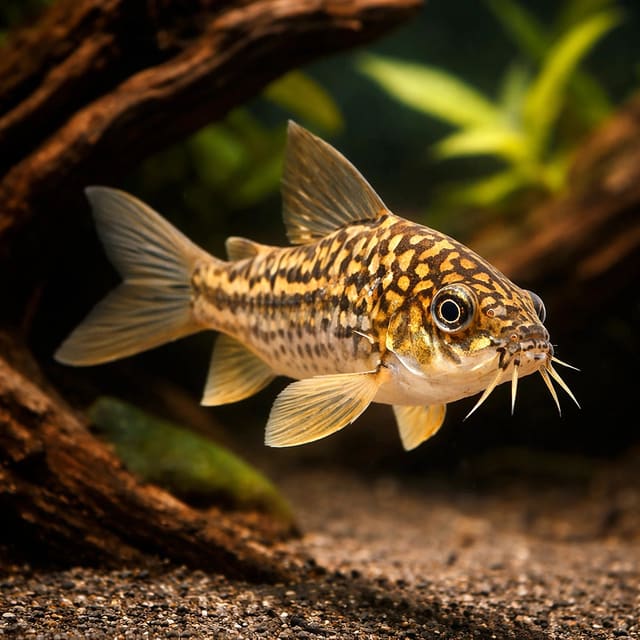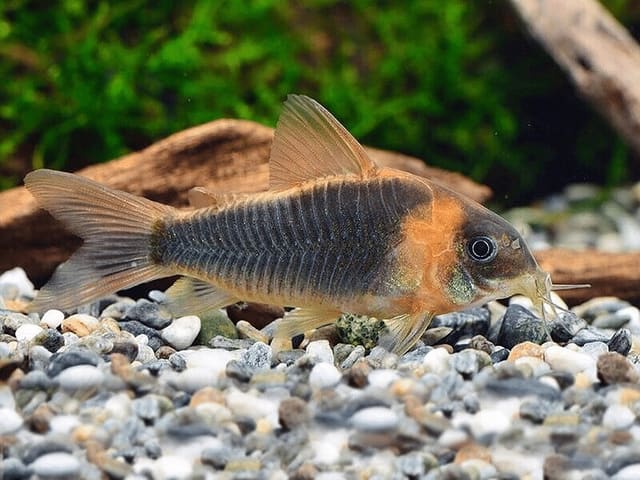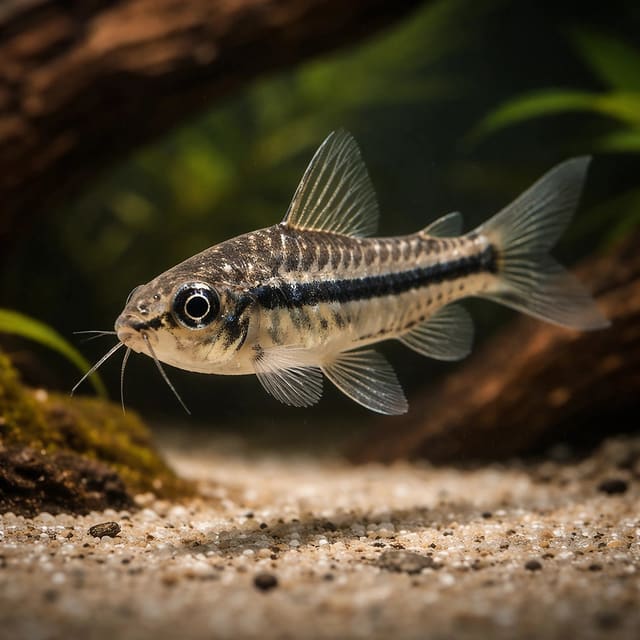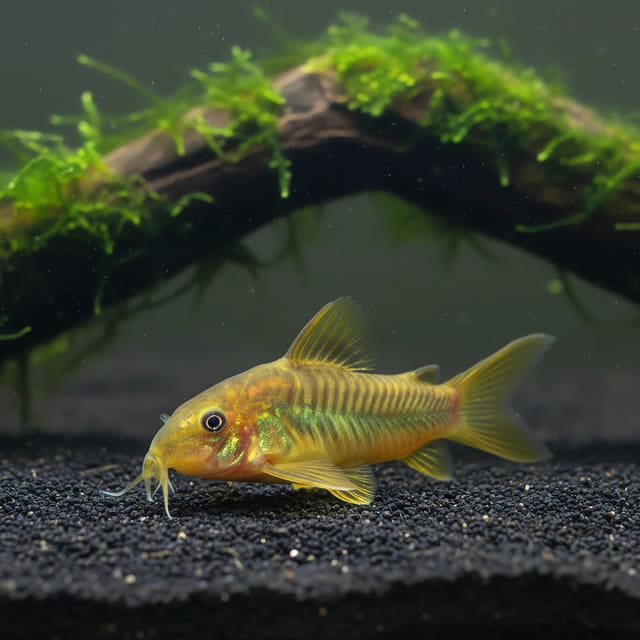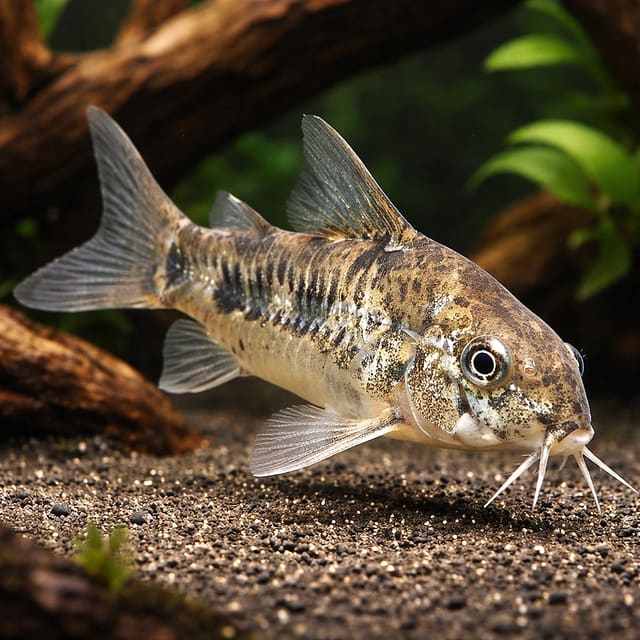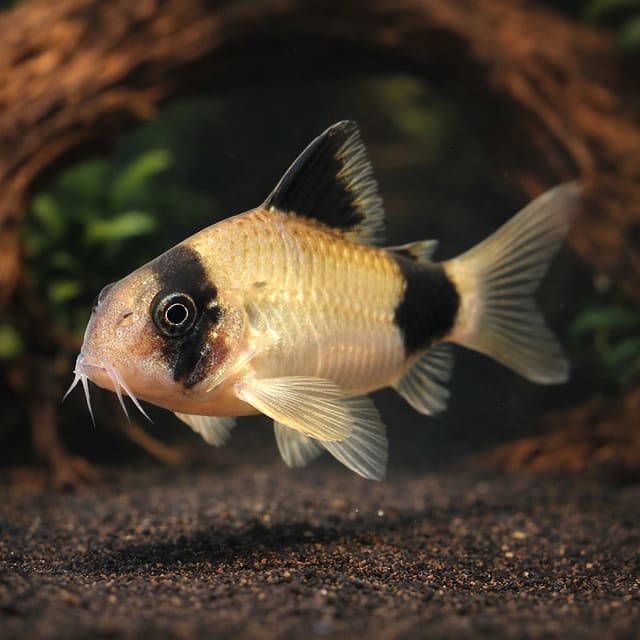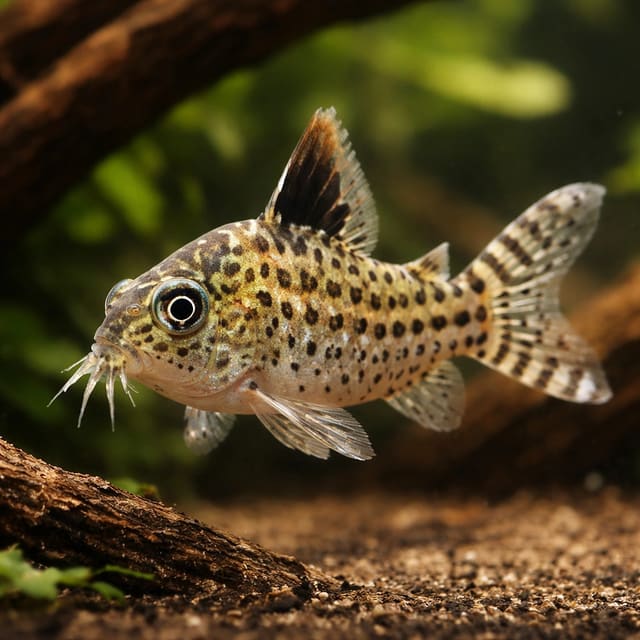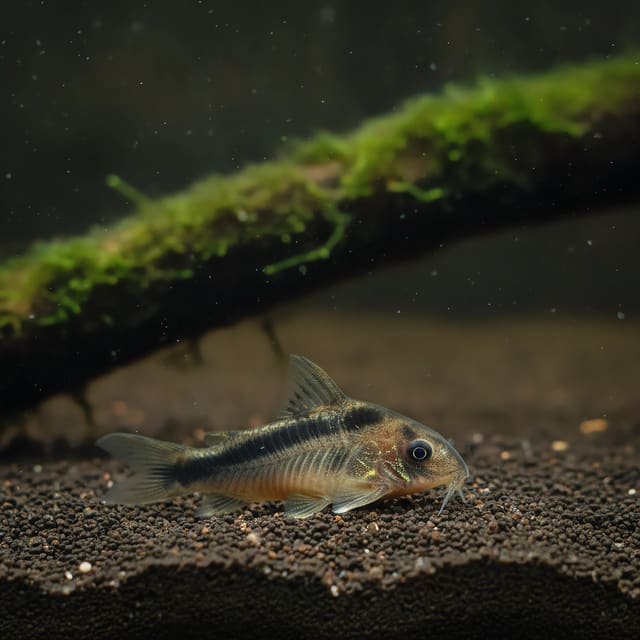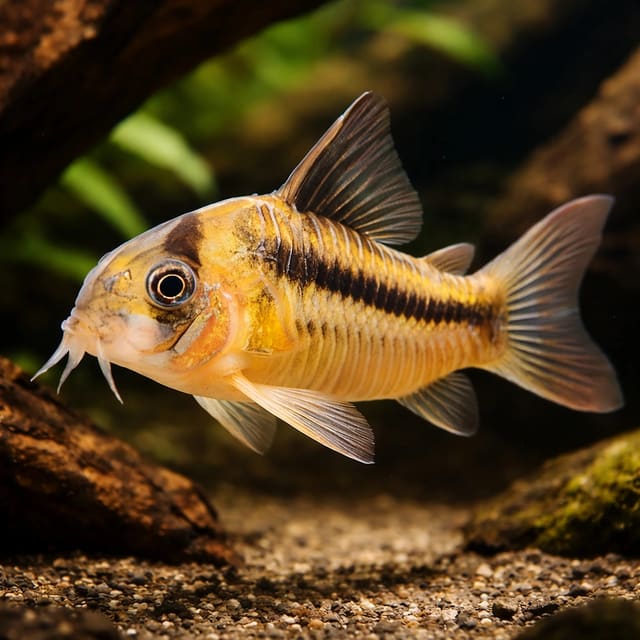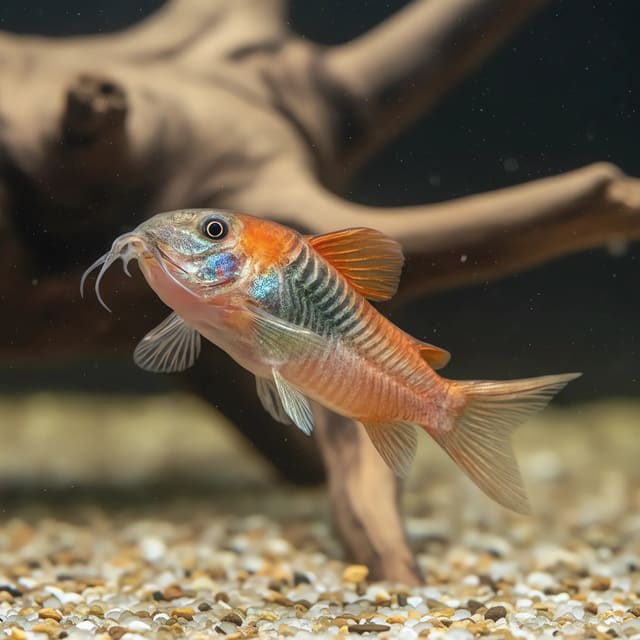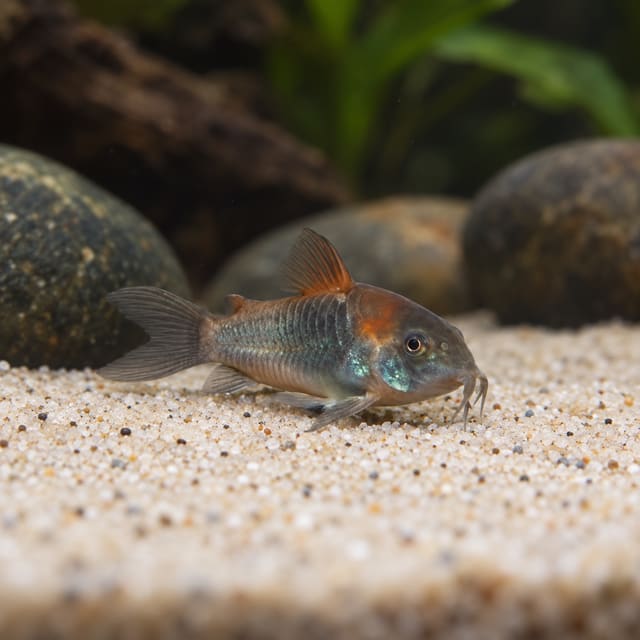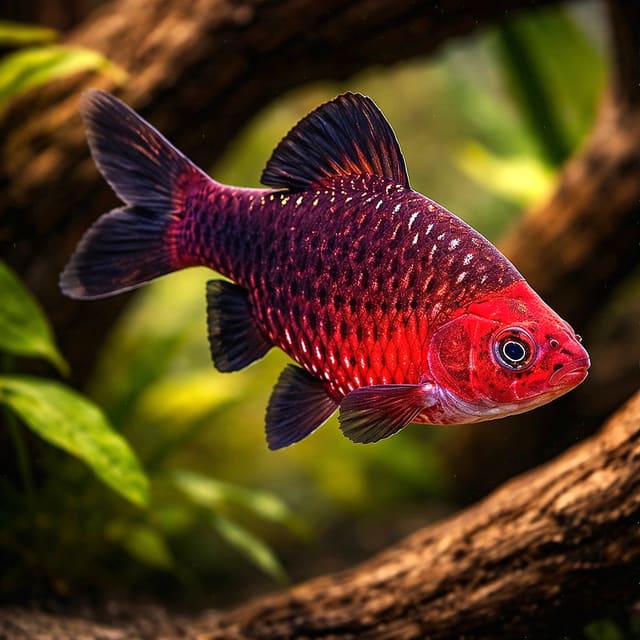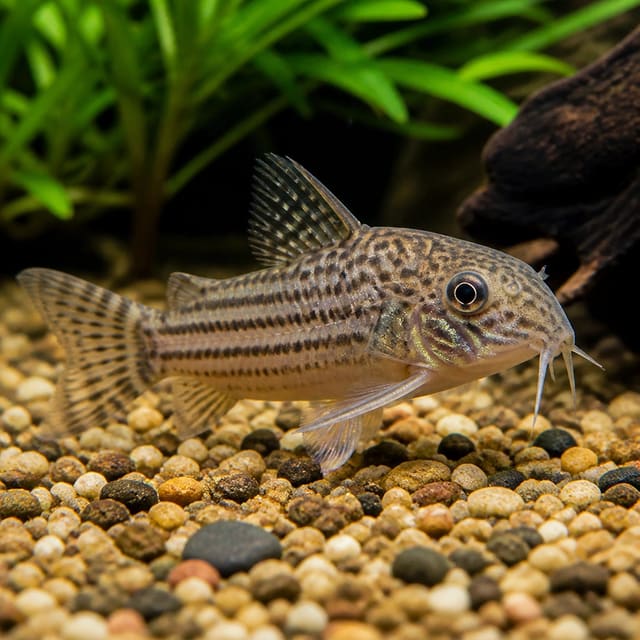
Assorted Corydoras Mix
22–26°C · pH 6–7.5
£4.99
One cory catfish from the Premium Mix per purchase. Choose from the listed size grades and prepare a mature aquarium with a gentle foraging floor, suitable companions and a considered social plan.
Corydoras sp.
Shoaling fish: kept in a group they feel safer, stay calmer and show their best colour.
One cory catfish from the Premium Mix per purchase. Choose from the listed size grades and prepare a mature aquarium with a gentle foraging floor, suitable companions and a considered social plan.
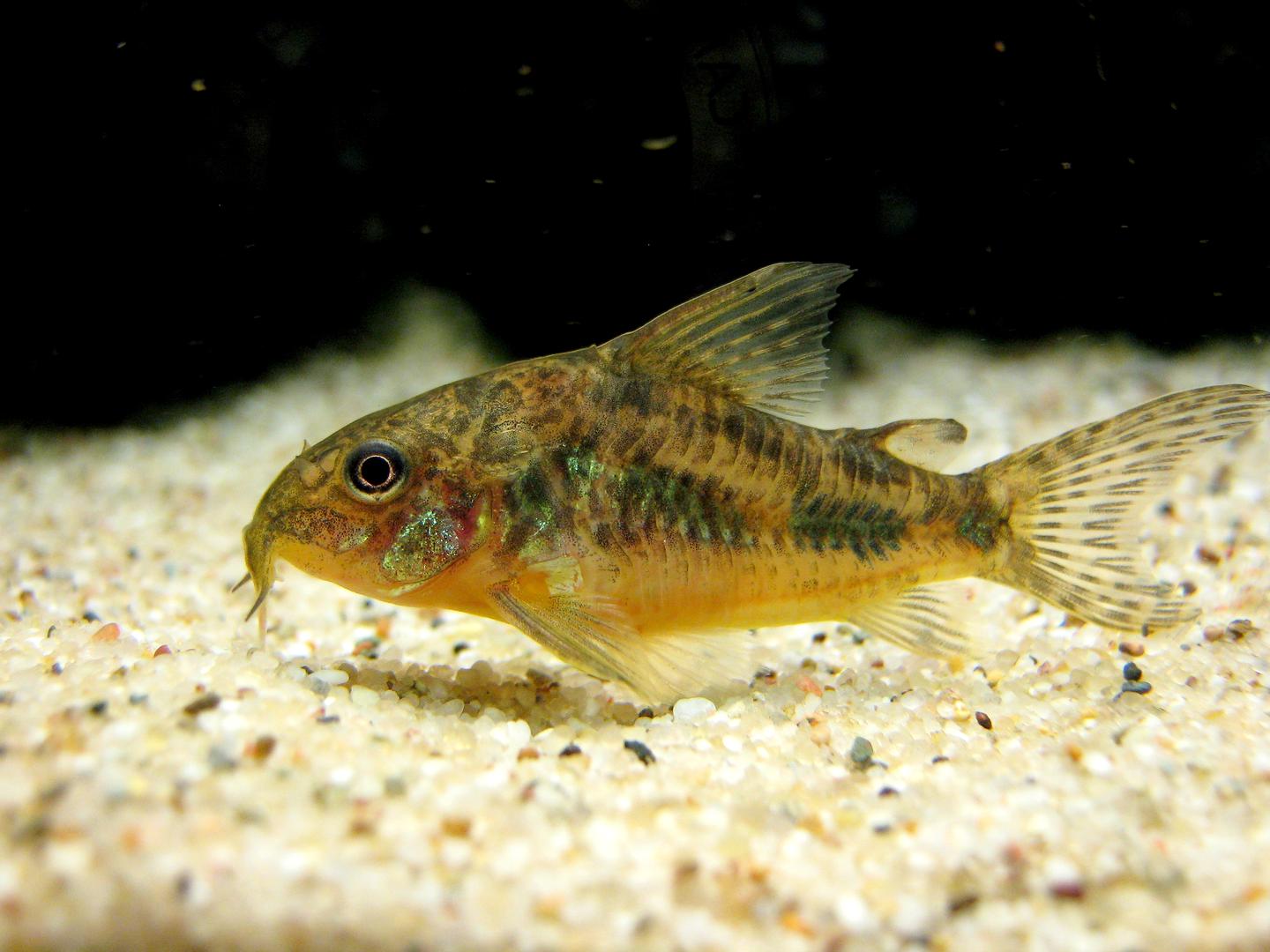
Identify the exact cory catfish before choosing care. Our starting policy for many common medium species is six compatible conspecifics, a mature 60 x 30 cm aquarium of about 60 litres, smooth fine sand and measured species-appropriate water.
Premium Mix Cory Catfish (Corydoras sp.) is a trade assortment of cory catfish for a carefully planned freshwater aquarium. One purchase supplies one live fish in the size grade you choose: 2.5–3 cm, 3–3.5 cm or XL. The size you select is the size supplied, not the adult size. The selector shows the current offer for each grade. A mixed trade name does not identify one named species or promise an exact combination of species, patterns or colours.
Sex is guaranteed only when the selected option explicitly states male or female. This Corydoras premium mix listing has no sex-guaranteed option. Choose this assortment only if you are comfortable planning care around a mixed identity and can assess the fish you receive. A keeper who needs a known species for an established same-species group should consider a product with an explicit, verified identity instead. That distinction matters more than the word premium: social needs and eventual size cannot be calculated reliably from a trade label alone.
Many cory catfish spend much of their time on or near the floor and are kept for their quiet, busy foraging. OATA describes Corydoras among the social catfish that can suit peaceful community aquaria. Its guidance is broad, because freshwater catfish include animals with very different needs. Give this fish a mature filtered aquarium, an accessible bottom feeding area, shelter and neighbours that will not monopolise food. Ask what the other bottom-dwellers already need before assuming there is room for another.
The supplier's record confirms the Premium Mix trade assortment and its three size grades. It does not identify the individual member species. Catalog of Fishes validates Corydoras as a genus in Callichthyidae, but taxonomy alone cannot certify every fish in an unnamed retail mix. That is why the scientific parenthetical remains at genus level. It is a careful identity label, not a claim that every pattern shown or every member of a wider cory trade group has the same adult size or water requirements.
Start with your actual aquarium measurements: usable floor length and width, mature filtration, temperature over several days, pH and hardness, and recent ammonia and nitrite tests. A tank can look large in litres but offer little unoccupied floor. Equally, an empty-looking floor may have resident fish that feed or shelter there. OATA gives an 80-litre starting recommendation for a shoal of smaller catfish such as Corydoras, while warning that larger species need much more. Use that as broad planning context, not a promised minimum for an unidentified Premium Mix member.
If the uncertainty is workable for your setup, the reward is watching a cory use a thoughtfully designed lower level of the aquarium. If you require an exact species, sex, future adult length or a guaranteed composition to make the tank plan safe, settle those questions before purchase. A good aquarium decision starts with the fish's long-term needs and the needs of animals already living there.
| Before choosing | What to check |
|---|---|
| Supply | One fish in the selected dispatch grade, with no sex selection. |
| Identity | A mixed trade assortment, with no named member species guaranteed. |
| Social plan | Compatible companions once the actual fish can be identified. |
| Home | A mature filtered aquarium with usable floor and adult space. |
Premium Mix is the name of the assortment sold here. It is useful for ordering the retail item but cannot answer which named species an individual fish belongs to. A supplier grade of 2.5–3 cm, 3–3.5 cm or XL describes the fish at supply, not the size it will reach as an adult. Do not build a permanent home from the assumption that every small cory remains small. Ask for an identity assessment if that adult-size decision is critical to the accommodation you have.
Catalog of Fishes places Corydoras in Callichthyidae and recognises other valid corydoradine genera. That scientific detail is a warning against treating every familiar cory-shaped fish as interchangeable. The record does not identify the animals in this mix. A photograph can help a keeper recognise an animal, but a single picture does not establish the mix's full composition, an exact specimen or a species-level care sheet. For an aquarium already built around one named species, choose a clearly identified addition rather than assuming a mixed trade item is a conspecific.
OATA notes that some Corydoras are shoaling fish and advises groups of at least five for the social types covered by its general catfish guidance. A group is about compatible animals able to behave together, not simply five purchases with cory in the title. In a mixed assortment, the exact identities may be different, so do not promise that a collection of unlike fish forms the same social group as conspecifics. If the resident fish already have an established group, confirm that a new individual is a suitable match before relying on it as a social companion.
Observe the actual animals after introduction. A fish spending all its time apart, refusing food or showing persistent stress deserves a reassessment of group composition, space and water. Do not solve uncertainty by adding several more fish at once to an untested aquarium. OATA warns that the beneficial filter bacteria need time to respond as stock and feeding rise. Increase numbers only after the system is mature, capacity is adequate and water tests remain sound. A social plan is important, but it must fit the biological filter and the adult footprint too.
OATA's freshwater-catfish sheet gives 22–27 °C, pH 6.0–8.0 and general hardness 4–18 °dH as group-level guidance. It explicitly says the values are a general guide and to check species-specific needs before buying. Because this retail item does not identify a named species, those figures cannot be printed as a verified optimum for every fish that might be supplied. Measure your source water and aquarium, keep a record of stability, and ask for advice if a chosen fish or resident group needs a narrower range.
Do not use the old narrow 22–26 °C and pH 6.0–7.5 card as proof for the mix: it did not identify its members. Nor is the broad OATA range permission to push an aquarium to its edges. The safest practical question is whether the actual fish and every resident can live in the same stable water. For details of what pH, GH, KH and nitrogen tests tell you, read Aquarium Water Parameters: What to Test and Why. Its H1 describes the water-testing topic, while your measured aquarium and identified animals decide suitability.
Measure the open bottom area after substrate, wood, plants and equipment are in place. A floor crowded by large objects may leave little space for a foraging group, even when the advertised tank volume sounds generous. OATA recommends at least 80 litres for a shoal of smaller catfish such as Corydoras as broad guidance, and notes that bigger animals need more. It does not establish an exact minimum for each possible member of this mix. Include the needs of current occupants, the eventual adult dimensions and the filter's workload when choosing the aquarium.
Provide a fine, smooth foraging surface and remove sharp material that could injure a fish working close to the bottom. OATA recommends suitable substrate and shelter for catfish; the final layout should let you see the fish and clean away waste. A planted margin, wood or secure shelter can provide places to withdraw, while an open area makes feeding and observation possible. Avoid a maze of tight gaps that can trap a fish or hide uneaten food. Fix decorations firmly so routine maintenance and a catfish's movement cannot dislodge them.
Plants are useful cover, yet their roots, pots and leaves also change usable floor space. Plan routes through the lower level. If resident animals defend caves or congregate around one feeding point, consider whether this fish can use a second safe area. A quiet-looking tank may still have strong competition just below the surface. Observe at feeding time and after the lights change to learn how the existing community actually uses the floor.
A working biological filter processes waste from fish and uneaten food. The RSPCA explains the sequence: ammonia is converted to nitrite and then to less harmful nitrate by the established filter community. Ammonia and nitrite are hazardous even when the aquarium looks clear. OATA's general catfish guidance aims for zero detectable ammonia and nitrite in home aquarium water. Confirm those results before adding a fish, and continue testing as feeding and stock change. A running pump alone does not prove that its biological media have matured.
Set up the aquarium, condition the water, run and inspect the equipment, then follow a fishless maturation process with repeat tests. Our How to Set Up a Tropical Fish Tank: 10 Safe Steps guide walks through the preparation sequence. For this fish, also check that the final water, group plan and floor area suit the actual identity; a general setup guide cannot settle those species-specific choices. If an established aquarium has recently had a filter replacement, power interruption or large change of stock, test it as carefully as a new setup rather than assuming past stability still applies.
Filter flow should move and oxygenate water without turning every shelter into a high-current zone. Check the intake cannot trap a small fish and that the floor does not collect a heavy layer of waste. If flow weakens, inspect for a blockage and clean the filter as its manufacturer directs while protecting the beneficial biological media. OATA advises rinsing media lightly in removed aquarium water rather than rinsing it under a tap. Do not replace every piece of mature media at the same time during routine cleaning.
Test on a regular schedule and more often after changes or signs of stress. Note the exact unit on each test, the source-water result and the date. Compare trends rather than chasing a single colour on a chart. A rising nitrate reading can prompt a review of feeding, stocking and water changes, but an isolated number without source-water context may mislead. OATA recommends a weekly partial water change of about a quarter as a general catfish maintenance routine. Use water prepared for your supply and keep the replacement temperature and chemistry reasonably aligned; adapt the schedule to measured results and the tank's actual load.
Remove uneaten food and visible debris from the lower level during maintenance. This is the area where the cory feeds and where waste can hide behind plants and décor. A well-designed floor is easy to inspect without stripping all shelter away. If a fish loses appetite, changes breathing, develops damage or hides much more than usual, start with water tests and equipment checks, then seek experienced aquatic advice. Do not automatically medicate every fish because one is quiet; the causes of abnormal behaviour can include water, social stress and illness.
Keep a simple record of filter work, water changes, test results and fish behaviour. It lets you see whether a change followed a new addition or a maintenance event. The purpose is not bureaucracy: it is to avoid several guessed fixes at once. One measured adjustment and a follow-up observation generally tell you more than repeated abrupt pH or temperature changes. This matters particularly for a mixed-identity purchase where a precise species target may need to be established after the animal arrives.
Cory catfish are not a substitute for cleaning an aquarium. OATA describes Corydoras as omnivorous catfish and recommends appropriate sinking food so they receive a complete diet. Start with a suitable complete sinking food rather than relying on particles that happen to fall after other fish feed. Check the size and texture against the actual animal. A small fish may have difficulty with food intended for a much larger bottom-dweller; an XL grade may need a different portion. Follow the food's instructions and watch what is consumed.
Place food where the cory can reach it and where you can see the result. In a lively community tank, a surface feeder may take everything before it reaches the bottom. Moving the sinking portion to another area or feeding when the usual competitors are less active can help, provided you still observe the fish. Food hidden under décor can decompose unnoticed. Remove excess rather than adding more to compensate for uncertainty. OATA warns that leftover food breaks down into toxic waste; the right feeding routine protects both nutrition and water quality.
Variety can be valuable, but a list of live or frozen foods is not a promise that every possible fish in this mix has identical requirements. Any supplement should be suitable, safely stored and offered in a quantity the fish can eat. Check whether the animal is actually foraging and maintaining body condition over time. A stomach that looks full on one day is not a substitute for observing consistent access to food. If several corys are present, watch the quieter individuals rather than assuming the group has eaten because one fish rushed to the tablet.
Do not confuse foraging with waste removal. A cory may investigate material on the bottom, but it does not make uneaten food, faeces or an unsuitable water result disappear. Remove debris during planned maintenance and keep filtration working. A clean-looking substrate can still have nitrogen waste in the water, so use tests as well as observation. This fish brings behaviour and interest to the lower level of an aquarium; it should not be bought as a maintenance tool.
Arrange to receive a live-fish parcel and have the tank ready beforehand. Check water and filter operation, reduce disturbance around the aquarium and follow the current Delivery & Live Arrival Guarantee instructions for inspection and acclimatisation. Do not leave the fish in a parcel while searching for equipment or attempting to complete a new cycle. A prepared, measured aquarium is the most useful welcome.
After introduction, allow a quiet settling period and observe movement, breathing and shelter use. A new fish may not compete confidently for the first meal. Offer a modest suitable portion, check whether it reaches the bottom and remove leftovers. Watch the residents too: chasing, persistent crowding or a fish being excluded from its feeding place can undermine acclimatisation. If distress persists, test water and get competent advice promptly rather than assuming every symptom is ordinary transport stress.
If you have a mature quarantine aquarium, it can help you observe a newcomer before joining an established group. It must have filtration, appropriate water and enough space; a newly filled spare tank or bowl is not safe quarantine just because it is separate. Use separate equipment where practical and observe the fish for normal feeding and behaviour. The final move into the main aquarium still needs careful acclimatisation and a social plan. Quarantine does not remove the need to check identity or long-term compatibility.
A peaceful-community label is a starting point, not a universal tank-mate list. OATA describes Corydoras among catfish that can do well in community aquaria, but species and individual circumstances matter. Compare the prospective fish's adult size, water requirements, activity, feeding method and social needs with every existing resident. Avoid animals that routinely harass or consume small bottom fish. Equally, avoid asking a small cory to share a cramped floor with larger or highly competitive bottom-dwellers.
Think about time and place. Fish that appear to use different levels during the day may converge on the bottom when food falls or lights dim. Observe the established tank at several feeding times. Is there a protected foraging area? Can a cory retreat without being cornered? Does food remain accessible after faster fish arrive? If the answer is no, more fish or food alone may worsen the problem. Adjust the layout and stocking plan before introduction.
Social compatibility needs special care with a premium mix. OATA's group advice for social Corydoras does not establish that unrelated or differently identified fish can substitute for conspecifics. A buyer seeking to add to an existing named group should confirm the new fish's identity. If the fish is not a match, a different named product may be the better choice. Do not force a mixed group simply to reach a number, and do not leave one fish isolated indefinitely on the assumption that another cory somewhere in the tank is enough.
The assortment does not give us a reliable species-level temperature or adult-length chart. Some named corys have different preferences, so a companion that suits one may be unsuitable for another. Use the broad OATA catfish values only to start a conversation, then settle the actual overlap for the animals you will keep. If the existing tank is already at the edge of a fish's water range, adding an unidentified member makes that judgement harder. A stable, correctly planned aquarium is more important than an impressive list of possible tank mates.
For shoppers comparing options, the Corydoras collection shows named listings as well as assortments. Choose a separately identified fish when you need a certain adult size or a true species match; a product alternative is a buying choice, not automatically a safe tank mate. After introduction, check feeding and behaviour over several days. Persistent hiding, injury or exclusion signals that the shared environment needs review.
A mixed assortment can be a reasonable choice for a flexible keeper with a mature aquarium and a plan for checking the fish's identity. It is a poor shortcut when your decision depends on a particular adult length, a precise water band or adding one more fish to a known species group. In those cases, a named product gives you a better basis for comparing the existing animals and the new arrival. The attractive colour or small dispatch grade of an individual cannot replace that information.
Before settling on the Premium Mix, write down which facts are essential to your aquarium. Do you need a fish that shares the residents' temperature and hardness requirements? Can you house a suitable group even if a supplied individual differs from the species you expected? Would a larger adult cory have enough clear floor? If one of those answers depends on the exact species, choose an identified animal or obtain a reliable identification first. A purchase can be postponed; a fish cannot undo an unsuitable placement.
If you do choose the mix, treat the first observations as useful evidence. Note the fish's appearance, behaviour, feeding access and interactions without guessing a sex or naming a species from one mark. Seek a knowledgeable identification where needed, then refine its long-term care and social plan. Keep the water stable and the aquarium mature while you do so. This approach respects the limits of the trade name and gives the individual fish a more considered home.
The selected grade describes the fish supplied, not its adult length. Because Premium Mix does not identify a single species, plan for an adult home only after you can confirm which fish you are keeping.
OATA gives at least 80 litres as a general starting point for a shoal of smaller catfish such as Corydoras, with much more space for larger species. Check the actual fish, usable floor area, existing stock and filter capacity before treating any number as sufficient.
OATA advises groups of at least five for social Corydoras in its broad catfish guidance. A mixed assortment may contain different identities, so confirm compatible group members rather than assuming any five corys form one suitable shoal.
They suit a keeper who can maintain a mature filtered aquarium, test water, feed the bottom level and resolve the social needs of the actual fish. A named species may be easier to plan for if this is your first cory group.
Use suitable complete sinking food and watch each fish eat. Corys are not a clean-up crew that can live on scraps; remove leftover food before it harms water quality.
OATA's broad freshwater-catfish guide gives 22–27 °C and pH 6.0–8.0, but these are group guidance, not a verified optimum for each unidentified member of this mix. Check the needs of the fish you receive and keep the aquarium stable.
OATA describes Corydoras as suitable for peaceful community aquaria. Still, observe the actual fish and its companions; persistent chasing, damage or exclusion means the arrangement needs attention.
Choose peaceful fish that share suitable water, adult space and a feeding plan. No named tank mate is guaranteed for every unidentified member of a mix; watch the group at the bottom as well as in open water.
Tropical Fish Co packs live fish for delivery under its current Delivery & Live Arrival Guarantee policy. Be present to receive and inspect the parcel, and follow that policy's acclimatisation and claim instructions if a problem occurs.
The exact retail grades and one-fish sale unit come from the current Tropical Fish Co offer and matching supplier trade record. Accepted genus and family are set out by Eschmeyer's Catalog of Fishes corydoradine genera record. It does not identify the members of this mix. OATA's freshwater catfish advice supplies broad setup, social, water and feeding guidance; its ranges are not species-specific. The RSPCA fish-environment advice explains general filtration and testing principles. Check the identity and circumstances of the actual fish before turning any broad guidance into a precise care target.
For measuring the water you will use, the Water Parameter Matcher can help organise tropical-aquarium readings, but its suggested species matches do not identify a fish in this assortment. The linked aquarium setup and water-testing guides explain preparation and interpretation rather than guarantee that a particular unidentified cory will thrive at a given number.
No reviews for this item yet. Bought one? Honest reviews only, good or bad.
What customers say about ordering from us
Easy website plenty of info on fish your buying great to pick a time slot
TRACEY DURRANT · 7 Oct 2026
Got some lovely fish thank you
Kevin Mackie · 7 Oct 2026
Reviews of our shop, collected by Judge.me, an independent third-party review collector. Newest first.