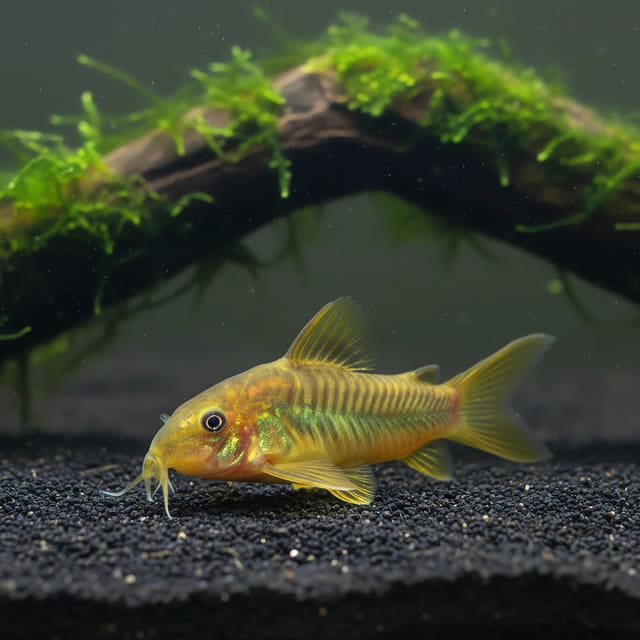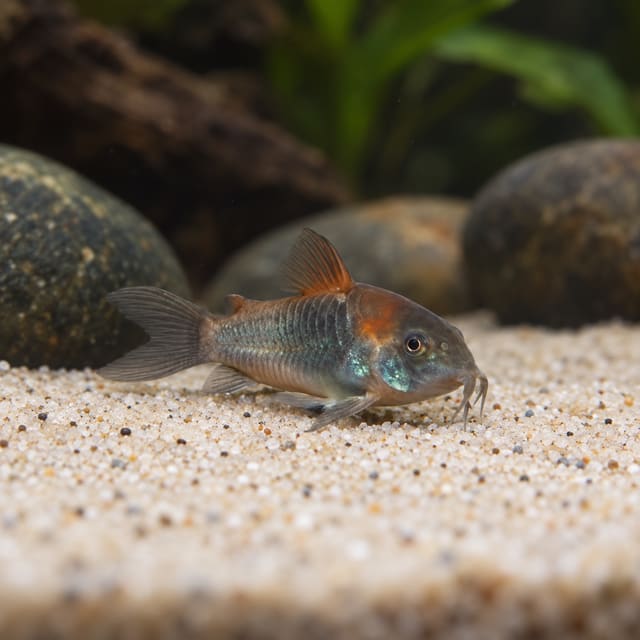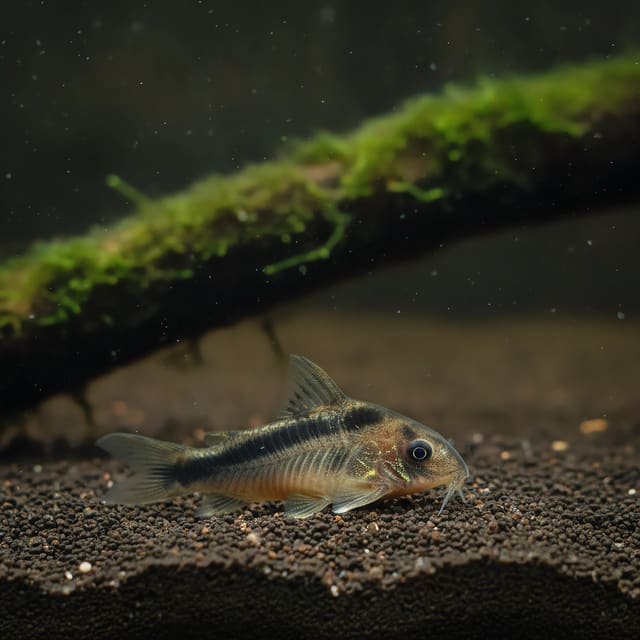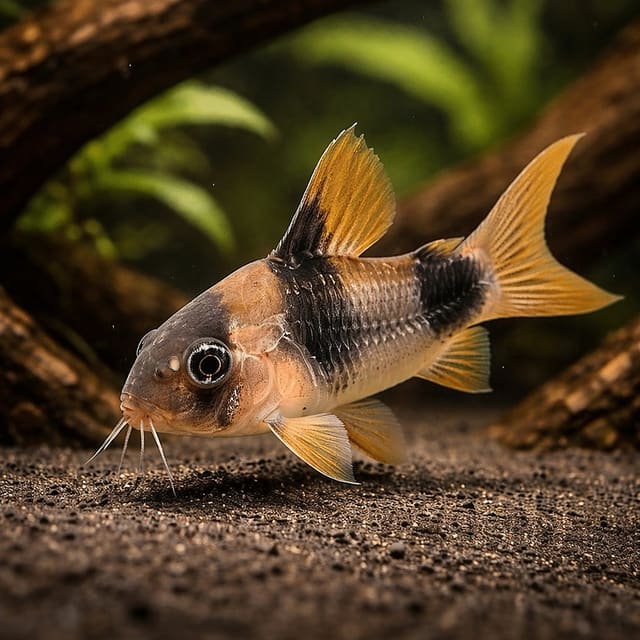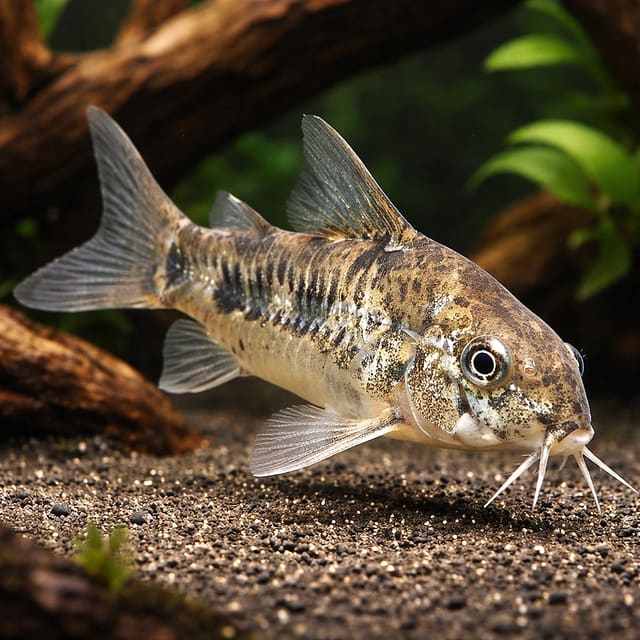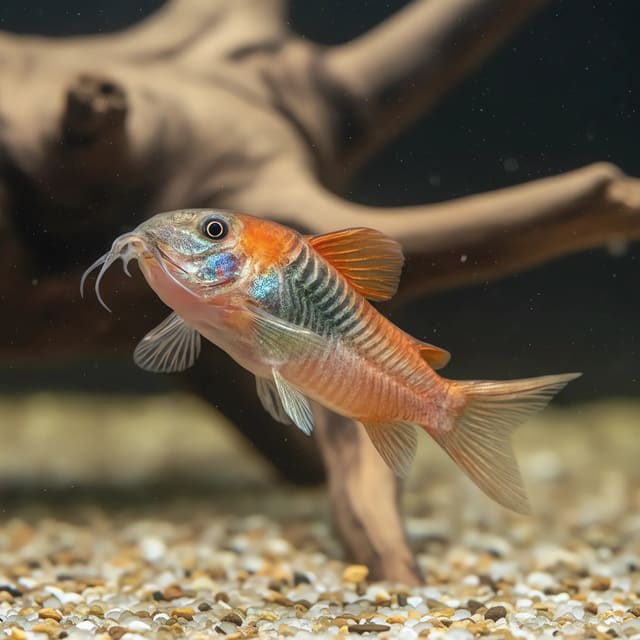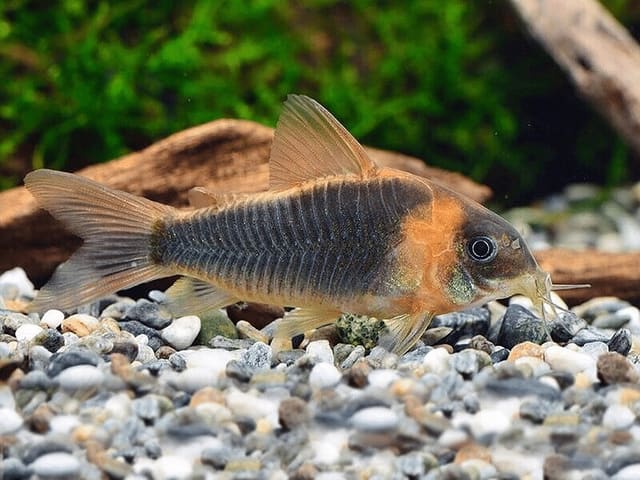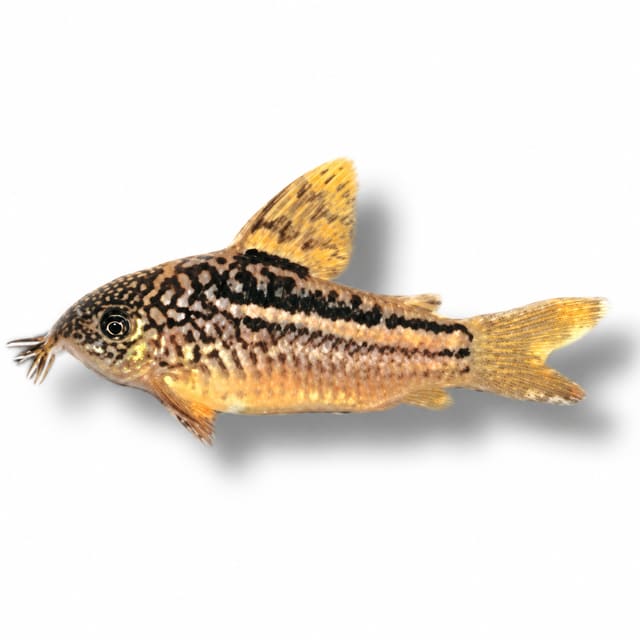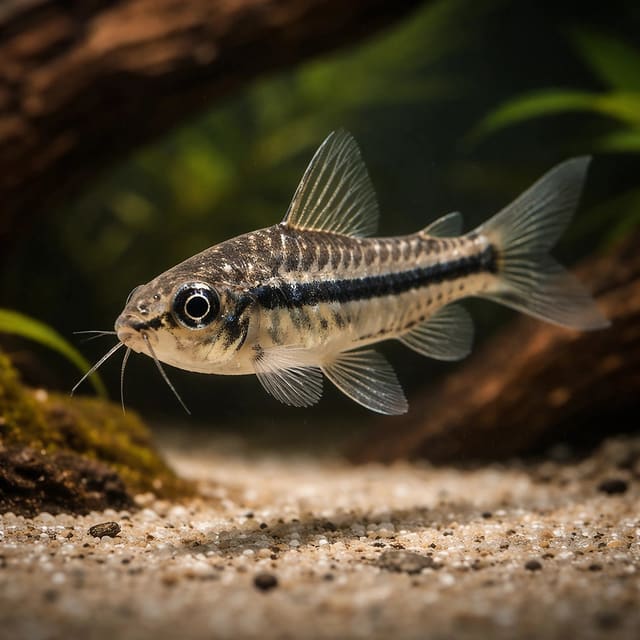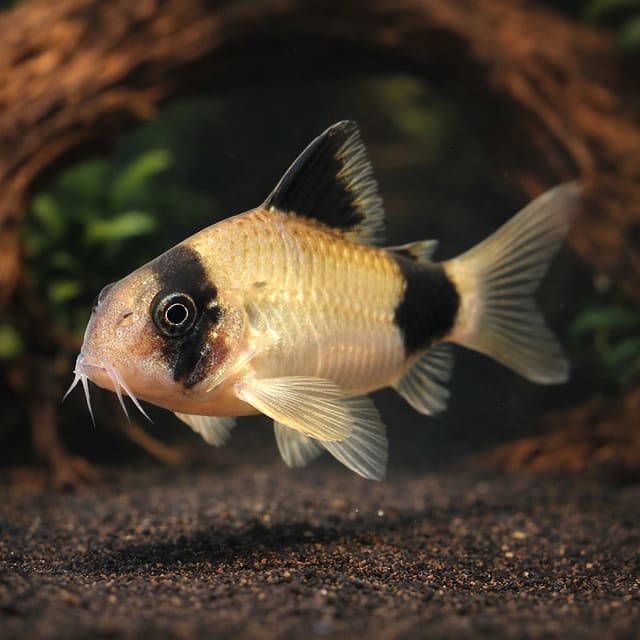
Panda Cory Catfish (Corydoras panda)
22–25°C · pH 6–7.4
From £8.69Some sizes on sale

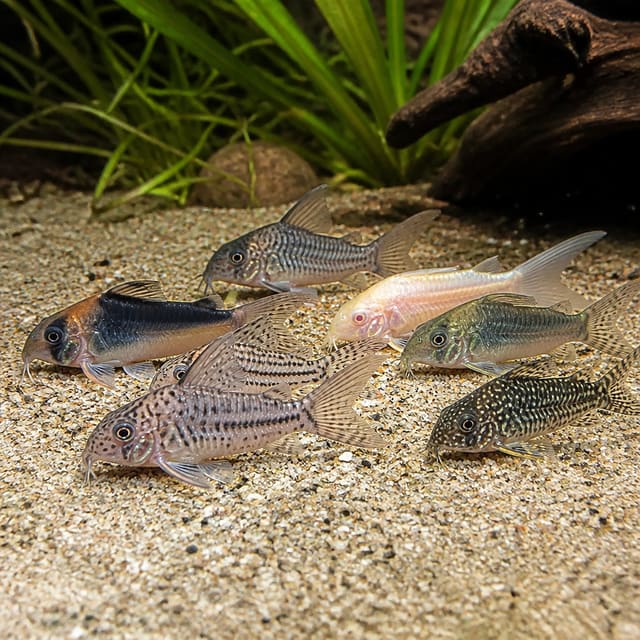
The Assorted Corydoras Mix, Corydoras sp. (mixed), is a mixed assortment of Corydoras catfish for the lower part of a freshwater aquarium. It suits a mature community aquarium; keep at least five together at 22–26°C and pH 6.0–7.5. Sold individually in 2.5–3 cm, 3–3.5 cm and XL dispatch sizes.
Corydoras sp. (mixed)
Shoaling fish: kept in a group they feel safer, stay calmer and show their best colour.
Minimum of 2 per order.
The Assorted Corydoras Mix, Corydoras sp. (mixed), is a mixed assortment of Corydoras catfish for the lower part of a freshwater aquarium. It suits a mature community aquarium; keep at least five together at 22–26°C and pH 6.0–7.5. Sold individually in 2.5–3 cm, 3–3.5 cm and XL dispatch sizes.
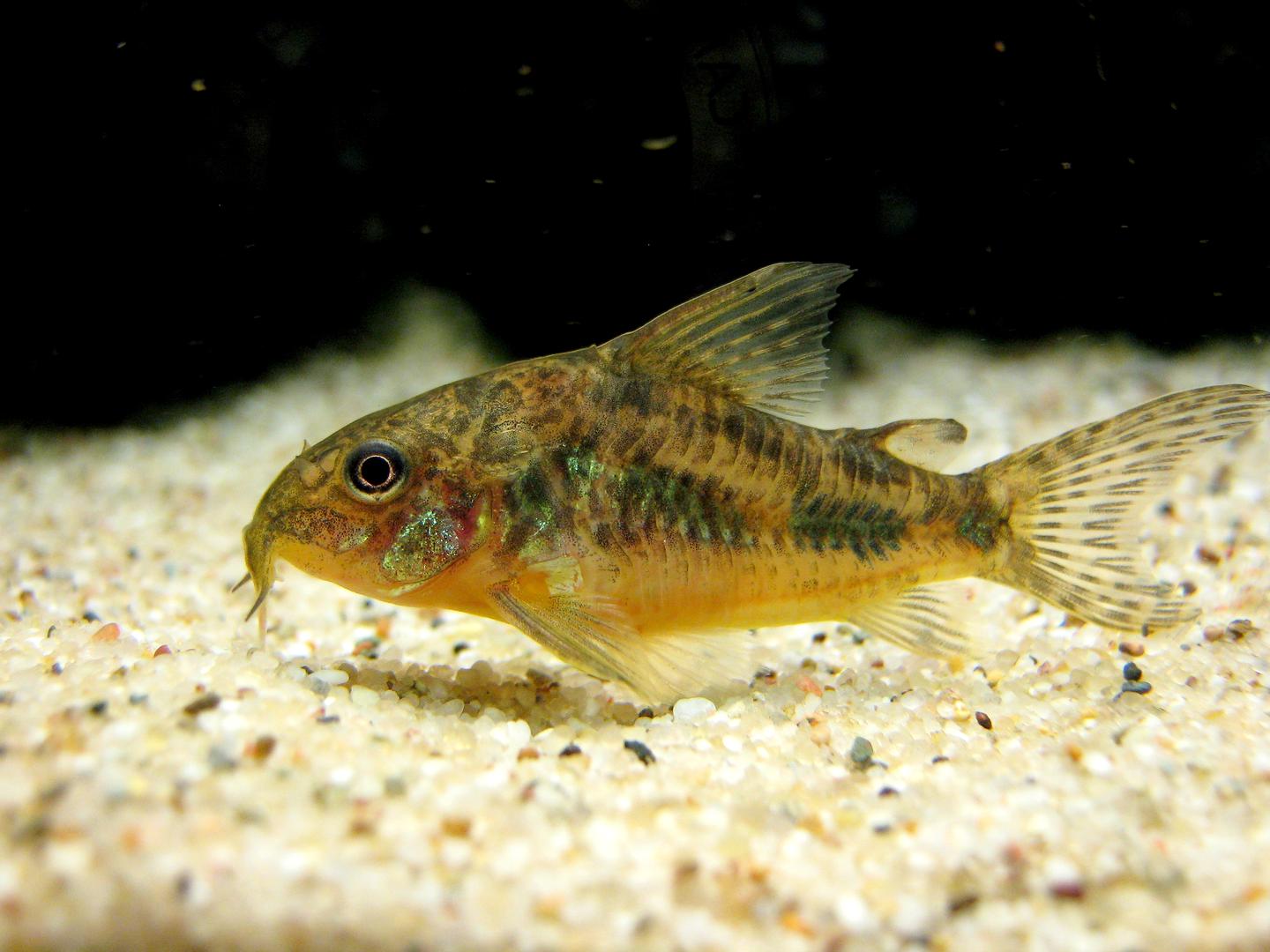
Identify the exact cory catfish before choosing care. Our starting policy for many common medium species is six compatible conspecifics, a mature 60 x 30 cm aquarium of about 60 litres, smooth fine sand and measured species-appropriate water.
Maintain these water conditions for optimal health and vibrant colors
The Assorted Corydoras Mix, Corydoras sp. (mixed), is a mixed assortment of Corydoras catfish in the family Callichthyidae. These are social freshwater catfish for the lower part of a community aquarium. They suit a keeper who can maintain a mature, filtered tank, feed the fish directly at the bottom and plan around an assortment rather than one named species.
Keep at least five together and use an aquarium of at least 80 litres as the starting point for a shoal of smaller catfish such as Corydoras. Keep the water at 22–26°C, pH 6.0–7.5 and 4–15°dH, with ammonia and nitrite at 0 mg/l. Larger fish would require more space, so treat 80 litres as a starting point rather than a universal final aquarium.
| Suits | Not suited to |
|---|---|
| A mature, filtered freshwater aquarium | An unfiltered or newly set-up aquarium |
| A group of at least five Corydoras | Keeping one fish alone |
| A peaceful community with overlapping water needs | Large predators or aggressive bottom dwellers |
| A keeper comfortable with an assorted identity | A species-pure group or breeding project |
| Direct daily feeding with sinking food | Relying on scraps left by other fish |
The assortment format makes flexibility important. If your aquarium has a tightly defined temperature, a fixed adult-size limit or a species-pure social group, a named Corydoras gives you a clearer long-term plan.
One purchase supplies one live fish from the selected size. Use the live size selector to choose 2.5–3 cm, 3–3.5 cm or XL. The 2.5–3 cm and 3–3.5 cm options are dispatch sizes, and XL is a dispatch grade with no centimetre figure.
The size you select is the size supplied, not the adult size. Adult size depends on which Corydoras is included in the assortment. Do not use a dispatch grade to decide whether the mature fish will fit your aquarium. Instead, start with the OATA planning figure of at least 80 litres for a shoal of smaller catfish such as Corydoras and allow more room when the individual fish requires it.
Fish in this assortment can be different Corydoras species rather than one named species. Colour, pattern and adult size can differ between fish in this assortment. Choose this mix when those differences fit your plans; choose a named Corydoras when an exact identity, fixed adult size or narrowly defined temperature requirement is essential.
Sex is guaranteed only when the selected option explicitly states male or female. This Assorted Corydoras Mix listing has no sex-guaranteed option.
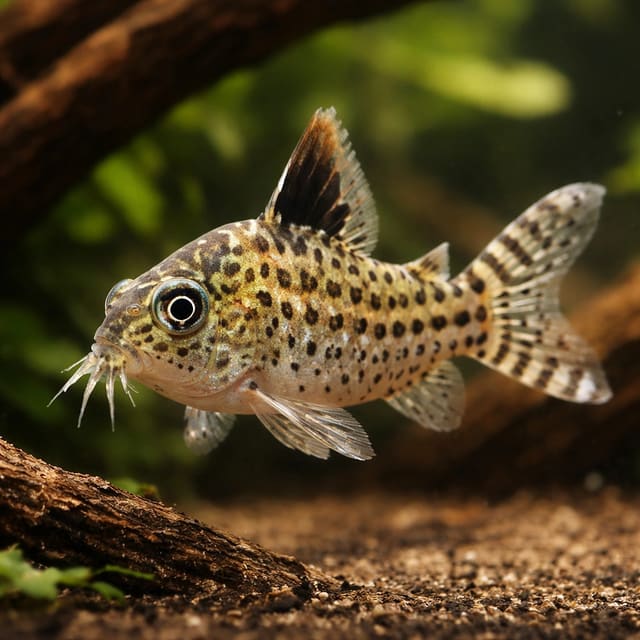
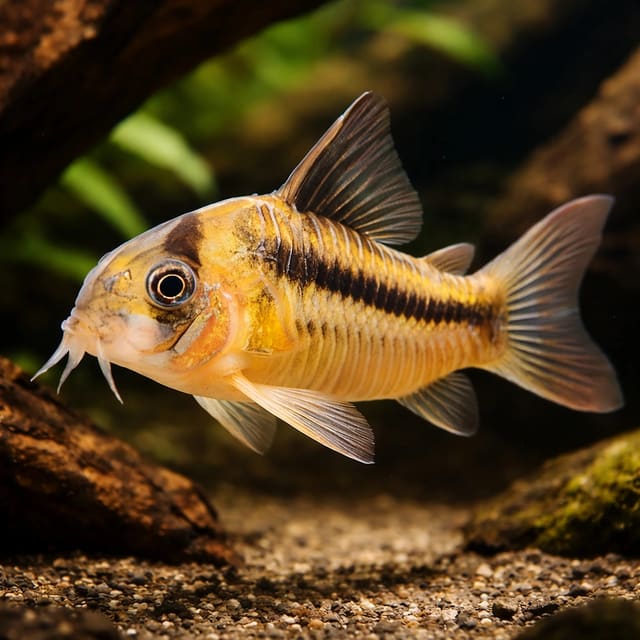
The gallery images are representative of this type of animal rather than photographs of the exact animal supplied, so colours can look slightly different from the live animal.
You can compare named fish in the Corydoras collection. Match the named animal’s adult size, social needs and water range to the aquarium before choosing it.
Whichever route you take, prepare the aquarium before the fish arrives. A mature biological filter, stable temperature, 0 mg/l ammonia, 0 mg/l nitrite and a deliberate feeding place at the bottom are practical essentials for this mix.
Prepare a mature, filtered aquarium before introducing the fish. OATA recommends an aquarium of at least 80 litres for a shoal of smaller catfish species such as Corydoras, while much larger aquariums are needed for bigger species. An assortment should therefore begin with that smaller-fish planning figure, not end with it. Choose as large an aquarium as practical, because a larger volume keeps temperature and water quality more stable.
If this is your first aquarium, follow our guide to preparing and maturing a first tropical tank before livestock arrives. Maturing the filter allows the beneficial bacterial population to process fish waste. Adding fish before that population is ready can allow toxic ammonia and nitrite to rise.
Arrange the aquarium so that shelter does not consume the whole feeding area. A useful layout has planted or furnished edges, one or more covered resting places and a clear patch of smooth substrate for meals. Watch where the fish gather when food reaches the bottom; if one shelter or ornament blocks access, move the feeding point rather than increasing the portion.
Introduce livestock gradually. Each additional fish and each extra meal increases the work required from the filter bacteria. Slow stocking gives that bacterial population time to grow and reduces the risk of new tank syndrome.
Make the final decision from measurements and usable space, not the aquarium’s appearance. Confirm that the filter is running normally, ammonia and nitrite both read 0 mg/l, the temperature is stable within 22–26°C and the planned Corydoras group has an accessible feeding area. An aquarium can look established while its biological filter is not ready for a larger waste load.
Check the arrangement from the fish’s level before adding livestock. Food should be able to reach smooth substrate without disappearing beneath inaccessible ornaments, and covered areas should not trap waste where it cannot be siphoned. If the only open area lies in a busy feeding route used by faster fish, prepare a second feeding point before the Corydoras arrive.
Keep the aquarium at 22–26°C, pH 6.0–7.5 and 4–15°dH. Hold ammonia and nitrite at 0 mg/l, and keep nitrate from rising more than 20 mg/l above the normal tap-water level. Stability within these limits is more useful than repeatedly adjusting the aquarium towards one edge of the range.
Measure the aquarium rather than relying on how clear the water looks. Our water-chemistry guide explains what the principal readings mean, while the water matcher helps compare your measured values with the stated range. Record the temperature, pH, hardness, ammonia, nitrite and nitrate so that a change can be seen rather than guessed.
The RSPCA explains how biological filtration supports fish welfare: fish release toxic ammonia, bacteria convert it to nitrite, and another bacterial stage converts nitrite into the safer nitrate. That process depends on a well-set-up and maintained filter. Clear water can still contain dissolved ammonia or nitrite, so testing remains essential.
| If you find | Do this |
|---|---|
| Ammonia above 0 mg/l | Pause further stocking, test again and correct the water-quality problem promptly. |
| Nitrite above 0 mg/l | Treat it as a filter or stocking warning and reduce the waste load. |
| Nitrate rising quickly | Review feeding, maintenance and stocking, then complete an appropriate conditioned water change. |
| A sudden pH or temperature change | Find the cause before making another adjustment. |
Do not solve a poor test result by adding more fish, more food or several rapid chemical adjustments. First confirm the reading, inspect the filter and review the recent stocking and feeding load. Prompt, measured action protects both the fish and the biological filter.
The nitrate limit is measured against the normal tap-water level, not against zero. For example, if conditioned tap water reads 10 mg/l nitrate, keep the aquarium from exceeding 30 mg/l under OATA’s limit of no more than 20 mg/l above that baseline. If the tap-water reading changes, update the comparison rather than continuing to use an old number.
Use trends to decide when routine needs attention. A single reading records one moment; several readings taken with the same method show whether nitrate is accumulating faster or pH is moving. When a result changes unexpectedly, repeat the test before altering the aquarium, then compare it with recent feeding, stocking and filter-flow observations.
Complete a partial water change of 25% at least once a week. Use a siphon to remove solid waste from the substrate, especially around feeding areas and beneath accessible ornaments. Treat replacement tap water with a suitable conditioner before it enters the aquarium so chlorine or chloramine does not harm the fish or filter bacteria.
If the filter media needs cleaning, rinse it lightly in aquarium water removed during the water change. Do not rinse established biological media under the tap because chlorine or chloramine may kill beneficial bacteria. Avoid replacing all mature filter media at the same time.
Changing 25% of the water at least once a week does not mean waiting for the weekly change when a test reveals a problem. If ammonia or nitrite rises above 0 mg/l, respond to the measured condition promptly and investigate the cause. Recent additions, excess food, decaying material or restricted filter flow can all increase the waste burden, so review what changed immediately before the reading moved.
Use the same test method and broadly similar point in the maintenance cycle each week. Comparable readings show whether nitrate is accumulating faster, pH is drifting or filter performance is changing. Write down unusual behaviour alongside the numbers; the combination often gives a clearer warning than either observation alone.
For an 80-litre aquarium, 25% is 20 litres. Marking that amount on a dedicated container makes the weekly change repeatable and prevents a rough estimate from becoming much smaller over time. For a different aquarium volume, multiply the volume by 0.25 to find the weekly amount before displacement by substrate and furnishings.
Use the siphon deliberately rather than disturbing every area at once. Start with places where sinking food lands and where visible debris gathers, then inspect around accessible shelters. The aim is to remove accumulated solid waste while preserving the established biological filter. Keep removed aquarium water aside when filter media needs its light rinse, then discard it after that task.
Finish by checking that the filter intake is clear and flow has returned to its normal level. Record the post-maintenance readings so next week’s values have a useful comparison point. If the fish behave differently after maintenance, compare temperature and pH with the pre-change readings before making another change.
Feed an appropriate sinking food once a day, offering only what the fish can eat within a few minutes. OATA identifies Corydoras as omnivorous catfish and warns that catfish should not be expected to live as scavengers. Food must reach the lower part of the aquarium in a form the group can find and eat.
Sinking pellets or granules provide a practical main food. Suitable frozen or live foods such as daphnia, Artemia or bloodworm can add variety where appropriate. Introduce variety in controlled portions and remove uneaten food rather than allowing it to break down in the substrate.
Do not increase the portion simply because the fish continue to search the substrate. Searching is not a measured feeding amount. Judge the meal by whether each fish eats, whether food remains after a few minutes and whether body condition stays steady.
| Observation | Response |
|---|---|
| Food remains on the bottom | Remove it and offer less at the next meal. |
| Other fish take every item | Use a second feeding point and confirm the Corydoras eat. |
| One fish loses condition | Check feeding access and water quality promptly. |
| The group stops showing interest | Test the water and assess the fish for other changes. |
Overfeeding is a water-quality problem as well as a diet problem. Uneaten food decomposes and adds waste that the biological filter must process. A small observed meal is safer than an oversized portion hidden among plants or gravel.
Begin with a controlled portion at the prepared feeding point and watch the whole feeding period. The correct amount is the amount the group consumes within a few minutes, not a fixed number of pellets for every aquarium. Food size, the number of fish and competition from other inhabitants all affect whether the meal actually reaches each Corydoras.
Use two feeding points only when that solves a visible access problem. Place both where you can see the food and remove anything left behind. If food disappears into deep gravel, beneath wood or behind an ornament, change the landing place before adding more. This keeps the feeding decision separate from the temptation to compensate with a larger portion.
Review appetite alongside the water test results. A group that suddenly loses interest in the usual meal needs an immediate water-quality check. If appetite remains normal but one fish repeatedly misses food, focus on access, competition and the position of the feeding area.
Be present to receive the parcel and inspect it on the day it arrives. Start filming before the parcel is opened. Record one continuous take showing the sealed parcel with the outer box visible, the parcel being opened and the fish still inside the sealed bag.
Follow the Tropical Fish Co delivery and Live Arrival Guarantee policy: float the bag for 20–30 minutes before releasing the fish, and do not pour the bag water into the aquarium. Contact us on the same day with the order number and the short continuous unboxing video if a claim is required.
Confirm that the aquarium is ready for livestock. Temperature should be within 22–26°C, ammonia and nitrite should both read 0 mg/l, and the filter should be operating normally. Do not use the arrival of the fish as the point at which the aquarium is first tested.
OATA advises increasing the aquarium population slowly because the filter’s beneficial bacteria must respond to the extra waste and feeding. Even a mature filter has a working capacity, so space additions rather than treating one successful introduction as permission to add a large number of fish immediately.
Write down the aquarium temperature, pH, ammonia and nitrite readings before starting the arrival process. This prevents the fish’s arrival from becoming the first point at which a filter or water problem is discovered. If ammonia or nitrite is above 0 mg/l, the aquarium needs attention before livestock is released into it.
Use each daily meal as a short health check. Healthy fish should show appropriate swimming behaviour, clear bright eyes, intact scales and fins, normal breathing and an interest in food. Learn the group’s normal appearance and behaviour so that a darker or paler colour, increased hiding or a change in swimming can be recognised quickly.
| If you see | First action |
|---|---|
| Hanging at the surface or erratic swimming | Test ammonia, nitrite, temperature and pH immediately. |
| Faster or slower gill movement | Check water quality and filter operation. |
| More hiding or altered temperament | Review recent stocking, disturbance and tank-mate behaviour. |
| White spots, fluffy growths, ulcers or damaged fins | Test the water and seek prompt health guidance. |
| Reduced feeding or loss of condition | Confirm that food reaches the fish and check all principal water readings. |
A change in behaviour does not identify one cause by itself. Testing separates a water-quality emergency from feeding competition or a compatibility problem. Write down the result and the observed change before altering several parts of the aquarium at once.
Whenever you are concerned about a fish’s health, test the water and contact us for further guidance. Include the aquarium volume, temperature, pH, ammonia, nitrite, nitrate, recent additions and maintenance history. Those details make the next decision more precise.
Continue daily feeding observation, weekly testing and a 25% water change at least once a week. Do not relax the routine because the water looks clear. Dissolved ammonia and nitrite cannot be judged by sight, while nitrate trends and gradual pH changes are easiest to manage when regular readings reveal them early.
Record only details that help with the next decision: whether every fish reached food, whether breathing and swimming looked normal, and whether colour, hiding or body condition changed. Pair unusual observations with the measured temperature, pH, ammonia, nitrite and nitrate. A dated note shows whether a change was brief, repeated after feeding or followed recent stocking or maintenance.
Change one manageable factor at a time unless ammonia or nitrite requires prompt action. If a fish misses one meal because another fish blocks the feeding point, correct access and watch the next meal. If several fish lose interest together, test the water and inspect the filter before changing the food. Look at the whole group before choosing the first check, and do not treat behaviour alone as a diagnosis.
Keep at least five Corydoras together. OATA warns that Corydoras kept singly or in groups that are too small will often become stressed. Count the group before assessing decorative space or adding unrelated bottom-dwelling fish; the Corydoras social requirement comes first.
A mixed selection does not replace a group of the same Corydoras species. The best group is several of one species or a clearly compatible close group; use a named, species-pure group when exact identity is central to your goal. Do not rely on a mixed assortment as a matched breeding group.
If the aquarium cannot hold at least five with suitable floor space, shelter and stable water quality, choose a different stocking plan. Reducing the group below five is not a substitute for providing enough room.
Additions should be gradual. Test ammonia and nitrite before increasing the group, then continue the usual weekly checks. A sudden rise above 0 mg/l indicates that the biological filter and waste load need attention before any further fish are introduced.
A minimum group of five is a stocking commitment, not a reason to add fish faster than the biological filter can support. Decide how the full group fits the aquarium, then pace introductions according to filter maturity and measured ammonia and nitrite. Both readings must remain at 0 mg/l before the stocking plan moves forward.
Recheck access when the group grows. A feeding place that works for one or two fish may become crowded when at least five use it, while a single shelter may not give the whole group practical cover. Add another visible feeding point or rearrange suitable cover when observation shows restricted access; do not solve crowding by reducing the Corydoras group below OATA’s minimum.
Pair the mix with peaceful community fish whose temperature, pH and hardness needs overlap. OATA identifies Corydoras as suitable community-aquarium catfish, but catfish compatibility varies widely across the wider group. Screen the actual aquarium rather than relying on the word “community” alone.
Do not add a proposed companion when only one check works. A peaceful fish with incompatible water needs is still a poor match, while a fish sharing the same temperature can still create persistent feeding or bottom-space competition.
| Community situation | Decision |
|---|---|
| Peaceful fish with overlapping water needs | Potentially suitable after space and feeding checks. |
| Fish that repeatedly blocks bottom feeding | Change the feeding arrangement or separate them. |
| Aggressive bottom dweller | Avoid. |
| Large predatory fish | Avoid. |
| Unclear adult size or behaviour | Resolve the stocking question before combining it with the mix. |
Monitor fins, breathing, hiding and feeding after any introduction. If one fish is repeatedly chased, excluded from food or damaged, act on the observed conflict rather than waiting for the weekly maintenance day. For a stocking and compatibility assessment, ask us with the aquarium volume, dimensions, measured water values and full livestock list.
Start with the companion’s required range. If it cannot remain at 22–26°C, pH 6.0–7.5 and the chosen point within 4–15°dH, stop there. If the water overlaps, assess behaviour next, followed by lower-area space and whether sinking food can reach the Corydoras.
A proposed companion passes only when all four checks work together. For example, a peaceful fish with overlapping water may still be unsuitable if it prevents the group from reaching food. Change the feeding arrangement and observe the result before treating the combination as workable. Repeated chasing, fin damage or exclusion from food is a failed compatibility outcome even when the test readings remain within range.
Repeat the screen whenever the community changes. Adding another fish alters the waste load, use of shelter and competition at feeding time. Check ammonia and nitrite after introductions and pause further additions if either rises above 0 mg/l.
Choose 2.5–3 cm, 3–3.5 cm or XL from the live size selector. Your selected size is the supplied dispatch size rather than an adult-size figure.
Use at least 80 litres as OATA’s planning figure for a shoal of smaller catfish such as Corydoras. Larger fish need more space, so choose a named fish when you require one fixed minimum aquarium size.
Keep at least five together, ideally as several of the same Corydoras species or a clearly compatible close group. OATA advises that Corydoras are shoaling fish and that individuals kept alone or in groups that are too small will often become stressed; a mixed selection does not replace a group of one species.
It suits a keeper who can run a mature filtered aquarium, test the water every week, complete a 25% water change at least once a week and plan around a mixed identity. Choose a named Corydoras if you need fixed adult-size and temperature details.
Feed suitable sinking pellets or granules once a day, giving only what the fish can eat within a few minutes. Corydoras are omnivorous, and suitable frozen or live foods such as daphnia, Artemia or bloodworm can add variety.
Keep it at 22–26°C, pH 6.0–7.5 and 4–15°dH. Maintain ammonia and nitrite at 0 mg/l and avoid sudden changes within the range.
Corydoras are peaceful catfish suited to a community aquarium. Monitor fins and behaviour after introductions, and avoid aggressive bottom dwellers or large predatory fish.
It can potentially live with peaceful community fish whose water needs overlap. Check temperature, pH, hardness, bottom space and feeding access for every proposed companion rather than treating any species as a universal match.
Fish are hand-bagged in pure oxygen, placed in an insulated poly box and given a heat pack when the weather calls for it, then carried by a licensed live-animal courier. Be present to receive the parcel, start a continuous unboxing video before opening, then float the bag for 20–30 minutes before releasing the fish.
No reviews for this item yet. Bought one? Honest reviews only, good or bad.
What customers say about ordering from us
I have a small group of long finned mountain minnows. So was delighted to be able to order ten of this variety to increase the genetics in my tank . The ones I recieved are healthy but it’s to early to give a verdict on wether they are of a long finned type since they are small currently.
Gordon Walker · 23 Sept 2026
100% success travel and "installation". Pleased with quality of purchase. The Siamese fighter a bit "shy" so have not yet seen him at his best yet but looking good. Happy customer. GG
George E Garratt · 21 Sept 2026
Reviews of our shop, collected by Judge.me, an independent third-party review collector. Newest first.