Easy
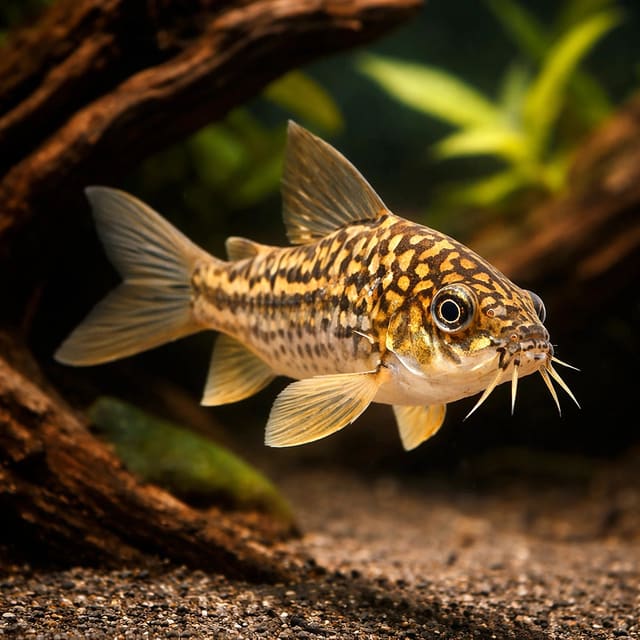
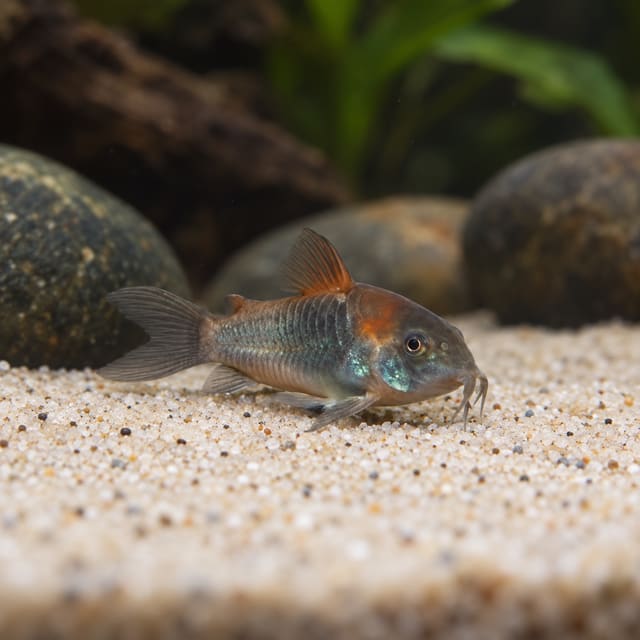
Venezuelan Cory (Corydoras venezuelanus)
25–27°C · pH 6–8 · 72L
£13.99

Peaceful spotted Corydoras-type catfish for mature soft-sand community aquariums. Best kept in a group, with clean substrate, shaded cover and targeted sinking foods.
Adult size is the maximum length this species reaches at full maturity (scientific sources). The livestock you receive will be younger and smaller — pick a size above for the actual shipping size. Product-photo provenance and any image-specific limitations are stated on the listing.
Corydoras melanistius
Shoaling fish: kept in a group they feel safer, stay calmer and show their best colour.
Confirm your email, then we’ll send an availability message for this exact item if it returns within 180 days.
This request is only for this product—no newsletter or other promotions. A mail-provider retry may very rarely duplicate the same availability message. Unconfirmed addresses are removed after 48 hours. See our privacy policy.
Peaceful spotted Corydoras-type catfish for mature soft-sand community aquariums. Best kept in a group, with clean substrate, shaded cover and targeted sinking foods.
Adult size is the maximum length this species reaches at full maturity (scientific sources). The livestock you receive will be younger and smaller — pick a size above for the actual shipping size. Product-photo provenance and any image-specific limitations are stated on the listing.
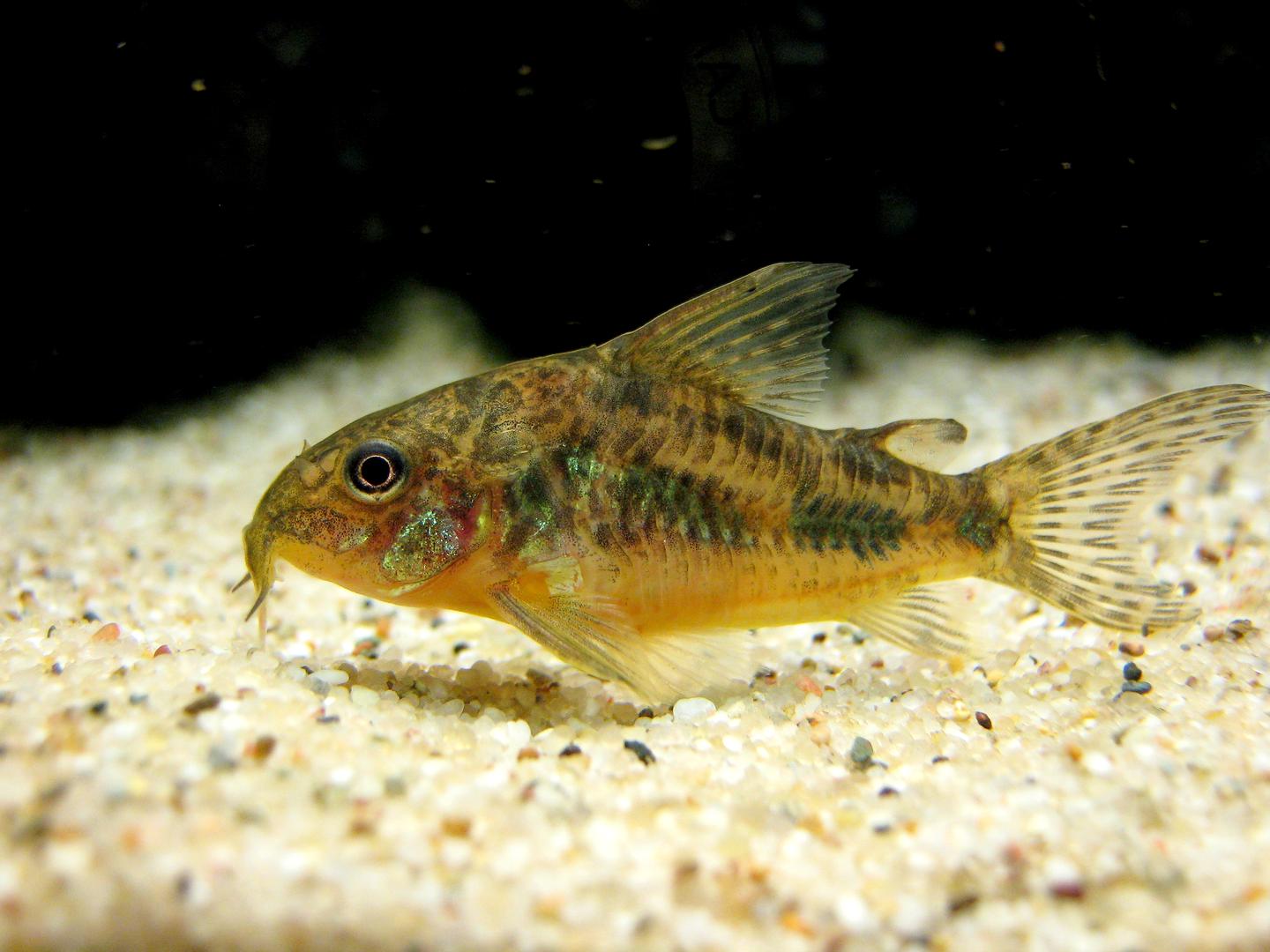
Identify the exact cory catfish before choosing care. Our starting policy for many common medium species is six compatible conspecifics, a mature 60 x 30 cm aquarium of about 60 litres, smooth fine sand and measured species-appropriate water.
Maintain these water conditions for optimal health and vibrant colors
The Black Sail Cory is a peaceful spotted Corydoras-type catfish sold under familiar aquarium names including Black Sail Cory, Black-Spot Cory, Bluespotted Corydoras, Guiana Cory and Corydoras melanistius. Current references may also place this fish as Hoplisoma melanistium, so this listing keeps the trade name customers recognise while making the taxonomy clear rather than forcing one name into every sentence.
This is a bottom-dwelling community fish with a pale grey body, dark spotting and a darker dorsal marking that gives the “black sail” name. It is at its best in a proper group on soft sand, where it can forage naturally without damaging the sensitive barbels around the mouth.
| Trade names | Black Sail Cory, Black-Spot Cory, Bluespotted Corydoras, Guiana Cory |
|---|---|
| Scientific names used | Corydoras melanistius; also treated in newer references as Hoplisoma melanistium |
| Adult size | Usually around 5-6 cm, depending on source and sex |
| Temperament | Peaceful, social, bottom-dwelling community catfish |
| Best kept | In a group of at least 5-6 where stocking and tank size allow |
| Tank area | Bottom level, with regular trips to the surface for air |
The visual appeal is subtle rather than loud: a clean spotted body, dark head line and the darker dorsal saddle make this fish look smart against pale sand, leaf litter and shaded wood. In a planted community aquarium, a group of Black Sail Corys gives constant movement across the front and lower areas of the tank without disturbing midwater fish.
The species is also interesting behaviourally. Like other Corydoras-type catfish, it forages in short bursts, rests together, and uses the barbels to sift for small foods. It can also gulp atmospheric air, so the aquarium should always leave a clear route to the surface rather than being packed tight to the lid with floating clutter.
FishBase currently presents the fish as Hoplisoma melanistium while the aquarium trade still widely uses Corydoras melanistius. Maidenhead/Fishkeeper also notes synonyms and warns that fish labelled as genuine melanistium can be confused with similar Corydoras/Hoplisoma forms such as brevirostris, delphax or leucomelas types.
For customers, the practical care remains consistent: choose fish with healthy barbels, clear fins, rounded body condition and active group behaviour. Avoid mixing up similar spotted Corydoras unless you are intentionally building a mixed Corydoras community, because closely related forms can look alike when young or stressed after shipping.
| Minimum aquarium | 80 litres is a sensible minimum for a small group; larger is better for mixed communities |
|---|---|
| Substrate | Soft sand is strongly preferred; very smooth fine gravel only if kept scrupulously clean |
| Temperature | 22-26C |
| pH | About 6.0-7.8, with stable mature water more important than chasing numbers |
| Hardness | Low to moderate hardness suits them; FishBase gives a broad 2-25 dH range |
| Decor | Driftwood, shaded planting, leaf litter areas and open sand for foraging |
Soft substrate is not cosmetic for this fish. Rough gravel and trapped waste can damage barbels, which then affects feeding and leaves the fish vulnerable to infection. Keep the front of the aquarium open enough for group foraging, with shaded retreats behind or around the hardscape.
Moderate light is fine, but bright light is best softened with broad-leaved plants, floating cover or darker wood. Good filtration and regular partial water changes matter more than high flow; Corydoras-type fish appreciate oxygen-rich clean water but should not be blasted around the bottom.
Black Sail Corys are omnivorous bottom feeders. Use quality sinking Corydoras pellets or wafers as the base, then rotate frozen or live foods such as bloodworm, daphnia, brine shrimp, white mosquito larvae or similar small foods. FishBase lists worms, crustaceans, insects and plant matter in the natural diet, so variety is useful.
Do not rely on leftovers from midwater fish. Corydoras should receive targeted sinking foods after the faster fish have settled, especially in busy community tanks. Feed modest portions that are cleared quickly, and remove excess food before it disappears into the substrate.
This is a social fish. A single Cory may survive, but it will not show the same confidence or natural behaviour as a group. In a group, they forage together, rest near one another and are more likely to come into view. Midwater dither fish such as small peaceful tetras, pencilfish or rasboras can also help them feel secure.
They are peaceful with tank mates, but they are not a cleanup crew for poor maintenance. Treat them as proper livestock with their own diet, oxygen needs, quarantine and observation. Their pectoral spines can catch in nets, so move them gently with a container where possible.
| Good tank mates | Small tetras, pencilfish, rasboras, peaceful livebearers, dwarf cichlids, other calm Corydoras-type catfish |
|---|---|
| Use caution with | Very boisterous feeders, territorial bottom dwellers and fish that monopolise sinking foods |
| Avoid | Large predatory catfish, aggressive cichlids, fin nippers and any fish large enough to swallow them |
| Community style | Best in mature planted or wood-based community aquariums with clean sand and stable water |
Because they spend so much time on the substrate, avoid pairing them with aggressive bottom fish that guard caves or food. A calm community with activity above them usually works best.
Breeding follows the general Corydoras pattern. Well-conditioned adults may spawn after cooler water changes and plentiful protein-rich foods. FishBase describes the female holding a small number of eggs between her pelvic fins while the male fertilises them, then placing the adhesive eggs on a chosen surface. ScotCat breeding notes describe successful spawning in clean, lightly filtered water around 24C with planted cover.
Most customers should treat breeding as a bonus, not the reason to choose the fish. Stable water, good feeding and a confident group come first.
Choose the Black Sail Cory if you want a peaceful, understated catfish for the lower level of a mature aquarium. It suits aquarists who enjoy natural behaviour, group movement and a sand-bottom aquascape more than a single centrepiece fish.
It is not the right choice for a sharp-gravel aquarium, a new uncycled tank, a predator setup, or a tank where bottom foods are never provided. If you want a reliable community Corydoras-style fish and can provide a group, soft substrate and clean water, it is a strong choice.
Black Sail Corys are sent through suitable UK live-fish courier handling when available for dispatch. Livestock orders are covered by the Tropical Fish Co Live Arrival Guarantee when the delivery and acclimation conditions are followed.
On arrival, dim the lights, float the sealed bag to equalise temperature, then acclimate gradually before release. Keep the first feeding light and observe barbel condition, breathing, balance and group behaviour over the first few days.
No reviews for this item yet. Bought one? Honest reviews only, good or bad.
What customers say about ordering from us
I have a small group of long finned mountain minnows. So was delighted to be able to order ten of this variety to increase the genetics in my tank . The ones I recieved are healthy but it’s to early to give a verdict on wether they are of a long finned type since they are small currently.
Gordon Walker · 23 Sept 2026
100% success travel and "installation". Pleased with quality of purchase. The Siamese fighter a bit "shy" so have not yet seen him at his best yet but looking good. Happy customer. GG
George E Garratt · 21 Sept 2026
Reviews of our shop, collected by Judge.me, an independent third-party review collector. Newest first.