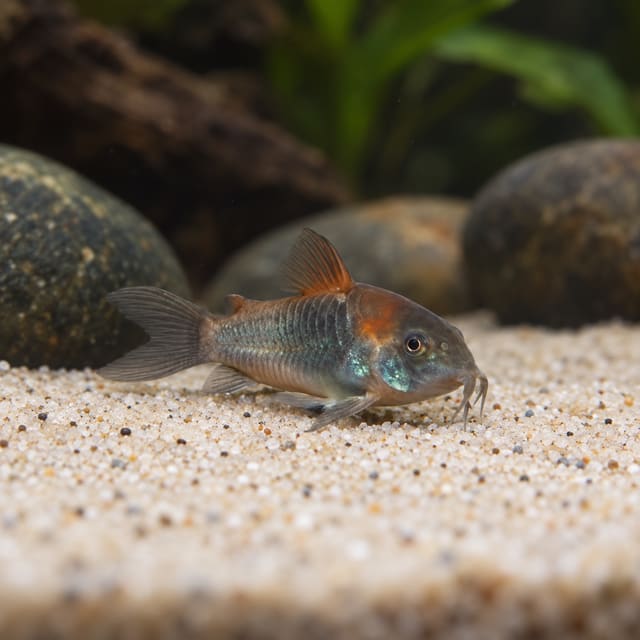
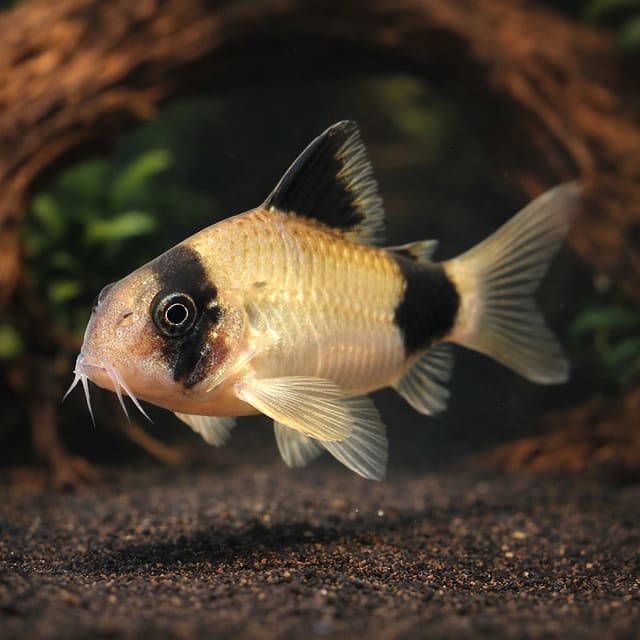
Albino Bronze Cory (Osteogaster aenea)
22–27°C · pH 6–8 · 72L
£2.99

A striking, peaceful bottom dweller ideal for community aquariums. Cory Catfish Loxozonus adds activity and character. Order now with UK delivery.
Adult size is the maximum length this species reaches at full maturity (scientific sources). The livestock you receive will be younger and smaller — pick a size above for the actual shipping size. Product-photo provenance and any image-specific limitations are stated on the listing.
Corydoras loxozonus
Shoaling fish: kept in a group they feel safer, stay calmer and show their best colour.
Confirm your email, then we’ll send an availability message for this exact item if it returns within 180 days.
This request is only for this product—no newsletter or other promotions. A mail-provider retry may very rarely duplicate the same availability message. Unconfirmed addresses are removed after 48 hours. See our privacy policy.
A striking, peaceful bottom dweller ideal for community aquariums. Cory Catfish Loxozonus adds activity and character. Order now with UK delivery.
Adult size is the maximum length this species reaches at full maturity (scientific sources). The livestock you receive will be younger and smaller — pick a size above for the actual shipping size. Product-photo provenance and any image-specific limitations are stated on the listing.
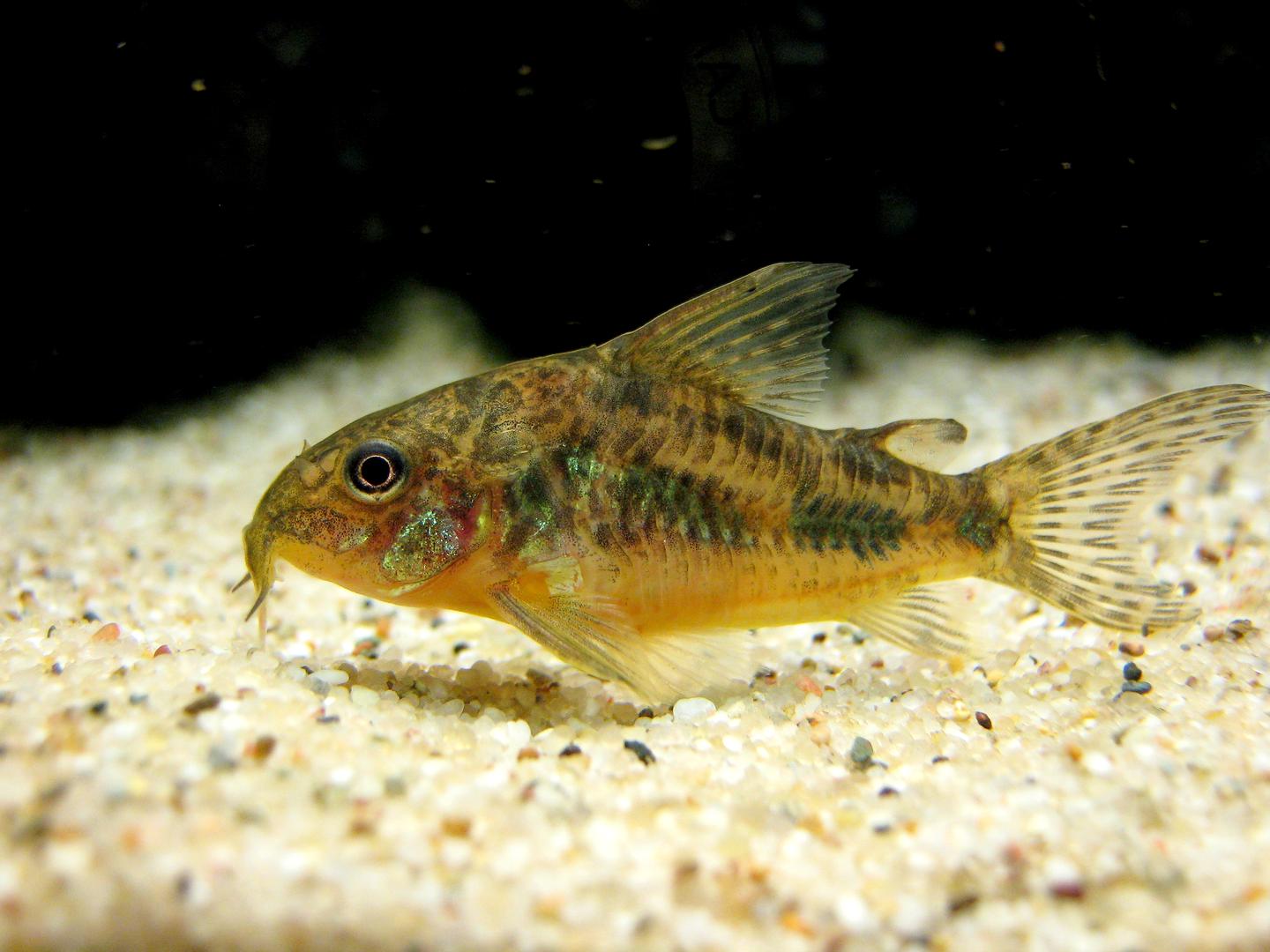
Identify the exact cory catfish before choosing care. Our starting policy for many common medium species is six compatible conspecifics, a mature 60 x 30 cm aquarium of about 60 litres, smooth fine sand and measured species-appropriate water.
Maintain these water conditions for optimal health and vibrant colors
Loxozonum Cory (Hoplisoma loxozonum) is a peaceful Colombian cory catfish with a distinctive dark diagonal marking across the shoulder and flank. Older aquarium books, supplier lists and searches commonly use the former name Corydoras loxozonus. This listing uses the current accepted name while retaining the older combination once for clarity.
One quantity supplies one unsexed fish in the selected approximate size grade. The 2–3cm, 3–4cm and 4–5cm options are dispatch sizes rather than adult sizes. This is a social species, so plan a group rather than a single fish.
| Current scientific name | Hoplisoma loxozonum |
|---|---|
| Former name | Corydoras loxozonus |
| Natural range | Meta River basin, Colombia |
| Adult size | About 5–5.5cm |
| Group size | At least 6; 8 or more is preferable where space allows |
| Aquarium | About 60 litres as a baseline, with a larger footprint preferable for a bigger group or community |
| Temperature | 22–26°C |
| pH | 6.0–7.5 |
| Hardness | Approximately 2–15 dGH |
| Temperament | Peaceful and social |
| Diet | Omnivore; deliberately feed sinking foods and suitable frozen/live variety |
Keep at least six Loxozonum Corys together. Eight or more often gives a more confident group where the aquarium has enough floor space and filtration. A solitary cory may survive, but it does not provide the normal social environment this fish needs.
Floor area matters more than height because the group spends most of its time searching the substrate. Around 60 litres is a practical baseline for a small group, while 75–90 litres or more gives more feeding space and flexibility in a mixed community. Use adult stocking, not the small dispatch grade, when planning capacity.
Fine aquarium sand is the preferred substrate because it supports natural sifting without abrading the mouth and barbels. Very smooth rounded fine gravel can also work, but avoid sharp or coarse material. Healthy barbels depend on clean water and bottom hygiene as well as substrate texture.
Use planted or shaded edges, smooth wood and open feeding areas. The group should be able to forage across the bottom without being trapped by territorial tank mates. Gentle to moderate filtration with good surface movement is suitable.
Keep the aquarium stable at around 22–26°C, pH 6.0–7.5 and roughly 2–15 dGH. Ammonia and nitrite should remain at zero in a mature aquarium. Track nitrate, feeding and substrate cleanliness rather than assuming a bottom-dweller will tolerate waste accumulating near the floor.
An occasional quick trip to the surface for air can be normal for cory catfish. Repeated frantic surfacing by several fish is different and should prompt checks of oxygen, temperature, ammonia, nitrite and filter flow.
This fish is not an algae-eating cleaner and should not be expected to live on leftovers. Use a complete sinking micro-pellet, soft catfish wafer or other appropriately sized bottom food as the staple. Rotate suitable frozen or live foods such as daphnia, cyclops, brine shrimp and bloodworm in sensible portions.
Watch a full feeding to make sure food actually reaches every cory before faster midwater fish take it. Remove persistent leftovers and reduce the next portion if food is accumulating under decor.
Loxozonum Corys suit peaceful community fish that share the same temperature and water chemistry. Calm tetras, rasboras and other non-aggressive upper-water fish can work well. Other cory species may coexist in a larger aquarium, but they do not replace a proper same-species group.
Avoid large predators, aggressive cichlids and boisterous bottom dwellers that prevent the group from feeding. Adult shrimp can often coexist in a peaceful planted aquarium, although very small shrimplets may be eaten opportunistically.
The current accepted name is Hoplisoma loxozonum. The older name Corydoras loxozonus remains common in aquarium literature and trade records.
Keep at least six of the same species. Eight or more is preferable where the aquarium has enough floor space and filtration.
Plan for an adult around 5–5.5cm. The 2–5cm options on this product are approximate dispatch size grades, not final adult size.
Around 60 litres is a practical baseline for a small group, with 75–90 litres or more giving a better margin for a larger group or mixed community.
No. They may investigate edible material on the bottom, but they are not an algae-control species and they still need deliberate feeding and normal aquarium maintenance.
Fine aquarium sand is preferred for natural sifting. Very smooth rounded fine gravel can work, but sharp or dirty substrate should be avoided.
Use complete sinking catfish foods as the staple, supported by appropriately sized frozen or live foods such as daphnia, cyclops, brine shrimp or bloodworm.
Adults can often coexist with peaceful aquarium shrimp, but very small shrimplets may be eaten opportunistically.
An occasional air gulp can be normal. Repeated frantic surfacing by several fish means oxygen, temperature and water quality should be checked immediately.
No sex is guaranteed by these size variants unless a future option explicitly says otherwise.
The product identity has been updated to Hoplisoma loxozonum while retaining Corydoras loxozonus as the former aquarium name so customers can connect older references with the current taxonomy.
No reviews for this item yet. Bought one? Honest reviews only, good or bad.
What customers say about ordering from us
I have a small group of long finned mountain minnows. So was delighted to be able to order ten of this variety to increase the genetics in my tank . The ones I recieved are healthy but it’s to early to give a verdict on wether they are of a long finned type since they are small currently.
Gordon Walker · 23 Sept 2026
100% success travel and "installation". Pleased with quality of purchase. The Siamese fighter a bit "shy" so have not yet seen him at his best yet but looking good. Happy customer. GG
George E Garratt · 21 Sept 2026
Reviews of our shop, collected by Judge.me, an independent third-party review collector. Newest first.