Easy
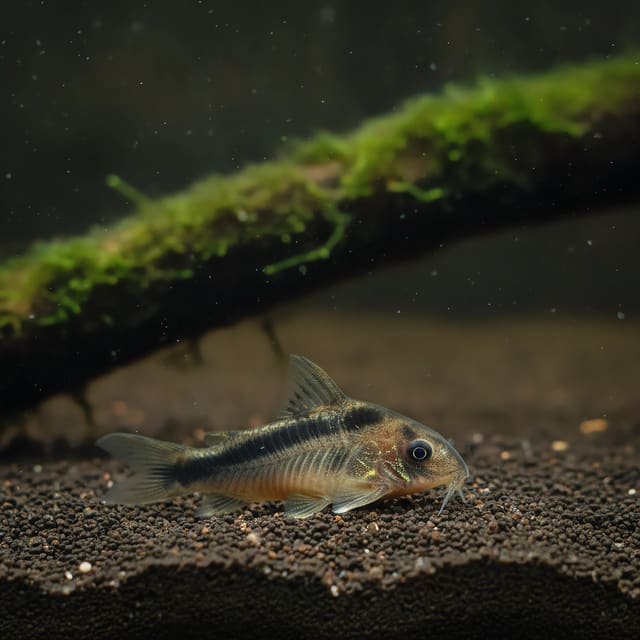
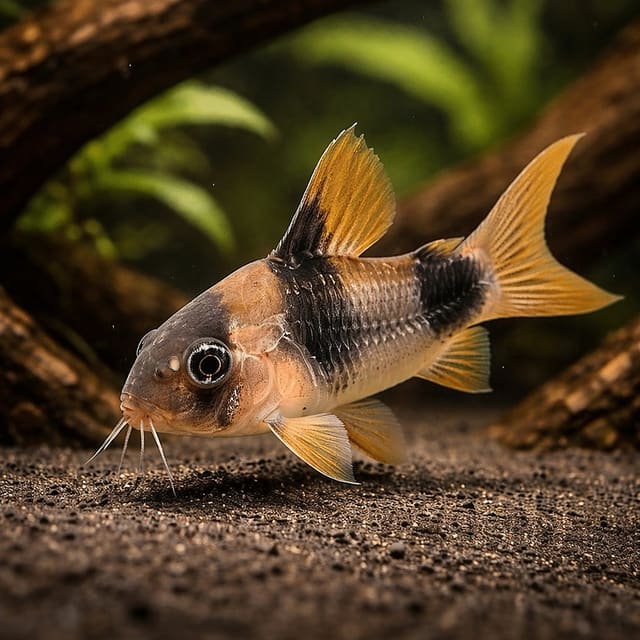
Three-Stripe Cory (Hoplisoma trilineatum)
22–26°C · pH 6–7.2 · 41L
£14.99

A small, peaceful bottom-dwelling catfish that adds constant activity and charm to planted community aquariums. Easy care, peaceful. 22-26C, pH 6.0-7.5.
Corydoras axelrodi
Shoaling fish: kept in a group they feel safer, stay calmer and show their best colour.
A small, peaceful bottom-dwelling catfish that adds constant activity and charm to planted community aquariums. Easy care, peaceful. 22-26C, pH 6.0-7.5.
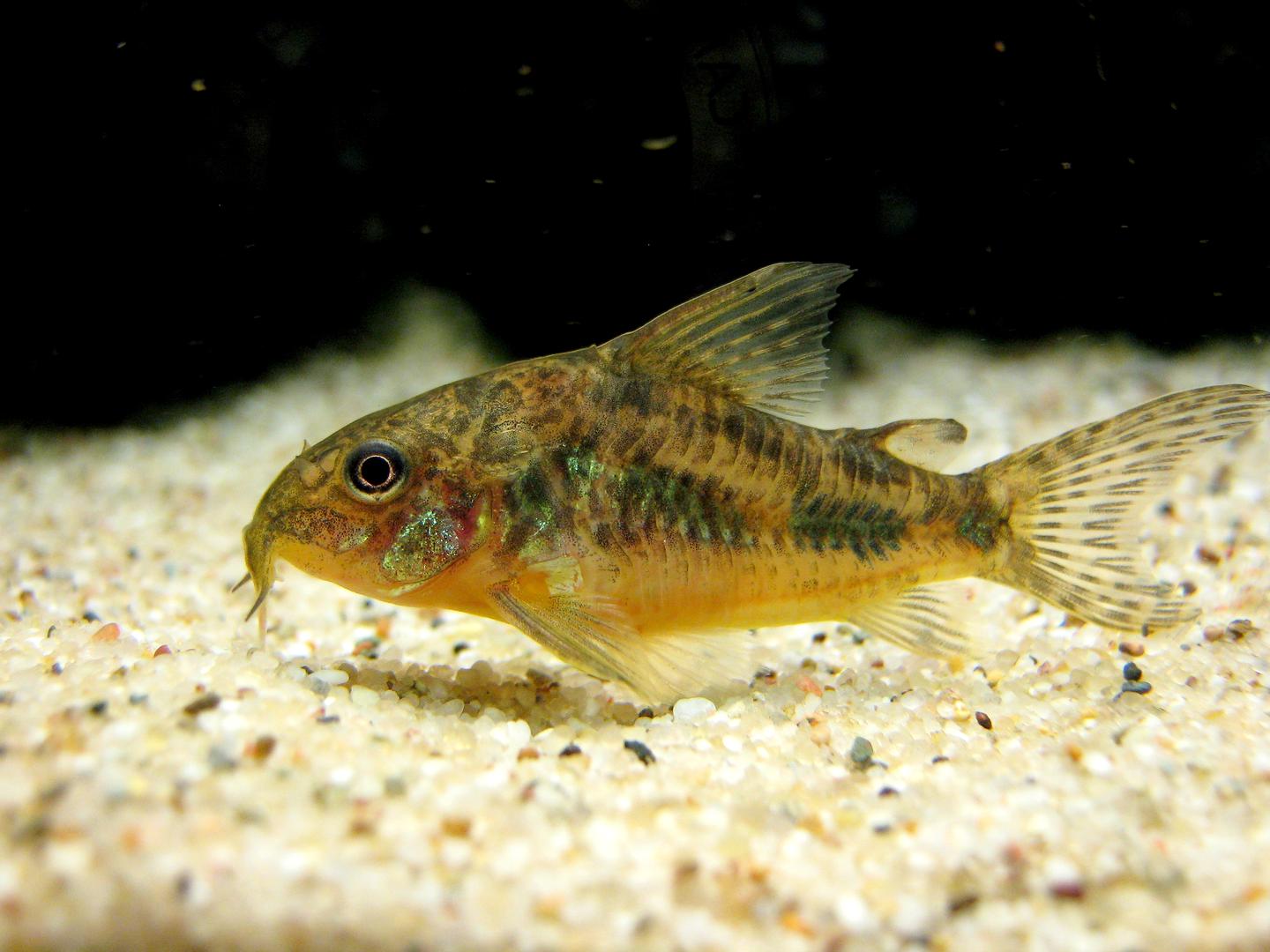
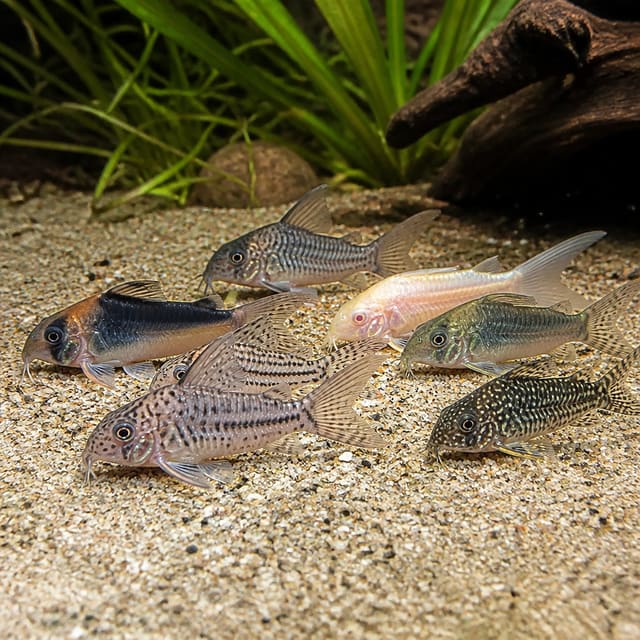
Identify the exact cory catfish before choosing care. Our starting policy for many common medium species is six compatible conspecifics, a mature 60 x 30 cm aquarium of about 60 litres, smooth fine sand and measured species-appropriate water.
Maintain these water conditions for optimal health and vibrant colors
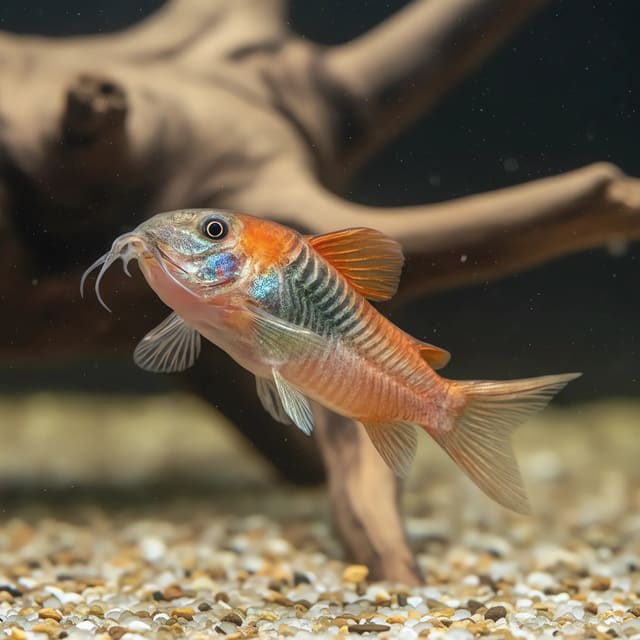
Corydoras axelrodi—commonly known as the Pink Corydoras or Pink Cory—is a small, peaceful catfish native to the Meta River basin in Colombia, South America. This species grows beyond small juvenile sizes and should be kept in a group, adding activity to the bottom of a community aquarium. Plan for adult growth rather than treating the selected supply size as a maximum adult length. Its colour and peaceful nature make it an appealing fish for a suitably planned community aquarium.
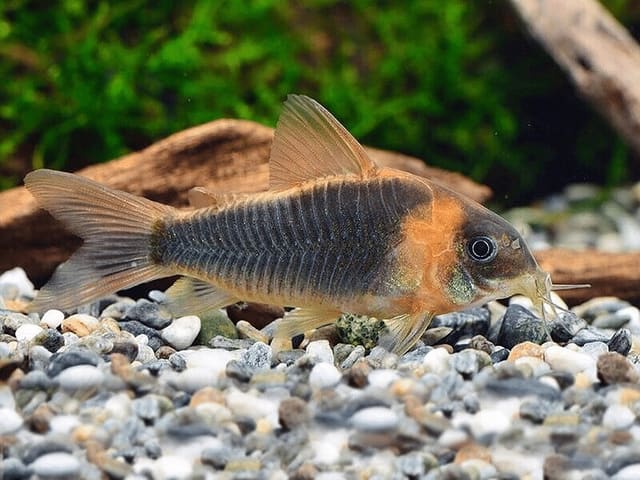
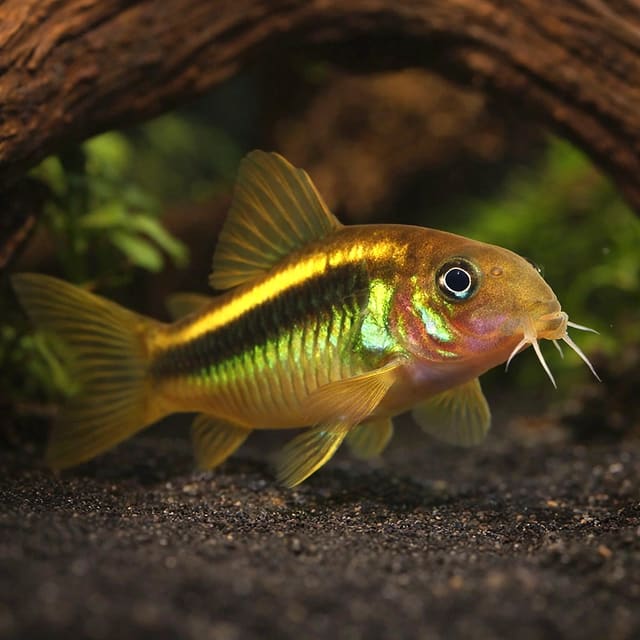
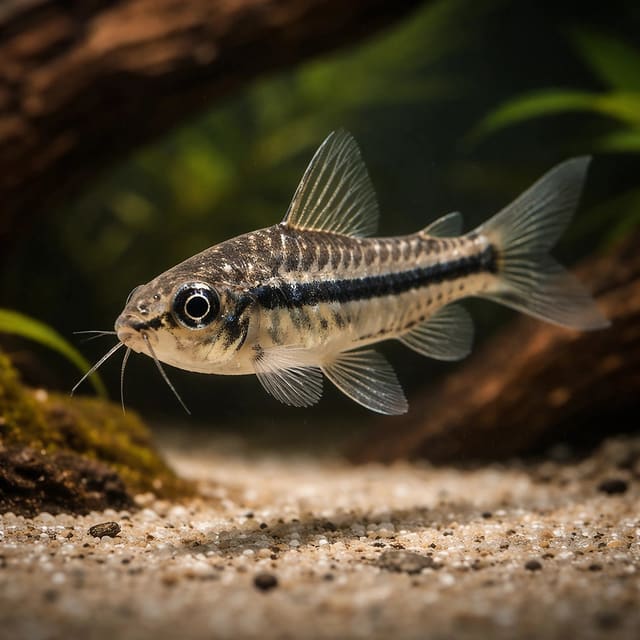
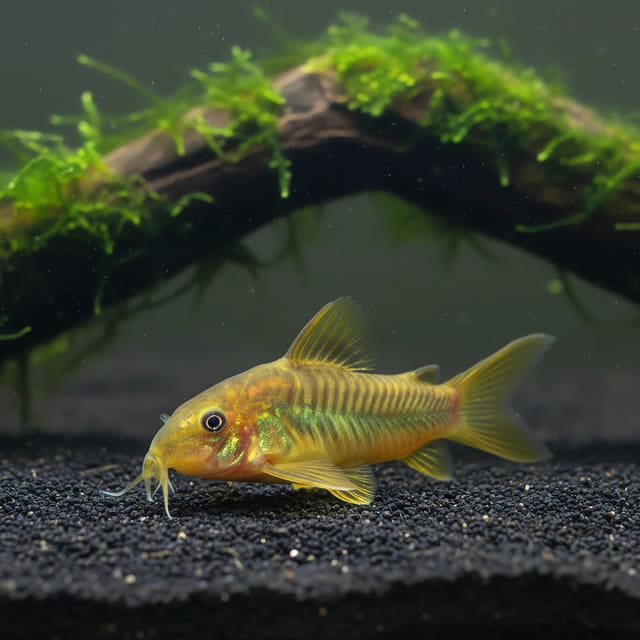
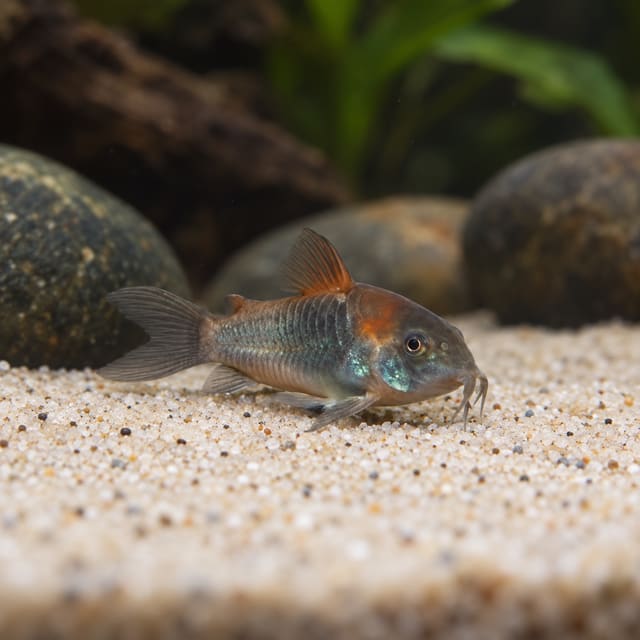
Corydoras axelrodi displays a delicate pink or pale peach base color with subtle darker mottling along the flanks. The body is compact and armored, typical of the Corydoras genus, with a rounded snout and sensitive barbels adapted for substrate exploration. The fins are semi-translucent with faint pigmentation, and the dorsal fin is upright and well defined. Under subdued lighting, the pink hue becomes particularly vivid, creating a soft, gentle appearance. Size and appearance vary with maturity; the selected size option describes the supplied fish rather than its adult maximum.
This species is endemic to the Meta River basin in Colombia, where it inhabits slow-moving tributaries and flooded forest zones with soft, acidic water. The substrate is fine sand or mud, and the environment is heavily shaded by overhanging vegetation and leaf litter. Water temperatures are stable between 22–26 °C, and the water is well-oxygenated with minimal current. Corydoras axelrodi is a diurnal species, actively foraging during daylight hours in small groups. Replicating these soft-water conditions at home encourages natural behavior and optimal health.
Choose an aquarium with enough clear bottom area for a group of Corydoras axelrodi to forage together. Judge suitability from its footprint, adult stocking and filtration, rather than volume alone. Use soft sand or very smooth rounded gravel to protect the delicate barbels, which are essential for foraging. Décor should include driftwood, rounded stones, and live plants such as Java fern, Anubias, and Amazon swords. Floating plants help diffuse lighting and create shaded zones. Avoid sharp-edged decorations or coarse substrates, which can damage the barbels and lead to infection. A secure lid is recommended, as Corydoras occasionally dart to the surface for gulps of air.
Corydoras axelrodi is an omnivore that thrives on a varied sinking diet. Offer quality corydoras pellets or wafers as a staple, supplemented with frozen or live foods such as bloodworms, daphnia, brine shrimp, and small meaty prepared foods. Occasional blanched vegetables like courgette or spinach can be offered, though meaty foods form the core of the diet. Feed once or twice daily in small portions, ensuring food reaches the substrate before mid-water fish consume it. Sinking foods prevent competition and allow the catfish to forage naturally along the bottom.
These catfish are highly social and must be kept in groups of at least five individuals to display confident, natural behavior. In smaller numbers they become shy and stressed, spending most of their time hidden. A well-adjusted shoal will actively forage across the substrate throughout the day, sifting sand through their gills and occasionally resting on plant leaves or driftwood. They are peaceful and compatible with a wide range of community fish. Males may engage in mild chasing during feeding, but aggression is extremely rare.
Ideal companions include small peaceful community fish such as tetras (neon, cardinal, ember), rasboras (harlequin, chili), danios (zebra, pearl), and other Corydoras and small catfish. Avoid housing with large predatory fish, aggressive cichlids, fin-nippers, or very boisterous species that outcompete bottom feeders. Small shrimp can coexist if the tank is well planted and offers hiding spaces. This species is ideal for peaceful community aquariums with stable water conditions.
Can be bred in captivity with soft, clean water, a cool water change to trigger spawning, and a group of conditioned adults. Males are slightly smaller and more streamlined than the plumper females. Eggs are typically laid on glass, plants, or décor and should be removed to a separate rearing tank to prevent predation by adults. Spawning often occurs after a series of partial water changes with cooler water. Fry require infusoria or liquid fry food initially, graduating to micro-worms and finely crushed flake within a week. Breeding success is achievable with patience and careful attention to water conditions.
Plan the aquarium before ordering Pink Corydoras, including suitable companions, a safe substrate and food that reaches the bottom. Ask Tropical Fish Co for help with care, compatibility and the size option you are considering.
FishBase — Pink corydoras; Seriously Fish — Corydoras axelrodi.
No reviews for this item yet. Bought one? Honest reviews only, good or bad.
What customers say about ordering from us
I have a small group of long finned mountain minnows. So was delighted to be able to order ten of this variety to increase the genetics in my tank . The ones I recieved are healthy but it’s to early to give a verdict on wether they are of a long finned type since they are small currently.
Gordon Walker · 23 Sept 2026
100% success travel and "installation". Pleased with quality of purchase. The Siamese fighter a bit "shy" so have not yet seen him at his best yet but looking good. Happy customer. GG
George E Garratt · 21 Sept 2026
Reviews of our shop, collected by Judge.me, an independent third-party review collector. Newest first.