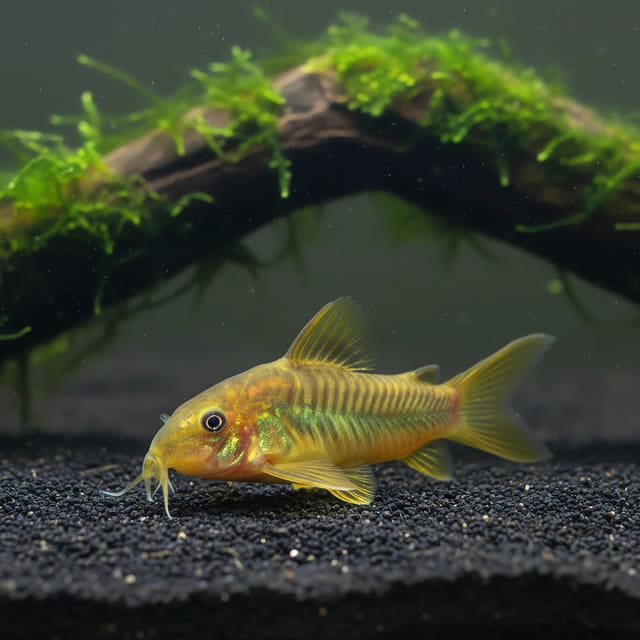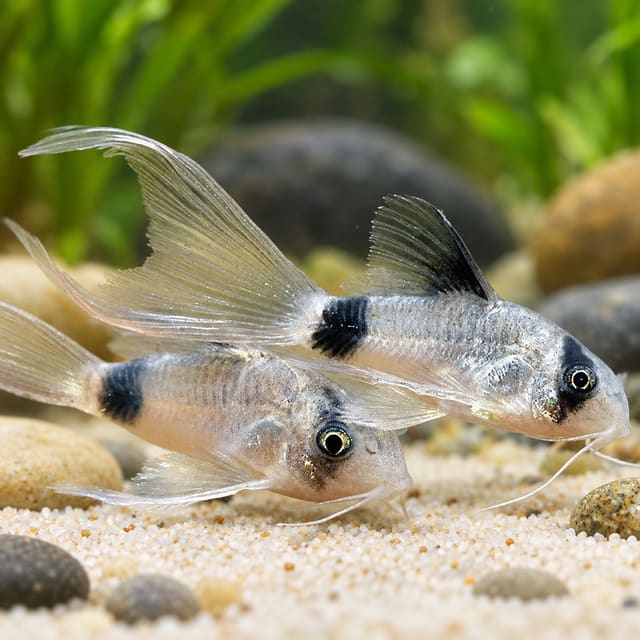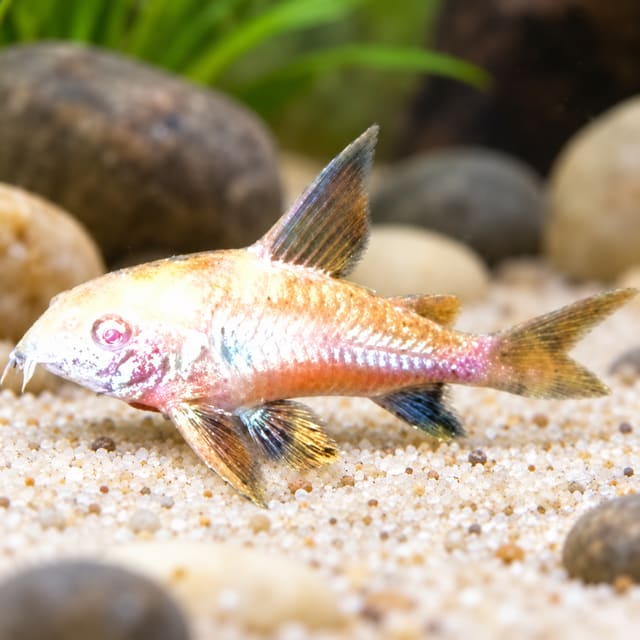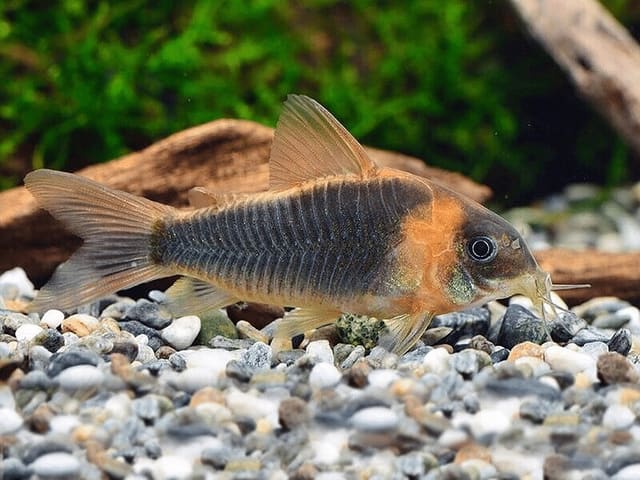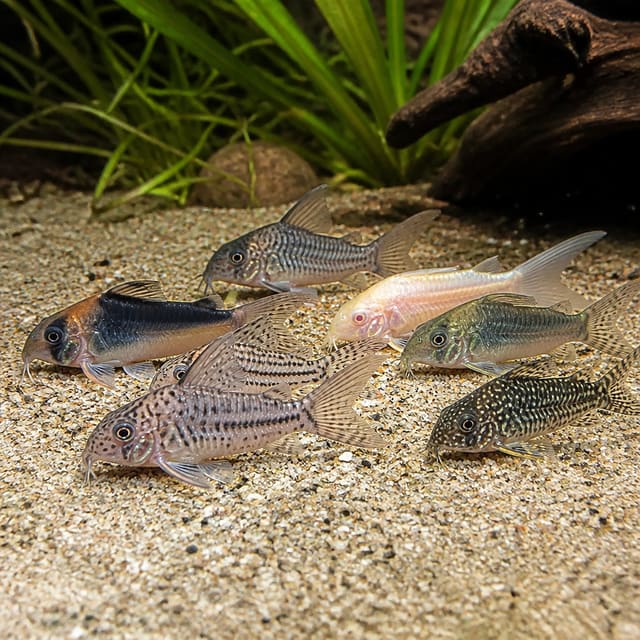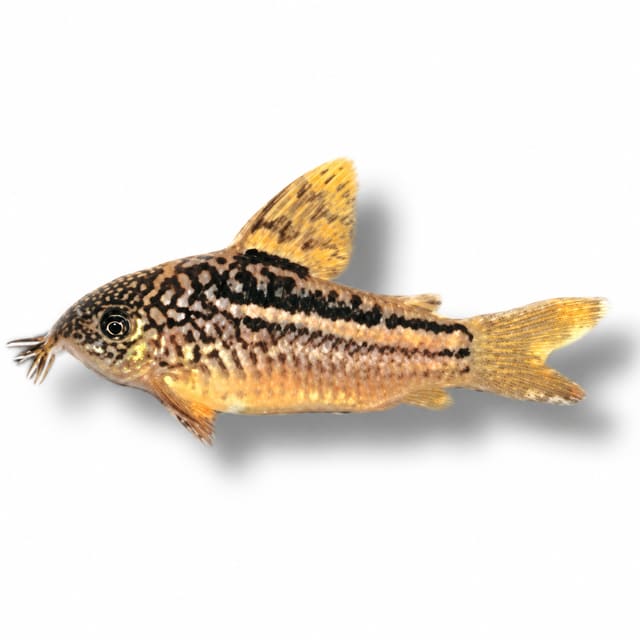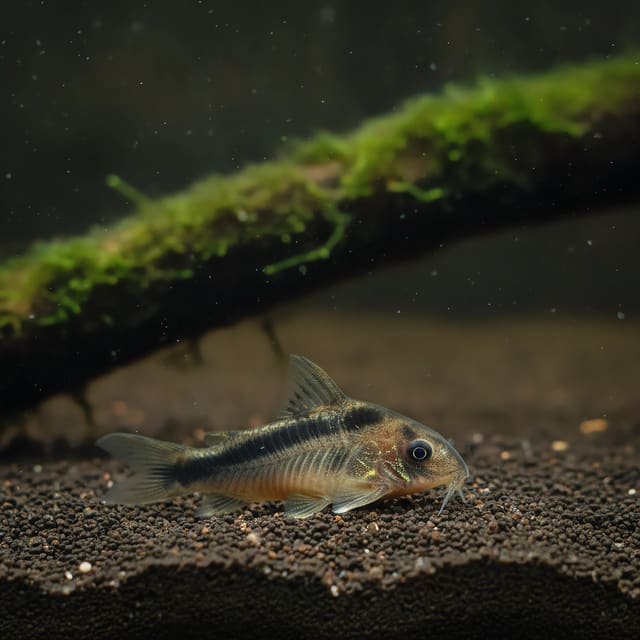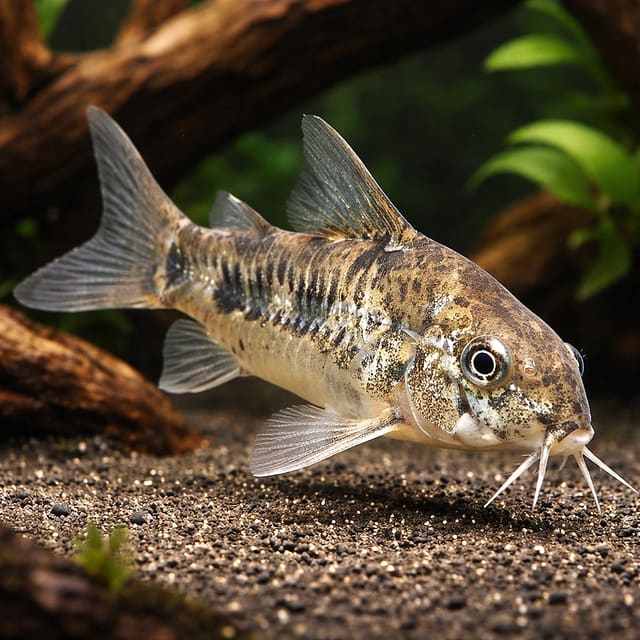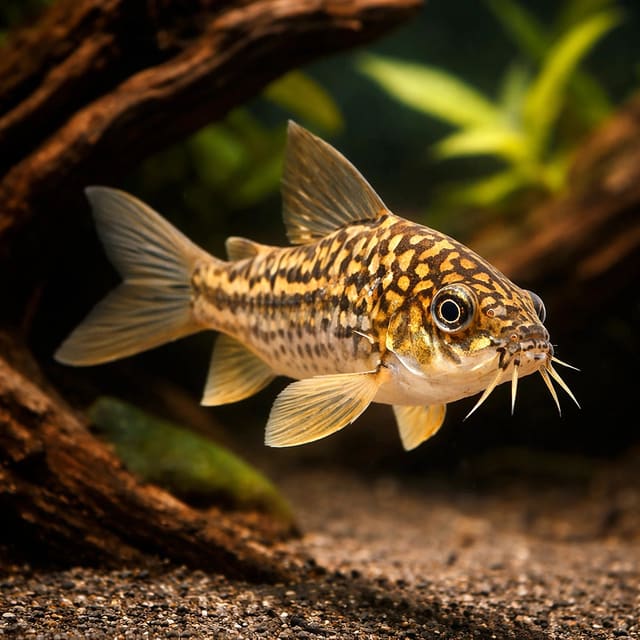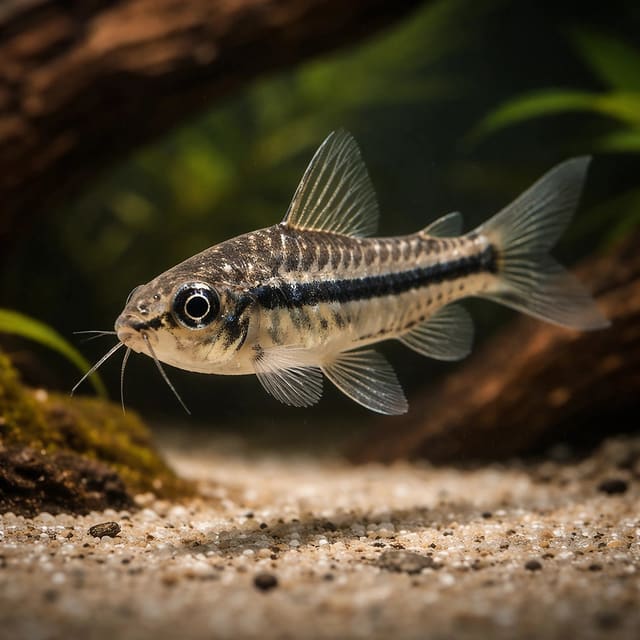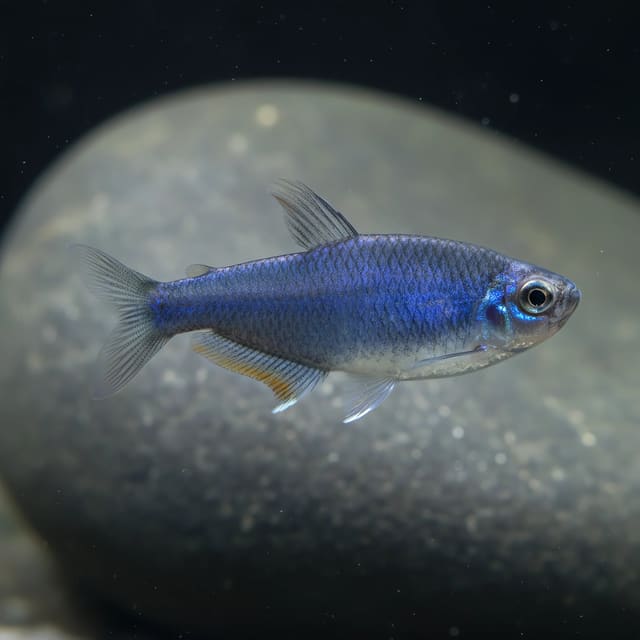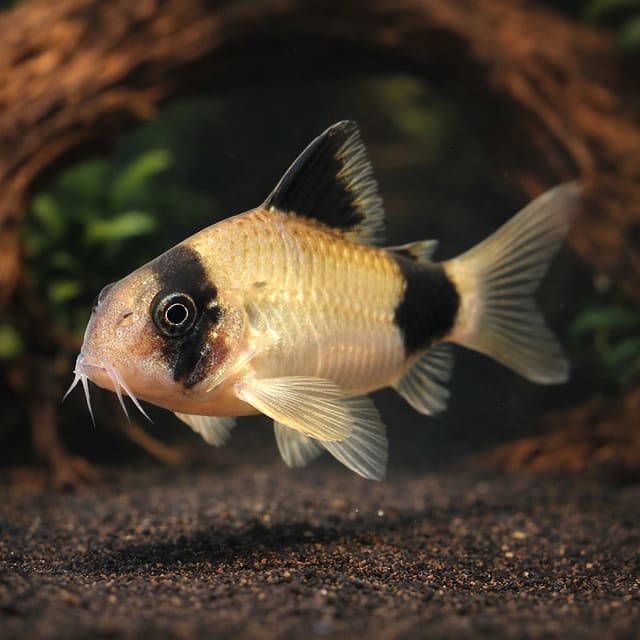
Panda Cory Catfish (Corydoras panda)
22–25°C · pH 6–7.4
From £8.69Some sizes on sale

The Three-Stripe Cory (Hoplisoma trilineatum) is a South American armoured catfish from the central and Peruvian Amazon and coastal Suriname that reaches 6.1 cm. It suits mature, peaceful community aquariums when at least six are kept at 22–26°C and pH 6.0–7.2. Sold individually in 2.5–3 cm, 3–4 cm and XL sizes.
Adult size is the maximum length this species reaches at full maturity (scientific sources). The livestock you receive will be younger and smaller — pick a size above for the actual shipping size. Product-photo provenance and any image-specific limitations are stated on the listing.
Hoplisoma trilineatum
Shoaling fish: kept in a group they feel safer, stay calmer and show their best colour.
The Three-Stripe Cory (Hoplisoma trilineatum) is a South American armoured catfish from the central and Peruvian Amazon and coastal Suriname that reaches 6.1 cm. It suits mature, peaceful community aquariums when at least six are kept at 22–26°C and pH 6.0–7.2. Sold individually in 2.5–3 cm, 3–4 cm and XL sizes.
Adult size is the maximum length this species reaches at full maturity (scientific sources). The livestock you receive will be younger and smaller — pick a size above for the actual shipping size. Product-photo provenance and any image-specific limitations are stated on the listing.
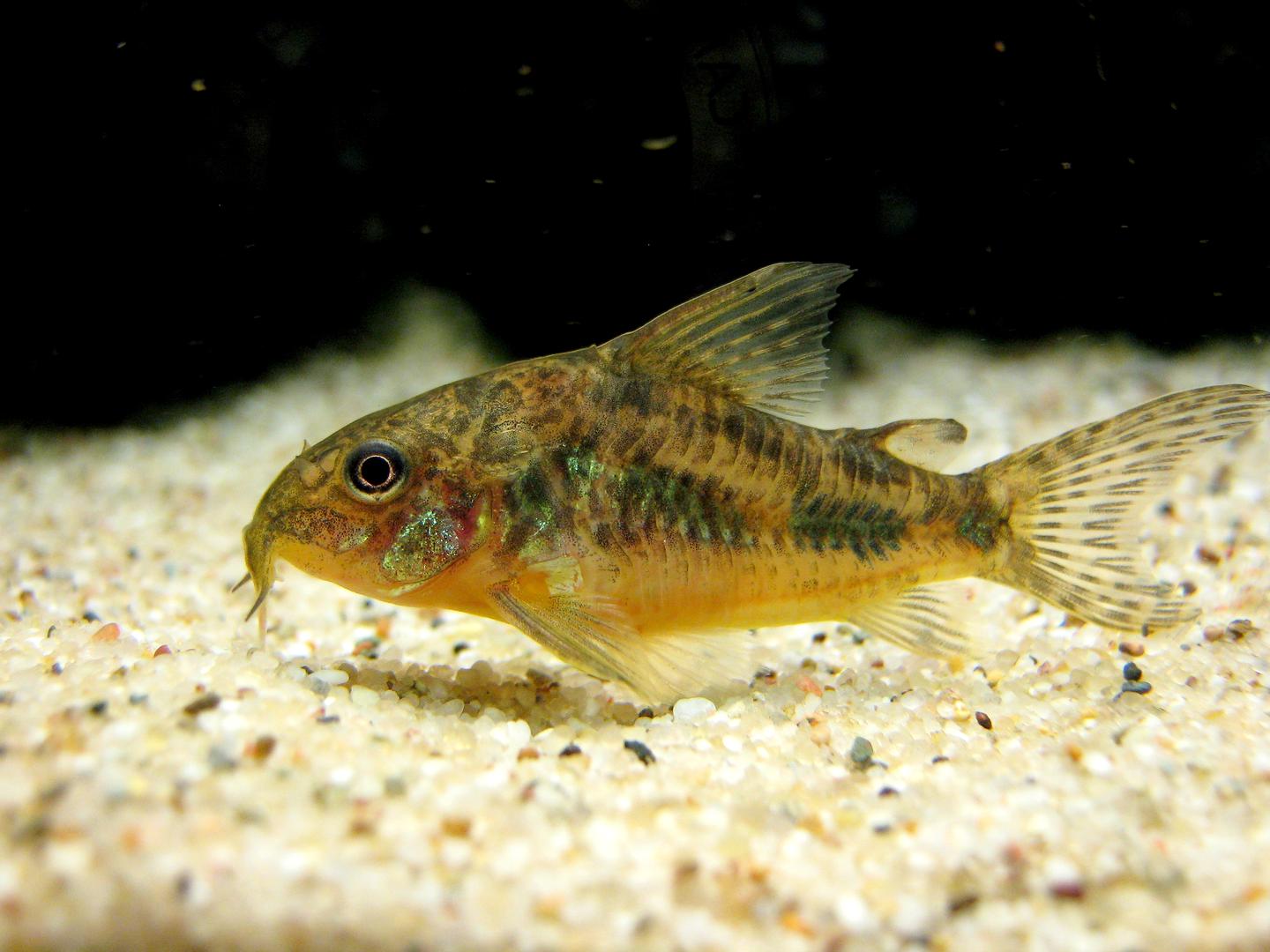
Identify the exact cory catfish before choosing care. Our starting policy for many common medium species is six compatible conspecifics, a mature 60 x 30 cm aquarium of about 60 litres, smooth fine sand and measured species-appropriate water.
Maintain these water conditions for optimal health and vibrant colors
The Three-Stripe Cory (Hoplisoma trilineatum) is a small, demersal freshwater armoured catfish in the family Callichthyidae. It comes from South America, where its range covers the central Amazon River basin, the Peruvian Amazon and coastal drainages of Suriname. FishBase records a maximum length of 6.1 cm standard length. It suits keepers planning a mature, filtered and peaceful community aquarium around a proper social group rather than a single bottom-dwelling fish.
Keep at least six together. Seriously Fish describes the species as very peaceful and says a group of at least six is best because these fish are more confident and active with their own kind. FishBase also advises groups of five or more, while OATA warns that Corydoras kept singly or in groups that are too small will often become stressed. Six therefore provides the clearest starting point for this species.
Its place is along the aquarium floor, where the group can forage together. Being a bottom dweller does not make it a substitute for cleaning or maintenance: these fish need deliberate feeding, suitable floor space and the same clean water required by every other aquarium resident. A mature biological filter must process the waste created by the whole community.
Choose companions that are peaceful, share the stated water range and leave the Cory group able to feed. Small characins, cyprinids, anabantoids, dwarf cichlids and other peaceful catfish are the kinds named by the species profile. Avoid anything very large or aggressive. Compatibility still depends on the aquarium’s dimensions, total stocking, water conditions and access to food, so assess all of those factors together.
We classify the care level as easy, but that label assumes the aquarium is already mature, filtered and large enough for at least six fish. The important work is consistent rather than complicated: hold stable water values, supply a suitable sinking diet, complete weekly maintenance and respond promptly when behaviour or appearance changes.
One purchase supplies one Three-Stripe Cory in the size selected through the live size selector. The labels are 2.5–3 cm, 3–4 cm and XL. The size you select is the size supplied, not the adult size. Whichever label you choose, plan the aquarium around the recorded adult maximum of 6.1 cm and the space needed by a group of at least six.
Sex is guaranteed only when the selected option explicitly states male or female. This Three-Stripe Cory listing has no sex-guaranteed option.
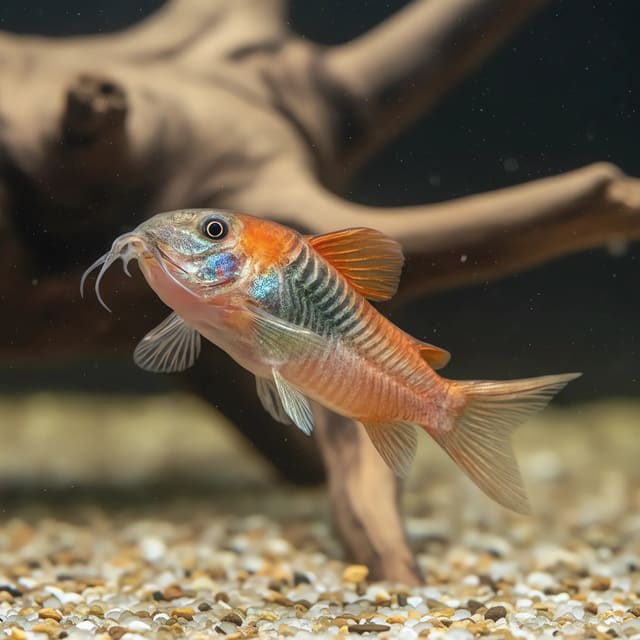
Some gallery images have been digitally enhanced to improve image quality. They show the listed type of animal rather than guaranteeing the exact markings of the individual supplied, so natural colour and pattern can vary.
| Suits | Not suited to |
|---|---|
| A mature, filtered freshwater aquarium | An unfiltered or newly assembled aquarium |
| A group of at least six Three-Stripe Corys | Solitary keeping or an undersized group |
| A peaceful community with compatible water needs | Anything very large or aggressive |
| A planned bottom-feeding routine | Reliance on scraps left by other fish |
| Stable water at 22–26°C | Aquariums unable to hold the stated range |
If you are comparing this fish with another cory, browse the current Corydoras collection, then compare adult size, group requirement, water range and aquarium footprint rather than markings alone.
Treat approximately 41 litres as the species-profile volume floor for a small group, then choose an aquarium that also satisfies FishBase’s minimum aquarium-size reference of 60 cm. Seriously Fish describes a 45 × 30 × 30 cm aquarium, approximately 41 litres, as large enough for a small group. Applying both references means choosing a model that offers at least the stated volume and reaches the 60 cm aquarium-size reference rather than selecting by litres alone.
This is a demersal fish that spends its time around the bottom, so the base dimensions are a practical part of capacity. The 45 × 30 cm base in the species profile provides a useful floor-space benchmark. Decorations should not consume every part of that footprint: preserve open areas where the group can gather and reach sinking food, while using wood, roots or planting to create cover elsewhere.
Start with at least six fish. The species profile says a group of at least six is best, FishBase advises five or more, and OATA explains that Corydoras kept singly or in groups that are too small will often become stressed. If the aquarium cannot hold six adults alongside its other residents, choose a different stocking plan rather than buying one as a solitary bottom fish.
Plan around the FishBase maximum of 6.1 cm standard length. Seriously Fish uses 5.5 cm standard length in its profile; that difference is why the larger FishBase figure is the safer value for calculating adult space. Dispatch measurements describe the animal supplied, while this adult figure controls the long-term decision.
| Planning check | Decision |
|---|---|
| Adult length | Use 6.1 cm |
| Social group | Keep at least six |
| Profile volume | Approximately 41 litres |
| Profile base | At least 45 × 30 cm |
| FishBase aquarium reference | At least 60 cm |
A larger aquarium remains useful because it gives the group more floor area and makes temperature and water quality easier to stabilise. Extra volume does not replace compatibility screening or maintenance, but it gives the keeper more room to meet both.
Use river sand, driftwood branches, twisted roots and dried leaves when creating an Amazon-style aquarium. Seriously Fish recommends this simple arrangement and says beech or oak leaves can be used. Remove old leaves and replace them every few weeks so they do not rot and foul the water. The wood and leaves may stain the water to the colour of weak tea.
A more standard, preferably well-planted aquarium is also suitable. This gives two supported layout choices: an Amazon-style display based on sand, wood, roots and leaves, or a planted community layout with enough open bottom area for the group. Plants are not described as a feature of the species’ natural waters, but the species profile specifically permits the planted alternative.
Fairly dim lighting is recommended for the Amazon-style arrangement. In a planted community, choose the layout as a whole so the fish still have cover and open foraging room. Lighting should serve that chosen design rather than becoming a reason to remove the group’s usable floor area.
Leaves and wood change the appearance of the aquarium, but they do not replace filtration or water testing. Inspect leaf litter when completing routine maintenance and remove material before it decays enough to foul the water. Siphon accessible areas to lift solid waste, taking care not to turn the entire bottom into a tightly decorated zone that cannot be cleaned.
The old idea that a cory exists to tidy the floor leads to poor habitat decisions. Give the group its own feeding space, remove waste through normal maintenance and let the bottom layout support social foraging rather than treating these fish as aquarium-cleaning equipment.
Keep the aquarium at 22–26°C, pH 6.0–7.2 and 5–12 dGH. These routine values are the overlap of FishBase’s environmental range, the Seriously Fish aquarium profile and OATA’s freshwater-catfish group guidance. OATA also sets ammonia at zero mg/l, nitrite at zero mg/l and nitrate at no more than 20 mg/l above the normal tap-water level.
Test the aquarium before adding the fish and at least weekly thereafter. Use the measured results rather than assuming the heater setting or tap-water history still reflects what is happening in the tank. The water chemistry guide explains what the principal measurements mean, while the water matcher helps compare your results with this range.
| Measurement | Routine target |
|---|---|
| Temperature | 22–26°C |
| pH | 6.0–7.2 |
| General hardness | 5–12 dGH |
| Ammonia | 0 mg/l |
| Nitrite | 0 mg/l |
| Nitrate | No more than 20 mg/l above tap water |
A reading is suitable only when the complete set works. For example, 24°C and pH 6.8 fall within the range, but detectable ammonia still calls for action. Likewise, zero ammonia cannot compensate for a temperature outside 22–26°C. Record the results together so a change in one measurement is not hidden by acceptable values elsewhere.
The RSPCA explains that a working biological filter supports beneficial bacteria that convert toxic ammonia to nitrite and then to the safer nitrate. No fish should be kept without a well-set-up and maintained filter. If this is your first aquarium, prepare and mature it before livestock arrives by following the first tropical tank guide.
In the approximately 41-litre example, Seriously Fish gives a turnover of four to five times the aquarium volume per hour and a filter rating of 165–205 litres per hour. Treat those figures as one worked example tied to that aquarium volume; choose equipment for the actual volume and layout you own.
Complete a 25% partial water change at least once every week. OATA recommends this schedule and suggests using a siphon to remove solid waste from the substrate. Keep the frequency attached to the instruction: the change is 25%, and it takes place at least weekly.
Treat replacement tap water with a suitable conditioner before adding it to the aquarium so chlorine or chloramine is removed. Match the new water to the aquarium plan and add it as part of a controlled routine. Testing before maintenance shows the condition of the aquarium; testing records over several weeks reveal whether the routine is keeping ammonia and nitrite at zero.
This approach removes enough accumulated material to restore flow while reducing the number of beneficial bacteria lost. The filter’s job is biological as well as mechanical, so cleaning it until it appears sterile works against the process that converts ammonia and nitrite.
When ammonia or nitrite is detected, stop treating the result as a routine variation. Check the filter for interruption or blockage, look for uneaten food and review whether fish or feeding were added faster than the bacterial population could adjust. OATA warns that stocking too quickly can cause new tank syndrome because the established bacteria cannot process the increased waste.
Increase the aquarium population slowly. Each added fish and each rise in feeding creates more waste, so the filter bacteria need time to increase. A planned group of Corys still has to be introduced into an aquarium with enough biological capacity; the group requirement does not justify overstocking or adding livestock to an immature filter.
| Weekly checkpoint | Required result or action |
|---|---|
| Ammonia | 0 mg/l |
| Nitrite | 0 mg/l |
| Water change | 25%, at least weekly |
| Substrate | Siphon accessible solid waste |
| Filter | Check flow and blockages |
Use a good-quality sinking pellet or tablet as the staple food. Seriously Fish records the Three-Stripe Cory as omnivorous and recommends those sinking foods, supplemented with live or frozen Daphnia, Artemia, bloodworm and similar foods. OATA likewise says Corydoras need appropriate sinking food rather than an assumption that catfish can live as scavengers.
Feed only what the fish can eat within a few minutes, once a day. This OATA schedule controls both portion and frequency. Watch the food reach the floor and confirm that the Cory group can approach it before other residents consume everything. If surface or mid-water fish take the entire ration first, change where the sinking food is placed rather than simply adding an uncontrolled amount.
| Food | Role |
|---|---|
| Quality sinking pellet | Staple dried food |
| Sinking tablet | Alternative staple format |
| Live or frozen Daphnia | Dietary variety |
| Live or frozen Artemia | Dietary variety |
| Live or frozen bloodworm | Dietary variety |
Variety does not mean offering every food at every meal. Keep the sinking pellet or tablet as the dependable base, then rotate the named live or frozen foods. The practical test is whether all members of the group can feed and whether the portion disappears within a few minutes.
Overfeeding allows uneaten food to break down and release toxic waste into the water. If food remains after the feeding period, remove the excess and reduce the next portion. Check whether the problem was quantity, poor placement or competition before feeding again.
Do not describe this fish as a clean-up crew. It contributes waste and needs a measured ration of its own. Deliberate feeding also makes observation easier: reduced intake or a loss of interest in food is one of the health changes OATA tells keepers to watch.
Receive the parcel in person and begin filming while it is still sealed. Keep the outer box visible, open it in one continuous take and show the fish while it remains inside the sealed bag. Inspect the parcel on the day it arrives, then float the bag for 20–30 minutes before releasing the fish. Do not pour the bag water into the aquarium.
These steps follow the Tropical Fish Co delivery and Live Arrival Guarantee policy. If the fish’s condition causes concern, contact us on the day it arrives with the order number and continuous unboxing video.
Before adding the fish, confirm that ammonia and nitrite are zero and that temperature, pH and hardness remain within 22–26°C, pH 6.0–7.2 and 5–12 dGH. OATA advises checking water quality before any fish is introduced and increasing the aquarium population slowly so its beneficial bacteria can adjust to additional waste and feeding.
FishBase describes this species as a facultative air-breather. That biological ability does not replace dissolved-water quality, filtration or the requirement for zero ammonia and nitrite. Judge settling by the complete pattern of feeding, swimming, breathing, appearance and test results.
Learn the group’s normal pattern, then respond to a clear change rather than waiting for several signs to appear together. OATA identifies swimming, colour, temperament, breathing, appearance, body condition and feeding as useful observation categories. These checks are most valuable when made during ordinary feeding and maintenance because you can compare the fish with its established routine.
| If you see | Do this |
|---|---|
| Hanging at the surface, prolonged bottom sitting or erratic swimming | Test water quality and check filter operation |
| Darker or paler colour than normal | Compare the whole group and test the water |
| More hiding or changed aggression | Review tank-mate behaviour and feeding access |
| Faster or slower gill-cover movement | Test water and inspect the aquarium promptly |
| White spots, fluffy growths or loss of fins or scales | Record what changed and seek further guidance |
| Weight change or reduced feeding | Check food access, portion and water quality |
Start with water testing because ammonia and nitrite must remain at zero. Confirm the filter is running, inspect it for blockages and look for uneaten food or decaying leaves. A normal temperature reading does not rule out a waste problem, so check the complete routine set rather than relying on one number.
Record the date, test results, affected fish, feeding response and visible sign. This creates a clear account of what changed and whether the whole group or one individual is involved. Do not improvise a treatment from a vague symptom: several problems can produce changes in swimming, colour or appetite.
If you remain concerned about any fish, contact us for further guidance after testing the water. The useful information is concrete: temperature, pH, hardness, ammonia, nitrite, nitrate, the filter’s operating condition and the change you observed.
Continue the normal weekly maintenance unless the situation calls for a more immediate response. Consistent records help distinguish a one-off feeding issue from a developing water-quality or compatibility problem.
Keep the Three-Stripe Cory with peaceful animals that share its water range and leave the group able to forage. Seriously Fish names small characins, cyprinids, anabantoids, dwarf cichlids and other peaceful catfish as good kinds of companion. These categories guide screening; they are not a promise that every species within a broad group will fit every aquarium.
Avoid anything very large or aggressive. That exclusion is direct and unconditional. Do not try to solve a temperament conflict by adding more cover or feeding more heavily: the species profile’s rule is not to keep this Cory with such animals.
Only proceed when every answer works. A peaceful species with incompatible water is not suitable, and a water-compatible fish that prevents the Cory group from feeding is not a good match. This is why companion names alone cannot replace an aquarium-specific assessment.
| Category | Decision |
|---|---|
| Small characins | Consider after full screening |
| Cyprinids | Consider after full screening |
| Anabantoids | Consider after full screening |
| Dwarf cichlids | Consider after full screening |
| Other peaceful catfish | Consider after full screening |
| Anything very large or aggressive | Avoid |
Keep its own social requirement separate from community variety. Six other bottom fish do not replace six Three-Stripe Corys; the confidence and activity described by the species profile come from the presence of conspecifics.
Assess compatibility at the level of the whole aquarium, not as a pair of species names. Begin with the Cory group: at least six adults reaching up to 6.1 cm, using the bottom area and receiving a measured sinking ration once daily. Add the existing residents, their adult space and their feeding behaviour before deciding whether another animal fits.
Example one: peaceful fish, unsuitable water. A proposed companion may be peaceful, but if its required pH lies outside 6.0–7.2, the plan fails the shared-water test. Do not average incompatible requirements or keep one species at the edge of an unrelated range.
Example two: compatible water, inadequate floor space. A small characin may pass the temperament and water checks, but the aquarium still needs enough usable bottom area for at least six Corys. Open-water capacity cannot compensate for a crowded base.
Example three: peaceful community, poor food access. If the existing fish consume every sinking item before the Cory group reaches it, change food placement and observe the result. Do not assume leftovers will meet an omnivorous catfish’s needs.
Example four: acceptable livestock, immature filter. Even a peaceful group is a poor addition when ammonia or nitrite is detectable. Delay the addition until the biological filter is mature and both readings are zero.
The honest uncertainty is that a named category cannot settle every compatibility question. Individual species within characins, cyprinids, anabantoids, dwarf cichlids and catfish differ. Use the screening rules above and seek a stocking assessment when the adult size, temperament, water needs or feeding behaviour of a proposed companion are unclear.
The Three-Stripe Cory reaches a recorded maximum of 6.1 cm standard length according to FishBase. Plan its aquarium around that adult figure, not the selected dispatch size.
Use approximately 41 litres as the profile volume floor for a small group, with at least a 45 × 30 cm base, and choose an aquarium meeting FishBase’s 60 cm minimum-size reference.
Keep at least six Three-Stripe Corys together. Seriously Fish says six is best because they are more confident and active with their own kind.
The Three-Stripe Cory has an easy store care rating when kept in a mature, filtered aquarium as a group of at least six with stable water and deliberate sinking feeds.
The Three-Stripe Cory is omnivorous. Feed a quality sinking pellet or tablet as the staple once daily, using only what the group eats within a few minutes, and add live or frozen Daphnia, Artemia or bloodworm for variety.
Keep it at 22–26°C, pH 6.0–7.2 and 5–12 dGH; these values are the overlap of FishBase, Seriously Fish and OATA guidance.
This fish is described as very peaceful, and aggression towards other species is virtually unheard of. Avoid anything very large or aggressive.
Consider small characins, cyprinids, anabantoids, dwarf cichlids and other peaceful catfish after checking shared water needs, adult space, temperament and feeding access.
Start filming the sealed parcel before floating the bag, open it in one continuous take and show the fish inside the sealed bag. Float the bag for 20–30 minutes before release, and contact us the same day with the order number and video if its condition causes concern.
No reviews for this item yet. Bought one? Honest reviews only, good or bad.
What customers say about ordering from us
I have a small group of long finned mountain minnows. So was delighted to be able to order ten of this variety to increase the genetics in my tank . The ones I recieved are healthy but it’s to early to give a verdict on wether they are of a long finned type since they are small currently.
Gordon Walker · 23 Sept 2026
100% success travel and "installation". Pleased with quality of purchase. The Siamese fighter a bit "shy" so have not yet seen him at his best yet but looking good. Happy customer. GG
George E Garratt · 21 Sept 2026
Reviews of our shop, collected by Judge.me, an independent third-party review collector. Newest first.