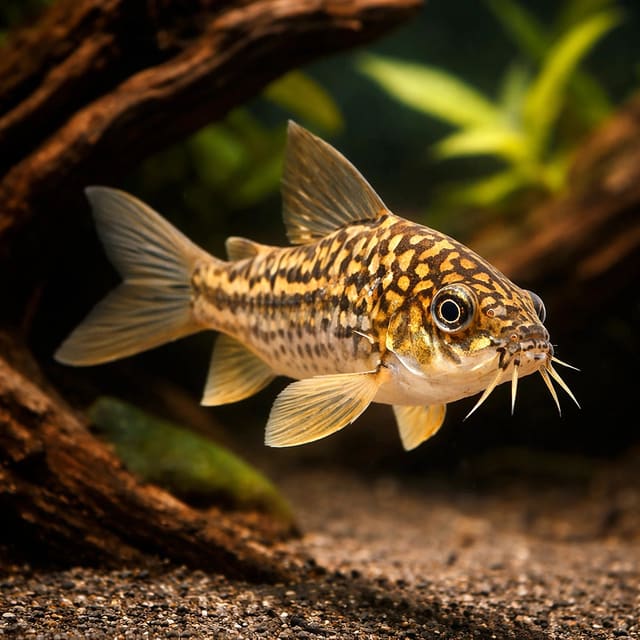
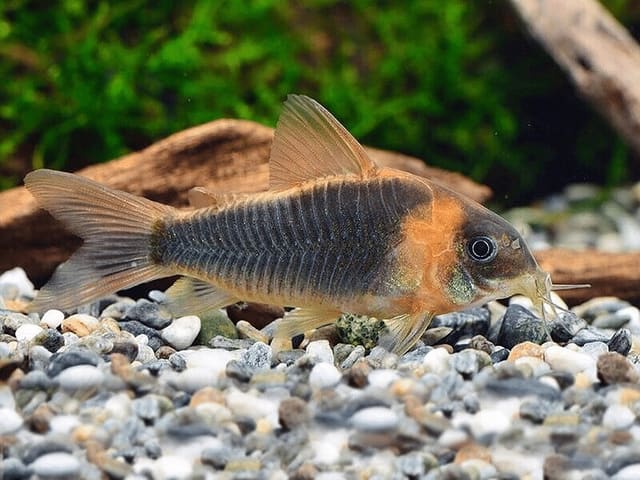
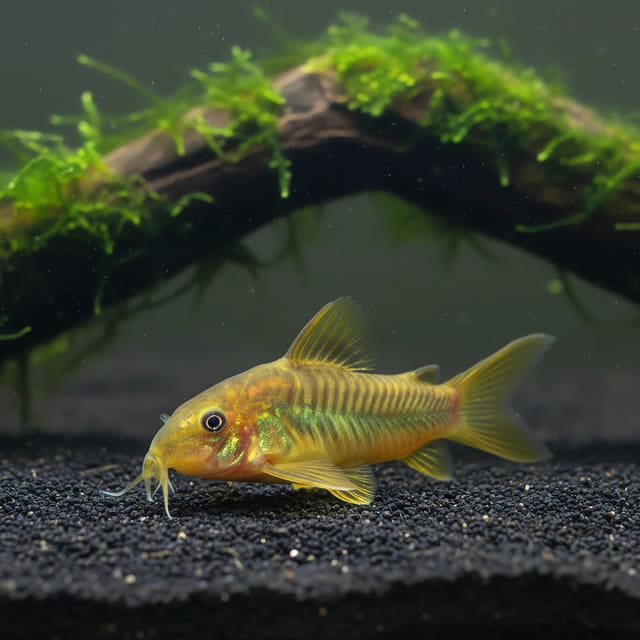
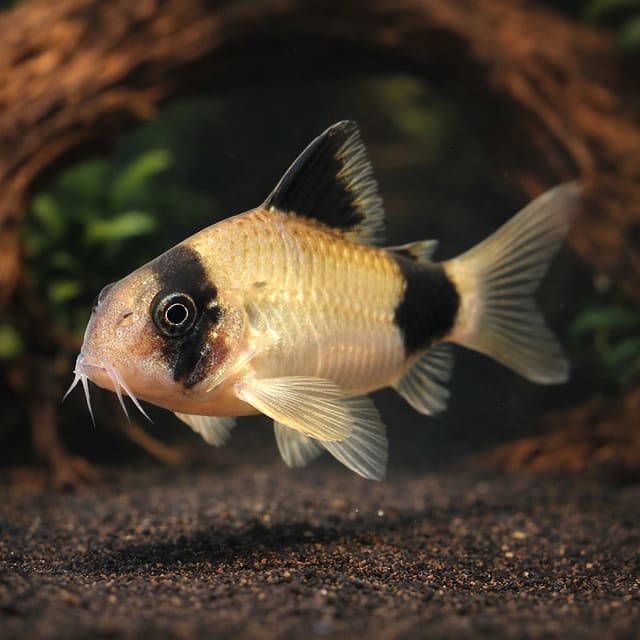
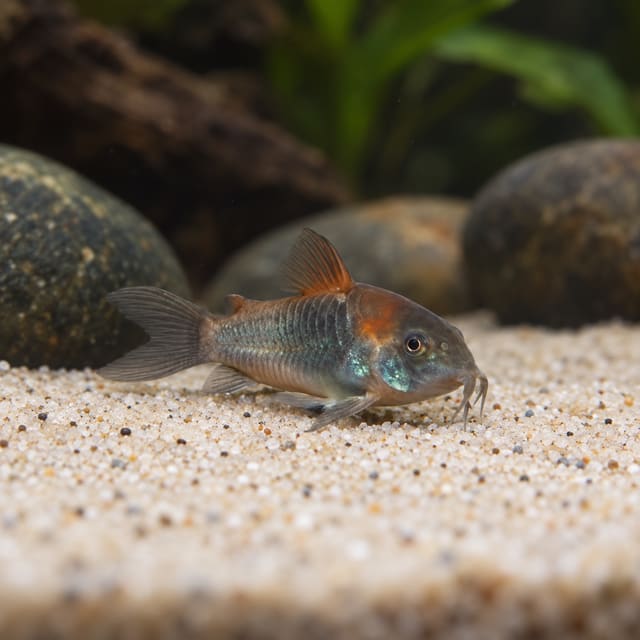
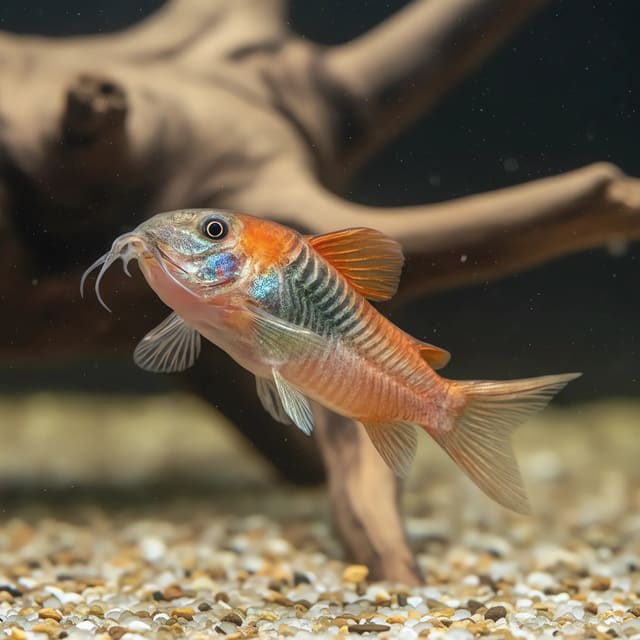
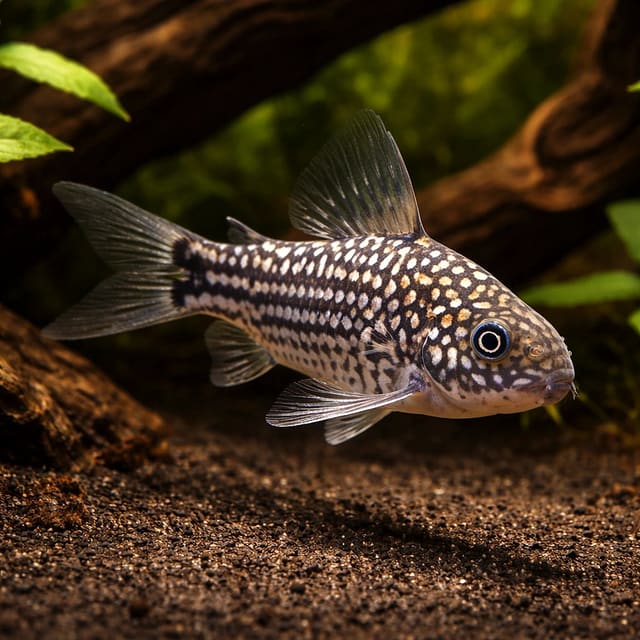
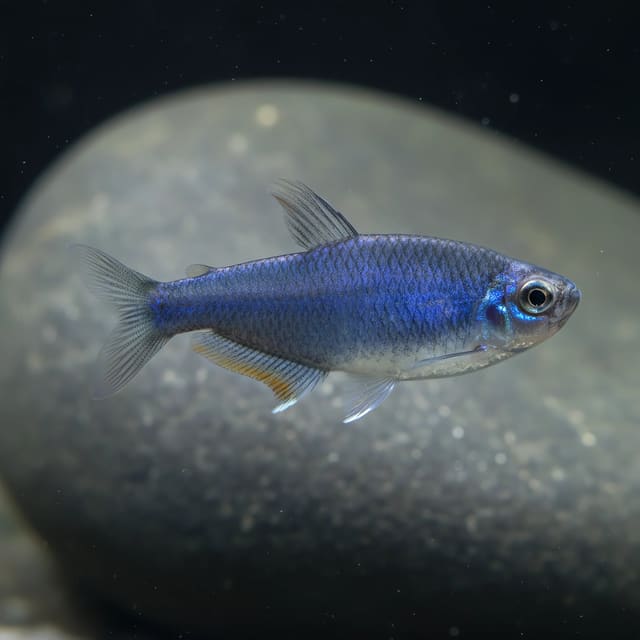
Duplicate Cory (Corydoras duplicareus)
22–26°C · pH 6–7
£25.99

Masked Corydoras (Hoplisoma metae) is a peaceful Colombian armoured catfish for mature community aquariums. Keep at least six over smooth substrate and feed a varied sinking diet.
Adult size is the maximum length this species reaches at full maturity (scientific sources). The livestock you receive will be younger and smaller — pick a size above for the actual shipping size. Product-photo provenance and any image-specific limitations are stated on the listing.
Hoplisoma metae
Shoaling fish: kept in a group they feel safer, stay calmer and show their best colour.
Masked Corydoras (Hoplisoma metae) is a peaceful Colombian armoured catfish for mature community aquariums. Keep at least six over smooth substrate and feed a varied sinking diet.
Adult size is the maximum length this species reaches at full maturity (scientific sources). The livestock you receive will be younger and smaller — pick a size above for the actual shipping size. Product-photo provenance and any image-specific limitations are stated on the listing.
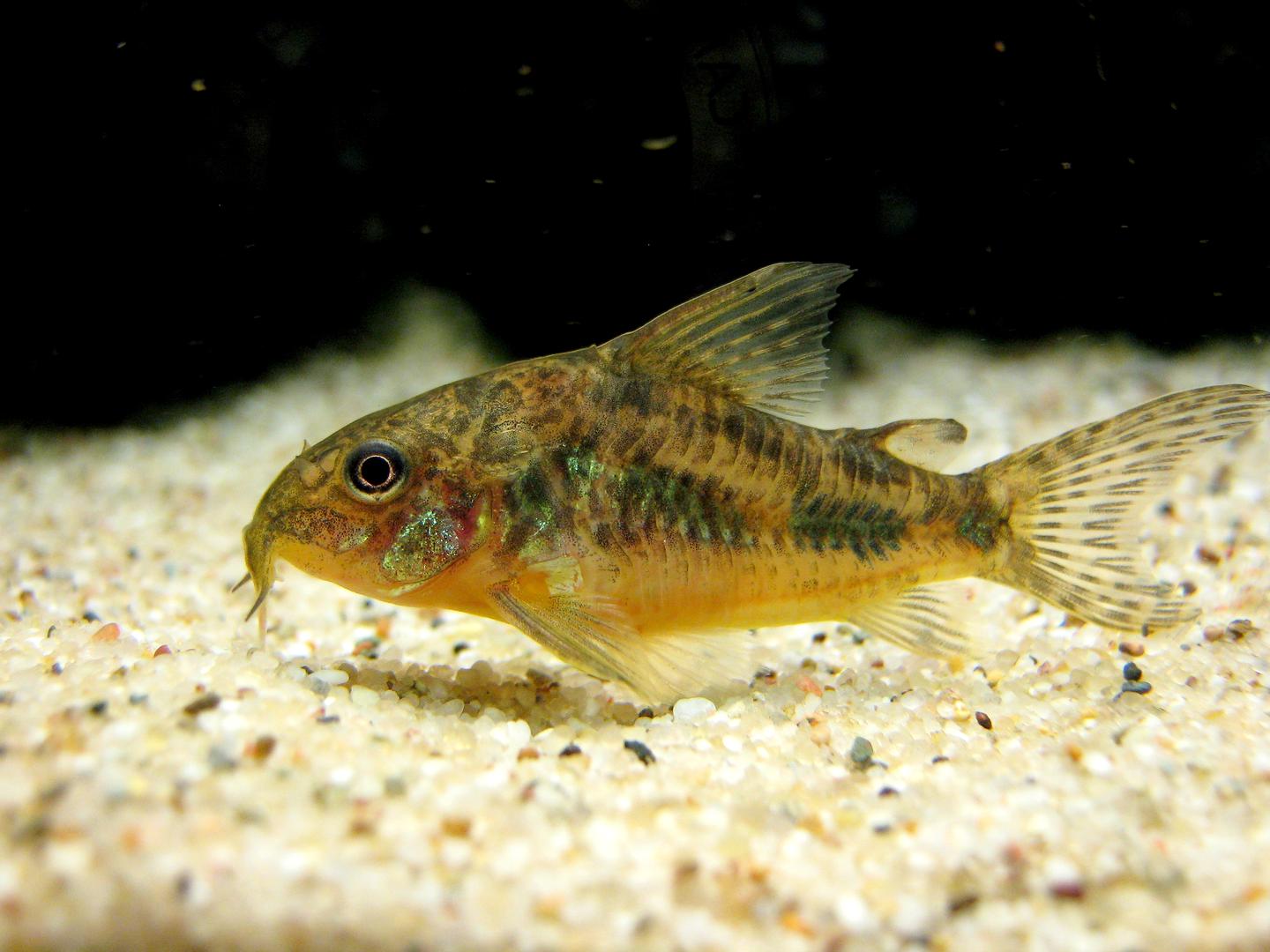
Identify the exact cory catfish before choosing care. Our starting policy for many common medium species is six compatible conspecifics, a mature 60 x 30 cm aquarium of about 60 litres, smooth fine sand and measured species-appropriate water.
Maintain these water conditions for optimal health and vibrant colors
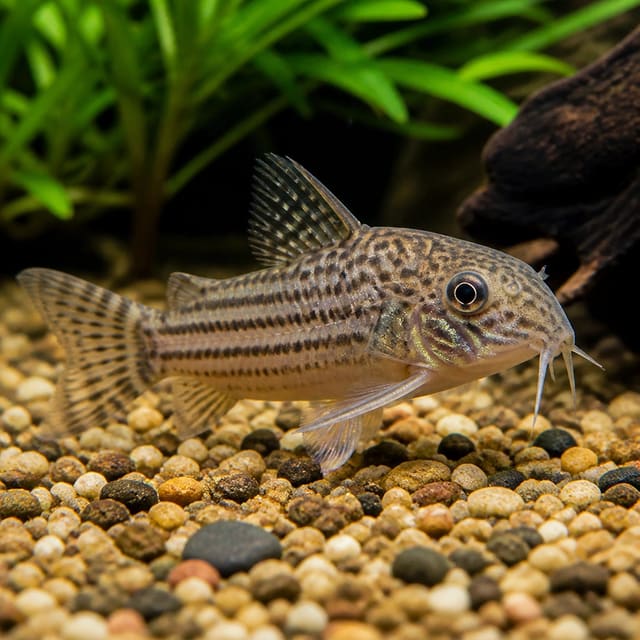
The Masked Corydoras is a small, peaceful South American armoured catfish with a dark band through the eye and a second dark marking running over the back towards the tail. Its currently accepted scientific name is Hoplisoma metae. Many aquarists, shops and older references still know it as Corydoras metae, the former combination for the same species.
This species is best for a mature tropical aquarium with a smooth substrate, clean oxygen-rich water and a proper same-species group. It spends much of the day searching the bottom together, but it is not an algae eater and should never be expected to live on leftovers. Choose the available size, then set the quantity for the number of individual fish required. For natural social behaviour, plan for at least six Masked Corydoras and make sure the aquarium has enough floor space for the whole group.
| Accepted scientific name | Hoplisoma metae (Eigenmann, 1914) |
|---|---|
| Former scientific name | Corydoras metae |
| Common names | Masked Corydoras, Masked Cory, Meta Cory and Bandit Cory |
| Family | Callichthyidae, subfamily Corydoradinae |
| Natural range | Meta River basin, Colombia |
| Adult size | Up to 4.8 cm standard length; roughly 5–6 cm total length in aquarium terms |
| Social needs | Keep at least six of the same species; a larger group is even better where space permits |
| Recommended aquarium | 75 litres or more, with a footprint around 60 cm long or larger for a group |
| Temperature | 22–26°C |
| Practical pH range | 6.0–7.5; published species records extend to pH 8.0 |
| Diet | Omnivore; feed complete sinking foods plus small frozen or live foods |
| Temperament | Peaceful and social |
| Care level | Moderate, mainly because mature water, group size and substrate hygiene matter |
This listing is priced per individual fish. Use the size selector to choose the available body-size band and the quantity control to build the group you need. The measurements describe the approximate size of the fish supplied, not its final adult size. Natural variation is expected in live animals, and colour can look paler immediately after transport before returning as the fish settles.
A single Masked Cory may survive, but solitary keeping does not meet the species' social needs. A group of six is the practical minimum, while eight or more usually produces more confident daytime foraging and a broader range of natural interactions. If the aquarium cannot house that group comfortably, choose a smaller species or delay the purchase until a suitable tank is ready.
The 2024 phylogenomic revision of Corydoradinae resurrected several genera that had long been placed within Corydoras. Under that classification, the Masked Corydoras is Hoplisoma metae. The name Corydoras metae still appears throughout older books, care guides and stock lists. It is a former combination for the same species, not a different fish.
Common names require more care. "Bandit Cory" is used for more than one similar-looking fish, especially Hoplisoma metae and Hoplisoma melini. On the Masked Cory, the dark dorsal marking crosses the top ridge of the back. On H. melini, often called the False Bandit Cory, the diagonal flank stripe generally leaves the top ridge pale and continues towards the lower part of the tail. Pattern quality, viewing angle and stress colour can complicate identification, so the scientific identity should take priority over a shared trade name.
| Feature | Masked Cory, H. metae | False Bandit Cory, H. melini |
|---|---|---|
| Eye marking | Dark mask through the eye | Dark mask through the eye |
| Back marking | Dark band crosses the ridge of the back | Upper ridge is usually pale between the diagonal markings |
| Tailward stripe | Broad dark saddle runs towards the tail base | Diagonal stripe commonly continues towards the lower caudal area |
| Buying advice | Use the scientific name and inspect the back pattern rather than relying on "Bandit Cory" alone. | |
Eschmeyer's Catalog of Fishes records this species from the Meta River basin in Colombia, where the original type locality was given as Barrigona, or Berrigon, in the Rio Meta drainage. FishBase also lists it as a freshwater, bottom-associated species from that basin. This restricted geographic identity is more useful than generic claims that it comes from all over South America.
A home aquarium cannot reproduce an entire river system, and it does not need to. The practical lessons are to provide warm freshwater, a clean bottom, shaded structure, oxygen and a varied diet of small foods that reach the substrate. Smooth wood, leaf-shaped cover and rooted or attached plants can create a calm lower level while open patches let the group search for food.
The species' natural range should not be used to justify sudden changes in temperature or chemistry. Seasonal river changes happen across large volumes of water and are not the same as an abrupt swing in a glass aquarium. Stability, low nitrogen waste and patient acclimation are safer than repeatedly adjusting pH to chase a precise wild-water number.
Floor area matters more than height because Masked Corydoras feed, rest and interact near the bottom. A mature 60-litre aquarium with a broad footprint can be a tightly managed starting point for six small fish, but 75 litres or more is the more forgiving recommendation. A tank around 60 cm long gives a group room to forage without crowding every feeding point. Choose a larger footprint for eight or more corys, a busy community, or other bottom-dwelling species.
Volume alone can mislead. A tall, narrow aquarium may hold the same litres as a long tank but provide much less usable substrate. Before ordering, mark out where the open feeding area, plants, wood, filter intake and shelters will sit. The group should be able to move around the whole lower level without being trapped in one corner by territorial tank mates.
| Planned setup | Starting point | What to check |
|---|---|---|
| Six Masked Corydoras, lightly stocked | 75 litres recommended | Broad footprint, mature filter and several open feeding patches |
| Eight to ten Masked Corydoras | 90 litres or more | More floor area and enough food access for every fish |
| Community with another bottom species | Increase volume and footprint | Separate territories, compatible water and no feeding competition |
| Tall display tank | Assess footprint, not litres alone | Usable bottom area may be smaller than expected |
For help comparing the full group, browse the Corydoras collection and read the Corydoras care guide before combining species.
FishBase gives a species range of 22–26°C, pH 6.0–8.0 and 2–25 dH. Those figures describe biological tolerance, not a reason to move a fish rapidly between extremes. For routine aquarium care, 22–26°C, pH 6.0–7.5 and soft to moderately hard water are sensible targets. Stable, dechlorinated tap water within the broader range is often safer than chemically altered water that changes at every water change.
| Parameter | Working range | Good practice |
|---|---|---|
| Temperature | 22–26°C | Keep steady; match tank mates to the same long-term range |
| pH | 6.0–7.5 practical target | Avoid abrupt correction with bottled pH products |
| Hardness | Soft to moderately hard is straightforward | Know the source water and acclimate gradually |
| Ammonia | 0 mg/L | Any detectable result needs immediate investigation |
| Nitrite | 0 mg/L | Any detectable result is unsafe |
| Nitrate | Keep low and stable | Control with stocking, feeding, plants and regular water changes |
Add these fish only after the nitrogen cycle is established. A newly filled tank is not mature because the water looks clear. Test ammonia and nitrite, verify that both remain at zero, and confirm the filter can process the aquarium's normal feeding load. Because corys are in constant contact with the lower level, deteriorating substrate and trapped food can affect them before an upper-water fish shows obvious trouble.
Weekly partial water changes are a sound baseline, but the exact schedule depends on stocking and test results. Match replacement water temperature, use a suitable dechlorinator and avoid cleaning all biological filter media under untreated tap water. Rinse reusable media gently in removed aquarium water when flow begins to fall.
Fine aquarium sand is the easiest substrate for observing natural sifting behaviour. The fish take small mouthfuls, investigate edible particles and release the substrate through the mouth and gill area. Very smooth, rounded fine gravel can also be used, but sharp, coarse or jagged material should be avoided.
Sand alone does not guarantee healthy barbels. Persistent dirt, uneaten food, poor water quality and abrasive surfaces can all contribute to damaged mouthparts. Keep the bed shallow enough to maintain, stir only where appropriate for the chosen substrate, and remove visible waste without turning every clean into a complete disturbance. Healthy barbels should look even and intact, not shortened, reddened or fuzzy.
Use a mature biological filter with enough circulation to prevent stagnant areas, but do not force the group to fight a powerful jet whenever they feed. A sponge filter, protected internal filter or suitably baffled external return can work. Guard intakes where a small fish could be trapped, and keep the surface moving so gas exchange remains effective.
Masked Corydoras are facultative air breathers. An occasional dash to the surface for a gulp of air can therefore be normal. Repeated frantic surfacing by the whole group is different: check temperature, oxygenation, ammonia, nitrite, filter flow and any recent chemical addition. Warm water holds less dissolved oxygen, so a heatwave or medication course can expose a marginal system quickly.
Do not add salt as a routine tonic. Corydoradinae can be more sensitive than many community fish to salt and to some medications, especially when products are combined. Diagnose the problem, check the label for catfish restrictions, calculate actual water volume and seek qualified aquatic-veterinary guidance when the condition is uncertain. Remove carbon only when the chosen treatment instructions require it, and increase aeration if the medicine reduces available oxygen.
Plants are useful for shade and visual security, but this species does not require a densely planted aquarium. Attach Anubias or Java fern to smooth wood, use rooted Cryptocoryne around the edges, and leave open substrate at the front or centre. Floating plants can soften strong light as long as they do not seal the whole surface and restrict gas exchange.
Create more than one sheltered zone so a dominant or nervous tank mate cannot control the only retreat. Smooth wood and rounded stones are safer than sharp resin ornaments. Check every cave opening against the adult body depth; a cory should not be able to wedge itself while turning. The best layout looks attractive from above the substrate but still leaves a continuous route around the lower level.
A seven to nine hour lighting period is sufficient for many planted community tanks. If the fish hide whenever the main light comes on, add shade, introduce a gentle ramp through room lighting, and reassess boisterous tank mates. Constant hiding is information about the environment, not proof that the species is naturally nocturnal.
These corys are social rather than tightly schooling every minute. A settled group may spread out to feed, rest in small clusters, then gather and move together. Short bursts along the glass can occur after a water change or during courtship. New arrivals may stay close for security while they learn the tank.
Same-species numbers matter because a mixed collection of one fish from six different cory species is not equivalent to six conspecifics. Different species may associate, but they use their own visual and chemical cues. Keep at least six Masked Corydoras together even when another cory group is present.
Signs of a comfortable group include level swimming, intact fins and barbels, regular substrate searching, steady breathing, rounded but not swollen bellies and a prompt response to food. Warning signs include clamped fins, isolation, persistent rapid breathing, red patches, a pinched abdomen, repeated loss of balance or failure to compete at feeding time.
Choose peaceful species that accept the same temperature and water chemistry. Small tetras, pencilfish, hatchetfish and calm rasboras can occupy the middle and upper levels without competing heavily for the bottom. Peaceful dwarf cichlids may work in a suitably large, structured tank, but breeding cichlids can defend the floor aggressively. Compatibility depends on tank dimensions, group sizes and individual behaviour, not just a species list.
| Potential companion | General fit | Important condition |
|---|---|---|
| Small peaceful tetras | Usually good | Make sure sinking food reaches the cory group |
| Pencilfish and hatchetfish | Usually good | Use a secure lid and compatible water |
| Calm rasboras | Often suitable | Match temperature and hardness |
| Other Corydoradinae | Possible in larger tanks | Still keep a full group of each species |
| Dwarf cichlids | Case by case | Provide space; breeding adults may guard the bottom |
| Adult dwarf shrimp | Often coexist | Very small shrimplets may be eaten opportunistically |
| Large or aggressive cichlids | Avoid | Risk of injury, predation and constant stress |
| Boisterous bottom feeders | Usually avoid | Competition can leave the corys underfed |
For another boldly marked species, compare the Duplicareus Corydoras. The Panda Cory Catfish is a useful smaller-patterned comparison, while a Corydoras mixed selection can suit aquarists who understand that each species still needs appropriate social numbers.
Masked Corydoras are omnivorous bottom foragers. A complete sinking pellet or soft wafer made for small catfish should form the staple, supported by appropriately sized frozen or live foods such as daphnia, cyclops, brine shrimp, bloodworm and small worms. Rotate foods rather than feeding one rich item every day.
Algae wafers are not automatically a complete diet, and this fish is not a solution for algae on glass. It will investigate edible material on the bottom but cannot live on waste produced by other fish. In a community aquarium, watch a full feeding to confirm that food reaches every cory before faster fish take it.
| Food type | Role | How to use it |
|---|---|---|
| Complete sinking micro-pellet | Daily staple | Distribute across two or more feeding spots |
| Soft catfish wafer | Staple or rotation food | Break to group-sized portions; remove uneaten remains |
| Frozen daphnia or cyclops | Variety | Offer small portions that reach the bottom |
| Frozen or live bloodworm | Protein-rich supplement | Use in rotation, not as the only food |
| Brine shrimp | Conditioning and variety | Rinse when appropriate and avoid overfeeding |
| Leftovers from other fish | Not a diet | Target-feed the cory group deliberately |
Feed one or two small meals each day, adjusting to body condition, temperature and community competition. A portion should be cleared promptly without leaving food to decay overnight. If fish are thin despite eating, investigate competition, parasites and water quality rather than simply adding larger amounts that pollute the tank.
New arrivals may feed more confidently after the main lights dim. Place a small amount near cover, then observe quietly. Once settled, many groups learn the normal routine and forage openly in daylight.
FishBase records a maximum of 4.8 cm standard length. Standard length excludes the tail fin, so the total length seen in an aquarium can be closer to 5–6 cm. Adult length varies with sex, age, feeding and measurement method.
Mature females are usually larger and broader through the abdomen, especially when viewed from above. Males tend to remain slimmer. Sexing small juveniles is unreliable, and this listing does not promise a chosen sex unless a variant explicitly says so.
Well-kept corys are long-term fish. Aquarium reports commonly place their potential lifespan in the region of five to ten years, but no lifespan can be guaranteed. Mature filtration, a suitable group, balanced food, stable water and early attention to illness influence longevity more than a promotional maximum.
Before adding new fish, prepare a quarantine plan whenever possible. A separate, cycled observation tank lets you confirm feeding, faeces, respiration and external condition without exposing an established community. Quarantine equipment should not be shared wet between tanks unless it is properly disinfected.
| What you see | What it may mean | First response |
|---|---|---|
| Occasional single air gulp | Normal facultative air breathing | Observe the wider group and water conditions |
| Whole group repeatedly gasping | Low oxygen, heat, toxins or gill irritation | Test water, increase aeration and investigate immediately |
| Short or inflamed barbels | Abrasion, dirty substrate or infection | Improve hygiene and seek a diagnosis before treatment |
| Pinched belly | Underfeeding, competition or internal disease | Observe targeted feeding and quarantine if needed |
| White spots or excess mucus | Possible parasite or irritation | Confirm symptoms; use a catfish-safe treatment only as directed |
| Redness or ulcers | Water-quality injury or infection | Check ammonia and nitrite, isolate where appropriate and seek expert help |
Never mix medicines casually. Many products share active ingredients, and combining them can produce an overdose even when each bottle is used at its stated rate. Do not use antibiotics without a justified diagnosis. For serious or persistent symptoms, consult an aquatic veterinarian or experienced fish-health professional.
Prepare the aquarium before the delivery day. Test the water, switch off intense lighting, check that the filter and heater are stable, and make sure current residents are not likely to attack a new bottom fish. Read the instructions supplied with the order before opening the bags because prolonged exposure to opened transport water can change its chemistry.
Our acclimation timer can help organise the process, while the water matcher is useful when checking whether planned tank mates share compatible conditions.
Condition a mature group with varied foods and excellent water quality. A larger water change with slightly cooler replacement water is often used by breeders to imitate a seasonal trigger, but the change must remain within a safe range. Spawning is more likely when both sexes are present and the adults are well fed without becoming overweight.
Corydoradinae show the characteristic T-position during courtship. FishBase describes the female holding a small group of eggs between the pelvic fins before attaching the adhesive eggs to a chosen surface. The sequence repeats as additional eggs are laid. Eggs may be placed on glass, plant leaves, spawning mops or filter housing.
Adults may eat eggs, so breeders commonly move either the adults or the eggs after spawning. A separate container needs clean water with matching chemistry and gentle movement around the eggs. Remove clearly fungused eggs with clean tools. Hatching time depends on temperature, and newly hatched fry should not be fed until the yolk sac is largely absorbed.
First foods must be small enough for the fry and present where they can find them. Microworms, newly hatched brine shrimp and suitable powdered fry foods can be used as growth allows. Feed tiny amounts, siphon waste carefully and make frequent small water changes with matched water. Stable cleanliness is more important than forcing rapid growth.
A wild population's conservation status does not establish the origin of an individual shop fish. If provenance matters to your purchase, ask for information about the current batch before ordering.
Responsible ownership means buying only the group the aquarium can support, preventing release into the wild, maintaining the fish for its full life and avoiding casual breeding without homes for the offspring. Never release aquarium fish, plants or water into local waterways.
A repeatable routine is more useful than reacting only when the fish look unwell. Begin each maintenance session by watching the aquarium before disturbing it. Check whether the whole group is visible, whether breathing is even, and whether any fish has separated from the others. Look at the barbels, fins, abdomen and eyes from more than one angle. A change from the group's normal behaviour can be an early warning even when a test result still looks acceptable.
| Task | Typical frequency | What good practice looks like |
|---|---|---|
| Observe the group | Daily | Count fish, compare breathing and confirm each one feeds |
| Remove uneaten food | After feeding when needed | No soft food remains trapped under wood or plants |
| Test water | Weekly at first, then according to the established tank | Ammonia and nitrite stay at zero; nitrate trend is understood |
| Partial water change | Usually weekly | Replacement water is dechlorinated and temperature matched |
| Clean exposed substrate | During water changes | Visible waste is removed without stripping the whole tank at once |
| Check filter flow | Weekly | Surface movement remains steady and intakes are clear |
| Rinse reusable filter media | Only when flow or debris requires it | Media is handled gently in removed aquarium water |
| Inspect heater and thermometer | Weekly | Actual temperature agrees with the controller setting |
Do not deep-clean the filter and substrate on the same day unless an emergency makes it necessary. Preserving stable biological filtration matters more than making every surface look sterile. Rotate the parts of the bottom that receive more detailed cleaning, and keep a simple record of test results. Trends are easier to act on than isolated numbers remembered from several weeks apart.
Plant leaves and wood create useful shelter but can hide food. Use a small torch to inspect behind decor after feeding and during maintenance. If one corner repeatedly collects debris, adjust circulation gently or change the layout rather than simply increasing filter power across the entire bottom.
The first week should be quiet and predictable. Keep the normal day-night cycle, avoid rearranging the aquarium, and resist adding other new fish immediately. A new group may spend more time under cover, but it should gradually begin exploring and responding to food. Compare each individual at the same time every day so a thin or withdrawn fish is not hidden by the activity of the rest.
Temporary paleness can follow transport, and a shy fish may need time to join the group. Persistent rapid breathing, rolling, inability to remain upright, obvious injury or failure to feed requires prompt investigation. Test the water first, preserve clear photos or video, and contact support within the guarantee terms when an arrival concern is present.
Do not medicate the entire display tank merely because a new fish hides on day one. Medication can stress fish, plants and biological filtration, and it may conceal the actual cause. Observation, water testing and a prepared quarantine tank give much better information.
| Mistake | Why it causes trouble | Better approach |
|---|---|---|
| Buying one or two fish | Small numbers are more likely to remain nervous and hide | Plan space and budget for at least six before ordering |
| Using the group as a cleanup crew | Scraps do not provide a balanced diet and decaying food pollutes the bottom | Target-feed complete sinking foods and maintain the aquarium normally |
| Choosing sharp decorative gravel | Repeated contact can damage mouthparts and restrict natural sifting | Use fine sand or genuinely smooth, rounded fine gravel |
| Adding fish to an uncycled tank | Ammonia and nitrite can rise before the aquarium looks dirty | Establish and test biological filtration before purchase |
| Keeping only a mixed-species assortment | Different cory species do not fully replace same-species companions | Maintain a suitable group of each species represented |
| Feeding only after the lights go out | Problems and competition are harder to observe | Use some targeted low-light feeds but regularly watch the group eat |
| Chasing an exact pH with chemicals | Repeated swings can be more stressful than stable water within range | Understand the source water and make changes gradually when truly needed |
| Treating every surface dash as disease | Occasional air breathing is normal for the group | Judge frequency, the whole group's behaviour and measured water quality |
| Assuming a tall tank has enough room | Litres may be high while usable floor area remains limited | Compare footprint, stocking and feeding zones |
Complete this check before selecting a delivery date. It protects the fish and prevents rushed changes after the parcel is already on the way.
If any essential item is missing, postpone the order rather than improvising around live fish. A well-prepared tank is the strongest start for confident feeding, intact barbels and stable group behaviour.
Live fish are packed for tracked UK delivery using insulated materials and seasonal temperature protection where required. Delivery availability, dates and any location restrictions are shown through the ordering process. Review the full live fish delivery information before choosing a date.
Eligible livestock orders are covered by our Live Arrival Guarantee. The evidence window and claim steps matter, so read the returns and Live Arrival Guarantee terms before delivery day and record the sealed parcel being opened as instructed. This gives the support team the evidence needed to help quickly if a problem occurs.
Yes. Hoplisoma metae is the current accepted combination following the 2024 Corydoradinae revision. Corydoras metae is the former name still widely used in the aquarium trade and older literature.
No. The Masked Cory is H. metae; the fish often sold as the False Bandit Cory is H. melini. Their masks look similar, but the dark back and tailward markings differ. Common trade names overlap, so check the scientific name.
Keep at least six of the same species. Eight or more can show even more confident social behaviour when the aquarium has enough floor space, filtration and feeding access.
Yes. The displayed price is for one fish in the selected size band. Set the quantity to the number required for your group.
A broad 75-litre aquarium is the recommended starting point for six. A mature 60-litre tank can be a tightly managed lower limit, but a larger footprint gives the group more usable feeding space and more stable water.
Fine aquarium sand is preferred because it supports natural sifting. Very smooth fine gravel can work, but avoid sharp or dirty substrate. Clean water and bottom hygiene are as important as the material itself.
No fish replaces maintenance. Masked Corydoras may eat suitable food from the bottom, but they are not waste eaters and are not reliable algae control. They need deliberate feeding and regular aquarium cleaning.
Use a complete sinking micro-pellet or soft catfish wafer as the staple, then rotate small frozen or live foods such as daphnia, cyclops, brine shrimp and bloodworm. Confirm that every fish gets food.
They generally coexist with adult dwarf shrimp and snails in a peaceful setup, but very small shrimplets may be eaten opportunistically. Dense plant cover improves shrimplet survival.
Different corys may associate, but a mixed assortment does not replace a same-species group. Keep at least six Masked Corydoras even if other Corydoradinae are present.
An occasional air gulp can be normal because these fish are facultative air breathers. Repeated frantic surfacing by several fish calls for immediate checks of oxygen, temperature, ammonia, nitrite and filter flow.
They are peaceful and manageable, but moderate care is a fairer rating. The aquarium must be fully cycled, the substrate must be safe, and the owner must provide a proper group and targeted food.
The published maximum is 4.8 cm standard length, which excludes the tail. In everyday aquarium measurements, an adult may be described as roughly 5–6 cm total length.
Mature females are usually larger and broader through the abdomen, especially from above. Males tend to remain slimmer. Juveniles cannot be sexed reliably, and a particular sex is not guaranteed.
Aquarium reports often suggest five to ten years with good care, but longevity varies. Stable water, mature filtration, a balanced diet and a suitable social group give the fish the best chance of a long life.
No reviews for this item yet. Bought one? Honest reviews only, good or bad.
What customers say about ordering from us
I have a small group of long finned mountain minnows. So was delighted to be able to order ten of this variety to increase the genetics in my tank . The ones I recieved are healthy but it’s to early to give a verdict on wether they are of a long finned type since they are small currently.
Gordon Walker · 23 Sept 2026
100% success travel and "installation". Pleased with quality of purchase. The Siamese fighter a bit "shy" so have not yet seen him at his best yet but looking good. Happy customer. GG
George E Garratt · 21 Sept 2026
Reviews of our shop, collected by Judge.me, an independent third-party review collector. Newest first.