Easy
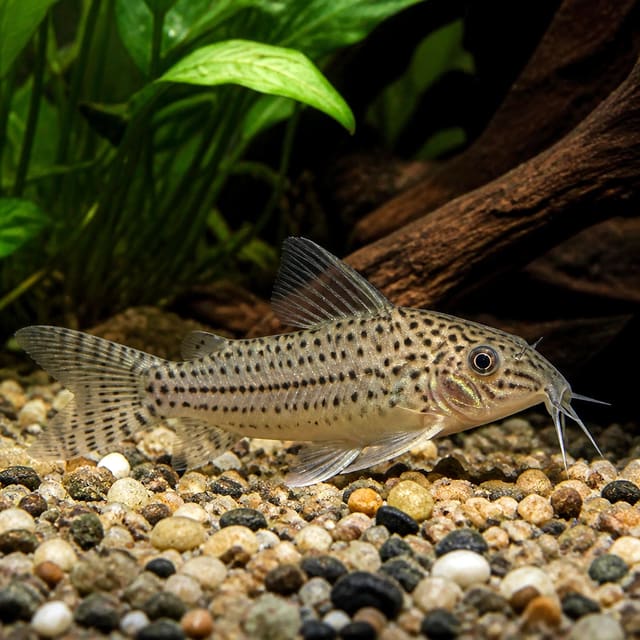
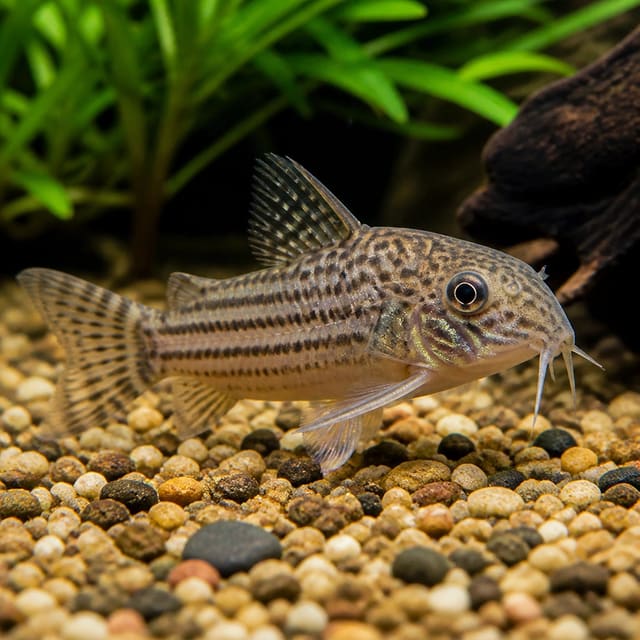
Julii Cory (Corydoras julii)
22–26°C · pH 6–7.5 · 60L
£10.99

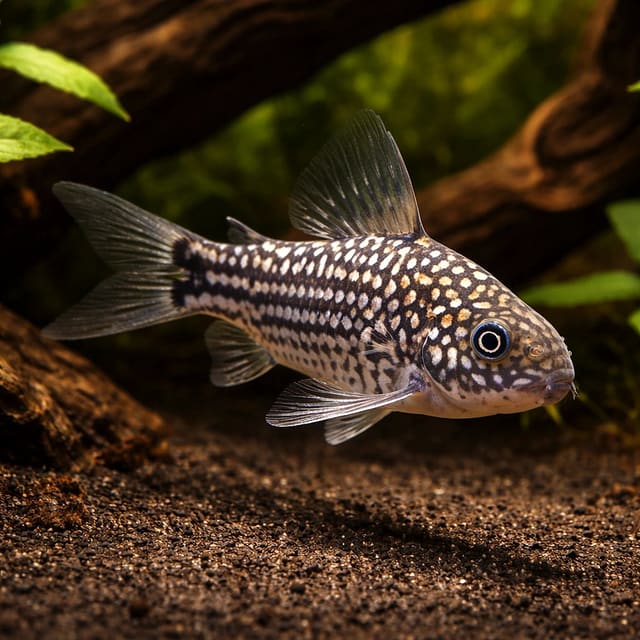
Sterbai Cory are peaceful, spotted warm-water catfish. Each quantity supplies one fish in the selected size grade; plan a group of at least six in a mature aquarium with a gentle substrate and sinking food.
Adult size is the maximum length this species reaches at full maturity (scientific sources). The livestock you receive will be younger and smaller — pick a size above for the actual shipping size. Product-photo provenance and any image-specific limitations are stated on the listing.
Hoplisoma sterbai
Shoaling fish: kept in a group they feel safer, stay calmer and show their best colour.
Sterbai Cory are peaceful, spotted warm-water catfish. Each quantity supplies one fish in the selected size grade; plan a group of at least six in a mature aquarium with a gentle substrate and sinking food.
Adult size is the maximum length this species reaches at full maturity (scientific sources). The livestock you receive will be younger and smaller — pick a size above for the actual shipping size. Product-photo provenance and any image-specific limitations are stated on the listing.
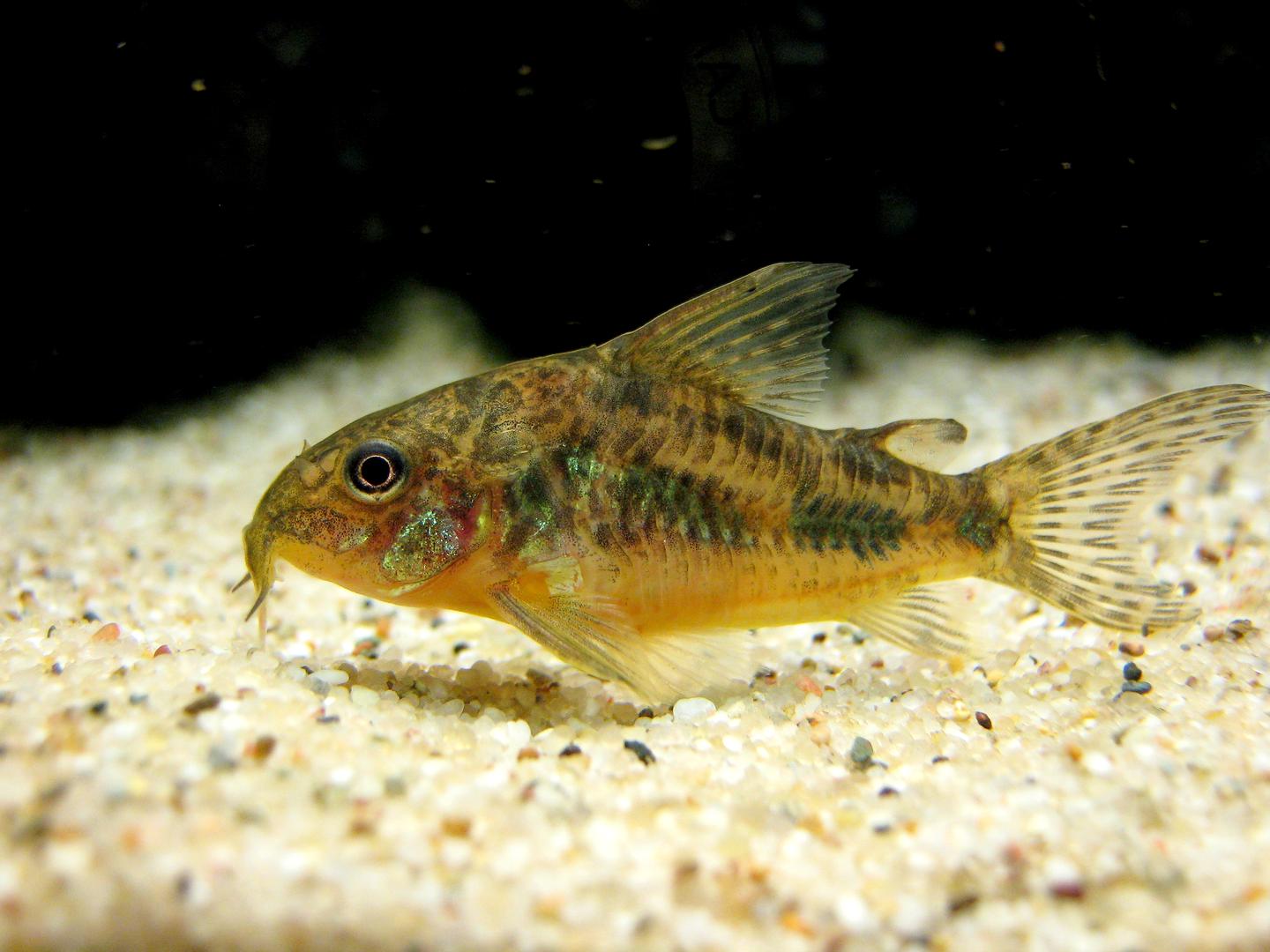
Identify the exact cory catfish before choosing care. Our starting policy for many common medium species is six compatible conspecifics, a mature 60 x 30 cm aquarium of about 60 litres, smooth fine sand and measured species-appropriate water.
Maintain these water conditions for optimal health and vibrant colors
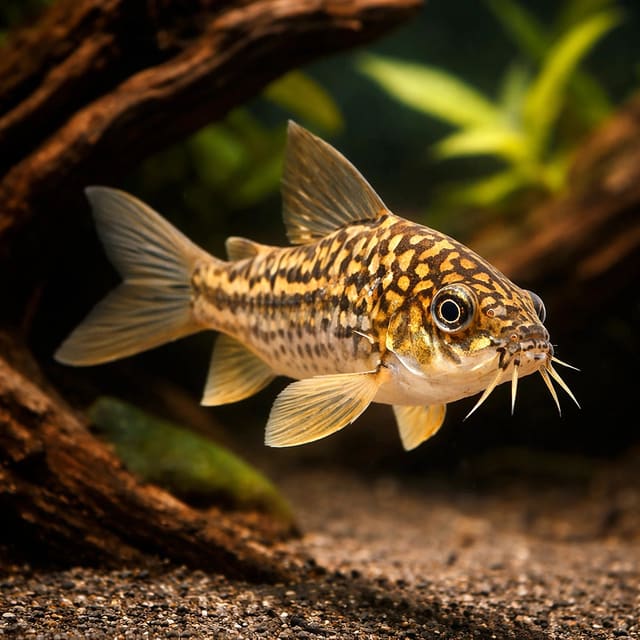
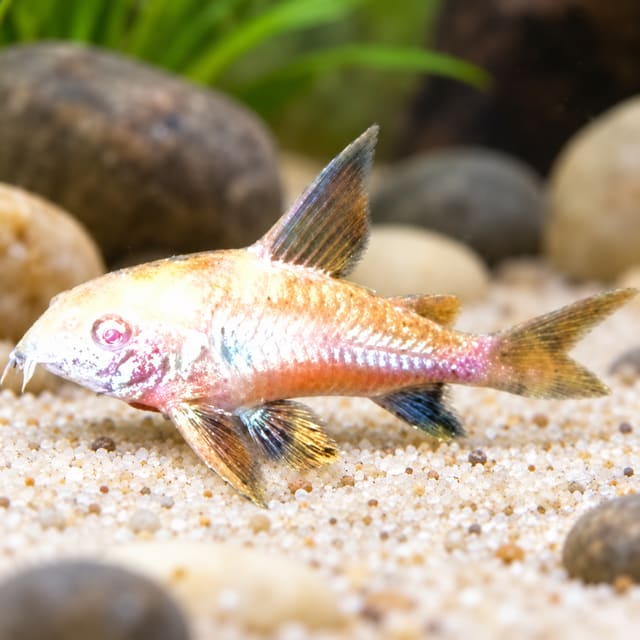
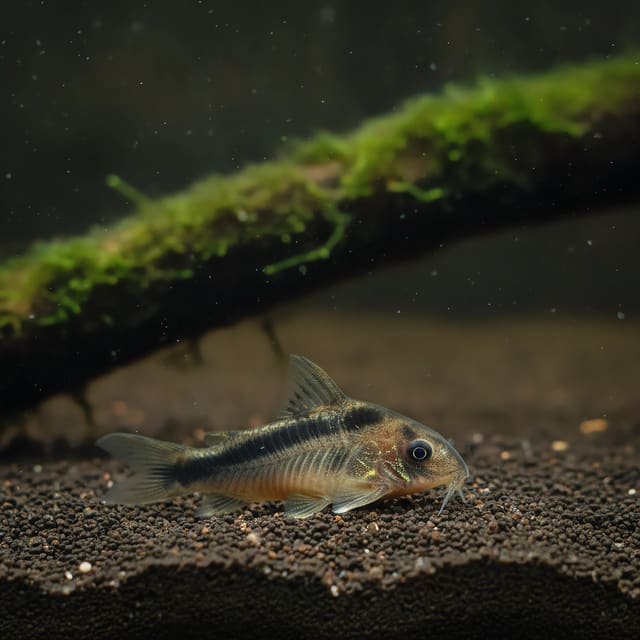
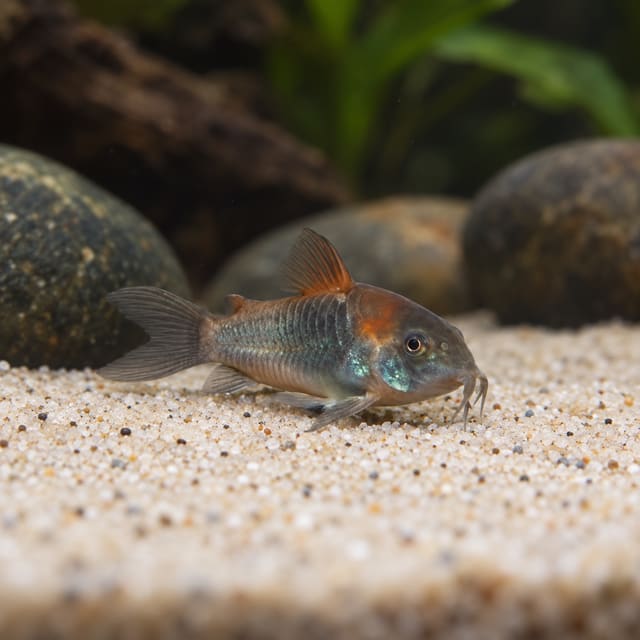
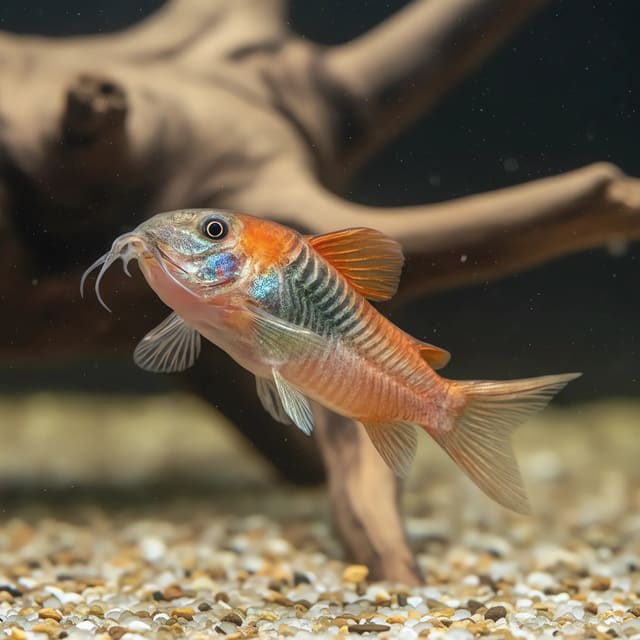
Sterbai Cory is a peaceful South American catfish that makes its home on the aquarium floor. Its accepted name is Hoplisoma sterbai, while the familiar older name Corydoras sterbai remains widespread among fishkeepers. The dark spotted head, contrasting body pattern and orange leading rays of the pectoral fins give the species its appeal. In a suitable group, the fish move between sheltered resting spots and open substrate, searching for food with their barbels. They deserve to be kept for that behaviour, not as an assumed solution to algae or leftover food.
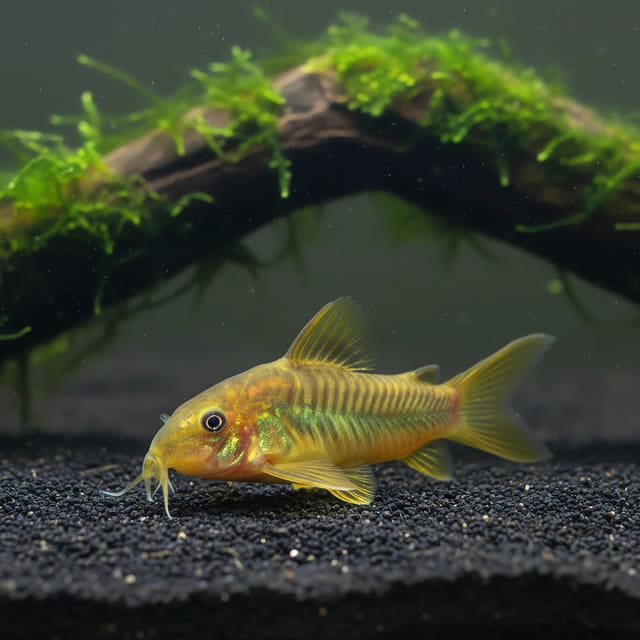
One purchase quantity supplies one Sterbai Cory in the size chosen on this page. The named grades are 2–2.5 cm, 2.5–3 cm, 3–4 cm and XL. XL is a supplier grade without a precise centimetre measurement; the live selector tells you which grades can be ordered. The size you select is the size supplied, not the adult size. Sex is guaranteed only when the selected option explicitly states male or female. This Sterbai Cory listing has no sex-guaranteed option. Gallery composition does not change the sale unit: a picture with more than one animal is still not a pack of fish.
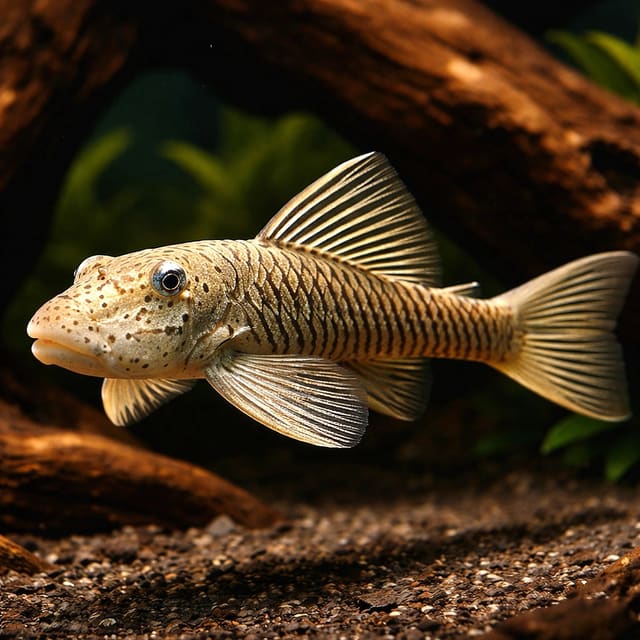
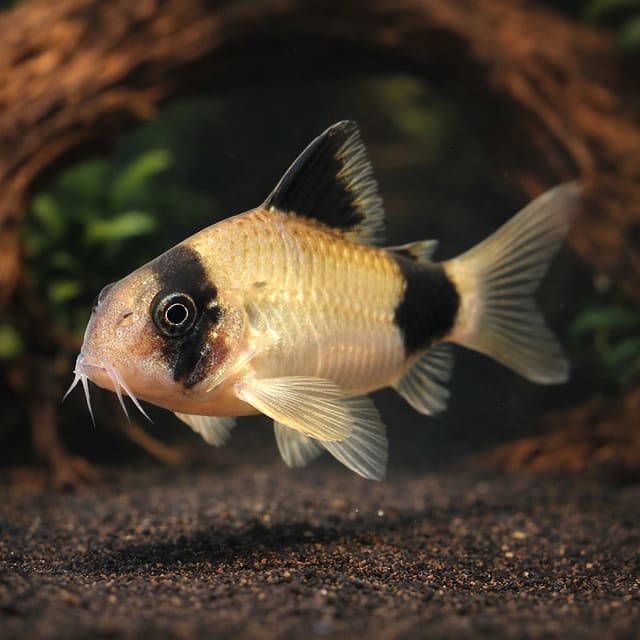
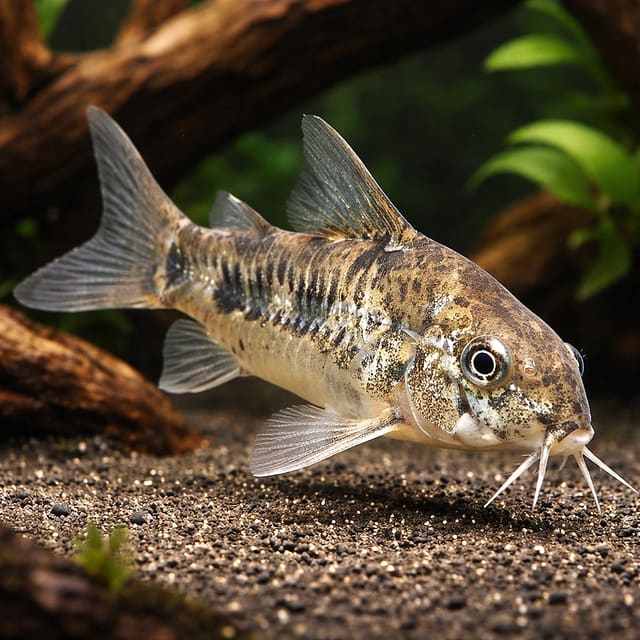
Think about the group before choosing the grade. Seriously Fish recommends at least six of this species together, and OATA's broader freshwater catfish guidance says at least five corys. Six or more is a sensible species-specific plan where the aquarium has sufficient floor space and filtration. One fish may join a group already living well together; one alone in a new tank would not meet its social needs. A mixed selection can include natural differences in body shape and pattern, so buy for the species and its care needs rather than an exact pictured individual.
Sterbai Cory suit a mature warm community aquarium with a generous, gentle floor and other peaceful residents that share the same water conditions. Their adult scale is modest, but a social group uses far more space than a single juvenile. A filter must already process the waste from existing livestock, and every fish must be able to reach its own sinking food. If the aquarium is newly started, crowded along the bottom or maintained for cooler-water fish, use the first tropical tank guide to prepare it before adding a warm-water cory group.
FishBase records a maximum of 6.8 cm standard length for male or unsexed H. sterbai. Standard length stops at the tail base, so it is not the same as total length including the tail. The Seriously Fish aquarium profile gives about 6.5 cm standard length. These describe recorded adult scale, not a promise that a particular fish will reach one exact measurement. The smaller numbers on the sale choices are dispatch grades. Plan the permanent aquarium for adult movement and the group, even if a young fish currently fits into a tiny corner.
Seriously Fish gives aquarium care guidance of 24–28°C, pH 6.0–7.6 and 1–15 dGH. FishBase includes a broader wild environmental record; wild occurrence should not be treated as a routine target for a home tank. Match a stable aquarium and its companions to the specialist care range. A fish can appear active while water quality is deteriorating, so rely on measured ammonia and nitrite as well as observation. Rapid chemical corrections in pursuit of a precise pH number can be more disruptive than a steady suitable value.
Tank size requires context. Seriously Fish describes a 45 by 30 cm base and about 41 litres as sufficient for a small group in its example. OATA's broader UK catfish sheet recommends at least 80 litres for a shoal of smaller catfish. For a mixed community, 80 litres is a more generous starting point, and a longer tank with ample floor is preferable to a tall narrow tank of equal volume. Neither figure includes unlimited additional bottom fish. Increase space for other floor residents, heavier stocking or substantial hardscape that occupies the substrate.
The most useful question is how much clear, clean floor the group can actually use. Provide open foraging patches between shaded cover, check that food can reach several points and leave a safe route to the water surface. Good surface movement supports oxygen, especially in warm water. An occasional quick air gulp is normal for this facultative air-breathing species; frequent distressed surface visits with rapid breathing call for water and equipment checks. A group confidently moving between shelter and open sand is a better sign than a number on a tank label alone.
Fine river sand is the specialist profile's suggested substrate. Smooth fine gravel is a workable alternative when grains are genuinely rounded and the bed is kept clean. Corys push their barbels into the upper layer while searching for food, so sharp gravel, rough decorative edges and trapped waste are poor choices. Abraded or missing barbels can have several causes; choosing a gentle, hygienic floor removes one avoidable risk. Leave enough exposed area to watch the group feed and to siphon settled debris without dismantling the whole layout.
Create shelter with pieces of wood, roots, rounded stones or planting along the edges. The Seriously Fish profile describes a river-sand and wood arrangement with leaf litter as one way to evoke its habitat, while accepting a standard planted aquarium as well. Neither style requires a densely packed floor. A few shaded resting places make the fish feel secure, but open channels let individuals move away from one another and receive food. If using botanical leaves, remove material before it rots and fouls the water.
Floor space matters more than display height for this animal. In a community aquarium, count the bottom-dwelling fish already there and observe where they claim shelter or food. A large cave, dense rock stack or group of territorial companions can make an apparently generous tank feel narrow to a cory. Arrange décor so you can see underneath or behind it during feeding and maintenance. If every sinking pellet vanishes into an inaccessible gap, rearrange the layout rather than increasing the amount of food you cannot later remove.
Maintain the substrate with light, regular cleaning. Uneaten food and waste collecting between gravel grains degrade water and make a bottom fish's environment less healthy. Siphon exposed patches during water changes, work around plants without uprooting them and monitor whether debris collects behind wood. Do not sterilise the whole aquarium or discard established biological filter media as part of a routine clean. The goal is a stable living system with a usable, clean floor, not a polished scene that is difficult to maintain.
Small fish also need appropriately guarded equipment. Check the filter intake, heater placement and any gaps around decorations before adding a juvenile grade. Gentle flow should keep waste moving toward the filter without making every resting spot a current. Aim the outlet to maintain surface movement and observe where the corys choose to spend time. Persistent hiding can reflect bright exposure, poor group size, troublesome companions or water conditions; it is worth checking those causes before concluding that the species is naturally shy.
The species aquarium range from Seriously Fish is 24–28°C, pH 6.0–7.6 and 1–15 dGH. Its warm-water tolerance makes it a candidate for some South American communities, including carefully managed discus displays, but compatibility still depends on the whole tank. Temperature alone is insufficient if another fish dominates the floor or consumes all sinking food. Measure the established water and its source, then use the Water Parameter Matcher to compare your readings with the species guidance. Choose a plan you can keep stable. Do not interpret FishBase's wider wild ranges as a reason to shift a domestic tank abruptly.
A mature biological filter is essential. The RSPCA explains that fish waste produces toxic ammonia; beneficial filter bacteria convert it to nitrite and then nitrate. Before adding Sterbai Cory, test for zero ammonia and nitrite and confirm that the aquarium has been coping with its current stock and feeding. New fish add waste as well as visual interest. Introduce stock at a pace the filter can support, particularly if building a group over more than one order. Clear water is not proof that it is chemically safe.
OATA's UK catfish sheet recommends testing at least weekly and a partial water change of roughly 25% each week as broad maintenance guidance. Use actual readings and the aquarium's load to decide whether more frequent action is needed. Treat replacement tap water to remove chlorine or chloramine and avoid a large temperature mismatch. Rinse a blocked filter sponge gently in removed tank water instead of chlorinated tap water, preserving much of the bacterial community that supports the aquarium.
Warm water deserves attention to oxygen. Keep the filter flowing, maintain surface agitation and watch for unusually rapid gill movement. An occasional air gulp is known for this species, but repeated frantic surface trips should prompt a check of oxygenation, ammonia, nitrite, temperature and other residents. If several fish show distress at once, investigate the environment promptly rather than treating each animal independently. The water parameters guide explains what to test and why. Routine logs of test results and water changes can reveal a drifting pattern before it becomes an emergency.
Do not chase a precise pH with repeated additives simply because a published interval has a decimal boundary. A suitable stable value, compatible source water and regular maintenance make more sense than swings. If your water is substantially outside the species guidance, choose livestock suited to the water or plan a controlled, sustainable approach before purchasing. A care card is a planning tool, not an instruction to make a rapid change while a fish is already in transit.
Sterbai Cory are omnivorous. Seriously Fish recommends a good-quality sinking pellet or tablet as the staple and suitable live or frozen variety such as daphnia, Artemia and bloodworm. Size the food to the mouth of the fish you actually receive, especially when a juvenile joins larger adults. Watch several meals to confirm that each individual gets a share. Their searching behaviour is not evidence that they can live on the scraps left by faster mid-water fish.
In a busy community, use two or more feeding points. A tablet placed in one corner can be monopolised by a confident cory or another bottom dweller. Place a second small portion where shy members forage, then remove leftovers rather than leaving food to decay under a root. Some keepers find that offering part of the meal when the brightest lights have dimmed gives bottom fish better access. The important test is whether you can observe the group eating and keeping good body condition.
Do not buy this fish to solve an algae problem. Corys may inspect edible material on the floor, but they are not specialist algae grazers and cannot replace aquarium maintenance. A complete staple plus controlled variety supports normal condition; excess bloodworm or other rich foods should not crowd out the balanced food. Use clean, appropriately sized frozen or live foods and avoid any feeding routine that leaves hidden waste. A few minutes watching the bottom after a meal can reveal both missed fish and decaying food.
A fish that repeatedly stays back, loses body condition or stops responding to food needs attention. First check water quality and whether a companion excludes it from feeding spots. A timid new arrival may need quiet cover and time to settle, but persistent loss of appetite is not a normal feature of the species. Seek qualified aquatic advice for an ill animal rather than guessing a medicine from a photograph or adding extra food to an already polluted tank.
Prepare the mature aquarium before delivery, including temperature, filtration, cover and water tests. The store's current delivery policy requires someone to receive live fish at the address. Open the parcel promptly and inspect the sealed bag. The same policy advises floating the bag for around 20–30 minutes before release and not pouring transport water into the aquarium. Check the current delivery policy when the parcel is due, since packing and claim processes can change.
Keep the aquarium lights subdued while the new fish settles. Provide a sheltered release area and observe whether the established group accepts the arrival without persistent chasing. If it is joining other corys, place sinking food so the newcomer has a fair chance once it is ready to eat. Do not interpret a single quiet first hour as a permanent temperament trait. Continue checking breathing, posture, barbels and feeding over the next few days.
For a Live Arrival Guarantee concern, the policy asks for the order number and a continuous short video beginning with the still-sealed parcel and showing the fish in its sealed bag as the parcel is opened. Contact the store the same day, before releasing the fish, following its current policy. The video is evidence for a claim, not a step that benefits the fish. Prompt inspection, careful acclimatisation and suitable water are the actual husbandry priorities.
A properly maintained separate observation or quarantine aquarium may help limit disease introduction to an established collection. It still needs stable water, filtration and suitable shelter; a bare emergency container is not automatically safer. If a fish develops abnormal breathing, damaged fins or a persistent refusal to feed, test water first and seek guidance from a capable aquatic retailer or fish vet. Avoid improvised drug treatment without a diagnosis. Monitoring the whole group often reveals whether the issue is individual or environmental.
Seriously Fish describes Sterbai Cory as very peaceful and names small characins, cyprinids, anabantoids, dwarf cichlids and other peaceful catfish as possible partners. These are families or groups to assess, not universal guarantees. The Corydoras collection shows other cory choices, but each has its own care needs. The actual species must share a useful overlap in temperature, pH and hardness and remain suitably sized as an adult. A fish that behaves calmly at the shop may defend territory when breeding or when the tank is crowded. Build the community around observed behaviour and room for every resident.
Avoid fish large enough to eat a cory, aggressively territorial fish and bottom dwellers that hold the only sheltered or feeding area. Fast feeders can be a problem without overt aggression: they may take each meal before it reaches the floor. Use several sinking-food points and watch the response. Do not replace the cory's own same-species group with a different catfish because both have a similar body shape. Social comfort depends on appropriate conspecific companions.
A discus aquarium can be suitable when it is large, mature, oxygenated and maintained within shared water conditions. The corys must have floor area and reliable access to food. Warm water at the upper end of a species range reduces the margin for dissolved oxygen, so monitor surface movement and respiration. Likewise, a cooler-water cory species does not become a good companion merely because it is a cory. Compare the actual species requirements rather than stocking by shop category.
Eggs, fry and very small invertebrates can become food for opportunistic community fish. The specialist profile notes that corys may consume bite-sized eggs or fry. A breeding or shrimp-rearing tank therefore has different priorities from a general display. If protecting every tiny young animal matters, plan separation or appropriate cover rather than relying on the word peaceful. Peaceful describes aggression toward other adult fish; it does not make an omnivorous fish ignore every edible item.
Delay the purchase if the aquarium is still cycling, ammonia or nitrite is measurable, the floor is sharp or dirty, or current fish require cooler conditions. Also wait if there is no plan for a group of the same species. Fixing the tank first is quicker than trying to manage a stressed arrival in unsuitable water. A little preparation lets the fish show the social, active floor-foraging behaviour that makes this species appealing.
Consider a larger or longer tank if several groups will share the substrate, if rockwork consumes much of the base, or if feeding competition is already noticeable. Seriously Fish's small-group 45 by 30 cm example and OATA's broader 80-litre shoal recommendation answer different questions; neither covers unlimited additional fish. The best choice is the one that gives all residents enough clean space and a maintenance routine you can sustain.
FishBase records 6.8 cm standard length as the maximum for male or unsexed Hoplisoma sterbai. Standard length excludes the tail. A selected dispatch grade is smaller and does not predict one individual's final size.
Prioritise floor length. Seriously Fish describes a 45 by 30 cm base, about 41 litres, for a small group; OATA's broader catfish guidance recommends at least 80 litres for a shoal of smaller species. Use more space for a mixed community.
Plan for at least six of the same species when space and filtration allow. Seriously Fish recommends six; OATA's broader catfish sheet says at least five. One purchased fish may join an existing suitable group.
A prepared keeper can succeed with a mature, tested warm aquarium, gentle substrate, a same-species group and deliberate feeding. It is a poor first addition to an uncycled tank or a lone fish in a small display.
Use a complete sinking pellet or tablet as the staple and add suitable live or frozen variety such as daphnia or Artemia. Make sure food reaches every fish; Sterbai Cory do not live on algae or leftovers.
Seriously Fish gives 24–28°C and pH 6.0–7.6 for aquarium care, with hardness 1–15 dGH. Keep conditions stable and choose companions with overlapping needs rather than treating wider wild records as routine targets.
Seriously Fish describes them as very peaceful. They are unsuitable with large predators, aggressive fish or territorial bottom dwellers that block access to food and shelter.
Peaceful small characins, cyprinids, anabantoids, dwarf cichlids and other peaceful catfish are possibilities named by Seriously Fish. Check each species' adult size, water needs and behaviour; no category is universally compatible.
Tropical Fish Co uses a tracked licensed live-animal courier and packs fish in oxygenated bags with insulation, adding a heat pack when conditions call for one. Someone must receive the parcel; follow the current delivery and Live Arrival Guarantee instructions on arrival.
The accepted name and recorded maximum standard length follow the FishBase Hoplisoma sterbai record. Species aquarium guidance for water, floor dimensions, diet and behaviour follows the Seriously Fish Sterbai Cory profile. These sources have different purposes; a wild environmental span is not presented here as a home-aquarium target.
The UK group-level context comes from the OATA freshwater catfish sheet. General biological-filtration advice comes from the RSPCA fish environment advice. The store's delivery information governs packing, receipt and any Live Arrival Guarantee claim. Check that policy when your order is due.
Make a brief daily observation at a consistent time. Count the corys you can see, notice whether they move freely between cover and open sand, and watch their breathing before food enters the tank. This helps you recognise the group's normal rhythm. A fish resting for a while is not automatically ill, yet one that repeatedly separates from the group, fails to respond to food or holds its fins differently deserves a closer look. Compare its behaviour with the others and test the water before drawing a conclusion from one sign alone.
Use feeding as a practical health check. Place a modest sinking portion in a visible open area and another near a quieter patch, then watch who arrives. A shy animal may feed after its bolder companions move away. If one fish never gets a share, revise the placement or the community rather than pouring in more food. If all of them ignore a familiar food, check temperature, oxygenation and water quality. Remove uneaten portions, especially from places where they can decompose unseen.
Keep notes on the aquarium's normal readings and maintenance. Temperature, pH, ammonia, nitrite and nitrate form a useful record when a fish begins to behave differently. A sudden change in one value can matter more than a single isolated number. If water tests show ammonia or nitrite, address the source and seek experienced advice while protecting the fish from further stress. Cleaning an entire filter and substrate on the same day can upset a mature system; work in measured steps and retain biological media.
During weekly care, look closely at the substrate immediately beneath food and shelter. Waste collects where flow is weak and where a cory spends much of its time. Gently remove that accumulation without turning every water change into a complete rebuild. Check filter flow and the heater, then observe the group again after replacement water has settled. These checks are especially valuable in a warm community because a filter that slows or a heater that drifts can affect every resident.
Allow the group to use the aquarium in its own way. Sterbai Cory may forage together, rest side by side and move more confidently when enough of their own species are present. The social pattern is not a fixed pair bond, and a photograph of two fish does not mean two are sold together. The exact number suited to one tank depends on its floor area, other stock and filtration. Build the planned group responsibly, watching water tests as additions increase feeding and waste.
A fish with a damaged barbel, red area, white spot, rapid breathing or a marked loss of weight needs more than a generic medicine suggestion. Check whether the issue appears in other animals, test water, inspect the floor and equipment, and seek a qualified aquatic opinion. Treatments vary with the cause and may harm sensitive fish or the filter if used incorrectly. A separate well-maintained observation tank can be useful, but it must itself be stable and suitable. Do not move an animal repeatedly without a reason.
Review the community as fish grow. A companion that was small and calm when introduced may become territorial or large enough to intimidate a juvenile cory. Feeding competition can also increase after a new group is added. Watch the bottom at meal times and look for an animal that controls one corner, pushes the corys away from cover or forces them into a narrow strip of sand. Changing the stocking or layout may be more effective than adding yet more food.
If you are still planning the aquarium, choose a practical maintenance route before arranging ornaments. Leave room for a siphon to reach feeding patches, provide a stable place for the heater and filter, and keep a clear view of the fish when they are at rest. A visually elaborate tank can be harder to care for if every food tablet vanishes behind rocks. Simple accessible design supports both the corys and the keeper who must monitor them over time.
No reviews for this item yet. Bought one? Honest reviews only, good or bad.
What customers say about ordering from us
I have a small group of long finned mountain minnows. So was delighted to be able to order ten of this variety to increase the genetics in my tank . The ones I recieved are healthy but it’s to early to give a verdict on wether they are of a long finned type since they are small currently.
Gordon Walker · 23 Sept 2026
100% success travel and "installation". Pleased with quality of purchase. The Siamese fighter a bit "shy" so have not yet seen him at his best yet but looking good. Happy customer. GG
George E Garratt · 21 Sept 2026
Reviews of our shop, collected by Judge.me, an independent third-party review collector. Newest first.