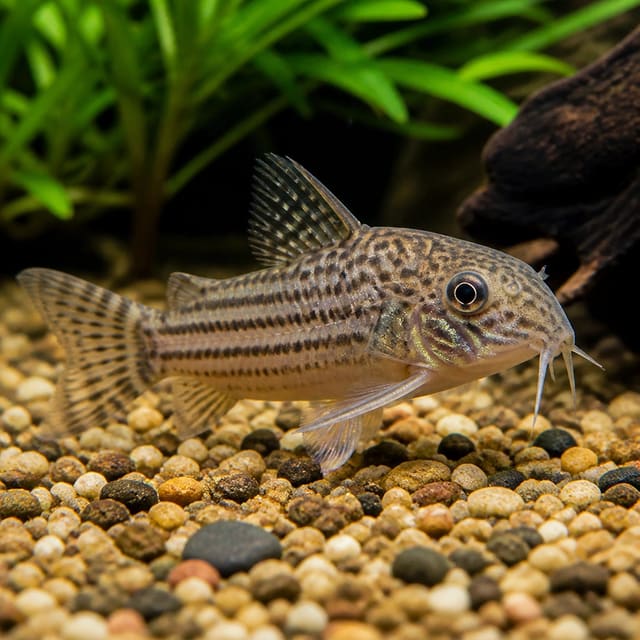
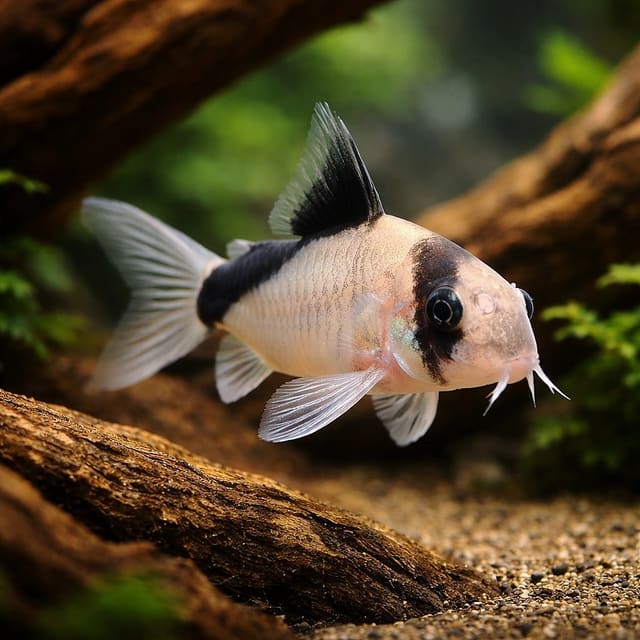
Duplicate Cory (Corydoras duplicareus)
22–26°C · pH 6–7
£25.99

One unsexed Gold Spot Pleco L001 (Pterygoplichthys joselimaianus) in the selected approximate 4-5 cm or 8-10 cm size. Plan for about 40 cm standard length, an aquarium around 180 x 60 x 60 cm and roughly 600 litres or more, mature heavy-duty filtration, strong oxygenation and a varied plant-rich omnivore diet. The one representative image is preserved as a representative illustration; actual marking, sex and exact size vary.
Pterygoplichthys joselimaianus
Shoaling fish: kept in a group they feel safer, stay calmer and show their best colour.
Confirm your email, then we’ll send an availability message for this exact item if it returns within 180 days.
This request is only for this product—no newsletter or other promotions. A mail-provider retry may very rarely duplicate the same availability message. Unconfirmed addresses are removed after 48 hours. See our privacy policy.
One unsexed Gold Spot Pleco L001 (Pterygoplichthys joselimaianus) in the selected approximate 4-5 cm or 8-10 cm size. Plan for about 40 cm standard length, an aquarium around 180 x 60 x 60 cm and roughly 600 litres or more, mature heavy-duty filtration, strong oxygenation and a varied plant-rich omnivore diet. The one representative image is preserved as a representative illustration; actual marking, sex and exact size vary.
‘Pleco’ is a loose aquarium-trade label, not one species or one care sheet. Before buying, confirm the scientific name or defensible L-number, adult size and measurement method, required footprint, temperature and water, diet, social plan and source. No universal pleco tank size, menu or algae result is honest.
Maintain these water conditions for optimal health and vibrant colors
Gold Spot Pleco L001 (Pterygoplichthys joselimaianus) is a very large South American sailfin pleco with a tall dorsal fin, an armoured body and pale gold-to-cream markings over a darker base. L001 and L022 are long-established aquarium-trade codes for this species. They are useful identifiers, but the small fish offered today must be chosen with its adult body, powerful waste output and long-term aquarium footprint in mind.
This listing supplies one unsexed fish in the selected approximate size. The Shopify options are approximately 4-5 cm and 8-10 cm when each is available. They are juvenile sale sizes, not the adult maximum, and exact dispatch length is not guaranteed. The listing does not include a pair, a group or a fish selected by sex.
Plan for a pleco capable of reaching about 40 cm standard length, with its tail and fully raised dorsal fin adding to the space it occupies. A conservative long-term starting point for one adult is an aquarium around 180 x 60 x 60 cm, roughly 600 litres or more, with a still larger footprint valuable in a community. This is an advanced fish because of adult scale, filtration demand and territorial management, not because it requires obscure chemistry.
| Current accepted name | Pterygoplichthys joselimaianus (Weber, 1991) |
|---|---|
| Trade identity | Gold Spot Pleco, Gold Spot Sailfin Pleco, L001; L022 is also used in the trade |
| What one quantity supplies | One unsexed live fish in the selected approximate size |
| Current size options | Approximately 4-5 cm or 8-10 cm when available; exact dispatch length is not guaranteed |
| Adult planning size | Plan for about 40 cm standard length, plus the caudal fin and sail-like dorsal fin |
| Long-term aquarium | Conservatively around 180 x 60 x 60 cm and roughly 600 litres or more for one adult; larger where other large fish share the bottom area |
| Temperature | About 24-29 C, with strong gas exchange and stable conditions |
| Water | A practical captive range is around pH 6.5-7.5 and 4-15 dGH; zero ammonia and nitrite are essential |
| Diet | Varied complete sinking omnivore diet with plant-rich foods, deliberate protein variety and access to natural grazing surfaces |
| Care level | Advanced because of adult size, footprint, waste output, long commitment and potential territoriality with other plecos |
| Gallery | One preserved representative image; it is not a WYSIWYG photograph of the exact fish |
One selected quantity means one live Gold Spot Pleco. Choose the approximate 4-5 cm or 8-10 cm option where stock is shown. The size band is a supplier estimate: living fish grow, posture changes and routine trade measurements are not laboratory measurements. A fish may therefore vary slightly within or around the selected band. The option never describes the eventual adult maximum.
The fish is supplied unsexed. Juveniles at these sizes cannot be promised as male or female from casual external inspection, and no particular sex ratio is included when more than one is ordered. The product is also not sold as a breeding pair, locality pair, captive-bred line or individually photographed specimen.
Our stock records do not document a breeder, generation, collection locality, captive-bred status or wild-caught status. This page does not invent any of those details. Retain the species name, trade number, selected size and purchase date in the aquarium record, but describe provenance as unrecorded unless later paperwork provides it.
Availability is controlled separately for each Shopify size option. One option can be available while the other is out of stock. Check the selected option before checkout rather than assuming that a price or stock message for one size applies to both.
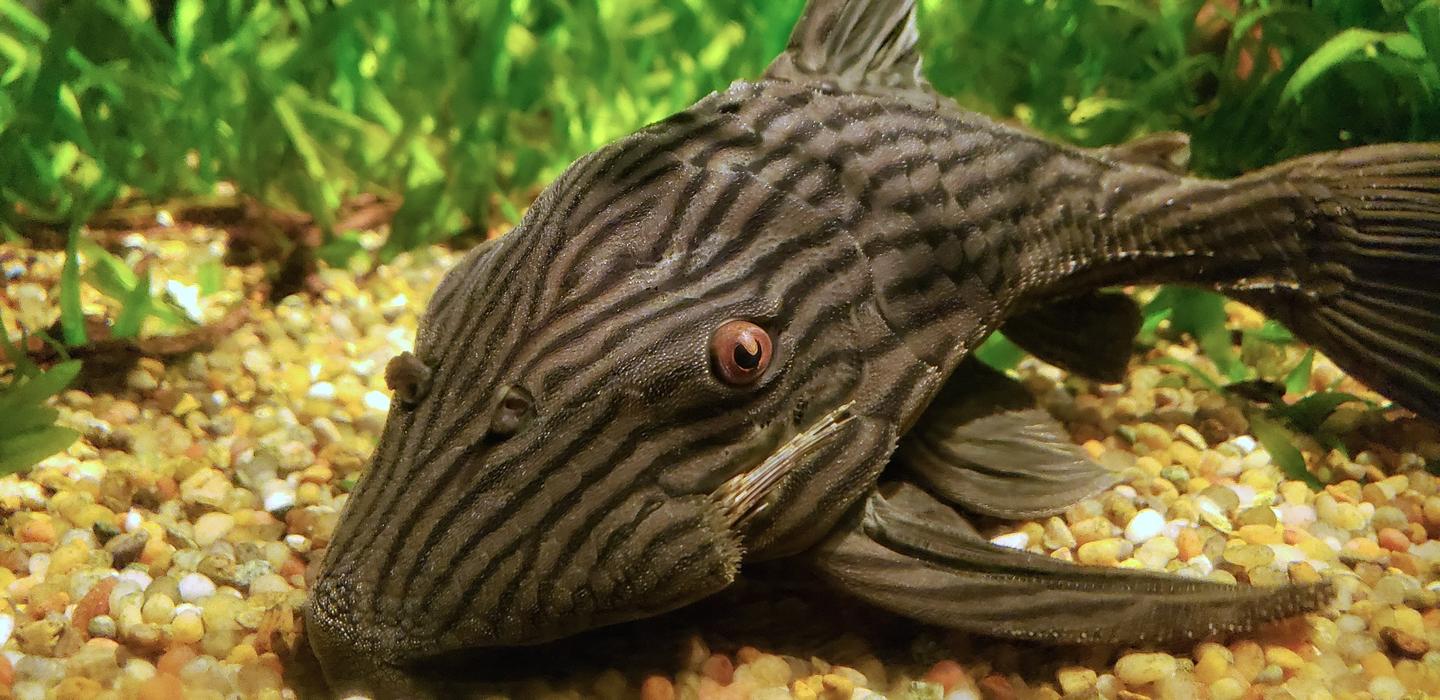
The gallery image is a representative aquarium image, not a photograph of the exact fish that will be selected for dispatch. It should be used to understand the broad sailfin-pleco body form, not to count spots, identify sex, prove exact colour or judge the dispatch size against the decor.
Actual L001 fish vary in spotting, vermiculation, base colour and fin pattern. Juveniles can look different as they mature, and aquarium lighting, background, stress and camera processing can alter contrast. Some fish appear more clearly gold-spotted; others develop joined or maze-like pale markings. This variation does not change the one-fish sale unit or the accepted species identity.
Because this is not a WYSIWYG listing, no promise is made that the supplied fish will match the illustration mark for mark. Assess arrival first through respiration, posture, body condition, fin integrity and normal attachment to a surface. Allow transport colour to settle under stable water before judging the final appearance.
The current accepted name is Pterygoplichthys joselimaianus (Weber, 1991), as recorded by the California Academy of Sciences Catalog of Fishes. The species was originally described in a different genus, and older trade material may therefore show the synonym Glyptoperichthys joselimaianus. That older combination is useful for tracing historic records, but it is not the name used as the main identity on this page.
The 1991 original species description provides the foundation for the identification. It described a dark loricariid with medium-sized light spots that may join in places across the body and fins. The material came from the Araguaia-Tocantins system, and the type series included a paratype of 307 mm standard length. These details fit the substantial, patterned sailfin pleco known in the aquarium trade as L001.
The scientific epithet ends in -anus: joselimaianus. The shortened form joselimae previously shown in this product title is not the current accepted spelling. Keeping the full accepted name helps search engines and aquarists distinguish this fish from other common sailfin plecos that can look similar when young.
L-numbers were created to identify loricariid trade forms before or alongside formal taxonomy. L001 remains a strong and natural search term because aquarists use it when comparing stock. L022 is also associated with this species in specialist retail. Neither code is a SKU, and neither replaces the scientific name. A clear aquarium record should carry both the L-number and Pterygoplichthys joselimaianus.
Gold Spot Pleco and Gold Spot Sailfin Pleco are the clearest common names for this listing. Marbled Sailfin Pleco is also used by parts of the UK trade. Common names overlap, however, and a young sailfin pleco can be sold under a generic common plec label. The L001 code and accepted scientific name are more useful than colour words alone.
Pterygoplichthys joselimaianus is not the same species as the frequently sold Leopard Sailfin Pleco, Pterygoplichthys gibbiceps, nor the Common Plec, Hypostomus plecostomus in older retail shorthand. All can become large and all need adult planning, but their patterns and accepted identities differ. Do not transfer a tank-size or breeding claim from one species simply because a shop used the words sailfin or common plec.
The prominent dorsal fin is a practical identification clue. When raised it forms a sail that increases the fish's apparent height and turning requirement. The body is plated, the mouth forms a ventral suction disc, and the pale markings extend onto the fins. Identification should still be based on the documented trade identity and a competent inspection, not one stylised gallery image.
For a current UK retail comparison, the Maidenhead Aquatics Fishkeeper L001/L022 profile also treats this as a very large, warm-water, vegetable-rich but varied-feeding pleco with territorial potential around similar fish. Its care framing is useful, while the exact batch promises on this product must still come from this listing and Shopify stock.
The species is native to the Tocantins River basin in Brazil. The type locality lies in the Araguaia-Tocantins system, and current summaries place it in the Tocantins basin. This retail batch has no named collection location, so the page does not claim a particular river, tributary, exporter or wild population.
Pterygoplichthys plecos are bottom-associated grazers that use submerged surfaces, shelter and open routes between feeding areas. In an aquarium, the goal is not to build a decorative cave that traps waste. Create broad turning lanes, shaded refuges, stable wood or smooth rock, and areas that can be siphoned. A large adult must be able to move without scraping its dorsal fin or becoming wedged.
FishBase's species summary records the fish as freshwater and demersal, with a 24-29 C temperature range and a maximum reported standard length of 39.5 cm. It also records facultative air breathing. That ability is not permission to accept low dissolved oxygen. Repeated surface visits in a normally settled aquarium should trigger immediate checks of temperature, aeration, filter performance, ammonia and nitrite.
A natural-looking setup can include wood, smooth rock and robust plants, but welfare comes from usable space and clean water rather than visual imitation. Avoid unstable piles and narrow ornaments. Large plecos are powerful enough to shift light decor, uproot plants and expose equipment, so secure every heavy item before the aquarium is filled.
This fish must not be planned around its 4-10 cm sale size. FishBase reports a maximum of 39.5 cm standard length. Standard length runs from the snout to the base of the tail and excludes the caudal fin, so the complete fish occupies more length. The original description included a 307 mm standard-length specimen, confirming that the species is already substantial before the later maximum is considered.
Some UK hobby profiles use an adult expectation around 30-35 cm, and individual captive fish may stop below the published maximum. A shop cannot know the final length of a juvenile. The responsible plan therefore allows for roughly 40 cm of body, a broad head, a large tail and the full sail-like dorsal fin. Planning low and hoping the fish stays small transfers the risk to the animal.
The Practical Fishkeeping discussion of large common and sailfin plecs explains the recurring welfare problem: juveniles are sold at a convenient size and later outgrow ordinary community aquariums. L001 is not a compact algae eater. The adult aquarium and long-term household commitment should exist as a credible plan before purchase.
| Evidence or measurement | Reported figure | How to use it |
|---|---|---|
| Current FishBase maximum | 39.5 cm standard length | Plan for about 40 cm of body before tail and raised dorsal fin are added |
| 1991 original description | Paratype to 307 mm standard length | Confirms that a mature specimen is already far larger than the juvenile sale options |
| Common UK trade estimates | Often around 30-35 cm | Useful for context, but not a safe ceiling for every individual |
| This listing's recommendation | 40 cm body-length plan | Choose the permanent aquarium, filtration and tank mates around the larger evidence |
For one adult, use a conservative starting point around 180 cm long by 60 cm front to back by 60 cm high, or roughly 600 litres and above after allowing for product dimensions. An aquarium at 180 x 60 x 60 cm is about 648 litres gross before substrate, decor and an air gap reduce the actual water volume. Check real internal dimensions with the aquarium volume calculator.
This recommendation is a welfare planning judgement based on the published body length, turning space, sail-like fin, waste output and need for stable water. It is not presented as a universal legal minimum or a claim that every aquarium with the same litre figure is equally suitable. A tall narrow tank can hold many litres yet provide poor floor area and turning width.
Front-to-back width matters. A fish approaching 40 cm standard length needs room to turn without folding around decor, and the filter needs open lanes to move debris towards an intake. A large external filter cannot create floor area. Similarly, adding more caves cannot make a crowded tank suitable for several territorial adults.
A community containing other large fish needs more water volume, filtration and usable footprint. If another pleco shares the bottom, allow separate territories and feeding lanes and be ready to separate them. A single adult L001 is often the clearer plan. It is not schooling and does not need companions of its own species to meet a group number.
A juvenile may be observed temporarily in a smaller mature quarantine or grow-out aquarium, but temporary housing must have a dated, funded upgrade plan. The fish does not grow only to the size of its aquarium. Restricted space and deteriorating water can stunt or deform an animal without turning the setup into a suitable permanent home.
Large sailfin plecos eat frequently and produce a conspicuous volume of solid waste. Use mature biological filtration sized for the adult fish and all tank mates, with strong mechanical capture that can be cleaned before debris breaks down. Two appropriately sized filters can add resilience and improve circulation, but only if both are maintained and intakes are protected from small juveniles.
Create strong surface movement and broad gas exchange. The recorded ability to breathe air is an emergency adaptation, not a substitute for oxygenated water. Warm water holds less dissolved oxygen, and filters, livestock and decomposing food all consume it. A battery air pump is sensible contingency equipment for hot weather and power interruptions.
Arrange the return so water moves around and behind wood without forcing the fish to sit in a narrow high-speed jet. Check for stagnant pockets with a small amount of food or visible debris, then adjust flow. The goal is an aquarium where waste can reach the mechanical filter or be siphoned, not one where it accumulates behind a display structure.
Use regular partial changes with dechlorinated, temperature-matched water. The correct frequency and volume depend on feeding, stocking, source water and measured nitrate, so test rather than copying a dramatic fixed percentage. In a heavily stocked or fast-growing system, smaller changes more often may be safer than waiting for a visible problem.
Rinse mechanical media before flow falls, following the filter manufacturer's directions, and preserve the mature biological media. Never replace all established media at once. After maintenance, confirm that returns, air lines, heaters and intake guards are working. A large fish can be affected quickly if an apparently running filter has lost circulation.
A practical routine temperature is about 24-29 C. Choose a stable point within that range that also suits every tank mate. At the warm end, pay extra attention to surface movement and stocking because oxygen availability falls while metabolic demand rises. Use a reliable thermometer and protect heaters from direct contact or impact.
For general captive care, pH around 6.5-7.5 and hardness around 4-15 dGH offer a reasonable working range. These are practical husbandry values rather than a claim that the undocumented retail batch came from one exact chemistry. Stability, clean water and appropriate acclimation matter more than repeatedly forcing small numerical changes.
Ammonia and nitrite must remain at zero. Keep nitrate controlled through sensible stocking, complete filtration, measured feeding, plants where practical and regular partial changes. A large aquarium can still become unsafe when a filter stalls, a fish dies unseen or a generous meal decays behind wood.
Use the aquarium water chemistry guide to interpret tests rather than treating each number in isolation. Never lower pH abruptly with an unmeasured acid or raise hardness with inconsistent additions. Test prepared replacement water before a major change and record the aquarium's normal baseline so a sudden drift is visible.
Choose fine sand, smooth gravel or a securely laid bare section that will not abrade the belly. Avoid sharp rock edges and narrow resin ornaments. A large pleco needs at least one broad shaded retreat where it can rest without trapping the dorsal fin, plus open feeding and turning areas. The shelter should remain accessible for inspection and siphoning.
Wood is useful for shade, grazing surfaces and physical structure. It may develop biofilm and support natural rasping behaviour. It is not, by itself, a complete diet, and this page does not claim that L001 must digest wood to survive. Use wood that is aquarium-safe, waterlogged and positioned so it cannot roll when the fish pushes beneath it.
Robust attached plants may work, but a big adult can uproot rooted plants, scrape soft leaves or move light pots. Choose species that tolerate the intended temperature and current, protect rhizomes from crushing and avoid fishing line or wire that can catch fins. Plant loss is an aquascaping consideration, not evidence that the fish is deliberately destructive.
Leave enough open floor to find waste. Dense decor that hides the fish from view can also hide food, faeces and an injured tank mate. The best layout balances security with maintainability. Use a tight lid around pipes and cables; a startled pleco is powerful, and equipment gaps should not become escape routes.
Gold Spot Plecos graze surfaces, but they must not be bought as unpaid algae control. Natural algae in a home aquarium is unpredictable and nutritionally incomplete. Feed a varied sinking omnivore diet built around a quality complete pleco food, with a strong plant-rich component and deliberate but measured animal-protein variety.
A product such as sinking pleco tablets can form part of the staple rotation. Add spirulina-rich chips or suitable bottom-feeder algae tablets for plant and algae-based variety. Check the complete ingredient and nutritional label rather than assuming that a green colour makes a wafer balanced.
Offer safe vegetable items such as courgette or other suitable blanched greens in portions the fish can finish, and remove uneaten pieces before they soften and pollute the water. Vegetables supplement a balanced ration; they are not a replacement for a formulated complete food. Wash produce and avoid seasonings, oils or cooked leftovers from the household table.
Small measured portions of appropriate animal foods can add variety. Suitable options may include mollusc, crustacean or insect-based sinking foods. Avoid mammal and poultry meat, feeder fish and uncontrolled high-protein feeding. A constantly meat-heavy diet is unnecessary for this grazer and can add fat and pollution without improving care.
Wood and biofilm are valuable enrichment, but neither removes the keeper's responsibility to feed. Likewise, leftover flakes intended for midwater fish are not a feeding plan. A pleco can appear busy on glass while losing weight. Inspect the abdomen and confirm that the fish reaches a measured evening meal.
| Food role | Suitable approach | What to monitor |
|---|---|---|
| Complete staple | Quality sinking omnivore or pleco tablet offered where the fish can feed undisturbed | The fish reaches it, body condition stays steady and the portion disappears without fouling |
| Plant-rich variety | Spirulina or algae-based food plus measured aquarium-safe vegetables | Remove soft leftovers and do not rely on one vegetable as a complete ration |
| Animal-food variety | Small portions of suitable mollusc, crustacean or insect-based sinking food | Avoid excessive protein, swollen condition and a rise in waste or nitrate |
| Grazing enrichment | Safe wood, rock and mature surfaces carrying biofilm | Useful behaviour and enrichment, but never counted as the entire diet |
| Avoid | Feeder fish, mammal or poultry meat, seasoned food and uncontrolled leftovers | Pathogen exposure, excess fat, digestive stress and water pollution |
Offer food in the evening or just before lights dim, when the fish is more likely to leave cover. Place the portion near its chosen route rather than dropping every item into the centre. In a community, use more than one feeding point so active midwater fish do not take all sinking food before it reaches the bottom.
A healthy abdomen should not remain pinched or hollow behind the head. Persistent weight loss, refusal to feed or stringy abnormal waste deserves investigation. Confirm water quality, oxygen, temperature and food access first, then seek aquatic-veterinary guidance when a health problem is suspected. Do not keep adding food to a tank where the fish will not eat.
Juveniles generally need smaller, regular meals because they are growing, while a large adult needs portions adjusted to activity and condition. There is no universal tablet count: food sizes and energy density differ. Start conservatively, observe what is eaten and remove leftovers. Record the routine so another household member does not accidentally feed again.
When several bottom fish are present, watch after the room becomes quiet. A dominant pleco can guard both a shelter and the nearest food. Feed in separated locations and confirm each abdomen rather than assuming the group shares. Long-term food exclusion may cause weight loss before obvious fighting appears.
L001 is a bottom-oriented fish that often rests under wood or in a shaded retreat during bright periods and becomes more active in subdued light. A settled specimen may learn the household feeding time and appear during the day. Provide a normal day-night cycle and secure shade rather than keeping the aquarium permanently dark.
It is not a schooling fish. One can be kept alone without adding companions of its own species. Adults may defend a preferred shelter or feeding area against other plecos, especially those with a similar body shape. The risk rises when floor space, turning room and food access are limited.
For a broader L001 Pleco care checklist, use the pleco care guide alongside this species page. The general guide helps with aquarium preparation and routine observation; the larger 40 cm body plan, conservative footprint and stock disclosures on this listing remain the product-specific requirements.
Short pushing displays can occur, but repeated trapping, damaged fins, rasp marks, a fish excluded from shelter or unexplained weight loss require intervention. Adding another cave is useful only if the aquarium already has enough footprint. Keep a realistic separation or rehoming plan before combining large loricariids.
Large plecos can move decor and may disturb rooted plants while turning or grazing. That does not make them aggressive towards every fish. Their main community concerns are adult physical scale, bottom-space competition, feeding access and the possibility of territorial conflict with similar catfish.
Robust, calm midwater fish can be suitable when their adult temperature, chemistry and oxygen needs genuinely match. Choose companions large enough not to be accidentally injured by a powerful adult, but avoid aggressive fish that repeatedly attack fins or prevent the pleco from feeding. The community must be planned around the adult L001, not the 4-5 cm juvenile.
Other plecos present the greatest territorial concern. Mixing L001 with an L-number such as the L236 Pleco, L333 Pleco, L046 Zebra Pleco or L260 Queen Arabesque is not a simple visual collection. Each has its own temperature, diet, adult size and cave needs, and the large sailfin pleco may overwhelm smaller cave specialists.
The popular Super Red Bristlenose Pleco is smaller, but size difference does not guarantee safety. A large L001 can dominate feeding and shelters. If two pleco species are attempted, use a substantially larger aquarium with separated zones, feed deliberately and be prepared to move one fish.
Small shrimp, newly moulted invertebrates, eggs and fry are not guaranteed safe around an opportunistic omnivore. Very slow, broad-bodied or flat fish also deserve caution because underfed large plecos have sometimes been reported rasping mucus from tank mates. Good feeding reduces risk but cannot turn an unsuitable combination into a guarantee.
Use the dedicated catfish and pleco shop to compare current stock, then evaluate adult husbandry before appearance. The Pterygoplichthys category is the more relevant route for close sailfin-pleco comparisons. Related links do not mean two products are automatically compatible.
| Potential companion | General fit | Main condition |
|---|---|---|
| Robust calm midwater fish | Often the clearest community option | Adult temperature, oxygen and space must match, and the pleco must receive sinking food |
| Another L001 | High planning requirement | Use a much larger footprint with separate shelters and an immediate separation plan |
| Other plecos or bottom fish | High caution | Assess adult size, cave competition, temperature and food access individually |
| Small shrimp, eggs or fry | Not reliably safe | An opportunistic omnivore may consume vulnerable animals or eggs |
| Slow or flat-bodied fish | Use caution | Avoid combinations where resting fish could be disturbed or rasped, especially if food is limited |
| Aggressive or predatory fish | Poor choice | Avoid harassment, fin injury, forced hiding and predation on juveniles |
Growth rate varies with genetics, temperature, food and water quality. Fast juvenile growth is not a reason to overfeed; stable condition and proportional development matter more. Measure the fish periodically from a photograph against a known scale without catching it solely for measurement, and record aquarium dimensions as well as litres.
If temporary grow-out housing is used, write down the transfer trigger before purchase. That trigger can include a date, fish length, turning clearance or filter capacity, but it should lead to the permanent aquarium well before space becomes restrictive. Waiting until the fish visibly cannot turn makes the move late.
The adult aquarium should be cycled, heated and tested before transfer. Large moves are easier when decor and filtration are planned around the fish's body. Use a rigid container or suitably large fish-safe bag rather than a small net that can catch pectoral spines and armour. Keep handling brief and the fish submerged as much as practical.
Do not release the fish if its aquarium becomes unsuitable. The US Fish and Wildlife Service ecological risk summary documents the concern around non-native populations of this adaptable loricariid. Rehome through a responsible experienced aquarist, aquatic shop or rescue route and disclose the adult size.
Prepare a mature aquarium before dispatch. Confirm the selected option, delivery date, heater, filter, aeration, temperature, pH, ammonia and nitrite. Place a secure shaded retreat in the tank and leave an open route to it. Do not plan to cycle a filter after the livestock arrives.
Follow the current livestock acclimation instructions supplied with the order. Transit time and bag chemistry matter, so a very long generic drip is not automatically the safest method for every shipment. Keep lights low, minimise handling and avoid pouring transport water into the display where the current instructions advise against it.
The acclimation timer can help keep the chosen procedure consistent, but the live instructions and condition of the shipment take priority. A juvenile pleco may cling strongly to the bag or container. Do not pull it from a surface; encourage it to release in water and keep pectoral spines away from fine mesh.
After release, allow the fish to choose cover. Do not lift wood repeatedly or chase it for photographs. Offer a small sinking meal after it settles and remove leftovers. During the first week, observe breathing, grip, abdomen, fins and waste, and test water daily if the aquarium or filter has recently changed.
A healthy fish normally grips surfaces, holds its fins without obvious damage and develops a gently filled abdomen once settled. Transport stress can temporarily reduce colour or activity. Pattern brightness alone is not a health test. Compare behaviour over time under the same light and feeding routine.
Warning signs include persistent rapid breathing, repeated surface visits, inability to attach, a hollow abdomen, swelling, sores, excess mucus, eroding fins, flashing or prolonged refusal to feed. First test temperature, ammonia, nitrite, nitrate and pH; confirm filter and air flow; then inspect food access and bullying. Correct measured environmental problems steadily.
Quarantine new fish in a mature heated system large enough for the individual, with its own filter, shelter and equipment. Match the intended display conditions. Observation is more useful than automatically dosing every new pleco. Keep separate nets and siphons to reduce cross-contamination.
Armoured catfish can be sensitive to some treatments. Never guess a dose, mix medications casually or assume a product is safe because it says tropical fish. Maintain oxygenation, read the full instructions and seek an aquatic veterinarian for diagnosis or serious signs. If medication is necessary, calculate the real water volume after decor displacement.
This listing is unsexed. Mature fish may show comparative differences in body shape, genital papilla and odontode development, but juvenile external sexing is not reliable enough to promise a male or female. Ordering two fish does not guarantee a pair, and ordering several does not guarantee a balanced group.
Pterygoplichthys species are associated with nesting in tunnels or banks in the wild rather than the small ceramic cave routine familiar from bristlenose plecos. Their adult size and nesting behaviour make home breeding difficult and space-intensive. No breeding outcome should be expected from a normal community aquarium.
Do not buy several juveniles solely to force a pair unless there is adult accommodation for all of them and a plan for territorial separation. If breeding or scientific record keeping matters, obtain documented broodstock provenance and preserve records. The current retail batch has no locality or breeder claim.
No. Restricted space can damage welfare and water quality; it does not create a healthy compact adult. Plan around the published 39.5 cm standard-length maximum and the fish's full fins.
No. Algae and biofilm are useful grazing enrichment, and wood provides structure, but the fish needs a complete varied sinking diet with plant-rich foods and measured protein variety.
No. Individuals vary, and some captive fish remain below the maximum. The 40 cm figure is a safer planning size based on published evidence, not a promise of final length.
No. Length and front-to-back width, stable filtration, decor clearance and tank-mate biomass all matter. A tall narrow aquarium with the same volume can provide a poorer adult footprint.
No. The listing is unsexed, juveniles are not selected as a pair, and adults may become territorial. One fish is the clearer default plan.
No. The preserved image is representative, not WYSIWYG. Actual marking, sex, proportions and size within the selected band vary.
Related products can help a keeper compare patterns and adult commitments, but they are not interchangeable algae tools. The L001 Gold Spot Pleco is the largest option in the table below. A smaller Hypancistrus or bristlenose still needs its own proper diet and care, yet may fit an aquarium that cannot responsibly hold a 40 cm-bodied sailfin pleco.
| Listing | Main distinction | Planning note |
|---|---|---|
| This Gold Spot Pleco L001 | Very large Pterygoplichthys joselimaianus with a sail-like dorsal fin | Plan around a 40 cm body, roughly 600 litres or more, heavy filtration and advanced long-term care |
| L236 Pleco | Much smaller cave-oriented Hypancistrus seideli | Different warm-water diet, cave and oxygen needs; not an automatic tank mate for L001 |
| L333 Pleco | Patterned Hypancistrus trade form | Compare current accepted identity and specialist care rather than generic pleco labels |
| L046 Zebra Pleco | Distinct small striped species Hypancistrus zebra | Far smaller but specialist; high temperature and cave requirements differ from L001 |
| L260 Queen Arabesque | Fine-patterned cave pleco | Assess accepted name, adult size and warm-water feeding separately |
| Super Red Bristlenose | Smaller Ancistrus trade strain | Often a more practical community choice where a very large sailfin pleco cannot be accommodated |
Do not choose only from the current juvenile price. Aquarium cost, filter capacity, food, electricity, moving equipment and adult rehoming difficulty all rise with body size. The best purchase is the fish whose mature care remains realistic for the household.
Large plecos are often long-lived aquarium residents. A lifespan of around 10-15 years is commonly reported in the trade, but no exact lifespan can be guaranteed for an individual. Plan for a long commitment, changes of home and the physical difficulty of moving a large armoured fish.
Keep the invoice, accepted scientific name, L-number, size option and date. If the fish is rehomed, disclose the likely 40 cm body size, current aquarium conditions and that breeder, locality and wild or captive origin were not documented. Never upgrade an uncertain fish to a locality or pedigree claim based on pattern.
Never release fish, eggs, plants, snails or aquarium water into a pond, stream or drain that reaches natural water. Adaptable sailfin plecos have established non-native populations in warm regions. Responsible rehoming protects both the fish and local ecosystems.
UK livestock dispatch depends on the selected option's stock, postcode, weather, courier schedule and the services shown at checkout. Read the current livestock delivery information before ordering. This listing does not promise next-day arrival where the route, weather or dispatch calendar does not support it.
Eligible livestock orders are covered by the published Live Arrival Guarantee. If there is a covered problem, photograph the affected fish in the unopened sealed bag within two hours of delivery and contact us promptly so the claim can be assessed under the current terms.
New customers can use WELCOME10 for 10% off a first qualifying order while the code and its current terms remain active. Enter it at checkout. The discount does not change livestock delivery charges, selected-option availability, the one-fish sale unit or the adult care requirement.
The current accepted name is Pterygoplichthys joselimaianus (Weber, 1991). L001 remains the established aquarium-trade code. Older records may use Glyptoperichthys, but the current genus is Pterygoplichthys.
Yes. Gold Spot Pleco and Gold Spot Sailfin Pleco are widely used names for this trade identity. L022 and Marbled Sailfin Pleco are also encountered, so the scientific name is the clearest cross-check.
One selected quantity supplies one unsexed live fish. It is not a pair, group or sexed specimen. Increase the cart quantity only after planning adult accommodation for every fish.
Select approximately 4-5 cm or 8-10 cm when that option is available. These are approximate juvenile supplier bands and exact dispatch length is not guaranteed.
Plan for about 40 cm standard length. FishBase reports 39.5 cm SL, which excludes the tail. The complete fish and raised dorsal fin require more space than the number alone suggests.
A conservative long-term starting point is around 180 x 60 x 60 cm and roughly 600 litres or more for one adult, with a larger system useful in a community. Footprint and turning width matter as much as litres.
No. A smaller mature quarantine or grow-out tank can be temporary, but it needs a dated and funded transfer plan. The fish does not stay healthy and small because the aquarium is restrictive.
It is best treated as advanced because of adult size, heavy filtration demand, long commitment and potential territoriality with similar plecos. The water values are not exotic, but the scale of care is demanding.
It grazes, but it is not an algae-cleaning service. Feed a complete varied sinking omnivore diet and maintain the aquarium manually. Natural algae alone is neither reliable nor complete.
Wood is valuable for shelter, grazing surfaces and biofilm. It is not a complete food, and this listing does not claim that wood digestion is an essential nutritional requirement.
About 24-29 C is a useful routine range. Select a stable point shared by all tank mates, and increase attention to surface movement and aeration at the warm end.
A practical captive range is around pH 6.5-7.5 and 4-15 dGH. Stable clean water, zero ammonia and nitrite, good oxygen and careful acclimation matter more than chasing tiny changes.
Robust calm midwater fish can work when adult space, temperature and oxygen match. Avoid aggressive fish and assess every bottom-dweller separately because feeding and territorial competition can occur.
Only with a substantially larger adult footprint, separated shelters, multiple feeding routes and a separation plan. They are not schooling, so one adult is usually the clearer arrangement.
Use high caution. The much larger L001 may dominate caves and food or physically overwhelm a small pleco. Different species also have different temperature and diet needs.
Small shrimp, newly moulted animals, eggs and fry are not guaranteed safe around an opportunistic omnivore. Do not buy L001 for a shrimp-focused aquarium.
It may rasp soft leaves, uproot plants while turning or move light pots. Robust attached plants are more practical, but no planted layout is guaranteed to remain unchanged around a large adult.
No. The preserved image is a representative illustration, not a WYSIWYG photograph. Actual marking, proportions, sex and exact size within the selected band vary.
Not reliably enough for this retail listing. One quantity remains unsexed, and several ordered juveniles are not guaranteed to include both sexes.
No. These large plecos are associated with bank or tunnel nesting and need substantial adult accommodation. This is not the small ceramic-cave breeding routine familiar from bristlenose plecos.
Trade sources commonly report around 10-15 years for large plecos, but an individual lifespan cannot be guaranteed. Treat it as a long-lived commitment and plan for future moves.
L001 and L022 are both encountered as aquarium-trade designations associated with this species. Use the accepted scientific name with the trade code to reduce confusion between similar juvenile sailfin plecos.
Although the species can breathe air facultatively, repeated unusual surface visits should trigger checks of oxygenation, temperature, filter flow, ammonia and nitrite. Treat the behaviour as a warning, not normal permission for low oxygen.
Follow the current livestock delivery terms. For a covered issue, photograph the affected fish in the unopened sealed bag within two hours and contact us promptly for assessment.
WELCOME10 gives 10% off a first qualifying order while its current terms remain active. It does not change delivery charges, option stock, the one-fish sale unit or the care requirements.
The accepted name and synonym history were checked against the Catalog of Fishes. The body pattern, type locality and early measured specimens were checked in Weber's 1991 original description. Maximum size, temperature and ecological summary were reconciled with FishBase.
UK husbandry context and the risk of under-planning for sailfin plecos were compared with Practical Fishkeeping and the Fishkeeper L001/L022 profile. The never-release guidance was reinforced by the US Fish and Wildlife Service risk summary. Retail quantity, current variants, prices, stock and image count come from the live Shopify product and are deliberately kept separate from biological sources.
This evidence does not prove a breeder, locality, sex or production method for the current batch. Where published records differ or retail estimates are narrower, the page uses the more protective adult plan and labels practical aquarium recommendations as husbandry judgements rather than universal biological laws.
No reviews for this item yet. Bought one? Honest reviews only, good or bad.
What customers say about ordering from us
I have a small group of long finned mountain minnows. So was delighted to be able to order ten of this variety to increase the genetics in my tank . The ones I recieved are healthy but it’s to early to give a verdict on wether they are of a long finned type since they are small currently.
Gordon Walker · 23 Sept 2026
100% success travel and "installation". Pleased with quality of purchase. The Siamese fighter a bit "shy" so have not yet seen him at his best yet but looking good. Happy customer. GG
George E Garratt · 21 Sept 2026
Reviews of our shop, collected by Judge.me, an independent third-party review collector. Newest first.