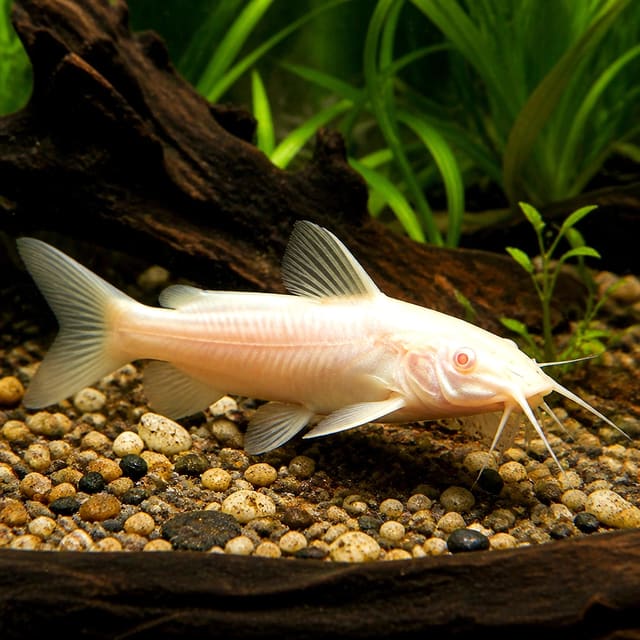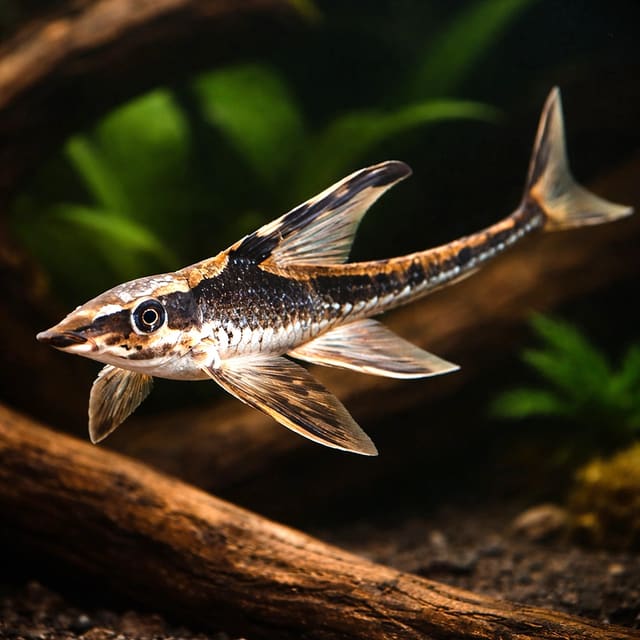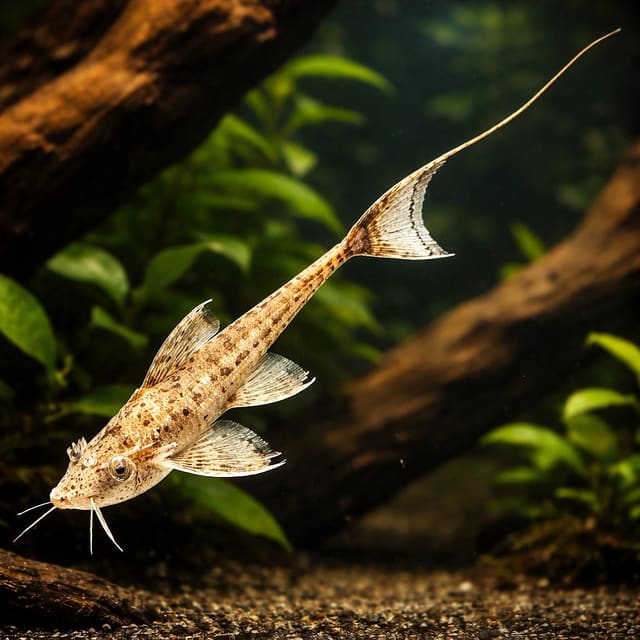
Moderate
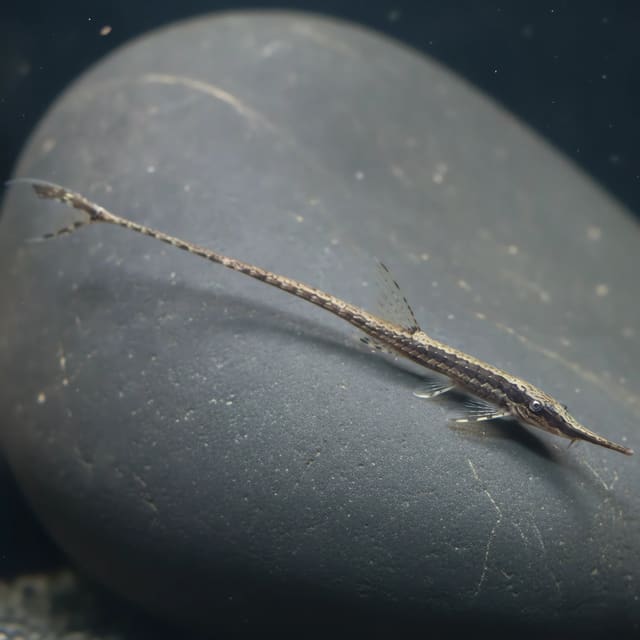
Whiptail Catfish (Dasyloricaria filamentosa)
23–28°C · pH 6–7.5 · 150L
£7.59
Red Whiptail Catfish (Loricaria sp.) is an unusual catfish sold in three dispatch sizes. Its exact species is unresolved, so it suits keepers prepared to plan cautiously, maintain mature filtration and confirm that food reaches the fish.
Loricaria sp.
Red Whiptail Catfish (Loricaria sp.) is an unusual catfish sold in three dispatch sizes. Its exact species is unresolved, so it suits keepers prepared to plan cautiously, maintain mature filtration and confirm that food reaches the fish.
Maintain these water conditions for optimal health and vibrant colors
Red Whiptail Catfish (Loricaria sp.) is the customer name used for this trade-listed Loricaria “red spec.” catfish. The trade identity establishes the genus but not a species epithet, so this page deliberately keeps the identity at Loricaria sp. rather than attaching care claims from a more familiar named whiptail. That distinction matters: a trade label can identify the fish well enough to sell the exact offer while still leaving adult length, social behaviour and species-level preferences unresolved.
One purchase supplies one live fish in the size you choose. The recurring dispatch sizes are 4–5 cm, 5–6 cm and 7–10 cm. The size you select is the size supplied, not the adult size. None of those choices promises a male or female, and colour, pattern and maturity can vary naturally. If sex matters to a breeding or social plan, this listing cannot provide that guarantee.
| What one purchase supplies | One live fish in the chosen dispatch size |
|---|---|
| Dispatch sizes | 4–5 cm, 5–6 cm or 7–10 cm |
| Scientific identity | Loricaria sp.; species unresolved |
| Sex | No male or female guarantee |
| Care approach | Intermediate; mature filtration and close feeding observation |
Sex is guaranteed only when the selected option explicitly states male or female. This Red Whiptail Catfish listing has no sex-guaranteed option.
The best keeper for this fish enjoys observation and is comfortable leaving uncertain details open. Measure the aquarium, record its chemistry and decide where food and shelter will go before ordering. That approach makes the animal’s actual response more important than a generic label and gives the keeper clear triggers for revising the layout, feeding method or companion mix.
This is best approached as a considered catfish purchase rather than a shortcut to an “algae cleaner”. Freshwater catfish cover an exceptionally broad range of diets, adult sizes and behaviours. The exact species has not been identified, so the care advice here follows the genus Loricaria and its care group. OATA’s freshwater-catfish guidance can help with broad water and husbandry boundaries, but it cannot turn an unresolved trade fish into a fully documented species. In practical terms, the keeper should have a mature filtered aquarium, stable tested water, usable bottom area, shelter, an appropriate sinking food and enough observation time to confirm that this fish is eating and settling.
Because adult size remains uncertain for this exact offer, there is no honest species-specific minimum-volume badge on this page. Choose an aquarium for long-term floor area and stability, not merely for the smallest dispatch fish, and leave room to revise the plan as the animal grows. A larger, well-filtered aquarium is easier to keep stable than a cramped one, while secure décor and several quiet resting places make it easier for a new catfish to avoid constant disturbance.
Use the live size selector for the current choices rather than relying on static availability wording. Before ordering, compare your measured water with the broad guidance, check that the aquarium has completed its biological maturation, and decide how you will deliver food to the bottom without faster fish taking it first. Those three checks do more for the animal than choosing it for colour alone.
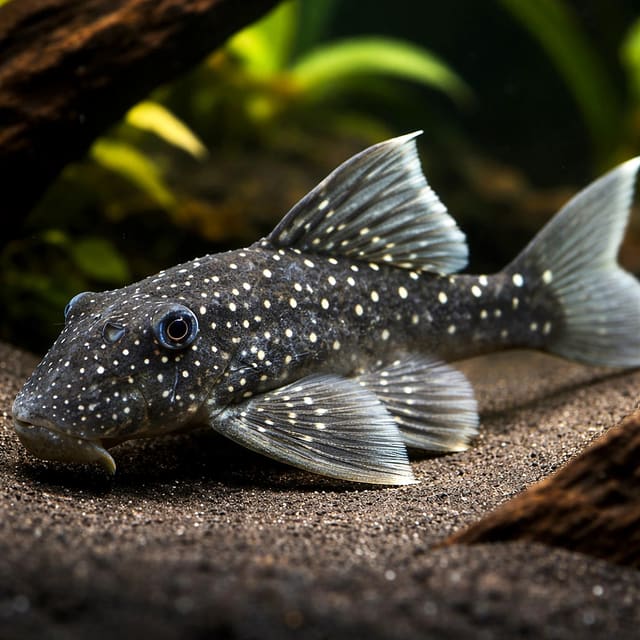
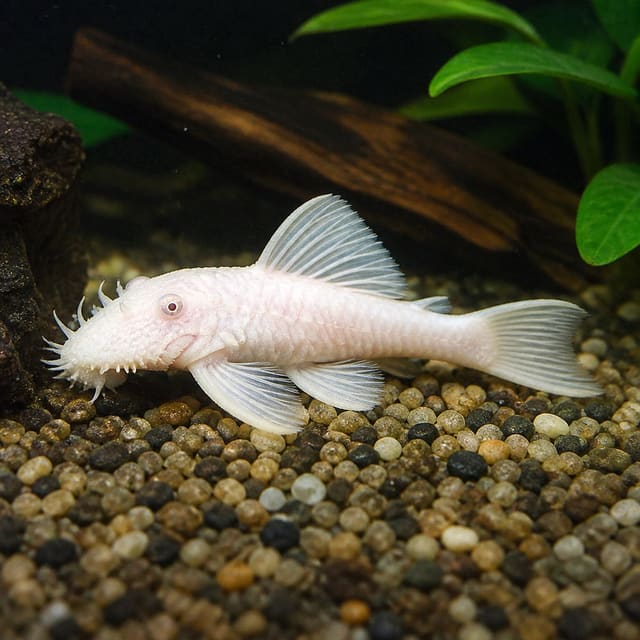
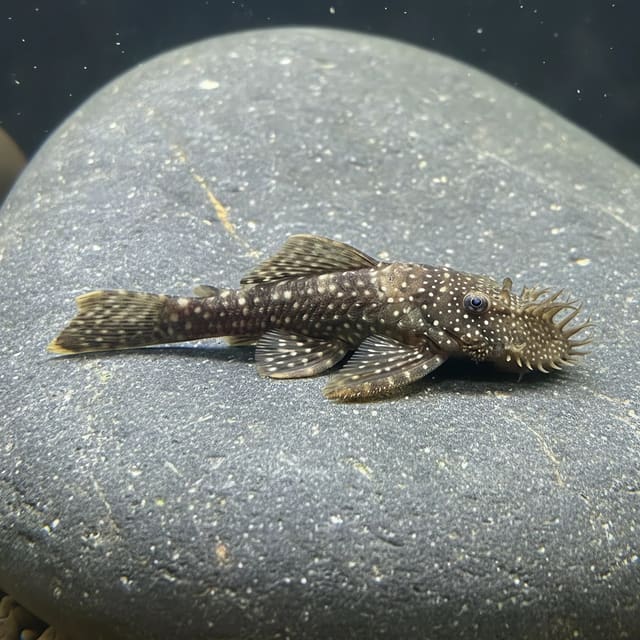
Gallery images have been digitally enhanced to improve image quality. Natural colour, pattern, size and maturity can vary between live animals.
If this cautious plan fits your aquarium, browse the current catfish and pleco collection for context. The related-products field is intentionally left empty: a Corydoras or bristlenose listing may be interesting in its own right, but it is not automatically an equivalent substitute for an unresolved Loricaria offer.
A catfish should not be used to test whether a new aquarium is ready. Fish release ammonia, and the RSPCA explains that a working biological filter supports bacteria that convert ammonia to nitrite and then to the less harmful nitrate. Ammonia and nitrite should be zero before this fish is introduced. A bottled product, clear-looking water or a few days of running equipment does not by itself demonstrate that the filter can process the aquarium’s waste.
If this is your first livestock aquarium, follow the first tropical tank setup guide before choosing a delivery date. Add livestock gradually, test after each change and avoid making several major adjustments at once. A mature tank is not maintenance-free; it is a system whose filter, water volume and routine have become predictable enough to protect the fish from sudden toxic peaks.
Check the filter flow, intake protection and oxygenation as part of the same plan. The filter should move and clean the water without creating a situation in which a resting fish has no calmer area. Keep the surface moving, prevent debris from accumulating around wood or ornaments, and make sure the intake cannot trap a smaller dispatch fish. If the aquarium has areas that are difficult to siphon, redesign them before the fish arrives rather than accepting a pocket of decomposing waste.
OATA gives freshwater catfish a broad group guide of 22–27°C, pH 6.0–8.0, general hardness 4–18°dGH and carbonate hardness 3–15°dKH. These figures span many different catfish and are not a species-specific optimum for this unresolved Loricaria. They are useful as a safety framework for discussion, not permission to swing the aquarium from one end of every range to the other.
Stability should guide the day-to-day target. Record the temperature, pH and hardness of the established aquarium, compare them with the water the fish will meet, and avoid chasing a textbook number through abrupt chemical adjustment. The aquarium water-parameters guide explains what the common tests measure, while the water matcher helps compare your readings with stated guidance. For this fish, keep the “broad group” label attached to the values whenever you use them.
Temperature should be checked with a reliable thermometer rather than inferred from the heater dial. Test pH and hardness from the aquarium itself, especially where tap water changes seasonally or where mineral substrates, rocks or driftwood can alter chemistry. If the aquarium sits near an exterior door, radiator or sunny window, look for daily fluctuations as well as the single reading taken at feeding time.
OATA advises zero ammonia and zero nitrite, regular testing and a weekly partial water change of about 25% for freshwater catfish. Replacement tap water should be treated for chlorine or chloramine before it reaches the aquarium. Nitrate control depends on the tap-water baseline, stocking and feeding, so use actual tests and a consistent log rather than guessing from appearance.
During a water change, siphon waste from accessible bottom areas without turning the whole aquarium upside down. Clean filter media only when needed and rinse biological media gently in removed aquarium water; do not run it under the tap, because that can damage the established bacterial population. Avoid replacing all filter media at once. If flow drops suddenly, investigate a blockage, but do not confuse vigorous flow with good biological filtration.
Watch the fish during and after maintenance. A sudden change in breathing, balance, colour, feeding or hiding deserves a water test first. Check equipment and recent changes, then seek qualified aquatic advice if the problem persists. This page does not provide a disease diagnosis or treatment recipe, because symptoms shared by water-quality stress, injury and infection need different responses.
The exact species is unresolved, so décor advice should be practical and reversible. Provide open areas where food can be seen and recovered, plus secure shelter using smooth wood, pots or stable ornaments. OATA notes that many catfish appreciate shelter and that shy fish benefit from cover. Keep every structure stable on the base, remove sharp points and leave enough clearance for the fish to turn without scraping its body or fins.
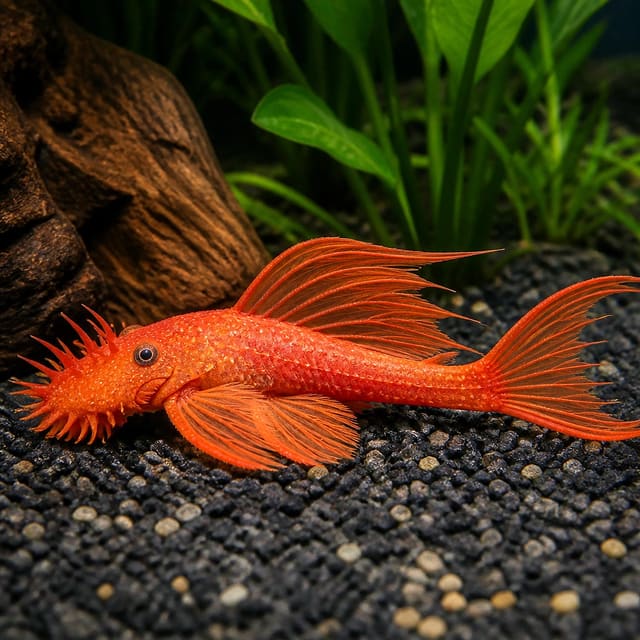
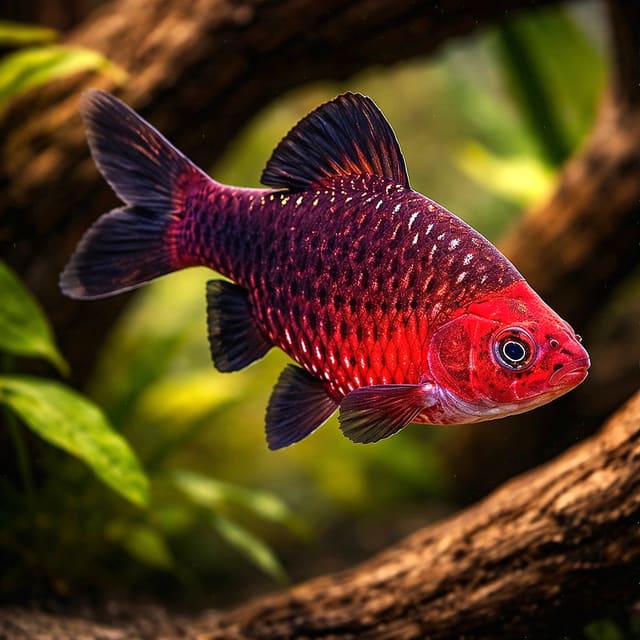
A smooth, easy-to-clean bottom zone is preferable to jagged décor or deep pockets that collect food. Do not assume every rough surface is harmless simply because another pleco uses it. Inspect wood for splinters and rocks for narrow traps. Plants can provide shade and visual separation, but place them so that the keeper can still check the animal and remove leftovers. The image shows one orange-red armoured catfish resting on driftwood in a planted aquarium; it does not establish the exact specimen supplied or a complete habitat formula.
Keep a fitted lid and close cable gaps. Even a bottom-associated fish can be displaced or startled, and an open route out of the tank is an avoidable risk. At the same time, do not seal the aquarium so tightly that gas exchange suffers. A secure cover, surface movement and sensible access for maintenance can coexist.
The three sizes describe the fish when supplied. The exact species remains unidentified, so a reliable adult length is not available for this offer and a fixed adult-size card would create false certainty. That means the responsible planning question is not “Can a 4–5 cm fish fit today?” but “Can I provide more floor area, filtration and separation if this fish becomes substantially larger?”
Avoid buying for a tiny temporary aquarium with an undefined upgrade date. If the existing tank could not accommodate meaningful growth, pause and seek confirmation of the species before purchase. Photographing the fish as it develops, measuring it without handling and keeping dated notes can help future discussions, but visual similarity alone must not be used to assign a species.
OATA mentions at least 80 litres for shoals of smaller Corydoras or smaller plecos, while also warning that larger catfish need much more. That is not a minimum for this Loricaria offer. It illustrates why a generic catfish number cannot replace identification, adult-size evidence and the aquarium’s actual footprint.
OATA stresses that catfish diets vary: some are omnivorous, some herbivorous and some carnivorous. The group’s reputation as scavengers is not a feeding plan. Choose an appropriate sinking food after confirming it suits the fish, and make sure a portion reaches the bottom where this individual can find it. Do not expect algae, uneaten community food or wood alone to provide complete nutrition.
Begin with modest portions and observe whether the fish approaches, mouths and consumes the food. OATA’s general advice is to offer only what fish can eat within a few minutes once daily, while allowing longer for grazing species where appropriate. Because this species is unresolved, use behaviour and body condition to refine the routine rather than assuming it follows a fixed genus-wide schedule. Remove uneaten food before it decays.
If faster mid-water fish intercept every sinking item, change the delivery method. Feed competing fish first, place food in more than one location, use a feeding tube or offer food when the aquarium is quieter. None of those techniques proves that the fish is nocturnal; they simply create a fair chance for a cautious bottom fish to eat. Check the result rather than trusting that food which disappeared was eaten by the intended animal.
Keep a simple feeding record during the first fortnight: food type, amount, whether the fish ate, leftovers and any change in waste. A swollen or hollow-looking abdomen, declining interest in food or repeated regurgitation needs investigation, beginning with water quality and the suitability of the diet. Avoid improvised medication or extreme fasting based on an online guess.
A short written routine helps separate normal variation from a developing problem. Once a week, note ammonia, nitrite, nitrate, temperature, pH, general hardness where relevant, water changed, filter flow, appetite and body condition. Add a brief note after a new food, large maintenance job or companion change. The point is not paperwork for its own sake; it is being able to see whether appetite fell after a chemistry swing, whether waste rose after larger portions, or whether one fish stopped feeding after a layout change.
Prepare for ordinary interruptions as well. Before a holiday or busy week, test the water, confirm the heater and filter are working, portion food conservatively and show the carer exactly what to observe. Avoid a large unfamiliar clean, new food or new companion immediately before leaving. Label equipment switches so nothing essential is turned off accidentally, and leave a contact plan for a leak, power loss or fish showing distress.
Review growth without handling. A monthly side photograph against a familiar piece of décor can show changing body condition and whether the aquarium plan still leaves useful floor area. If growth begins to outpace the available space, act early. A stable move to a larger mature aquarium is safer than waiting until filtration, turning room or compatibility has already become a welfare problem.
Prepare the aquarium before delivery so the bag is not left waiting while décor is rearranged. Record the sealed parcel opening before other handling, then float the unopened bag for 20–30 minutes as set out in the delivery guidance. Avoid adding transport water to the aquarium. Once the fish is released, allow it to choose cover. Repeatedly moving wood to force a view increases stress and makes it harder to judge normal settling.
For the first few days, check breathing, posture, skin, fins, response to food and whether other fish block access to shelter. Take a short video from outside the glass if you need to compare behaviour over time. Avoid netting merely to inspect colour. Natural colour and maturity vary, and the enhanced gallery image should not be treated as a promise of an identical shade.
Keep hands, aerosols, cleaning chemicals and unconditioned replacement water away from the aquarium. Quarantine procedures should be planned before purchase and use equipment suited to the keeper’s experience; do not improvise a tiny uncycled container as “quarantine”. If isolation is necessary, it still needs mature filtration, heat, oxygen, cover and monitoring.
“Catfish” does not mean automatically peaceful, communal or compatible with every other bottom fish. OATA notes that catfish range from small and peaceful to large and predatory. Because this offer remains at genus level, there is not enough species-specific support to publish a universal tank-mate list. A cautious match considers adult scale, water chemistry, feeding style, use of the bottom area and the behaviour of each animal already present.
Start with the non-negotiable conditions. Every resident must be healthy within the same stable temperature, pH and hardness plan. Do not place this fish in unsuitable chemistry merely because the other species is described as peaceful. Avoid companions capable of swallowing it, biting it, repeatedly charging its resting place or monopolising every sinking meal. Also avoid relying on it to control algae or leftover food created by overstocking.
Bottom-area conflict is easy to miss because it may occur after the room becomes quiet. Provide more than one sheltered area and more than one feeding point, arranged so a dominant resident cannot guard them all from one position. Watch from a distance after food is added. A fish that stays hidden constantly, loses condition or never reaches food is not thriving simply because there are no torn fins.
When adding the catfish to an established aquarium, note which residents investigate, chase or block it. Brief curiosity is different from repeated displacement. If pressure continues, use a safe divider or a properly prepared alternative aquarium rather than waiting for visible injury. Rearranging a little décor may break a defended route, but a layout change cannot fix an unsuitable predator-prey or water-chemistry combination.
Other bottom dwellers deserve particular care. They may compete for the same resting and feeding spaces even when both are sold as community fish. Corydoras and bristlenose products therefore remain separate catalogue choices, not promises of compatibility or equivalent care. A roomy footprint and duplicated resources reduce competition, but they cannot guarantee that two unknown individuals will coexist.
The packet does not establish whether this exact fish should live singly, as a pair or in a group. Do not turn a retailer’s stock count, a photograph or a different Loricaria species’ behaviour into a social rule. If more than one is considered, identification and adult-size guidance should be resolved first, followed by a plan for extra floor area, shelter and feeding stations.
Sex is not guaranteed in any size. Colour, fin shape or apparent body form in a juvenile photograph cannot reliably create a male, female or bonded-pair claim. Do not buy two on the assumption that they will form a pair. Breeding advice is withheld because the species and sexes are unresolved.
Before purchase, write down each resident’s adult size, preferred chemistry, feeding zone and known aggression. Mark anything that overlaps at the bottom. If a current resident is territorial, predatory or highly competitive, choose a different plan. If the aquarium already struggles with nitrate, low oxygen or missed feeding, adding another animal is not the answer.
After introduction, review the plan at one day, one week and one month. Look for feeding success, stable body condition, intact fins, normal breathing and use of more than one area. Compatibility is an ongoing observation, not a one-time label. Be ready to separate fish safely if behaviour or growth changes the balance.
The exact species has not been resolved, and no applicable record establishes its adult length. The 4–5 cm, 5–6 cm and 7–10 cm figures are dispatch sizes only. Plan for growth and do not use the smallest supplied size as a permanent tank-size guide.
There is no supported species-specific minimum for this unresolved offer. Use a mature, filtered aquarium with generous usable floor area, stable water and room for growth; if your setup cannot accommodate an uncertain adult size, seek firmer identification before buying.
No reliable group number is established for this exact fish. Do not assume it needs a pair or shoal from another species’ care sheet. If considering more than one, first confirm identity and allow substantially more floor area, shelter and feeding access.
It is a better fit for an intermediate keeper who understands cycling, testing and targeted feeding. The unresolved species means adult size and social needs cannot be reduced to a simple beginner formula, so the keeper must be comfortable observing and adjusting the plan.
Freshwater catfish have varied diets, so this fish should not be treated as an algae-eating clean-up crew. Offer an appropriate sinking food, confirm that this individual eats it, prevent faster fish taking every portion and remove leftovers before they affect water quality.
OATA’s broad freshwater-catfish guide is 22–27°C and pH 6.0–8.0, with 4–18°dGH and 3–15°dKH. These are group-level boundaries, not a proven optimum for this unresolved species. Keep conditions stable and compare your actual readings before purchase.
There is no species-specific temperament record for this exact offer. Observe it cautiously, protect quiet resting and feeding space, and avoid predatory, persistently aggressive or highly competitive companions. Separate fish if repeated chasing or blocked feeding develops.
Choose residents that share stable water conditions and cannot swallow, harass or outcompete the catfish. No named species is presented as universally safe. Pay special attention to other bottom dwellers because they may compete for the same shelter and food.
Tropical Fish Co hand-packs live fish in oxygenated bags inside an insulated box and uses a licensed live-animal courier on the confirmed delivery date. Read the current delivery and Live Arrival Guarantee terms, and record the sealed parcel being opened if you need to make a claim.
The identity and sale unit come from the current Shopify offer and the trade identity used for this offer. The trade name is Loricaria “red spec.” and provides the three dispatch grades; it does not establish a species epithet or provide care values used on this page. That is why the scientific label remains Loricaria sp. and why adult length, fixed minimum volume and group number are withheld.
The OATA freshwater-catfish care sheet supplies broad group guidance for water, filtration, maintenance, shelter and feeding. The RSPCA aquarium environment guidance supports the need for established biological filtration. Neither source identifies this fish to species, so their ranges stay clearly labelled as group-level planning guidance.
If any step depends on a species-specific adult size, sex, group number or breeding method, pause until the identity is resolved. Honest uncertainty is more useful than a confident but unrelated care sheet.
No reviews for this item yet. Bought one? Honest reviews only, good or bad.
What customers say about ordering from us
Easy website plenty of info on fish your buying great to pick a time slot
TRACEY DURRANT · 7 Oct 2026
Got some lovely fish thank you
Kevin Mackie · 7 Oct 2026
Reviews of our shop, collected by Judge.me, an independent third-party review collector. Newest first.