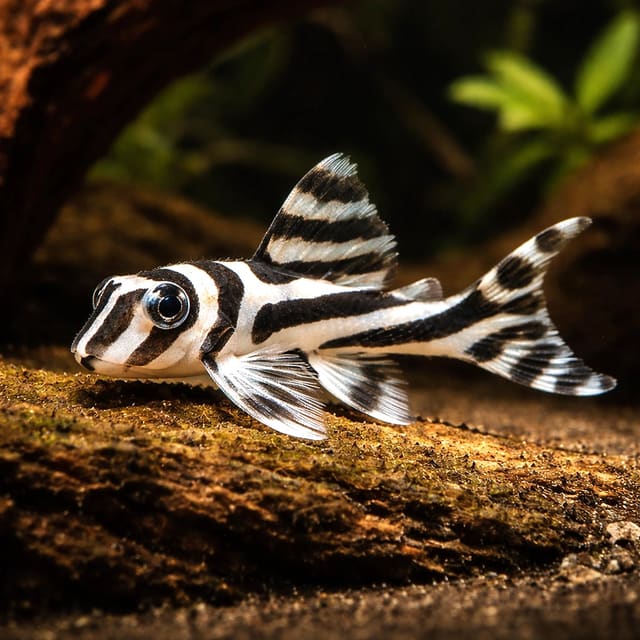
L333 Maze Zebra Pleco (Hypancistrus sp.) – CB Porto de Mos
22–27°C · pH 6–8
£48.99

Specialist L260 Queen Arabesque Pleco with fine white-on-dark patterning for warm, cave-rich aquariums. A compact Hypancistrus for keepers who can provide clean, oxygen-rich water and meaty sinking foods.
Adult size is the maximum length this species reaches at full maturity (scientific sources). The livestock you receive will be younger and smaller — pick a size variant above for the actual shipping size. Product-photo provenance and any image-specific limitations are stated on the listing.
Hypancistrus sp.
Confirm your email, then we’ll send an availability message for this exact item if it returns within 180 days.
This request is only for this product—no newsletter or other promotions. A mail-provider retry may very rarely duplicate the same availability message. Unconfirmed addresses are removed after 48 hours. See our privacy policy.
Specialist L260 Queen Arabesque Pleco with fine white-on-dark patterning for warm, cave-rich aquariums. A compact Hypancistrus for keepers who can provide clean, oxygen-rich water and meaty sinking foods.
Adult size is the maximum length this species reaches at full maturity (scientific sources). The livestock you receive will be younger and smaller — pick a size variant above for the actual shipping size. Product-photo provenance and any image-specific limitations are stated on the listing.
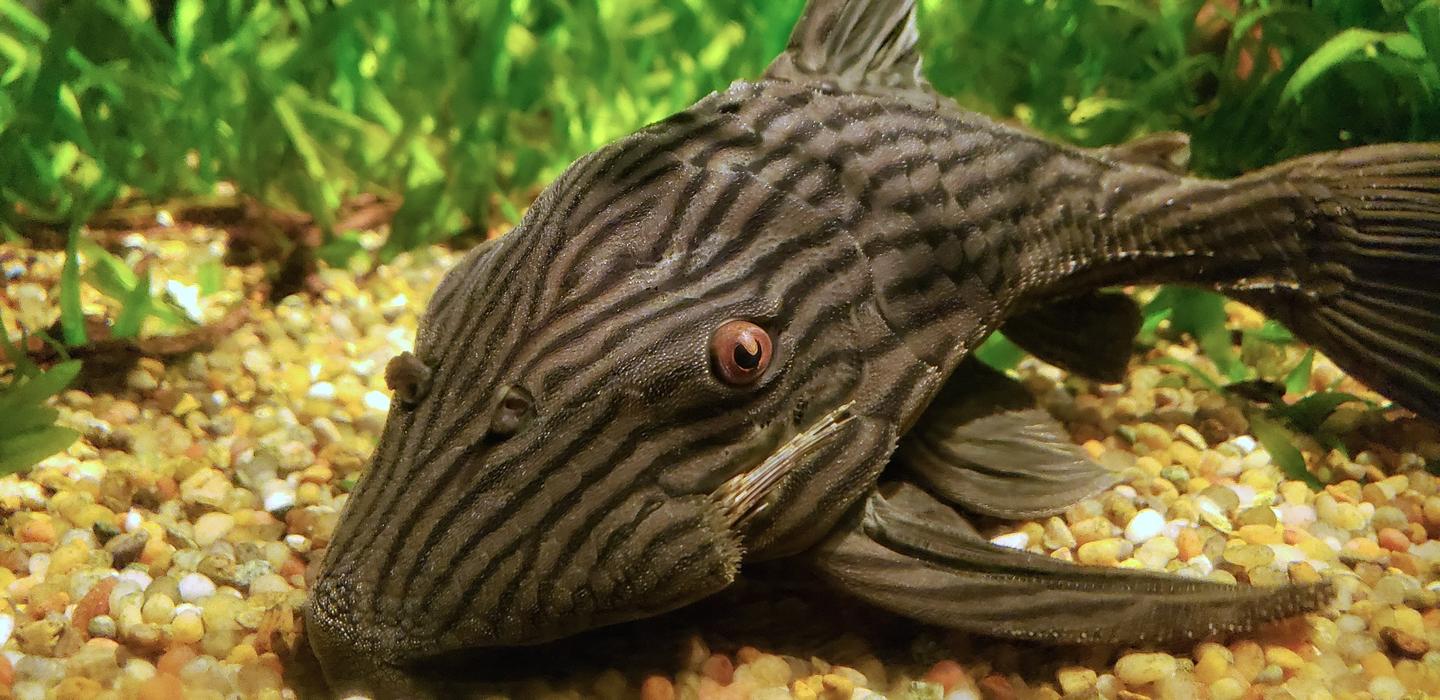
‘Pleco’ is a loose aquarium-trade label, not one species or one care sheet. Before buying, confirm the scientific name or defensible L-number, adult size and measurement method, required footprint, temperature and water, diet, social plan and source. No universal pleco tank size, menu or algae result is honest.
Maintain these water conditions for optimal health and vibrant colors
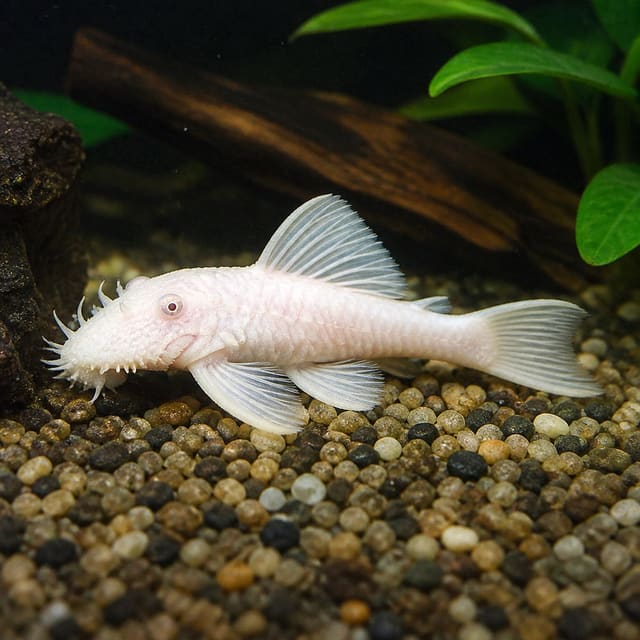
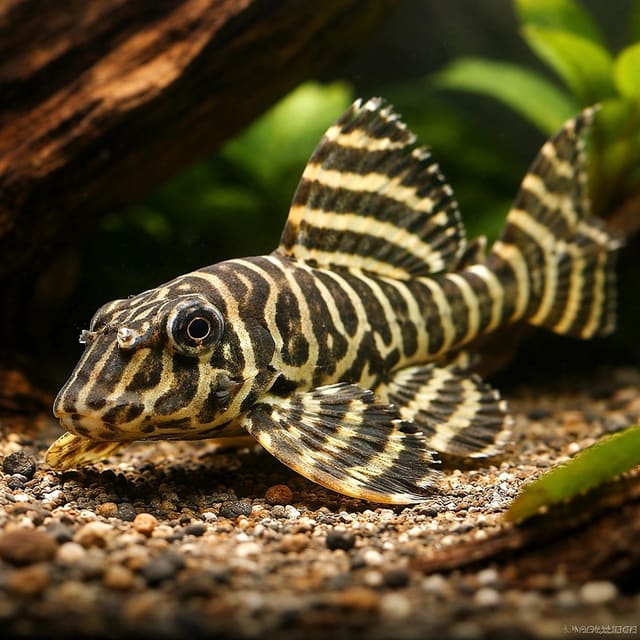
L260 Queen Arabesque Pleco (Hypancistrus sp. L260) is a small, striking loricariid catfish recognised by its fine pale maze-like lines over a dark body. The L-number is important: L260 is still best treated as an undescribed Hypancistrus rather than being assigned a made-up species name.
This listing has supplied-size variants. Choose the current size from the live variant selector when stock is available. The product is sold by size, not as a guaranteed sexed fish or breeding pair unless a future variant explicitly says so.
The Queen Arabesque is an L-number pleco, which means the aquarium trade had a recognisable form before a formal species description was available. Keeping the label Hypancistrus sp. L260 is more accurate than inventing a species name simply to make the listing look more complete.
Individual pattern density varies. Some fish show very fine pale lines, others a slightly broader or more broken arabesque pattern. Colour can also change with stress, background, lighting and condition, so the gallery should be treated as representative rather than a promise of one exact line pattern.
A mature warm-water aquarium with strong filtration, good oxygenation and plenty of secure caves suits this species. For a single adult, our house screen starts around 80 litres, but more floor space is preferable where other bottom dwellers or additional L260 are present.
Use smooth sand or fine rounded gravel. Add wood, rounded rock and several caves with entrances large enough for the fish but snug enough to feel secure. If several plecos are kept, provide more caves than fish and break up sight lines so one dominant animal cannot control every refuge.
L260 comes from a warm river system, so temperature and oxygenation need to be considered together. Maintain roughly 26–30°C with good surface movement and circulation. Warmer water contains less dissolved oxygen, making adequate flow and clean filtration especially important.
A practical pH range is around 6.0–7.5, with soft to moderately mineralised water suitable when kept stable. Ammonia and nitrite should remain at zero. Keep nitrate controlled through appropriate stocking and regular water changes.
Do not buy a Queen Arabesque Pleco as an algae-cleaning fish. Hypancistrus are not equivalent to common bristlenose plecos in feeding ecology. L260 should receive a varied sinking diet with a meaningful protein component.
Use quality sinking pleco/catfish pellets together with suitable frozen or fresh aquatic foods such as small shrimp, mussel, krill or insect/invertebrate-based foods. Some plant matter can be included for variety, but algae growing on the glass should not be treated as the complete diet.
Feed after lights dim if necessary so the pleco can eat without faster tank mates taking everything. Remove uneaten protein-rich food before it spoils.
Queen Arabesque Plecos are usually unobtrusive toward fish using the middle and upper levels of the aquarium. Conflict is more likely with other cave-oriented loricariids competing for the same bottom territory.
Suitable tank mates are peaceful warm-water species that tolerate the same temperature and do not dominate food. Avoid very aggressive cichlids, species that constantly invade caves and any combination that leaves the L260 unable to feed.
Multiple L260 can be kept in a sufficiently spacious aquarium with many caves and broken sight lines, but adults can become territorial toward one another. A product quantity or shared tank should never be interpreted as a guaranteed compatible pair.
If breeding is the goal, sexing mature Hypancistrus requires more than body colour. Do not assume sex from juvenile size or pattern alone.
Choose L260 if you want a compact, highly patterned specialist pleco for a mature warm aquarium and you can provide oxygen-rich water, caves and a deliberate sinking diet. Reconsider if you are looking for a fish whose main job is to remove algae or if the aquarium runs cool and poorly oxygenated.
Use the live Shopify variant for supplied size, price and availability. This description avoids stale fixed prices and unrelated algae-search phrases so the product remains clearly about Hypancistrus sp. L260.
Max adult size is the length this species reaches at full maturity (from scientific sources). The livestock you receive will be younger and smaller — pick a size variant on the buy box for the actual shipping size. Product-photo provenance and any image-specific limitations are stated on the listing.
Peaceful, but cave-oriented. Provide separate shelters for each bottom-dweller.
Always research specific species before adding them to your tank. Consider:
No reviews for this item yet. Bought one? Honest reviews only, good or bad.
What customers say about ordering from us
I have a small group of long finned mountain minnows. So was delighted to be able to order ten of this variety to increase the genetics in my tank . The ones I recieved are healthy but it’s to early to give a verdict on wether they are of a long finned type since they are small currently.
Gordon Walker · 23 Sept 2026
100% success travel and "installation". Pleased with quality of purchase. The Siamese fighter a bit "shy" so have not yet seen him at his best yet but looking good. Happy customer. GG
George E Garratt · 21 Sept 2026
Reviews of our shop, collected by Judge.me, an independent third-party review collector. Newest first.