Moderate
Green Dragon Longfin Bristlenose Pleco (Ancistrus sp.)
22–27°C · pH 6–8
£45.99

The Albino Green Dragon Bristlenose Pleco (Ancistrus sp.) is a loricariid freshwater catfish from a genus native to South America and Panama. It suits mature, filtered aquariums with cover and wood; OATA’s bristlenose guidance gives 22–27°C, pH 6.0–8.0 and keeping alone, in pairs or small groups. Sold individually in sizes from 2–3 cm to 5–7 cm.
Ancistrus sp.
The Albino Green Dragon Bristlenose Pleco (Ancistrus sp.) is a loricariid freshwater catfish from a genus native to South America and Panama. It suits mature, filtered aquariums with cover and wood; OATA’s bristlenose guidance gives 22–27°C, pH 6.0–8.0 and keeping alone, in pairs or small groups. Sold individually in sizes from 2–3 cm to 5–7 cm.
For one typical common bristlenose, start with a mature, filtered aquarium of at least 90 litres, useful floor area, wood and cover. OATA reports about 15 cm adult length, 22-27°C, pH 6-8 and 4-12 dGH. Confirm the exact trade identity before applying species-level claims.
Maintain these water conditions for optimal health and vibrant colors
Albino Green Dragon Bristlenose Pleco is the trade identity for this freshwater catfish. The scientific label is Ancistrus sp.: the accepted taxonomy places Ancistrus in the family Loricariidae, but the name stops at the genus rather than identifying one species. It suits a keeper prepared to provide a mature filtered aquarium, direct feeding, cover and aquarium wood.
Wikipedia describes Ancistrus as a genus of nocturnal freshwater fish native to South America and Panama. It also explains why bushynose and bristlenose catfish are commonly called plecos in aquariums, even though “pleco” is used broadly for several loricariid catfish. Here, Bristlenose Pleco is retained as the familiar aquarium trade name while Ancistrus sp. gives the honest scientific identity.
Choose this fish because you want an Ancistrus catfish and can provide its full care plan, rather than choosing it only as an algae-control tool. If you are comparing similar trade forms, browse the current bristlenose pleco collection and compare adult planning needs as well as colour.
| Suits | Not suited to |
|---|---|
| A mature freshwater aquarium with a well-maintained filter | An aquarium without a well-set-up biological filter |
| A layout with plenty of cover and aquarium wood | A layout without shelter or accessible grazing surfaces |
| A keeper prepared to provide prepared food and vegetables | A plan that expects aquarium algae to provide the complete diet |
| Keeping alone, in a pair or in a carefully planned small group | A group plan that ignores OATA’s advice that one male per group is usually best |
The strongest match is an established freshwater aquarium with a functioning biological filter, measurable water conditions and a keeper prepared to feed the fish directly. Algae on the glass is a supplement, not the basis of the care plan.
One purchase supplies one animal in the size selected. Use the live size selector to choose “2 - 3 cm”, “3 - 4 cm”, “4 - 5 cm” or “5-7 cm”. These measurements describe the fish at dispatch and do not change its adult care needs.
The size you select is the size supplied, not the adult size. Plan the aquarium, filter, cover and long-term stocking around a bristlenose catfish that grows to about 15 cm in OATA’s bristlenose guidance. A smaller selected size is not a reason to begin with an aquarium that cannot accommodate that planning length.
| Selector label | Decision to make |
|---|---|
| 2 - 3 cm | Check that food can reach the fish without being taken first by larger residents. |
| 3 - 4 cm | Prepare the complete adult layout before introduction rather than adding cover later. |
| 4 - 5 cm | Reserve enough floor-level shelter and grazing surface within the stocking plan. |
| 5-7 cm | Assess the aquarium against the same 15 cm adult planning length. |
Dispatch size should therefore answer only one question: which measured size do you want to receive? Aquarium suitability is a separate decision based on the adult length, water conditions, filtration and the space already used by other fish.
A photograph can show bristles, colour and body shape, but it does not determine the sex of the animal attached to a selected size. Sex is guaranteed only when the selected option explicitly states male or female. This Albino Green Dragon Bristlenose Pleco listing has no sex-guaranteed option.
The exact species has not been identified, so the care advice here follows the genus Ancistrus and its care group.
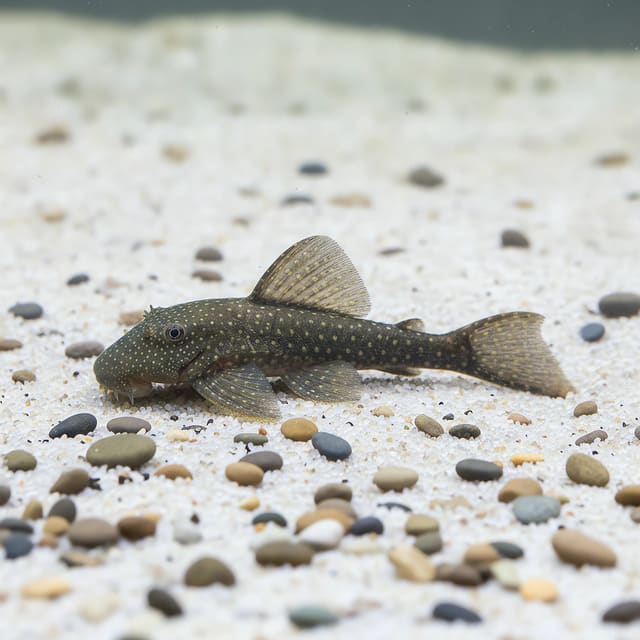
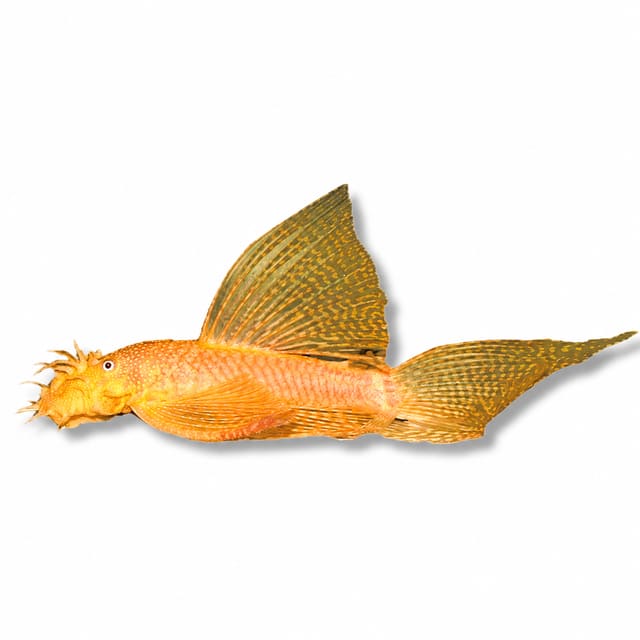
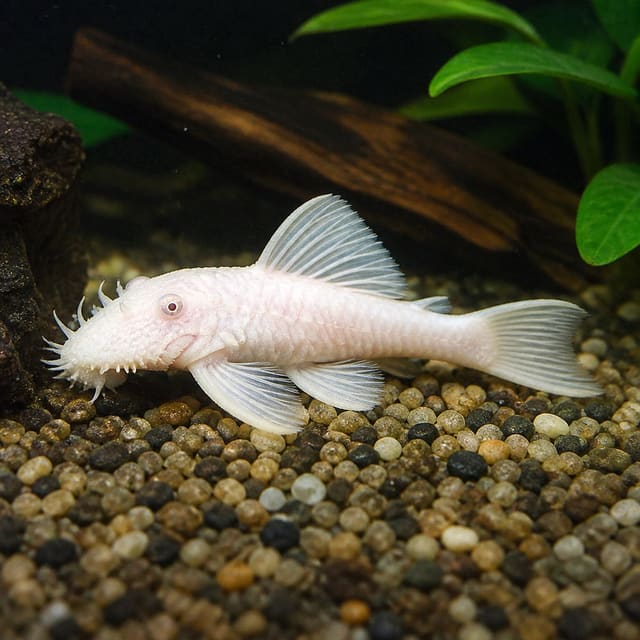
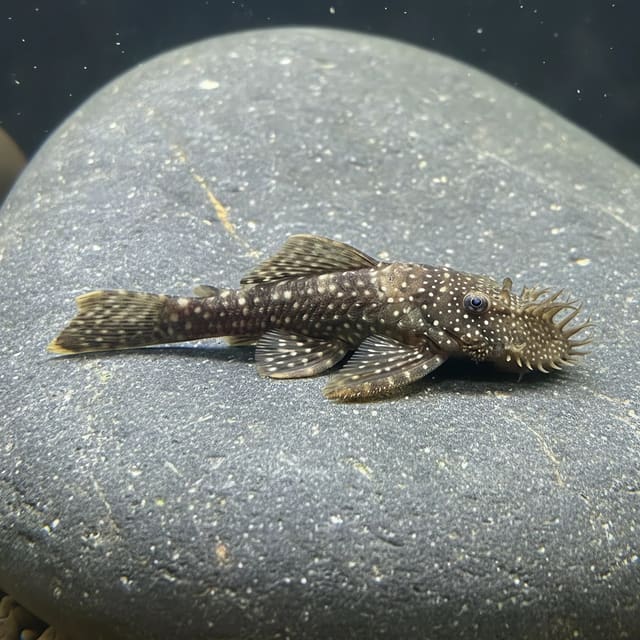
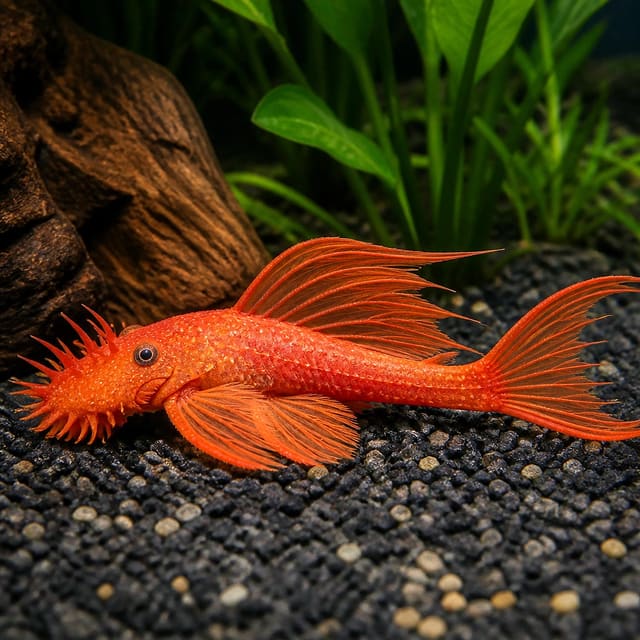
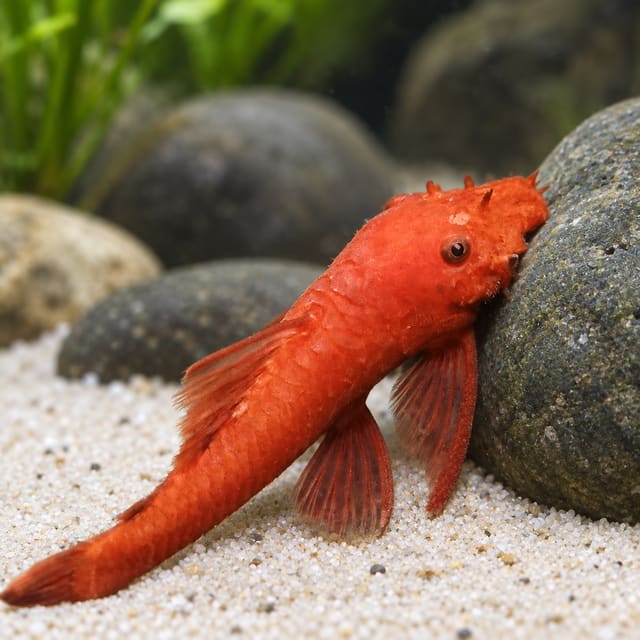
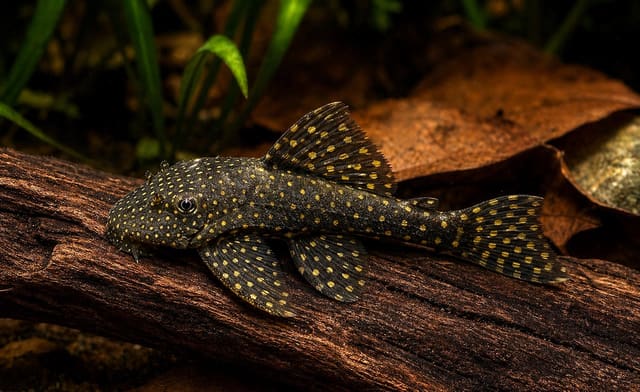
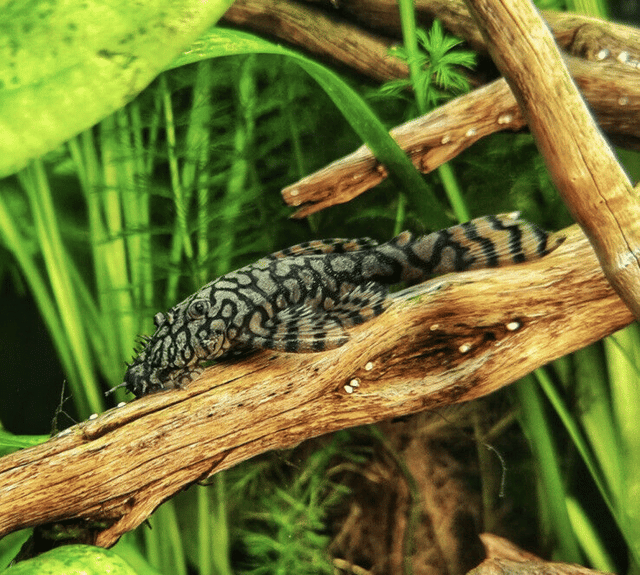
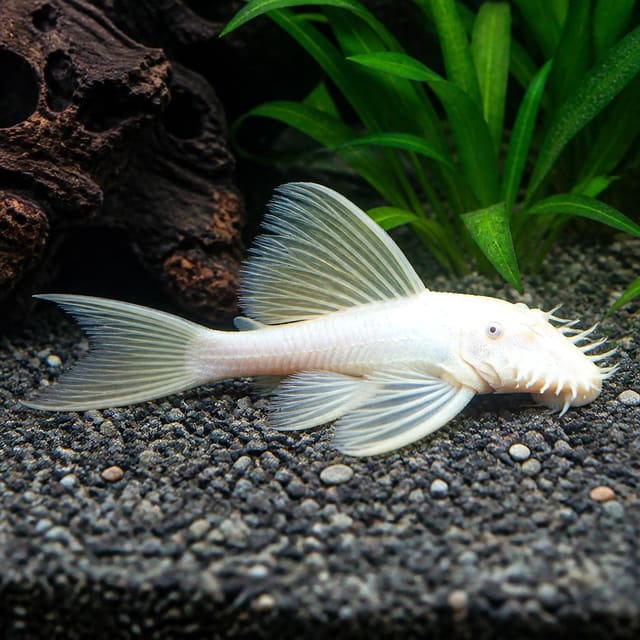
The gallery shows one golden-yellow fish with red eyes, translucent fins, a flattened armoured body and bristles around its broad snout. Plants, dark wood, stones and gravel form the aquarium setting. The gallery images are representative of this type of animal rather than photographs of the exact animal supplied, so colours can look slightly different from the live animal.
OATA’s tropical algae-eater guidance gives bristlenose catfish an adult planning size of about 15 cm, a temperature range of 22–27°C and pH 6.0–8.0. It also calls for ammonia and nitrite at 0 mg/L and nitrate not exceeding 20 mg/L. Use these bristlenose planning values for the unidentified fish behind this trade name.
| Planning point | What to provide |
|---|---|
| Adult length | Plan for about 15 cm, regardless of the selected dispatch size. |
| Temperature | Keep the aquarium within 22–27°C. |
| pH | Keep it within 6.0–8.0. |
| Nitrogen waste | Maintain ammonia and nitrite at 0 mg/L and nitrate at no more than 20 mg/L. |
| Habitat | Provide plenty of cover and at least one piece of aquarium wood for grazing. |
| Feeding | Supplement algae grazing with prepared food and fresh vegetables. |
Choose as large an aquarium as practical within your space, with a useful footprint for cover, wood and feeding access. A larger water volume generally gives more stable temperature and water quality, but volume alone does not fix a crowded layout. Check that the fish can reach shelter and food without every floor-level area already being occupied.
Set up and mature the aquarium before arranging the fish’s arrival. A mature biological filter contains the beneficial bacteria needed to process toxic waste, while a newly assembled aquarium can look clear without yet being ready for livestock. Follow the first tropical aquarium preparation guide before choosing a delivery window.
Do not treat clear water as the readiness test. Ammonia and nitrite are dissolved and need a test kit. The filter must also remain part of the permanent setup; plants, algae and a light stocking level do not replace it.
Arrange the aquarium around the expected 15 cm length even when selecting “2 - 3 cm”. That means leaving room around the hardscape, maintaining access for cleaning and reserving cover for the catfish before community fish use every sheltered area. Beginning with the complete layout also avoids repeatedly moving wood and shelters after the fish has been introduced.
Before proceeding, confirm three separate conditions: the filter is mature, the measured water is suitable and the long-term layout can accommodate the adult planning size. Passing only one of these checks is not enough.
Keep temperature between 22°C and 27°C and pH between 6.0 and 8.0. Maintain ammonia at 0 mg/L, nitrite at 0 mg/L and nitrate at no more than 20 mg/L. Test once a week so that a change is found by measurement rather than after water quality has deteriorated visibly.
The water chemistry guide explains what the principal readings mean, while the water matcher helps compare your measured aquarium values with the working range. Use actual test results rather than assuming that tap water, old aquarium water or clear water is automatically suitable.
| Reading | Decision |
|---|---|
| 24°C | Inside the 22–27°C range. |
| 21°C | Outside the range; bring the aquarium into range before introduction. |
| pH 7.2 | Inside the pH 6.0–8.0 range. |
| pH 8.1 | Outside the range; reassess the match before adding the fish. |
| Ammonia 0.25 mg/L | Fails the required 0 mg/L reading. |
| Nitrite 0 mg/L | Meets the required reading. |
| Nitrate 22 mg/L | Exceeds the maximum of 20 mg/L. |
A value being close to the limit does not move the limit. For example, 21 mg/L nitrate is still above “not to exceed 20 mg/L”, while 20 mg/L sits at the maximum rather than below it. Use regular maintenance, appropriate stocking and controlled feeding to keep waste from accumulating, then retest after corrective maintenance.
When another fish is being considered, compare its complete routine range with 22–27°C and pH 6.0–8.0. A single overlapping point is a weak long-term plan if either animal would be held continuously at the edge of its range. Choose a stable shared setting that remains within the stated range for every resident.
RSPCA aquarium welfare guidance explains that fish release toxic ammonia into the water. Beneficial bacteria in a working biological filter convert ammonia to nitrite, which is also toxic, and then to the safer nitrate measured during routine testing. This is why a well-set-up and maintained filter is essential throughout the fish’s life.
Filter capacity and stocking must be considered together. Every fish contributes waste, including an animal bought partly for grazing algae. Adding a bristlenose catfish therefore adds to the filtration requirement; it does not reduce the need for filtration or maintenance.
Keep the filter operating as the permanent waste-processing system and maintain the aquarium regularly. Decorative wood, plants and algae-covered surfaces contribute habitat, but none performs the filter’s defined job of supporting the bacteria that process ammonia and nitrite.
A larger aquarium can make environmental conditions more stable, yet it still needs an effective filter and testing routine. Likewise, a powerful filter does not create more physical shelter or feeding space. Judge water-processing capacity and usable habitat separately, then require both to pass before adding this catfish.
Bristlenose catfish are secretive and thrive with plenty of cover. Include at least one piece of aquarium wood for grazing, then combine it with plants or suitable ornaments to form sheltered areas. Aquarium gravel or sand provides the substrate recommended in OATA’s general aquarium setup.
| Function | Layout decision |
|---|---|
| Shelter | Create covered areas with wood, plants or suitable aquarium ornaments. |
| Grazing | Leave accessible wood and other established aquarium surfaces. |
| Feeding | Choose a place where the catfish can reach prepared food and vegetables. |
Do not fill every part of the footprint with decoration. The fish still needs routes between its shelter, grazing surfaces and feeding place, and the keeper needs access for regular maintenance. A tall water column cannot compensate for a floor plan in which all lower areas are already occupied.
For a community aquarium, assess the layout from the bottom rather than only from the front. Count how many residents need the same covered areas and whether food placed for the bristlenose can actually remain within reach. This is especially important when the selected fish is smaller than established residents, because the purchase still needs direct access to its supplemented diet.
Wood is recommended as cover and as a surface for grazing. Keep it as part of the habitat while continuing to offer prepared food and vegetables. It is not a replacement for feeding, filtration, water testing or regular maintenance.
A practical final check is to trace one unobstructed route from shelter to food and another around the wood for maintenance access. If either route is blocked before the fish is introduced, simplify or reposition the layout.
This fish may graze algae in the aquarium, but algae-eating fish still need their diet supplemented. Use prepared algae-based wafers or flakes and fresh vegetables such as cucumber. The fish should be chosen as a catfish you intend to feed, not as a substitute for cleaning, water testing or appropriate stocking.
| Food | Role in the routine |
|---|---|
| Algae-based wafers | A prepared supplementary food that can be placed where the catfish can reach it. |
| Algae-based flakes | Another prepared option named in the algae-eater guidance. |
| Cucumber | A fresh vegetable that adds variety to the supplemented diet. |
| Aquarium algae | A grazing opportunity, not the entire diet. |
| Wood surfaces | A place to graze within a covered habitat, not a complete food. |
Offer a measured portion of prepared food where the fish can reach it, while allowing extra time for grazing on algal foods. Judge the portion by whether it is consumed without leaving food to break down in the aquarium. Uneaten food releases toxic waste, so overfeeding directly conflicts with the ammonia, nitrite and nitrate limits.
Vegetables may carry residual pesticides that can harm fish or invertebrates. Buy organic vegetables or wash them thoroughly before use. Place the food where the bristlenose can reach it rather than relying on leftovers intended for fish feeding higher in the aquarium.
In a community, watch the feeding event long enough to answer two practical questions: did the prepared food reach the catfish’s area, and did the fish gain access before another resident removed it? If another resident consistently takes it first, change the placement rather than simply adding an uncontrolled extra portion.
Persistent algae can indicate an underlying water-chemistry or maintenance issue. Respond with testing and aquarium maintenance while continuing the fish’s normal supplemented diet; adding more algae-eating fish does not correct the underlying cause.
Algae can be a reason people first consider a bristlenose catfish, but it should not be the deciding reason to add one. Some algae-eating fish become too large for many aquariums, and this fish must be planned around an adult length of about 15 cm. The correct sequence is to assess adult space and care first, then regard grazing as one behaviour within that plan.
A “yes” to the algae question does not create a “yes” to the fish question. Likewise, owning the fish does not remove the need to clean and maintain the aquarium. It eats, produces waste and relies on the same filter and testing routine as the other residents.
Keep some established surfaces accessible for grazing, but do not withhold prepared food in an attempt to make the animal consume more algae. Its diet must include the algae-based wafers or flakes and fresh vegetables described in the feeding plan.
If algae continues to increase, check the weekly water results and review maintenance and stocking. OATA notes that persistent algae may indicate underlying water-chemistry problems caused by incorrect maintenance. Treat that as an aquarium-management signal rather than proof that another grazer is needed.
This distinction also protects the stocking plan. Adding animals repeatedly to solve algae increases the biological load on the filter, while the underlying maintenance issue remains. Choose the Albino Green Dragon Bristlenose Pleco when its identity, adult size and behaviour appeal to you and when the aquarium already meets its needs.
Prepare the mature aquarium, shelter and measured water before the delivery window. Someone must be present to receive live fish; the parcel cannot be left unattended. Use the confirmed date and tracking details described in the current delivery and Live Arrival Guarantee policy.
If the bag begins floating at 14:00, release takes place between 14:20 and 14:30. Transfer the fish without adding the transport water to the aquarium.
Continue the established feeding, filtration and weekly testing plans. Secretive behaviour fits the bristlenose group’s preference for cover, so the layout must let the fish use shelter while still giving it access to supplemented food.
If a health change causes concern, test the aquarium water against 22–27°C, pH 6.0–8.0, ammonia and nitrite at 0 mg/L and nitrate no higher than 20 mg/L. Those measurements show whether the aquarium remains within its working care range.
OATA says bristlenose catfish can be kept alone, in pairs or in small groups. Keeping one is therefore a complete social plan rather than a temporary arrangement. A pair or small group becomes a wider aquarium-planning decision because every animal needs access to cover, wood, food and suitable water.
| Arrangement | Planning requirement |
|---|---|
| One fish | Provide the full adult setup, including plenty of cover and at least one piece of wood. |
| A pair | Increase usable floor-level cover and make sure both fish can reach supplemented food. |
| Small group | Use a larger, structured aquarium and assess filtration, shelter and feeding access for every animal. |
For several bristlenose catfish, plan the group around OATA’s advice that one male is usually best. Check that the proposed group has enough cover, wood and feeding access for every animal.
Do not calculate group suitability from litres alone. A larger aquarium offers more stable environmental conditions, but a group also needs a usable footprint and distributed cover. An aquarium can contain a substantial volume while still concentrating every shelter and feeding place into one crowded area.
Buying different dispatch sizes does not reduce any of these requirements. Each selected unit is one animal that needs the complete adult care plan.
Use a compatibility screen rather than a universal list of named companions. This trade identity covers an unidentified Ancistrus species, so the safest decision comes from matching the measured environment, adult space, shelter and feeding access for the exact aquarium you own.
| Question | Passing condition |
|---|---|
| Do the water needs overlap? | Every resident can remain within 22–27°C and pH 6.0–8.0 at a stable shared setting. |
| Can the filter carry the stocking? | Ammonia and nitrite remain at 0 mg/L and nitrate does not exceed 20 mg/L. |
| Is the adult size accommodated? | The plan allows for this catfish to reach about 15 cm. |
| Is there usable cover? | The bristlenose has sheltered access to wood and does not depend on one already occupied space. |
| Can it reach food? | Prepared algae food and vegetables reach its area without relying on leftovers. |
A proposed companion fails the screen if its long-term water needs require conditions outside the shared range. The plan also fails when the new stocking would overload filtration, use all floor-level shelter or prevent the bristlenose from receiving its supplemented diet. Passing only the temperature check is not enough.
Use the same process for another catfish, a mid-water fish or an existing group of bristlenose catfish. The relevant question is not whether two trade names are often described as community fish; it is whether this particular aquarium can meet all of their needs at the same time.
A passed environmental screen cannot guarantee every interaction between individual fish. Observe access to shelter and food after introduction, and keep the stocking plan flexible if one resident prevents another from using either resource.
For several bristlenose catfish, add the one-male-per-group guidance to the same screen. For one fish, continue to assess the community’s total waste production and floor-level use rather than assuming solitary keeping removes compatibility decisions.
OATA’s bristlenose guidance gives about 15 cm as the adult planning size. Use 15 cm for the aquarium plan because this fish is identified only as Ancistrus sp.
Choose as large an aquarium as practical and plan its footprint around an adult length of about 15 cm, plenty of cover and at least one piece of wood. OATA uses these as bristlenose planning points rather than setting a litre minimum for this fish.
OATA says bristlenose catfish can be kept alone, in pairs or in small groups and that it is usually best to have just one male per group. Every fish still needs access to cover, wood and supplemented food.
Choose it only when you can provide a mature biological filter, weekly water testing, direct feeding, aquarium wood and plenty of cover. Clear water alone does not show that a new aquarium is ready for fish.
OATA’s algae-eater guidance says to supplement grazing with prepared algae-based wafers or flakes and fresh vegetables such as cucumber. Aquarium algae is not a complete diet or a substitute for maintenance.
OATA’s bristlenose guidance gives 22–27°C and pH 6.0–8.0, with ammonia and nitrite at 0 mg/L and nitrate not exceeding 20 mg/L. Use these values when planning for this unidentified Ancistrus.
OATA describes bristlenose catfish as secretive and says that one male per group is usually best. Provide distributed cover and feeding access, then observe individual interactions rather than assuming every combination will behave alike.
OATA’s bristlenose guidance gives 22–27°C and pH 6.0–8.0. Use companions whose long-term needs share a stable setting within that range; the aquarium must also have enough filtration, adult space, floor-level cover and feeding access for every resident, while individual interactions remain uncertain.
Film every delivery continuously from the sealed parcel as it is opened, with the fish still inside the sealed bag. Someone must be present to receive it; float the bag for 20–30 minutes before releasing the fish and never pour the bag water into the aquarium.
No reviews for this item yet. Bought one? Honest reviews only, good or bad.
What customers say about ordering from us
I have a small group of long finned mountain minnows. So was delighted to be able to order ten of this variety to increase the genetics in my tank . The ones I recieved are healthy but it’s to early to give a verdict on wether they are of a long finned type since they are small currently.
Gordon Walker · 23 Sept 2026
100% success travel and "installation". Pleased with quality of purchase. The Siamese fighter a bit "shy" so have not yet seen him at his best yet but looking good. Happy customer. GG
George E Garratt · 21 Sept 2026
Reviews of our shop, collected by Judge.me, an independent third-party review collector. Newest first.