Moderate
Bristlenose Pleco (Ancistrus sp.)
22–27°C · pH 6–8
From £3.51Some sizes on sale

Ancistrus lemon l 144 (Ancistrus sp. L144) is a lemon-yellow bristlenose catfish for tropical freshwater aquariums. It suits keepers prepared to provide wood, cover, a maintained filter, 24–27°C and pH 6.0–7.5. Sold individually in sizes from 2–2.5 cm to XL.
Ancistrus sp. L144
Ancistrus lemon l 144 (Ancistrus sp. L144) is a lemon-yellow bristlenose catfish for tropical freshwater aquariums. It suits keepers prepared to provide wood, cover, a maintained filter, 24–27°C and pH 6.0–7.5. Sold individually in sizes from 2–2.5 cm to XL.
For one typical common bristlenose, start with a mature, filtered aquarium of at least 90 litres, useful floor area, wood and cover. OATA reports about 15 cm adult length, 22-27°C, pH 6-8 and 4-12 dGH. Confirm the exact trade identity before applying species-level claims.
Maintain these water conditions for optimal health and vibrant colors
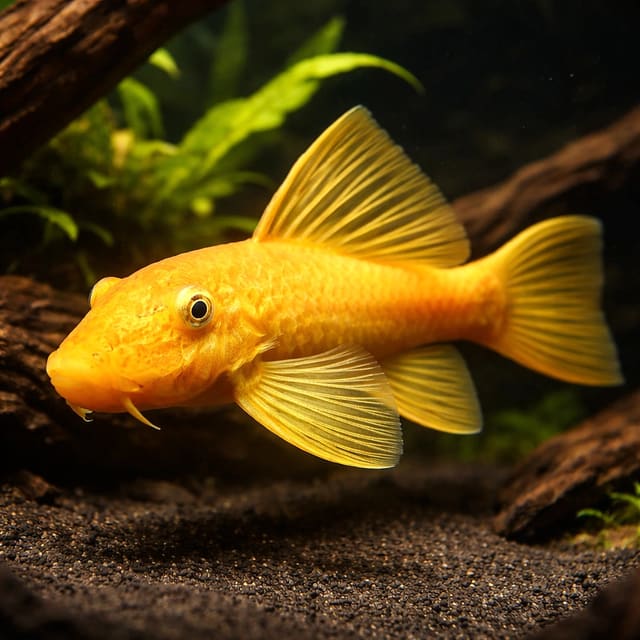
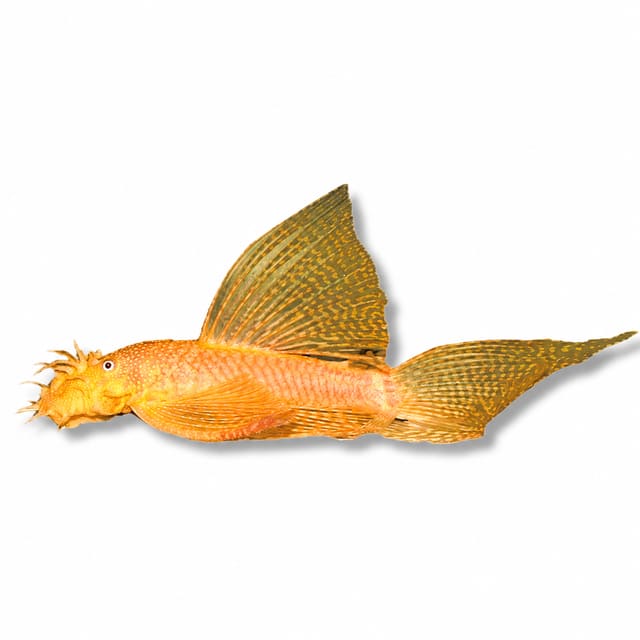
Ancistrus lemon l 144 (Ancistrus sp. L144) is a lemon-yellow loricariid catfish commonly called a Lemon Bristlenose Pleco or L144 pleco. Its armoured body, sucker-shaped mouth and bottom-dwelling grazing behaviour give it the familiar bristlenose form, while the bright colour makes it conspicuous against wood, plants and dark substrate. It suits a keeper who wants a largely retiring catfish and is prepared to provide a mature filtered aquarium, dependable water quality, shelter and a complete diet rather than expecting one fish to maintain the aquarium.
Plan its space around the needs of bristlenose catfish rather than using the dispatch size as a tank-size rule. Begin with at least 60 litres for one fish, then increase the aquarium size when adding livestock, sharing the bottom area or creating several territories. More water volume also makes temperature and water quality easier to keep stable.
Keep it at 24–27°C and pH 6.0–7.5 in soft to moderately hard water. Check that your tap water and established aquarium can hold those values steadily before choosing the fish. Ammonia and nitrite must remain at zero, while nitrate should not exceed 20 mg per litre. Stability matters more than repeatedly altering the water to chase a particular point within each range.
This catfish is not a substitute for cleaning glass, managing nutrients or correcting an algae problem. Grazing is part of its behaviour, but the aquarium still needs regular maintenance and the fish still needs prepared food. The best match is a keeper who values the catfish itself and can provide wood, secure retreats and feeding access on the bottom.
One purchase supplies one fish in the size selected on the live size selector. You can choose 2–2.5 cm, 2.5–3 cm, 3–4 cm, 4–5 cm, 5–7 cm or XL. The size you select is the size supplied, not the adult size. Every size, including XL, needs the same aquarium preparation.
Smaller fish need the same preparation as larger grades: a mature biological filter, zero ammonia, zero nitrite, suitable temperature and pH, wood, shelter and food that reaches the bottom. Before choosing a grade, inspect gaps around ornaments, filter intakes and caves. The fish must be able to enter and leave its shelter without becoming trapped, and larger fish need proportionally wider routes across the aquarium floor.
Sex is guaranteed only when the selected option explicitly states male or female. This Ancistrus lemon l 144 listing has no sex-guaranteed option. Plan any pair or small group without assuming that colour, dispatch size or a gallery image reveals the sex of the fish sent.
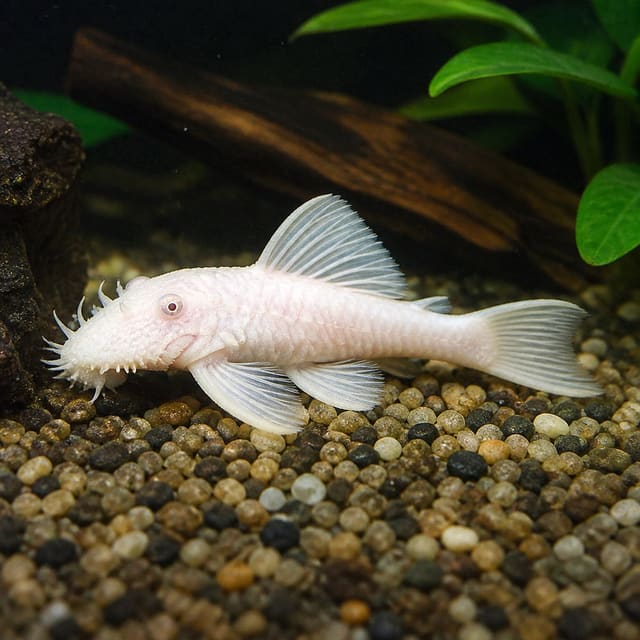
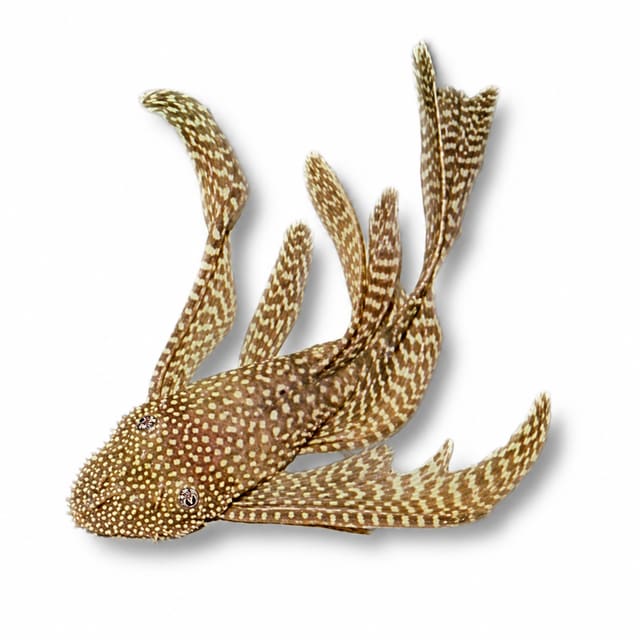
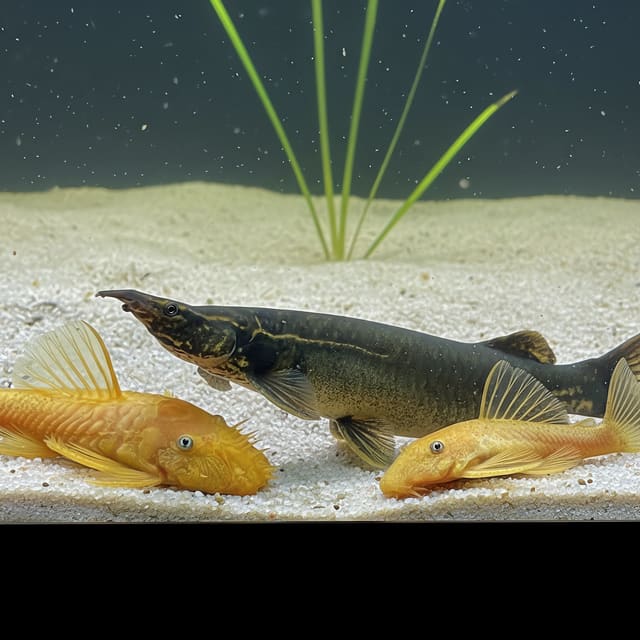
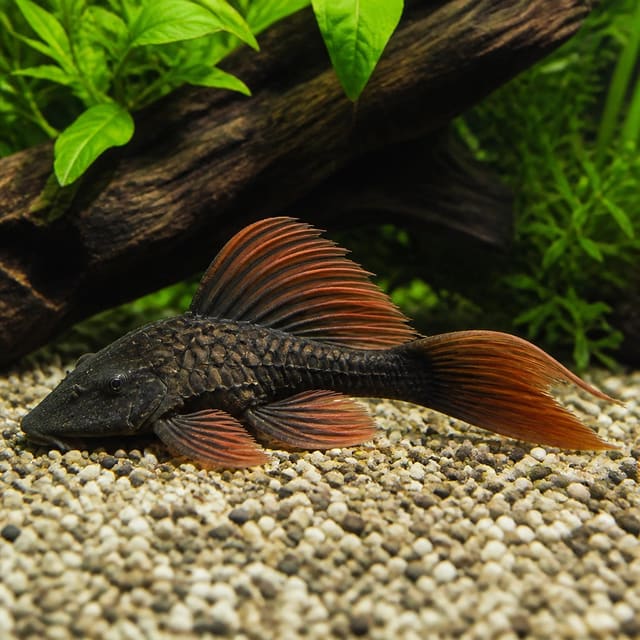
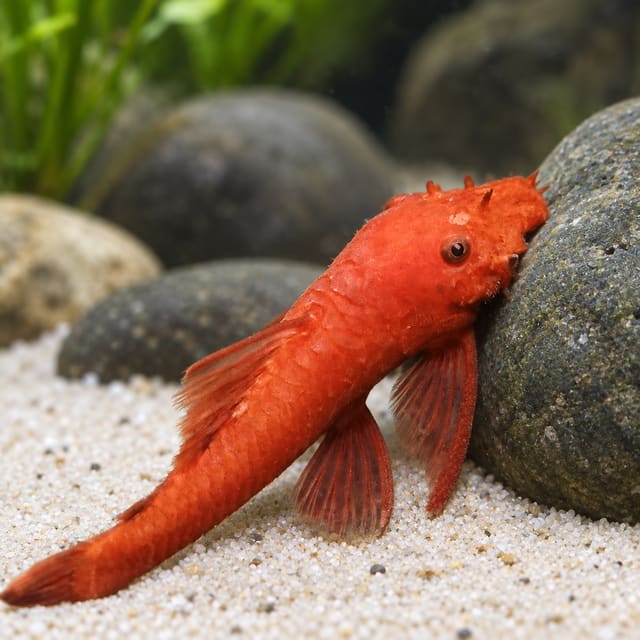
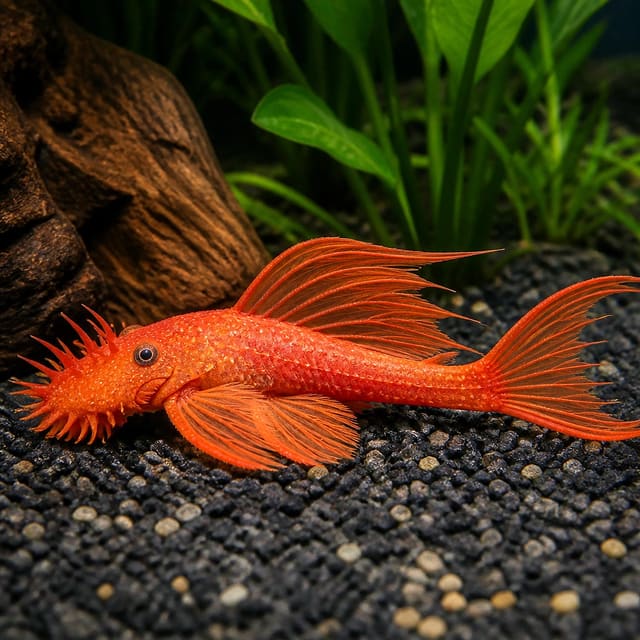
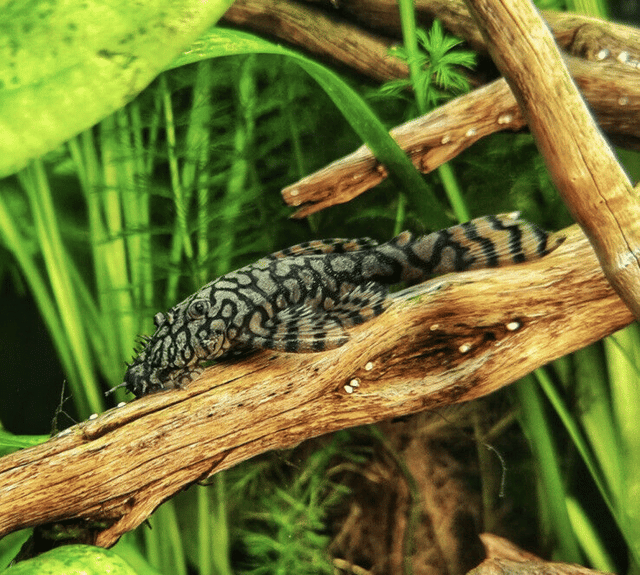
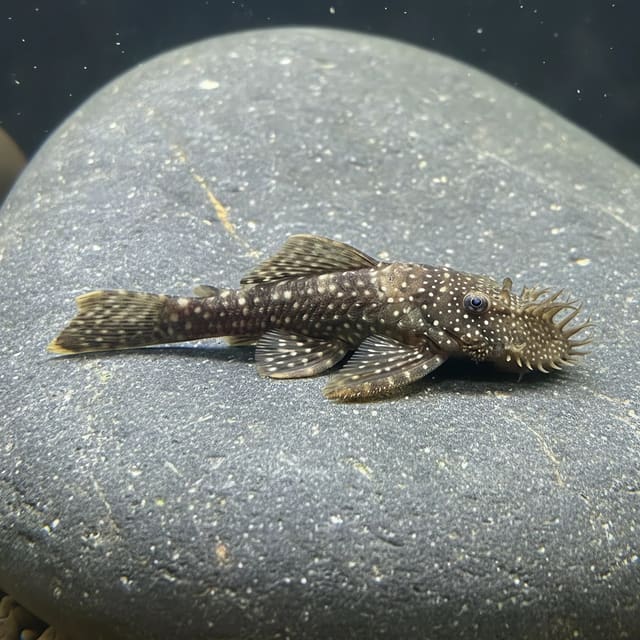
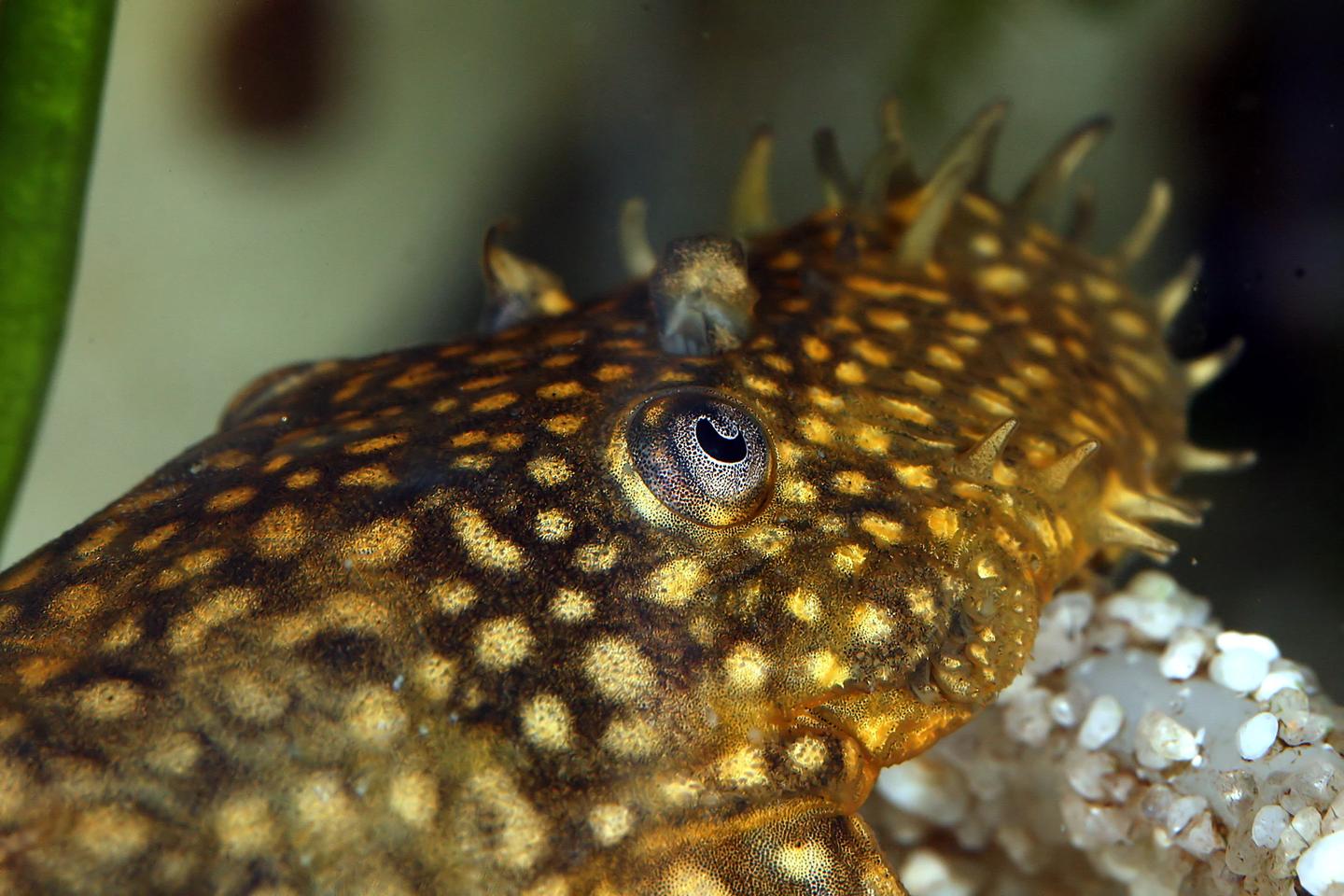
The gallery images are representative, based on reference photographs of this species, so colours can look slightly different from the live animal. Use the images for the general bristlenose body shape, and judge the aquarium by the care requirements and the size you choose.
Keep enough bottom space free for food placement and routine observation. A larger grade is easier to see at first, but it does not remove the need for cover; a smaller grade still needs the same complete setup. You can also browse the bristlenose pleco collection before deciding which catfish best matches your setup.
Choose this fish when the aquarium is mature, filtered and arranged around bottom-level shelter. Wood provides both cover and a surface for grazing. Plants, caves and shaded spaces divide the floor into usable areas, while open routes allow the fish to reach food without squeezing past sharp decoration.
| Suits | Not suited to |
|---|---|
| A mature tropical freshwater aquarium kept at 24–27°C and pH 6.0–7.5 | A new or unfiltered aquarium where ammonia or nitrite may rise |
| Keepers who provide prepared food and washed vegetables | An aquarium relying on the fish to live on algae alone |
| A layout with wood, caves, plants or other secure cover | A bare layout without dependable shelter |
| One fish, a planned pair or a carefully arranged small group | An unplanned collection competing for the same bottom retreat |
| Calm companions screened for matching water and feeding needs | Large aggressive, predatory, fin-nipping or highly territorial companions |
At least 60 litres is the starting point for one fish, not a universal answer for every community. Increase volume and floor area when other animals use the bottom, when several retreats are needed or when the filter must process a greater total stocking load. OATA advises choosing as large an aquarium as reasonably possible because larger systems tend to maintain temperature and water quality more steadily.
The final decision should combine four checks: suitable water, adequate floor space, a mature filter and a realistic feeding plan. Passing only one check is not enough. A spacious aquarium with the wrong chemistry is unsuitable, just as correct chemistry does not compensate for a bare floor with no shelter or feeding access.
Keep the aquarium at 24–27°C and pH 6.0–7.5 in soft to moderately hard water. Pick a stable point that suits the whole aquarium rather than moving temperature or pH repeatedly within the permitted range.
Ammonia must be zero mg per litre and nitrite must be zero mg per litre. Keep nitrate at no more than 20 mg per litre. Ammonia and nitrite are immediate warning signs that waste processing is failing or has been overwhelmed; nitrate shows the accumulated result of the aquarium’s waste cycle and maintenance pattern.
Use our aquarium water chemistry guide to understand what each test measures. The water matcher can then help compare your measured aquarium values with 24–27°C and pH 6.0–7.5.
A worked check is simple: an aquarium at 25°C and pH 7.0 is within range, but it is not ready if nitrite is detectable. Conversely, zero ammonia and nitrite do not compensate for a temperature outside 24–27°C. All parts of the water check must pass together.
Avoid rapid corrective swings. If pH or hardness differs from the intended value, establish why before making changes. The goal is dependable water that the fish experiences every day, not a single test result achieved shortly before introduction.
Use a well set up, mature and maintained filter from the beginning. The RSPCA’s aquarium welfare guidance explains that fish release toxic ammonia. Beneficial bacteria in a working biological filter convert ammonia to nitrite, which is also toxic, and then to the safer nitrate measured during routine testing.
A running filter is not automatically a mature filter. The biological community must be established and capable of processing the aquarium’s waste load. Prepare and mature the system before livestock arrives; our first tropical aquarium guide sets out that preparation in a practical sequence.
After introduction, protect the filter from avoidable overload. Feed only what can be eaten, remove food that is being left to decay and do not add several new animals merely because one set of readings looks good. Each addition changes the amount of waste the filter must process.
Maintain the equipment before flow becomes unreliable. Inspect the intake, outlet and impeller, and make sure wood, leaves or substrate have not obstructed water movement. The fish spends much of its time near the bottom, where trapped waste and forgotten food can accumulate, so filtration must work alongside physical cleaning rather than replacing it.
If ammonia or nitrite appears, pause further stocking, check that the filter is operating and reduce the sources of waste. Continue testing while restoring safe conditions. A clear-looking aquarium can still contain dissolved waste, which is why visual clarity never replaces test results.
Provide aquarium gravel or sand, at least one piece of wood and several secure retreats. OATA says bristlenose catfish thrive with plenty of cover and wood on which they can graze. Live plants add cover and grazing surfaces; where live plants are not used, add aquarium-safe artificial plants and ornaments such as plant pots or model caves for shelter.
Start with at least 60 litres for one fish and treat that as a floor, not a reason to crowd the aquarium. Increase the size when adding another bristlenose, other bottom dwellers or more total livestock. Floor area matters because caves, feeding positions and travel routes all occupy the same part of the aquarium.
Use smooth caves and decoration without sharp contact points. Check openings from the fish’s perspective: its broad body and spread fins need more clearance than its head alone. An entrance that looks wide from the front can narrow behind the rim, so inspect the full route before placing it in the aquarium.
Secure wood and ornaments so routine maintenance cannot make them shift or collapse. Avoid creating a narrow dead space where food and waste collect but cannot be reached. If a cave is removable, lift and inspect it carefully during maintenance rather than forcing tools around a hidden fish.
Plants can help divide the bottom and make it feel less exposed. Leave enough open substrate to place food and check whether it has been eaten. If the fish repeatedly misses meals because companions arrive first, add a second feeding position rather than scattering excess food around the entire aquarium.
Review the layout as the fish grows. A retreat suitable for a small dispatch grade may become restrictive later, while a route that once allowed easy movement may be narrowed by plant growth or shifted wood.
Offer a complete diet; aquarium algae is supplementary grazing, not the whole ration. Algae-grazing fish all need their diet supplemented with prepared algae-based wafers or flakes, ideally with fresh vegetables such as cucumber. Spirulina tablets and vegetable-based sinking foods can also form part of the feeding routine.
Feed in the evening, when this retiring catfish becomes active, and check that the fish reaches the food and finishes an appropriate portion without leftovers building up.
Wash vegetables thoroughly before use or choose organic produce. OATA warns that pesticide residues may harm fish and invertebrates. Remove portions that remain uneaten and begin with less food next time; leaving extra food overnight does not ensure that a shy fish eats, and decaying food adds toxic waste.
Use the fish’s access, body condition and leftover food to adjust the portion. If a wafer disappears because faster companions take it, add a second controlled feeding position instead of doubling the total indiscriminately. If food remains after the grazing period, reduce the next portion and check whether the fish is using its retreat normally.
A practical feeding example is one measured prepared portion placed near the retreat after more active fish have been fed elsewhere. Watch long enough to confirm that the bristlenose locates it. When offering vegetables, substitute part of the prepared ration rather than adding a large vegetable portion on top of the normal meal.
Persistent algae still requires maintenance and a review of water chemistry, lighting and stocking. Feeding the catfish properly and correcting the aquarium’s nutrient problem are separate responsibilities.
Test water once a week and record temperature, pH, ammonia, nitrite, nitrate and hardness. Compare each result with 24–27°C, pH 6.0–7.5, soft to moderately hard water, zero ammonia, zero nitrite and nitrate no higher than 20 mg per litre. A sequence of results shows direction: a rising nitrate figure or a gradual pH change deserves attention even while it remains inside the permitted range.
Keep maintenance proportionate and repeatable. Waiting for the aquarium to smell, cloud over or grow heavy algae allows dissolved waste to develop before action is taken. At the other extreme, repeatedly changing the layout removes dependable retreats and makes normal behaviour harder to compare from week to week.
Use a simple log with one row per week. For example, write “25°C, pH 7.0, ammonia 0, nitrite 0, nitrate 10 mg/l, soft to moderately hard water; filter flowing; food eaten”. The next entry can then be judged against real figures. If nitrate rises towards 20 mg per litre, review waste removal, portions, total stocking and the maintenance interval before the limit is exceeded.
An algae increase is a prompt to test and inspect, not a reason to reduce the catfish’s prepared food. OATA warns that persistent algae can indicate underlying water-chemistry or maintenance problems, and an algae-grazing fish does not replace appropriate stocking and aquarium care.
Expect this retiring catfish to use caves and wood during the day and become more active around dusk, overnight or when food reaches the bottom. Judge it against its own established pattern. A fish that normally emerges for food but suddenly remains withdrawn deserves a water and equipment check, while routine sheltering by itself is not a reason to dismantle the aquarium.
| Observation | Immediate action |
|---|---|
| Food remains untouched | Test the water, confirm the fish can reach the feeding place and inspect for trapped leftovers |
| Repeated exclusion from food | Create a second controlled feeding position near another retreat |
| Faster breathing or unusual inactivity | Check temperature, ammonia, nitrite, filter flow and visible signs of distress |
| Weight loss or prolonged listlessness | Review intake, competition and water quality, then seek prompt help |
| A cave becomes too tight | Replace it with a smooth, wider retreat while keeping another shelter in place |
Water testing comes before guesses about temperament or appetite. Zero ammonia and nitrite are essential, and a heater or filter failure can change behaviour before the water looks dirty. Record what changed, including new animals, altered food, moved decoration or missed maintenance.
Inspect the whole fish when it is visible: body condition, fins, posture and attachment to surfaces are more informative together than colour alone. Do not use colour brightness as the only health measure.
Contact us promptly when a marked health change persists, especially after checking the aquarium values and equipment. Provide the measured figures, the recent feeding pattern and a clear account of what changed. Concrete observations make the next decision more useful than a general statement that the fish looks different.
Avoid treating the entire aquarium on appearance alone. First establish the water conditions and make sure the fish is receiving food. Treatment choices require the actual problem, the product instructions and the needs of every animal sharing the aquarium.
Prepare the mature aquarium before the parcel arrives and follow the Tropical Fish Co delivery and Live Arrival Guarantee policy. Fish are hand-bagged in pure oxygen, packed in an insulated box and given a heat pack when weather calls for it. Someone must be at the delivery address to receive the parcel because live fish cannot be left unattended.
Once released, leave the established layout intact and check that the fish can reach a retreat without becoming trapped behind equipment or unstable decoration. Confirm that the heater and filter continue to operate and note the aquarium’s temperature.
If a Live Arrival Guarantee claim is needed, the policy requires the continuous video showing the sealed parcel, opening and fish in the sealed bag. Send it with the order number on the day the fish arrives so the condition can be assessed promptly.
Do not compensate for missed feeding by adding a large portion on the first night. Start with the normal measured ration, check access and remove uneaten food. A controlled beginning protects water quality while showing whether the new fish has found its feeding route.
Like other bristlenose catfish, Ancistrus lemon l 144 can be kept alone, in a pair or in a small group. A single fish avoids competition between bristlenose territories. A pair or group needs more floor area, more than one usable retreat and feeding positions that can be reached without one fish controlling every route.
OATA advises that it is usually best to have just one male per bristlenose group. Do not use colour, size or a picture to assign sex. When planning more than one fish, arrange the aquarium so the stocking decision still works if territorial behaviour develops: separate caves, divided bottom areas and more than one feeding position provide practical choices.
| Plan | What to provide |
|---|---|
| One fish | At least 60 litres, wood, a secure retreat and a clear feeding place |
| A pair | More volume and floor area, separate retreats and two observable feeding positions |
| A small group | Several territories, separate bottom areas, distributed food and close behaviour checks |
A mixed collection of bristlenose forms does not remove the need to plan territories. Bristlenose catfish of different colours still each need caves, wood and bottom-level feeding space. Count every bottom-dwelling animal when judging whether a layout is crowded.
Ask us for one stocking and compatibility assessment before combining several bristlenose catfish or adding one to a bottom-heavy community. Include the aquarium dimensions, volume, water values, established livestock, number of caves and a description of the floor layout. Those details reveal conflicts that a tank-volume figure alone can miss.
Watch feeding after any addition. If one fish repeatedly blocks another from food or shelter, add separation and reconsider the stocking arrangement rather than increasing food throughout the aquarium. More food does not create more territory and can raise the waste load.
Use this fish in a peaceful community only after checking that every companion can share 24–27°C, pH 6.0–7.5 and soft to moderately hard water. Water compatibility is the first screen, not the last: a calm fish that needs different chemistry is still the wrong match.
Next, inspect how the aquarium’s bottom area is used. The L144 needs a retreat, wood and access to prepared food. Another bottom fish may be calm in open water yet occupy the same cave entrance or reach every sinking meal first. Add floor area, separated cover and controlled feeding positions before introducing another animal into that space.
Do not combine this catfish with large aggressive cichlids that may harass it, fin-nipping fish, very large predatory fish or highly territorial bottom fish, which will exclude it from feeding. A shared temperature range does not make a predator an acceptable companion.
Check the community at feeding time. A fish can appear peaceful during the day yet prevent a retiring catfish from receiving food. Place the bristlenose ration near its retreat and watch whether it reaches the meal. If competition occurs, separate feeding locations or reconsider the companion rather than leaving excess food to decay.
Plan additions around total waste as well as behaviour. More animals increase the demand on biological filtration. Test ammonia and nitrite after a stocking change, continue the weekly record and pause further additions if either appears.
Compatibility always belongs to the whole aquarium: dimensions, number of retreats, water chemistry, filter capacity and the behaviour of individual animals all matter.
You will receive one fish in the selected 2–2.5 cm, 2.5–3 cm, 3–4 cm, 4–5 cm, 5–7 cm or XL grade. That is its size when sent, not its adult size.
Use at least 60 litres for one fish and choose a larger aquarium when adding more livestock. Greater water volume helps temperature and water quality remain stable, while wood, cover and a maintained filter are essential parts of the plan.
OATA says bristlenose catfish can be kept alone, in pairs or small groups, usually with just one male per group. For a pair or group, provide separate retreats, enough floor area and more than one feeding position.
It can suit a beginner who prepares a mature filtered aquarium, maintains 24–27°C and pH 6.0–7.5, tests water weekly and provides wood, cover and a complete diet.
Offer prepared algae-based food and washed vegetables such as cucumber. Allow extra time for grazing, but use a measured portion and prevent leftovers accumulating.
Keep it at 24–27°C and pH 6.0–7.5 in soft to moderately hard water. Ammonia and nitrite must remain at zero, and nitrate should not exceed 20 mg per litre.
It is generally peaceful, but male bristlenose catfish may be territorial with other males. Avoid fin-nipping companions and provide separate retreats when keeping more than one bristlenose.
Choose peaceful community fish that share 24–27°C and pH 6.0–7.5 and do not block access to bottom food or shelter. Avoid large aggressive cichlids that may harass it, fin-nippers, large predators and highly territorial bottom fish, which will exclude it from feeding.
Tropical Fish Co hand-bags fish in pure oxygen and packs them in an insulated box, with a heat pack when the weather calls for it. Receive the parcel in person, film continuously from the sealed box and float the bag for 20–30 minutes before release.
No reviews for this item yet. Bought one? Honest reviews only, good or bad.
What customers say about ordering from us
I have a small group of long finned mountain minnows. So was delighted to be able to order ten of this variety to increase the genetics in my tank . The ones I recieved are healthy but it’s to early to give a verdict on wether they are of a long finned type since they are small currently.
Gordon Walker · 23 Sept 2026
100% success travel and "installation". Pleased with quality of purchase. The Siamese fighter a bit "shy" so have not yet seen him at his best yet but looking good. Happy customer. GG
George E Garratt · 21 Sept 2026
Reviews of our shop, collected by Judge.me, an independent third-party review collector. Newest first.