Moderate
Bristlenose Pleco (Ancistrus sp.)
22–27°C · pH 6–8
From £3.51Some sizes on sale

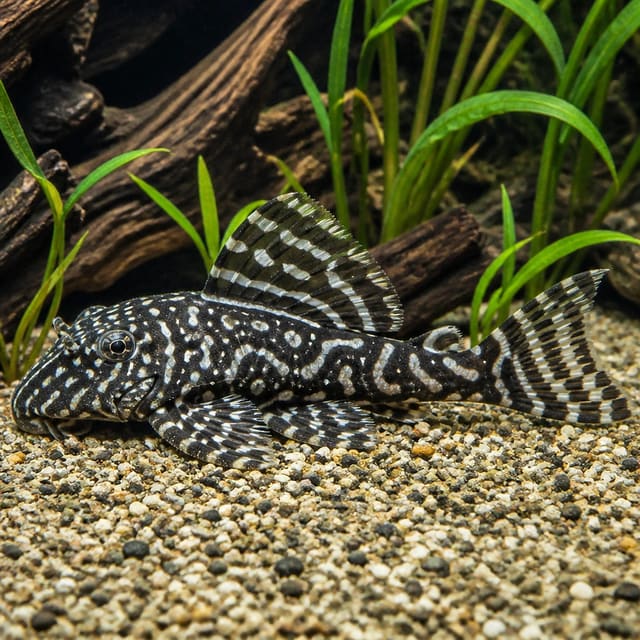
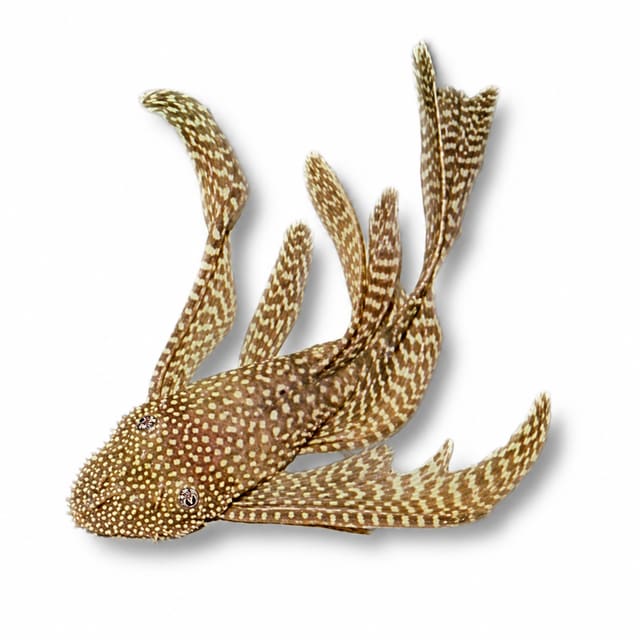
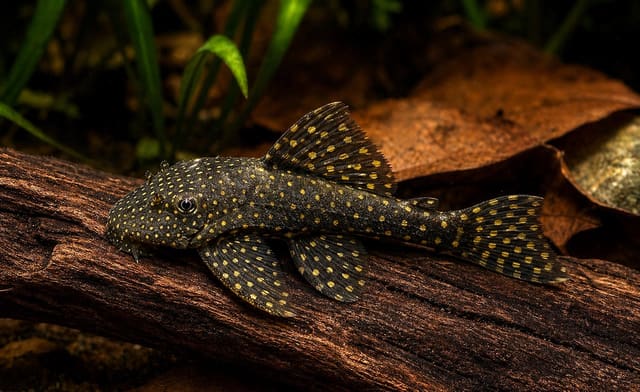
L519 Rio Itenez Honeycomb Bristlenose Pleco (Ancistrus sp.) is a South American loricariid trade form for established tropical aquariums, supplied as one unsexed fish in the size chosen, with filtration, cover and deliberate feeding central to its care.
Ancistrus sp.
L519 Rio Itenez Honeycomb Bristlenose Pleco (Ancistrus sp.) is a South American loricariid trade form for established tropical aquariums, supplied as one unsexed fish in the size chosen, with filtration, cover and deliberate feeding central to its care.
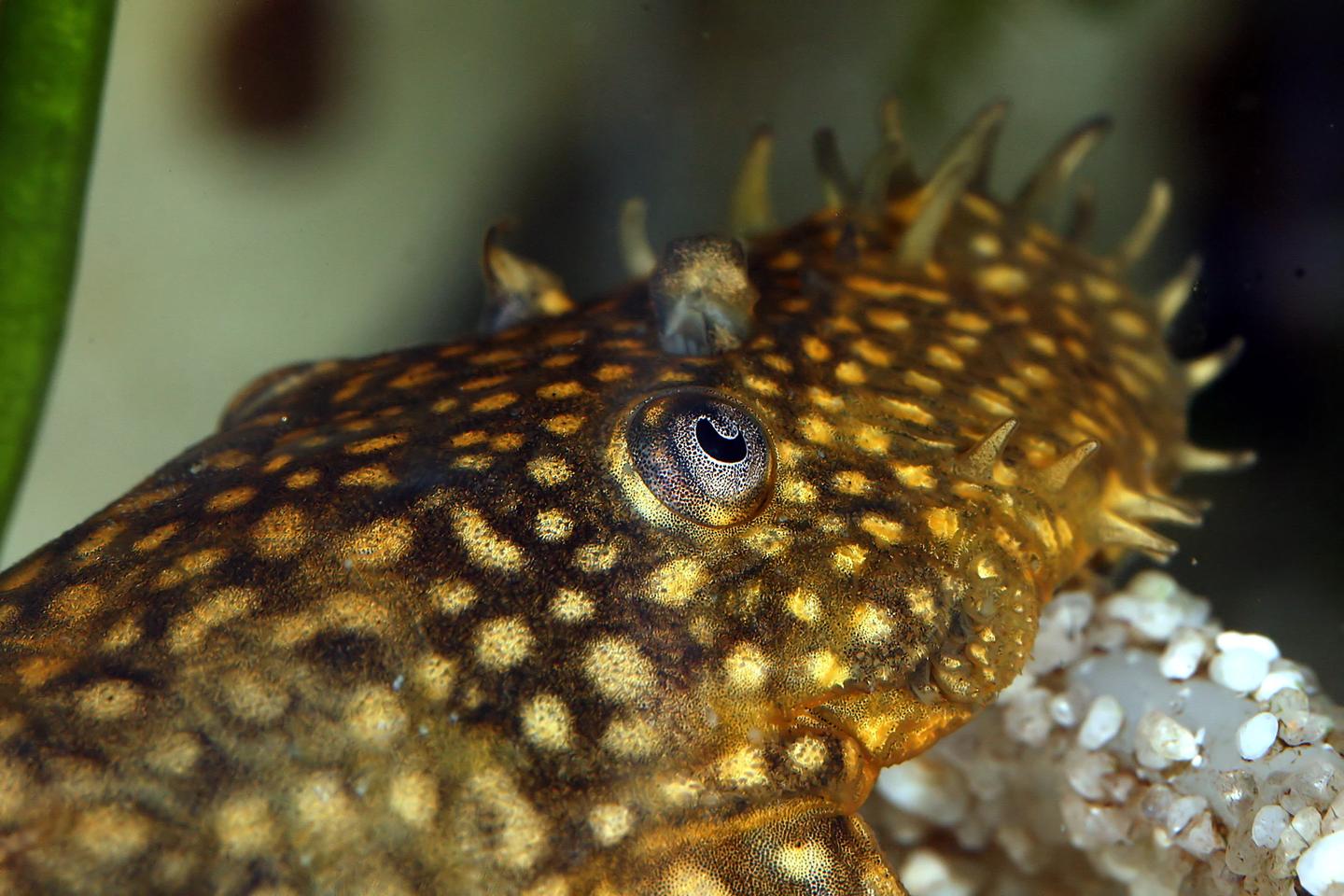
For one typical common bristlenose, start with a mature, filtered aquarium of at least 90 litres, useful floor area, wood and cover. OATA reports about 15 cm adult length, 22-27°C, pH 6-8 and 4-12 dGH. Confirm the exact trade identity before applying species-level claims.
Maintain these water conditions for optimal health and vibrant colors
L519 Rio Itenez Honeycomb Bristlenose Pleco is the trade identity for this patterned Ancistrus listing. The defensible scientific label is Ancistrus sp.: the accepted genus record places Ancistrus in Loricariidae, while the offer does not establish a species. The L-number and Rio Itenez name are therefore useful trade identifiers, not a licence to attach a made-up species epithet.
One purchase supplies one live fish in the size chosen. The dispatch grades span 3–4 cm, 4–5 cm, 5–6 cm and 6–8 cm. The size you select is the size supplied, not the adult size. Size choice should help with introduction and feeding plans, but it should never be used as a shortcut for the fish's mature space requirement.
The exact species has not been identified, so the care advice here follows the genus Ancistrus and its care group. That distinction matters: the genus record supports identity, while the genus natural-history summary supports a South American freshwater context. The aquarium figures below come from explicitly broad UK trade-body guidance. This page keeps those roles separate so that a useful starting routine does not become false species precision.
| Suits | Keepers with an established, filtered tropical aquarium who can test water, provide cover and make sure a bottom-feeding fish receives its own food. |
|---|---|
| Not suited to | An uncycled aquarium, a purchase made only for algae control, or a layout with no sheltered bottom area. |
| Sold unit | One unsexed live fish per purchase, in the chosen dispatch size. |
| Identity confidence | Trade form L519 Rio Itenez; scientific identity retained at Ancistrus sp. |
If you are still comparing this fish with more familiar forms, browse the current bristlenose pleco collection. Compare adult planning, water compatibility and your ability to feed a bottom-dweller directly rather than choosing by pattern alone.
Start with the aquarium, not the fish. The filter should already be biologically established, the temperature stable and the usual ammonia, nitrite and nitrate checks understood. The RSPCA explains why filtration matters: fish waste produces toxic ammonia, and a functioning biological filter supports the bacteria that process it. A pleco added to a new or unstable tank is not a substitute for completing that preparation.
Next inspect the usable bottom area. Decorative volume does not guarantee feeding space. Wood, plants, rocks and ornaments can create cover, but the fish must also have a clear route to food and a retreat that faster or more assertive residents cannot occupy continuously. Plan where a sinking food will land and how you will confirm that this particular fish eats it.
Finally match the dispatch grade to the existing residents. A smaller arrival may need calm feeding conditions and protection from boisterous tank mates; a larger arrival still needs patient introduction. In either case, the chosen grade describes the size arriving from the shop. It does not promise sex, adult length, temperament or instant suitability for the aquarium you already own.
Sex is guaranteed only when the selected option explicitly states male or female. This L519 Rio Itenez Honeycomb Bristlenose Pleco listing has no sex-guaranteed option.
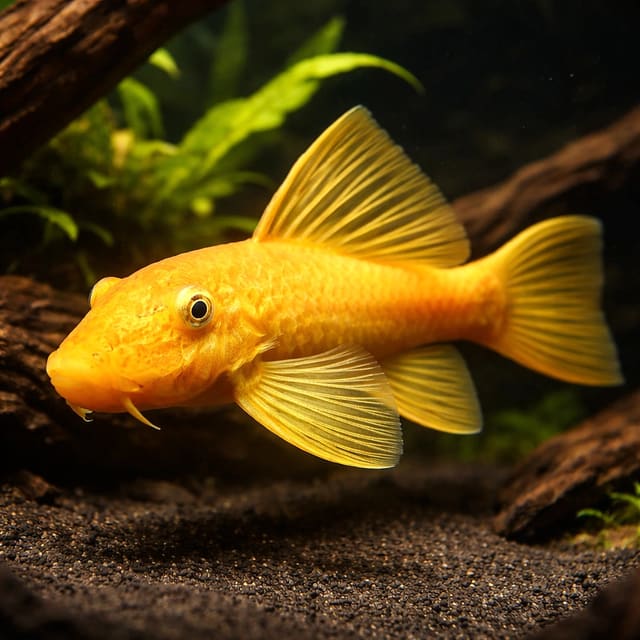
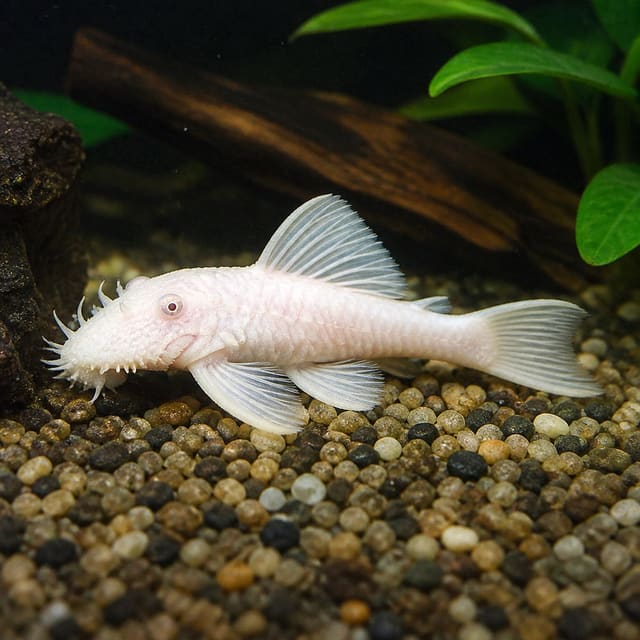
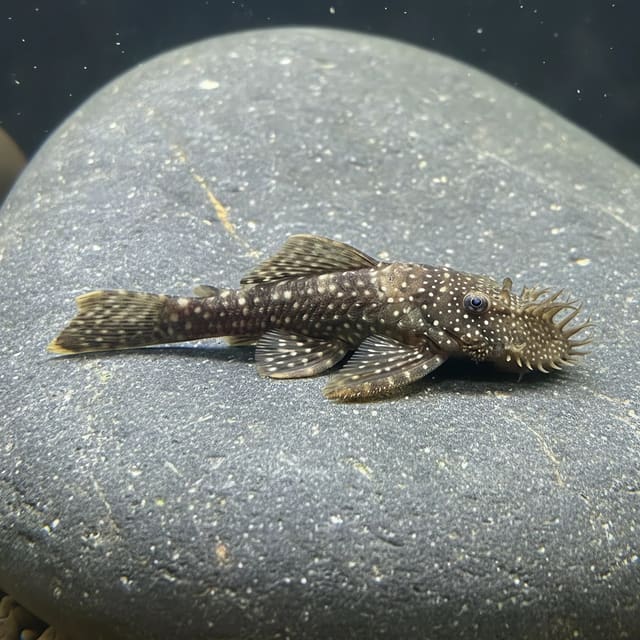
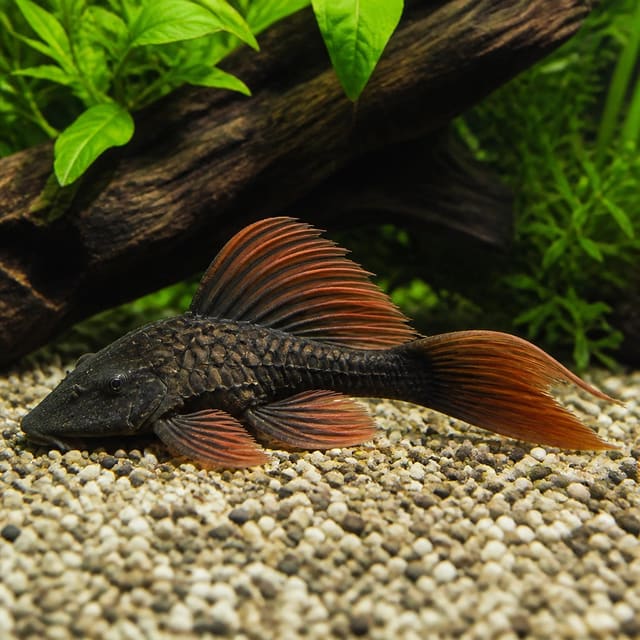
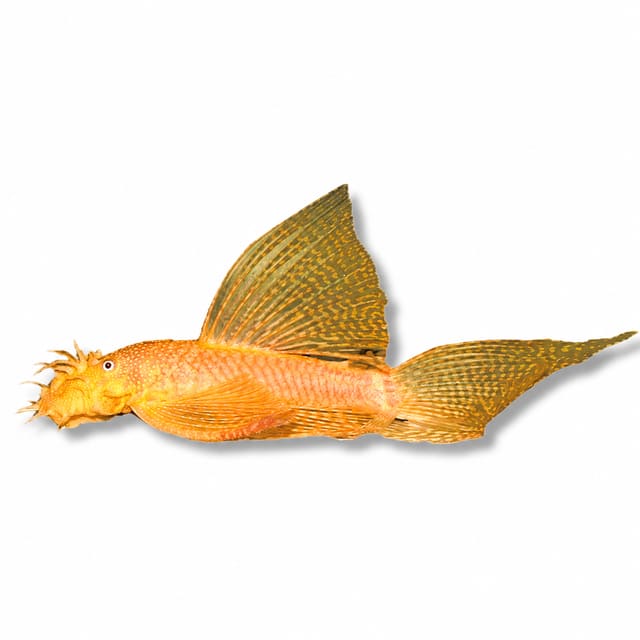
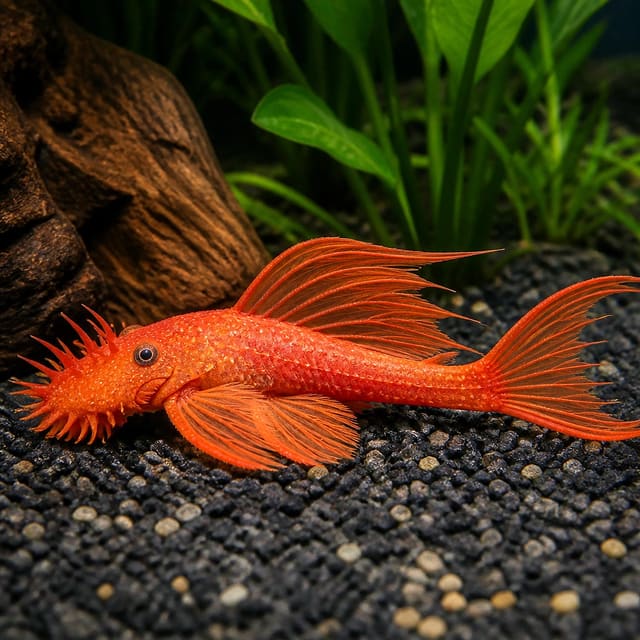
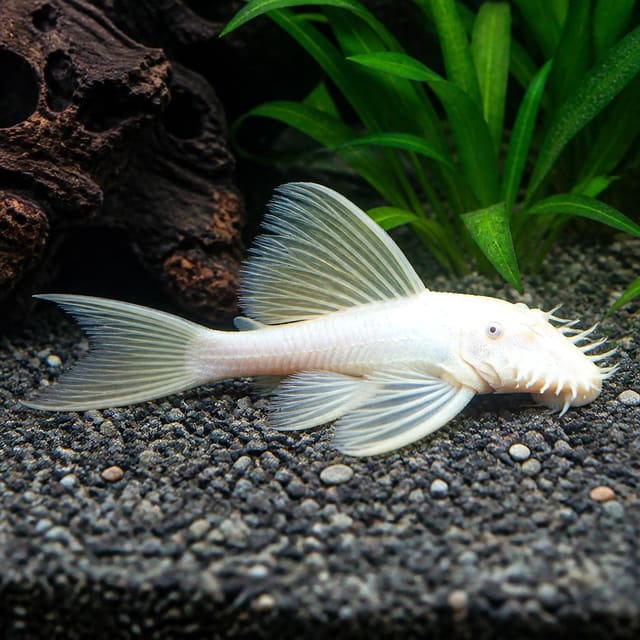
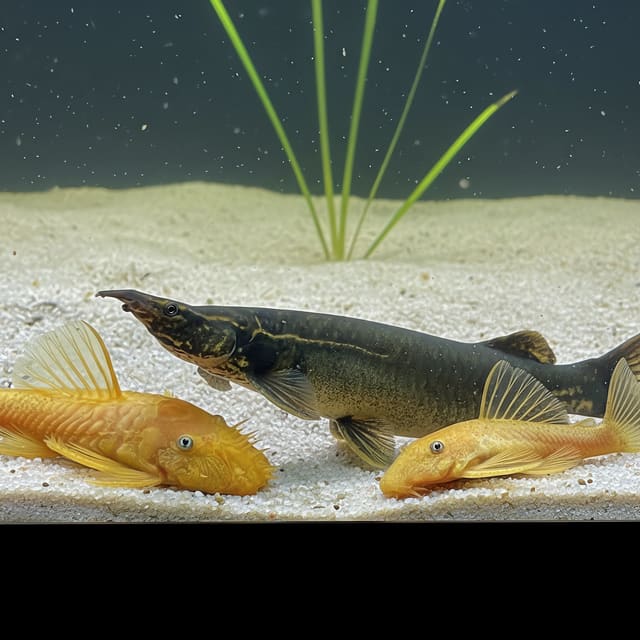
The attraction is the L519 trade form and its honeycomb-style appearance, but live-animal variation should be expected. Gallery images have been digitally enhanced to improve image quality. Natural colour, pattern, size and maturity can vary between live animals.
The non-negotiable foundation is a working biological filter. RSPCA aquarium-welfare guidance explains the ammonia-to-nitrite-to-nitrate process and why no fish belongs in an unfiltered aquarium. In practice, that means allowing the filter to mature before livestock is added, testing rather than guessing, and treating any detectable ammonia or nitrite as a husbandry problem to solve before introducing another fish.
Use the figures below as a broad planning framework, not as a claim that L519 has a researched species optimum. The OATA tropical algae-eater care sheet gives 22–27°C and pH 6.0–8.0 for the bristlenose example, while other named algae-eater examples use soft-to-medium water around 4–12 dGH. Keep the aquarium comfortably within a stable overlap and avoid treating an edge value as a target.
| Temperature framework | 22–27°C from broad bristlenose/algae-eater guidance; not an L519 species optimum. |
|---|---|
| pH framework | 6.0–8.0 from broad group guidance; choose a stable value compatible with every resident. |
| Hardness framework | Soft-to-medium, around 4–12 dGH in named comparator examples; retain the group-level scope. |
| Waste control | Ammonia and nitrite at zero, with nitrate managed through measured stocking, feeding and maintenance. |
Consistency is normally more useful than repeated adjustment. Test the aquarium and the replacement water, understand the direction in which your tap water moves, and make changes gradually. The water-chemistry guide explains what the common readings mean, while the water matcher can help compare measured values with the stated care framework.
Good filtration is not only a filter-box choice. Flow must reach the lower aquarium without turning the shelter into a relentless jet, oxygen exchange must remain reliable, and waste must not collect unseen beneath hardscape. Observe the fish: difficulty resting, reaching food or finding cover is a signal that the layout needs adjustment even when a test strip looks acceptable.
OATA's broad aquarium guidance recommends substrate plus plants or suitable ornaments that provide shelter. For this listing, translate that into a bottom layout with at least one secure shaded refuge, open routes between cover and food, and surfaces that can be inspected during maintenance. Wood may be used as structure and grazing surface, but this page does not turn a general bristlenose recommendation into a claim about an exclusive L519 dietary requirement.
Stability comes before visual density. Rest hardscape securely so a burrowing or rasping fish cannot undermine it. Smooth contact points reduce the chance of abrasion. Leave enough space around the filter intake, heater and feeding area to clean them without dismantling the whole aquarium. A beautiful wall of wood that traps waste behind it is less useful than a simpler layout that can be maintained.
Plants can add shelter and make a community aquarium feel secure, but choose and anchor them for the conditions you actually keep. Artificial plants are also a valid shelter option under the broad OATA guidance when live planting is unsuitable. Whichever route you choose, inspect leaves and decor for trapped food and ensure that the bottom remains accessible.
Where more than one cave-using fish is kept, duplicate resources rather than expecting them to share. Separate entrances, put food in more than one reachable place and watch for repeated exclusion. Because this offer carries no sex guarantee, facial features, size or a photograph should not be used to promise that a particular social arrangement will work.
OATA is clear that algae-eating fish do not replace maintenance and cannot be expected to live on algae alone. Use an appropriate prepared algae-based wafer or sinking food as the dependable part of the routine, supplemented with well-washed fresh vegetables such as cucumber where suitable. The purpose is not to make the fish perform cleaning work; it is to give a bottom-feeder reliable nutrition.
Offer food where the fish can reach it. In a busy community, mid-water fish may intercept sinking tablets and leave a shy pleco with little. Watch the food reach the bottom, check the fish's response and inspect for leftovers later. Feeding in more than one position can help when another bottom resident guards the first place, but extra locations still count towards the total food entering the aquarium.
| Useful staple | An appropriate prepared algae-based or vegetable-led sinking food from a reputable aquatic-food range. |
|---|---|
| Fresh supplement | Thoroughly washed suitable vegetables, offered in a manageable piece and removed before deterioration affects water. |
| Natural grazing | Biofilm and soft algae may be used, but they are a supplement rather than the complete plan. |
| Main risk | Assuming visible algae means the fish is fed, or adding so much food that waste accumulates around cover. |
Judge the routine by observation and water quality. A fish that remains hidden can still be checked by placing food consistently, looking for feeding marks and confirming that it is not being displaced. Avoid adding uneaten food simply because you did not see the fish immediately. Instead, make the feeding position safer and quieter, then reassess.
Vegetables can carry residues, which is why the OATA guidance advises organic produce or thorough washing. Use clean utensils and avoid seasoning, oils or kitchen scraps. Remove food before it breaks down. That single habit protects the biological filter, keeps the lower aquarium cleaner and makes it easier to tell whether the fish is feeding normally.
A maintenance plan should make changes visible early. Record temperature and the key nitrogen-cycle tests, look beneath hardscape, and note whether the fish emerges for food. The broad OATA sheet recommends regular testing, while the RSPCA's filtration explanation shows why a clear aquarium can still contain harmful dissolved waste.
Clean in a way that preserves biological stability. Remove settled debris from accessible bottom areas, rinse reusable mechanical media only as appropriate for the filter, and keep the biological section functioning. Avoid changing several major parts of the system at once when a smaller, measured correction will do. Replacement water should be prepared for the aquarium rather than added at a sharply different temperature or chemistry.
A new arrival may spend time under cover. Do not respond by repeatedly lifting ornaments or chasing it into view. Confirm water quality, keep disturbance low and offer food in a predictable location. If behaviour changes suddenly, examine the environment first: temperature, filter function, recent maintenance, new tank mates and access to food are practical starting points.
If this is your first livestock addition, work through the first tropical tank guide before the delivery date. The goal is to make the aquarium ready before the box arrives, so acclimation is not delayed by last-minute filter, heater or water problems.
A simple written baseline makes later decisions easier. Note the aquarium temperature, the most recent ammonia, nitrite and nitrate results, the normal filter flow and the feeding behaviour of existing residents. Photographing the layout for your own reference can also help you remember which areas were open, where debris collected and whether a refuge entrance has become blocked.
Because Ancistrus is a nocturnal genus, make one evening check part of the routine: place a counted portion of sinking food in the same open feeding patch before the normal low-light period, then inspect later for leftovers without lifting the refuge or adding an unmeasured second portion.
Choose a regular viewing time when the room is calm and the fish has a realistic chance to emerge. Observe without lifting its shelter. The first useful question is whether food reaches the fish, followed by whether another resident repeatedly removes it. If access is poor, move the feeding point or distribute suitable sinking food between separated areas before increasing the total amount.
Use changes in the aquarium as prompts for extra checks. A cleaned filter, a large rearrangement, a new resident, unusual room temperature or a missed maintenance session can alter the conditions the fish experiences. Recheck water and flow after the change, then compare behaviour with the baseline. This is more informative than reacting to one brief hiding episode in isolation.
The purpose is not to turn ordinary care into paperwork. A short record helps separate a stable individual habit from a new environmental problem, and it gives useful context if professional aquatic advice is later needed. It also makes it easier for another household member to follow the established routine accurately.
Read the current delivery and Live Arrival Guarantee policy before dispatch, and arrange for someone to receive the parcel. Have the aquarium ready, the lights calm, a timer available and a phone positioned for a continuous video. The store policy asks for evidence beginning with the sealed parcel, so starting after the box is open can miss the condition needed for a claim.
After release, prioritise quiet observation. Let the fish locate cover and avoid crowding the glass or rearranging the bottom immediately. Offer an appropriate sinking food once the aquarium has settled, then check that it reaches the intended feeding place. Keep the video until you are satisfied that the arrival and any guarantee issue are resolved.
The arrival process cannot repair an unsuitable aquarium. Stable water, a functioning filter and compatible residents must be in place beforehand. Equally, a mature aquarium does not remove the need to follow the store's current evidence and contact steps. Treat the two responsibilities as complementary: prepare the habitat, then document and handle the parcel correctly.
A cautious compatibility method is more useful than a universal tank-mate list. Ancistrus is a South American freshwater loricariid genus, and broad bristlenose guidance allows community keeping while noting competition between males. That is enough to plan shelter and feeding carefully, but it is not enough to promise that every peaceful fish will be suitable.
Start with shared water requirements. A proposed companion should be comfortable in the same stable tropical range, should not require an extreme at the edge of that framework, and should not turn feeding into a daily contest. Next compare space use. Fish that occupy mid-water may leave the bottom open, but any animal that claims the same refuge, blocks the entrance or consumes all sinking food increases the management burden.
| Potentially suitable | Peaceful tropical residents whose own requirements overlap and which leave this fish reliable access to bottom food and shelter. |
|---|---|
| Use caution | Additional cave users, grazers or assertive bottom-feeders, especially in layouts with one prime refuge. |
| Avoid as a setup | Unfiltered, immature, overcrowded or unstable aquariums, and any community where the fish cannot feed without harassment. |
Observe actual interactions rather than relying on a label. A fish may look calm in open water yet repeatedly displace a bottom-dweller at feeding time. Warning signs include one fish being confined to a poor hiding place, food being monopolised, persistent chasing around a refuge, damage or a clear decline in feeding. Respond by separating resources or residents, not by waiting for the excluded fish to adapt.
Map the bottom of the aquarium as territories and feeding lanes. Count usable refuges, not decorative objects: an ornament with a narrow blocked entrance may be inaccessible, and two caves placed side by side may function as one contested area. Spread shelter across the footprint and space the entrances apart where practical.
Feed with a plan. Place sinking foods far enough apart that one resident cannot guard both, and watch until each animal has a genuine opportunity. Avoid using a large excess of food as a substitute for resource separation because the leftovers return as water-quality pressure. If one fish is repeatedly absent from feeding, change the layout or stocking arrangement.
Sex cannot be inferred reliably for this purchase, and no male or female is promised. Broad bristlenose advice about male competition should therefore guide caution without encouraging visual guesswork. Provide the space and duplicate resources that would be prudent if territorial behaviour develops, then judge the actual fish in front of you.
Compatibility also changes with growth and maturity. A layout that seems spacious for a small dispatch grade may become crowded later. Keep room to add or reposition shelter, and reconsider stocking before another cave-dwelling fish is introduced. The best community is one that remains manageable after the novelty of the new arrival has passed.
The exact L519 trade form has no species-level adult maximum in the material used for this page. Broad OATA bristlenose guidance describes bristlenose catfish at about 15 cm, so use that only as a conservative care-group planning reference and allow generous bottom space.
Choose a mature aquarium with enough floor area for shelter, grazing surfaces and unobstructed feeding. Because the identity is genus level, avoid treating any dispatch length as an adult-size calculation; a larger, stable aquarium is the safer planning choice.
Broad bristlenose guidance allows single fish, pairs or small groups, while warning that males may compete. As this offer is not sexed, provide separated shelters and feeding places and add further fish only when the aquarium has ample bottom space.
It is best described as intermediate rather than difficult: the keeper should already know how to run a mature biological filter, test water, manage bottom-feeding and notice whether a shy fish is actually eating.
Use the OATA tropical algae-eater guidance as a broad feeding framework: offer a suitable prepared algae-based food and well-washed fresh vegetables, while remembering that grazing does not replace deliberate feeding or routine aquarium maintenance.
Broad OATA tropical algae-eater guidance uses 22–27°C, pH 6.0–8.0 and soft-to-medium water around 4–12 dGH. These are care-group planning values rather than an L519 species-specific optimum, so stability and measured water matter more than chasing an edge of the range.
Do not assume identical behaviour from every fish. Broad bristlenose guidance highlights competition between males, so arrange separate shelters, watch access to food and move fish apart if persistent chasing or exclusion appears around the bottom.
Choose peaceful tropical fish that share the same stable water framework and do not prevent this bottom-feeder from reaching food and shelter. Check the needs of every proposed species; a community label alone is not proof that temperature, water chemistry, space and behaviour all match.
Tropical Fish Co hand-packs live fish in an insulated box and uses a licensed live-animal courier. Be present, record one continuous unboxing video from the sealed parcel through to the fish still in its sealed bag, inspect it on arrival and contact the team the same day if a Live Arrival Guarantee claim is needed.
This listing is for one L519 Rio Itenez Honeycomb Bristlenose Pleco from the selected dispatch-size option. The fish is identified as Ancistrus at genus level, so no species-level adult maximum or species-specific water optimum is claimed here. Plan beyond the dispatch size and provide ample usable bottom space as the fish matures.
L519 is a South American loricariid trade form. Broad UK bristlenose and tropical algae-eater guidance supports mature filtration, shelter, supplementary prepared foods and vegetables, and stable tropical conditions. RSPCA guidance explains why an established biological filter matters in processing toxic fish waste.
Choose the aquarium around long-term space, shelter and reliable access to food rather than a fixed minimum volume. This listing does not guarantee sex, and breeding behaviour or an exact adult length should not be assumed. Refer to Tropical Fish Co's delivery policy for packing, courier, arrival inspection, unboxing-video and guarantee steps.
No reviews for this item yet. Bought one? Honest reviews only, good or bad.
What customers say about ordering from us
I have a small group of long finned mountain minnows. So was delighted to be able to order ten of this variety to increase the genetics in my tank . The ones I recieved are healthy but it’s to early to give a verdict on wether they are of a long finned type since they are small currently.
Gordon Walker · 23 Sept 2026
100% success travel and "installation". Pleased with quality of purchase. The Siamese fighter a bit "shy" so have not yet seen him at his best yet but looking good. Happy customer. GG
George E Garratt · 21 Sept 2026
Reviews of our shop, collected by Judge.me, an independent third-party review collector. Newest first.