Moderate
Bristlenose Pleco (Ancistrus sp.)
22–27°C · pH 6–8
From £3.51Some sizes on sale

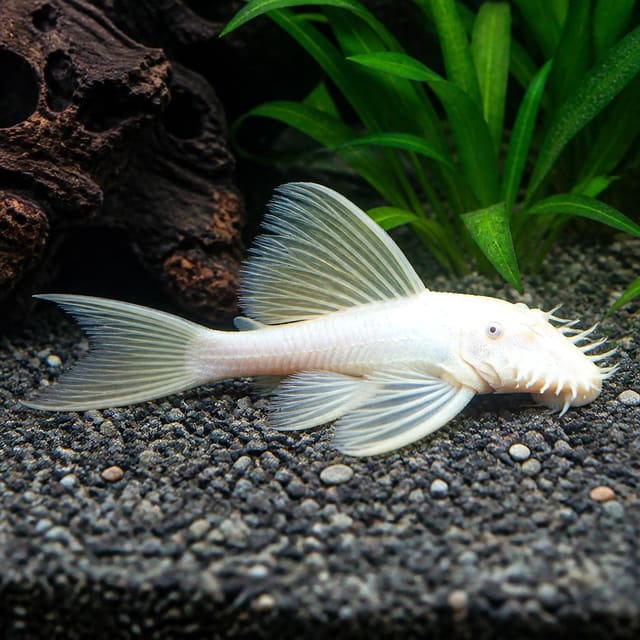
The Longfin Bristlenose Pleco (Ancistrus sp. long fin) is a nocturnal loricariid catfish from a genus native to freshwater habitats in South America and Panama. It suits a filtered aquarium with cover and wood; OATA's bristlenose guidance gives 22–27°C, pH 6.0–8.0, and keeping one, a pair or a small group with one male. Sold individually in 2.5–3 cm, 3–4 cm, 4–5 cm, 5–7 cm and XL dispatch sizes.
Ancistrus sp. long fin
The Longfin Bristlenose Pleco (Ancistrus sp. long fin) is a nocturnal loricariid catfish from a genus native to freshwater habitats in South America and Panama. It suits a filtered aquarium with cover and wood; OATA's bristlenose guidance gives 22–27°C, pH 6.0–8.0, and keeping one, a pair or a small group with one male. Sold individually in 2.5–3 cm, 3–4 cm, 4–5 cm, 5–7 cm and XL dispatch sizes.
For one typical common bristlenose, start with a mature, filtered aquarium of at least 90 litres, useful floor area, wood and cover. OATA reports about 15 cm adult length, 22-27°C, pH 6-8 and 4-12 dGH. Confirm the exact trade identity before applying species-level claims.
Maintain these water conditions for optimal health and vibrant colors
The Longfin Bristlenose Pleco (Ancistrus sp. long fin) is a nocturnal freshwater catfish in the family Loricariidae. WoRMS recognises Ancistrus as a genus within the order Siluriformes, while Wikipedia's genus summary places these fish in freshwater habitats across South America and Panama. This form suits a keeper who can provide a filtered tropical aquarium, reliable cover, wood for grazing and deliberate supplementary feeding.
Plan with a benchmark of about 15 cm and keep the aquarium at 22–27°C and pH 6.0–8.0. OATA's tropical algae-eater guidance gives those values for bristlenose catfish as group guidance, so use them to reserve space and set routine aquarium conditions without treating 15 cm as a fixed endpoint for every member of the genus.
Bristlenose and bushynose catfish are established aquarium names for Ancistrus. The word pleco is also widely used in the hobby, although it can refer loosely to many loricariid catfish. The full name Longfin Bristlenose Pleco therefore matters: it identifies the bristlenose form and distinguishes it from other loricariid catfish, such as Hypostomus plecostomus, that are also called plecos.
Start with the aquarium you can maintain consistently. A working filter is essential, ammonia and nitrite must remain at zero, nitrate must not exceed 20 mg per litre, and the fish needs cover plus at least one piece of wood to graze on. These requirements matter whether you begin with a small dispatch size or a larger fish.
| Suits | Not suited to |
|---|---|
| A filtered aquarium held at 22–27°C and pH 6.0–8.0 | An unfiltered aquarium or one that cannot hold those values steadily |
| A layout with plenty of cover and at least one piece of wood | A bare layout without shelter or a wood-grazing surface |
| A keeper who will feed prepared algae-based food and washed vegetables | A plan that expects the fish to live on visible algae alone |
| Keeping one fish, a pair or a carefully planned small group | A group planned without accounting for OATA's one-male recommendation |
| Weekly water testing and regular aquarium maintenance | A hands-off approach to filtration, testing and waste |
The larger the aquarium, the more stable its temperature and water quality will be. Use enough space to fit the filter, wood and cover without crowding the fish's usable environment. When comparing two suitable aquariums, favour the one that gives you more room to create shelter and maintain stable conditions.
One purchase supplies one fish in the size selected from the live selector. The labels are 2.5–3 cm, 3–4 cm, 4–5 cm, 5–7 cm and XL. The size you select is the size supplied, not the adult size. Use the selector to match the dispatch size to the aquarium and its other inhabitants, while planning the permanent setup around the bristlenose group's approximate 15 cm benchmark.
The exact species has not been identified, so the care advice here follows the genus Ancistrus and its care group. The scientific label therefore remains Ancistrus sp. long fin rather than assigning this aquarium form to one named species. You can browse the bristlenose pleco collection when comparing this longfin form with other bristlenose choices.
Sex is guaranteed only when the selected option explicitly states male or female. This Longfin Bristlenose Pleco listing has no sex-guaranteed option. Build any pair or group plan without guessing sex from dispatch size, colour or gallery appearance.
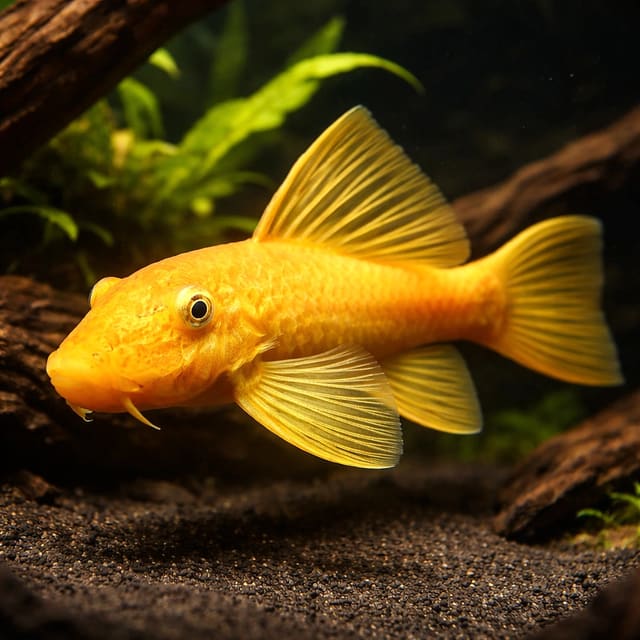
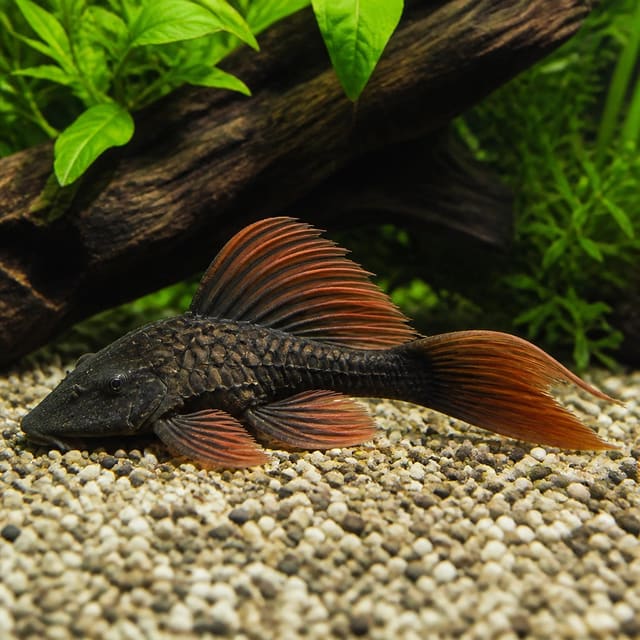
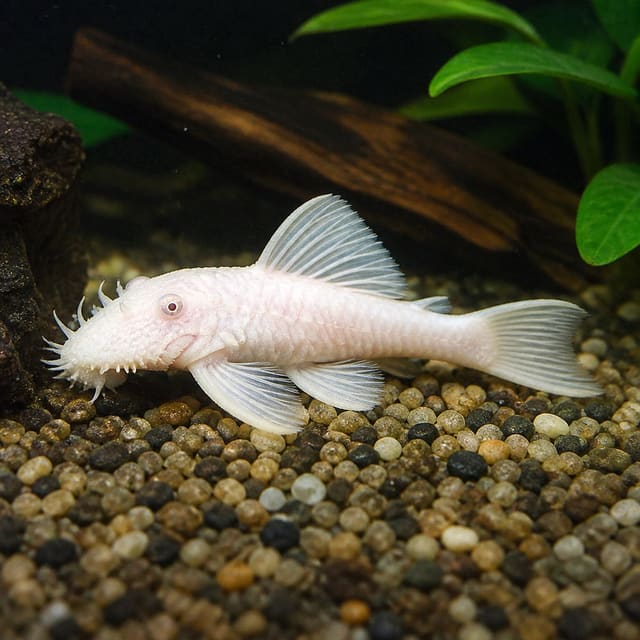
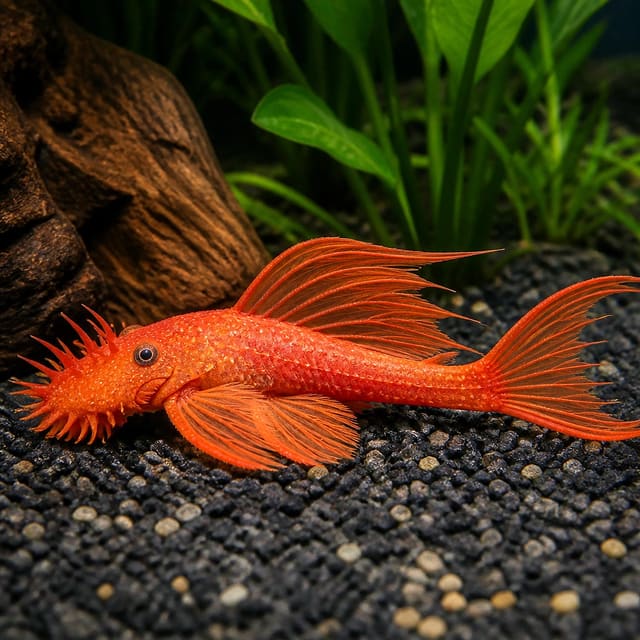
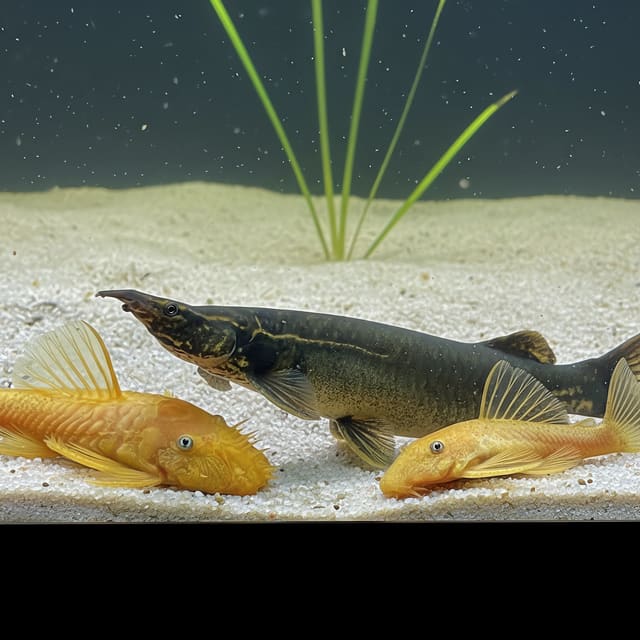
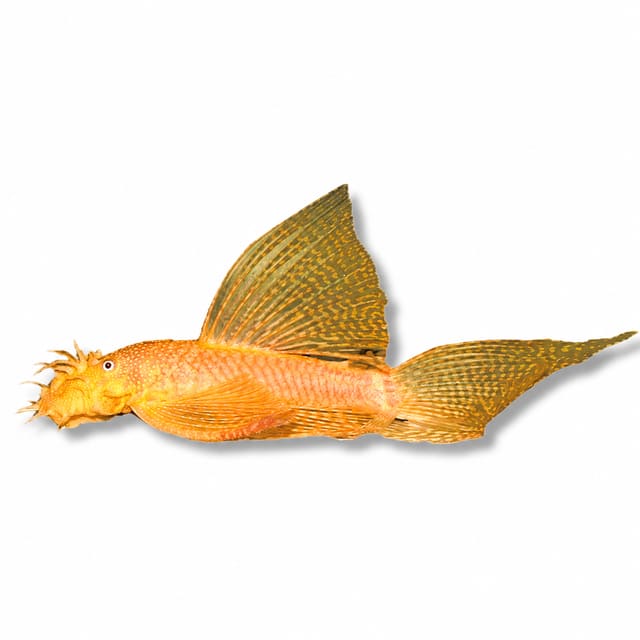
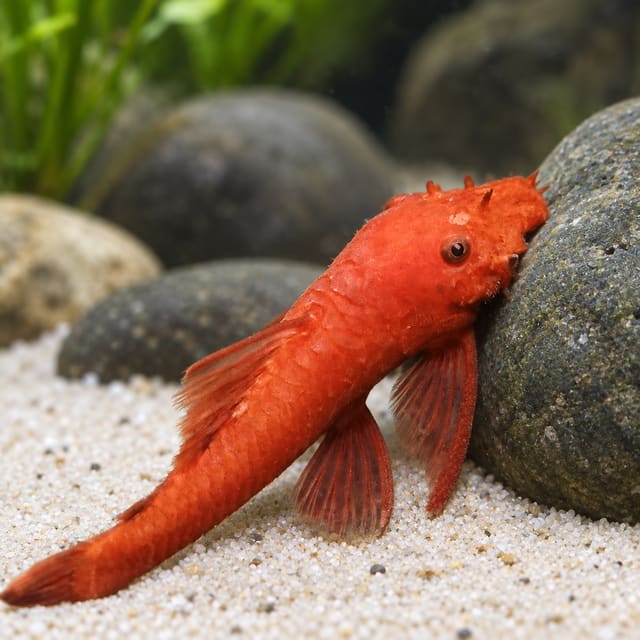
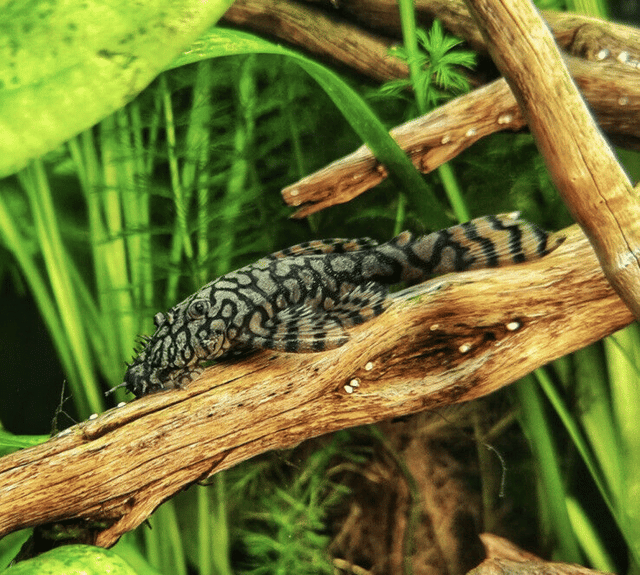
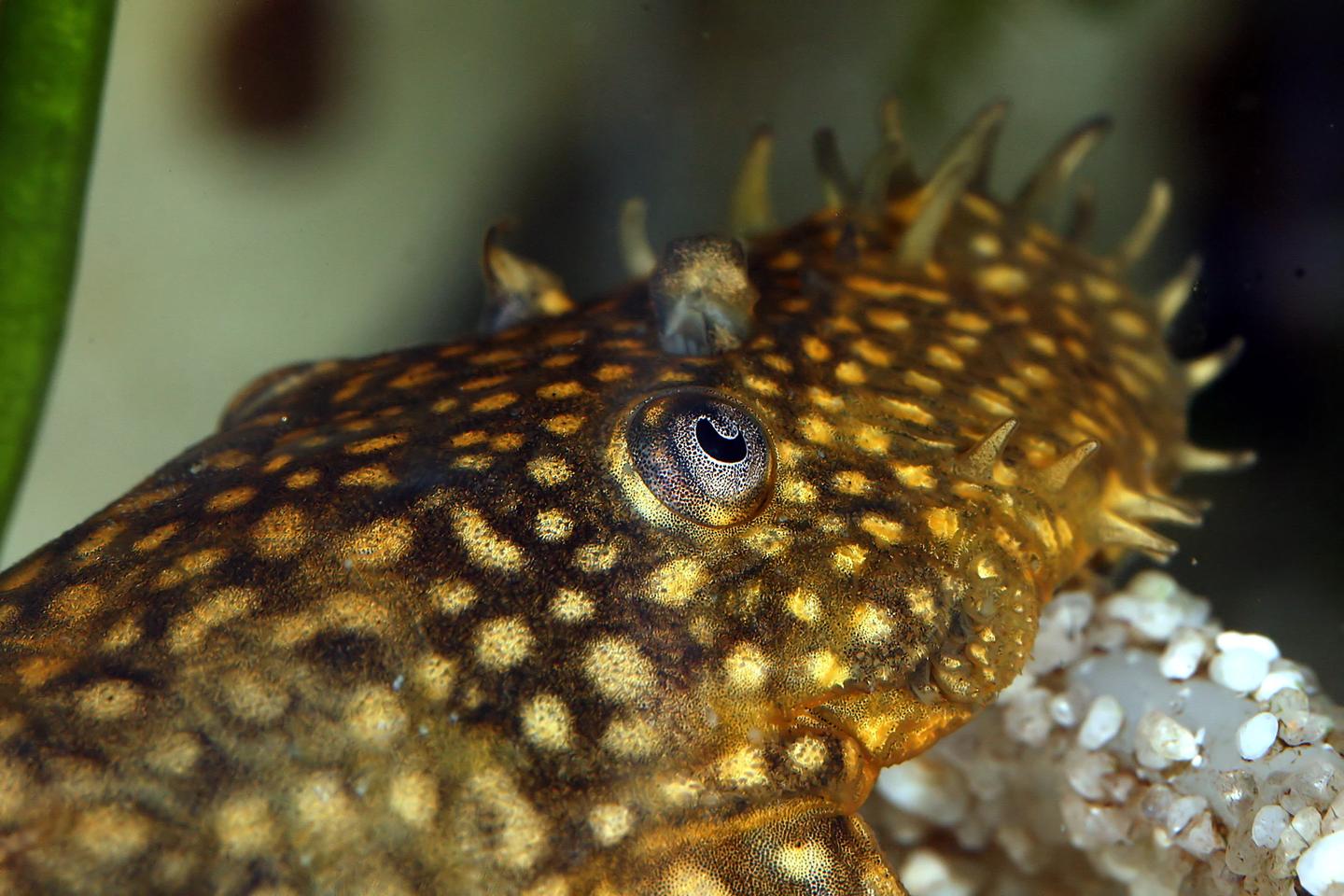
Some gallery images are representative, based on reference photographs of this kind of animal, and none shows the exact animal supplied, so colours can look slightly different from the live animal. The gallery illustrates the long-finned bristlenose appearance and aquarium scenes, while the offer remains one live fish in the selected dispatch size.
Choose an aquarium as large as practical and reserve enough usable space for the fish, filtration, cover and at least one piece of wood. The approximate 15 cm bristlenose benchmark is the useful planning figure for this genus-level offer. It is more informative for long-term preparation than any dispatch measurement.
This exercise does not turn the group benchmark into an exact final measurement. It shows whether a setup selected around a small fish still makes practical sense as that fish grows. Reassess the layout whenever wood, ornaments or additional livestock reduce the space originally reserved.
Do not use litres alone as the decision. OATA's advice is to buy as large an aquarium as reasonably possible because greater water volume improves environmental stability. The aquarium must also accommodate a working filter, gravel or sand, cover and wood. A nominally large tank that is crowded with unsuitable objects can still fail those practical tests.
A single fish is the simplest arrangement because it does not require a sex-ratio plan. A pair or small group needs enough shelter for every fish to use cover without all individuals depending on one position. For groups, apply OATA's recommendation of one male. Because sex is not promised by this offer, arrange a group only when its composition can be managed without assumptions based on appearance.
Keep the aquarium at 22–27°C and pH 6.0–8.0. Maintain ammonia at 0 mg per litre, nitrite at 0 mg per litre and nitrate at no more than 20 mg per litre. Test these values weekly so a change is found from a measurement rather than from guesswork.
Begin with an established biological filter. The RSPCA's aquarium guidance explains why: fish release toxic ammonia, filter bacteria convert it to toxic nitrite, and further bacteria convert nitrite to the safer nitrate. The filter must be properly set up and maintained for that process to protect the fish.
Use our first tropical aquarium guide to prepare and mature the setup before the fish arrives. Temperature and pH being in range do not compensate for detectable ammonia or nitrite. Confirm all five targets in the table below before adding the fish, then continue the same testing routine after introduction.
| Measurement | Routine target |
|---|---|
| Temperature | 22–27°C |
| pH | 6.0–8.0 |
| Ammonia | 0 mg per litre |
| Nitrite | 0 mg per litre |
| Nitrate | No more than 20 mg per litre |
Test general hardness in °dH as well and note it in your weekly log beside the other readings. Our water chemistry guide explains what the measurements mean, and the water matcher helps compare your tested aquarium values with the stated range.
If ammonia or nitrite appears, the aquarium has moved outside the care target. Check filter operation, feeding, stocking and maintenance immediately. A rising nitrate trend calls for the same review before it passes 20 mg per litre.
Provide plenty of cover and at least one piece of aquarium wood for grazing. OATA describes bristlenose catfish as secretive and says they thrive with both features. Make them part of the initial layout rather than optional additions after the fish has been introduced.
Arrange these elements so the fish can move between sheltered positions and its wood. Do not fill every open area simply to create a dense display; you still need access for observation, feeding and maintenance. Secure each item so routine care does not repeatedly dismantle the cover on which the fish depends.
A cave or crevice matters for more than shelter. OATA notes that males and females may breed in a community aquarium when suitable cave-like cover is present, and free-swimming fry may later appear. Treat that as a possible consequence of keeping a compatible pair rather than as a breeding plan. Anyone who does not intend to manage fry should include that possibility when deciding between one fish and a pair.
Stand back and check four visible requirements: the filter is operating, gravel or sand covers the base, shelter is present, and at least one wood-grazing surface remains accessible. If one element is missing, complete the setup before introduction instead of expecting the fish to compensate for it.
Offer a modest ration and adjust it according to what the fish consumes, while allowing extra grazing time for algal foods. Visible algae can contribute to grazing, but it does not form a complete feeding plan. Use prepared algae-based wafers or flakes and, ideally, fresh vegetables such as cucumber.
Wash vegetables thoroughly before putting them in the aquarium, or choose organic produce. Residual pesticides may harm fish or invertebrates. Prepare only a small portion, then remove food that remains uneaten and begins to break down. Decaying food releases waste and works against the zero-ammonia, zero-nitrite targets.
| Feeding decision | What to do |
|---|---|
| Little visible algae | Continue the prepared food and vegetable routine; do not wait for algae to grow. |
| Plenty of visible algae | Continue supplementary feeding because grazing alone is not a complete diet. |
| Food is consumed promptly | Keep observing who eats it and whether the bristlenose gains access. |
| Food remains and breaks down | Remove it and reduce the next portion. |
| Algae keeps increasing | Review water chemistry, maintenance and stocking instead of adding fish as the sole remedy. |
The portioning principle is simple, but the amount must reflect the aquarium and the fish. A portion suitable for a larger animal or a group may be excessive for one small dispatch-size fish. Begin with a modest amount that can be monitored, then adjust from what is consumed rather than following a fixed number of wafers.
When community fish share the aquarium, confirm that the prepared food reaches the bristlenose. The feeding plan has failed if every portion is taken before this fish can graze. Resolve food access when screening companions and selecting a feeding position.
This is not a substitute for aquarium cleaning. It grazes algae, but OATA says these grazers will all need their diet supplemented with prepared feeds such as algae-based wafers or flakes, ideally with fresh vegetables such as cucumber. Choose it because you want an Ancistrus catfish and can meet its needs, not simply because algae is visible.
Algae growth can be a useful grazing opportunity, but persistent algae may point to water chemistry or maintenance issues. Address the aquarium conditions themselves instead of increasing the number of algae-eating fish as a substitute for appropriate stocking and care.
Test the aquarium once a week and write down temperature, pH, ammonia, nitrite and nitrate. A short written log turns isolated readings into a trend. It shows whether nitrate is approaching 20 mg per litre, whether pH is drifting, or whether the biological filter is no longer holding ammonia and nitrite at zero.
Use the result to make one targeted decision. Detectable ammonia or nitrite requires immediate attention to filtration, waste, stocking and feeding. Nitrate approaching its ceiling calls for a maintenance review. Repeated uneaten food calls for smaller portions. Increasing algae calls for a water-chemistry and maintenance check rather than an assumption that another algae eater will solve it.
Keep stocking within the aquarium's capacity. OATA explicitly warns that algae-eating fish do not replace suitable stocking levels or regular maintenance. Adding livestock increases the biological load on the filter even when the new fish grazes algae.
Consistency is the goal. Larger aquariums keep temperature and water quality more stable, but they still need testing every week. Small changes noticed early are easier to address than a pattern discovered only after several weeks without measurements.
Arrange for someone to receive the parcel so live fish are not left unattended. The fish is hand-bagged in pure oxygen and packed in an insulated poly box, with a heat pack when weather conditions call for one. Tracking and the confirmed arrival date are sent by email so the journey can be followed.
These are the steps on our delivery and Live Arrival Guarantee policy. Follow the policy instructions on that page when making a claim.
Prepare the aquarium before opening the box. OATA's guidance gives 22–27°C and pH 6.0–8.0 for bristlenose catfish, with ammonia and nitrite at zero; the filter should already be operating, and the layout should already contain cover and wood. Acclimatisation is an introduction step; it cannot compensate for an unfinished aquarium.
After release, continue with the established feeding and weekly testing routines. Use measurements and observed access to cover, wood and food to judge whether the setup is functioning as intended.
Use a short sequence of checkpoints rather than making several aquarium changes at once. This fish belongs to a nocturnal genus, so daytime visibility alone is not a complete measure of settling. Concentrate on the requirements you can confirm: safe acclimatisation, suitable water, an operating filter, accessible cover, wood and food.
If a health change causes concern, test temperature, pH, ammonia, nitrite and nitrate straight away and correct any reading outside the targets above. Write down those readings with the stocking, the recent feeding and a clear description of the change so you can see what has altered.
Do not begin a disease treatment from appearance alone. First establish whether the aquarium is meeting the stated temperature, pH and nitrogen-waste targets, then follow product-specific treatment directions only after the problem and the treatment's suitability for the aquarium have been assessed.
Keep a Longfin Bristlenose Pleco alone, as a pair or in a small group. OATA supports all three arrangements and says it is usually best to have one male per group. The right choice therefore depends on how much space, cover and management capacity the aquarium offers.
| Arrangement | Planning decision |
|---|---|
| One fish | The simplest choice when sex ratio and possible breeding are not part of the plan. |
| A pair | Provide cover, wood and suitable cave-like shelter while recognising that a male and female may breed. |
| Small group | Reserve more shelter and plan around one male rather than assuming every combination will work. |
A single fish still needs the full habitat and maintenance routine. Solitary keeping does not reduce the need for a filter, wood, cover, supplementary food or weekly water testing. It simply removes the need to manage an internal group structure.
A pair may produce fry in a community aquarium when a suitable breeding cave or crevice is present. OATA notes that fry may become visible once free-swimming. Consider that possibility before choosing a pair, because adding a second fish is not merely a visual choice.
For a small group, do not assign sex from size, colour or gallery scenes. The offer carries no sex guarantee, and OATA's one-male recommendation makes guessed composition a poor basis for stocking. If your plan needs a particular sex ratio, keep a single fish instead of a group.
Order quantity and social arrangement are separate from dispatch size. Two small fish still form a two-fish social plan, while one XL fish remains a single-fish arrangement.
Community fit is conditional rather than universal. OATA places bristlenose catfish among algae grazers that can fit many community aquariums, but every proposed companion still needs to pass the same practical checks: overlapping water conditions, adequate space, appropriate stocking, access to food and enough cover.
Apply this screen to fish and invertebrates alike. The fact that two animals both graze algae does not establish compatibility, and adding several algae eaters does not replace maintenance. Compare the needs of each animal rather than assigning a universal community label.
For another bristlenose, return to the social rule first: one fish, a pair or a small group with one male. For a different animal, assess its own temperature, pH, space, feeding and social requirements against this aquarium. Proceed only when the complete combination works, not merely because each animal can be kept in freshwater.
Check that the filter continues to hold ammonia and nitrite at zero and nitrate at no more than 20 mg per litre. Confirm that this fish still reaches its prepared food and uses cover and wood. If the extra biological load or competition prevents either requirement, the community plan needs changing.
This screening method is more dependable than a fixed list of names because it tests the actual aquarium, stocking plan and measured water. Individual interactions can still vary, so observation remains part of every community decision.
OATA gives about 15 cm for bristlenose catfish, including their long-finned varieties. Because the exact species is unidentified, use that figure to reserve space rather than treating it as a fixed endpoint.
Choose an aquarium as large as practical and make room for a filter, gravel or sand, plenty of cover and at least one piece of wood. OATA links larger aquariums with more stable temperature and water quality.
OATA's bristlenose guidance allows one fish, a pair or a small group and recommends one male per group. Plan without assuming the sex of any fish from its size or appearance.
Choose it only if you can run an established filter, test the water weekly, keep OATA's bristlenose values of 22–27°C and pH 6.0–8.0, provide cover and wood, and feed it consistently. It is not a hands-off algae solution.
Feed prepared algae-based wafers or flakes and, ideally, thoroughly washed fresh vegetables such as cucumber. Offer a modest portion and adjust it from observed consumption, allowing extra time to graze algal food.
OATA's bristlenose guidance gives 22–27°C and pH 6.0–8.0, with ammonia and nitrite at 0 mg per litre and nitrate no higher than 20 mg per litre.
Keep one male per group, provide plenty of cover and watch how the fish share shelter and food. Community fit remains case by case, especially where animals compete for shelter or food.
Consider community animals only when their temperature and pH needs overlap, the aquarium has enough space and cover, and this fish can still reach its food. Apply the same screen to fish and invertebrates.
It is hand-bagged in pure oxygen, placed in an insulated poly box with a heat pack when weather calls for one, and carried by a licensed live-animal courier. Someone must receive the parcel; film every delivery continuously from the sealed parcel as it is opened, with the fish still inside the bag, then float the bag for 20–30 minutes and keep bag water out of the aquarium.
No reviews for this item yet. Bought one? Honest reviews only, good or bad.
What customers say about ordering from us
I have a small group of long finned mountain minnows. So was delighted to be able to order ten of this variety to increase the genetics in my tank . The ones I recieved are healthy but it’s to early to give a verdict on wether they are of a long finned type since they are small currently.
Gordon Walker · 23 Sept 2026
100% success travel and "installation". Pleased with quality of purchase. The Siamese fighter a bit "shy" so have not yet seen him at his best yet but looking good. Happy customer. GG
George E Garratt · 21 Sept 2026
Reviews of our shop, collected by Judge.me, an independent third-party review collector. Newest first.