
 By Tom Whitfield
Moderate
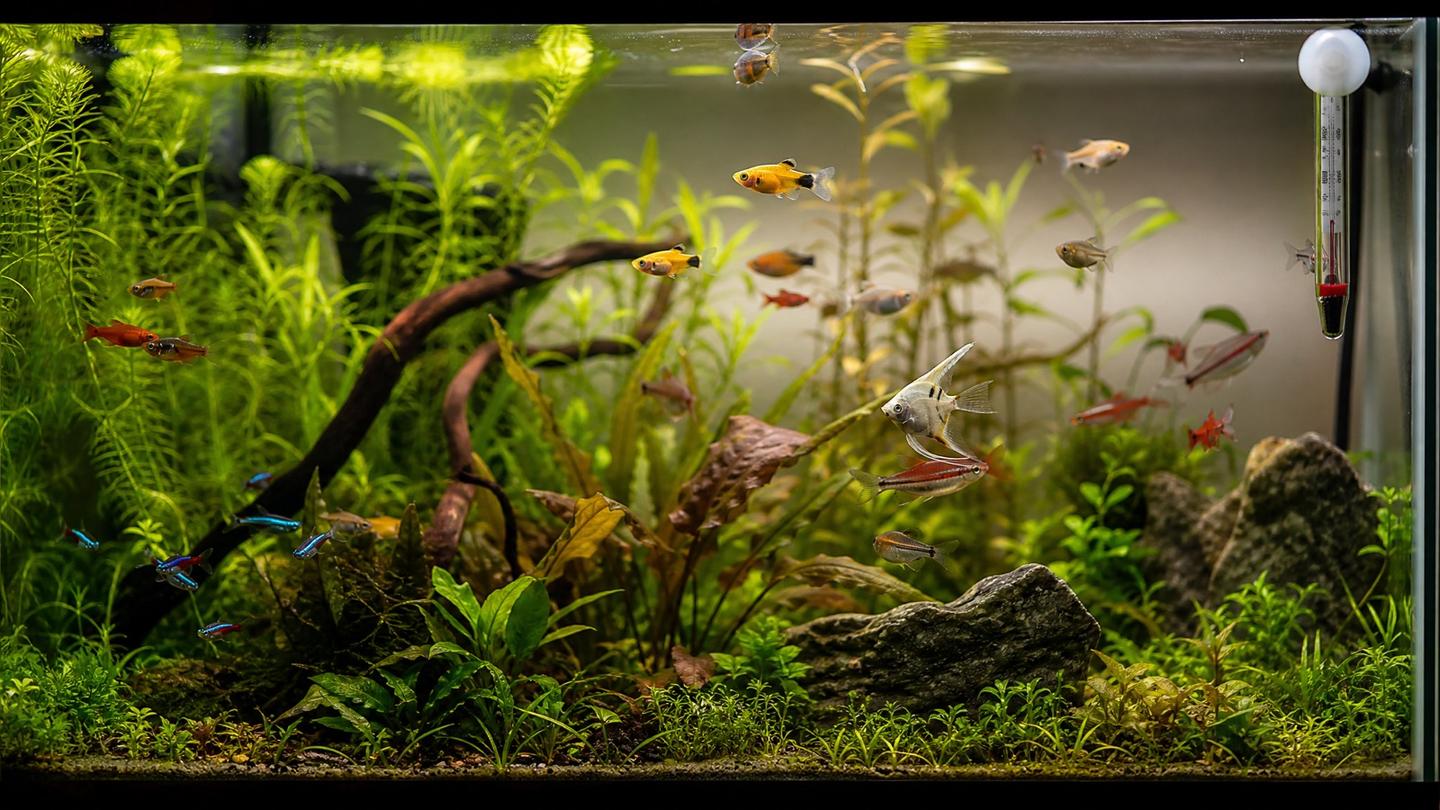
Neon Tetra (Paracheirodon innesi)
21–25°C · pH 5–7
£2.99
Community Tank Fish · Buying Guide
Most tropical fish want a steady 24–26 °C. Get the ideal range, heater sizing, a by-species table and UK heatwave fixes — then shop our live stock.
10 products in stock today
Live prices and stock. Every fish covered by our Live Arrival Guarantee.
21–25°C · pH 5–7

22–28°C · pH 7–8 · 41L
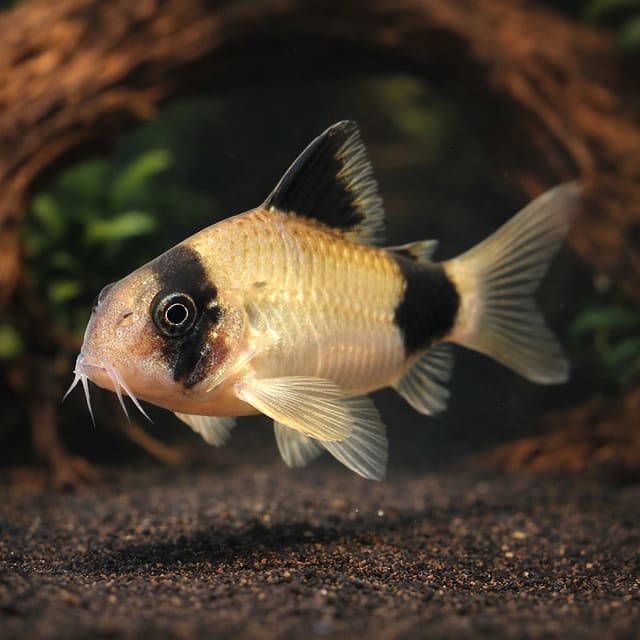
22–25°C · pH 6–7.4
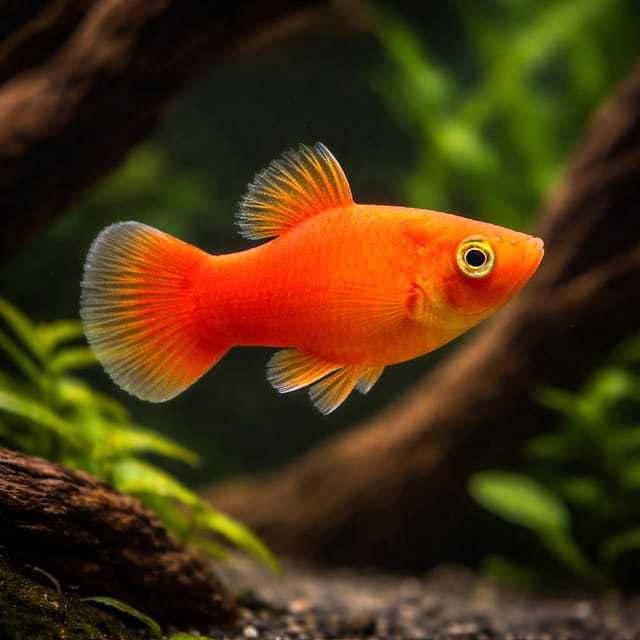
20–25°C · pH 7–8 · 54L
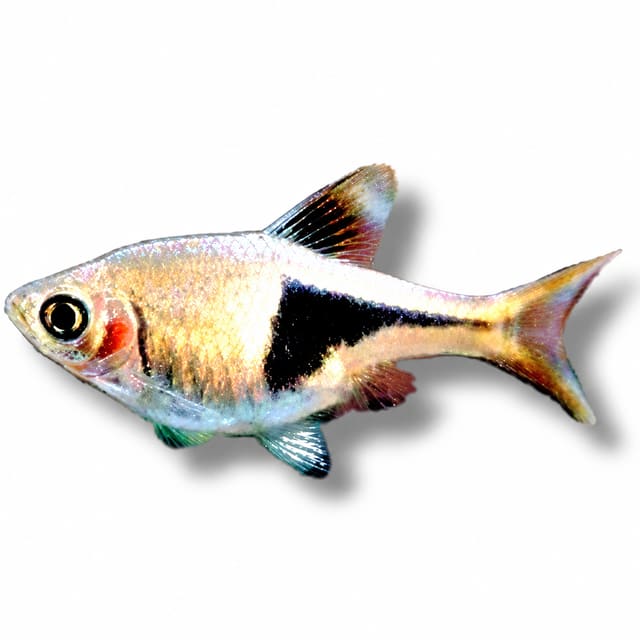
22–25°C · pH 5–7

17–27°C · pH 6.5–8
22–27°C · pH 6–8

22–27°C · pH 6–7.5
16–25°C · pH 6–8
22–27°C · pH 7–8 · 108L
Our trained assistant knows this tropical fish temperature page inside out. Ask it anything — water parameters, tank mates, how many to buy — or have it read the guide aloud while you set up your tank.
Ask a new fishkeeper what killed their first batch of fish and they'll usually blame the water — ammonia, a missed water change, "bad luck." Nine times out of ten, in my experience, the real culprit was temperature: water that sat too cold all winter, spiked in a summer heatwave, or swung four degrees every single day. None of those leave an obvious mark. The fish just slowly stop thriving.
I'm Tom Whitfield. I write our nano-tank and beginner guides, and the question I answer most often is some version of "what temperature should my tropical fish tank be?" The honest answer is short — 24–26 °C for almost any community tank, with 25 °C as the target — but the why behind it, and the kit you need to hold it steady in a draughty British house, is what this guide is really about.
This is the page I'd hand a customer who's just cycled their first tank and is about to choose a heater. It complements our dedicated betta fish temperature guide — bettas want it a touch warmer and are a special case, so they get their own page; this one is for the everyday community species most people start with.
A Panda Cory (Corydoras panda) — one of the cooler-leaning community fish, happiest at 20–25 °C. Bottom-dwellers feel temperature swings first because the substrate is the last place to warm up. Photo: Tropical Fish Co warehouse.
Here's where the "what temperature for tropical fish" question gets practical. Below are real temperature ranges for the community species we stock — taken straight from our own care data, not rounded off or invented. Set your tank where the ranges overlap and you can keep a mixed community in one tank with one heater.
| Species (as listed in our shop) | Ideal range | Notes |
|---|---|---|
| Neon Tetra (Paracheirodon innesi) | 20–26 °C | Wide tolerance; the classic mid-twenties community fish |
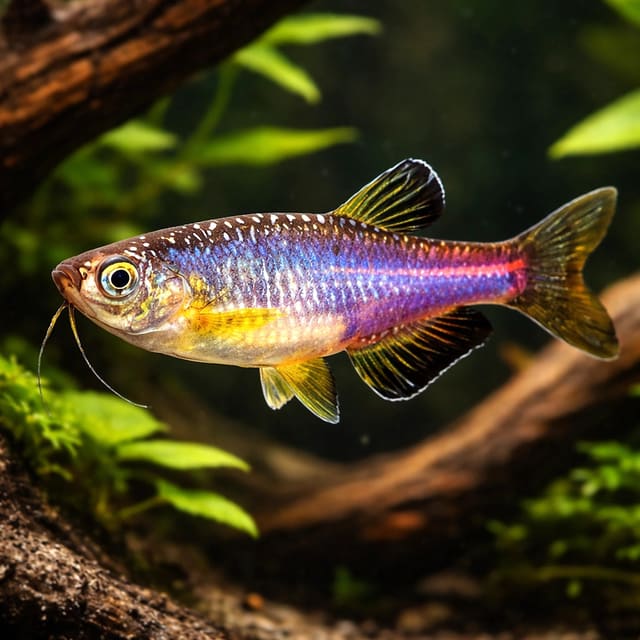
| Pearl Danio (Brachydanio albolineatus) | 20–26 °C | Active, hardy, fine at the cooler end of the band |
| Panda Cory (Corydoras panda) | 20–25 °C | Cooler-leaning bottom-dweller; avoid the high 20s |
| Assorted Platy (Xiphophorus maculatus) | 20–28 °C | Very adaptable livebearer; comfortable across the whole range |
| Female Guppy (Poecilia reticulata) | 22–28 °C | Loves a warm, steady tank; breeds readily at 25–26 °C |
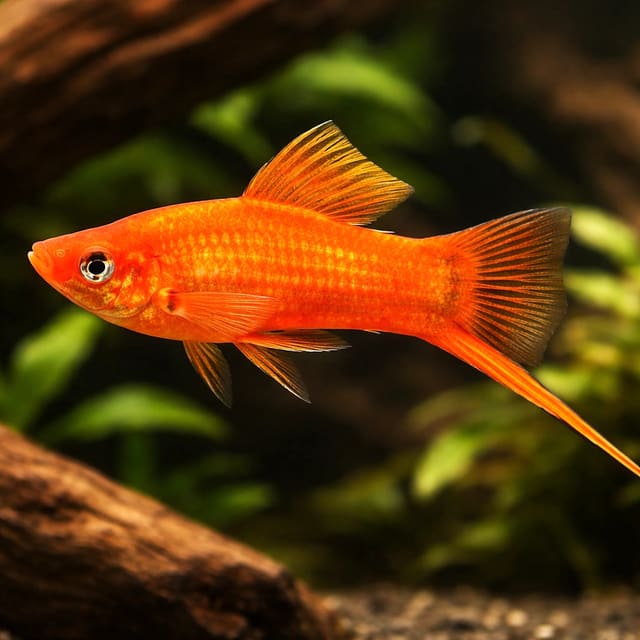
| Swordtail Red (Xiphophorus helleri) | 22–28 °C | Hardy livebearer; mid-twenties is ideal |
| Harlequin Rasbora (Rasbora heteromorpha) | 23–28 °C | Schooling fish; happiest at 25 °C+ |
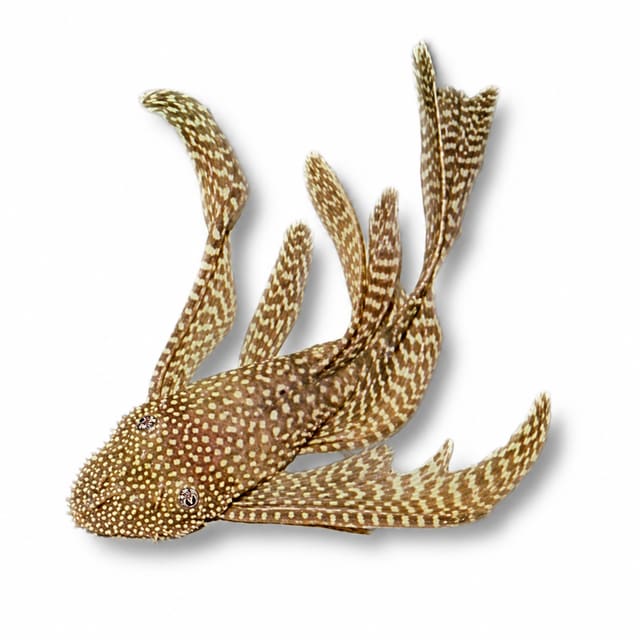
| Longfin Bristlenose (Ancistrus sp.) | 22–28 °C | Algae-eating catfish; tolerant but dislikes cold |
| Neocaridina Shrimp (Neocaridina davidi) | 18–28 °C | Widest tolerance of all — fine in unheated cool rooms |
| Female Dwarf Gourami (Colisa lalia) | 24–28 °C | Warm-leaning; keep it 24 °C or above |
| Angelfish (Pterophyllum scalare) | 24–28 °C | Warmest on this list; pair only with warm-loving tank mates |
The shared overlap for this whole list sits right around 24–25 °C — which is exactly why 25 °C is the safe default for a mixed community. The two species at the warm end (dwarf gourami and angelfish) set the floor; the cool-leaning panda cory sets the ceiling at the bottom of its range.
When you mix species, don't average their ranges — find the band where every species is comfortable. A panda cory (20–25 °C) and an angelfish (24–28 °C) only truly overlap at 24–25 °C. Set the tank there and both are happy; drift to 27 °C and the cory is at the very top of its tolerance.
Do you need a heater? In a UK home, for tropical fish, yes — nearly always. The RSPCA lists a thermostatic heater as standard kit for tropical species [6], and the arithmetic backs it up: an un-heated tank in an 18–21 °C British room sits several degrees below the tropical range year-round.
What size? The rule of thumb is roughly 1 to 1.5 watts per litre of water [4] [7]. Round up if the tank lives somewhere cold.
| Tank volume | Minimum heater | Recommended | Cold-room upgrade |
|---|---|---|---|
| 30 L | 25 W | 50 W | 75 W |
| 60 L | 50 W | 75 W | 100 W |
| 100 L | 100 W | 150 W | 200 W |
| 125 L | 150 W | 200 W | 250 W |
| 200 L | 200 W | 250 W | 300 W |
Recommended figures are deliberately a little generous. An oversized heater spends most of its time switched off and lasts for years; an undersized one runs flat-out all winter and burns out early.
Where to put it. Mount the heater in the flow — beside the filter outlet or near a circulation pump — so warmed water is carried around the tank instead of forming a hot pocket in one corner. In anything above 100 L, two smaller heaters on opposite sides give you more even heat and a built-in safety net: if one sticks off, the other keeps the tank from crashing.
The dial on a heater sets a target, not reality — and budget thermostats can read 2–3 °C off. Always run a separate thermometer and trust that. It's how you catch a stuck heater before it cooks or chills the tank, and it costs about £3.
Temperature problems come in two opposite flavours, and in Britain we get both within a single year — cold rooms and power cuts in winter, heatwaves in summer.
This is the more dangerous failure, because it accelerates. As the water warms, your fish's metabolism speeds up and demands more oxygen at exactly the moment the warmer water can dissolve less of it [2]. The result is fish at the surface, gasping, with fast-pumping gills.
Signs: surface gasping, rapid gill movement, faded colour over a day or two, restless darting, fish going off food when the tank peaks in the afternoon. The fastest first response is to turn the heater off, crack the lid and add surface agitation — Practical Fishkeeping's heatwave guidance walks through the full sequence [5].
Cold doesn't kill quickly; it weakens. Below the comfort range a fish's immune system drops, and the first visible result is usually white-spot (ich) — grains like scattered salt across the fins and body. Left in cold water, secondary fungal and bacterial infections follow.
Signs: resting on the bottom, clamped fins, no interest in food, and that tell-tale dusting of white spots.
Most countries worry about one extreme. We get both. A January power cut or a tank against a single-glazed window can drag the temperature to 18 °C; an August heatwave in a top-floor flat can push the same tank past 30 °C. A heater handles the cold end — but plan for the hot end too, because no heater cools a tank down.
Oxygen solubility falls as water heats. Water at 30 °C holds noticeably less dissolved oxygen than the same water at 25 °C — so "too hot" is really an oxygen problem as much as a heat one. That's why the first response to an overheating tank is always more surface agitation, not just cooling [4].
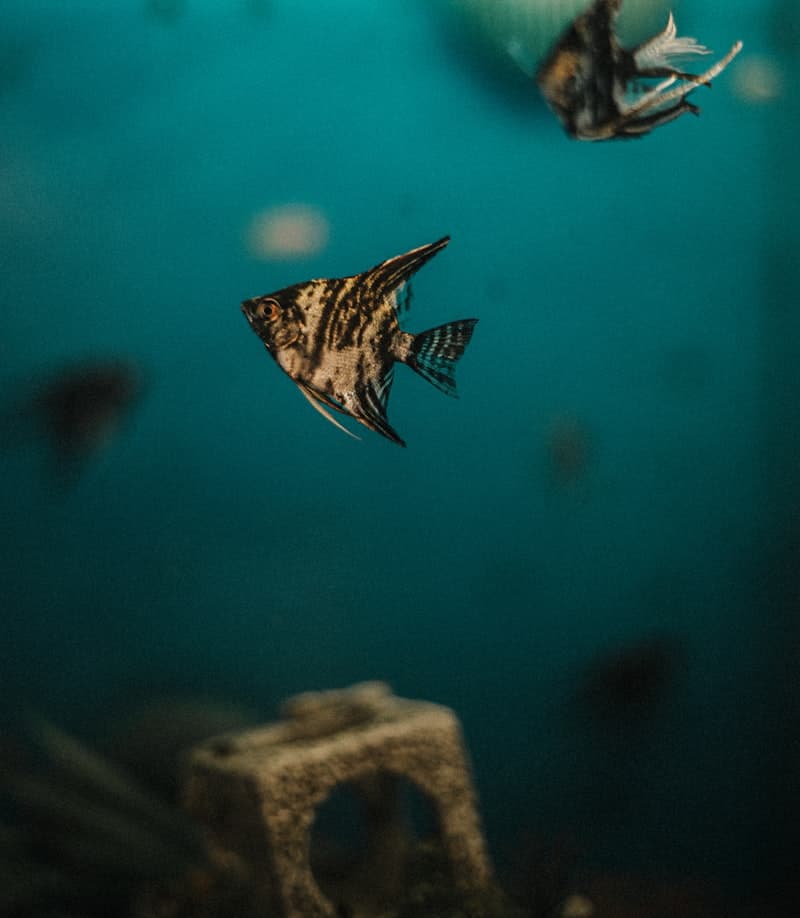
An Angel Fish (Pterophyllum scalare) — one of the warm-leaning species on our list, happiest at 24–28 °C. Angelfish set the floor for a community tank: keep them, and your minimum becomes 24 °C. Photo: Tropical Fish Co warehouse.
The biggest temperature shock a fish ever gets isn't the weather — it's the move into your tank. Bag water cools in transit, and tipping a chilled bag straight into a warm tank is a textbook cold-shock. The RSPCA's own advice is to bring replacement and new water close to tank temperature before it meets the fish [6]. Here's the protocol we give every customer:
Floating the bag for five minutes and tipping it in. Five minutes isn't enough to equalise temperature, and pouring in the bag water adds a cold slug and whatever was in the transport bag. Twenty minutes floating plus a proper drip is the difference between fish that settle overnight and fish that sulk on the bottom for a week.
Dwarf gourami, angelfish and black molly all sit at the warm end (24–28 °C). If these are on your stocking list, set the tank at 25–26 °C and pair them only with other warm-tolerant species.
For the full picture on starting out, our first tropical tank care guide walks through cycling, kit and stocking, and the water chemistry care guide explains how temperature ties into pH, hardness and the nitrogen cycle. Keeping a betta? They're the one species that wants it warmer — see the betta fish care guide.
Still choosing your fish? The best beginner tropical fish guide shortlists the hardiest, most forgiving species, and the dedicated betta fish temperature guide covers that special case in full.
Ready to stock the tank? Browse the community tank fish hub for species that share a temperature comfortably, or the tropical fish for sale hub for the full live range — every listing shows its temperature range so you can build a community that all wants the same water.
Visual route into the rest of our UK live-fish range.
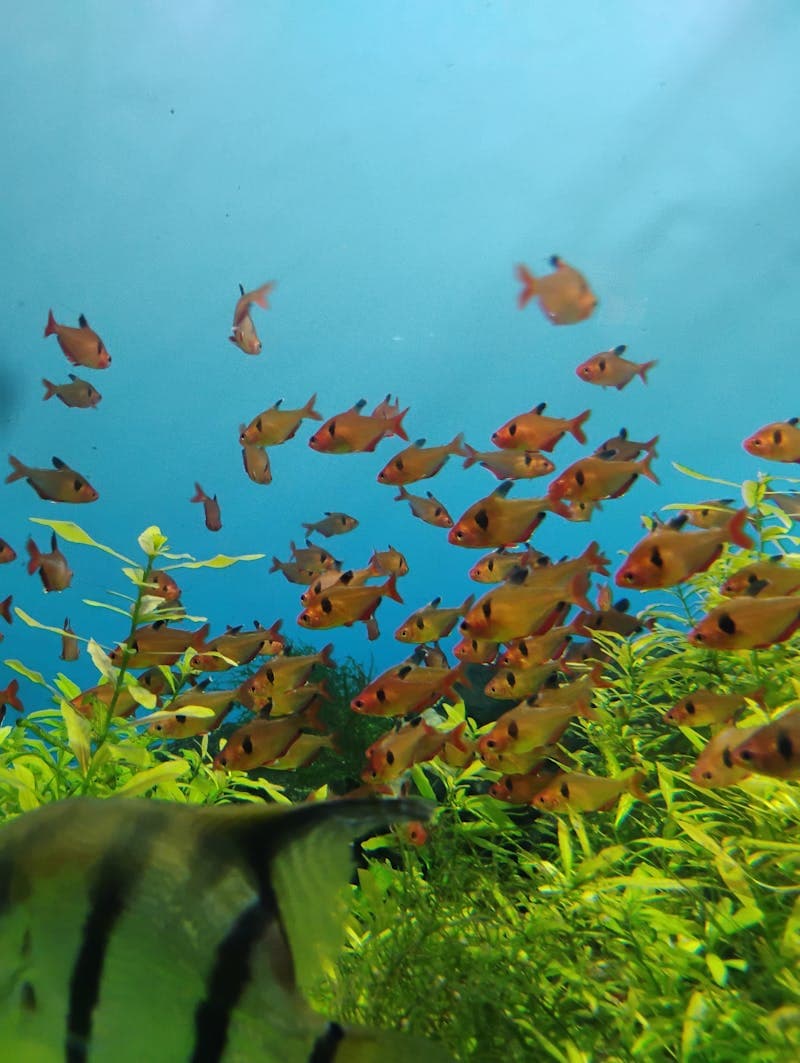
Peaceful tetras, rasboras, corydoras, platies and gouramis chosen to live together — temperament, adult size and water range per listing so the mix works.
Tropical fish for sale UK — tetras, cichlids, bettas, guppies and corydoras. Specialist delivery backed by our Live Arrival Guarantee.
Material factual claims cite the sources below; store policy and cautious inference are labelled in the article. Sources are grouped by type so you can judge their weight at a glance.
Peer-reviewed evidence that aerobic scope and survival in tropical fish fall as water warms toward the upper thermal limit.
Lists the species as tropical, 20–26 °C — used as the anchor for the community-tropical range.
Independent hobbyist cross-check on maintenance temperature (21–25 °C).
UK hobbyist source for the tropical range, the watt-per-litre heater rule, and oxygen at higher temperatures.
UK-specific summer overheating remedies referenced in the heatwave section.
Referenced in the heater-sizing section for the watts-per-volume rule of thumb.
UK welfare authority: heaters must be thermostat-controlled, warm replacement water before adding, check temperature daily.
Fishkeeping moves fast and we want every guide spot-on. If you think something here is wrong, out of date, or could be clearer, tell us — our team reads every message and updates the page.
Suggest an editPeaceful tetras, rasboras, corydoras, platies and gouramis chosen to live together — temperament, adult size and water range per listing so the mix works.
Tropical fish for sale UK — tetras, cichlids, bettas, guppies and corydoras. Specialist delivery backed by our Live Arrival Guarantee.
Set up a tropical fish tank in 10 evidence-led steps: choose the tank, install filter and heater, cycle safely, test the water and add fish carefully.
Learn which freshwater aquarium water parameters to test, how to read ammonia, nitrite, nitrate, pH, GH and KH, and when a result needs action.
Betta fish care for UK homes: plan a 20-litre heated, filtered, furnished tank. Check water, feeding and Siamese fighting fish welfare before buying.
Nano-Tank & Beginner Specialist · 6+ years in the hobby
Tom runs a YouTube channel on nano-aquariums (12.3k subscribers) from his one-bedroom Edinburgh flat, where he keeps eight tanks between 10 L and 60 L. He writes every beginner guide on Tropical Fish Co — on the theory that someone six years into the hobby remembers what's confusing, where a twenty-year veteran has long since forgotten.
