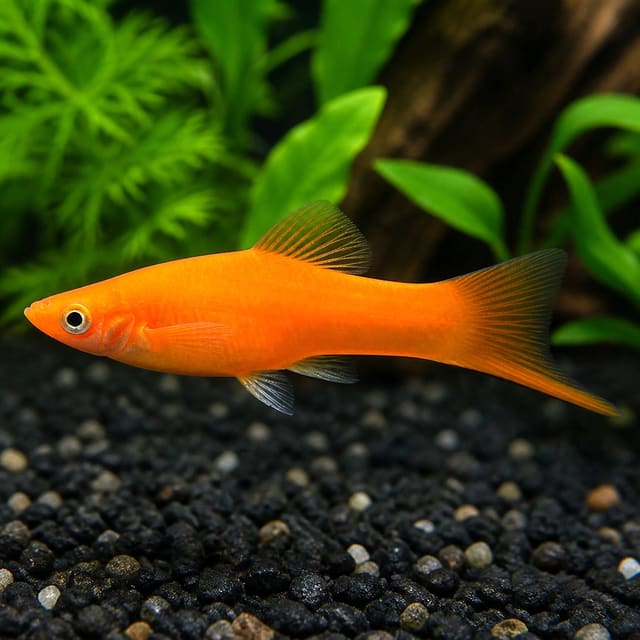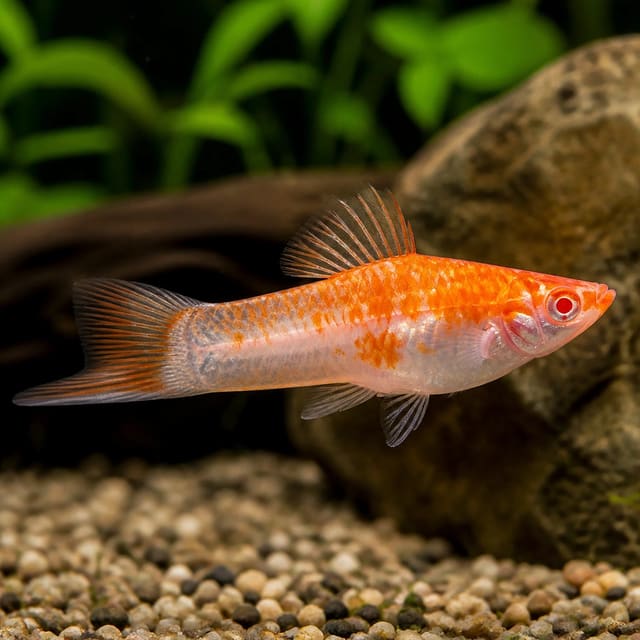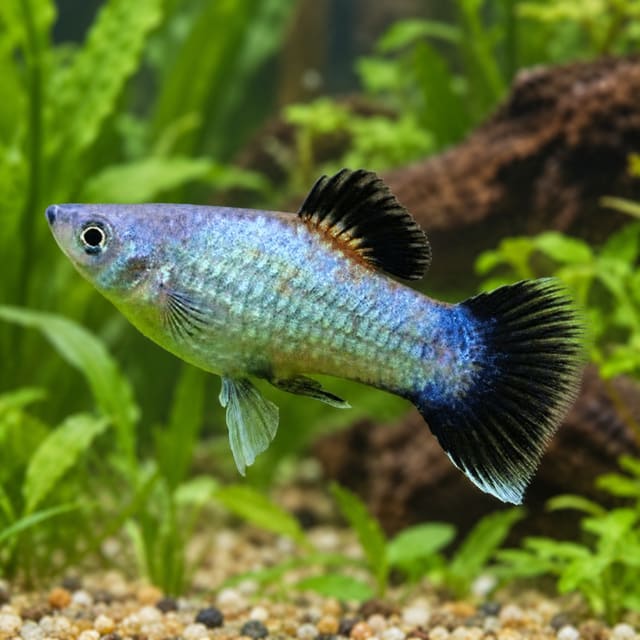
Easy
Blue Wagtail Platy (Xiphophorus maculatus)
20–26°C · pH 7–8.2 · 54L
£5.99

The Assorted Platy (Xiphophorus maculatus) is a peaceful poeciliid from Veracruz, Mexico, to northern Belize that reaches 5 cm total length. It suits prepared beginners; OATA’s group guidance suggests at least three, and the FishBase and Seriously Fish overlap is 20–25°C, pH 7.0–8.0 and 10–19 dGH. Sold individually in 1–2 cm, 2–2.5 cm, 3–4 cm, 5–6 cm and XL dispatch grades.
Adult size is the maximum length this species reaches at full maturity (scientific sources). The livestock you receive will be younger and smaller — pick a size above for the actual shipping size. Product-photo provenance and any image-specific limitations are stated on the listing.
Xiphophorus maculatus
Save when buying multiple fish. Each quantity is one fish; sex and pair formation are not guaranteed unless the selected variant explicitly states them.
Minimum of 2 per order.
The Assorted Platy (Xiphophorus maculatus) is a peaceful poeciliid from Veracruz, Mexico, to northern Belize that reaches 5 cm total length. It suits prepared beginners; OATA’s group guidance suggests at least three, and the FishBase and Seriously Fish overlap is 20–25°C, pH 7.0–8.0 and 10–19 dGH. Sold individually in 1–2 cm, 2–2.5 cm, 3–4 cm, 5–6 cm and XL dispatch grades.
Adult size is the maximum length this species reaches at full maturity (scientific sources). The livestock you receive will be younger and smaller — pick a size above for the actual shipping size. Product-photo provenance and any image-specific limitations are stated on the listing.
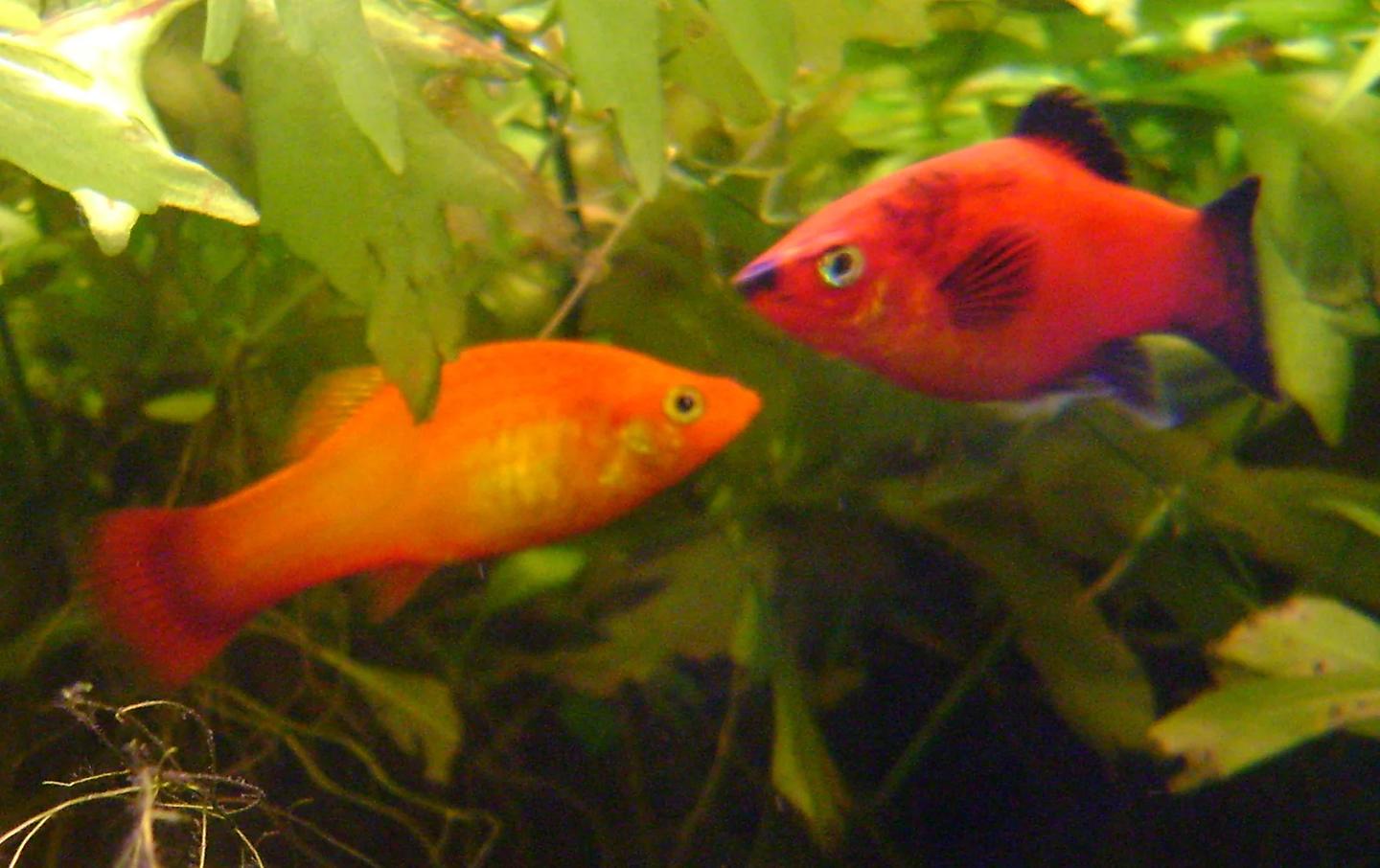
Platy is a trade name used for Xiphophorus maculatus, X. variatus and domestic forms. Start with at least three in a mature aquarium of at least 45 litres, verify the exact fish and measured water, and plan extra capacity before mixing sexes.
Maintain these water conditions for optimal health and vibrant colors
The Assorted Platy (Xiphophorus maculatus) is a small, peaceful freshwater fish in the Poeciliidae family. It is native from the Veracruz area of Mexico towards northern Belize, where adults occur in warm springs, canals, ditches, creeks and swamps. FishBase records a maximum length of 4 cm total length for male or unsexed fish. This compact adult size, peaceful temperament and readiness to accept aquarium foods make it suitable for a prepared beginner with a mature, filtered aquarium.
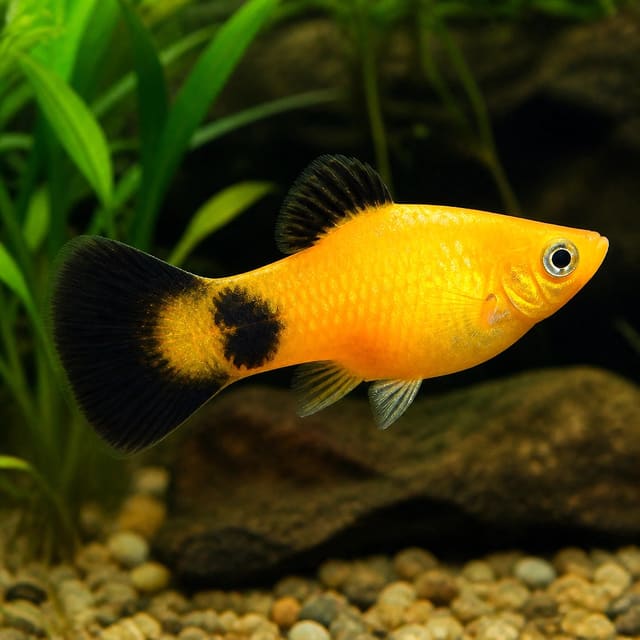
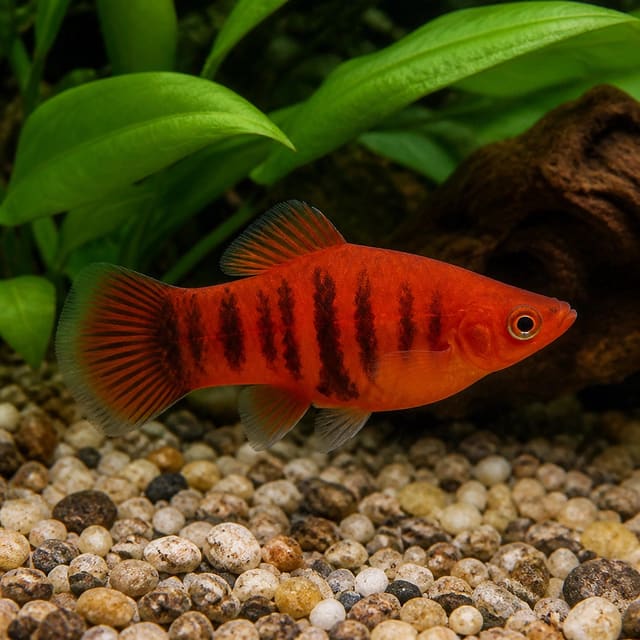
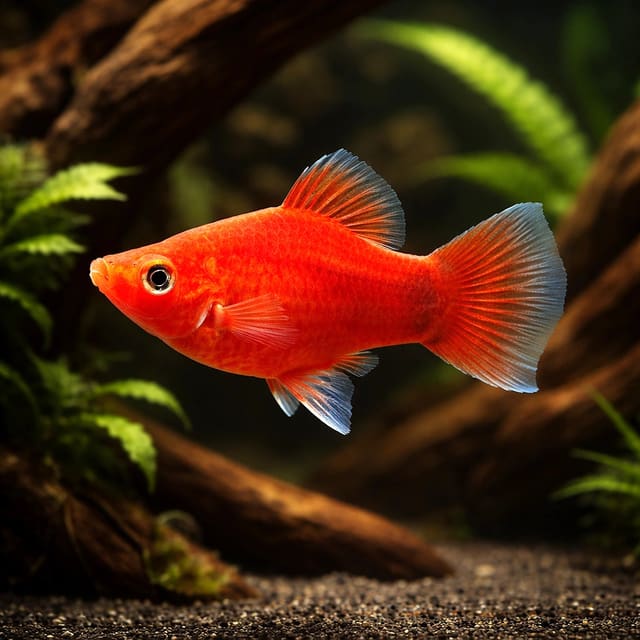
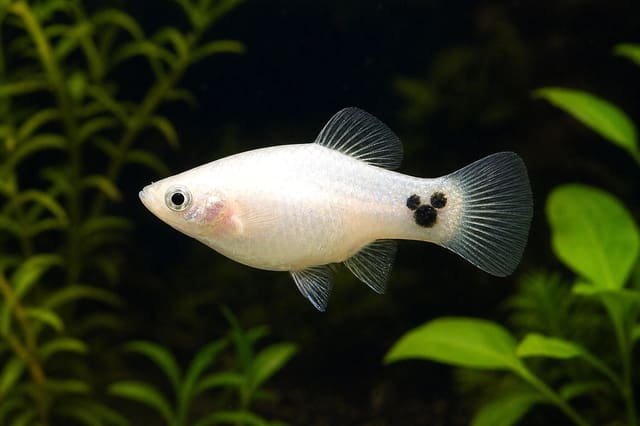
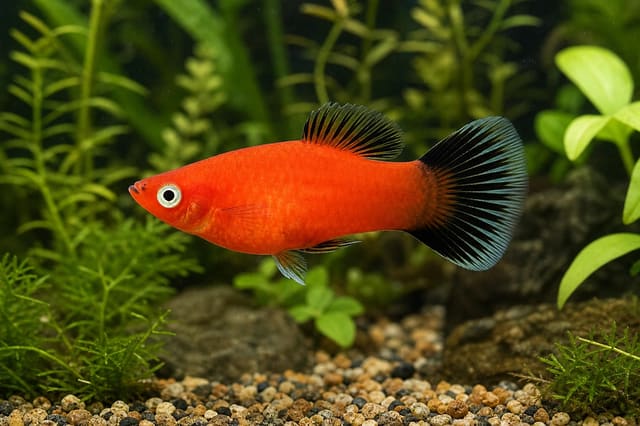
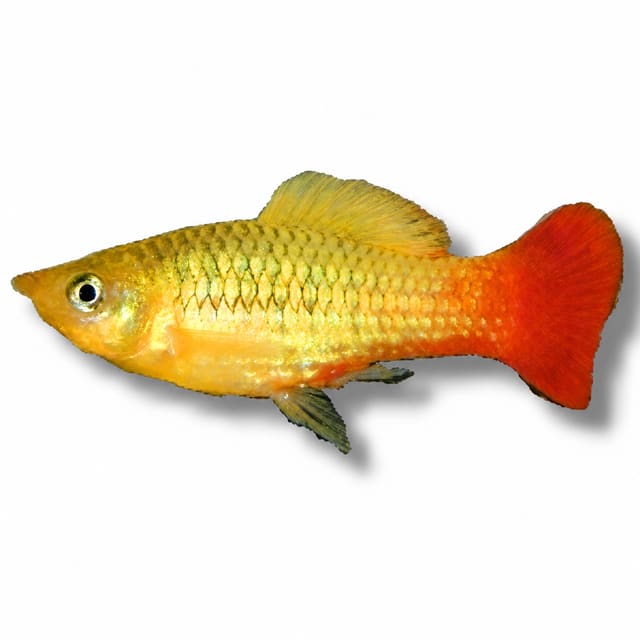
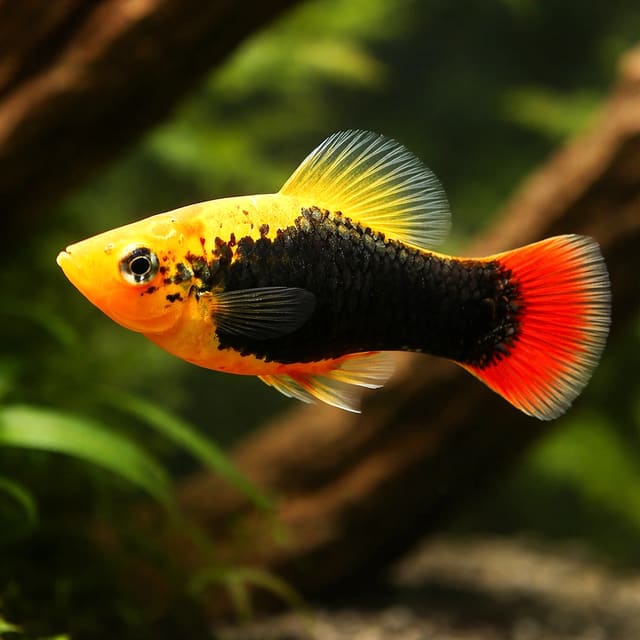
Wild fish inhabit areas that commonly have slow-moving water, silt and weedy banks. In an aquarium, a planted layout reflects the cover associated with those habitats while leaving open space for swimming. Assorted ornamental fish may show different colours and patterns, but every fish on this page remains the same listed species rather than a guaranteed named colour strain.
Several aquarium colour varieties are associated with this species. “Assorted” means the purchase is based on species and dispatch grade, not a promise of a particular ornamental pattern.
One purchase supplies one Assorted Platy in the grade chosen on the live size selector. Use the selector to choose 1–2 cm, 2–2.5 cm, 3–4 cm, 5–6 cm or XL, then set the purchase quantity to the number of fish required. XL is a relative grade without a centimetre band.
The size you select is the size supplied, not the adult size. A centimetre grade describes the fish at dispatch and is not a prediction of its eventual sex, body depth or mature appearance. One purchase remains one fish even when a gallery scene shows two animals.
| Choice | What it means |
|---|---|
| 1–2 cm | One fish measured within this dispatch band |
| 2–2.5 cm | One fish measured within this dispatch band |
| 3–4 cm | One fish measured within this dispatch band |
| 5–6 cm | One fish measured within this dispatch band |
| XL | One fish in the relative XL grade |
Sex is guaranteed only when the selected option explicitly states male or female. This Assorted Platy listing has no sex-guaranteed option.
Some gallery images have been digitally enhanced to improve image quality. They show the listed type of animal rather than guaranteeing the exact markings of the individual supplied, so natural colour and pattern can vary.
The assortment does not promise a named colour strain or a particular mix of colours within a multi-fish purchase. If appearance is the main decision, browse the platy fish collection for separately identified forms.
Choose an Assorted Platy for a mature, filtered freshwater aquarium with moderately hard or harder water. Seriously Fish describes the species as very peaceful and suitable for most community settings, while also warning that it will not thrive in soft, acidic water.
Plan a 60 × 30 cm base holding about 54 litres. Keep the aquarium at 20–25°C, pH 7.0–8.0 and 10–19 dGH; these routine values are the overlap of the FishBase species environment range and the Seriously Fish aquarium range. OATA’s platy and swordtail guidance suggests at least three platies, with two females per male when a mixed-sex group is planned.
| Suits | Not suited to |
|---|---|
| A mature aquarium with a working biological filter | An unfiltered bowl or newly filled aquarium |
| Moderately hard or harder water above neutral pH | Soft, acidic water |
| A planned social group with adequate space | A purchase made without considering group composition |
| Planted cover with open swimming room | A layout with no cover from persistent courtship |
| A keeper ready to manage possible fry | A mixed-sex plan with no capacity for young fish |
The store care assessment is easy because the fish accepts varied foods and has a peaceful disposition. That rating assumes the aquarium has already been matured, the water matches the required range and routine testing and maintenance continue.
Use a 60 × 30 cm aquarium base holding about 54 litres as the species planning reference. This footprint gives a group horizontal swimming room and allows planted cover to be separated from open areas. More fish or an established community require more space because the same volume must support the waste, social needs and swimming room of every animal.
Platies appreciate a planted aquarium. Arrange live plants so fish can move behind cover when they need relief from attention, but retain clear swimming space. OATA also permits aquarium gravel or sand and recommends plants, suitable ornaments or model caves for shelter when live planting is not used.
A worked layout for a 60 × 30 cm base might place cover towards the rear and ends while keeping the centre open. The purpose is not to reproduce every detail of a wild ditch or spring. It is to give the fish usable shelter without removing its swimming area.
Seriously Fish gives a turnover of four to five times the aquarium volume each hour. For about 54 litres, that works out at roughly 215–270 litres per hour. Check the filter’s rated flow against its condition and the aquarium’s total stock rather than assuming the printed figure remains unchanged after media collects debris.
The same profile uses roughly 50 W of heating for a 54-litre aquarium in a room around 20°C. Heater choice still depends on aquarium volume and room conditions, while a thermometer confirms the result. Equipment ratings are planning aids; the measured water temperature is the value that matters to the fish.
Do not treat 54 litres as an automatic stocking allowance. A tank of that size already occupied by other fish may not have room for a responsible platy group. Count the adult needs of the existing community before adding another species.
Keep the aquarium at 20–25°C, pH 7.0–8.0 and 10–19 dGH. This is the overlap between FishBase’s species environment values of 18–25°C, pH 7.0–8.0 and 9–19 dH and Seriously Fish’s aquarium range of 20–26°C, pH 7.0–8.2 and 10–30 dGH. Using the overlap keeps every routine value inside both ranges.
Moderately hard or harder water matters because Seriously Fish warns that Xiphophorus maculatus will not thrive in soft, acidic conditions. Test the aquarium itself rather than judging hardness from appearance or assuming that every local water supply is alike.
| Measurement | Routine instruction |
|---|---|
| Temperature | Keep between 20°C and 25°C |
| pH | Keep between 7.0 and 8.0 |
| General hardness | Keep between 10 and 19 dGH |
| Ammonia | Maintain at 0 mg/l |
| Nitrite | Maintain at 0 mg/l |
| Nitrate | OATA advises no more than 20 mg/l above the normal tap-water level |
Read the water chemistry guide if GH, KH and pH are unfamiliar. GH describes dissolved minerals, while pH describes acidity or alkalinity; one value cannot stand in for the other. Use the water matcher to compare measured aquarium values with the routine range.
If the aquarium is soft and acidic, do not rely on a sudden correction immediately before introducing a platy. Establish suitable, stable conditions first and confirm them with another test. If a result changes unexpectedly, test again and examine the water source, recent maintenance and anything newly added to the aquarium.
Run a mature biological filter continuously. The RSPCA explains that fish release toxic ammonia and that filter bacteria convert it first to nitrite and then to the safer nitrate. A clear aquarium can still contain ammonia or nitrite, so testing is essential.
Prepare and mature the system before livestock arrives. Our first tropical tank guide explains the setup sequence and the role of the biological filter. OATA advises confirming that ammonia and nitrite are zero before adding fish and increasing the population slowly so the bacterial colony can respond to extra waste and feeding.
Change 25% of the aquarium water at least once every week. Larger or additional changes should be a response to measured water quality and the needs of the complete aquarium, not a substitute for suitable stocking and feeding.
If the filter needs cleaning, do not rinse it under the tap. Lightly rinse reusable media in aquarium water removed during the partial water change. This preserves more of the bacterial population that processes waste.
Test promptly when fish hang at the surface, sit on the bottom, swim erratically, breathe unusually or lose interest in food. Water results help distinguish a system-wide quality problem from an issue affecting one fish.
Feed a quality flake or small granule with a high algae content as the regular aquarium food, then add suitably small live or frozen foods for variety. FishBase records worms, crustaceans, insects and plant matter in the wild diet, while OATA gives the portion and frequency guidance for aquarium feeding.
| Food role | Suitable choice |
|---|---|
| Regular food | Quality flake or granule with a high algae content |
| Live or frozen variety | Small daphnia, bloodworm or tubifex |
| Portion | Only what the fish finish within a few minutes |
| Frequency | Once a day |
Choose food particles that the fish can take cleanly. A small dispatch-grade fish needs a smaller particle than a larger individual, but the daily portion remains limited by what the fish finish within a few minutes. Break flakes or select smaller granules when food is repeatedly too large to swallow.
Watch the whole group during feeding. A portion is appropriate when fish feed readily and the food is consumed within the stated time. If food remains after several minutes, remove the excess and reduce the next portion. Uneaten food breaks down and releases waste, increasing the load on the biological filter.
Live or frozen foods add variety; they do not sit on top of a full extra daily ration. When one of these foods is offered, count it as part of that day’s feeding. This keeps the total amount within the few-minute rule.
Reduced feeding interest can be an early sign that something has changed. Test ammonia and nitrite, check temperature and observe breathing, swimming and social pressure before increasing the portion. More food cannot correct unsuitable water and may make water quality worse.
OATA suggests keeping at least three platies because they require companionship. When males and females are kept together, its group guidance uses two females per male to reduce stress on females and other inhabitants. More fish can be kept in that ratio when the aquarium has enough space and filtration.
| Known group | OATA ratio |
|---|---|
| Three fish | One male with two females |
| Six fish | Two males with four females |
These examples apply when the sexes are known; they do not change the terms of this assorted offer. If a purchase produces a different group composition, assess behaviour, available cover and the aquarium’s capacity rather than assuming the planned ratio has been achieved.
Seriously Fish describes the species as very peaceful and notes that even males tolerate one another. It also warns that male attention towards females can be relentless. More females spread that attention, while dense planting gives fish places to move out of direct view.
Platies are livebearers and can reproduce readily in a community aquarium. Seriously Fish says batches of fry may be continual when males and females live together. Before assembling a mixed-sex group, decide whether the aquarium has space for additional fish and how future stocking will remain within the filter’s capacity.
Dense planting can help young fish find cover, but each surviving fish adds to the aquarium’s waste and space requirements. Increase livestock numbers slowly and continue checking ammonia and nitrite as the population changes.
Group size, ratio and aquarium volume are connected decisions. Adding companions to reach the suggested group number is not responsible if the existing community already fills the aquarium’s practical capacity.
Use 4 cm total length as the adult-size figure for this Assorted Platy. FishBase records 4 cm total length for male or unsexed Xiphophorus maculatus. Seriously Fish presents 5 cm standard length, a measurement that excludes the tail fin, while OATA gives a broader 6–8 cm planning range for platies as a group. These differently defined figures should not be treated as interchangeable measurements.
The centimetre label chosen at purchase describes dispatch size only. A fish in a smaller grade has growing to do, while a larger grade may already be close to the planning figure. XL remains a relative grade, so do not assign it a centimetre measurement.
OATA describes healthy fish as having clear, bright eyes, undamaged fins, intact scales and no ulcerations or bumps. Individual colour varies in an assortment, so learn the normal appearance and behaviour of each fish and respond to changes.
| Change to notice | First action |
|---|---|
| Hanging at the surface or sitting on the bottom | Test water quality and check temperature |
| Erratic swimming | Check ammonia, nitrite and recent aquarium changes |
| Faster or slower gill movement | Test water and examine the filter’s operation |
| Darker or paler colour | Compare behaviour, feeding and water results |
| White spots, fluffy growths or lost scales | Seek fish-health guidance before choosing a treatment |
| Reduced food intake | Test water and observe competition at feeding |
Do not combine treatments blindly. Record the signs, affected fish and water-test results so the next decision responds to what is actually happening.
Prepare the aquarium before the fish travels. Confirm that ammonia and nitrite are zero, the filter is working and the temperature, pH and hardness are within the planned range. Complete these aquarium checks before receiving the parcel.
Tropical Fish Co hand-bags fish in pure oxygen and uses an insulated poly box, with a heat pack when the weather calls for it. Someone must be at the address to receive the parcel because live fish cannot be left unattended.
The unboxing video should run from the sealed parcel through opening and inspection. Keep the order number with the recording. If anything has gone wrong, contact us the same day with the order number and video so the concern can be handled under the current Live Arrival Guarantee terms.
Read the full delivery and Live Arrival Guarantee policy before the delivery date. It sets out the receiving and claim conditions that apply to the order.
Observe swimming, balance and breathing, then continue the established feeding and maintenance routine. Adding fish increases the waste that the biological filter must process, so keep checking that ammonia and nitrite remain at zero as the bacterial population adjusts.
Assorted Platies can live with most peaceful community fish that share their water requirements. Seriously Fish describes Xiphophorus maculatus as very peaceful and notes that it lacks the aggression associated with some swordtails and mollies. That description is broad rather than a universal tank-mate guarantee.
Compare each proposed species against 20–25°C, pH 7.0–8.0 and 10–19 dGH. Avoid combinations in which another fish requires soft, acidic water because the platy will not thrive under those conditions. The aquarium must also have room for the responsible social group of every species.
| Check | Decision |
|---|---|
| Temperature | Both species remain within their routine range at the same setting |
| pH | Both species suit pH 7.0–8.0 |
| Hardness | Both species suit 10–19 dGH |
| Temperament | The proposed fish is peaceful enough for a community setting |
| Space | The aquarium can hold each species at its responsible group size |
| Reproduction | The stocking plan can absorb or manage possible platy fry |
“Community fish” describes temperament in general terms; it does not guarantee matching water. Check the exact species rather than selecting companions from a broad family or shop category alone.
Invertebrate compatibility needs the same exact-species assessment because no general promise covers every shrimp, snail or other animal. Ask us for a stocking and compatibility assessment when the planned combination remains unclear.
Mixed-sex platy groups need a deliberate ratio because male attention can be relentless. OATA suggests two females per male, and Seriously Fish likewise recommends more females to spread male attention. Dense planting can help by breaking direct sight lines and giving fish a route away from pursuit.
Do not solve social pressure by adding more fish automatically. Reaching a preferred ratio may increase crowding if the aquarium is already full. Space, filtration and the needs of existing species must be checked before the group expands.
Male platies are described as tolerant of one another, but that does not remove the need to observe a real group. Aquarium footprint, cover and total stocking determine how readily fish can move apart.
A combination that begins peacefully still needs routine observation as fish grow and the group changes. Watch whether every fish swims normally, reaches food and has access to cover. Pair those observations with the weekly water tests so behavioural changes are not separated from water quality.
If the sexes become known, compare the group with the suggested two-females-per-male structure. If they remain uncertain, manage the behaviour in front of you and retain capacity for possible young.
An Assorted Platy reaches 4 cm total length according to FishBase, which is the adult-size figure used for aquarium planning here.
Plan a 60 × 30 cm base holding about 54 litres, the aquarium size given for Xiphophorus maculatus by Seriously Fish; use more space as the group or community grows.
OATA’s group guidance suggests at least three platies and two females per male when the sexes are known; more fish require more aquarium space.
An Assorted Platy can suit a prepared beginner because it is peaceful and accepts varied foods, but it needs a mature filter and stable, moderately hard or harder water.
Feed quality flake or small granules with a high algae content once a day, offering only what it finishes within a few minutes; add small daphnia, bloodworm or tubifex for variety.
Keep this fish at 20–25°C, pH 7.0–8.0 and 10–19 dGH, the overlap of the FishBase species environment range and the Seriously Fish aquarium range.
Seriously Fish describes the Assorted Platy as very peaceful and suitable for most community settings, although male attention towards females can be relentless.
Choose peaceful community fish that share 20–25°C, pH 7.0–8.0 and 10–19 dGH, and make sure the aquarium has room for every species’ social group.
Tropical Fish Co hand-bags the fish in pure oxygen inside an insulated poly box, using a heat pack when needed; someone must receive it, film continuously from the sealed parcel, then float the bag for 20–30 minutes before release.
No reviews for this item yet. Bought one? Honest reviews only, good or bad.
What customers say about ordering from us
I have a small group of long finned mountain minnows. So was delighted to be able to order ten of this variety to increase the genetics in my tank . The ones I recieved are healthy but it’s to early to give a verdict on wether they are of a long finned type since they are small currently.
Gordon Walker · 23 Sept 2026
100% success travel and "installation". Pleased with quality of purchase. The Siamese fighter a bit "shy" so have not yet seen him at his best yet but looking good. Happy customer. GG
George E Garratt · 21 Sept 2026
Reviews of our shop, collected by Judge.me, an independent third-party review collector. Newest first.