Easy
Xiphophorus maculatus red tiger
20–25°C · pH 7–8 · 54L
£3.99
Photo coming soon
The size, price and care details on this page are for this listing.
Sunset Platy (Xiphophorus maculatus) is a bright orange-red livebearer supplied as one fish in the chosen catalogue size. It suits a mature planted aquarium with hard, neutral-to-alkaline water, peaceful companions and a planned social group; sex is not selectable on this listing.
Adult size is the maximum length this species reaches at full maturity (scientific sources). The livestock you receive will be younger and smaller — pick a size above for the actual shipping size. Product-photo provenance and any image-specific limitations are stated on the listing.
Xiphophorus maculatus
Shoaling fish: kept in a group they feel safer, stay calmer and show their best colour.
Minimum of 2 per order.
Sunset Platy (Xiphophorus maculatus) is a bright orange-red livebearer supplied as one fish in the chosen catalogue size. It suits a mature planted aquarium with hard, neutral-to-alkaline water, peaceful companions and a planned social group; sex is not selectable on this listing.
Adult size is the maximum length this species reaches at full maturity (scientific sources). The livestock you receive will be younger and smaller — pick a size above for the actual shipping size. Product-photo provenance and any image-specific limitations are stated on the listing.
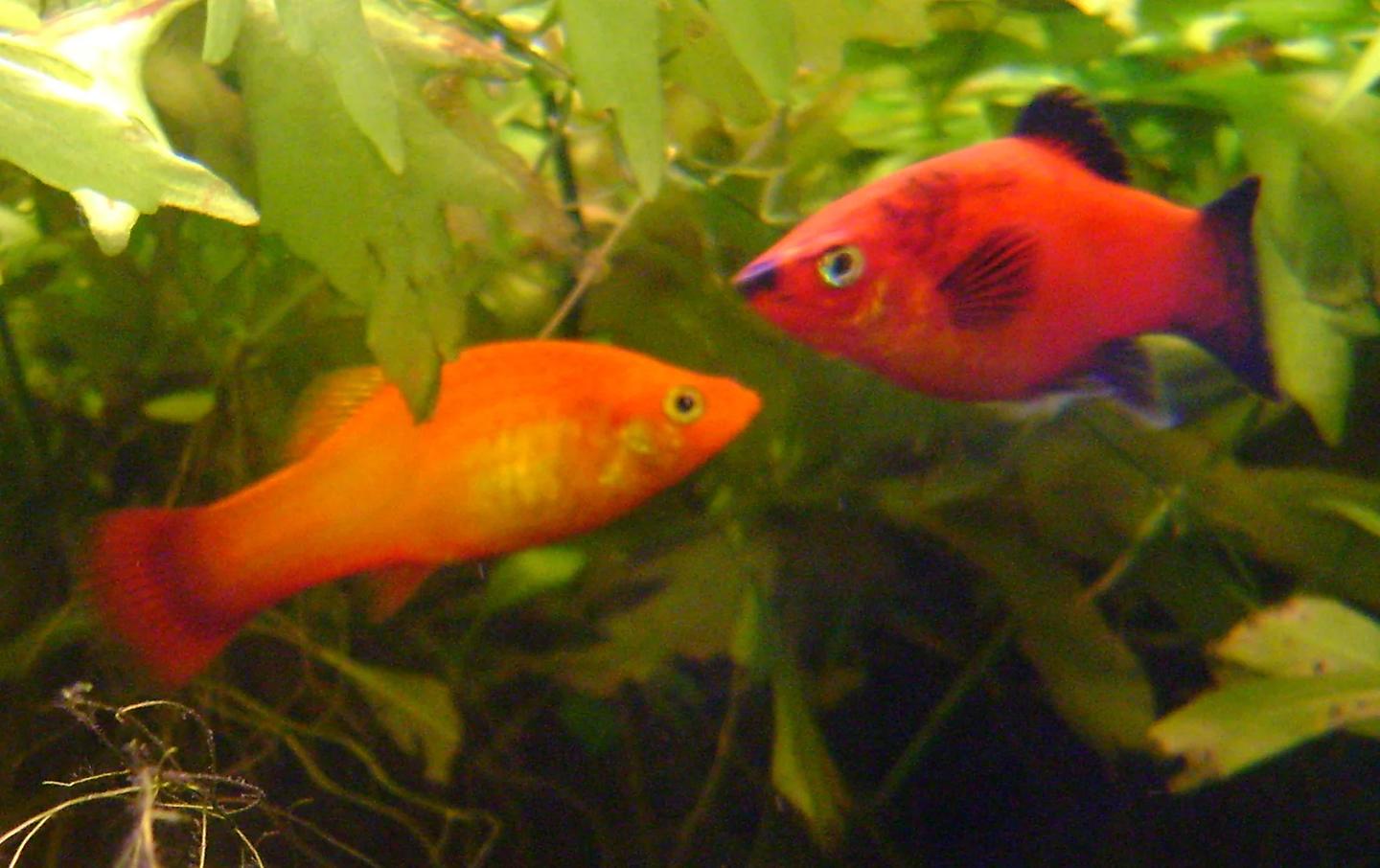
Platy is a trade name used for Xiphophorus maculatus, X. variatus and domestic forms. Start with at least three in a mature aquarium of at least 45 litres, verify the exact fish and measured water, and plan extra capacity before mixing sexes.
Maintain these water conditions for optimal health and vibrant colors
The Sunset Platy (Xiphophorus maculatus) is a compact, orange-to-red livebearer for a calm, properly prepared community aquarium. One purchase supplies one live fish in the size chosen on the product page. The size you select is the size supplied, not the adult size. The numerical centimetre choices are dispatch grades, while the XL label is a recurring catalogue grade without a fixed centimetre promise.
This is a sociable fish rather than a solitary ornament. OATA’s broad platy guidance recommends at least three, with two females for each male in a mixed-sex group. That ratio is a planning aid, not a guarantee against courtship pressure or fry. This listing does not offer a sex choice, so do not build a precise sex ratio around a single unsexed purchase. Sex is guaranteed only when the selected option explicitly states male or female. This Platy Sun Set listing has no sex-guaranteed option.
| Suits | A prepared beginner or experienced keeper with a mature, filtered aquarium and naturally hard water |
|---|---|
| Routine aquarium range | 20–26°C, pH 7.0–8.2 and 10–30 dGH from the species profile |
| Space | A 60 × 30 cm base, about 54 litres before displacement, for a modest group plan |
| Social plan | Keep with other platies; OATA suggests at least three and more females than males where sex is known |
| Temperament | Peaceful, but mixed sexes can produce persistent courtship and regular fry |
| Food | A complete quality flake or granule, with suitable frozen or live variety |
The body size records need careful reading. FishBase reports 4 cm total length for male or unsexed fish, while the species aquarium profile gives 5 cm standard length; OATA’s combined platy-and-swordtail sheet gives a broader 6–8 cm description for platies as a group. Standard length excludes the tail, and none of these figures describes the dispatch grade. For conservative aquarium planning, allow for the larger credible species-profile body figure and do not use the smallest juvenile option as an adult-space calculation.
The familiar aquarium fish is a selected colour form of a species native to North and Central America. FishBase records adults in warm springs, canals, ditches, creeks and swamps, often around slow-moving water, silt and weedy banks. Those habitat notes help explain why a planted aquarium with steady rather than punishing flow is a sensible visual and practical match. They do not make collected mud, outdoor water or wild plants suitable aquarium additions. Use clean aquarium materials and give the fish both cover and unobstructed room to swim.
The word “peaceful” describes general temperament; it does not settle the whole buying decision. First check that the filter is mature, ammonia and nitrite are undetectable, and the aquarium remains within the routine range. Then count the adult space already committed to other residents, decide how a platy group will be formed, and allow for livebearer reproduction. Finally, make sure there is a safe response if one fish is persistently pursued or becomes ill. A fish that is easy to feed can still be a poor choice for soft acidic water, an overstocked aquarium or an unplanned mixed-sex group.
A planted layout with open swimming room suits the species. Moderately hard or harder water matters more than chasing one perfect number. Soft, acidic water is a poor long-term match. Before ordering, compare the proposed group, existing livestock and measured tap-water chemistry rather than relying on the label “easy”. If the aquarium is new, the first tropical aquarium guide explains cycling and preparation, while the platy collection shows other colours without implying that every platy is an automatic tank mate.
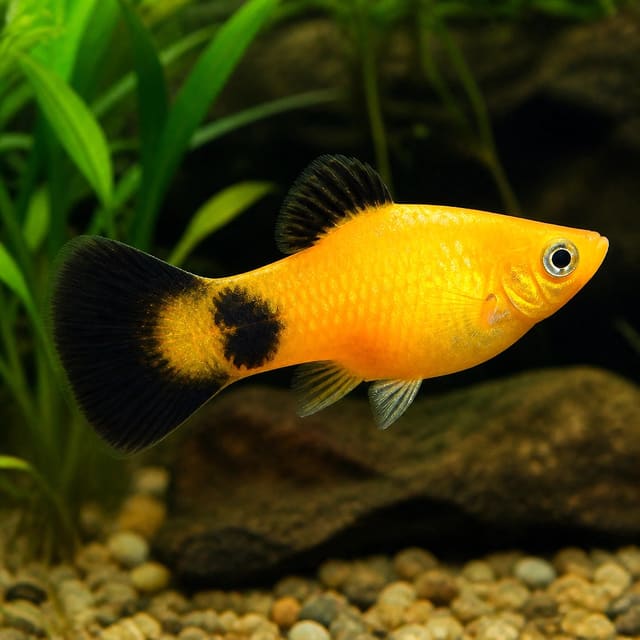
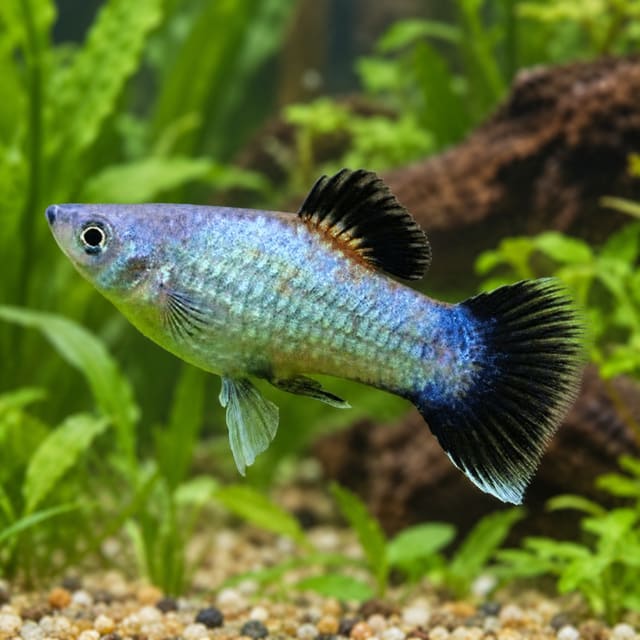
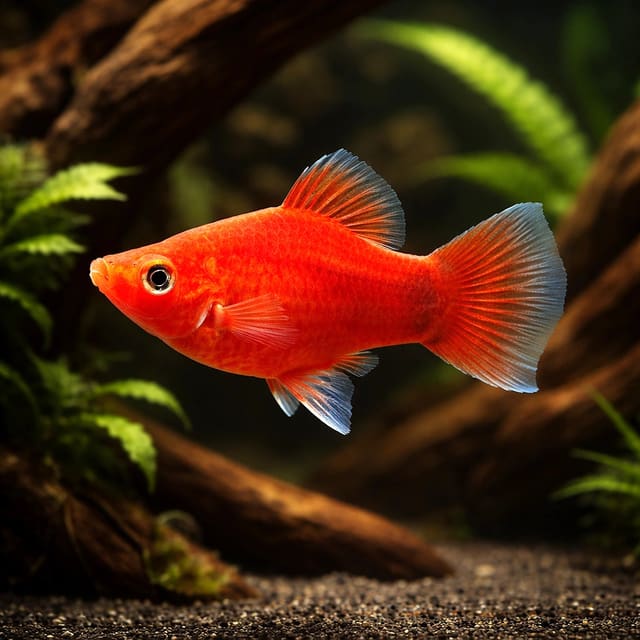
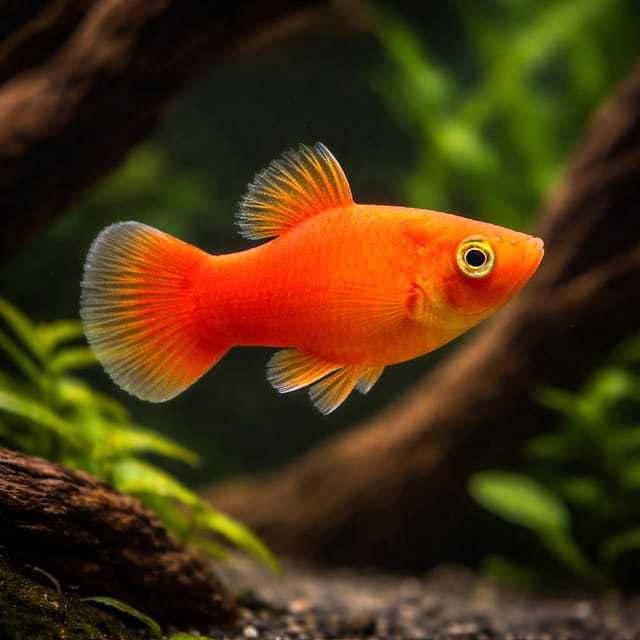
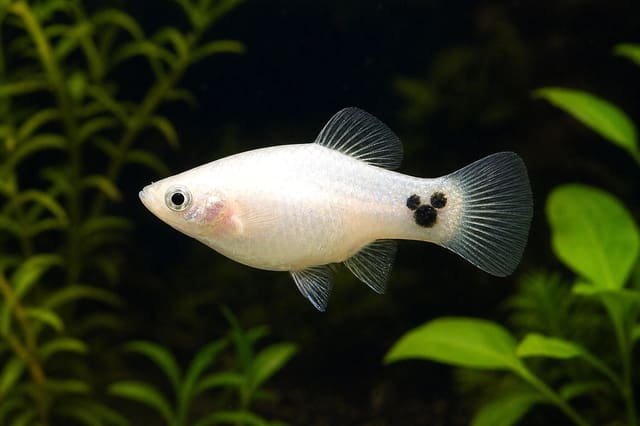
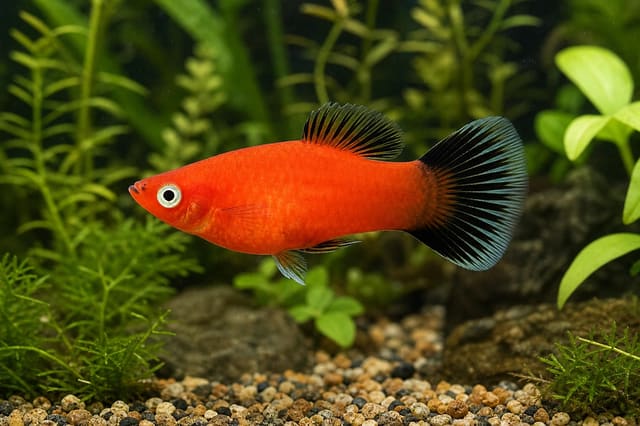
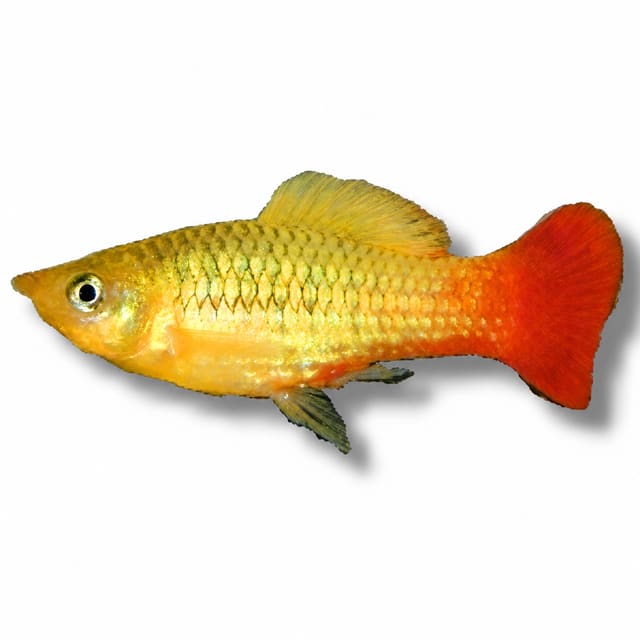
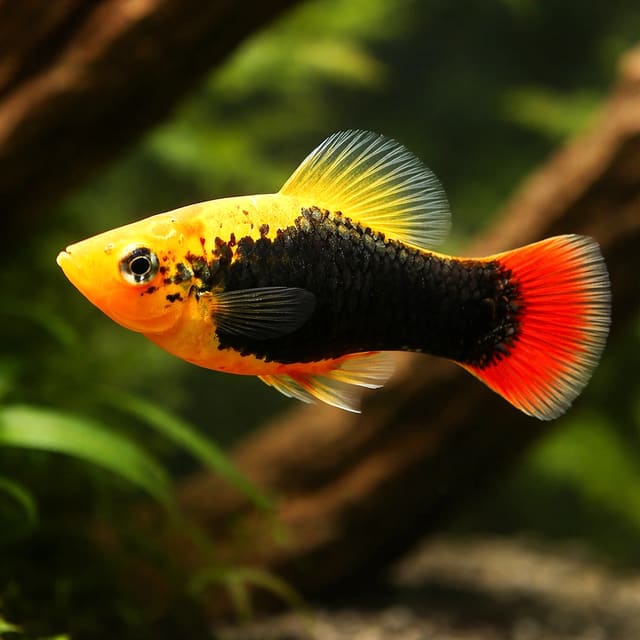
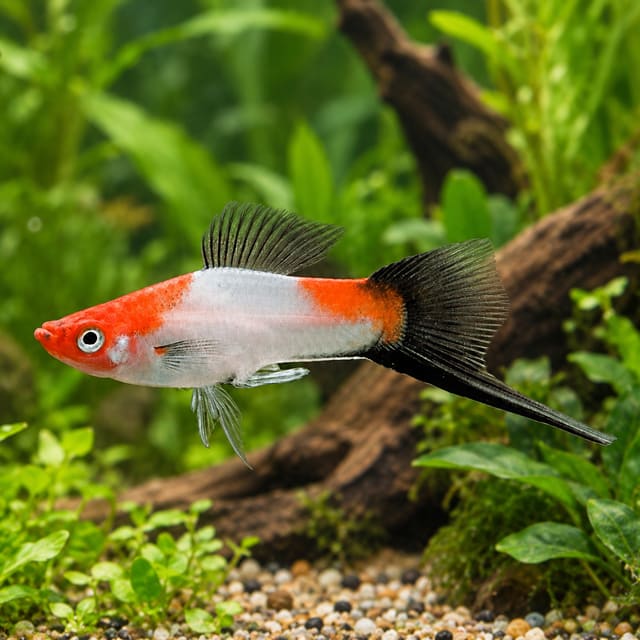
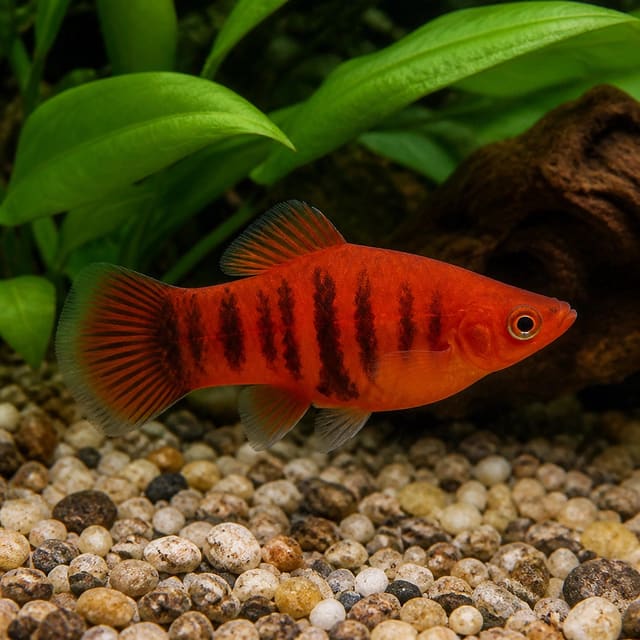
Gallery images have been digitally enhanced to improve image quality. Natural colour, pattern, size and maturity can vary between live animals. The gallery shows the orange-yellow body and deeper red tail area associated with this listing, but colour intensity and markings can differ between live fish.
Choose in this order: water and aquarium first, social plan second, colour preference third. The Sunset name describes the trade colour form, not a different set of care rules. Its orange-to-red appearance may catch the eye, but the decision to keep it should rest on the needs of Xiphophorus maculatus and the capacity of the actual aquarium.
A suitable home has mature filtration, consistently suitable hard water, a 60 × 30 cm footprint for the modest group plan described here, and companions that will neither harass nor swallow a platy. It also has room in the maintenance routine for weekly partial water changes and regular tests. If any of those foundations is missing, prepare the aquarium before choosing a dispatch size.
The species profile recommends an aquarium with a 60 × 30 cm base, approximately 54 litres before substrate, decor and the normal air gap are allowed for. The footprint is useful because it protects swimming room and gives several fish space to move without constantly crossing one another. OATA gives 45 litres as broad guidance for a small group of platies, but the 60 × 30 cm species-profile aquarium is the clearer planning screen for this exact fish. More fish, other livestock or a mixed-sex population requires more capacity; 54 litres is not a universal stocking entitlement.
Use a mature biological filter. Fish continually add ammonia to the system, and a functioning filter supports the bacteria that convert ammonia to nitrite and then nitrate. Both ammonia and nitrite should remain undetectable on a suitable hobby test. OATA advises nitrate no more than 20 mg/l above the normal tap-water level for its platy-and-swordtail group guidance. In practice, compare the aquarium result with the usual tap-water result rather than reading “20 mg/l” as a stand-alone ceiling.
A clear-looking aquarium is not proof that the biological filter is ready. Before adding fish, use reliable tests to confirm how the system handles waste. After an addition, test more frequently until the readings show that the filter is keeping up. If ammonia or nitrite becomes detectable, stop adding livestock, reduce avoidable feeding waste and correct the water-quality problem. Adding another fish because the water looks clear only increases the burden on an already struggling filter.
Choose a filter whose real flow keeps water clear and oxygenated without turning the aquarium into a torrent. The species profile’s equipment illustration uses four to five turnovers per hour for its example aquarium, but plant density, media, head height and maintenance affect actual output. Watch the fish: they should swim normally across the tank rather than being pinned into one quiet corner. Protect the intake if young fish could be drawn against it.
Nominal litres are only the beginning of a stocking calculation. Substrate, wood, rocks and the air gap reduce the water volume, while tall narrow aquariums can offer less useful horizontal swimming room than their litre figure suggests. Count the adult needs of every resident and reserve capacity for routine maintenance, not merely survival. If fry are likely, decide where the extra animals will live before they appear rather than treating filtration as unlimited.
For routine aquarium care, the species profile gives 20–26°C, pH 7.0–8.2 and 10–30 dGH. FishBase records a wild environmental range of 18–25°C, pH 7.0–8.0 and 9–19 dH; those occurrence figures describe recorded environments and should not be stretched into a captive target. OATA’s combined platy-and-swordtail sheet gives 17–27°C, pH 7.0–8.0 and 4–12 dGH for platies as broad group advice. Where the figures differ, the species profile’s moderately hard-or-harder requirement is the safer routine interpretation for long-term maintenance.
Test the water that will actually enter the aquarium. UK tap water varies by region and sometimes by supply blend. A pH reading without hardness is incomplete, and a water-company report cannot replace a current aquarium test. The water-chemistry guide explains the main measurements; the water parameter matcher can help compare measured values with the range above. Use both as decision aids, not as a promise that a number alone makes two animals compatible.
Stability begins with understanding the supply. Test tap water and aquarium water with the same method, and note whether a result is freshly drawn or has stood. Avoid making large adjustments from one isolated reading. Retest an unexpected value, check the test’s instructions and expiry, and look for a cause before changing chemistry. A dependable result taken the same way each time is more useful than repeatedly dosing the aquarium to chase a particular midpoint.
General hardness describes dissolved minerals and is central to deciding whether naturally soft source water suits a platy. pH alone cannot answer that question. If the tap supply is far below the routine hardness range, this is not the fish to buy first and solve for later. Choose livestock matched to the available water, or establish a controlled, well-understood mineral plan before purchase. Rapid swings caused by improvised correction are poor husbandry even when the final test number falls inside a published range.
A thermostatic aquarium heater is sensible where the room cannot keep the water stable within range. Verify it with a separate aquarium thermometer, because the dial is only a setting. Position the tank away from direct sun, radiators and cold draughts. Sudden temperature movement is more disruptive than a stable value a little away from the middle of the routine range. Check temperature at different times of day when seasonal room conditions change, and make sure warm weather has not pushed the aquarium beyond the planned range.
Sunset Platies show well against planting, and plants provide cover for fish that want to leave another’s line of sight. Keep a useful open-water route through the middle and front of the aquarium. Sand or smooth gravel can both work; the substrate choice should suit the plants and other residents and should be maintainable without trapping excessive waste. Use stable decor without sharp edges and leave access for a siphon.
Arrange the aquarium for movement as well as appearance. A fish should be able to cross open water, reach food and move behind cover without entering a dead end. Place tall planting and wood so they divide long sight lines but do not block the filter outlet. Leave enough space around the heater for water to circulate, and secure rocks or timber before fish are added. Reaching into a stocked aquarium to repair unstable decor is avoidable disturbance.
A secure lid is a sensible precaution around any aquarium, while regular day and night lighting supports a predictable rhythm. Floating plants can soften bright areas, but do not cover the entire surface or obstruct gas exchange. Dense planting also gives fry more places to survive. That may be welcome in a planned breeding aquarium, but it can quickly increase stocking pressure when it happens unintentionally.
Xiphophorus maculatus is an omnivore. FishBase records worms, crustaceans, insects and plant matter in wild feeding, while the aquarium profile describes the species as unfussy and accepting live, frozen and dried foods. In the home aquarium, use an appropriately sized, nutritionally complete flake or granule as the staple. Add safe frozen or live variety in portions the fish can finish without leaving food to rot.
Observe the whole group at meals. A bold fish taking every first bite does not prove that the quieter fish have eaten. Scatter small portions across more than one spot when needed, and check body condition over time. OATA’s group sheet advises a portion eaten within a few minutes once daily, but food density, age, temperature and group composition all affect demand. The practical rule is measured feeding, complete nutrition and no persistent waste.
Use feeding time as an observation window. Compare appetite, swimming position and body shape with the fish’s usual pattern. One missed meal is not a diagnosis, but repeated refusal, weight loss or an inability to reach food deserves investigation. Remove persistent leftovers before they decay. If food repeatedly reaches the bottom uneaten, reduce the portion rather than relying on the filter to absorb the extra load.
Do not use colour food as a substitute for water quality or balanced nutrition. The deep orange and red appearance is a selected trade form, but food alone cannot promise one exact shade or reproduce the gallery colour in every fish. Natural individual variation is normal. Judge condition through steady growth, normal behaviour, appropriate body shape and intact fins rather than colour intensity alone.
OATA strongly recommends a partial water change of 25% at least once every week for its platy-and-swordtail guidance. Treat that as a starting routine and adjust only in response to reliable tests, stocking, feeding and veterinary advice. Dechlorinate replacement tap water and bring its temperature and chemistry close enough to avoid an abrupt change.
A repeatable maintenance order helps prevent omissions. Test before the change when the result is meant to describe the aquarium at the end of its week. Prepare replacement water, switch off equipment that must not run dry, siphon accessible waste, complete the partial change and restart everything promptly. Confirm that the heater and filter are operating afterwards. Record the result and any unusual observation so the next reading has context.
Check ammonia, nitrite, nitrate, pH, hardness and temperature regularly, especially after adding animals or changing feeding. Record results so gradual movement is visible before it becomes an emergency. If the filter needs cleaning, rinse biological media lightly in removed aquarium water rather than under the tap; chlorine or chloramine can damage the bacterial population that makes the filter work. Avoid replacing all biological media at once.
Filter cleaning should restore flow without stripping away the mature biological system. Clean only as much as needed, keep media wet, and follow the manufacturer’s safe shutdown and restart directions. Never allow a stalled or blocked filter to become the normal state. Reduced outlet movement, accumulated debris or fish gathering where oxygen is highest are reasons to inspect the system and test the water.
Remove obvious waste, dead plant material and uneaten food, but do not sterilise a healthy aquarium. Keep a separate bucket and siphon for aquarium use. Wash hands before and after maintenance, rinse away soap thoroughly, and never start a siphon by mouth.
Prepare the aquarium and test it before the parcel arrives. Someone must be present to receive live animals. Begin a continuous unboxing video for every parcel while the outer parcel is still sealed, keep the box visible and show the fish inside the sealed bag before anything is disturbed. The current delivery and Live Arrival Guarantee page contains the full reporting terms and current delivery instructions.
Separate the parcel procedure from the longer settling period. The unboxing video records condition on arrival; it is not a reason to delay opening once the required sealed views are captured. The float equalises temperature, not water chemistry. Follow the current shipment directions, keep bag water out of the aquarium and give the fish time to recover from transport before expecting normal feeding.
During the first week, look for steady swimming, open fins, regular breathing and an interest in food. Hiding, surface gasping, clamped fins, unusual shaking, white spots, wounds or loss of balance are warning signs, not diagnoses. Test the water promptly, protect the fish from further social pressure and seek qualified help rather than choosing medication from one symptom.
Compare each observation with the whole aquarium. If several fish show breathing difficulty, test temperature, ammonia and nitrite immediately and inspect circulation. If only the newcomer is affected, also consider transport stress and social exclusion. Avoid mixing treatments on speculation. Accurate water results, a clear account of behaviour and good photographs or video give an aquatic veterinarian or experienced fish-health professional more useful information than a guessed disease name.
Make observations at consistent times. Breathing may be faster immediately after transport than it is after settling, and a fish can be less eager to feed on its first day. What matters is the direction of change as well as the snapshot: breathing should settle, balance should remain normal, and the fish should begin to explore and feed. Record temperature and water tests beside the observation so a behavioural change can be considered alongside the environment.
Inspect the whole body without chasing the fish around the aquarium. Look at both sides when possible, check that the fins open normally, and note whether the abdomen and back retain an appropriate shape. Watch the gill covers, swimming control and response to nearby fish. Colour can alter with lighting and stress, so interpret it with posture, appetite and breathing rather than using shade alone.
Keep equipment checks simple but regular during the settling week. Confirm that the filter outlet is moving water, the heater is holding the intended temperature and no intake is trapping the newcomer. Check that food reaches the fish without a scramble that drives it into a corner. These observations can reveal stopped flow, temperature drift or social exclusion before a practical problem is mistaken for disease.
Respond to a concern with measurements and calm observation. Test ammonia and nitrite, confirm temperature, inspect circulation and consider whether several fish or only the newcomer are affected. Avoid combining treatments on speculation. Accurate results, a clear account of behaviour and useful photographs or video give an aquatic veterinarian or experienced fish-health professional a better basis for advice than a guessed diagnosis.
The species profile describes Xiphophorus maculatus as very peaceful and suitable for many community aquariums. That is useful temperament guidance, but it is not a universal compatibility list. A successful match still needs overlapping routine water chemistry, similar feeding opportunity, enough usable space and no serious predation or fin-nipping risk.
Choose companions that are comfortable in hard, neutral-to-alkaline water and are not large enough to swallow a platy. Avoid aggressive cichlids, persistent fin nippers and animals whose soft, acidic requirements would force one species to live at the edge of its range. Other peaceful livebearers can share broadly similar water, but their adult size, activity and breeding load still need checking. A product shown as another platy colour is an alternative purchase, not automatic evidence of spare space or a guaranteed companion.
Match the routine, not just an overlap at the limits. Two fish may both survive at one shared temperature while requiring very different hardness, flow or social conditions. Compare the point at which each species is normally maintained, then account for the aquarium’s measured water. A companion that needs persistent soft acidity is a poor choice even if a broad temperature chart appears to overlap.
Feeding behaviour also changes compatibility. A quick platy can intercept floating food before a timid resident reaches it, while a large predatory mouth creates a risk even when the larger fish is described as calm. Observe where each species feeds and whether all residents maintain condition. The absence of obvious fighting does not make a pairing successful if one animal is routinely displaced from food or shelter.
OATA suggests at least three platies and a ratio of two females to one male in a mixed-sex group. The species profile similarly advises more females than males because male attention can be relentless. No ratio removes the need to observe the fish, and this unsexed listing cannot be used to order a guaranteed male or female. If the existing group’s sex mix is unknown, add only after checking whether every fish can feed, rest and move away from pursuit.
The gonopodium is the male’s specialised anal fin; females have a more triangular anal fin, and the species profile describes males as the smaller sex. Those biological differences can help with observation once fish are mature enough to assess, but photographs, colour and dispatch size do not create a sex promise for this offer. If a precise ratio is essential, choose only options explicitly sold by sex rather than trying to infer it from the gallery.
Additions change the whole group, not only the newcomer’s experience. Watch established fish as well: a previous balance can be disturbed when another animal competes for the same feeding area or resting cover. Provide several routes through planting, distribute food where appropriate and check every individual at close range. A fish that stays hidden all day or emerges only after food is gone is not thriving merely because it has no visible wound.
Useful warning signs include one fish being repeatedly cornered, hiding through meals, losing condition, showing damaged fins or being driven into strong flow. Add cover and sight breaks, but do not use decor as an excuse to ignore persistent harassment. A cycled separation aquarium or safe divider plan is more useful than hoping the group will eventually settle.
Platies give birth to live young and reproduce readily. A mixed-sex group can produce fry repeatedly, and a female may have mated before sale. Do not promise a precise brood size or schedule for an individual fish. Decide in advance whether fry could be housed, fed and responsibly rehomed. Dense plants can increase survival, which also increases the need for filtration and space.
Reproduction affects stocking before the fry look large. More mouths increase feeding and waste, while tiny fish need protection from filter intakes and access to suitable food. Count nursery equipment, spare mature filtration and rehoming options as part of the plan. Moving fry into a new, uncycled container simply transfers the welfare problem from crowding to unstable water.
Do not use adult fish or unsuitable companions as population control. If breeding is deliberate, prepare a mature nursery with protected filtration, stable water and food suited to the fry. OATA and the species profile differ on some breeding techniques; this product guide therefore avoids prescribing a small breeding trap as a default.
Observe the aquarium after any change. Check at feeding time, during active swimming and when fish settle. Compatibility is a continuing husbandry decision, not a one-time label attached to a species name. If behaviour changes, retest the water and inspect the environment before assuming the cause is personality alone.
Plan around a body length of about 5 cm standard length from the species aquarium profile. FishBase gives 4 cm total length for male or unsexed fish, while broad OATA guidance describes platies as 6–8 cm. These measurements and scopes differ, so allow conservatively for the larger credible species-profile figure and remember that the tail and individual variation affect the fish’s overall impression.
The species profile recommends a 60 × 30 cm base, about 54 litres before displacement. OATA gives 45 litres for a small group as broader platy guidance. Use the 60 × 30 cm footprint as the practical screen, then increase capacity for more platies, tank mates or likely fry.
OATA suggests at least three platies. Where males and females are known, it recommends two females per male to spread courtship pressure. This listing does not guarantee sex, and no number or ratio removes the need to watch feeding, pursuit and body condition.
It can suit a prepared beginner because it is peaceful and accepts common aquarium foods. It still needs a mature biological filter, stable hard water, regular tests, measured feeding and a social and reproduction plan. It is not suitable for an uncycled bowl or persistently soft, acidic water.
Use a quality complete flake or small granule as the staple, with suitable frozen or live foods for variety. Feed measured portions that the group can finish without leaving waste, and make sure quieter fish get access. Wild diet observations are ecological context, not a recipe for collecting natural foods.
The species aquarium profile gives a routine range of 20–26°C and pH 7.0–8.2, with 10–30 dGH. Keep the water stable, moderately hard or harder, and verify it with tests. FishBase’s wild occurrence values and OATA’s broader group figures are context rather than reasons to keep the fish at an extreme.
Platies are generally peaceful and the species profile notes that even males tolerate one another. Mixed-sex groups can still experience persistent courtship. Avoid known fin nippers and aggressive fish, and intervene if any platy is cornered, excluded from food or physically damaged.
Consider peaceful community fish that share hard, neutral-to-alkaline water and cannot swallow or harass a platy. Other platies and some livebearers may fit, but every exact species still needs its own adult-size, group, behaviour and aquarium-space check. No named animal is a guaranteed tank mate.
Tropical Fish Co hand-bags each fish with pure oxygen, uses an insulated box and a heat pack when weather requires it, and sends the parcel with a tracked licensed live-animal courier. Someone must receive it. Start a continuous unboxing video while the parcel is sealed, inspect the fish in the sealed bag and contact the store the same day with the order number if a Live Arrival Guarantee claim is needed.
The husbandry above distinguishes species-level aquarium guidance from broad trade-body advice and wild occurrence records. These public pages were used for identity, measurements, routine care and general welfare:
Ranges describe different scopes rather than one universal optimum. Use the routine species-profile range for this fish, confirm the aquarium with current tests and seek qualified aquatic veterinary advice for illness or treatment decisions.
No reviews for this item yet. Bought one? Honest reviews only, good or bad.
What customers say about ordering from us
Easy website plenty of info on fish your buying great to pick a time slot
TRACEY DURRANT · 7 Oct 2026
Got some lovely fish thank you
Kevin Mackie · 7 Oct 2026
Reviews of our shop, collected by Judge.me, an independent third-party review collector. Newest first.