Sunset Variatus Platy (Xiphophorus variatus)
20–26°C · pH 7–8.2 · 54L
£5.99
The Orange Gold Variatus Platy (Xiphophorus variatus) is a peaceful freshwater livebearer from Mexico that reaches 7 cm. It suits a planted community aquarium; the FishBase and Seriously Fish overlap is 20–25°C, pH 7.0–8.0 and 14–19 dGH, while OATA group guidance recommends at least three. Sold individually in 3–4 cm or 4–4.5 cm sizes.
Adult size is the maximum length this species reaches at full maturity (scientific sources). The livestock you receive will be younger and smaller — pick a size above for the actual shipping size. Product-photo provenance and any image-specific limitations are stated on the listing.
Xiphophorus variatus
Shoaling fish: kept in a group they feel safer, stay calmer and show their best colour.
Minimum of 2 per order.
The Orange Gold Variatus Platy (Xiphophorus variatus) is a peaceful freshwater livebearer from Mexico that reaches 7 cm. It suits a planted community aquarium; the FishBase and Seriously Fish overlap is 20–25°C, pH 7.0–8.0 and 14–19 dGH, while OATA group guidance recommends at least three. Sold individually in 3–4 cm or 4–4.5 cm sizes.
Adult size is the maximum length this species reaches at full maturity (scientific sources). The livestock you receive will be younger and smaller — pick a size above for the actual shipping size. Product-photo provenance and any image-specific limitations are stated on the listing.
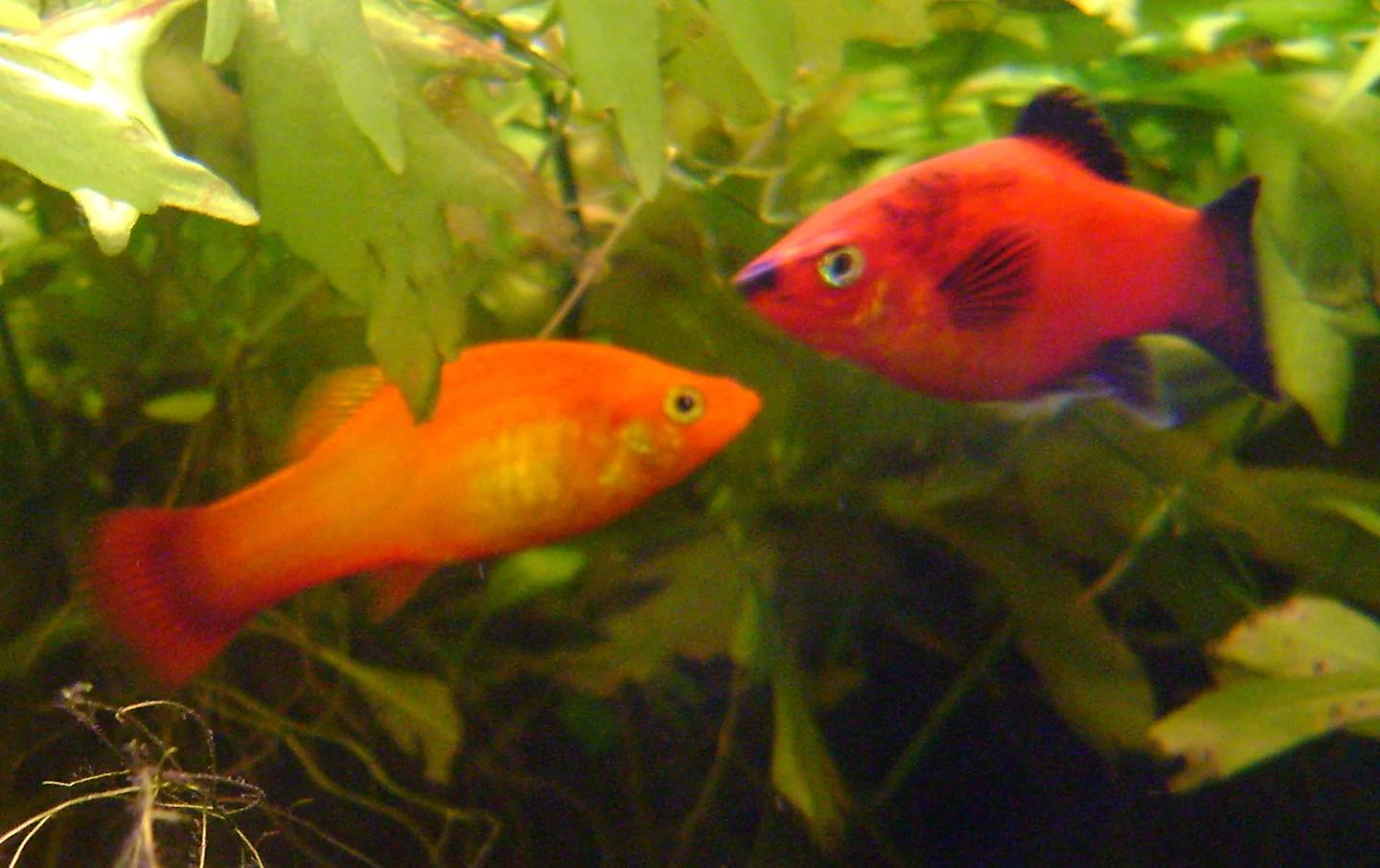
Platy is a trade name used for Xiphophorus maculatus, X. variatus and domestic forms. Start with at least three in a mature aquarium of at least 45 litres, verify the exact fish and measured water, and plan extra capacity before mixing sexes.
Maintain these water conditions for optimal health and vibrant colors
The Orange Gold Variatus Platy is an orange-gold form of Xiphophorus variatus, also called the variable platyfish. It belongs to the Poeciliidae family and is a freshwater livebearer from Mexico that reaches a maximum recorded length of 7 cm. Its compact shape, warm colour and generally peaceful manner suit a keeper planning a planted community aquarium with hard, alkaline water, a mature biological filter and room for a small social group.
FishBase identifies Xiphophorus variatus as a Mexican species occurring from southern Tamaulipas to northern Veracruz. Wild adults inhabit warm springs, weedy canals and ditches, where they feed on worms, crustaceans, insects and plant matter. Those natural-history details explain why aquarium care should combine varied food, vegetation or cover and open swimming room.
The orange-gold wording describes this aquarium colour form rather than a separate species. For comparison with other colour forms and related fish, browse our livebearers collection.
| Suits | Not suited to |
|---|---|
| A planted, mature community aquarium with peaceful fish | Soft, acidic water |
| Hard, alkaline water within the stated range | An aquarium without a mature biological filter |
| A plan with room for at least three platies under OATA group guidance | A plan based only on the fish’s dispatch size |
| A 60 × 30 cm aquarium base with open swimming room and cover | Tank mates that cannot share its water requirements |
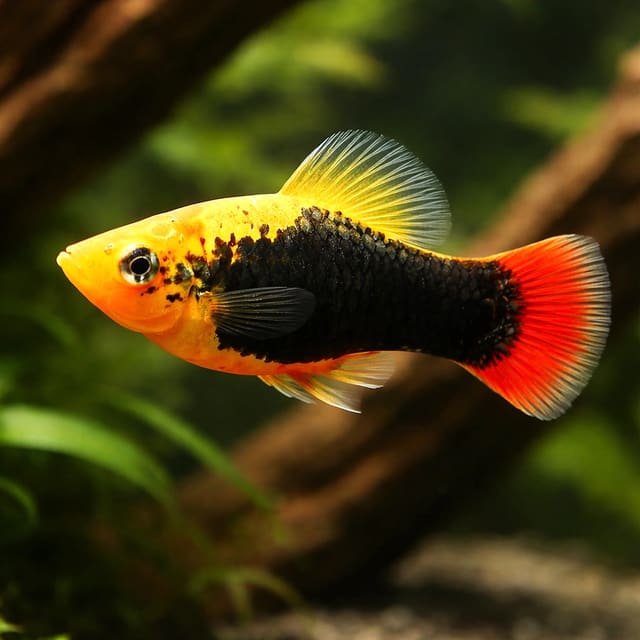
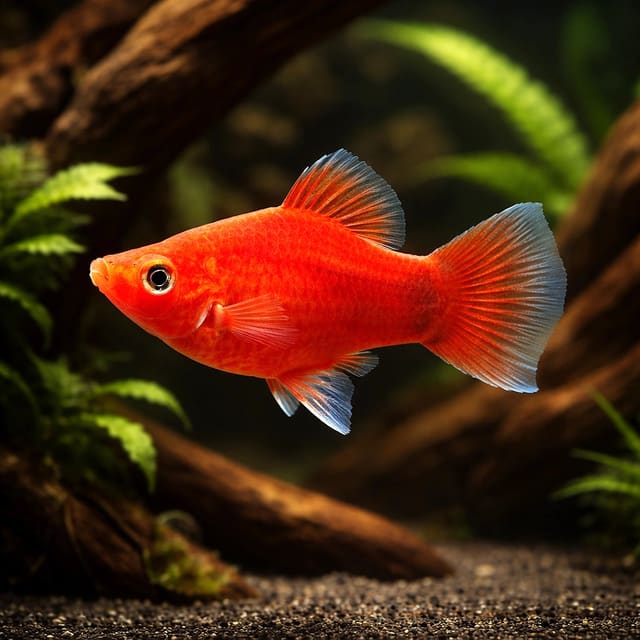
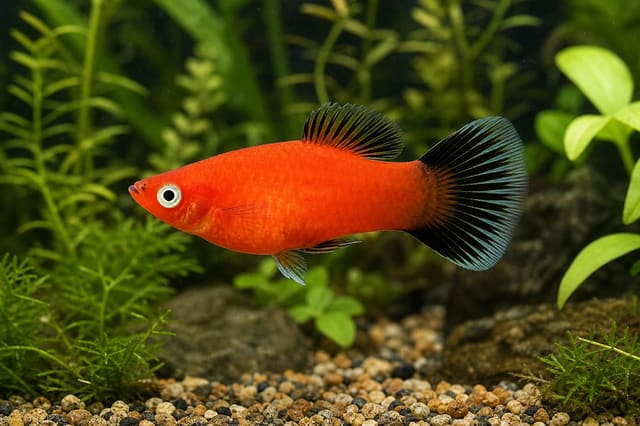
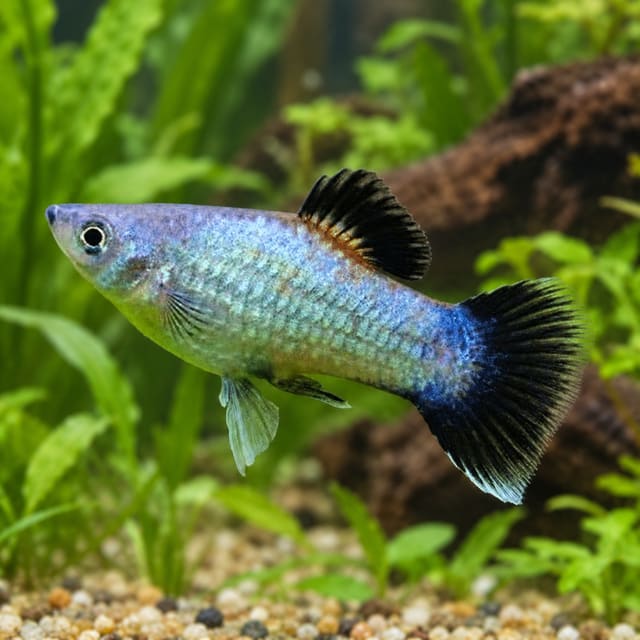
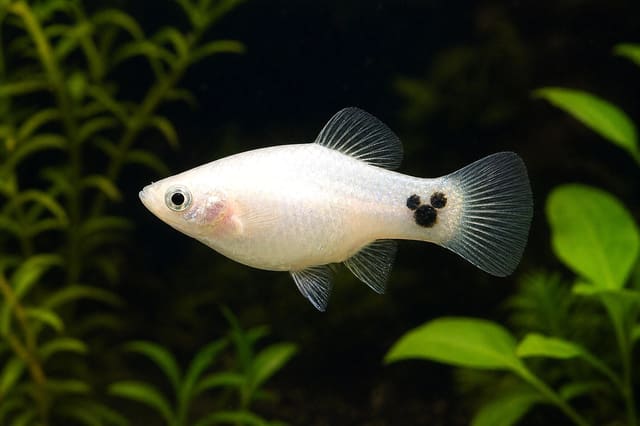
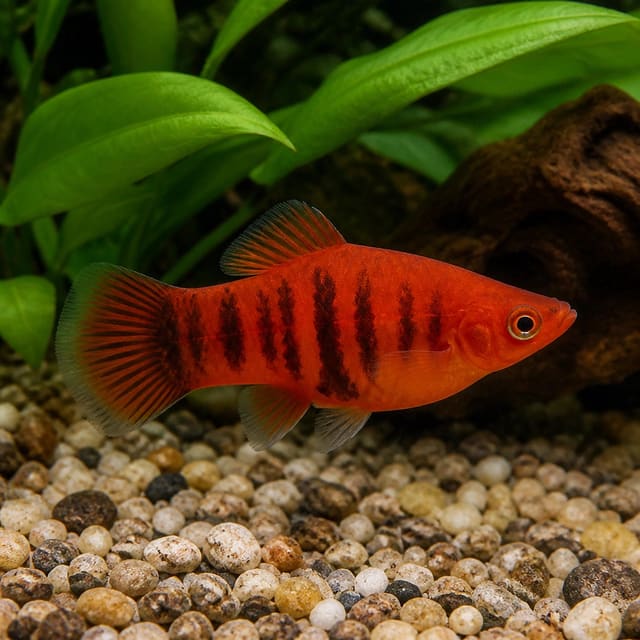
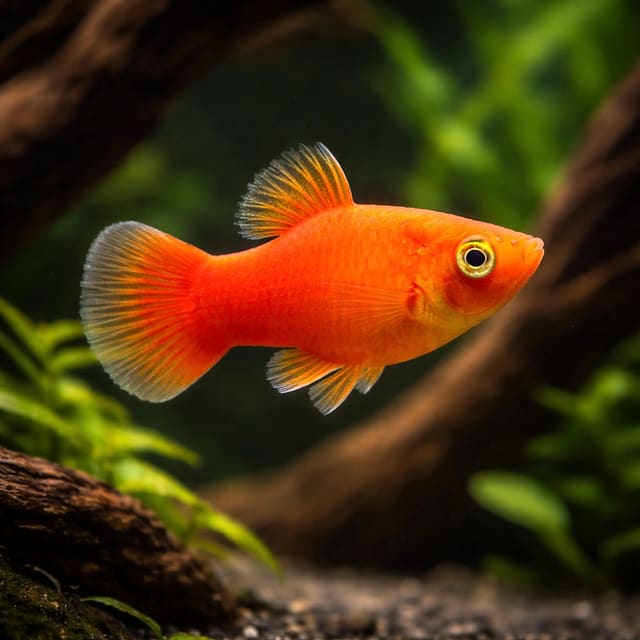
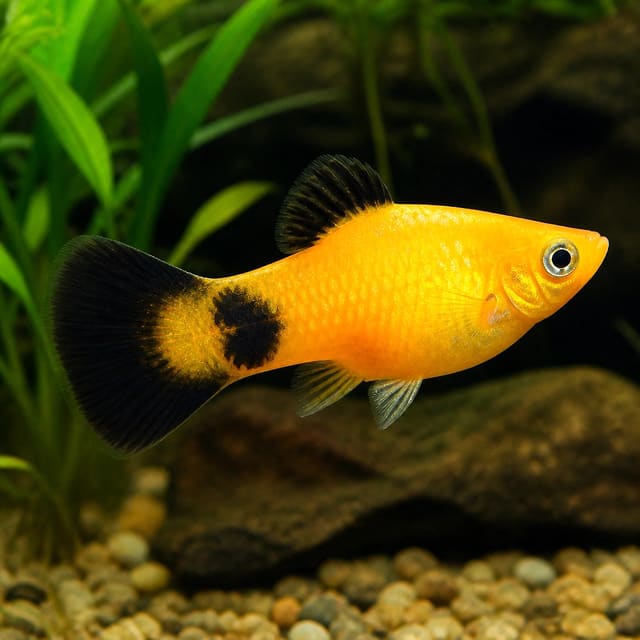
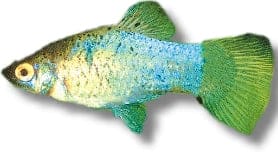
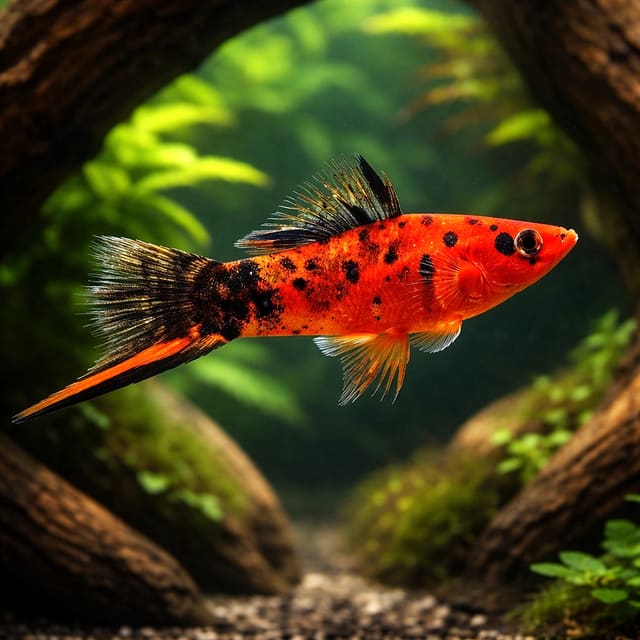
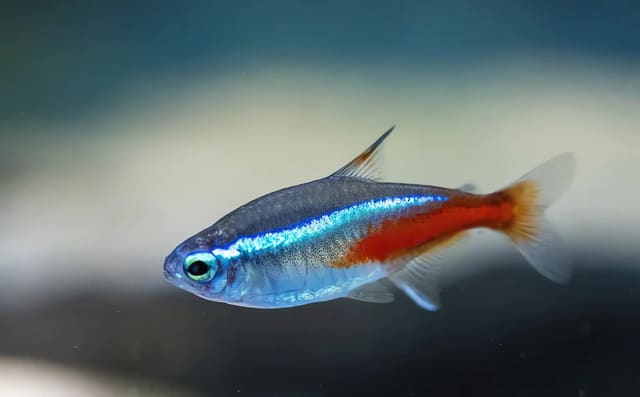
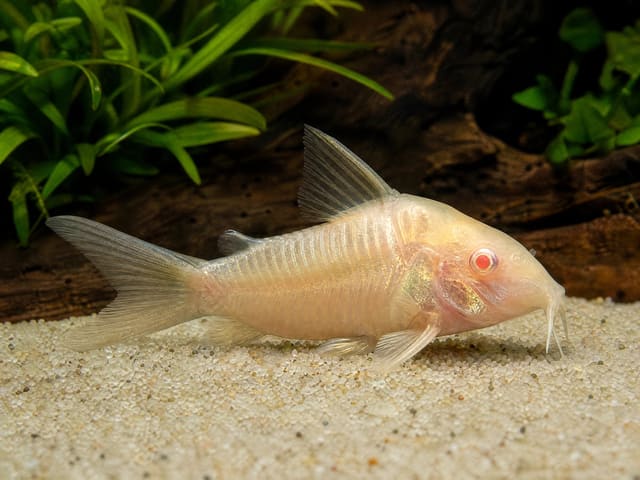
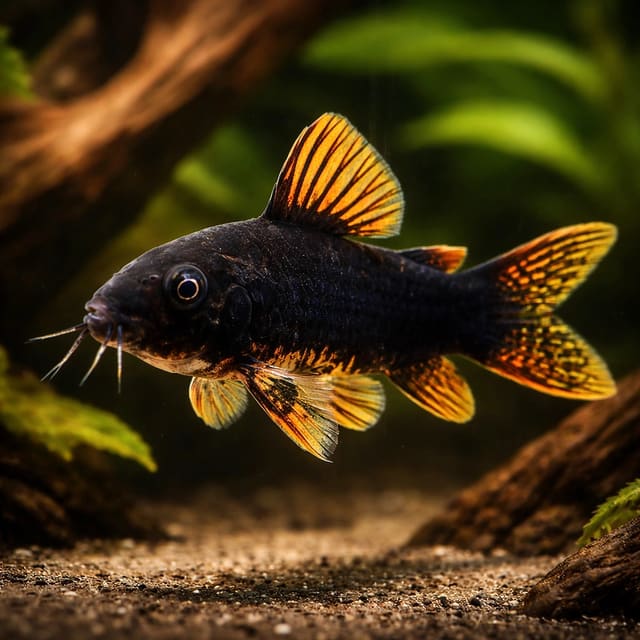
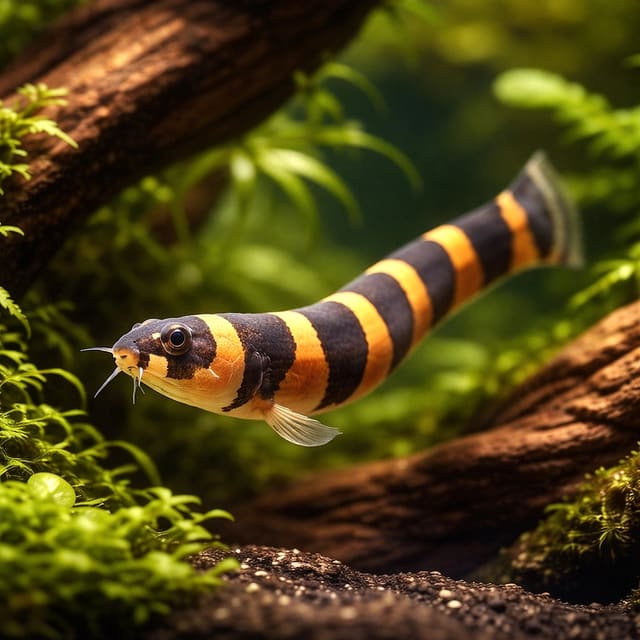
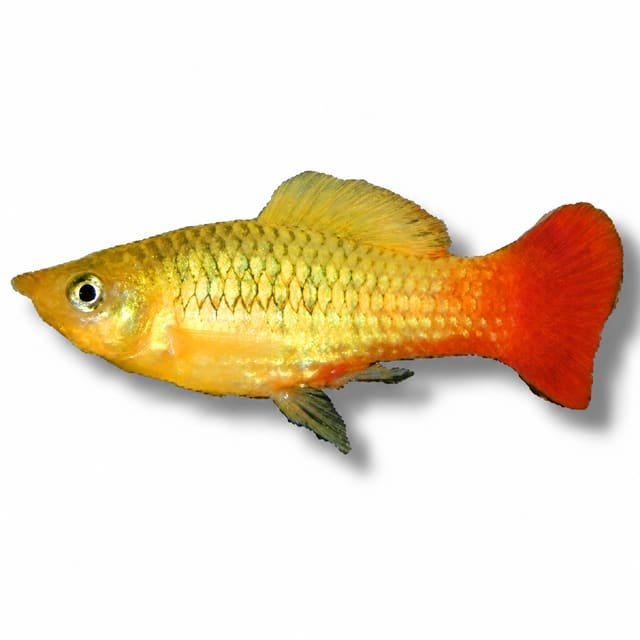
The pictured fish has a predominantly orange-gold body, a paler underside and translucent grey-orange fins. It is swimming side-on above pale gravel, with green plants and dark wood behind it.
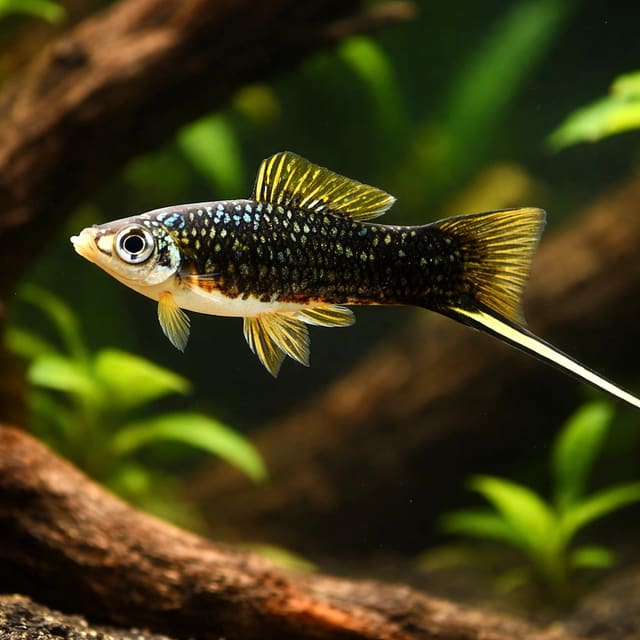
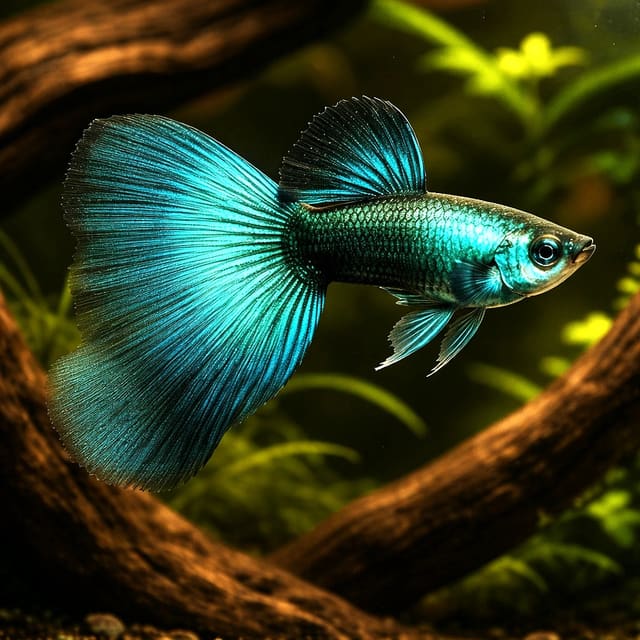
The gallery images are representative of this type of animal rather than photographs of the exact animal supplied, so colours can look slightly different from the live animal.
Use the image to understand the characteristic colour and body shape, while allowing for natural differences in shade, markings and fin appearance between individual fish.
One purchase quantity supplies one Orange Gold Variatus Platy in the size selected on the live selector. Choose between the labels 3–4 cm and 4–4.5 cm rather than assuming that a photograph represents the precise size of the fish sent.
The size you select is the size supplied, not the adult size.
These measurements describe the fish at dispatch. They help you plan the immediate introduction and compare the newcomer with fish already in your aquarium, but they are not a stopping point for growth. Base permanent space, filtration and companion choices on the maximum adult measurement of 7 cm total length.
Sex is guaranteed only when the selected option explicitly states male or female. This Orange Gold Variatus Platy listing has no sex-guaranteed option.
Do not build a precise male-to-female ratio around a single unsexed purchase. If you already keep platies, assess the known composition of the established group and leave room to adjust it after the new fish has settled and can be assessed directly.
OATA describes platies as generally easy to keep, but that judgement depends on matching their water requirements. This fish suits a keeper who can maintain hard, alkaline water, a mature biological filter and a compatible social group. It is a weaker match for a soft, acidic aquarium, even if its colour and peaceful temperament otherwise appeal.
Check the live selector when choosing a dispatch size. Permanent care remains the same whichever size label you select.
Use the adult measurement, aquarium footprint and social needs together. A tank that accommodates one dispatch-sized fish but leaves no room for a small group, plants or future growth is not a complete plan.
| Planning point | Working figure |
|---|---|
| Maximum recorded length | 7 cm total length |
| Aquarium footprint | At least 60 cm long with a 60 × 30 cm base |
| Planning volume | Around 54 litres |
| Routine temperature | 20–25°C |
| Routine pH | 7.0–8.0 |
| Routine hardness | 14–19 dGH |
| Social plan | At least three under OATA group guidance |
FishBase gives a maximum of 7 cm total length. Seriously Fish gives 5 cm standard length, alongside a 60 × 30 cm tank base and an example volume of approximately 54 litres. Use the 7 cm figure as the adult-size ceiling throughout the aquarium plan.
Start with at least a 60 cm-long aquarium and preserve the stated footprint rather than judging suitability from litres alone. Length creates swimming room, while the 30 cm front-to-back dimension leaves space for plants, shelter and an open route across the aquarium.
OATA’s platies and swordtails sheet gives broad group guidance of at least three platies. A small group therefore needs more usable room than a lone dispatch-sized fish suggests. Increase the aquarium size when other fish, repeated fry or more platies will share the system.
Treat 54 litres as the planning example for a suitable 60 × 30 cm setup, not permission to crowd every aquarium carrying that label. Décor, internal filters and tank shape all alter the usable swimming area.
Set routine aquarium conditions to 20–25°C, pH 7.0–8.0 and 14–19 dGH. These targets are the overlap of FishBase’s recorded environment and the aquarium range described by Seriously Fish, so they respect the shared conditions rather than stretching to either outer limit.
| Value | Routine target |
|---|---|
| Temperature | 20–25°C |
| pH | 7.0–8.0 |
| General hardness | 14–19 dGH |
| Ammonia | 0 mg/l |
| Nitrite | 0 mg/l |
| Nitrate | No more than 20 mg/l above the normal tap-water level |
The underlying ranges differ. FishBase gives 15–25°C, pH 7.0–8.0 and 9–19 dH for the species’ environment, while Seriously Fish recommends 20–26°C, pH 7.0–8.2 and 14–30 dGH in the aquarium. OATA’s platy guidance extends to 17–27°C and gives softer group figures, but its broader values should not widen the species target. In particular, Seriously Fish warns that X. variatus will not thrive in soft, acidic water.
Test the aquarium and tap water rather than estimating hardness from appearance or location. Our water chemistry guide explains what pH, general hardness, ammonia, nitrite and nitrate tell you. Enter measured values in the water matcher to compare them with the working range above.
If the aquarium sits at 19°C, raise it into the 20–25°C routine band gradually and confirm the result with a thermometer. If it reads pH 6.8 or 10 dGH, bring the aquarium consistently within range before adding the fish. Stability matters more than chasing a number with abrupt daily adjustments.
Check replacement water before a change when its chemistry varies. Large differences in temperature or mineral content can make a routine water change a sudden environmental shift.
Arrange the 60 × 30 cm base so the fish can move freely across the aquarium while still reaching cover. Plant the back and sides, or use compact groups of plants around wood and suitable ornaments, then keep a clear route through the front or centre. This reflects the species’ association with weedy habitats without turning the tank into an obstructed thicket.
Seriously Fish notes that the precise décor is not critical, but that Xiphophorus variatus appreciates a planted aquarium. Plants provide cover and can help when one fish follows another. They do not replace adequate footprint, filtration or water changes.
A filter is essential. RSPCA aquarium guidance explains that fish release toxic ammonia and that a working biological filter supports bacteria which convert ammonia to nitrite and then to the safer nitrate. The filter must therefore move water and preserve an established bacterial community.
For the approximately 54-litre example, Seriously Fish suggests turnover of four to five times the aquarium volume each hour. Multiplying 54 litres by four gives 216 litres per hour; multiplying it by five gives 270 litres per hour. A filter rated around 215–270 lph fits that worked example before allowing for flow lost to media, debris or installation height.
Direct the outlet so the water circulates without forcing the platies to struggle constantly. Watch how the fish hold position: normal exploration and easy swimming indicate a more usable flow than fish repeatedly sheltering from the current.
The same 54-litre example uses roughly a 50 W heater when the room is around 20°C. Treat that as a sizing example, then confirm the aquarium stays within 20–25°C with a separate thermometer. Room temperature, aquarium covers and seasonal changes affect heater demand.
Leave access around the filter intake, heater and décor for maintenance. A layout that looks attractive but prevents safe cleaning will make the weekly routine harder and allow waste to accumulate.
Add this fish only after the aquarium and biological filter are mature and stable. A newly filled tank may look clear while lacking enough nitrifying bacteria to process fish waste. Use our first tropical tank guide to prepare and mature the system before livestock arrives.
Confirm ammonia and nitrite are both 0 mg/l before introduction. Record temperature, pH and hardness as well, because a safe nitrogen cycle does not compensate for soft, acidic water or an unsuitable temperature.
Every added fish and every extra meal increases the waste entering the aquarium. OATA warns that stocking too quickly can lead to new tank syndrome when the bacterial population cannot process the increased load. Add fish gradually and test after each addition rather than filling all planned capacity at once.
Do not use the nominal aquarium volume as a head-count formula. Adult size, group composition, existing fish, filtration, décor and the possibility of live young all affect capacity. A 54-litre aquarium with a clear 60 × 30 cm base may meet the starting footprint, yet still be fully occupied once a platy group and other community fish are considered.
Choose the social group first, then assess remaining space for other fish. This order prevents the platy’s need for companionship from becoming an afterthought. If the aquarium already contains livestock, compare every planned addition with its adult size and water needs before increasing the load.
In nature, Xiphophorus variatus eats worms, crustaceans, insects and plant matter. In the aquarium, offer a good-quality flake or granule with a high algae content as the regular food. Small live or frozen items such as daphnia, small bloodworm or tubifex can add variety.
Seriously Fish also describes the species as an unfussy omnivore that accepts dried, frozen and live foods. Variety matters because its natural diet includes both animal and plant material; a single rich food should not become the entire routine.
Feed once a day and give only what the fish can finish within a few minutes. Start with a modest amount. If food remains after the fish lose interest, remove what you can and reduce the next portion. Uneaten food breaks down and adds waste, increasing pressure on the biological filter.
| What you see | What to do |
|---|---|
| Food remains after a few minutes | Reduce the next daily portion |
| One fish misses every meal | Check chasing, access and health |
| Fish eat normally but ammonia rises | Stop adding livestock, test again and review feeding |
| Body condition changes | Compare portions, access to food and water readings |
Distribute food where every platy can reach it without creating a large cloud that disappears into plants or gravel. Observe the whole group instead of judging the portion by the quickest fish. A bolder individual finishing its share does not mean every fish has eaten.
Frozen food should be small enough for the fish to take cleanly. Rotate it with the regular algae-rich dried food rather than increasing the total quantity. Feeding variety changes ingredients; it should not double the day’s ration.
Test the receiving aquarium before the fish arrives and make sure someone can receive the parcel. The tank should already be within 20–25°C, pH 7.0–8.0 and 14–19 dGH, with ammonia and nitrite at 0 mg/l. Acclimatisation cannot repair unsuitable water or an immature filter.
These receiving steps come from our delivery and Live Arrival Guarantee policy. Open and inspect the parcel on the day it arrives, and keep the continuous unboxing video with your order details.
OATA advises watching for changes in swimming, breathing, colour, temperament and feeding. Check that the newcomer remains upright, moves without repeated loss of balance and is not trapped by persistent chasing.
Do not respond to every pause by netting or moving the fish again. First compare what you see with the water readings and the behaviour of the established fish. Repeated handling adds another change before you know whether temperature, water quality, flow or social pressure is responsible.
Watch the established residents as well as the newcomer. A fish that feeds normally when alone may miss food if a tank mate controls the feeding area. Likewise, a newcomer holding near the surface can point to a water or oxygen problem affecting more than one fish.
Record the introduction time and the first test results. If behaviour changes later, those notes give you a useful baseline for deciding whether the issue began at release, after feeding or after a change in water quality.
Carry out a 25% partial water change at least once a week. Use a siphon to remove solid waste from the substrate, especially around feeding areas, plant bases and sheltered corners where debris settles. Treat replacement tap water with a conditioner that deals with chlorine or chloramine before it enters the aquarium.
Match replacement water closely for temperature and use water that keeps the aquarium within pH 7.0–8.0 and 14–19 dGH. A regular 25% change should refresh the tank without creating a sudden move outside the fish’s normal range.
Check the filter for reduced flow and blockages. When media needs cleaning, rinse it lightly in water removed from the aquarium during the water change. Do not run it under the tap because chlorine or chloramine may kill beneficial bacteria.
Clean only as much as needed to restore flow. A spotless-looking filter is not the aim; preserving its bacterial population while removing obstructive debris is the practical goal. After maintenance, confirm that the outlet is circulating water and that the heater and thermometer remain correctly positioned.
| Observation | First response |
|---|---|
| Hanging at the surface | Test ammonia and nitrite and check circulation |
| Sitting on the bottom | Check temperature, water quality and social pressure |
| Erratic swimming | Test water and inspect flow and chasing |
| Faster or slower gill movement | Check water quality promptly |
| Colour becomes unusually pale or dark | Compare water readings and recent changes |
| White spots, fluffy growths or damaged fins | Record the change and test the aquarium |
| Reduced appetite | Check access to food, behaviour and water values |
Test at least weekly even when the fish look normal. Ammonia and nitrite should remain at 0 mg/l, while nitrate should not rise more than 20 mg/l above the normal tap-water level. A trend matters: a reading that moves week after week calls for action before visible distress develops.
If a health change persists after checking water quality, contact us with the readings and a clear description of swimming, breathing, appearance and appetite. Do not begin a treatment merely from colour change or hiding, because those signs can have several causes.
Seriously Fish describes Xiphophorus variatus as peaceful and suitable for a general community aquarium. That does not make every community fish an automatic match. Begin by checking whether each proposed companion can live long term at 20–25°C, pH 7.0–8.0 and 14–19 dGH.
Hardness is a decisive screen. A fish requiring soft, acidic conditions should not be placed in harder, alkaline water merely to share a tank with this platy. Equally, lowering the aquarium below the platy’s suitable range to accommodate another species compromises the Orange Gold Variatus Platy.
Use the platy’s maximum recorded length of 7 cm when assessing a tank mate, not the selected dispatch size. Consider whether the other fish is likely to treat a 7 cm peaceful livebearer as prey, prevent it from feeding or subject it to persistent pursuit. Compatibility remains conditional on the actual aquarium, its inhabitants and the behaviour observed after introduction.
| Screen | Decision rule |
|---|---|
| Temperature | Both fish must fit 20–25°C |
| pH | Both fish must fit 7.0–8.0 |
| Hardness | Both fish must fit 14–19 dGH |
| Adult size | Plan around a 7 cm platy |
| Temperament | Reject persistent aggression or feeding exclusion |
| Space | Leave room for the full platy group |
Feed and observe after introduction. A nominally peaceful combination can still fail if one individual repeatedly drives another away from cover or food. Early signs include one fish staying hidden, missing meals, showing damaged fins or being confined to one corner.
For a stocking and compatibility assessment, ask us with the aquarium dimensions, measured water values, filter, established livestock and planned group size. Those details allow a more useful decision than a tank-volume label alone.
OATA recommends at least three platies because they require companionship. Establish space for that group before filling the aquarium with unrelated community fish. More platies require more room, and the biological load must rise gradually so the filter can adapt.
When the known group includes males and females, keep two females for each male. Seriously Fish likewise advises more females than males because male attention can be relentless. Dense planting can help, although it does not correct a badly imbalanced group.
Because this offer does not guarantee sex, one selected fish cannot be relied upon to complete a planned ratio. Use only sexed fish already known to you when calculating the current composition, then reassess after the newcomer has settled.
| What you observe | Decision |
|---|---|
| Brief following with normal feeding | Continue watching the group |
| One fish repeatedly blocks another from food | Change feeding access and review composition |
| Persistent pursuit into a corner | Add dense planting and reassess the group promptly |
| Damaged fins or missing scales | Check water, isolate the cause and prevent further injury |
| Several fish breathing abnormally | Test the aquarium rather than assuming a social cause |
Platies are livebearers, and mixed-sex groups may produce repeated batches of fry. Treat that possibility as a capacity decision even when breeding is not your aim. More fish mean more feeding, waste and demand on the biological filter.
Do not count fry as negligible because they begin small. Pause further stocking if numbers rise, monitor ammonia and nitrite and reassess the aquarium’s usable space. A system planned closely around its adult residents has little margin for a growing population.
Plants can create cover for adults and young fish, but they do not create extra water volume. Maintain the weekly 25% water change, measured feeding and gradual stocking routine while reviewing how many fish the aquarium can support as they grow.
The Orange Gold Variatus Platy reaches a maximum recorded length of 7 cm, so plan its permanent aquarium and tank mates around that adult figure.
Use at least a 60 cm-long aquarium with a 60 × 30 cm base; Seriously Fish uses approximately 54 litres as the example for those dimensions, and more fish or fry require more space.
OATA’s group guidance recommends at least three platies, with two females for each male when the sexes are known.
OATA describes platies as generally easy to keep, provided you can maintain a mature filtered aquarium with hard, alkaline water and complete the weekly care routine.
Feed a quality flake or granule with a high algae content once daily in an amount eaten within a few minutes, adding small live or frozen daphnia, bloodworm or tubifex for variety.
Keep it at 20–25°C and pH 7.0–8.0, with hardness at 14–19 dGH; these routine values are the overlap of FishBase and Seriously Fish.
Seriously Fish describes the Orange Gold Variatus Platy as peaceful and suitable for a general community aquarium, but persistent pursuit can occur in mixed-sex groups when male attention is not spread across more females.
Choose peaceful community fish that can share 20–25°C, pH 7.0–8.0 and 14–19 dGH, then screen them for adult size, feeding access, temperament and enough space for the full platy group.
Start filming the sealed parcel before opening it, continue without interruption until the fish is shown inside the sealed bag, and have someone present to receive it; then float the bag for 20–30 minutes and never pour the bag water into the aquarium.
No reviews for this item yet. Bought one? Honest reviews only, good or bad.
What customers say about ordering from us
Easy website plenty of info on fish your buying great to pick a time slot
TRACEY DURRANT · 7 Oct 2026
Got some lovely fish thank you
Kevin Mackie · 7 Oct 2026
Reviews of our shop, collected by Judge.me, an independent third-party review collector. Newest first.