By Tropical Fish Co Editorial Team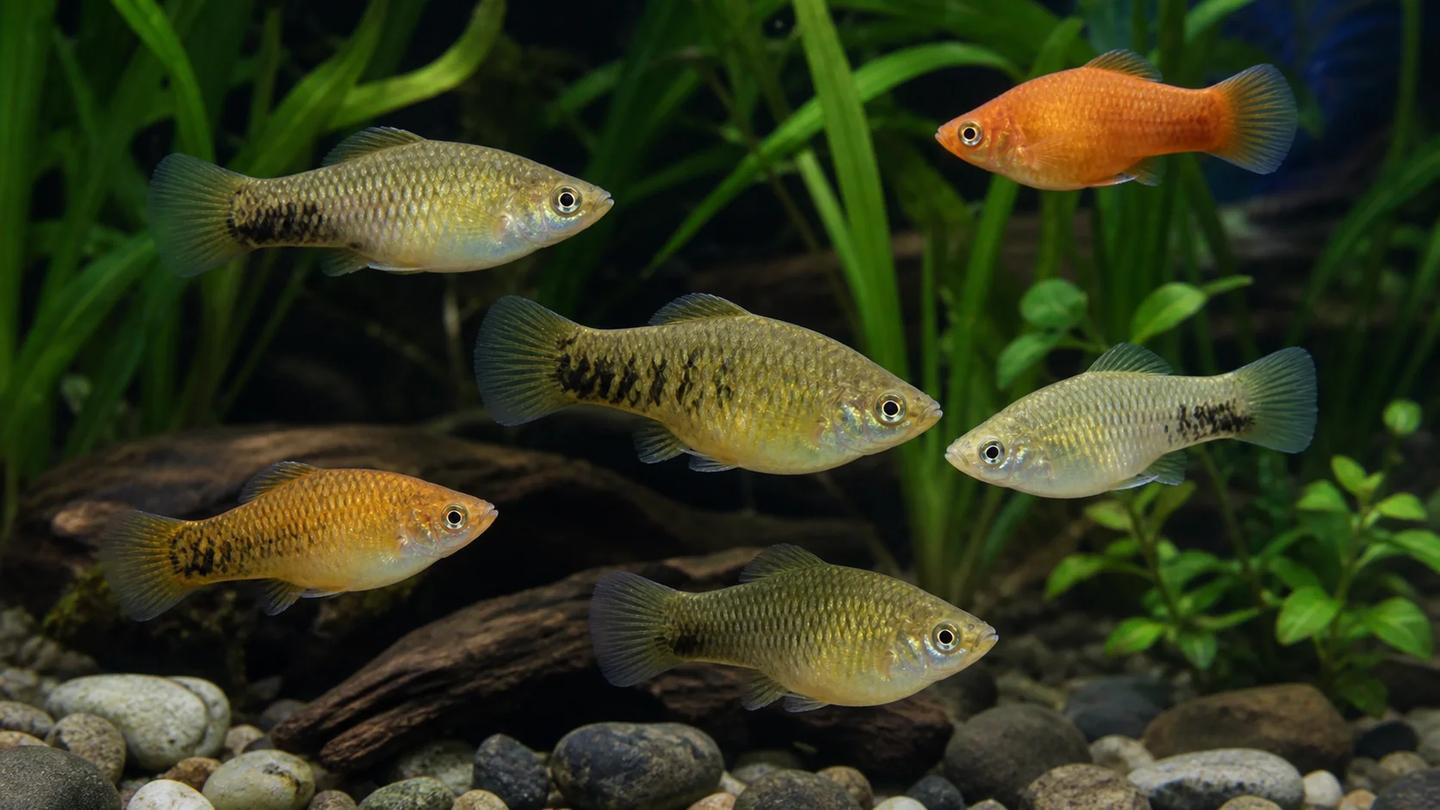
The direct answer
The variatus platy is Xiphophorus variatus, also called the variable platyfish. FishBase records a maximum of 7.0 cm total length, a 15–25°C compiled temperature range, pH 7.0–8.0, 9–19 dH and a 60 cm aquarium-length clue [1]. Those figures are useful screening evidence, not a promise that every retail strain, home aquarium or tank-mate mix should use the full range.
Before buying, make five decisions:
- Confirm the scientific name. “Sunset”, “gold”, “Hawai” and other colour words do not prove the fish is X. variatus.
- Plan the adult group. OATA's broad platy starting point is at least three, with two females per male in a mixed group [4].
- Check aquarium length, width and volume. A litre number alone does not show swimming footprint, cover, filtration or existing stock.
- Measure the water. Compare the seller's current holding water with the aquarium instead of assuming every UK tap supply is the same.
- Decide how you will manage fry. A mixed-sex variatus group can produce fry; breeding is a realistic consequence, not a rare surprise.
A peer-reviewed study sampled 84 wild X. variatus populations and found most of the measured genetic richness within populations; environmental heterogeneity was associated with that richness [5]. That makes variation biologically interesting, but it does not let a buyer identify a fish or predict a home-aquarium colour from one photograph.
Variatus platy identity: species before colour
FishBase and GBIF record Xiphophorus variatus as a species in the livebearer family Poeciliidae [1] [2]. The closely related southern or common platyfish is Xiphophorus maculatus [6]. A seller may use “platy” for either species, a selected colour form or stock whose ancestry is not obvious from a thumbnail.
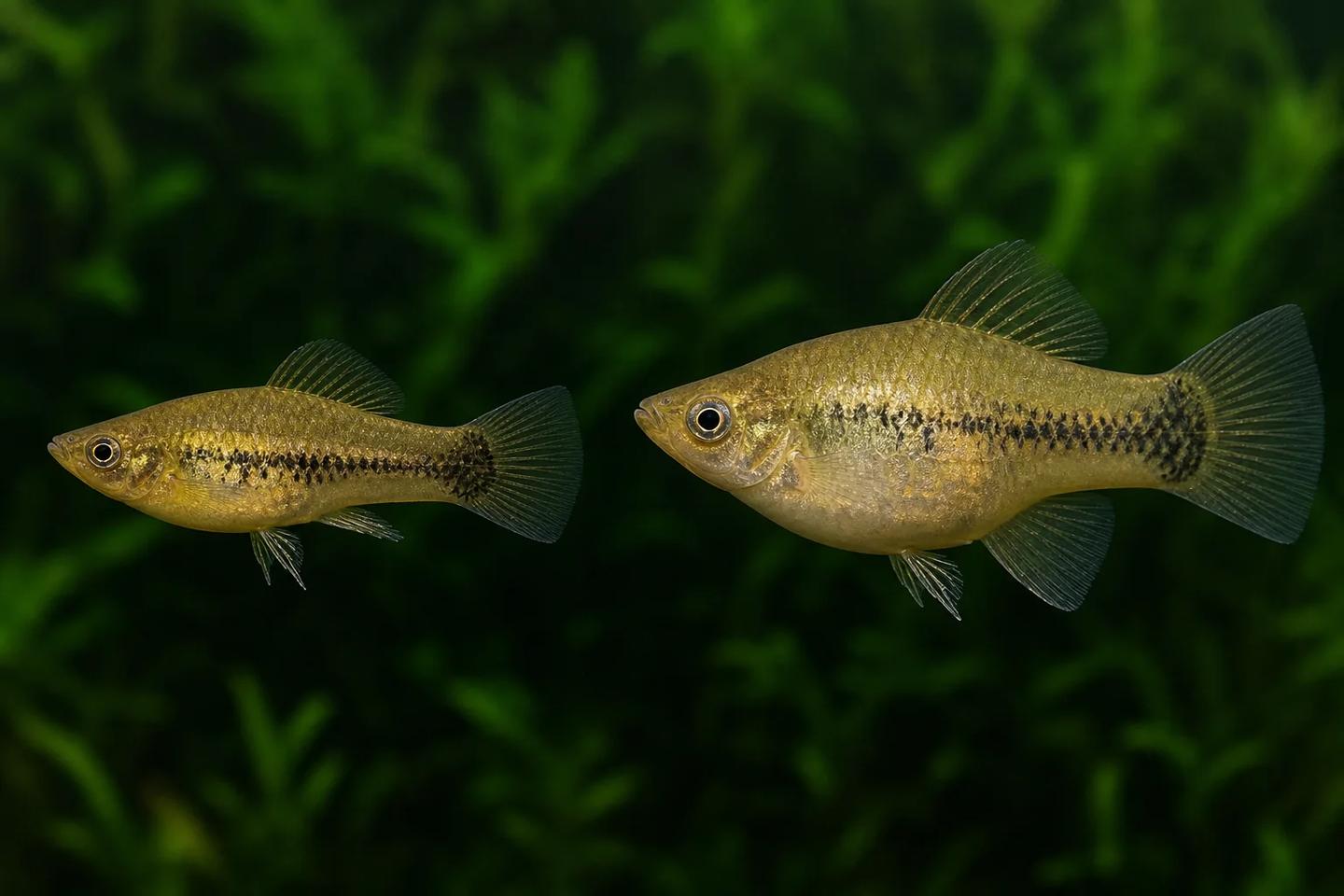
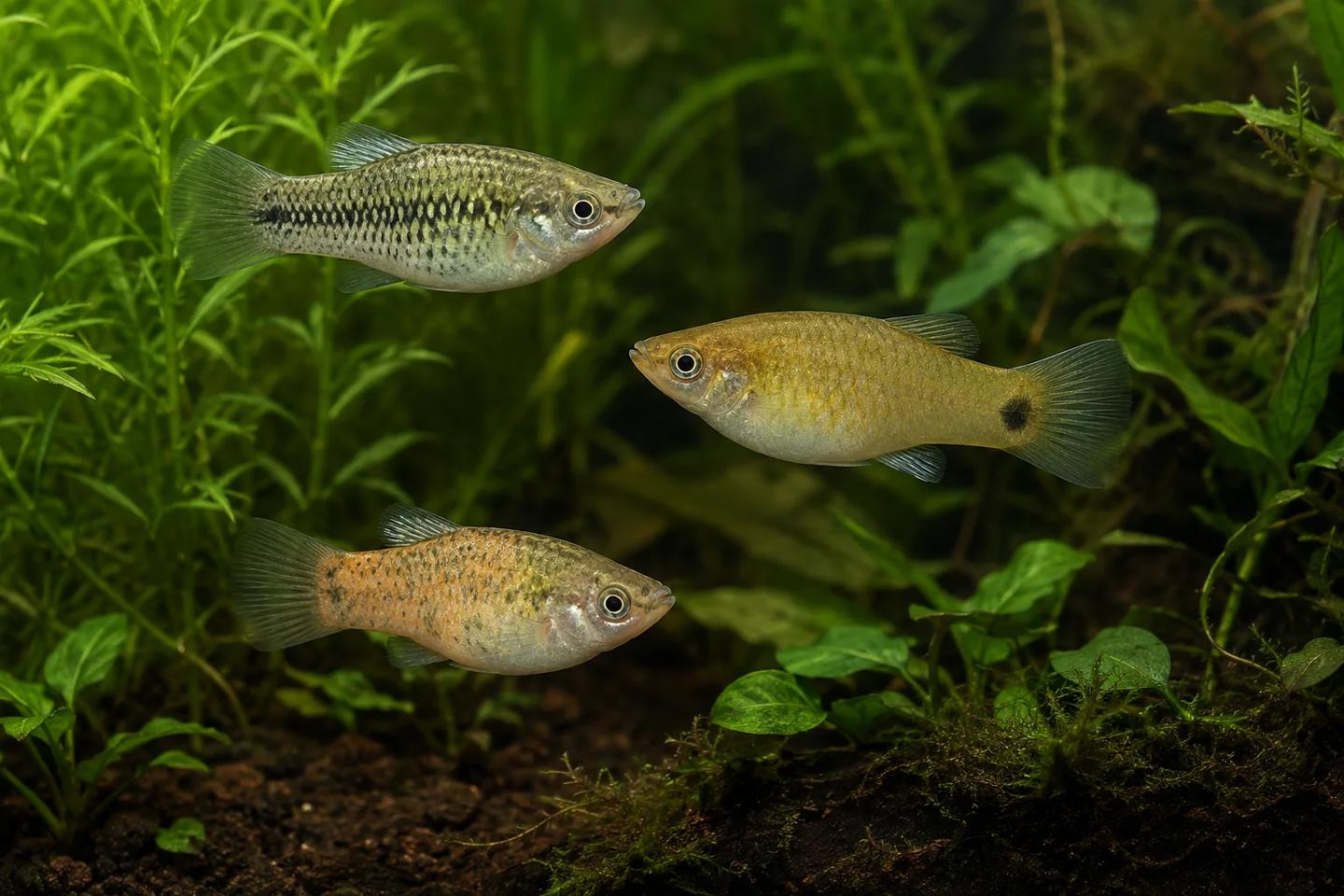
Useful X. variatus visual clues include a moderately elongate, laterally compressed body and a slightly upturned mouth. The Florida Museum describes wild colour as highly variable—from olive-brown and silver-white to yellow-orange—and notes two or more dark zigzag side stripes in the fish it profiles [3].
None of those clues is a barcode. Lighting, age, sex, condition, selective breeding and image processing change appearance. The safe buying record is:
- the scientific name used by the supplier;
- whether the fish is presented as a species, selected form or known cross;
- a current photograph or description of the actual batch where available;
- the seller's sex, size and sale-unit information.
The images on this page are educational illustrations. They do not depict an available batch and should not be used to overrule a traceable supplier record.
Size and aquarium space
FishBase records 7.0 cm TL as the maximum length for male or unsexed X. variatus and 3.9 cm TL as a common length [1]. TL means total length, including the tail fin. It is not equivalent to standard length, and neither figure promises the eventual size of an individual fish.
For space, two different types of evidence help:
| Planning clue | Published evidence | How to use it |
|---|---|---|
| Adult length | FishBase: 7.0 cm maximum TL | Plan for adults, not juvenile sale size |
| Aquarium length | FishBase: 60 cm | Preserve useful horizontal swimming room |
| Broad starting volume | OATA: at least 45 L for a small group of platies | Treat as a floor to screen, never a stocking calculator |
| Social starting point | OATA: at least three platies | Fit the whole group plus all existing adults |
RSPCA guidance asks keepers to consider adult size, aquarium surface area, filtration and oxygen, and generally favours more space than a bare minimum [7]. A tall 45-litre cube and a long 45-litre aquarium do not offer the same swimming footprint. Hardscape, planting, territories and other fish also reduce usable space.
If the complete adult plan only just fits a published floor, choose a larger aquarium or a less crowded community. Do not solve a space problem by keeping an inadequate social group.
Male or female: the practical sexing check
Look underneath the fish rather than relying on colour. In OATA's broad platy guidance:
- a male has a specialised, narrow and pointed anal fin called a gonopodium;
- a female has a broader fan- or triangle-shaped anal fin and is generally larger [4].
Body depth and size can support the observation, but they are not conclusive alone. Young fish may be difficult to sex, fins may be held against the body, and a single still photograph can hide the relevant angle. Ask the seller whether the actual animals have been sexed and how confidently.
For a mixed group, OATA suggests two females to each male to reduce stress on females and other inhabitants. Treat that as a broad welfare starting point, not proof that chasing cannot occur. Watch for persistent pursuit, hiding, fin damage, feeding exclusion or loss of condition and be ready to separate fish.
An all-male or all-female plan can reduce new matings, but the seller must be able to sex the fish accurately. Do not promise a fry-free outcome from a generic product label.
Temperature, pH and the “cold-water” question
FishBase compiles 15–25°C, pH 7.0–8.0 and 9–19 dH for X. variatus [1]. OATA's broader captive-platy guide gives 17–27°C, pH 7.0–8.0 and 4–12 dH [4]. The difference is a reason to keep the source boundary visible—not to combine both into an enormous universal target.
“Can platies live in cold water?” is therefore the wrong final question. Ask instead:
- What temperature does this aquarium reach before dawn in the coldest season?
- How much does it change across one day?
- What temperature and chemistry is the seller currently using for this batch?
- What stable overlap suits every intended tank mate?
- Is a thermostatically controlled heater needed to hold that overlap?
OATA notes that platies can live in slightly cooler conditions and may be kept in an unheated aquarium, while also warning against temperature fluctuations, draughts and heat sources. “Unheated” is not a temperature reading. A British room, conservatory or outbuilding can move outside a suitable range, and this evidence does not turn X. variatus into a pond fish or a goldfish companion.
Do not assume “UK tap water” has one hardness. The Drinking Water Inspectorate explains that hardness varies with local geology and supplier area [8]. Obtain the local supplier report, then test the source and aquarium. Avoid chasing a web number with sudden chemical changes.
Group, breeding and fry planning
Platies are livebearers: females give birth to free-swimming young. OATA says breeding is highly likely and gives a broad platy guide of 20–80 fry after a 24–30 day pregnancy [4]. That is not an exact schedule or guaranteed brood size for every X. variatus female.
Choose a plan before purchase:
- Mixed sexes: assume young may appear and decide whether adults and tank mates will have access to them.
- One stated sex: ask how the seller sexed juveniles and what uncertainty remains.
- Raising young: provide appropriate mature space, cover, food, water quality and an ethical long-term population plan.
- Not raising young: do not buy a mixed group and rely on predation as the only population policy.
Dense fine-leaved cover can allow more young to survive. Conversely, adult fish may eat small fry. Never release aquarium fish or plants into the wild. If numbers exceed the aquarium's safe capacity, work with a responsible retailer or experienced keeper on rehoming; do not wait for water quality to fail.
Two females per male describes a broad social relationship. It does not decide how many fish fit your aquarium. Adult size, usable footprint, filtration, oxygen, cover, existing stock, health and a fry plan all remain part of the decision.
Feeding, plants and daily observation
FishBase records worms, crustaceans, insects and plant matter in the species' diet; OATA describes platies broadly as omnivorous and recommends a suitable complete flake or granule with algae content plus appropriately sized live or frozen variety [1] [4].
In the aquarium:
- use particles every fish can take comfortably;
- distribute food so subordinate fish are not excluded;
- feed according to body condition, behaviour and water results rather than a fixed internet scoop;
- remove uneaten food and do not use extra feeding to compensate for poor access;
- provide open swimming room together with planted or structured cover.
Observe before and during feeding. Clear eyes, intact fins and scales, steady breathing and normal swimming are useful signs, but a healthy-looking fish can still carry a problem. Persistent surface hanging, bottom sitting, erratic swimming, rubbing, clamped or damaged fins, white spots, unusual growths, colour change, weight loss or refusal to feed warrants immediate water testing and competent assessment.
This page does not diagnose disease or prescribe medicine. A symptom photograph cannot show ammonia, nitrite, temperature, oxygen or the fish's full history.
Tank mates: screen the complete community
OATA describes platies broadly as generally peaceful, but “peaceful” is not a universal compatibility guarantee. There is no universally safe list. For every proposed companion, compare:
- adult body and mouth size;
- temperature, pH and hardness overlap;
- social group and territorial needs;
- swimming level, usable space and cover;
- feeding speed and access;
- persistent chasing or vulnerable fins;
- breeding and small-prey risk;
- a practical separation option.
Do not publish or follow a static “safe fish” list without checking the actual aquarium. Individual behaviour, overcrowding, illness and layout can make a nominally compatible combination fail. Small fry, shrimplets and other tiny invertebrates may be eaten by any fish able to take them; if maximum offspring survival matters, use a fish-free rearing setup.
The broader Platy Fish care guide owns general platy husbandry. This page owns the narrower X. variatus identity, sexing and buying decision. For testing terminology and stable-change principles, use the aquarium water chemistry guide.
A safer pre-purchase checklist
Before ordering, confirm all of the following:
- Identity: Xiphophorus variatus is recorded, not inferred only from colour.
- Form: the seller states whether a colour name describes a selected form or uncertain ancestry.
- Adult size: the whole plan allows for the 7 cm FishBase maximum TL.
- Group: the intended number and sex mix are clear.
- Aquarium: mature filtered volume, usable length and width, cover and open swimming space are sufficient.
- Water: ammonia and nitrite are zero; temperature, pH and hardness are measured.
- Seller values: current holding water and the actual consignment's arrival instructions are available.
- Community: every adult species, social group, feeding and behaviour risk has been screened.
- Breeding: there is a realistic fry and rehoming plan.
- Health: the actual fish and its shared system show no unexplained concerning signs.
- Commercial details: sex, sale unit, size, price, delivery coverage and current guarantee terms are confirmed on the live route.
- Contingency: a mature separation option or route to competent help exists.
Current England seller guidance requires written buyer information about welfare needs, including environment and water parameters; it separately covers acclimatisation of newly received stock to its environment [9]. It does not prescribe one universal home-acclimation timer. Follow the current instructions for the actual consignment and compare measured source and destination conditions.
Where the guide ends and live shopping begins
This informational page does not state that variatus platies are currently available, or freeze a price, sale size, sex mix, delivery promise or guarantee into an article. Those details can change independently of the biological guide.
Browse the current livebearer shop route when you are ready to check availability. On the relevant product or category page, verify the scientific name, actual form, sale unit, sex information, holding water and current commercial terms again. If identity or welfare information is unclear, pause the order and ask before buying.
The references below separate scientific identity and species records from broader UK husbandry and seller guidance. If you spot an error, use the page feedback route and include the scientific name and a supporting source so the correction can be checked.