Easy
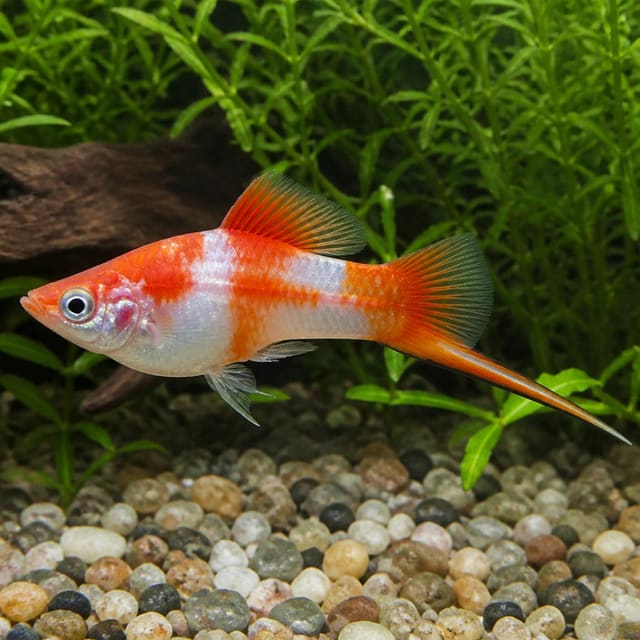
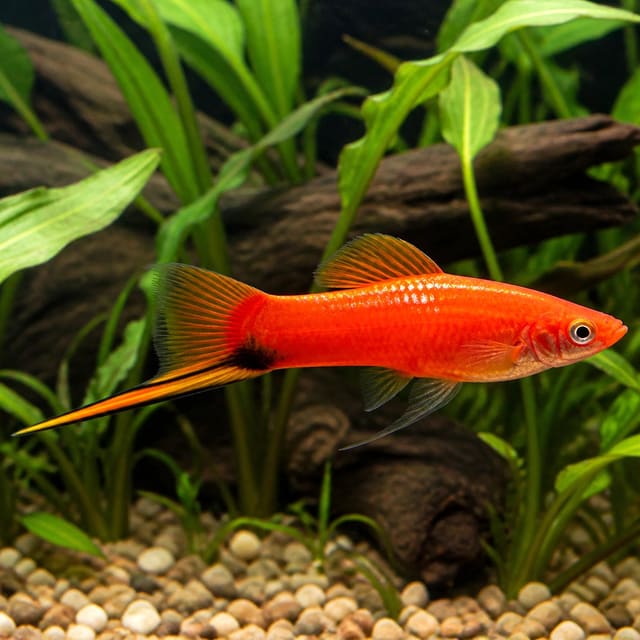
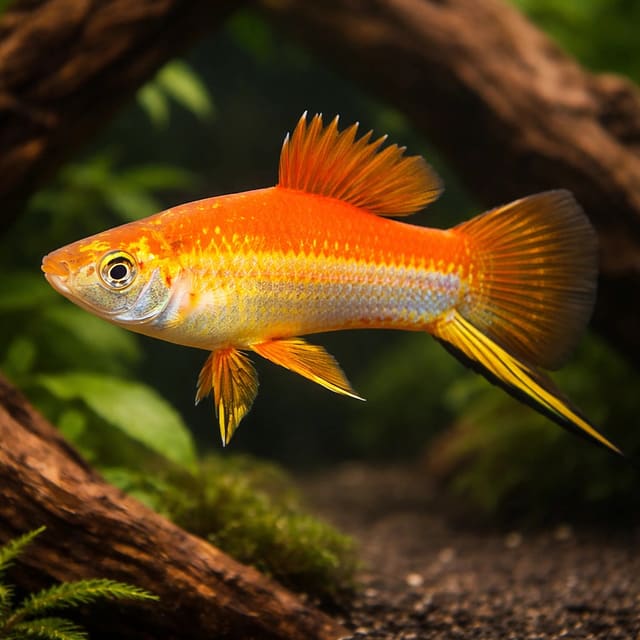
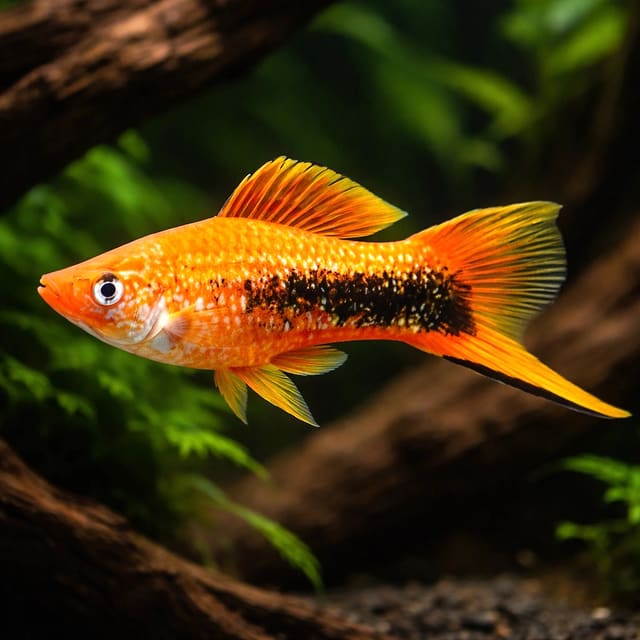
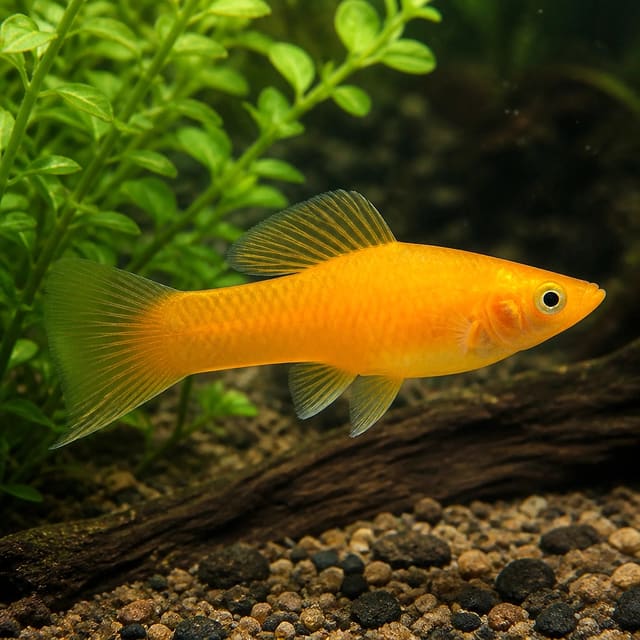
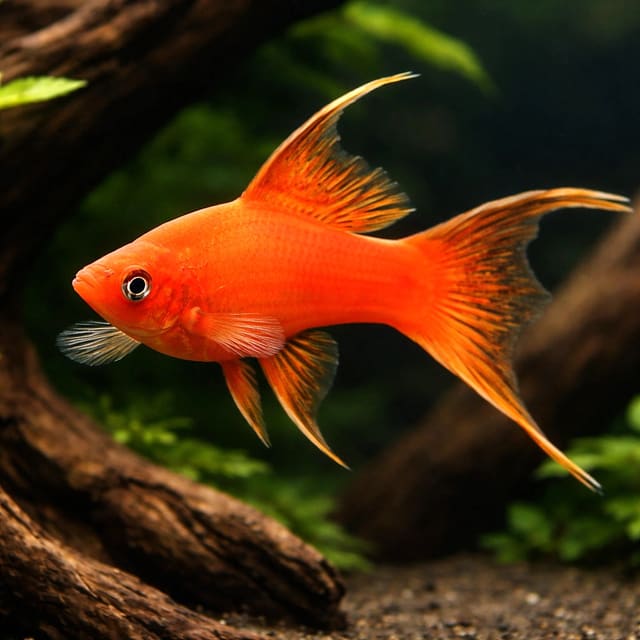
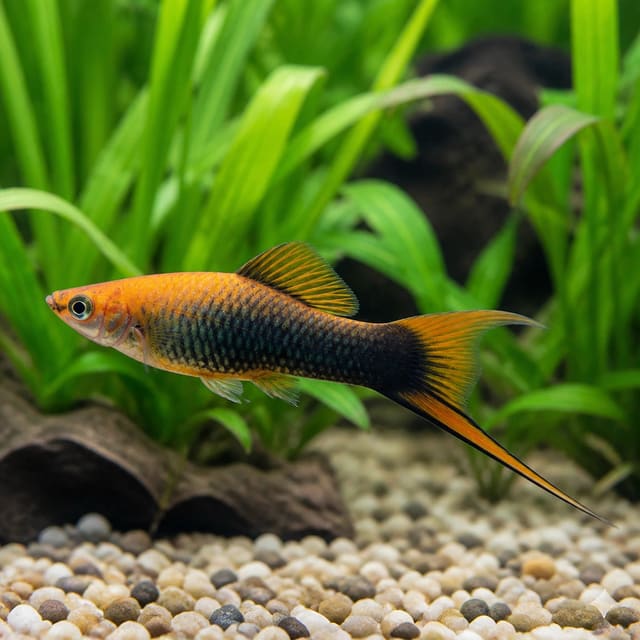
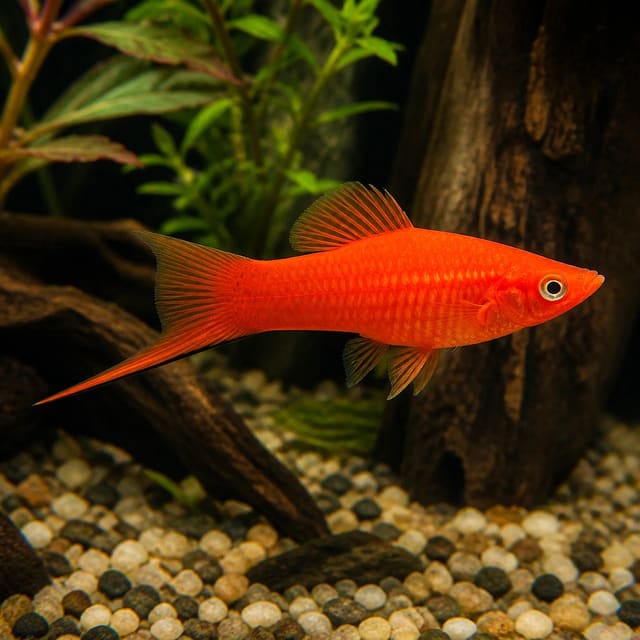
Swordtail Red (Xiphophorus helleri red)
22–27°C · pH 7–8 · 108L
£3.99

The Berlin Swordtail (Xiphophorus hellerii) is a livebearing poeciliid from North and Central America that reaches 14 cm. It suits prepared keepers with at least 108 litres and a 120 × 30 cm base; keep 22–27°C, pH 7.0–8.0 and 10–12 dGH, the overlap of Seriously Fish and OATA guidance, and OATA recommends at least three. Sold individually in sizes from 4–5 cm to 6–8 cm.
Adult size is the maximum length this species reaches at full maturity (scientific sources). The livestock you receive will be younger and smaller — pick a size above for the actual shipping size. Product-photo provenance and any image-specific limitations are stated on the listing.
Xiphophorus hellerii
Shoaling fish: kept in a group they feel safer, stay calmer and show their best colour.
The Berlin Swordtail (Xiphophorus hellerii) is a livebearing poeciliid from North and Central America that reaches 14 cm. It suits prepared keepers with at least 108 litres and a 120 × 30 cm base; keep 22–27°C, pH 7.0–8.0 and 10–12 dGH, the overlap of Seriously Fish and OATA guidance, and OATA recommends at least three. Sold individually in sizes from 4–5 cm to 6–8 cm.
Adult size is the maximum length this species reaches at full maturity (scientific sources). The livestock you receive will be younger and smaller — pick a size above for the actual shipping size. Product-photo provenance and any image-specific limitations are stated on the listing.
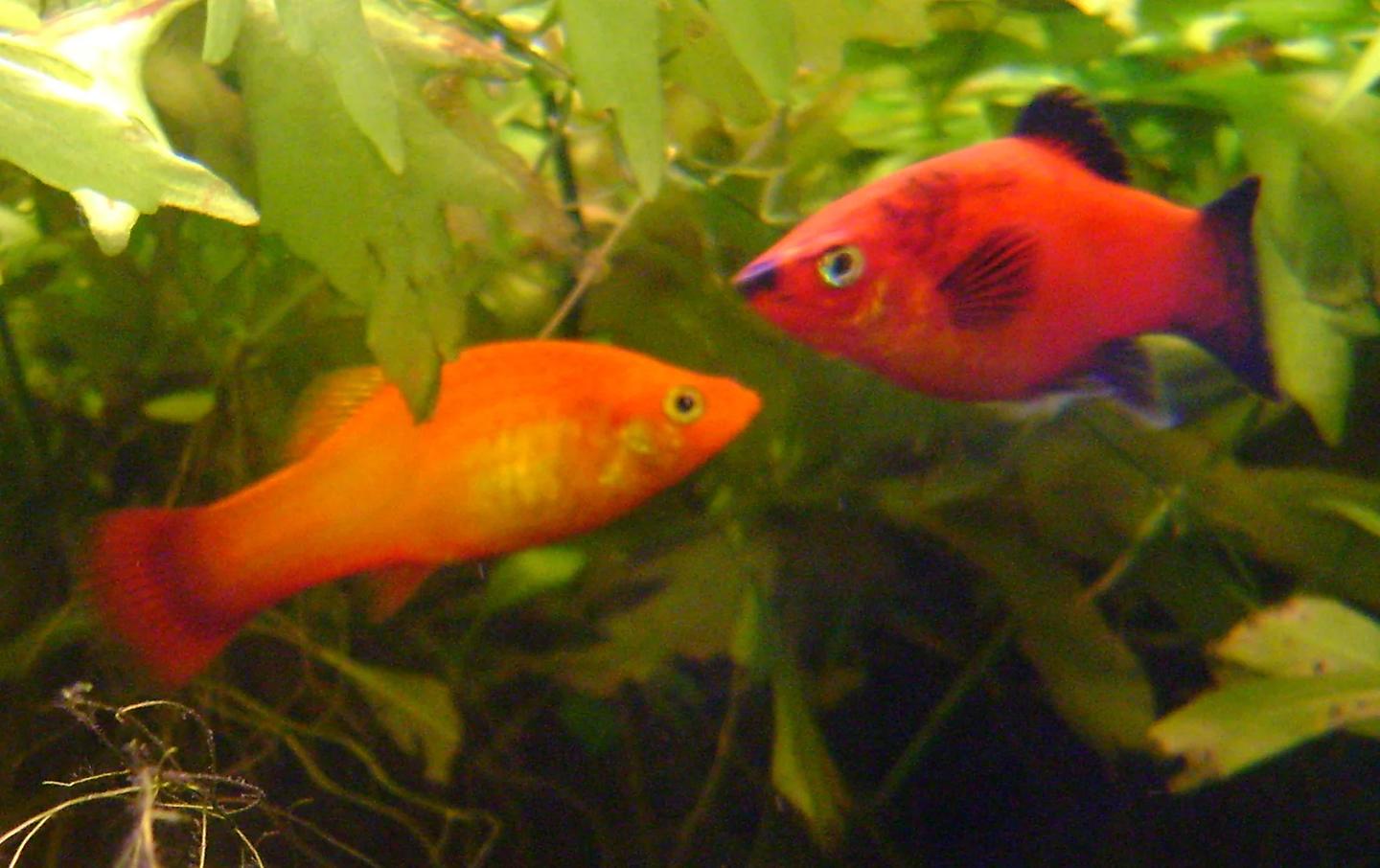
Platy is a trade name used for Xiphophorus maculatus, X. variatus and domestic forms. Start with at least three in a mature aquarium of at least 45 litres, verify the exact fish and measured water, and plan extra capacity before mixing sexes.
Maintain these water conditions for optimal health and vibrant colors
The Berlin Swordtail (Xiphophorus hellerii) is a livebearing freshwater fish in the family Poeciliidae. FishBase records its native range from Mexico to north-western Honduras and a maximum length of 14 cm. This active social fish suits a prepared keeper with a mature, filtered aquarium, measured mineral-bearing water and enough horizontal swimming space for its adult size. Plan at least 108 litres with a 120 × 30 cm base, keep the routine water within 22–27°C, pH 7.0–8.0 and 10–12 dGH, and assess every intended companion before introduction.
One purchase supplies one animal from the size selected. The live selector may show 4–5 cm, 5–6 cm and 6–8 cm, and it is the place to choose the required size. Quantity two means two individual animals from the same selected size; it does not create a pair or a particular social ratio.
The size you select is the size supplied, not the adult size. These measurements are commercial dispatch sizes rather than ages, life stages or final dimensions. A 4–5 cm fish therefore needs the same permanent adult aquarium plan as a larger dispatch size.
| Selected size | Plan on receiving |
|---|---|
| 4–5 cm | One animal in the selected dispatch band |
| 5–6 cm | One animal in the selected dispatch band |
| 6–8 cm | One animal in the selected dispatch band |
| Quantity three | Three individual animals from one selected size |
Sex is guaranteed only when the selected option explicitly states male or female. This Berlin Swordtail listing has no sex-guaranteed option. Neither dispatch size nor quantity changes that boundary, so plan a social group that can accommodate any sex supplied.
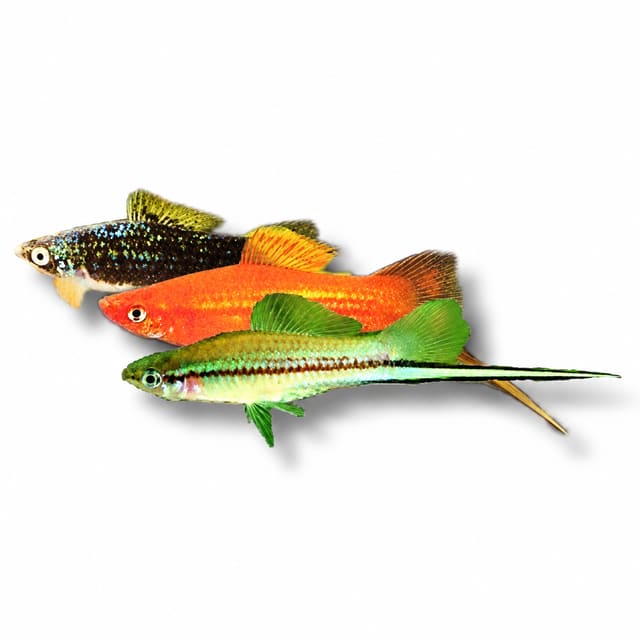
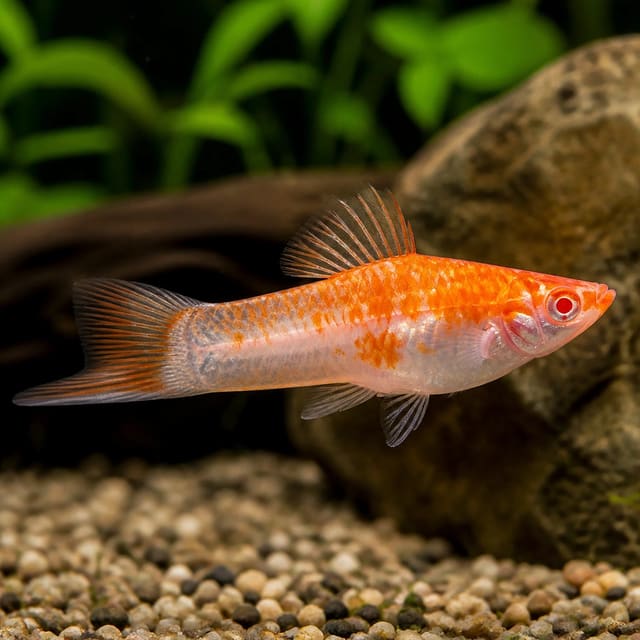
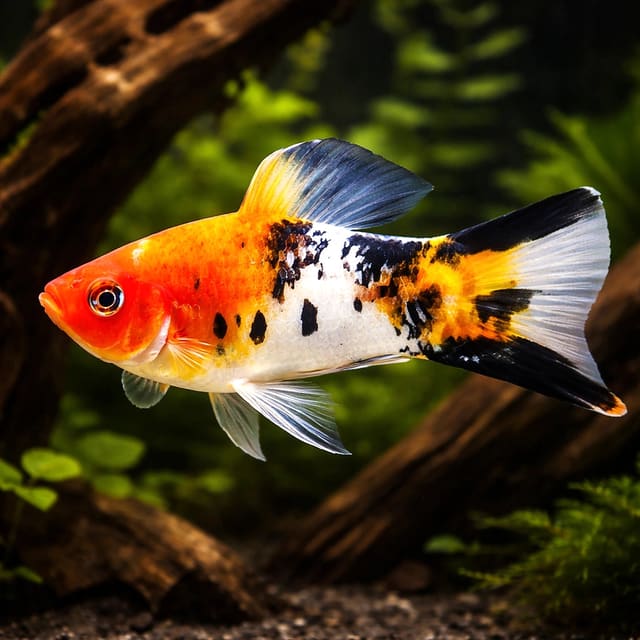
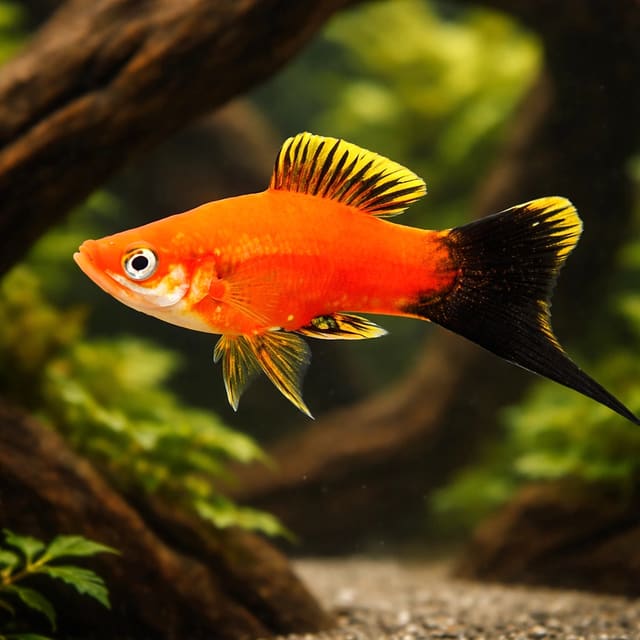
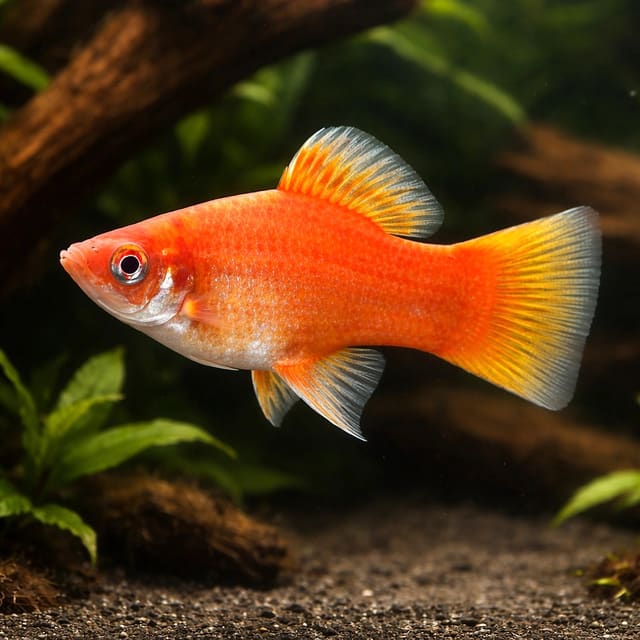
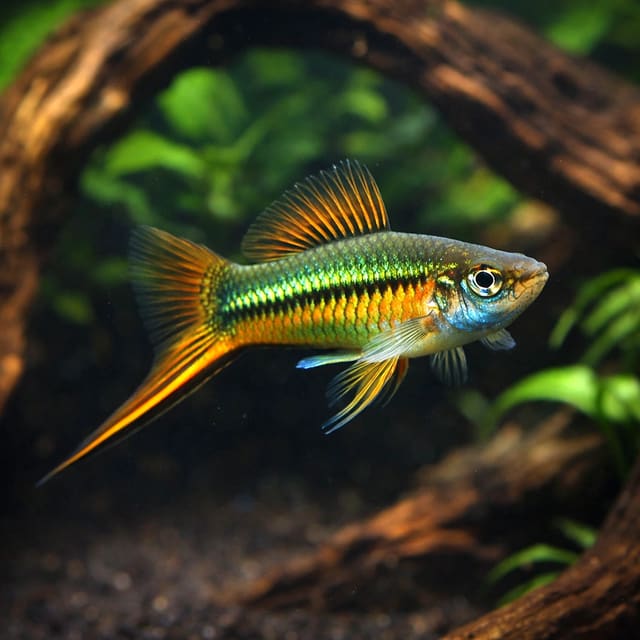
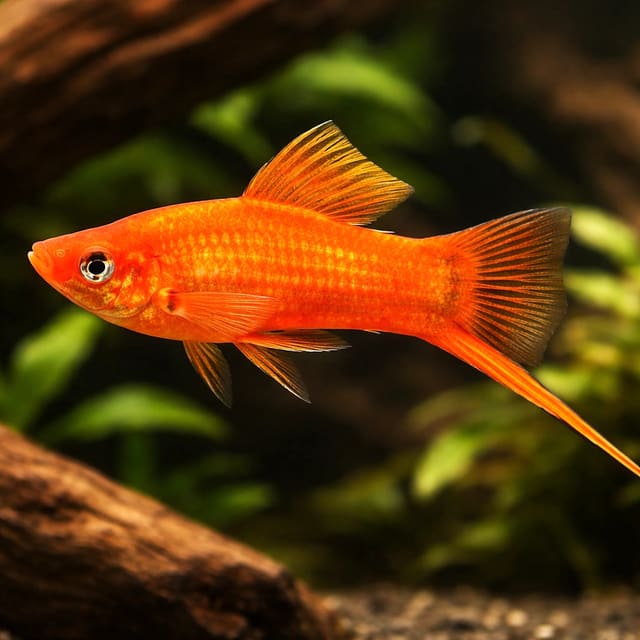
The gallery images are representative, based on reference photographs of this species, so colours can look slightly different from the live animal. Use the gallery to recognise the named form while allowing for individual variation. You can also browse the current livebearer collection when comparing animals with different adult-space and water requirements.
Adult dimensions and swimming space decide whether this fish fits your aquarium. Seriously Fish uses 140 mm standard length for aquarium planning and says a base measuring 120 × 30 cm, or an equivalent footprint, should be the smallest considered. Its corresponding volume is approximately 108 litres. FishBase separately records a maximum of 14 cm total length for male or unsexed fish. Plan around the 14 cm adult figure and the full recommended footprint rather than the dispatch size.
A nominal 108-litre aquarium is suitable only when its base offers the required swimming room. A tall, short tank may hold the same number of litres but does not provide the same horizontal route. Substrate, décor and the air space above the water also reduce usable volume, making the external capacity only the starting point for a stocking decision.
| Suits | Not suited to |
|---|---|
| A mature filtered aquarium of at least 108 litres with a 120 × 30 cm base | A compact aquarium planned around the dispatch size |
| Stable water at 22–27°C, pH 7.0–8.0 and 10–12 dGH | Water outside the shared care ranges |
| A planned social group with enough adult capacity | Confined groups in which male dominance occupies substantial time |
| Screened peaceful companions with matching needs | Timid tankmates exposed to boisterous chasing |
This is an active social fish rather than a choice for a compact desktop aquarium. Seriously Fish notes that males may form dominance hierarchies in confined spaces, while OATA recommends companionship for swordtails. More fish also require more filtration capacity and adult swimming room.
Our store suitability assessment is intermediate. The everyday tasks are straightforward, but success depends on coordinating adult space, mineral content, mature biological filtration, social pressure and measured feeding. A prepared keeper who tests water and observes behaviour can meet those needs; a newly filled aquarium or a setup chosen around dispatch size cannot.
Before choosing this animal, confirm that the permanent aquarium can provide its adult footprint, that every intended companion shares compatible water values and that additional fish will not push filtration or social space beyond capacity. Those decisions matter more than choosing between adjacent dispatch sizes.
Arrange the aquarium around a clear route through the main swimming area, then place cover along the back and sides. Seriously Fish says décor is not especially critical and describes heavily planted layouts, floating plants, driftwood roots and branches as suitable choices. These elements diffuse light and provide sheltered positions while preserving the open base length needed for movement.
| Area | Practical use |
|---|---|
| Front and centre | Keep a broad route open for normal swimming and feeding |
| Back and sides | Use plants or branches to provide cover |
| Surface | Add floating cover without sealing off gas exchange |
| Filter return | Maintain water movement without turning the whole tank into a strong current |
Filtration does not need to create an especially strong current, although the fish appreciates some water movement. Aim for circulation that carries waste towards the filter and moves the surface while still leaving calmer positions behind plants or wood. If every fish must swim continuously to hold position, diffuse or redirect the outlet rather than reducing essential filtration.
Use aquarium-safe gravel or sand. OATA recommends substrate and cover for swordtails, with live plants preferred where practical; artificial plants and suitable ornaments can provide shelter when live planting is not used. Check that openings and gaps cannot trap a fish at its current size or after growth.
A good layout balances shelter with visibility. Planting should not hide maintenance problems or stop you seeing whether an individual is feeding, breathing normally and using the aquarium confidently.
Keep the aquarium at 22–27°C, pH 7.0–8.0 and 10–12 dGH. These routine values are the overlap of the species aquarium range from Seriously Fish and OATA’s platy and swordtail guidance. Seriously Fish gives 16–28°C, pH 7.0–8.0 and 10–25 dGH for Xiphophorus hellerii; OATA gives 22–27°C, pH 7.0–8.0 and 4–12 dGH for the group, not a species-specific optimum.
OATA’s platy and swordtail guidance also gives 3–10 dKH, sets ammonia and nitrite at 0 mg/l and says nitrate should not exceed 20 mg/l above the normal tap-water level. Apply those nitrogen-waste targets to routine maintenance.
| Value | Decision |
|---|---|
| Temperature | Choose one stable point within 22–27°C and match companions to it |
| pH | Keep within 7.0–8.0 without abrupt chemical swings |
| General hardness | Keep within the shared range of 10–12 dGH |
| Carbonate hardness | Use OATA’s group guidance of 3–10 dKH |
| Ammonia | Maintain 0 mg/l |
| Nitrite | Maintain 0 mg/l |
| Nitrate | Keep no more than 20 mg/l above the tap-water baseline |
Test the tap water and aquarium with the same method so the comparison is meaningful. Our water chemistry guide explains what the main measurements mean, while the water matcher helps compare measured values with the care ranges. Enter test results rather than estimates.
If tap water measures pH 7.5 and 11 dGH, it sits within the shared aquarium guidance. Keeping it stable is preferable to dosing towards pH 7.0 or a particular hardness number. If the aquarium then shows ammonia or nitrite above 0 mg/l, treat that as a filtration or loading problem rather than trying to disguise it by changing pH.
Record temperature, pH, hardness, ammonia, nitrite and nitrate before introduction. Recheck after additions because more livestock and food increase the waste processed by the biological filter.
A working biological filter is essential. The RSPCA explains that beneficial bacteria convert toxic ammonia into nitrite and then into safer nitrate. Water in a new aquarium may look clear before that biological process is ready, so confirm ammonia and nitrite at 0 mg/l before adding this fish.
Prepare the aquarium in advance with the help of our first tropical tank guide. Increase livestock gradually after maturation. OATA warns that adding too many fish too quickly can exceed the bacterial population’s ability to process the extra waste, causing ammonia and nitrite to rise.
For an aquarium of approximately 108 litres, Seriously Fish suggests turnover of four to five times the volume each hour and a filter rated around 430–540 litres per hour. Treat the rating as a selection aid rather than a guaranteed delivered flow: media, pipework and accumulated debris can reduce actual circulation.
| Check | Action |
|---|---|
| Ammonia or nitrite detected | Check stocking, feeding, filter operation and recent changes immediately |
| Flow falls noticeably | Inspect for blockages while preserving mature biological media |
| Media needs cleaning | Rinse it lightly in aquarium water removed during maintenance |
| Replacement water | Treat it for chlorine or chloramine before adding it |
OATA strongly recommends a 25% partial water change at least once every week and testing at least weekly. Use the measured nitrate rise, feeding level and stocking load to decide whether more frequent maintenance is needed. Siphon accumulated solid waste while leaving enough established biology in the filter to continue processing dissolved waste.
Do not run filter media under the tap because chlorine or chloramine may kill the beneficial bacterial population. Avoid replacing every mature medium at once. If one component must be changed, retain established media and monitor ammonia and nitrite closely while the replacement matures.
Surface movement supports oxygen exchange, but it does not replace waste processing. Keep the filter running continuously, investigate an unexplained loss of flow and make equipment checks part of every water-change routine.
Xiphophorus hellerii is an omnivore. Seriously Fish reports that wild fish consume aquatic and terrestrial invertebrates, organic detritus, algae and other plant material. In the aquarium it recommends a balanced diet based on good-quality dried food with small live or frozen foods such as Daphnia, Artemia and bloodworm.
OATA advises feeding swordtails once a day, offering only what they can eat within a few minutes. Its group guidance recommends a good-quality flake or granule with a high algae content, supplemented by small live or frozen foods. This provides a clear routine: use a complete prepared food as the staple, keep an algae component in the rotation and add suitable small foods for variety.
| Food | Role in the routine |
|---|---|
| Complete flake or granule | Daily nutritional foundation in an appropriate particle size |
| Algae-rich prepared food | Regular plant and algae component |
| Daphnia or Artemia | Small live or frozen variety |
| Bloodworm | Measured supplementary food rather than the sole diet |
Start with a modest portion and watch the entire feeding period. Food should be eaten within a few minutes rather than collecting on the substrate or entering hidden spaces. Remove persistent leftovers and reduce the next portion; decaying food adds waste that the filter must process.
A missed feed does not need to be corrected with an oversized meal. Resume the measured routine and assess appetite alongside swimming, breathing and body condition. Consistent small decisions protect both nutrition and water quality.
OATA recommends keeping at least three platies or swordtails together and suggests two females for each male to reduce pressure on females and other inhabitants. This is broad social guidance rather than a guaranteed outcome for every group. Because this offer does not guarantee sex, do not treat a quantity of three as a planned one-male, two-female trio.
Start with the 108-litre, 120 × 30 cm species setup and assess how much of its capacity is already used. More swordtails need more swimming room and filtration capacity. The recommendation for companionship does not override adult stocking limits.
| Situation | Response |
|---|---|
| Adding one to an established group | Check adult capacity and observe whether attention concentrates on the newcomer |
| Planning three from this offer | Allow for any combination of sexes and the behaviour that follows |
| Several males develop | Watch for sustained dominance activity and prepare separation if needed |
| One fish is repeatedly displaced | Intervene before feeding or condition declines |
Seriously Fish notes that groups of males can form dominance hierarchies in confined spaces and may spend substantial time maintaining their positions. Brief interaction is different from one fish being chased continually, excluded from food or held in a corner. Observe who starts an interaction, who moves away and whether both animals resume normal swimming.
Adult males tend to be smaller and possess a gonopodium, while the characteristic sword is an extension of the lower caudal-fin lobe. Females do not usually have that male sword, although ornamental strains may carry other extended fins. These adult biological features can help manage an established group, but they do not change the sex terms of this offer.
Swordtails are livebearers, and Seriously Fish notes that females may store viable sperm for months. Plan aquarium capacity with the possibility of young in mind whenever sexes mix or a female has previously encountered a male. Do not rely on removing a visible male as a certain way to prevent later births.
Complete the permanent setup before the fish arrives. Confirm the required footprint, stable temperature, suitable pH and hardness, continuous filter flow, ammonia at 0 mg/l and nitrite at 0 mg/l. Check that existing inhabitants leave enough adult capacity rather than calculating from the selected dispatch size.
| Checkpoint | What to confirm |
|---|---|
| Before selection | The 120 × 30 cm base and approximately 108-litre volume fit the adult plan |
| Before arrival | Temperature and chemistry are stable, with zero ammonia and nitrite |
| First observation | The fish maintains balance and breathes without persistent distress |
| First feeds | Small portions are eaten within a few minutes |
| End of week | Tests remain safe and no individual is continually displaced |
OATA advises increasing fish numbers slowly so the beneficial bacteria in the mature filter can adjust as waste and feeding rise. Avoid combining this introduction with several other major changes. Replacing filter media, rearranging the whole aquarium and adding multiple animals together makes it harder to identify the cause of a problem.
Read our current delivery and Live Arrival Guarantee policy while planning receipt. Arrange for someone to receive the parcel and prepare to film continuously from the sealed parcel through opening, with the fish still inside the sealed bag. Float the bag for 20–30 minutes before releasing the fish, and never pour the bag water into the aquarium.
Write down the temperature, pH, hardness, ammonia, nitrite and nitrate readings taken before introduction. Repeat the key waste tests during the first week and compare them with that baseline. A rising nitrate trend may call for maintenance, while any ammonia or nitrite needs prompt investigation of filter performance, feeding and total load.
Watch from a distance as well as at feeding time. A newly introduced animal needs access to swimming space, cover and food without continuous pursuit. Early observation lets you identify social pressure before it affects condition.
OATA recommends watching swimming, colour, temperament, breathing, appearance, body condition and feeding. Learn the normal pattern for each individual, then act when a change persists or several signs occur together. A single observation is most useful when compared with test results and recent events.
| What you notice | First response |
|---|---|
| Hanging at the surface | Check temperature, filter flow, surface movement, ammonia and nitrite |
| Sitting on the bottom | Review water values, breathing and social pressure |
| Erratic swimming | Check water chemistry, equipment and recent changes |
| Faster or slower breathing | Test water and inspect circulation promptly |
| Reduced interest in food | Observe whether the fish is displaced and review water quality |
| White spots or fluffy growth | Record the change and seek appropriate health guidance |
Begin with objective measurements rather than guessing from appearance alone. Ammonia and nitrite should remain at 0 mg/l, and nitrate should stay no more than 20 mg/l above the tap-water baseline. Confirm temperature and pH with working equipment, then inspect whether the filter has stopped or lost flow.
If water tests are outside their targets, correct the husbandry cause while avoiding abrupt swings. Review overfeeding, sudden stocking increases, blocked flow and recent media changes. Keep notes of readings and behaviour so a pattern is easier to interpret.
Contact us when a health change persists, worsens or occurs alongside abnormal breathing, loss of balance, marked weight change or refusal to feed. Accurate test results, the aquarium volume, temperature and a short timeline make further guidance more useful.
Continue routine observation after the first week. Weekly testing and maintenance are minimum habits, while daily feeding provides a regular opportunity to confirm that each fish can reach food and move normally through the aquarium.
OATA describes platies and swordtails as generally peaceful and compatible with other species, but notes that large swordtails can become boisterous and may chase timid tankmates. Use that as a screening rule rather than a universal approval. Compare adult dimensions, water values, activity, feeding access and the space already occupied before adding any companion.
| Screen result | Decision |
|---|---|
| All adult needs overlap | Proceed cautiously and observe the actual individuals |
| Water ranges only touch at an endpoint | Choose a combination with a broader stable overlap |
| Companion is notably timid | Allow for boisterous chasing and choose another plan if it cannot withdraw |
| Current tank is already crowded | Do not add fish merely because the species is often called peaceful |
A temperature match alone is not enough. Two fish may share 24°C while requiring different hardness, activity levels or social space. Equally, a large volume does not solve every conflict if one fish controls the only open route or feeding point.
Watch established inhabitants at feeding time and during normal movement. If the swimming space is already busy, adding an active swordtail can increase competition even when the nominal litre count looks adequate. A larger footprint and separated feeding points may improve access, but they do not guarantee harmony.
Compatibility remains conditional because individual behaviour varies. Use the screening rule before introduction and continue observing afterwards, with a practical separation plan if one animal cannot feed, rest or move normally.
Social compatibility includes interactions within the swordtail group. Seriously Fish records that males may form dominance hierarchies in confined spaces. OATA recommends companionship and a female-heavy ratio when sexes are known, but this offer does not provide a chosen sex. Build the aquarium so any resulting combination can be observed and managed.
| Observation | Management decision |
|---|---|
| Brief display followed by normal swimming | Continue observing access to space and food |
| Repeated chasing through the whole aquarium | Assess whether the aquarium provides enough space and prepare separation |
| One fish remains hidden at feeding time | Separate feeding points and check whether harassment continues |
| One individual loses condition | Intervene rather than waiting for the hierarchy to resolve itself |
Footprint is the first management tool. The 120 × 30 cm species minimum provides a starting point for the adult plan, while groups and communities may need more. Plants, roots and branches provide cover, but leave enough open water for every fish to move without entering a narrow bottleneck.
Swordtails reproduce through internal fertilisation, and females may retain viable sperm for months. A group can therefore produce young after an apparently simple change in composition. Treat future population growth as part of compatibility because additional fish increase feeding, waste, swimming-space and filtration demands.
Do not select companions or group quantity on the assumption that a particular sex will arrive. If the aquarium cannot absorb additional reproductive or dominance pressure, choose a lower-risk stocking plan before purchase rather than relying on later identification.
Step in when a fish is continually excluded from food, held in one part of the aquarium, injured or losing condition. First check water quality because environmental stress can occur alongside social problems. Then assess footprint, group composition and total stocking, and separate fish where one cannot resume normal activity.
The most reliable community is one planned around measurable overlap and observed behaviour. General peacefulness supports consideration, but the final decision belongs to the actual aquarium and its inhabitants.
The Berlin Swordtail reaches 14 cm, the maximum length recorded by FishBase. Plan the aquarium around that adult figure rather than the selected dispatch size.
A Berlin Swordtail needs at least approximately 108 litres with a 120 × 30 cm base or an equivalent footprint, according to Seriously Fish. Allow more adult capacity for a group or community.
OATA recommends at least three swordtails and suggests two females per male when sexes are known. This offer does not guarantee sex, so allow enough adult space for any combination supplied.
The Berlin Swordtail has an intermediate store suitability rating. It suits a prepared keeper who can provide at least 108 litres, a 120 × 30 cm base, mature filtration, measured water and careful social planning.
Feed Xiphophorus hellerii once daily with a good-quality complete flake or granule containing an algae component, plus small live or frozen foods such as Daphnia, Artemia or bloodworm. Offer only what it eats within a few minutes.
Keep this fish at 22–27°C, pH 7.0–8.0 and 10–12 dGH, the overlap of Seriously Fish species guidance and OATA group guidance. Keep ammonia and nitrite at 0 mg/l.
Males may form dominance hierarchies in confined spaces, and OATA says large swordtails can be boisterous and may chase timid tankmates. Screen companions for temperament, adult space and feeding access, and intervene if chasing prevents normal movement or feeding.
It can be considered for a peaceful community when every inhabitant shares compatible temperature, pH, hardness, adult space, activity and feeding needs. Avoid pairing a large, boisterous swordtail with timid tankmates that cannot withdraw from chasing.
Start filming every delivery continuously while the parcel is still sealed, then record it being opened with the fish still inside the sealed bag. Someone must be present to receive it. Float the bag for 20–30 minutes before releasing the fish, and never pour the bag water into the aquarium.
No reviews for this item yet. Bought one? Honest reviews only, good or bad.
What customers say about ordering from us
I have a small group of long finned mountain minnows. So was delighted to be able to order ten of this variety to increase the genetics in my tank . The ones I recieved are healthy but it’s to early to give a verdict on wether they are of a long finned type since they are small currently.
Gordon Walker · 23 Sept 2026
100% success travel and "installation". Pleased with quality of purchase. The Siamese fighter a bit "shy" so have not yet seen him at his best yet but looking good. Happy customer. GG
George E Garratt · 21 Sept 2026
Reviews of our shop, collected by Judge.me, an independent third-party review collector. Newest first.