Easy
Xiphophorus helleri orange comet
22–27°C · pH 7–8 · 108L
£3.99
Photo coming soon
The size, price and care details on this page are for this listing.
One Vienna Broccoli Swordtail per quantity. An active Xiphophorus hellerii high-dorsal strain for a 90 cm+ aquarium with harder, neutral-to-alkaline water and carefully planned companions.
Xiphophorus hellerii
Shoaling fish: kept in a group they feel safer, stay calmer and show their best colour.
One Vienna Broccoli Swordtail per quantity. An active Xiphophorus hellerii high-dorsal strain for a 90 cm+ aquarium with harder, neutral-to-alkaline water and carefully planned companions.
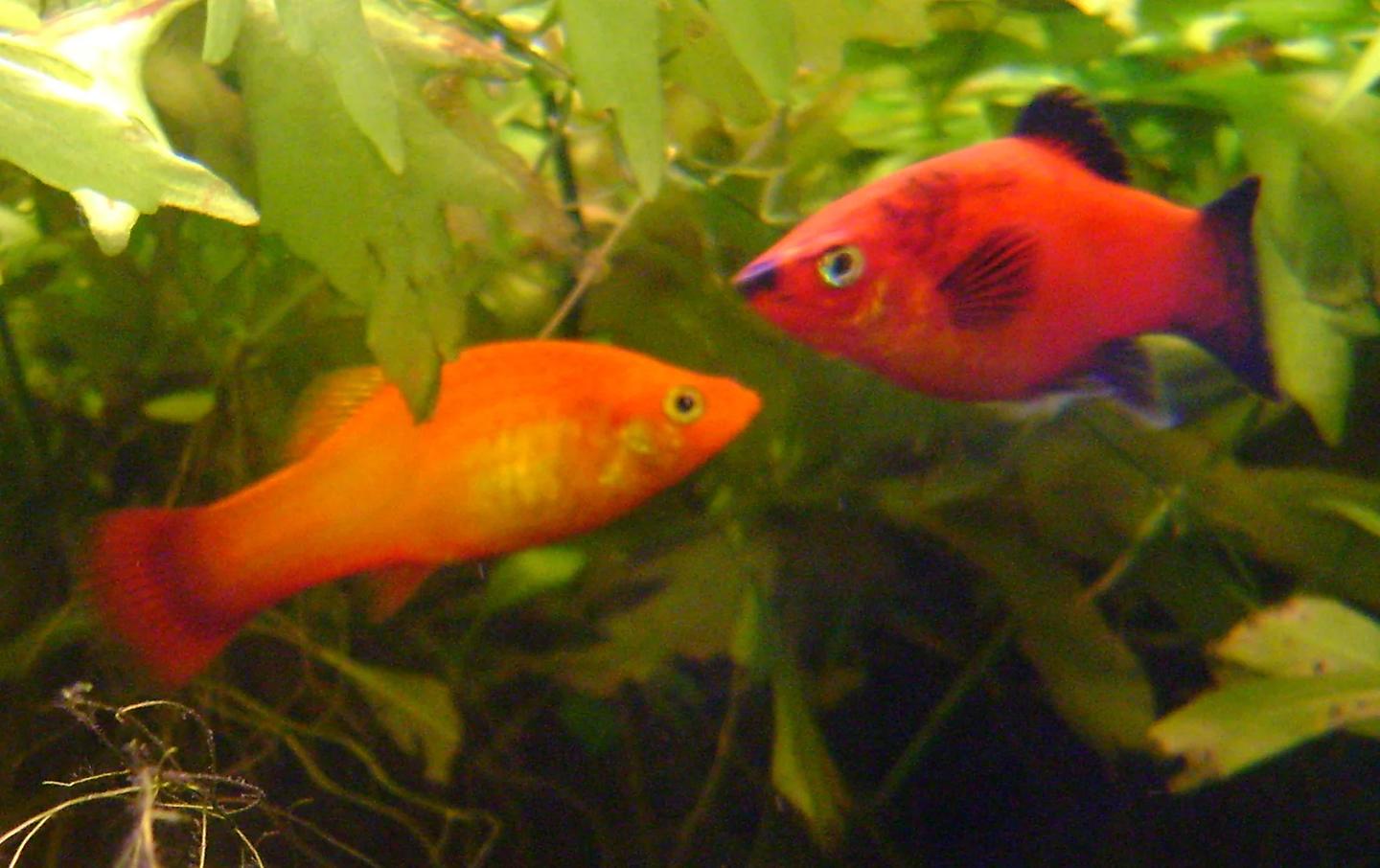
Platy is a trade name used for Xiphophorus maculatus, X. variatus and domestic forms. Start with at least three in a mature aquarium of at least 45 litres, verify the exact fish and measured water, and plan extra capacity before mixing sexes.
Maintain these water conditions for optimal health and vibrant colors
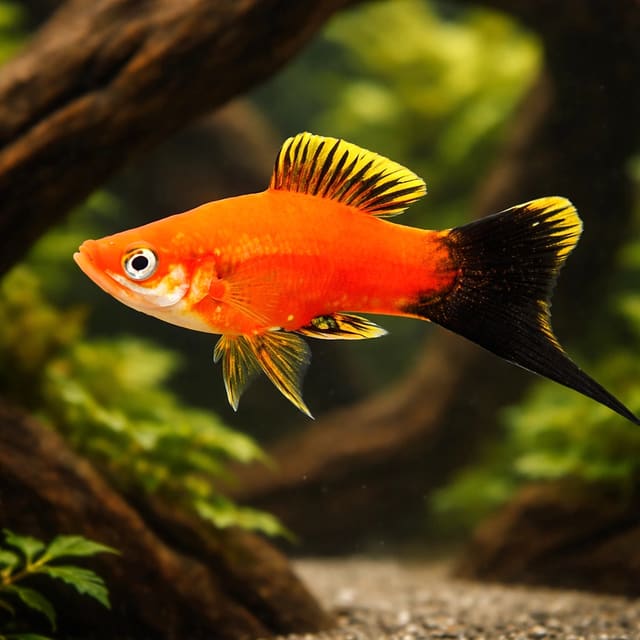
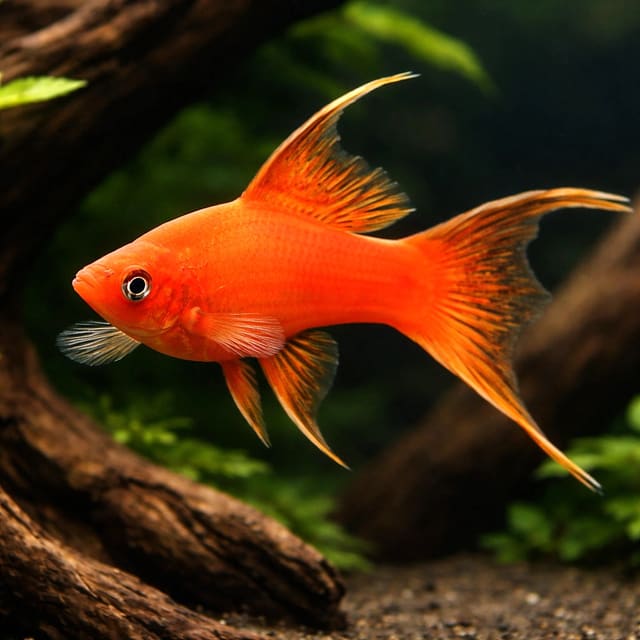
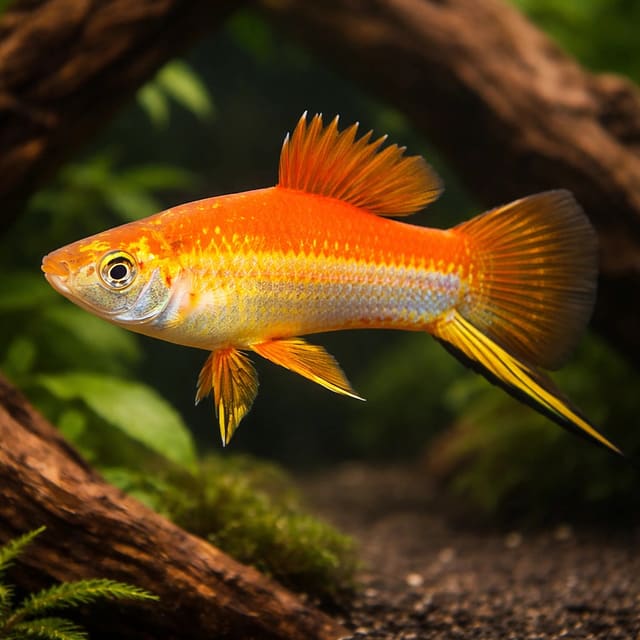
Vienna Broccoli Swordtail (Xiphophorus hellerii) is an aquarium-bred swordtail selected for an unusually enlarged, sculpted dorsal fin and a strong red appearance. You may also see this strain written as “Wien Broccoli”; Wien is the German name for Vienna. It is an active livebearer rather than a small, slow community fish, so its adult size, swimming room and social behaviour should be planned before ordering.
This strain belongs to the livebearer family Poeciliidae. The wild species is native to Middle America, from Veracruz in Mexico towards northwestern Honduras, while “Vienna Broccoli” describes a cultivated aquarium form rather than a separate wild species or locality.
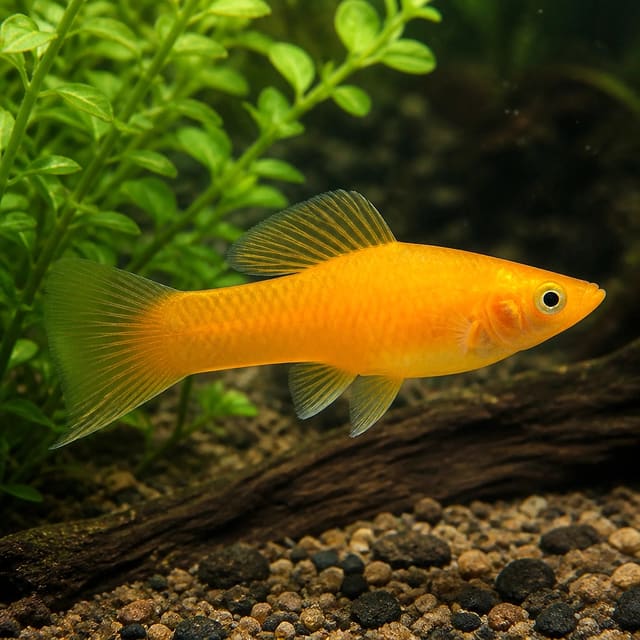
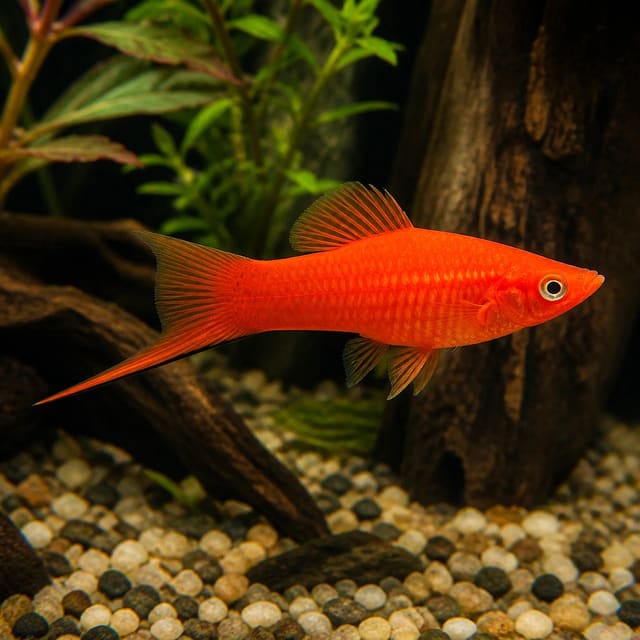
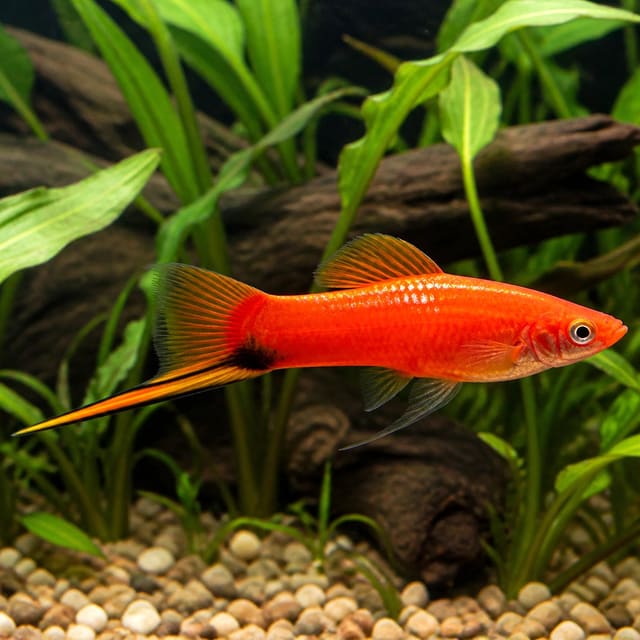
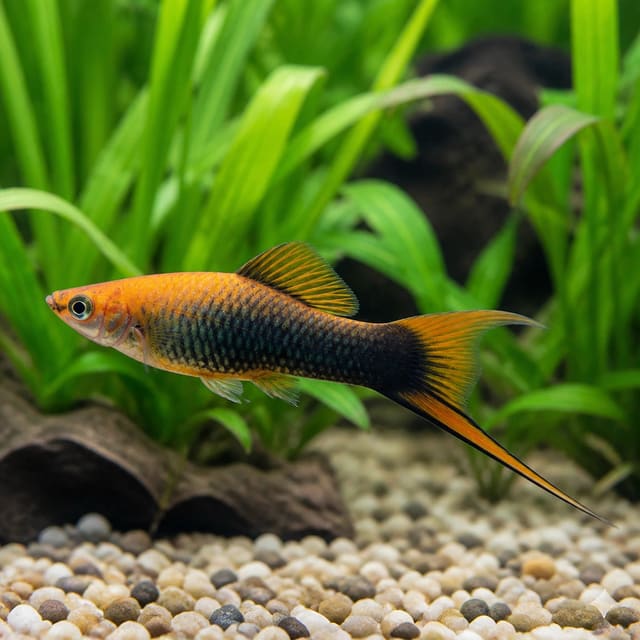
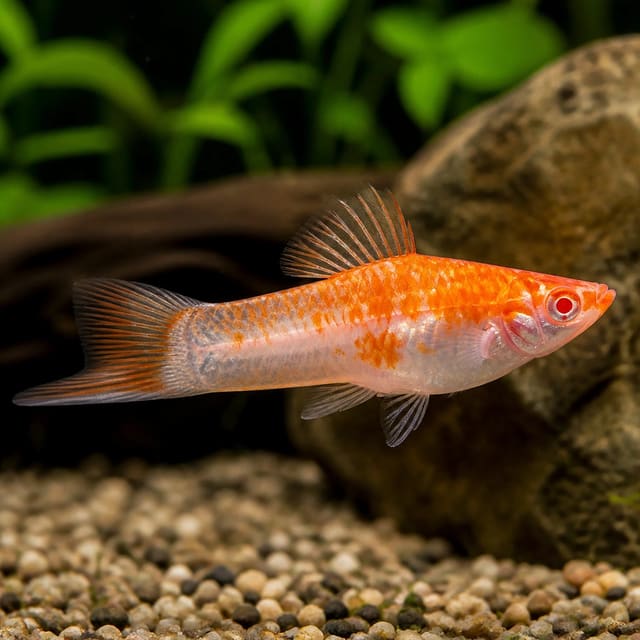
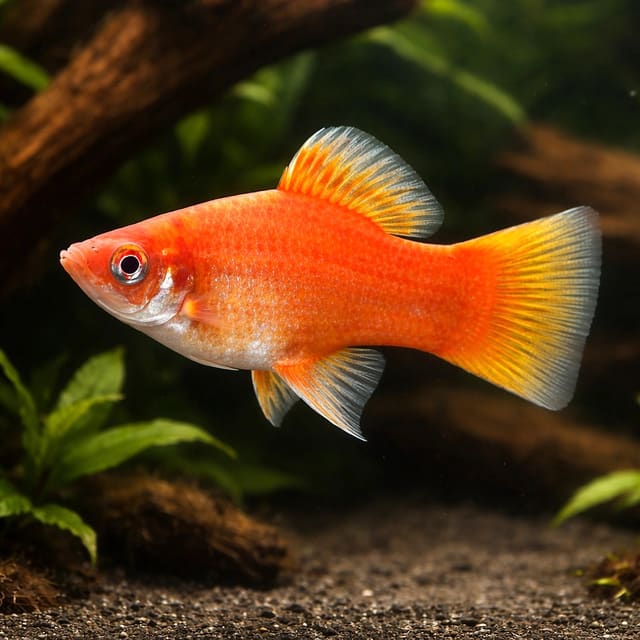
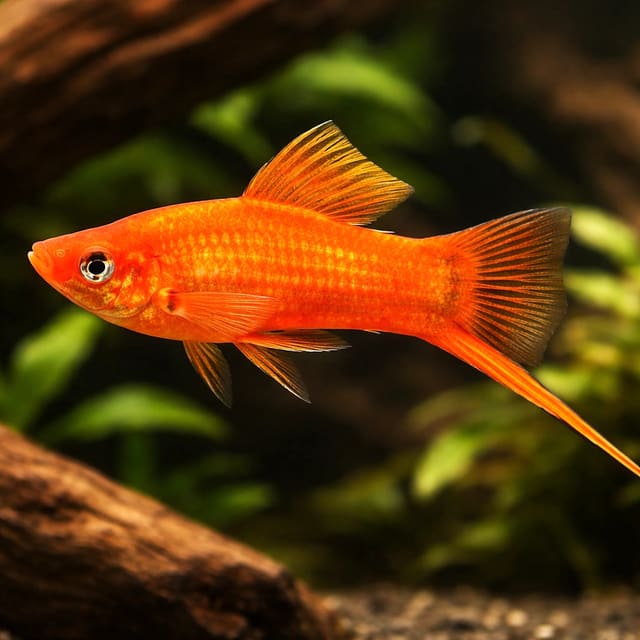
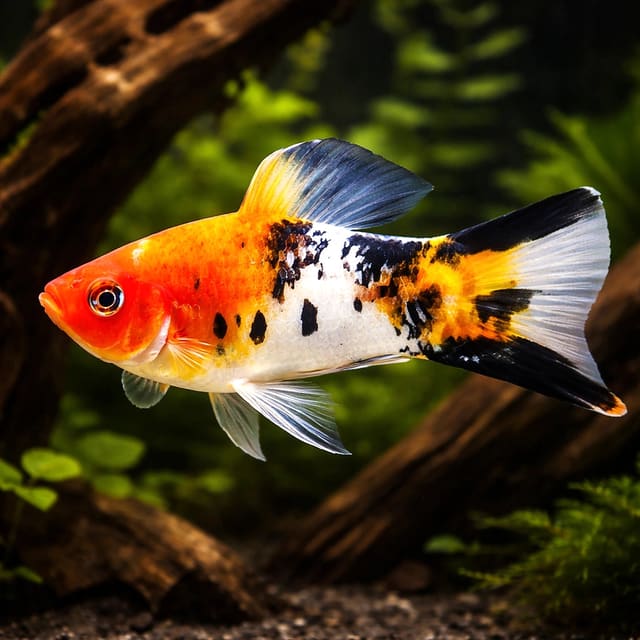
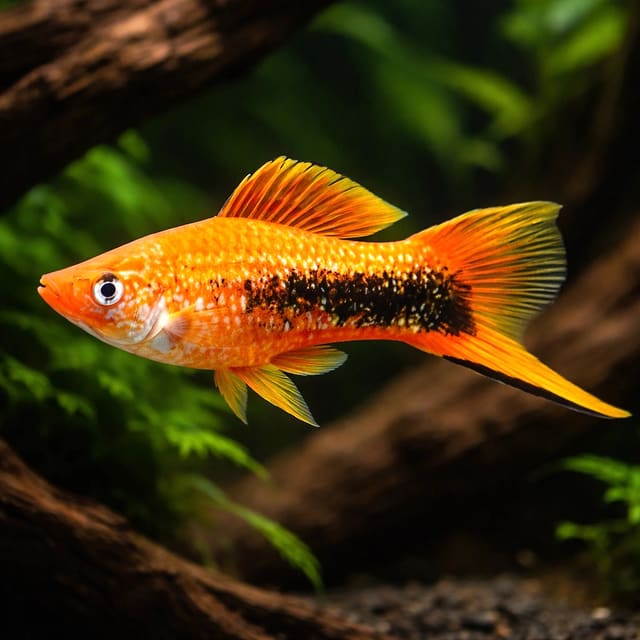
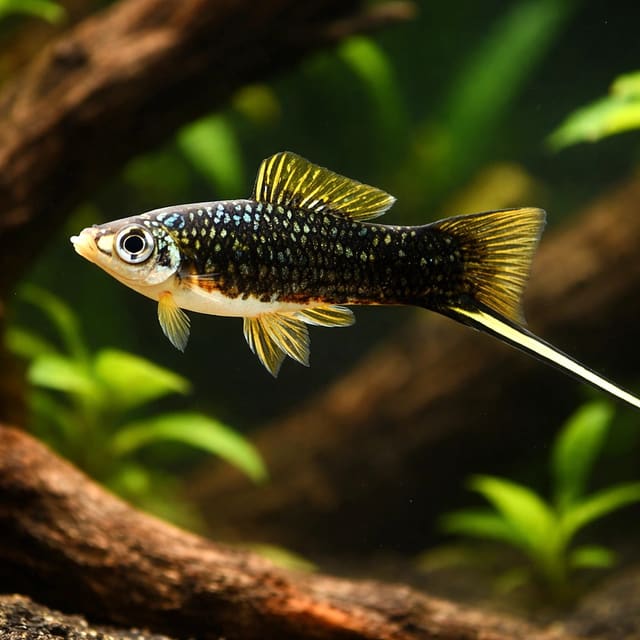
Each quantity adds one fish. Sex, age, exact size, fin development and colour intensity are not selectable unless a choice is shown above. Young fish may not yet display the full adult sword or enlarged dorsal fin. The gallery is representative of the strain rather than the exact fish dispatched.
| Accepted scientific name | Xiphophorus hellerii Heckel, 1848 |
|---|---|
| Family | Poeciliidae |
| Wild-species origin | Middle America, from Veracruz in Mexico towards northwestern Honduras |
| Other trade wording | Wien Broccoli Swordtail; Broccoli Swordtail |
| Sale unit | One fish per quantity |
| Sex and size selection | Not selectable unless an option is displayed |
| Reported adult maximum | Up to about 14 cm for males and 16 cm for females |
| Aquarium length | At least 90 cm; longer is preferable for a group |
| Temperature | 22–28°C |
| pH | 7.0–8.0 |
| General hardness | About 9–19 dGH |
| Diet | Omnivorous; varied prepared, frozen and vegetable-rich foods |
| Care level | Moderate |
Broccoli describes a cultivated fin form, not a wild locality. Aquarium Glaser records the line as a development involving Simpson high-fin and lyretail swordtails. Its most recognisable feature is a very large dorsal fin whose rays and membrane can form a wavy, folded outline. The same account explains that the red albino expression is known in the trade as Vienna Cross. This breeding history is why “Broccoli”, “Vienna” and “Wien” can appear together in supplier and retailer names.
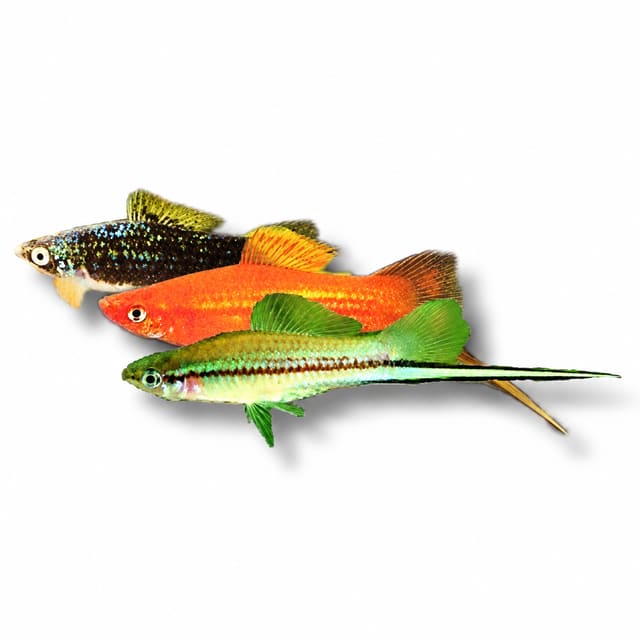
Fin length, body colour and the degree of dorsal folding vary between individuals and become clearer as fish mature. Males normally develop the lower caudal-fin “sword” and a gonopodium, while females are generally deeper-bodied and do not carry the same mature sword extension. A juvenile cannot always be sexed reliably from an early photograph, so the trade name should not be read as a promise of one exact adult appearance.
A Vienna Broccoli Swordtail needs horizontal swimming room. Use an aquarium at least 90 cm long, with a longer tank preferred when keeping several adults or mixing them with other energetic livebearers. This length-based recommendation is more useful than a low litre figure because two aquariums with the same volume can offer very different swimming space.
Leave an open route across the middle and upper levels, then use robust planting, wood or other aquarium-safe structure around the sides and rear to break sightlines. Dense marginal or floating plants give females and young fish places to withdraw. Maintain good filtration and oxygenation without turning the whole aquarium into a forceful current.
Add this fish only to a fully cycled aquarium. Test temperature, pH, hardness, ammonia, nitrite and nitrate rather than judging water quality by clarity. Ammonia and nitrite should remain at zero; regular partial water changes and sensible feeding help control nitrate and dissolved waste. Stability matters more than chasing a particular number with sudden chemical adjustments.
The species is associated with harder, neutral-to-alkaline water. FishBase reports 22–28°C, pH 7.0–8.0 and 9–19 dGH for Xiphophorus hellerii. Check that your tap water and established aquarium are reasonably compatible before ordering. If your water is naturally very soft or acidic, plan a measured, stable remineralisation method rather than exposing the fish to repeated swings.
| Check | Suitable approach | Avoid |
|---|---|---|
| Temperature | Stable 22–28°C with adequate oxygen | Rapid heating or cooling |
| pH and hardness | Stable neutral-to-alkaline, moderately hard water | Large corrective doses that cause swings |
| Waste control | Cycled filter, testing and regular partial water changes | Overstocking or relying on clear-looking water |
| Flow | Good circulation with calmer planted areas | Relentless strong current across the whole tank |
Swordtails can work in a well-chosen community, but “peaceful” should not be interpreted as passive. They are persistent, fast-moving fish, and adult males can compete with one another. Males may also direct frequent courtship towards females. Aquarium length, cover, sex ratio and the number of males all influence how much pressure one fish receives.
For a mixed-sex group, provide generous space, broken sightlines and more females than males. A UK care profile advises larger groups with at least three males, outnumbered by females, when keeping several males together; this distributes rivalry more safely than a cramped pair of males. A single unsexed fish or an unexpectedly male-heavy group may require a revised stocking plan as the fish mature. Never add extra fish only to satisfy a ratio if doing so would overstock the aquarium.
| Usually better candidates | Use caution or avoid |
|---|---|
| Robust, similarly sized community fish that prefer comparable harder water | Tiny, timid or slow-feeding fish that may be unsettled by constant activity |
| Other suitable livebearers where the aquarium has enough room and filtration | Persistent fin-nippers, especially around enlarged dorsal and tail fins |
| Peaceful bottom dwellers compatible with the same water chemistry | Aggressive or strongly territorial fish |
| A carefully planned swordtail group with visual cover | Cramped male groups or mixed-sex groups with no refuge for females |
Compatibility is never guaranteed by a species list alone. Compare adult size, water chemistry, swimming speed, feeding behaviour and individual temperament, and have a safe separation plan if persistent chasing or fin damage develops. Browse the wider swordtail collection when planning a compatible group, but calculate the final adult stocking level before adding fish.
Offer a varied omnivorous diet rather than relying on one flake indefinitely. A quality small pellet or flake can form the staple, supported by appropriately sized frozen or live foods and foods containing plant or algae material. FishBase records worms, crustaceans, insects and plant matter in the species’ diet.
Feed portions the fish can finish promptly, once or twice daily according to age, stocking and filtration. Make sure shy tank mates still receive food, and remove persistent leftovers. Variety supports condition and natural foraging, but heavy feeding cannot substitute for suitable water quality and regular maintenance.
Xiphophorus hellerii is a livebearer: females produce free-swimming young rather than laying eggs. FishBase reports a gestation of roughly 24–30 days and broods that can vary widely, from about 20 to 200 young. Mature females can also store sperm, so fry may appear after separation from a male.
If you want fry to survive, provide fine-leaved or floating cover and plan how growing juveniles will be housed. Adults may eat young fish, while a densely planted aquarium can quickly produce more survivors than expected. Breeding therefore increases the need for space, filtration and a responsible rehoming plan; it is not automatically a benefit in every community aquarium.
Before dispatch, confirm that the aquarium is cycled and the water matches the range above. Read the current livestock delivery and Live Arrival Guarantee terms before choosing a delivery date, because eligibility and reporting steps matter.
When the fish arrives, follow the acclimation instructions supplied with the order. Keep the aquarium lighting low, avoid chasing or handling the new fish, and allow it time to settle. Observe breathing, balance, fins and interactions closely. Feed lightly at first and separate the fish if established residents cause sustained harassment.
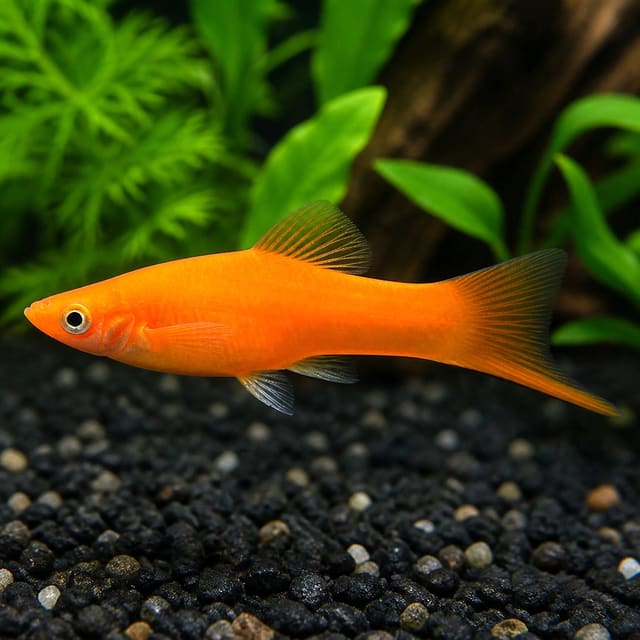
The current gallery image is a representative illustration based on the product name; it is not a photograph of the exact fish that will be dispatched. Use the written strain description, scientific name and selectable options as the purchasing specification. Natural variation, age, sex, lighting and settling time can all affect the colour and fin development you see.
No reviews for this item yet. Bought one? Honest reviews only, good or bad.
What customers say about ordering from us
Easy website plenty of info on fish your buying great to pick a time slot
TRACEY DURRANT · 7 Oct 2026
Got some lovely fish thank you
Kevin Mackie · 7 Oct 2026
Reviews of our shop, collected by Judge.me, an independent third-party review collector. Newest first.