Easy
Swordtail Red (Xiphophorus helleri red)
22–27°C · pH 7–8 · 108L
£3.99

The Wien Swordtail (Xiphophorus helleri Wien) is a Poeciliid livebearer native from Mexico to north-western Honduras that reaches 14 cm. It suits a mature, filtered aquarium of at least 120 × 30 cm, around 108 litres; the FishBase, Seriously Fish and OATA ranges overlap at 22–27°C, pH 7.0–8.0 and 10–12 dGH. Sold individually in 3–4 cm, 4–5 cm, 5–6 cm, L and XL sizes.
Adult size is the maximum length this species reaches at full maturity (scientific sources). The livestock you receive will be younger and smaller — pick a size above for the actual shipping size. Product-photo provenance and any image-specific limitations are stated on the listing.
Xiphophorus helleri
Shoaling fish: kept in a group they feel safer, stay calmer and show their best colour.
Minimum of 2 per order.
The Wien Swordtail (Xiphophorus helleri Wien) is a Poeciliid livebearer native from Mexico to north-western Honduras that reaches 14 cm. It suits a mature, filtered aquarium of at least 120 × 30 cm, around 108 litres; the FishBase, Seriously Fish and OATA ranges overlap at 22–27°C, pH 7.0–8.0 and 10–12 dGH. Sold individually in 3–4 cm, 4–5 cm, 5–6 cm, L and XL sizes.
Adult size is the maximum length this species reaches at full maturity (scientific sources). The livestock you receive will be younger and smaller — pick a size above for the actual shipping size. Product-photo provenance and any image-specific limitations are stated on the listing.
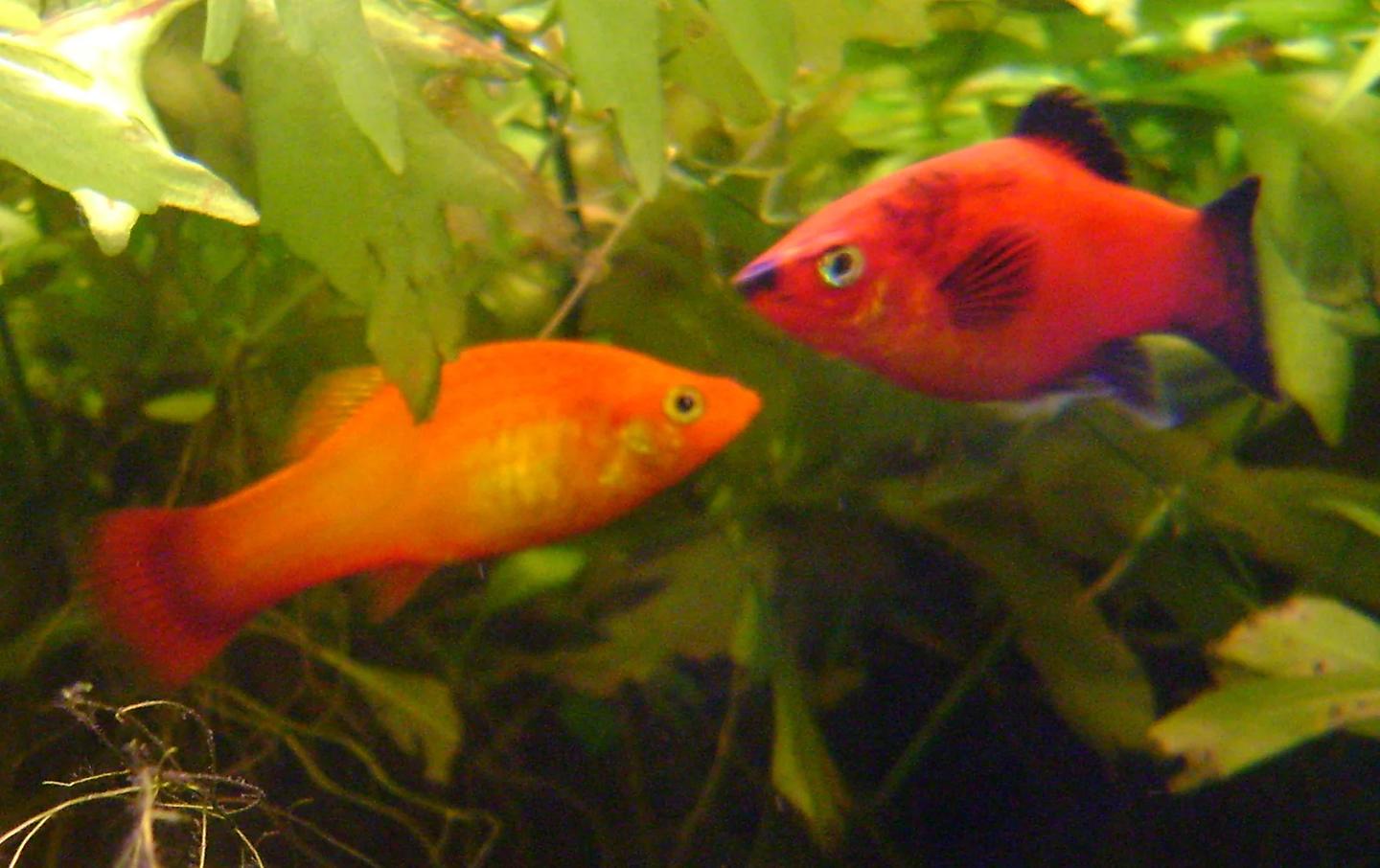
Platy is a trade name used for Xiphophorus maculatus, X. variatus and domestic forms. Start with at least three in a mature aquarium of at least 45 litres, verify the exact fish and measured water, and plan extra capacity before mixing sexes.
Maintain these water conditions for optimal health and vibrant colors
The Wien Swordtail is a Poeciliid livebearer native from Mexico to north-western Honduras that reaches 14 cm total length. This active, generally peaceful fish suits a mature, filtered aquarium planned around its adult swimming space, stable water and social behaviour. It belongs with the swordtails rather than the smaller platies, although both groups are closely related livebearers. You can browse the wider livebearers collection when comparing body size, swimming space and social needs.
FishBase now lists it as Xiphophorus hellerii, treating Xiphophorus helleri as a synonym. FishBase records a maximum of 14 cm total length for male or unsexed fish. It occurs in freshwater and brackish environments and has also formed introduced populations outside its native range.
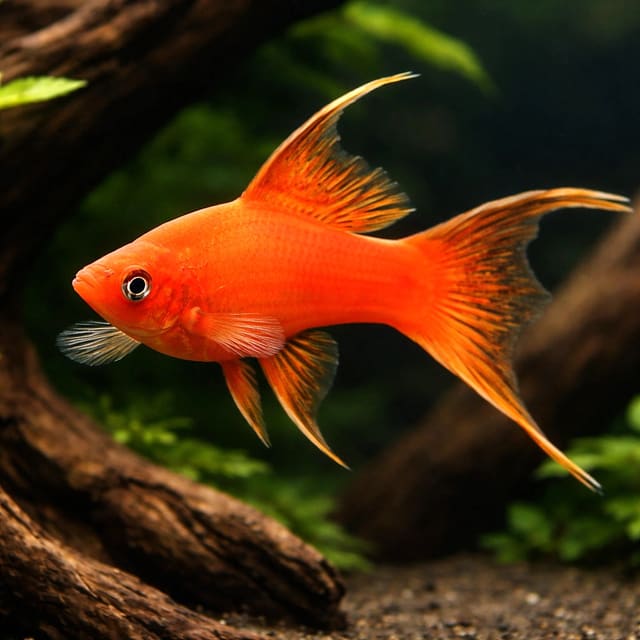
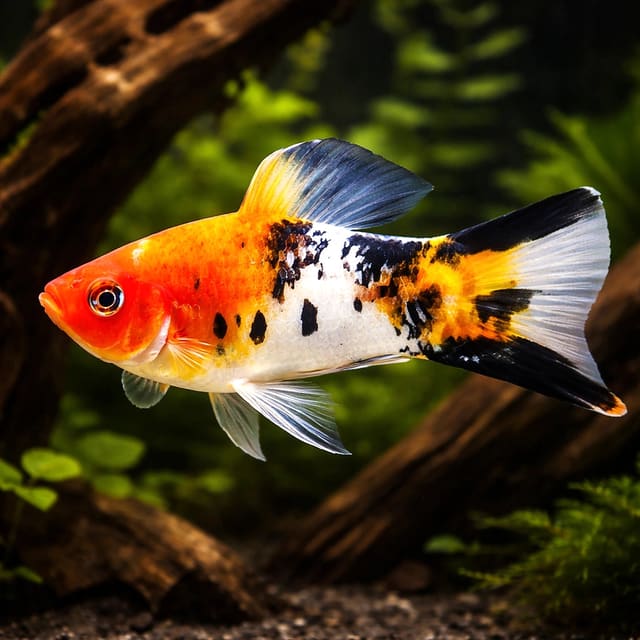
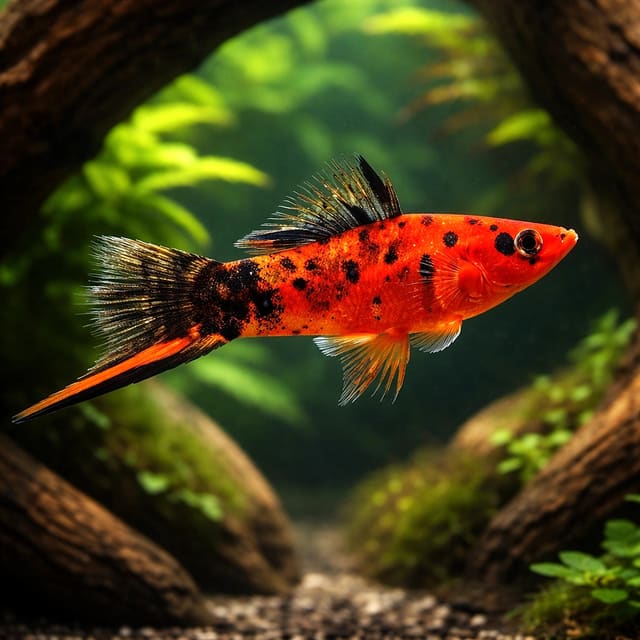
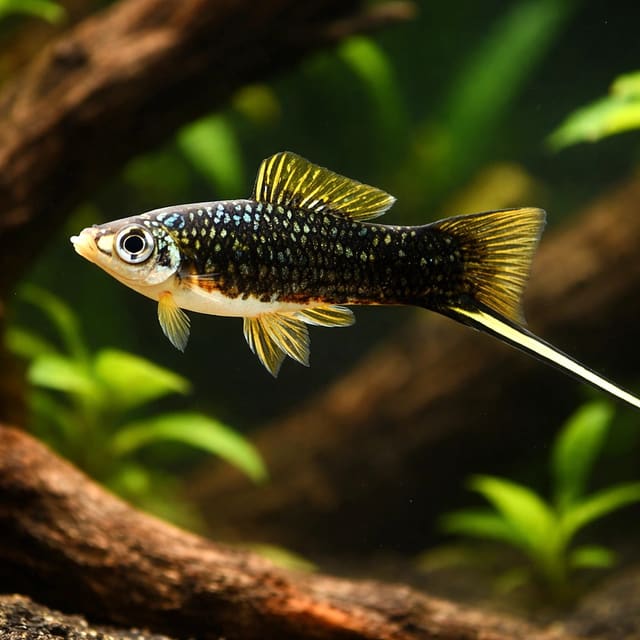
The word Wien identifies the ornamental form in this offer; it does not turn the fish into a separate species or a Yucatán locality animal. Swordtails are recognisable livebearers, but selective breeding has produced many forms with colours and fin shapes that do not occur in wild fish. Plan care from the requirements of Xiphophorus hellerii rather than from an assumed colour, sex or locality.
One purchase supplies one Wien Swordtail of the selected option. The live selector labels are 3–4 cm, 4–5 cm, 5–6 cm, L and XL; consult it when choosing. L and XL are dispatch-size labels, so they should not be converted into centimetres or treated as promises about adult length.
The size you select is the size supplied, not the adult size. A centimetre label describes the fish at dispatch, while the 14 cm FishBase figure is the recorded maximum total length used for long-term aquarium planning. Every size therefore needs the same adult-sized footprint and water-quality plan.
Sex is guaranteed only when the selected option explicitly states male or female. This Wien Swordtail listing has no sex-guaranteed option.
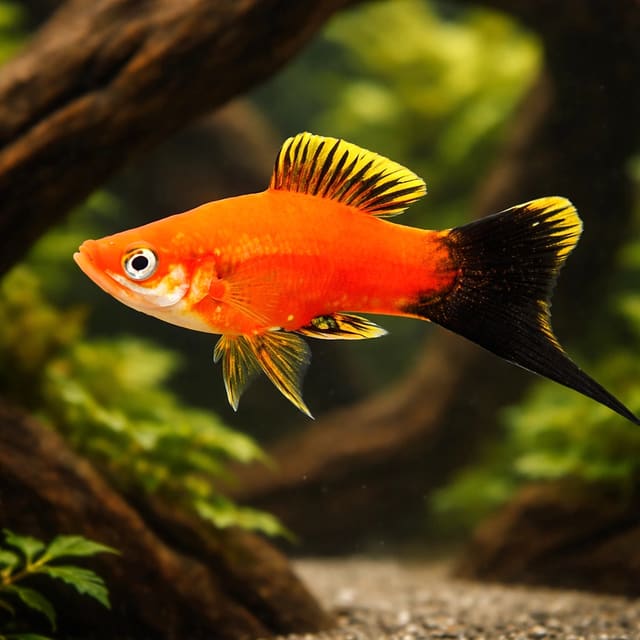
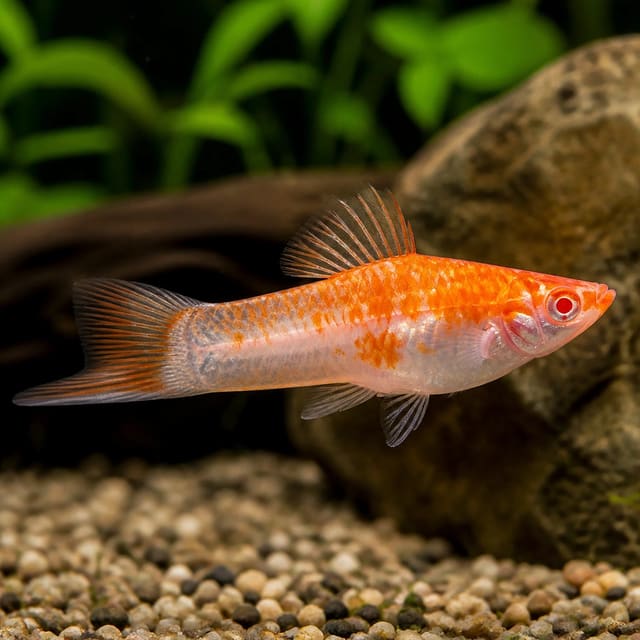
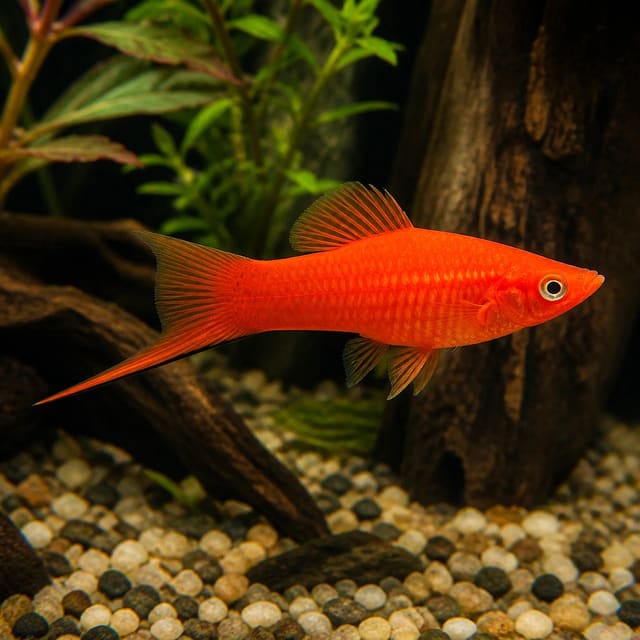
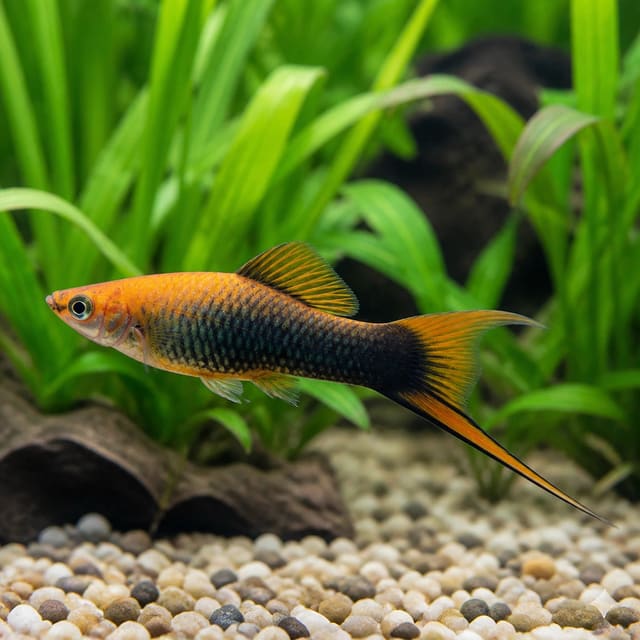
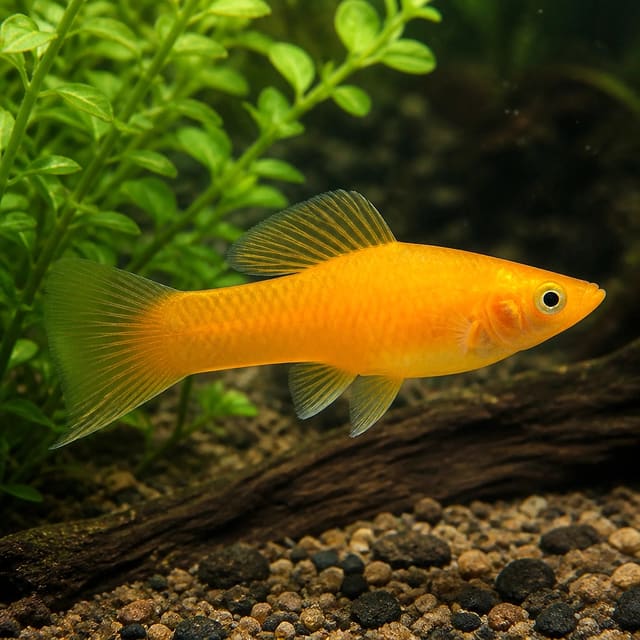
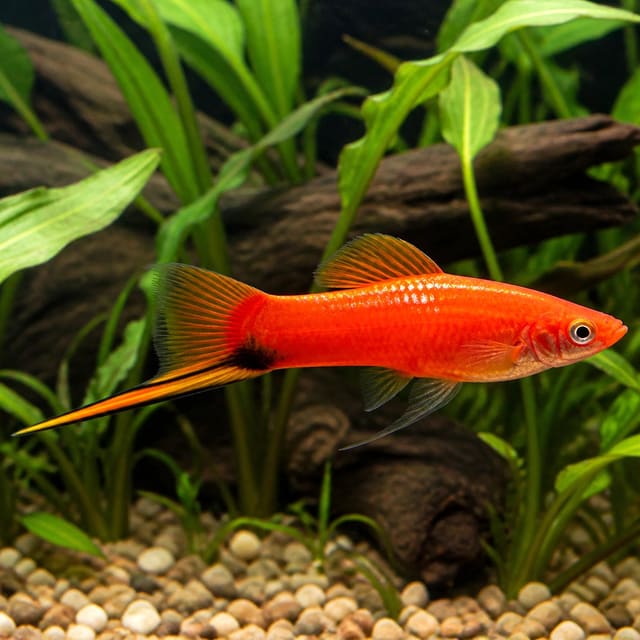
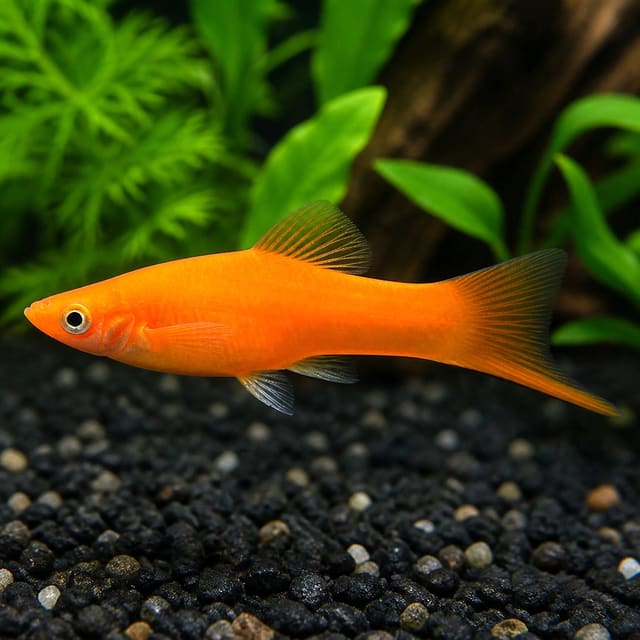
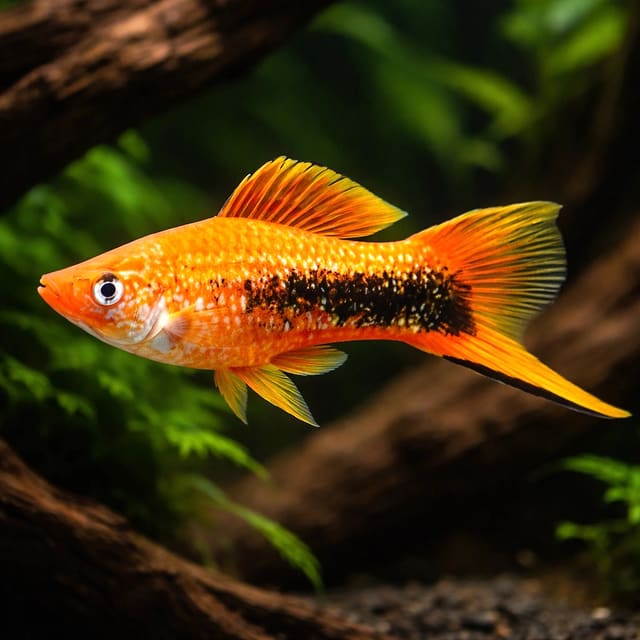
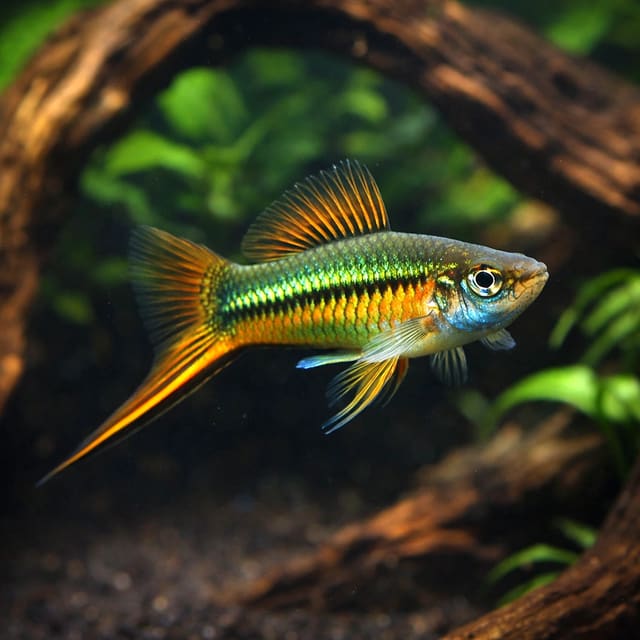
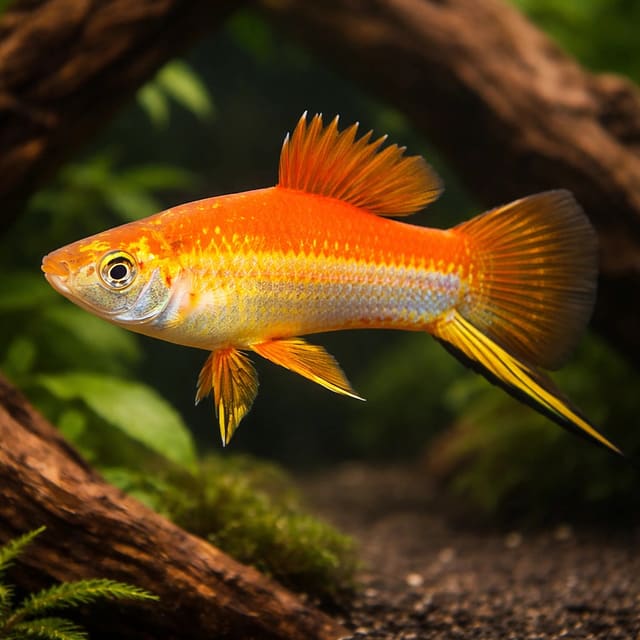
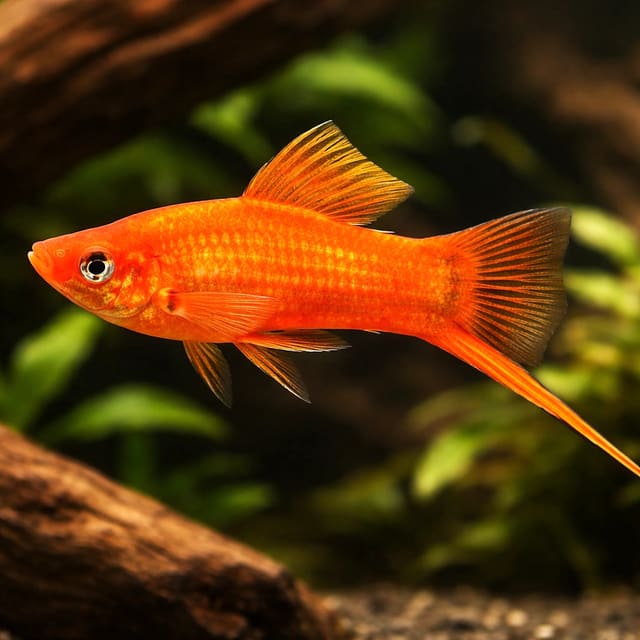
The gallery images are representative, based on reference photographs of this species, so colours can look slightly different from the live animal.
| Selector label | How to use it |
|---|---|
| 3–4 cm | Dispatch size in centimetres |
| 4–5 cm | Dispatch size in centimetres |
| 5–6 cm | Dispatch size in centimetres |
| L or XL | Dispatch-size label |
Sale quantity and sex are defined by the selector and offer text, not by the number or appearance of fish shown in a gallery scene. For packing, dispatch days and the Live Arrival Guarantee, read our delivery and live-arrival policy before ordering.
Seriously Fish recommends an aquarium with base dimensions of at least 120 × 30 cm, or an equivalent footprint, for Xiphophorus hellerii. Its worked volume is around 108 litres. Treat both the footprint and volume as minimum planning figures because this is an active fish that benefits from open swimming space.
| Adult-care decision | Figure to use |
|---|---|
| Recorded maximum length | 14 cm total length |
| Smallest footprint | At least 120 × 30 cm or equivalent |
| Worked aquarium volume | Around 108 litres |
| Routine temperature | 22–27°C |
| pH | 7.0–8.0 |
| General hardness | 10–12 dGH |
The routine water values are the overlap of FishBase’s recorded environment, the Seriously Fish aquarium range and OATA’s swordtail guidance. A tall aquarium can hold around 108 litres while still having a short base, so compare dimensions as well as the litre figure. The 120 cm length gives the fish room to move horizontally and allows planted cover to be arranged without filling the whole swimming route.
| Suits | Not suited to |
|---|---|
| A mature, filtered aquarium with open swimming space and planted cover | An aquarium with a base shorter than the recommended 120 × 30 cm footprint |
| Water held at 22–27°C, pH 7.0–8.0 and 10–12 dGH | Water outside the overlapping routine ranges |
| A planned swordtail group with capacity for every adult | Confined male groups where hierarchy maintenance dominates normal activity |
| Peaceful communities screened for space, water and behaviour | Timid tank mates displaced or chased by boisterous swordtails |
Use the temperature, pH and hardness figures as operating ranges rather than aiming automatically for the midpoint. Match the aquarium to a stable point within all three ranges and confirm that intended tank mates share that water. Stability inside the range is more useful than repeatedly changing water chemistry to pursue a single number.
Allow extra capacity for every other animal in the aquarium. The minimum species footprint is not a promise that every proposed community or group will fit; total adult size, waste production and social pressure still determine the final aquarium requirement.
Arrange the aquarium around two needs: planted or structured cover and a long, open route for swimming. Décor style is flexible, but a heavily planted layout with a dark substrate suits the species. Floating plants and driftwood roots or branches can diffuse overhead light, while the central or front portion of the 120 cm base remains open.
A stream-style arrangement is another supported option. Water-worn rocks and small boulders can create structure, provided they do not turn the minimum footprint into a maze. Whichever style you choose, keep shelter around resting areas and leave enough unobstructed length for active movement.
The RSPCA explains why a mature biological filter is vital: fish release toxic ammonia, bacteria convert it to nitrite, and further bacterial action converts nitrite into the safer nitrate. Never place this fish in an aquarium without a well-established and maintained filter.
For the worked 108-litre aquarium, Seriously Fish uses a turnover of four to five times the aquarium volume per hour. That corresponds to a filter rating of about 430–540 litres per hour. The species appreciates some water movement, but filtration need not be especially strong, so distribute the return rather than directing a narrow, forceful jet through the only open swimming area.
Seriously Fish gives roughly 75–125 W as a heater-sizing example for a 108-litre aquarium held within 16–28°C when the surrounding room is around 20°C. Treat that as a worked example, then choose equipment according to the actual aquarium, room and routine range of 22–27°C.
If this is your first aquarium, follow our first tropical tank guide to prepare and mature it before livestock is added.
Run this aquarium at 22–27°C, pH 7.0–8.0 and 10–12 dGH. These routine values are the overlap of FishBase’s recorded environment, the Seriously Fish species aquarium range and OATA’s group guidance. Measure your starting values, select a stable point that also suits the other inhabitants, and avoid repeated adjustments that move the aquarium from one end of a range to the other.
OATA’s broad platy-and-swordtail guidance gives 22–27°C for swordtails, pH 7.0–8.0, zero mg/l ammonia, zero mg/l nitrite and nitrate no more than 20 mg/l above the normal tap-water level. Its general-hardness range is 4–12 dGH, while FishBase records 9–19 dH and Seriously Fish gives 10–25 dGH; their overlap is 10–12 dGH.
| Reading | Required response |
|---|---|
| Ammonia above 0 mg/l | Pause further additions and address filtration and waste |
| Nitrite above 0 mg/l | Pause further additions and address filtration and waste |
| Rising nitrate | Compare it with the tap-water baseline and maintain water changes |
| pH or hardness outside range | Resolve the mismatch before introducing the fish |
Use our water chemistry guide to understand each measurement, then enter the measured figures in the water matcher when comparing this fish with the aquarium.
Test at least weekly and change 25% of the water at least once a week. Treat replacement tap water with conditioner to remove chlorine or chloramine before it enters the aquarium. Siphon solid waste from the substrate during the water change and check the filter for blockages.
When filter media needs cleaning, rinse it lightly in the aquarium water removed during the partial change. Do not run mature media under the tap because chlorine or chloramine may kill part of the bacterial population responsible for processing ammonia and nitrite.
Wild stomach analyses identify Xiphophorus hellerii as a generalised omnivore. Natural foods include aquatic and terrestrial invertebrates, organic detritus, algae and other plant material. In an aquarium it accepts a broad selection of foods, but variety is still important because no single treat represents that natural mixture.
Use a good-quality dried food as the foundation. OATA’s group feeding guidance recommends flake or granules with a high algae content for swordtails, supported by small live or frozen items such as daphnia, small bloodworm or tubifex. Seriously Fish also lists Artemia and chironomid larvae alongside quality dried products.
| Food role | Suitable choice |
|---|---|
| Regular foundation | Quality flake, granule or other dried food |
| Plant-rich element | A dried food with a high algae content |
| Live or frozen variety | Small daphnia, Artemia, bloodworm or tubifex |
| Freeze-dried variety | Bloodworm or Artemia |
Feed once a day and offer only what the fish can finish within a few minutes. This rule scales better than a fixed pinch because food size, fish size and the number of animals all affect the portion. Watch the first portion disappear before deciding whether another very small amount belongs in that same feed.
Uneaten food breaks down and adds toxic waste to the water, so a portion that remains after the feeding window is too large. Reduce the next daily portion rather than adding extra filtration to compensate for routine overfeeding. Where several species share the aquarium, observe whether this active fish reaches the food without taking the entire ration before calmer inhabitants feed.
Keep the dried foundation consistent while rotating supported live, frozen or freeze-dried items for variety. A marked increase or decrease in body condition, reduced intake or loss of interest in food is a prompt to test the water and review the feeding amount. Do not respond automatically by adding richer food when deteriorating water quality may be affecting appetite.
Before acclimating a Wien Swordtail, confirm that the aquarium is large enough for its adult needs, that it is at 22–27°C, pH 7.0–8.0 and 10–12 dGH, and that ammonia and nitrite both read 0 mg/l. A mature biological filter must already be processing the waste produced by the existing livestock.
Increase the aquarium population slowly. Beneficial bacteria increase in response to the waste and feeding associated with additional fish, so a sudden stocking increase can leave too few bacteria to process ammonia and nitrite. OATA describes the resulting rise in toxic waste as new tank syndrome.
| Checkpoint | Decision |
|---|---|
| Before introduction | Confirm water range, 0 mg/l ammonia and 0 mg/l nitrite |
| After the stocking change | Keep feeding measured and avoid another rapid increase |
| During the first week | Observe swimming, breathing, appearance and appetite |
| At the weekly check | Test the water and complete the normal partial change |
Keep the first stocking change modest and preserve the routine already supporting the mature filter. A sudden increase in food can raise waste alongside the increase from the new fish, so feed the once-daily portion by eating time rather than assuming every addition requires a large extra pinch.
Do not judge successful introduction only by whether the fish swims immediately. Continue checking whether it feeds, holds its fins normally, breathes at its usual rate and uses both cover and open space. Those observations help distinguish a brief adjustment from a continuing water-quality or social problem.
When behaviour changes after introduction, work through the aquarium in a fixed order. Test ammonia and nitrite first because both should remain at 0 mg/l. Check temperature and pH against the established readings next, then look at feeding access and interactions with the other inhabitants. This order prevents a chasing problem from distracting you from a toxic-water reading, or a water problem from being mistaken for ordinary settling behaviour.
For example, a fish that remains behind cover but comes out to eat, breathes normally and shares water that still tests at 0 mg/l ammonia and 0 mg/l nitrite needs continued observation of its social setting. A fish that hangs at the surface while ammonia is detectable requires an immediate water-quality response, not another livestock addition or a larger meal. Use the measurements and the change from normal together.
At each weekly checkpoint, compare the new results with the previous readings rather than looking at one value in isolation. Stable results, normal feeding and unrestricted use of the aquarium support the next planning decision. A deterioration in any of those areas is a reason to hold the stocking level while filtration, waste or social pressure is addressed.
OATA’s platy-and-swordtail group guidance suggests keeping at least three, with two females to each male, to reduce stress on females and other inhabitants. More can be kept in that ratio when the aquarium is enlarged to accommodate them. Treat the ratio as a social-planning tool whenever adult sex can be identified, not as a reason to crowd the minimum footprint.
Confined groups of males may establish dominance hierarchies and spend a significant amount of time maintaining their positions. Repeated chasing therefore matters most when the aquarium is short, cover is poorly arranged or several males have little opportunity to move away from one another.
Adult males tend to be smaller than females and possess a gonopodium, a modified anal fin used in internal fertilisation. The characteristic sword is an extension of the lower caudal-fin lobe and occurs on males. Females have a triangular anal fin, while ornamental strains may carry other extended fins in either sex.
Use the anal-fin structure alongside the lower tail extension when managing a known adult group. Do not treat a dispatch-size label, colour or a representative image as a substitute for examining the actual fish as it develops. If the group composition is unclear, provide the full space and cover first, then monitor interactions rather than forcing a ratio from appearances.
A larger aquarium offers more stable water conditions as well as more room for social separation. When increasing the group, expand capacity for the extra adult fish and the additional waste instead of relying only on the minimum 108-litre example.
A healthy swordtail should have clear, bright eyes, undamaged fins, intact scales and no ulcerations or bumps. Its swimming, colour, body condition, breathing and feeding will vary slightly between individuals, so learn the normal pattern for the fish rather than comparing every movement with another specimen.
These signs do not all point to the same cause, so begin with measurements rather than guessing at a treatment. Test ammonia, nitrite, nitrate, pH and temperature, review the recent maintenance and feeding routine, and check whether chasing or crowding is preventing normal behaviour.
If ammonia or nitrite is detectable, treat the water-quality problem as urgent and pause further livestock additions. Continue the supported partial-water-change routine with conditioned replacement water, while preserving mature filter media and checking the filter for blockages.
| What you observe | First decision |
|---|---|
| Faster breathing or surface hanging | Test water immediately and inspect filter operation |
| Reduced appetite | Test water, check the portion and observe feeding access |
| Repeated hiding | Check for directed chasing and access to open swimming space |
| Fin or scale damage | Review interactions and record the change in appearance |
| Body condition changing | Compare feeding intake with water results and recent maintenance |
Record exact readings rather than describing the aquarium only as clean or stable. A temperature, pH, ammonia, nitrite and nitrate result creates a useful comparison with the fish’s normal conditions. Note whether the change appeared before or after maintenance, feeding or a stocking change, because that sequence helps separate coincidental timing from a continuing aquarium problem.
Observe more than one behaviour before drawing a conclusion. A fish that misses one feeding but otherwise swims and breathes normally presents a different decision from one that refuses food, remains isolated and shows rapid gill movement. In both cases, water testing comes first; the combination of signs determines how urgently the next step is needed.
Urgent water-quality action should not destroy the bacteria needed for recovery. Use conditioned replacement water for the partial change, clear filter blockages and rinse media only in removed aquarium water when cleaning is necessary. Continue measuring ammonia and nitrite rather than assuming one maintenance action has restored both to 0 mg/l.
Do not select medication from appearance alone. When a change persists or the fish deteriorates, record the measured water values and contact us for health guidance. Clear observations about swimming, breathing, skin, fins, body condition and appetite make the next decision more useful than a general description that the fish looks unwell.
Swordtails are generally peaceful and compatible with other species, but larger individuals can be boisterous and may chase more timid tank mates. No named species is an automatic match because adult size, water chemistry, swimming behaviour, group structure and the aquarium footprint all affect the result.
| Compatibility screen | What to check |
|---|---|
| Water | Every fish must suit 22–27°C, pH 7.0–8.0 and 10–12 dGH |
| Space | Keep at least the 120 × 30 cm footprint and add capacity for all adults |
| Temperament | Do not place timid fish where boisterous chasing prevents normal activity |
| Feeding | Confirm calmer fish can reach their ration |
| Social structure | Allow room for male hierarchy and group management |
A peaceful label describes the general pattern, not every interaction. A tank mate that matches pH and temperature can still be a poor choice if it is easily displaced from food or spends its time hiding from active swordtails. Conversely, a spacious aquarium with cover, open swimming room and compatible water gives the keeper more ways to prevent pressure.
Check the proposed animals at adult size rather than comparing dispatch sizes. The Wien Swordtail may reach 14 cm total length, so very small companions and short aquariums require particularly careful assessment even when the water values overlap.
Start with measured water rather than a general description such as tropical or community. If the aquarium runs at 24°C, pH 7.5 and 11 dGH, those readings sit within the overlapping Wien Swordtail ranges. That establishes water overlap for this fish, but it does not finish the assessment. The next questions are whether the base is at least 120 × 30 cm, whether the complete adult community fits, and whether every inhabitant can move and feed without persistent chasing.
A different aquarium might hold an appropriate volume yet have a base shorter than 120 cm. In that case, the litre figure alone does not satisfy the footprint recommendation. Resolve the swimming-space limit before considering temperament. Likewise, a long aquarium that shares the correct water can still fail the social screen if a timid inhabitant remains behind cover or cannot reach food.
Compatibility remains conditional after the initial screen because fish behaviour and biological load become clearer once the community is sharing space. Keep the measured water, adult-size plan and observed behaviour together. Passing only one of those tests is not enough for a sound community decision.
For a stocking and compatibility assessment, ask us with the aquarium dimensions, volume, measured temperature, pH and hardness, plus the species and numbers already present. Those details allow a conditional decision instead of a universal tank-mate list.
Swordtails are livebearers and give birth to live young. Males use a gonopodium for internal fertilisation, and females may store viable sperm for months. A community assembled without an intentional breeding plan can therefore produce young even when its later composition appears different from the group first introduced.
Selective breeding has produced a wide range of ornamental Xiphophorus hellerii forms. Some are the result of artificial hybridisation with other members of the genus, particularly Xiphophorus maculatus and Xiphophorus variatus. If retaining the characteristics associated with the Wien form matters to you, decide that goal before building a mixed Xiphophorus community.
Use plants, floating cover, driftwood or other suitable ornaments to provide shelter without filling the open swimming route. Cover provides places to rest, while the long base gives active animals room to pass without repeatedly cornering a calmer inhabitant.
Never release this fish or any aquarium livestock into natural waterways. FishBase reports introduced populations of Xiphophorus hellerii outside its native range and notes adverse ecological effects following introduction in several countries. Responsible compatibility planning includes keeping the entire community contained within the aquarium.
The Wien Swordtail reaches a recorded maximum of 14 cm total length, so plan its aquarium around that adult figure rather than its dispatch size.
Plan a base of at least 120 × 30 cm or an equivalent footprint, around 108 litres; Seriously Fish describes this as the smallest aquarium that should be considered.
OATA’s group guidance suggests at least three swordtails, with two females to each male when adult sex is known; increase aquarium capacity for the complete group.
The Wien Swordtail needs a mature filter, 0 mg/l ammonia and nitrite, a 120 × 30 cm footprint, stable routine water and planned social management, so choose it only when you can maintain those conditions consistently.
Feed a quality dried food with an algae-rich element, varied with small daphnia, Artemia, bloodworm or tubifex. OATA’s group guidance says to offer only what it can finish within a few minutes once a day.
Keep it at 22–27°C and pH 7.0–8.0, with hardness at 10–12 dGH; these routine values are the overlap of FishBase, Seriously Fish and OATA guidance.
Wien Swordtails are generally peaceful, but larger fish can be boisterous and may chase timid tank mates, while confined groups of males may spend substantial time maintaining dominance positions.
Choose peaceful fish that share 22–27°C, pH 7.0–8.0 and 10–12 dGH, then screen adult size, total stocking, swimming space, feeding access and whether timid fish are chased.
Start filming before opening the sealed parcel and continue as it is opened until the fish is shown inside the sealed bag. Someone must be present to receive it; float the bag for 20–30 minutes before releasing the fish, and never pour the bag water into the aquarium.
No reviews for this item yet. Bought one? Honest reviews only, good or bad.
What customers say about ordering from us
I have a small group of long finned mountain minnows. So was delighted to be able to order ten of this variety to increase the genetics in my tank . The ones I recieved are healthy but it’s to early to give a verdict on wether they are of a long finned type since they are small currently.
Gordon Walker · 23 Sept 2026
100% success travel and "installation". Pleased with quality of purchase. The Siamese fighter a bit "shy" so have not yet seen him at his best yet but looking good. Happy customer. GG
George E Garratt · 21 Sept 2026
Reviews of our shop, collected by Judge.me, an independent third-party review collector. Newest first.