Easy
Swordtail Red (Xiphophorus helleri red)
22–27°C · pH 7–8 · 108L
£3.99
Swordtail L mixture (Xiphophorus hellerii) is a large-grade swordtail sold as one live fish per purchase, with no choice of colour or sex. Plan a long, planted tank with a 120 × 30 cm base, water at 22–27 °C and pH 7.0–8.0, and a group with two females to each male.
Adult size is the maximum length this species reaches at full maturity (scientific sources). The livestock you receive will be younger and smaller. Product-photo provenance and any image-specific limitations are stated on the listing.
Xiphophorus hellerii
Shoaling fish: kept in a group they feel safer, stay calmer and show their best colour.
Swordtail L mixture (Xiphophorus hellerii) is a large-grade swordtail sold as one live fish per purchase, with no choice of colour or sex. Plan a long, planted tank with a 120 × 30 cm base, water at 22–27 °C and pH 7.0–8.0, and a group with two females to each male.
Adult size is the maximum length this species reaches at full maturity (scientific sources). The livestock you receive will be younger and smaller. Product-photo provenance and any image-specific limitations are stated on the listing.
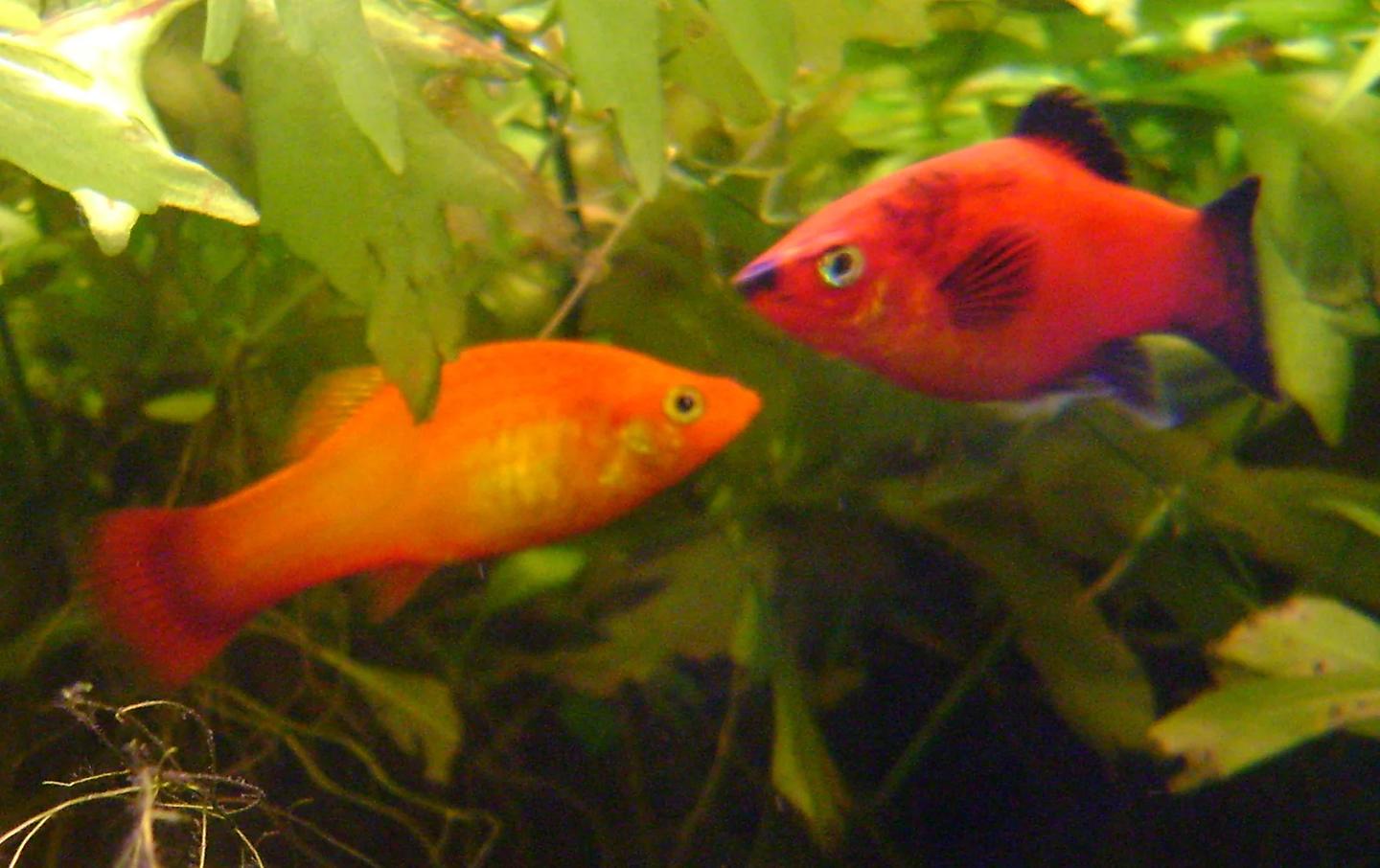
Platy is a trade name used for Xiphophorus maculatus, X. variatus and domestic forms. Start with at least three in a mature aquarium of at least 45 litres, verify the exact fish and measured water, and plan extra capacity before mixing sexes.
Maintain these water conditions for optimal health and vibrant colors
Swordtail L mixture is a large-grade swordtail, Xiphophorus hellerii, sold as one live fish per purchase. It comes from a mixed selection, so there is no choice of colour or sex with this listing. It suits a keeper who wants a varied, lively group of swordtails rather than one matched colour form.
Swordtails are livebearers from fast-flowing, heavily planted rivers between Veracruz in Mexico and north-western Honduras. They grow larger than platies, which share their care sheet from OATA, the UK trade body for the ornamental fish industry, and they need three things above all: a long tank with open swimming room, clean water that is neutral to alkaline and moderately hard, and a group with more females than males. OATA describes most platies and swordtails as undemanding aquarium fish that are easy to keep. The rest of this guide explains what that means for a large swordtail in practice.
| Suits | A mature, planted aquarium on a base of about 120 × 30 cm or larger, with peaceful companions |
|---|---|
| Supplied | One fish per purchase at the L (large) grade; colour and sex not chosen |
| Maximum recorded length | 14 cm total length |
| Water | 22–27 °C, pH 7.0–8.0, 10–19 dGH |
| Group | At least three, with two females to each male |
| Diet | Omnivore: quality dried food plus small live or frozen foods |
The L in the name is the grade the fish is supplied at. It describes a large fish at dispatch rather than the adult length, which FishBase records at up to 14 cm. Water, tank size, feeding and arrival are covered in the care section, and tank mates in the compatibility section.
Each unit you add to the basket is one swordtail, so order the number of fish you want for your group. There is no colour or sex choice, and the fish you receive comes from the mixed selection.
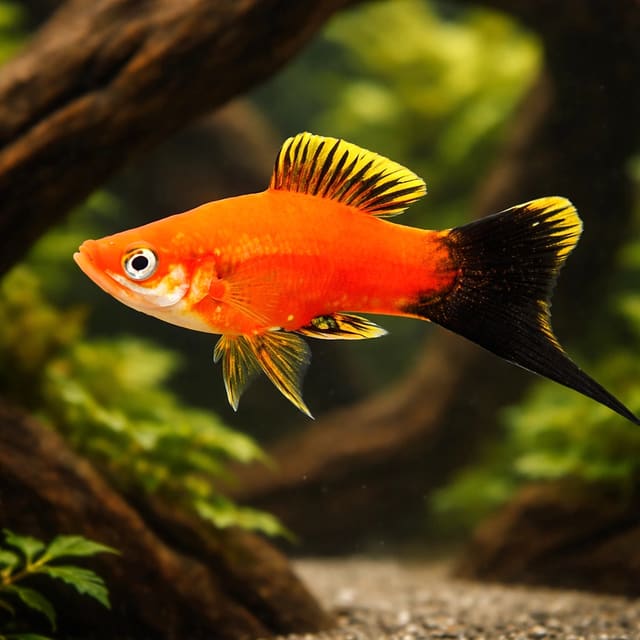
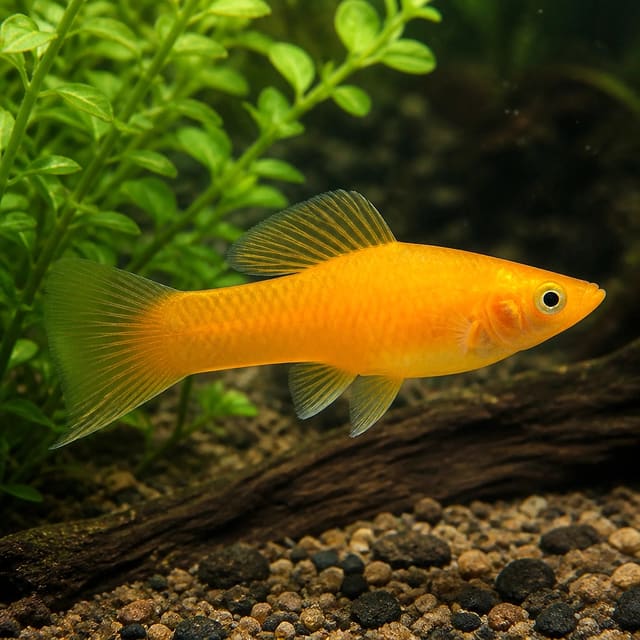
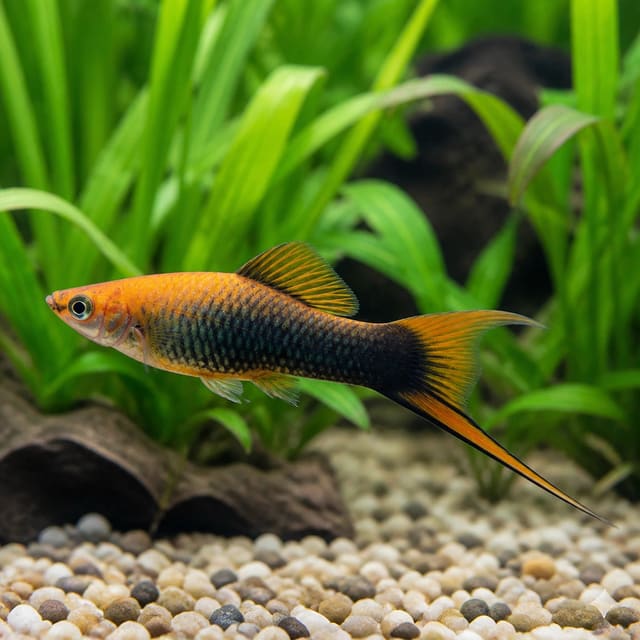
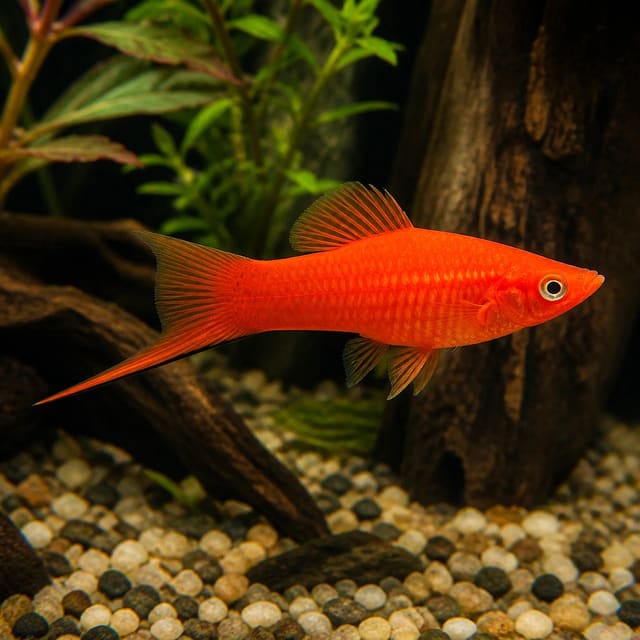
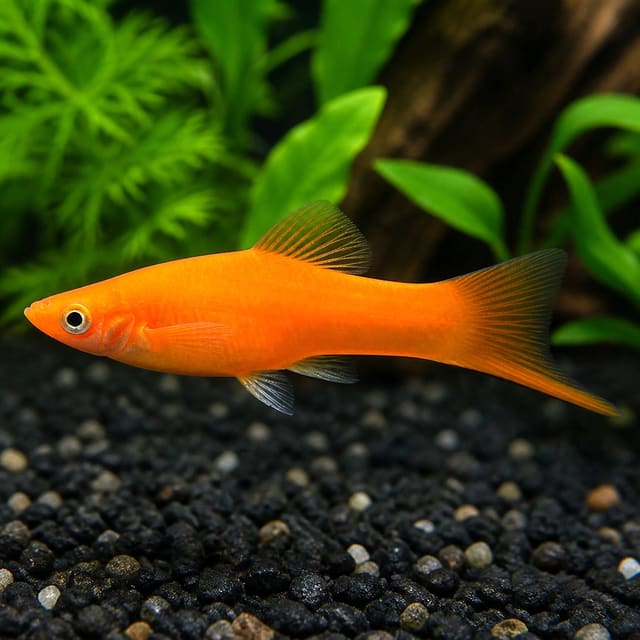
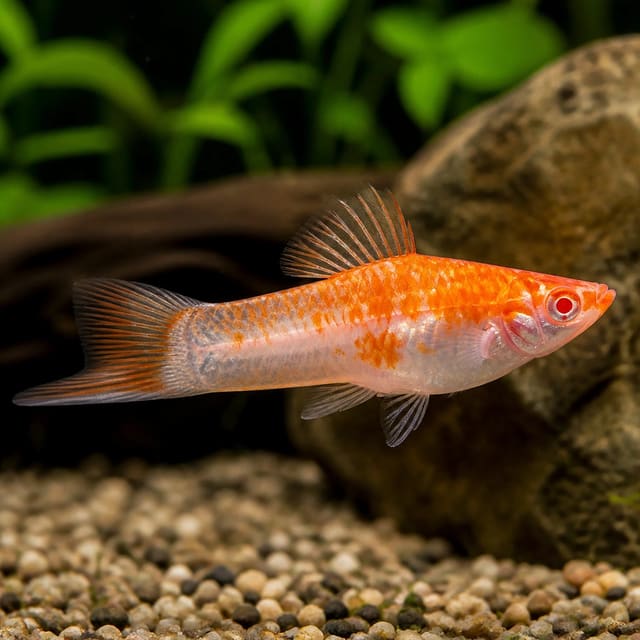
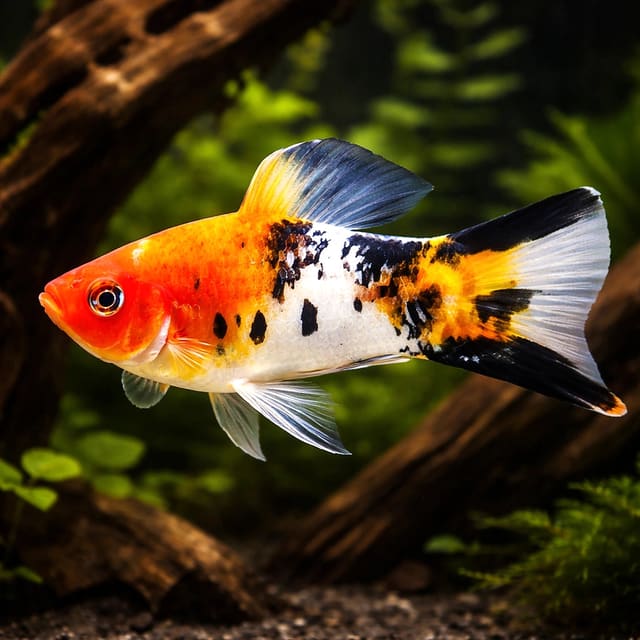
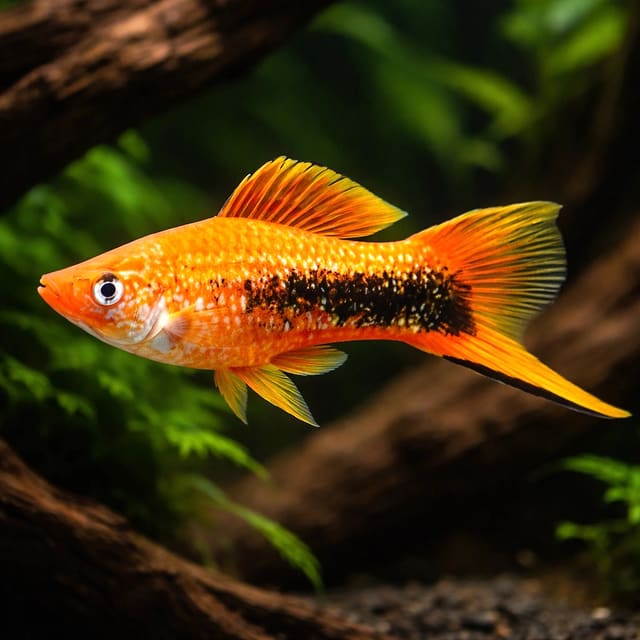
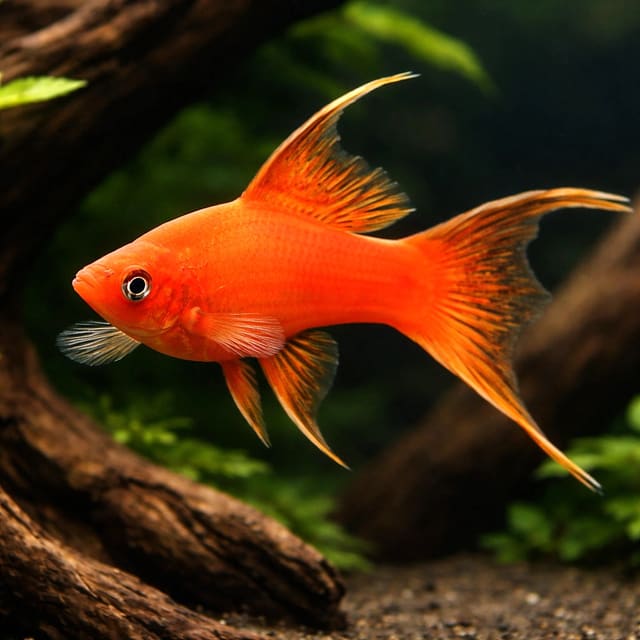
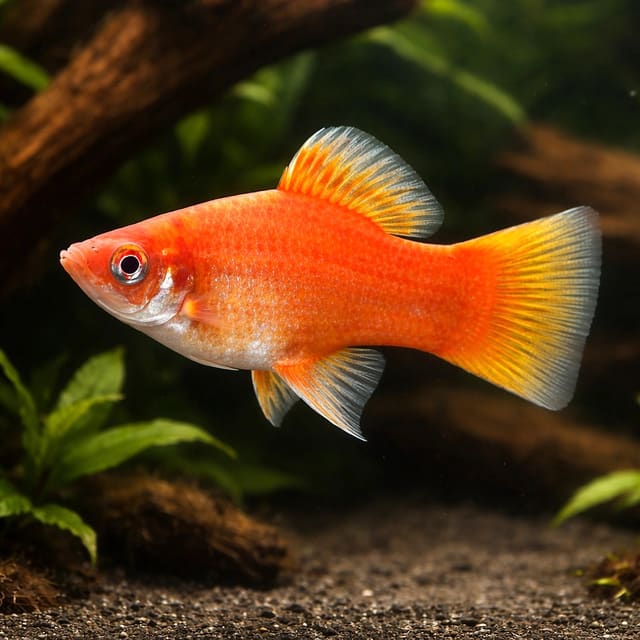
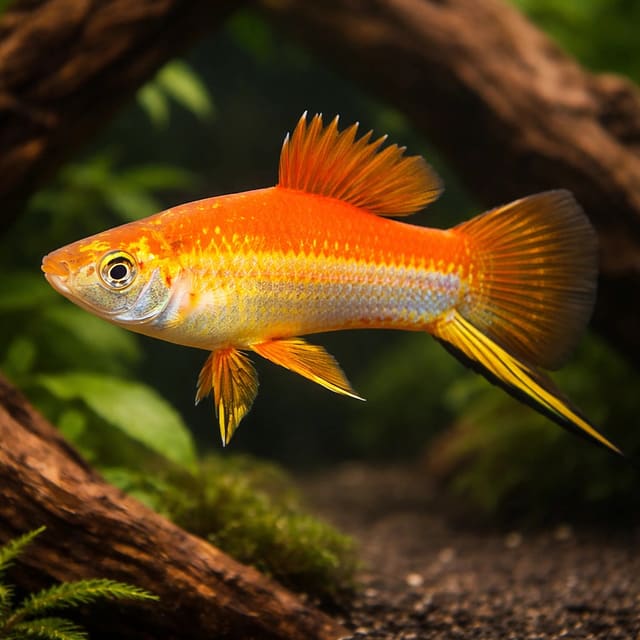
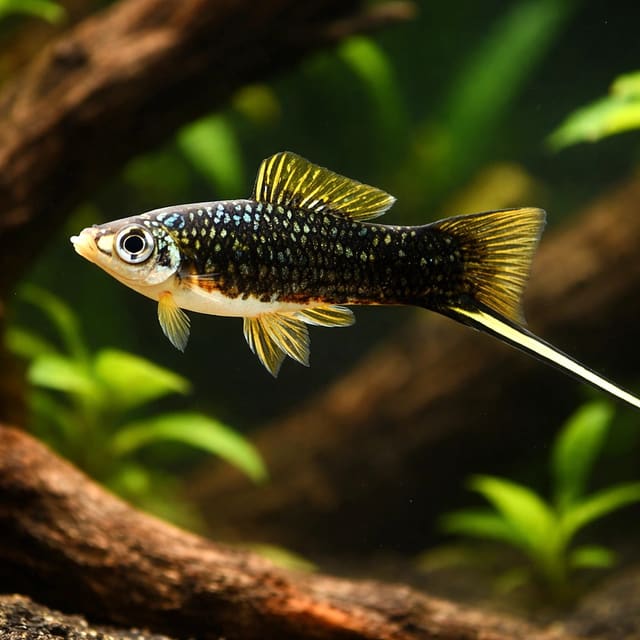
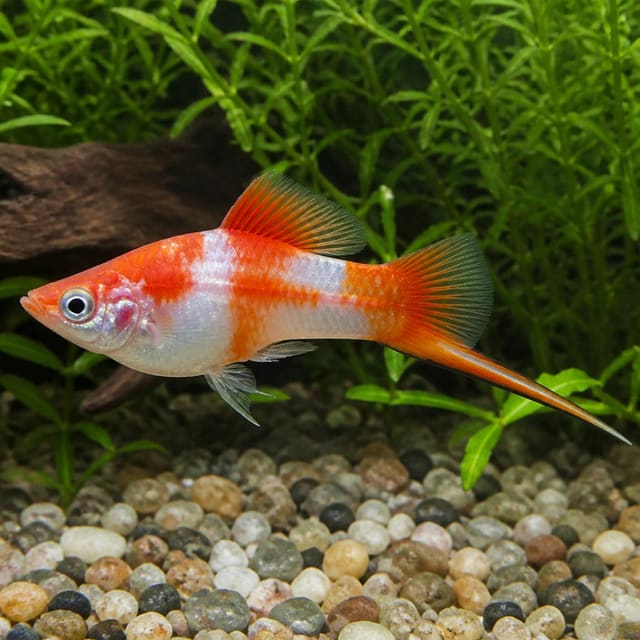
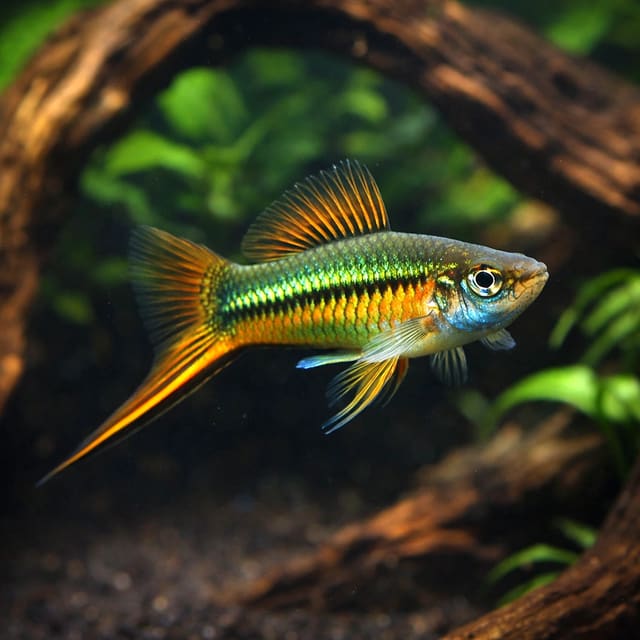
Selective breeding has produced a wide range of ornamental swordtails, with colours and fin shapes that are not found in wild fish. Seriously Fish notes that some forms are also the result of crosses with other members of the genus, particularly X. maculatus and X. variatus. A mixture can therefore include fish that look quite different from one another, and from the fish in the photograph.
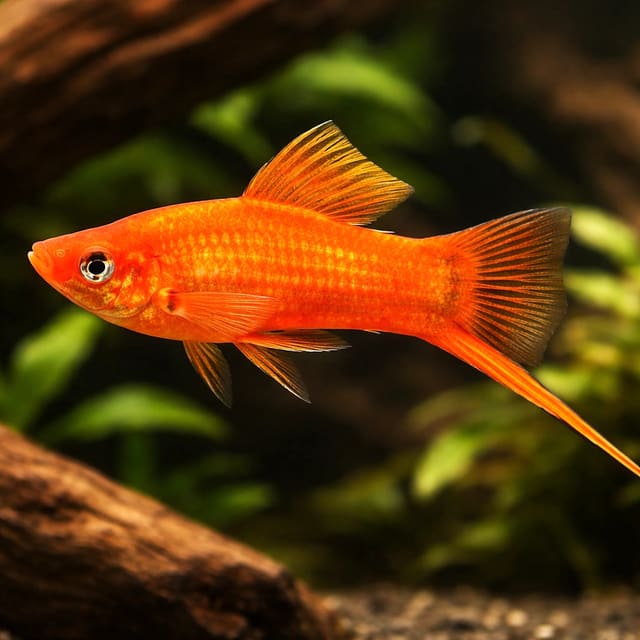
The gallery shows a single red swordtail with a long, dark-edged sword in a planted aquarium. Gallery images have been digitally enhanced to improve image quality. Natural colour, pattern, size and maturity can vary between live animals. Because this listing is a mixture, your fish may be a different colour from the one pictured, and a female will not have the sword at all.
Sex is guaranteed only when the selected option explicitly states male or female. This Swordtail L mixture listing has no sex-guaranteed option.
Sex matters with swordtails because males compete with one another and the group works best with more females than males. With a mixture you cannot set the balance at the checkout, so order a slightly larger group than the minimum and check the sexes once the fish have settled. How to tell males from females is explained in the care section.
| A good fit if | You have, or are maturing, a long planted tank; your tap water tests neutral to alkaline and moderately hard; and you are happy for colours and sexes to vary across the group |
|---|---|
| Think again if | Your tank is short or already busy; your water is soft and acidic; or you need one particular colour form or a guaranteed male or female |
A mixture is a relaxed way to stock a swordtail tank: every fish is sold as the same species and needs the same care, so variety in colour costs nothing in husbandry. What it cannot do is promise a matched look or a set balance of the sexes. If either of those matters, compare this mixture with other swordtails and livebearers side by side in our livebearer fish collection.
FishBase lists Xiphophorus hellerii, the green swordtail, in the livebearer family Poeciliidae. Its natural range runs from the Rio Nantla in Veracruz, Mexico, to north-western Honduras. Adults live mainly in rapidly flowing streams and rivers and prefer heavily vegetated habitats, and the species also occurs in warm springs and the water flowing from them, in weedy canals and in ponds.
The spelling is worth knowing when you look the fish up. Seriously Fish points out that the name is often written X. helleri, with a single i, in both scientific and hobby literature, while the correct spelling is X. hellerii. FishBase treats the single-i form as a synonym, so both spellings lead to the same species.
Swordtails have become established well outside their native range. FishBase reports feral populations in parts of southern Africa, including Natal, eastern Transvaal and Lake Otjikoto in Namibia, and notes that several countries report adverse ecological impact after introduction. Never release swordtails, or any young they produce, into ponds, streams or other waterways. The IUCN assesses the species as Least Concern.
FishBase also notes that the species is used in genetics research, and that red varieties in particular are very popular aquarium fish.
A large-grade swordtail needs room from the day it arrives. The sources give different minimums, and the longest is the one to plan around:
| Source | Smallest aquarium given |
|---|---|
| Seriously Fish | A base of 120 × 30 cm, about 108 litres |
| FishBase | 80 cm long |
| OATA, for swordtails | At least 80 litres |
For a group of large swordtails, use the 120 × 30 cm footprint from the Seriously Fish species profile. The extra length matters because males kept in confined spaces tend to form dominance hierarchies and can spend much of their time defending their position. OATA adds that the more fish you keep, the larger the volume required, and that a larger aquarium keeps temperature and water quality more stable.
For a tank of about 108 litres, Seriously Fish suggests a filter that turns the water over four to five times an hour, which means one rated at around 430–540 litres per hour. Swordtails appreciate a degree of water movement, but the current does not need to be fierce. The same profile estimates that holding the temperature in a tank of this size needs a heater of roughly 75–125 W, assuming a room of around 20 °C. A cooler room or a bigger aquarium calls for the upper end of that range or more.
Whatever size you choose, the filter is not optional: OATA describes it as always essential. The next sections cover the water values to aim for and how to keep them steady.
In the wild, FishBase records Xiphophorus hellerii in water of pH 7.0–8.0 with a hardness of 9–19 dH. In the aquarium the same picture holds: neutral to alkaline, moderately hard water, kept clean and stable.
| Value | Target for this fish |
|---|---|
| Temperature | 22–27 °C |
| pH | 7.0–8.0 |
| General hardness | 10–19 dGH |
| Ammonia and nitrite | Zero |
| Nitrate | No more than 20 mg per litre above your tap water |
FishBase, Seriously Fish and OATA all give pH 7.0–8.0, so that part is simple. Temperature needs a little more thought:
Holding 22–27 °C keeps a heated tropical aquarium inside every one of those figures. Hardness varies more between sources. FishBase records 9–19 dH and Seriously Fish recommends 10–25 dGH, while OATA’s joint sheet for platies and swordtails lists softer water, 4–12 °dH general hardness and 3–10 °dKH carbonate hardness. The two sources that describe this species on its own overlap at 10–19 dGH, so that is the band to aim for.
Test your tap water’s pH and general hardness before you order, and make sure the aquarium holds a steady temperature for several days. Our guide to aquarium water parameters explains what each test measures and why it matters, and the water parameter matcher compares your own readings with the targets above. If your water sits well outside them, a different livebearer or another community fish may be a better match for your tap supply than a swordtail.
The RSPCA says that no fish should be kept in a tank without a well set up and maintained filter. Fish release ammonia, which is toxic. A working biological filter grows beneficial bacteria that convert ammonia to nitrite, which is also toxic, and then to nitrate, which is safer.
That bacterial population has to be in place before fish arrive, and it needs to grow each time you add fish or increase feeding. OATA’s platy and swordtail care sheet warns that overstocking, or stocking too quickly, can cause new tank syndrome: there are not enough nitrifying bacteria to cope with the extra waste, ammonia and nitrite climb, and fish can become ill or die. Check that ammonia and nitrite read zero before adding swordtails, then add fish gradually. If you are starting from scratch, our guide to setting up a first tropical tank walks through maturing the aquarium before any livestock goes in.
Keep a simple note of each test result and water change. Swordtails are undemanding, but a gradual rise in ammonia, nitrite or nitrate is much easier to correct when you spot the trend early, before the fish show any change in behaviour.
Swordtails are omnivores. In the wild, FishBase records them feeding on worms, crustaceans, insects and plant matter, and Seriously Fish notes that stomach analyses of wild fish show a generalised diet of aquatic and terrestrial invertebrates, organic detritus, algae and other plant material. In the aquarium they are unfussy and accept just about anything offered, which makes it easy to feed them well.
Seriously Fish recommends a balanced diet that combines good dried products with small live and frozen foods, and a varied menu also gives you a chance to see every fish in the group feed.
OATA advises feeding platies and swordtails only what they can eat within a few minutes, once a day. Uneaten food breaks down and releases toxic waste into the water, so take care not to overfeed.
Feeding time doubles as a daily health check. OATA lists reduced intake or lack of interest in food among the changes to watch for, so note any swordtail that stops coming forward for food and look at it more closely.
Preparation does most of the work for new swordtails, so run through this list while you wait for the aquarium to be ready:
If any line is not yet ticked, wait. A swordtail will be healthier added a week later to a stable tank than on time to one that is still settling.
Your swordtail is hand-bagged in pure oxygen and packed in an insulated poly box, with a heat pack when the weather calls for it. It travels with a licensed live-animal courier, and you receive an email with the tracking number and your confirmed delivery date. Our delivery and Live Arrival Guarantee policy sets out the full terms, and the steps below follow it.
The Live Arrival Guarantee depends on those conditions: someone present to receive the parcel, the parcel opened and inspected the same day, and a continuous unboxing video that starts with the parcel still sealed.
Add new fish only to a tank with stable readings, and build up your stocking slowly, as OATA advises, because the filter bacteria need time to catch up with each addition. During the first days, watch how each swordtail swims, breathes and feeds, and test ammonia and nitrite more often than usual while the filter adjusts.
This is also the time to check the sexes in your group. Once the fish are swimming normally, look at the anal fin: in a male it forms the gonopodium, while a female’s is triangular. If you have more males than females, give the tank extra planting and swimming room and think about how you will balance the group.
OATA describes a healthy fish as having clear, bright eyes, undamaged fins, intact scales and no ulcers or bumps. Every fish varies a little in behaviour and appearance, so learn what is normal for your swordtails and watch for changes in:
If something still looks wrong, OATA’s advice is to test your water quality and then seek further guidance from your retailer. You are welcome to contact us with your readings and a description of what you have seen.
Swordtails are livebearers: rather than laying eggs, females give birth to live young. Males fertilise females internally with the gonopodium, a modified anal fin, and Seriously Fish notes that females can store viable sperm for months. A female that has already mated can therefore produce young some time after she was last with a male.
| Male | Gonopodium in place of a normal anal fin; sword extending from the lower lobe of the tail; generally smaller than females |
|---|---|
| Female | Triangular anal fin; no sword; generally the larger fish |
OATA describes platies and swordtails as very easy to sex because of the gonopodium. Fin shape alone can mislead with ornamental strains, though: Seriously Fish notes that in some strains the upper tail lobe or other fins are extended too, including in females. Look at the anal fin rather than the tail.
Swordtail reproduction is well studied. Females show preferences for many male traits, including sword length, colour pattern, body size, vertical barring on the body, chemical cues and particular courtship behaviours, and in some cases they prefer the traits of males of other species. Male behaviour is geared both to attracting females and to driving rivals away.
A tank holding both sexes can produce fry. Decide in advance what you will do with any young, and remember that neither fry nor adults should ever go into ponds or waterways.
OATA describes platies and swordtails as generally peaceful fish that are compatible with other species, with one important caveat: large swordtails can be boisterous at times and may chase more timid tankmates. This listing supplies large-grade fish, so plan the community with that in mind.
FishBase records that males are aggressive towards each other, and Seriously Fish adds that in confined spaces groups of males tend to form dominance hierarchies and may spend a significant proportion of their time maintaining their positions. Space and cover make the difference: a long tank lets a less dominant male keep his distance, and dense planting gives him somewhere to go.
OATA suggests keeping at least three together, two females to each male, to reduce stress on the females and on other fish in the aquarium. More can be kept as long as they are added in that ratio. Because this mixture comes without a sex choice, count your males and females once they have settled and let that count guide how you stock the rest of the tank.
A worked example helps. Suppose a group of six settles as three males and three females. That is one female to each male, half the balance OATA suggests, so the females and the other fish in the tank are more exposed to the stress that ratio is meant to reduce. The practical answers are room and cover: a longer tank, denser planting and fewer extra fish of other species, so the swordtails have space to spread out. If the same six settle as two males and four females, you already have the suggested balance.
This mixture is sold as Xiphophorus hellerii, and its ornamental forms differ in colour and sometimes in fin shape. Those forms come from selective breeding, some with a contribution from related Xiphophorus species, but the care on this page applies to the whole group. There is no need to plan separately for different colours; the size of each fish and the balance of the sexes matter far more.
Good companions for a large swordtail share its water and can live alongside an active, sometimes boisterous fish. Test every species you are considering against these points:
Timid fish are the main concern, because OATA singles out large swordtails as capable of chasing more timid tankmates. The other thing to plan around is several male swordtails sharing a short or sparsely planted tank. There is no universal list of perfect tank mates; judge each species against the points above and against the length of your aquarium.
OATA advises increasing the number of fish in an aquarium slowly, because the filter bacteria need to catch up each time more fish are added and feeding increases. That suits a mixed community well. Add the swordtails and any companions in separate steps rather than all at once, test ammonia and nitrite after each addition, and wait until the readings are back at zero before the next one. Each pause also lets you see how the swordtails behave with the fish already in the tank before you commit to more.
FishBase records the species at up to 14 cm total length, and Seriously Fish gives a similar maximum of 140 mm. OATA puts typical swordtails at 8–12 cm, and males are generally smaller than females, so many aquarium fish stay below the recorded maximum.
Plan on a tank with a base of at least 120 × 30 cm, about 108 litres, which Seriously Fish gives as the smallest to consider for Xiphophorus hellerii. FishBase quotes an 80 cm minimum length and OATA at least 80 litres for swordtails, but the longer tank gives large fish and rival males more room.
OATA suggests at least three together, in a ratio of two females to each male, and more can be kept if they are added in that ratio. With Swordtail L mixture, count males and females once the fish have settled and allow extra space and planting if males outnumber females.
They can be. OATA describes most platies and swordtails as undemanding and easy to keep, but they still need a matured, filtered aquarium, a weekly maintenance routine and enough length for an active fish that can reach 14 cm.
Xiphophorus hellerii is an omnivore. Feed a good quality flake or granule, ideally with a high algae content, and add small live or frozen foods such as daphnia, Artemia or small bloodworm. Give only what the fish eat within a few minutes, once a day.
Keep Swordtail L mixture at 22–27 °C with a pH of 7.0–8.0 and a general hardness of about 10–19 dGH. Ammonia and nitrite should read zero, and OATA advises keeping nitrate no more than 20 mg per litre above your tap water level.
Xiphophorus hellerii is generally peaceful, but FishBase notes that males are aggressive towards each other, and OATA warns that large swordtails can be boisterous and may chase timid tankmates. A long, planted tank and two females to each male keep that in check.
Choose peaceful community fish that are comfortable in the same neutral to alkaline, moderately hard water at 22–27 °C and are confident enough not to be stressed by an active swordtail. Check every candidate against its adult size, temperament and water needs before adding it.
It is hand-bagged in pure oxygen, packed in an insulated poly box with a heat pack when the weather calls for it, and carried by a licensed live-animal courier with tracking. Someone must be in to receive it. Film the sealed parcel being opened in one continuous take, float the sealed bag for 20–30 minutes, then release the fish without pouring the bag water into your tank.
No reviews for this item yet. Bought one? Honest reviews only, good or bad.
What customers say about ordering from us
Easy website plenty of info on fish your buying great to pick a time slot
TRACEY DURRANT · 7 Oct 2026
Got some lovely fish thank you
Kevin Mackie · 7 Oct 2026
Reviews of our shop, collected by Judge.me, an independent third-party review collector. Newest first.