Easy
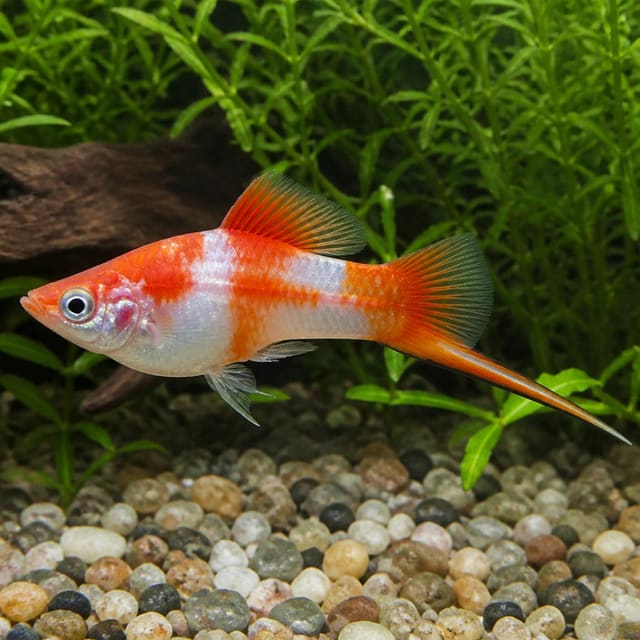
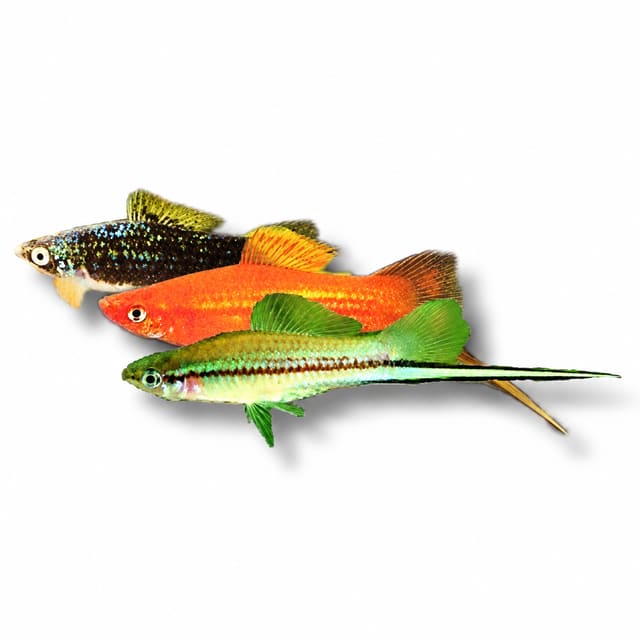
Swordtail Red Wagtail (Xiphophorus helleri red wagteil)
22–27°C · pH 7–8 · 108L
£4.99

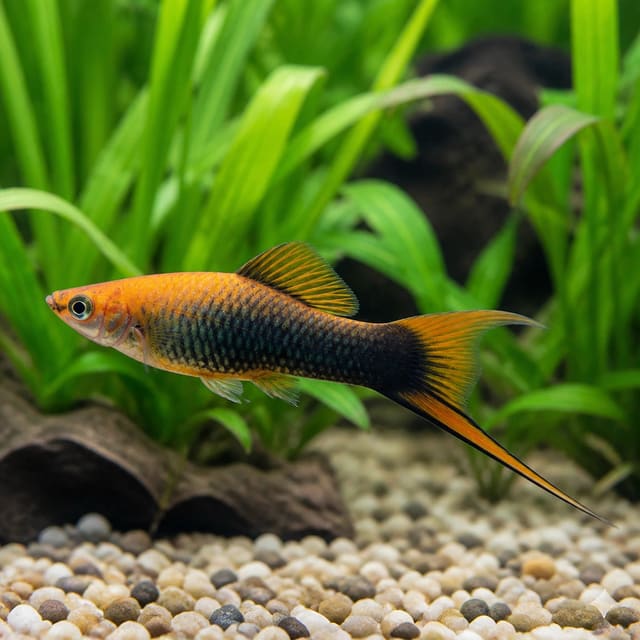
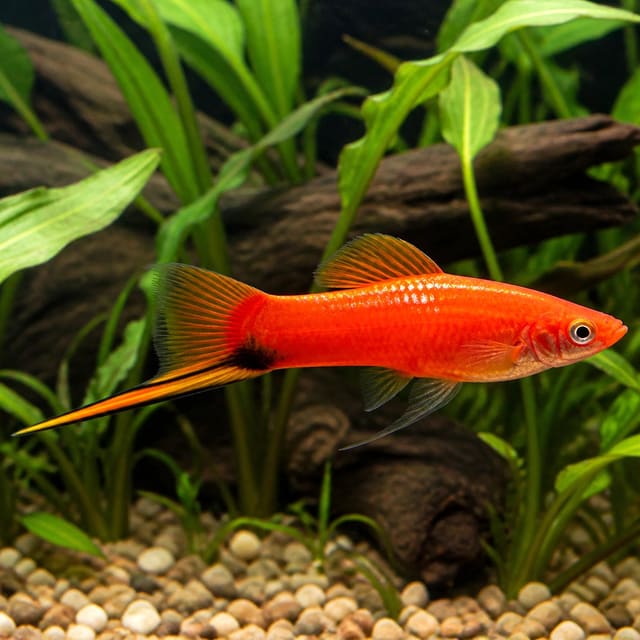
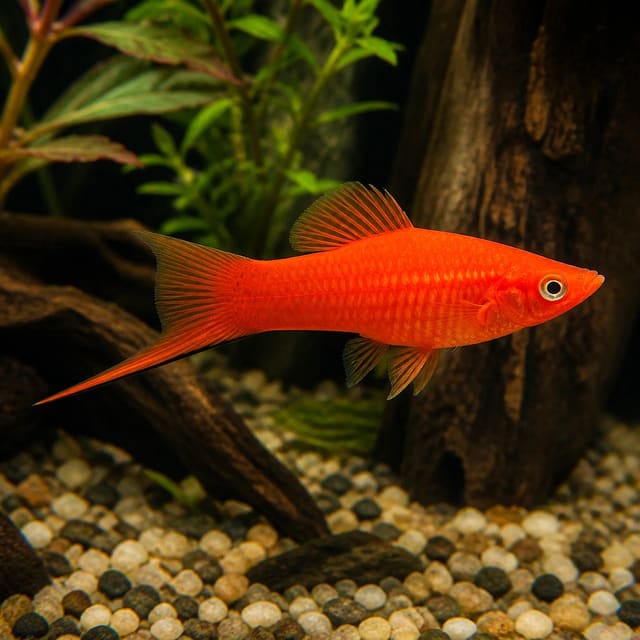
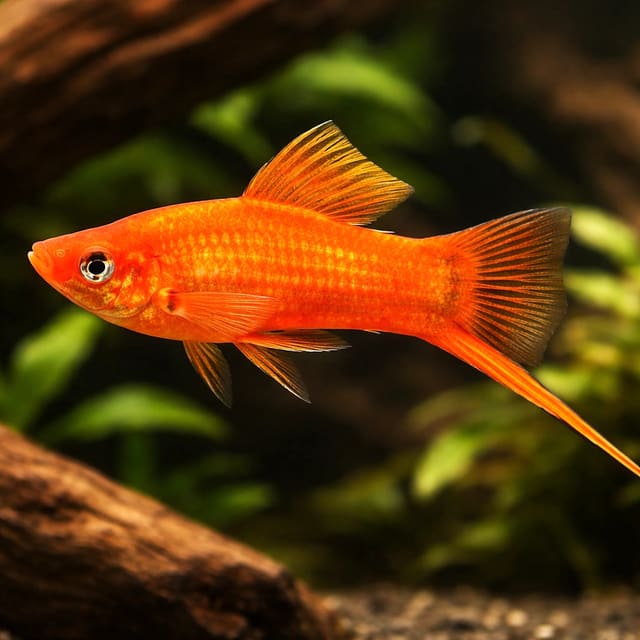
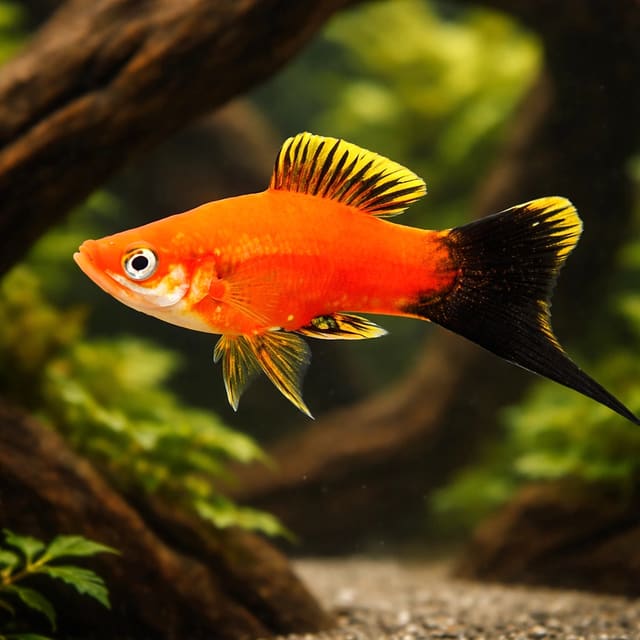
Swordtail Red Lyra is an active red livebearer with extended lyretail finnage. Choose from three size choices; each purchase supplies one fish, with no sex guarantee. Allow a 120 x 30 cm base, hard alkaline water, open swimming room and a carefully planned social group.
Xiphophorus helleri
Shoaling fish: kept in a group they feel safer, stay calmer and show their best colour.
Swordtail Red Lyra is an active red livebearer with extended lyretail finnage. Choose from three size choices; each purchase supplies one fish, with no sex guarantee. Allow a 120 x 30 cm base, hard alkaline water, open swimming room and a carefully planned social group.
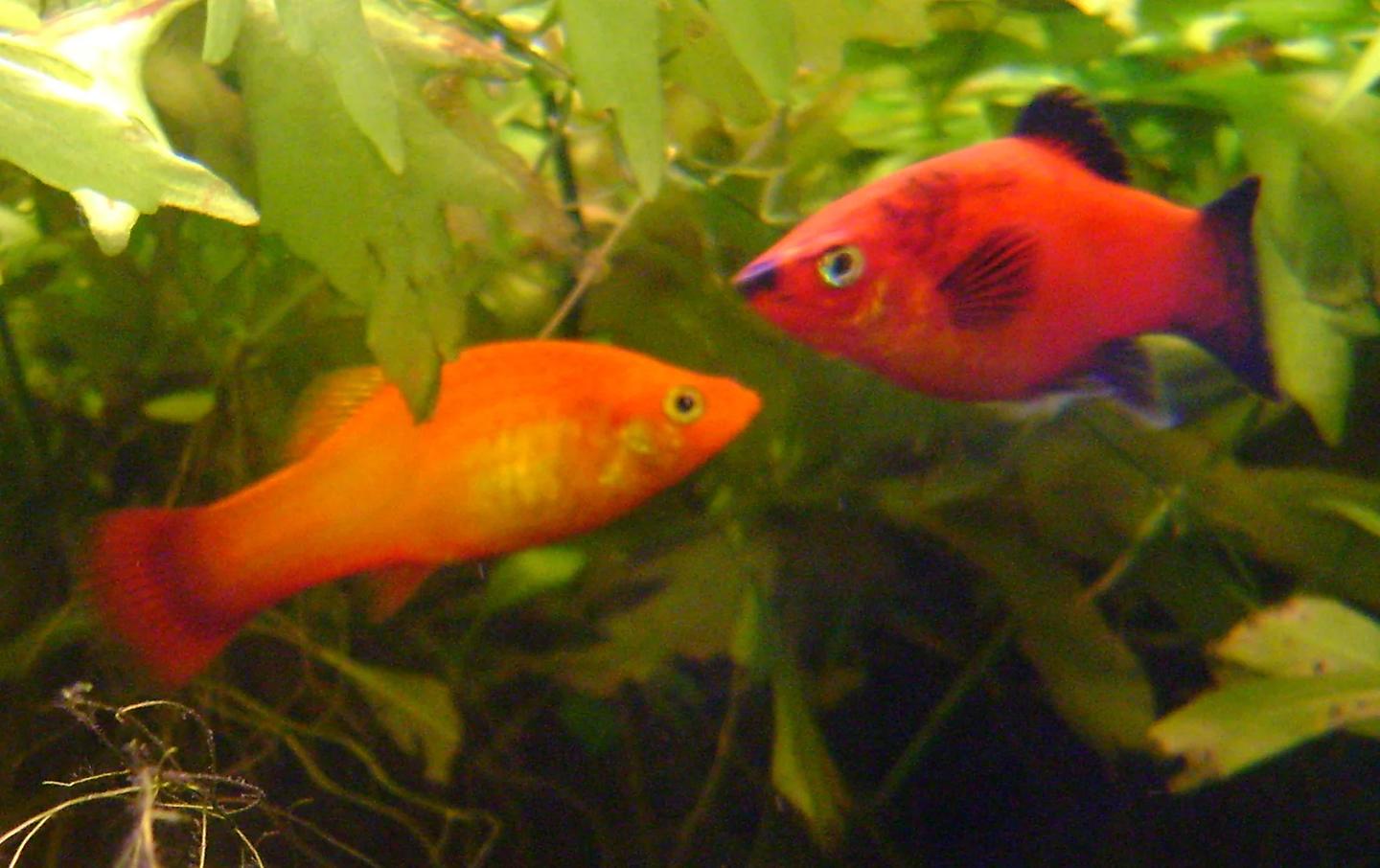
Platy is a trade name used for Xiphophorus maculatus, X. variatus and domestic forms. Start with at least three in a mature aquarium of at least 45 litres, verify the exact fish and measured water, and plan extra capacity before mixing sexes.
Maintain these water conditions for optimal health and vibrant colors
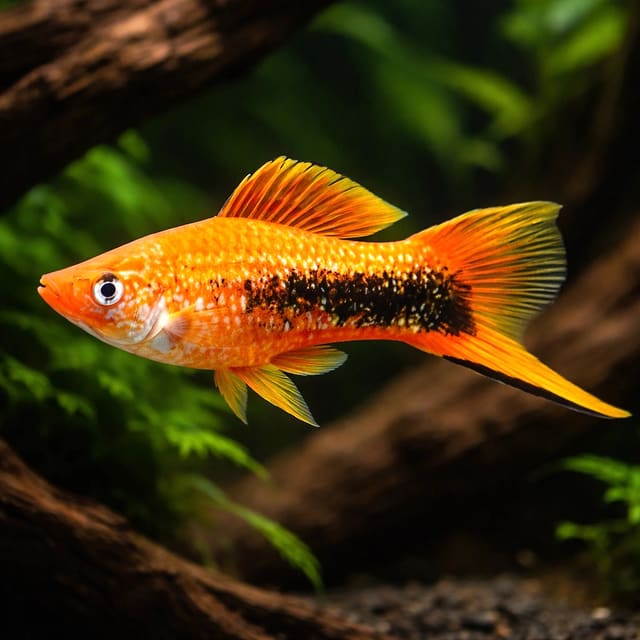
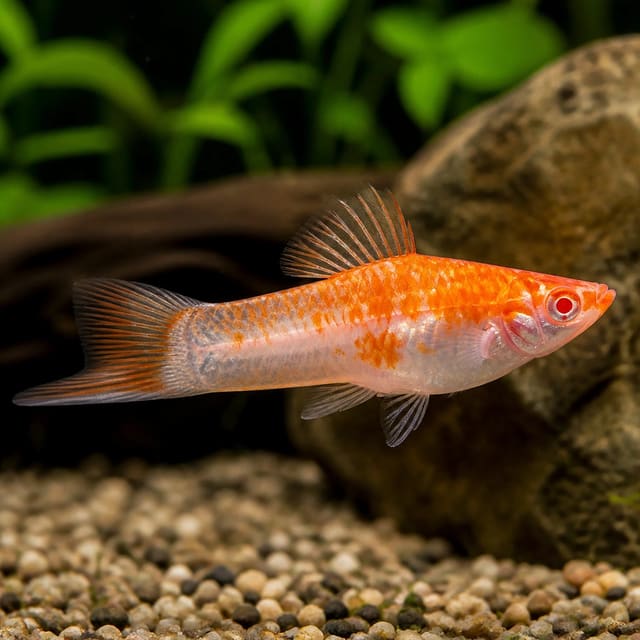
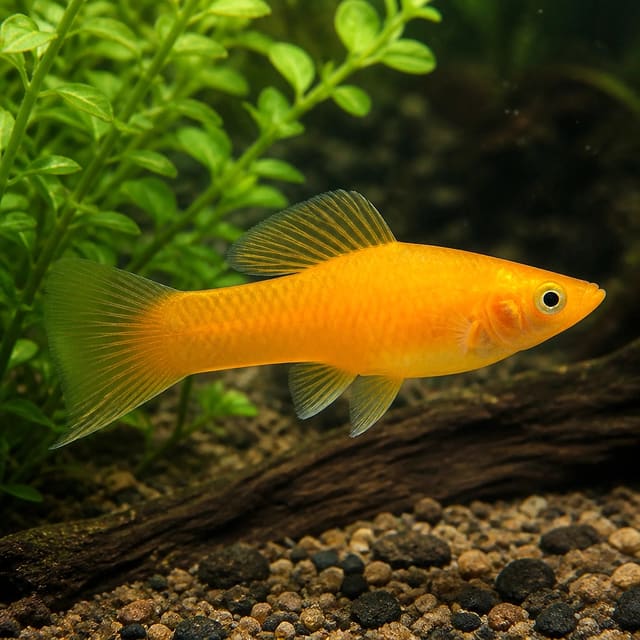
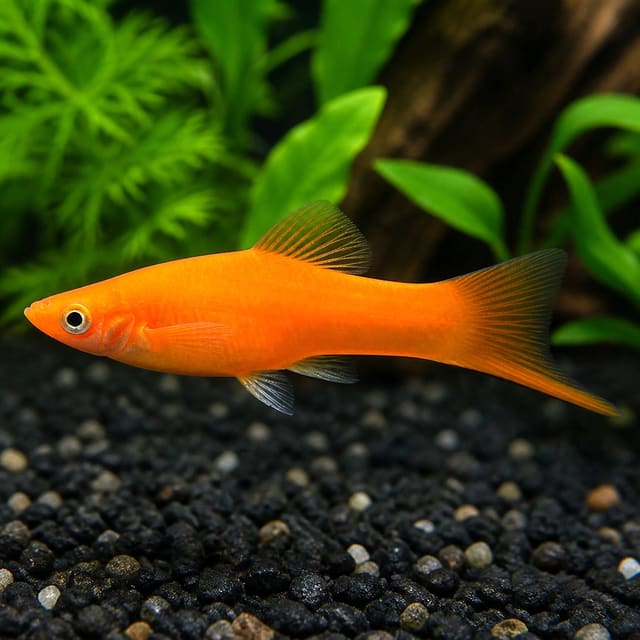
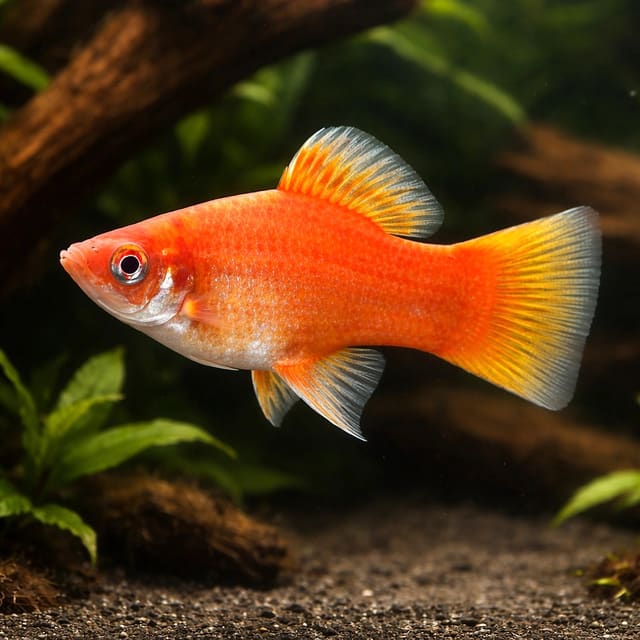
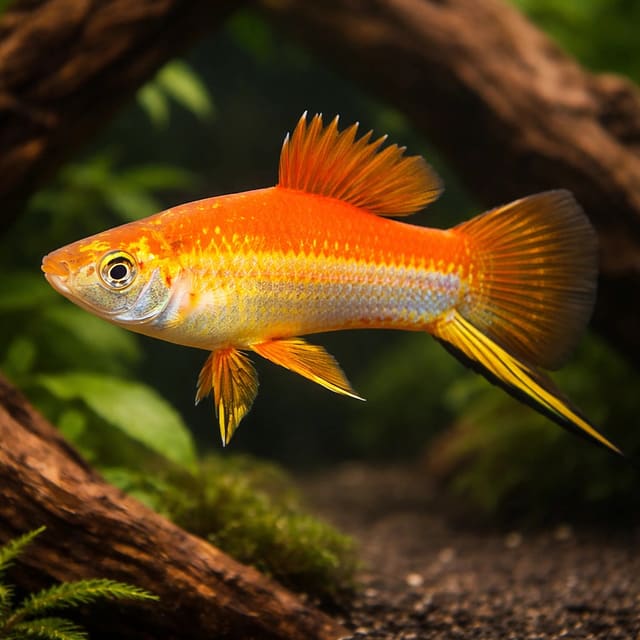
The Swordtail Red Lyra is the red, long-finned ornamental form sold here under the supplier identity Xiphophorus helleri. The fish has the lively, forward-moving character of a swordtail, while the extended upper and lower tail rays and lengthened fins give the Lyra form a softer, more flowing outline. It is still an active livebearer rather than a slow ornamental fish, so the best home combines clear swimming lanes with cover around the edges.
One purchase supplies one live fish in the size you choose. The listing has three genuine size choices: 4–5 cm, 5–7 cm and 7–10 cm. The size you select is the size supplied, not the adult size. These are dispatch grades, not different species.
Sex is guaranteed only when the selected option explicitly states male or female. This Swordtail Red Lyra listing has no sex-guaranteed option. That matters if you are trying to build a particular male-to-female ratio: plan the aquarium for swordtail social behaviour, but do not order on the assumption that a photographed fin or body shape guarantees what will arrive.
Published size records need a little care. FishBase records 14 cm total length for a male or unsexed fish, while the dedicated Seriously Fish profile gives 14 cm standard length. Standard length stops at the base of the tail, so the caudal fin, sword and Lyra extensions add to the space the fish occupies. In practical terms, plan for a substantial, active swordtail rather than treating the selected dispatch size as its finished size.
The species profile recommends a base of 120 x 30 cm or an equivalent footprint, approximately 108 litres, as the smallest considered. Length matters because swordtails cruise rather than hover. Plants, wood and floating cover can make the aquarium feel secure, but leave a broad route through the middle and near the surface. A secure cover is sensible for any energetic livebearer, especially during settling or chasing.
This form suits a keeper who can provide a mature, filtered aquarium, mineral-rich water and enough room to manage social energy. OATA describes platies and swordtails as generally undemanding and easy to keep, but easy does not mean suitable for a small, newly filled tank. Stable water, thoughtful numbers and regular maintenance still decide whether the fish settles well.
If you are comparing the fin form rather than the colour, the standard Red Swordtail is the most useful direct alternative: it keeps the same broad red swordtail identity without the Lyra-style extended finnage. You can also browse the wider livebearers collection, but treat every product as a separate care and compatibility decision rather than an automatic tank-mate suggestion.
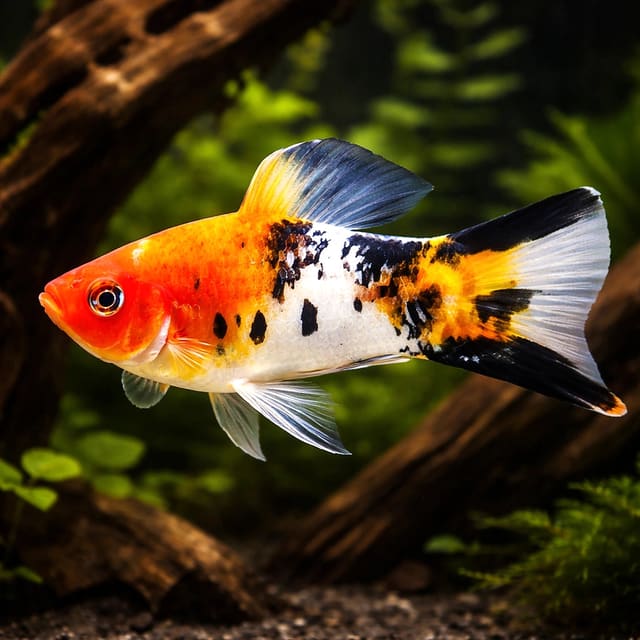
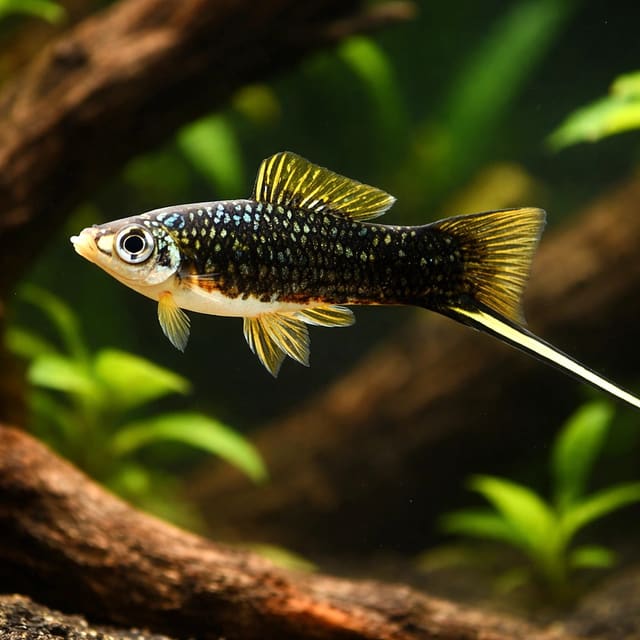
Gallery images have been digitally enhanced to improve image quality. Natural colour, pattern, size and maturity can vary between live animals. Red intensity, fin extension and pattern can vary naturally with age, sex, condition, lighting and individual development.
Choose this form if you want an active red swordtail with conspicuously extended finnage and you have a long, mature aquarium ready for its adult scale. Do not choose it for a small tank, a very soft acidic community or a plan that depends on receiving a particular sex. The practical priorities are a 120 x 30 cm base, stable mineral-rich water, a social arrangement that allows fish to move apart and décor that cannot snag long fins.
The three dispatch grades change the fish's starting size, not its adult care. Compare the selected grade with the residents already in the tank, then work forward to the 14 cm standard-length planning record. If the aquarium cannot remain suitable when the fish and its companions are fully grown, a different livestock plan is the better choice.
| Identity | Red Lyra ornamental form of Xiphophorus helleri; accepted species spelling commonly shown as Xiphophorus hellerii |
|---|---|
| Adult planning | 14 cm SL in the aquarium profile; FishBase also records 14 cm TL for male/unsexed fish. Keep those measurement scopes distinct. |
| Suggested minimum footprint | 120 x 30 cm or equivalent, about 108 litres, from the species husbandry profile |
| Species-profile water | 16–28 °C; pH 7.0–8.0; 10–25 dGH |
| Broad UK swordtail guidance | 22–27 °C; pH 7.0–8.0; 4–12 dGH, explicitly a group-level guide |
| Feeding | Varied omnivorous diet: quality dried food plus small live or frozen foods |
| Social planning | OATA suggests at least three and, for deliberately sexed mixed groups, two females per male; this listing does not guarantee sex |
A swordtail uses horizontal space throughout the day. The 120 x 30 cm footprint is more useful than a tall narrow aquarium with the same nominal volume because it gives the fish room to cruise, turn and move away from a more assertive companion. When comparing aquariums, look at the internal base after décor is installed, not just the number of litres on the box.
Start with a mature biological filter. Fish continually release ammonia, and the RSPCA explains that a working filter supports bacteria that convert ammonia to nitrite and then nitrate. Both ammonia and nitrite should remain at zero. A newly filled aquarium may look clean while still lacking the bacterial population needed to process waste, so cycle and test it before the fish arrives. The first tropical tank guide gives a practical setup sequence.
Arrange taller planting, roots or rounded décor around the back and ends, leaving a clear lane along the front or centre. Floating plants can soften overhead light and help a new fish feel less exposed. Secure every piece so normal swimming or maintenance cannot shift it. The species does not need a torrent, although the husbandry profile notes that some water movement is appreciated. Aim for steady circulation without forcing the long fins to work against a hard jet in every part of the tank.
Long decorative fins deserve clean surroundings. Avoid sharp plastic leaves, rough holes or narrow gaps that could catch an extended fin ray. This is not a reason to keep the aquarium bare: live plants and smooth wood provide visual breaks, refuge and a more forgiving social layout. It is a reason to run a hand over ornaments and remove anything with a snagging edge before filling the tank.
The dedicated species profile gives 16–28 °C, pH 7.0–8.0 and 10–25 dGH for aquarium care. OATA's UK sheet gives a narrower 22–27 °C and pH 7.0–8.0 for swordtails as a group, with 4–12 dGH general hardness. These figures are not identical and should not be averaged into a new optimum. For a mixed aquarium, choose a stable point inside the requirements of every resident, with particular attention to the Swordtail Red Lyra's preference for neutral-to-alkaline, mineralised water.
Measure the tap water and aquarium rather than adjusting by guesswork. The water chemistry guide explains what pH, hardness, ammonia, nitrite and nitrate tell you, while the water parameter matcher can help compare measured values with a stated care range. Stability is more useful than repeatedly chasing a number with abrupt chemical corrections.
Temperature influences metabolism, oxygen demand and the pace at which waste is produced. Use a reliable thermometer and place the heater where circulation distributes warmth. At the warmer end, make sure surface movement remains good because warm water holds less dissolved oxygen. At the cooler end, confirm every companion shares the same range rather than assuming all tropical community fish are interchangeable.
Hardness is not merely a technical extra for livebearers. It represents dissolved minerals that influence osmoregulation and long-term stability. If your source water is very soft, do not add this fish first and then try to redesign the chemistry around it. Decide whether you can provide consistently suitable mineral content and whether the rest of the planned community wants the same conditions.
Wild stomach analyses described by Seriously Fish show a generalised omnivore taking aquatic and terrestrial invertebrates, detritus, algae and plant material. In the aquarium, use a reputable flake or small pellet as the dependable base, with some plant or algae content rather than an all-meat menu. Rotate small live or frozen foods such as Daphnia, Artemia and bloodworm for variety.
Offer pieces the fish can take easily and distribute food across the swimming area so one confident animal does not monopolise the surface. Watch what is eaten rather than feeding to a fixed visual cloud. OATA's broad guidance is to give only what the fish consume within a few minutes once daily. Uneaten food decays into the same waste the filter must process, so generous feeding is not generous care.
Body condition is a better guide than begging behaviour. Swordtails quickly learn to approach the keeper, but attention at the glass does not always mean hunger. A well-fed fish should retain a balanced outline without becoming pinched or bloated. Adjust the amount gradually and keep treats as part of a varied plan, not the whole diet.
OATA's broad platy-and-swordtail sheet recommends companionship: at least three fish, with two females to each male in a deliberately selected mixed-sex group to reduce pressure on females. This product does not offer a sex guarantee, so that ratio is planning guidance rather than a promise about the fish supplied. If a precise ratio matters, speak to the shop before building the plan around it.
Seriously Fish notes that males can form dominance hierarchies in confined spaces. More water alone does not solve that; use length, plants and wood to create routes and visual breaks. Watch whether one fish patrols all food, keeps another pinned behind décor or repeatedly pursues the same companion. Early layout changes and a realistic stocking level are kinder than waiting for damaged fins.
Do not buy extra fish simply to hit a number if the aquarium cannot house the adult group. Work backwards from 14 cm standard length, the long tail form and the available base. A group that seems sparse at dispatch size can become crowded as bodies and finnage develop. The selected size is useful for acclimation and current scale, but adult needs should control the purchase.
Test ammonia and nitrite regularly, especially after adding livestock or changing filter media. OATA recommends weekly testing and a weekly partial water change of about 25% as broad swordtail care. Match replacement water for temperature, use conditioner where required for chlorine or chloramine, and avoid sudden swings in mineral content or pH.
Siphon accessible debris without stripping every surface clean. Beneficial bacteria live mainly on filter media and hard surfaces, not as a disposable cloud in the water. If filter media needs cleaning, do not run it under the tap; rinse it gently in aquarium water removed during the water change. Never replace all mature media at once unless the manufacturer and a tested plan make that unavoidable.
Check the filter intake and décor for long-fin safety during maintenance. A suitable guard can prevent a weakened or resting fish being held against an intake. Keep the outlet clear, but provide areas of gentler flow. Look at the whole fish each day: clear eyes, intact fin edges, steady breathing, confident swimming and interest in food establish its normal baseline.
Prepare before opening the parcel: test the aquarium, switch the main light down, have a clean net or transfer container ready and make sure the lid fits. Use a calm acclimation method and keep the aquarium conditions stable. Do not pour transport water into the aquarium. Give the fish a quiet route into the tank and let it find cover without immediate competition for food.
For the first day, observe from a distance. A newly moved fish may be subdued while it adjusts, but it should not be subjected to chasing or a bright, exposed layout. Keep the environment stable rather than making several reactive changes at once. If something appears wrong on arrival, preserve the evidence required by the store policy before releasing the fish.
The three size choices let you match the fish to a prepared aquarium, but the smallest choice is not a small-tank version of the species. A 4–5 cm fish has more growing to do and may be less able to compete immediately with large, fast residents. A 7–10 cm fish is closer to adult presence and may be more confident, yet it also adds more biomass to the filter on day one. In every case, the adult footprint and long-term social plan stay the same.
Think about the mouths and behaviour already in the aquarium. A new fish must be too large to be treated as prey, while existing fish should not overwhelm it at feeding time. Size matching is about more than length: a slender young livebearer can be vulnerable beside a deep-bodied or predatory fish that appears only a little larger on paper. If the match is doubtful, wait rather than using the delivery bag as a test.
Do not use a larger dispatch grade as a substitute for observation or compatible stocking. Size cannot protect a fish from unsuitable chemistry, an immature filter or persistent harassment. Equally, do not buy the smallest grade solely because it is the smallest if the established community is built around larger, forceful feeders. Choose the grade whose immediate scale fits the prepared aquarium, then care for it as a fish that can reach the full adult planning size.
A settled swordtail should use open water, notice activity outside the tank and approach food confidently. It may move through planted cover, but persistent isolation deserves attention when it differs from the fish's established pattern. Learn the normal breathing rate, body carriage and feeding response of your own fish. A change from that baseline is more informative than comparing it with a short clip of another individual.
During a daily check, look at both sides of the body and the full length of the fins. Extended Lyra rays can make small tears easier to spot, but they can also make normal asymmetry look dramatic. Check whether damage is fresh, whether edges continue to recede and whether another fish is repeatedly making contact. Combine appearance with behaviour and water tests before deciding what the problem is.
Surface hanging, unusually fast gill movement, clamped fins, loss of appetite or repeated hiding can have several causes. Begin with measurable basics: ammonia, nitrite, temperature, filter flow and any recent additions. Do not add a treatment chosen without a clear diagnosis simply because a symptom has a familiar name. Guessing at disease can delay correction of a water-quality or compatibility problem.
A planted layout works best when it supports both the fish and the keeper. Dense stems can break sight lines and shelter less confident fish, while a central open lane preserves the active display that makes swordtails enjoyable. Leave enough access to siphon exposed substrate and inspect behind wood. A beautiful corner that traps food every day is not a successful design.
Anchor plants and décor before the fish arrives, then make later changes in stages. Continually rebuilding the whole aquarium removes familiar routes and can restart social disputes. If chasing develops, a targeted change that interrupts one dominant line of sight is easier to evaluate than a complete redesign. Observe whether it actually gives the pursued fish a usable route and feeding position.
Floating cover can be valuable, but do not allow it to seal the entire surface or block the filter outlet. Gas exchange depends on open water and surface movement. Trim plants so light, flow and oxygen remain balanced, particularly in warm weather. Check that roots do not create a hidden trap between the lid, brace and filter hardware.
If one of those points is unresolved, postponing the order is part of good fishkeeping. The strongest start is a quiet transfer into a tank that has already proved stable, not a rush to alter chemistry, filtration and stocking after the fish is on its way.
The Swordtail Red Lyra is best considered a hard-water community fish, not a universal community fish. A companion may be described as peaceful yet still be a poor match if it needs acidic, very soft or much cooler water. Compare the full ranges, then choose a stable shared point. Adult size, activity and feeding style matter just as much as temperament labels.
OATA describes swordtails as generally peaceful but notes that large individuals can be boisterous and may chase timid tank mates. Seriously Fish also records male dominance hierarchies in confined spaces. The practical response is a long aquarium, several routes through planting and enough room for another fish to disengage. A quiet species that spends all day hiding from movement is not a successful match simply because no biting occurs.
Long Lyra fins make observation especially important. Choose companions that do not persistently investigate or harass extended fins, and avoid cramped stocking that turns ordinary curiosity into constant contact. Check fin edges daily after introducing a new species. Torn fins, repeated pursuit or a fish being excluded from food are reasons to intervene, not a normal settling ritual to ignore.
Swordtails are quick to food. Slower or shy companions need a feeding plan that lets them receive an appropriate diet without the swordtails eating every portion first. Distribute food, use different food forms where suitable and watch actual intake. Do not solve competition by continuously adding more food; that raises waste and can still leave the slower fish underfed.
Before adding other species, decide how the swordtail group itself will work at adult size. OATA's broad advice of at least three, and two females per male in a deliberately sexed group, helps explain why a single impulse purchase can develop into a social problem. Because this listing does not guarantee sex, do not assume a chosen ratio from the gallery or from juvenile appearance.
Watch for an individual that dominates the entire aquarium. Useful signs include repeated chasing at feeding time, another fish remaining behind the filter, clamped fins or a consistent failure to approach food. Rearranging sight lines may help, but the stocking plan still has to fit the space. Adding more fish is not an automatic cure.
No named species is automatically compatible in every aquarium. Individual temperament, sex mix, adult size, layout and water chemistry can change the outcome. Treat product comparisons as buying alternatives unless a separate compatibility assessment supports keeping them together.
Seriously Fish lists 14 cm standard length, which excludes the tail, while FishBase records 14 cm total length for a male or unsexed fish. Plan around the 14 cm standard-length record because the caudal fin and Lyra extensions need additional room.
The species profile says a 120 x 30 cm base or equivalent, about 108 litres, should be the smallest considered. Prioritise horizontal swimming space and leave a clear route through planted or wooded cover.
OATA's broad swordtail guidance suggests at least three and, for a deliberately sexed mixed group, two females per male. This listing does not guarantee sex, so confirm your plan before relying on a precise ratio.
OATA describes most swordtails as undemanding and easy to keep, but they still need a mature filter, suitable hard alkaline water, adult swimming space and a workable social group. They are not a shortcut around cycling or testing.
Use a quality dried food with plant or algae content as the base, then rotate small live or frozen foods such as Daphnia, Artemia and bloodworm. Feed modest portions that are eaten promptly.
The species aquarium profile gives 16–28 °C, pH 7.0–8.0 and 10–25 dGH. OATA's narrower 22–27 °C range is broad UK swordtail guidance; choose a stable shared range for the whole aquarium.
They are generally treated as community fish, but adult swordtails can be boisterous and males may form dominance hierarchies in confined spaces. Provide length and sight breaks, then act on repeated chasing or damaged fins rather than assuming it is harmless.
Choose peaceful community fish of suitable adult size that share neutral-to-alkaline, mineral-rich water and can cope with active swimmers. Avoid treating any named species as universal; check water, feeding access and temperament for the actual aquarium.
Tropical Fish Co hand-packs live fish with oxygen in an insulated box, using a heat pack when conditions call for it, and sends them with a licensed live-animal courier. For a Live Arrival Guarantee claim, contact the team the same day with your order number and a continuous video showing the sealed parcel being opened and the fish still in the bag; read the current delivery policy for the full conditions.
The offer, sold unit, size choices and media identity come from the current shop listing and documented offer evidence. Care figures are kept in their original scope rather than blended.
Accessed for this author pass on 20 September 2026. The store's delivery policy is linked in the arrival answer where it is directly useful.
No reviews for this item yet. Bought one? Honest reviews only, good or bad.
What customers say about ordering from us
I have a small group of long finned mountain minnows. So was delighted to be able to order ten of this variety to increase the genetics in my tank . The ones I recieved are healthy but it’s to early to give a verdict on wether they are of a long finned type since they are small currently.
Gordon Walker · 23 Sept 2026
100% success travel and "installation". Pleased with quality of purchase. The Siamese fighter a bit "shy" so have not yet seen him at his best yet but looking good. Happy customer. GG
George E Garratt · 21 Sept 2026
Reviews of our shop, collected by Judge.me, an independent third-party review collector. Newest first.