Easy
Swordtail Red (Xiphophorus helleri red)
22–27°C · pH 7–8 · 108L
£3.99

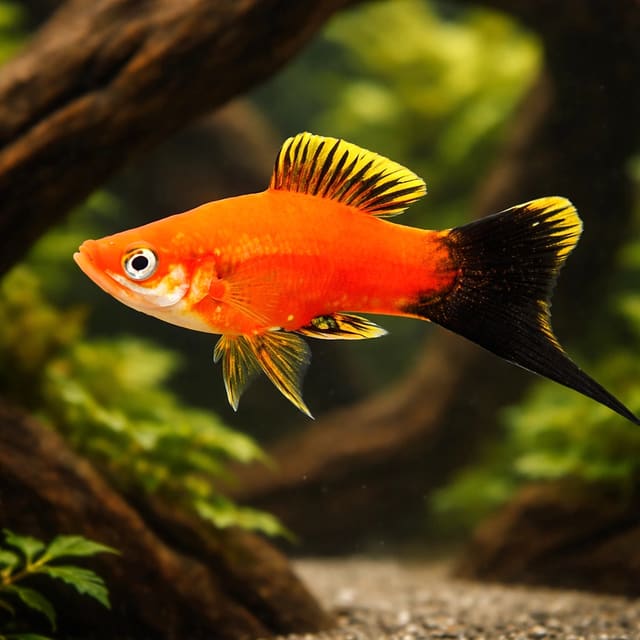
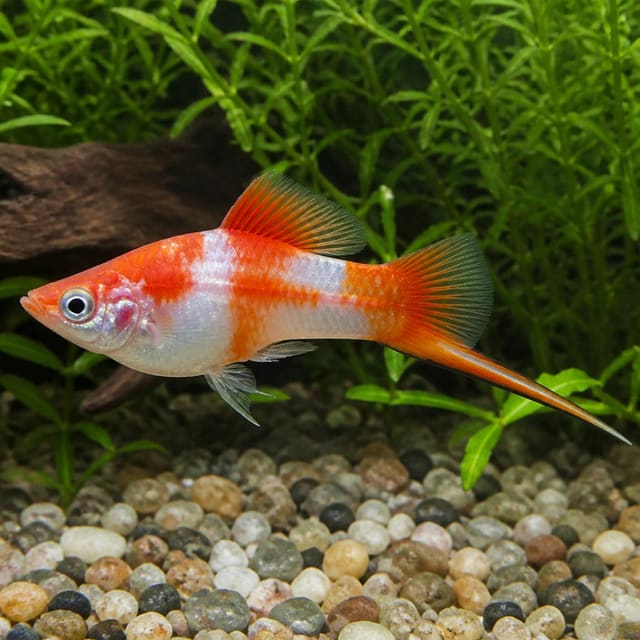
Xiphophorus helleri koi sanke, the Koi Sanke Swordtail (Xiphophorus helleri), is a Poeciliid livebearer from North and Central America that reaches 14 cm. It suits keepers with a mature aquarium of about 108 litres and a 120 × 30 cm base; use the Seriously Fish and OATA overlap of 22–27°C, pH 7.0–8.0 and 10–12 dGH, and plan at least three under OATA’s group guidance. Sold individually as one live fish.
Adult size is the maximum length this species reaches at full maturity (scientific sources). The livestock you receive will be younger and smaller. Product-photo provenance and any image-specific limitations are stated on the listing.
Xiphophorus helleri
Xiphophorus helleri koi sanke, the Koi Sanke Swordtail (Xiphophorus helleri), is a Poeciliid livebearer from North and Central America that reaches 14 cm. It suits keepers with a mature aquarium of about 108 litres and a 120 × 30 cm base; use the Seriously Fish and OATA overlap of 22–27°C, pH 7.0–8.0 and 10–12 dGH, and plan at least three under OATA’s group guidance. Sold individually as one live fish.
Adult size is the maximum length this species reaches at full maturity (scientific sources). The livestock you receive will be younger and smaller. Product-photo provenance and any image-specific limitations are stated on the listing.
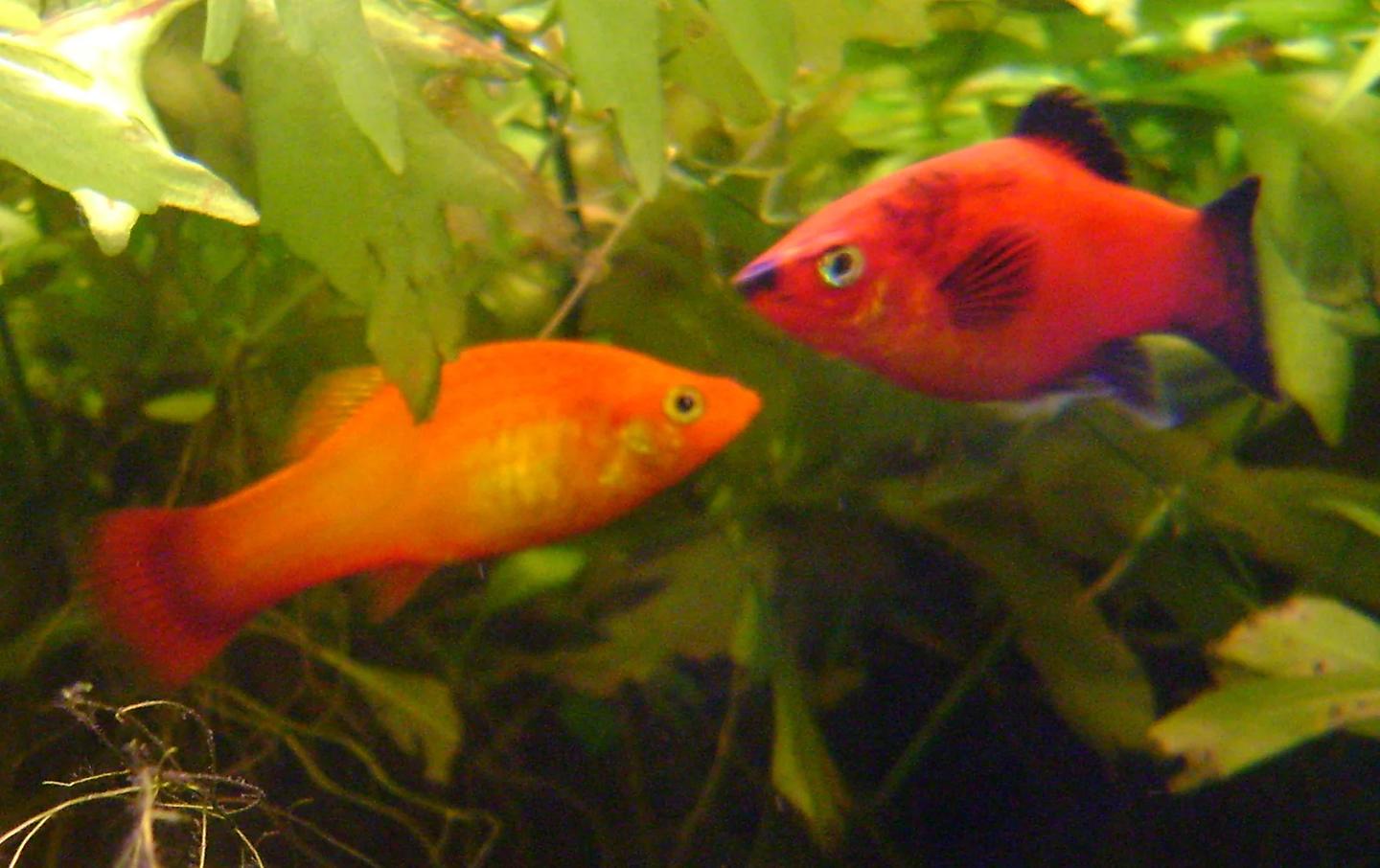
Platy is a trade name used for Xiphophorus maculatus, X. variatus and domestic forms. Start with at least three in a mature aquarium of at least 45 litres, verify the exact fish and measured water, and plan extra capacity before mixing sexes.
Maintain these water conditions for optimal health and vibrant colors
The Koi Sanke Swordtail (Xiphophorus helleri) is an ornamental Poeciliid livebearer from North and Central America that reaches a maximum recorded length of 14 cm. It suits keepers who can provide a mature, filtered aquarium with a base of at least 120 × 30 cm or equivalent, about 108 litres, open swimming room and planted cover. Plan at least three swordtails under OATA’s group guidance and use 22–27°C, pH 7.0–8.0 and 10–12 dGH as the practical overlap between the Seriously Fish species range and OATA’s swordtail values.
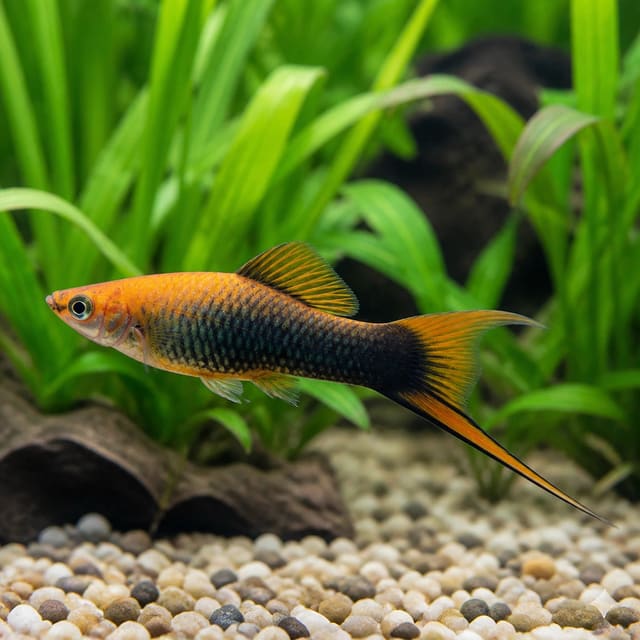
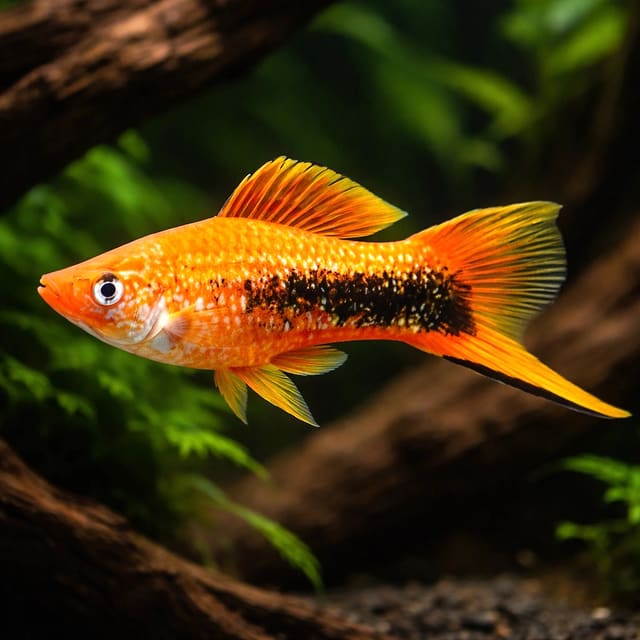
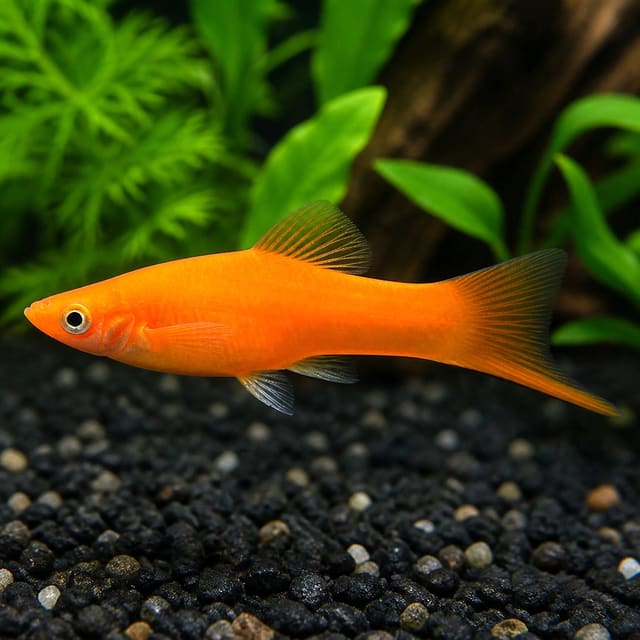
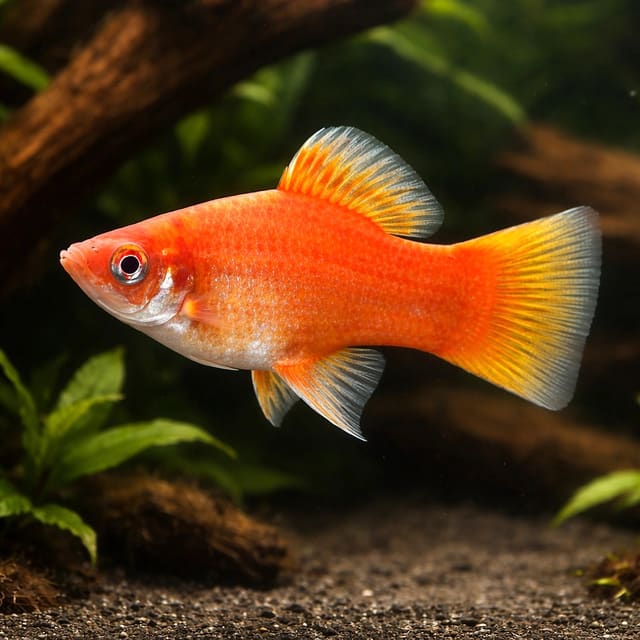
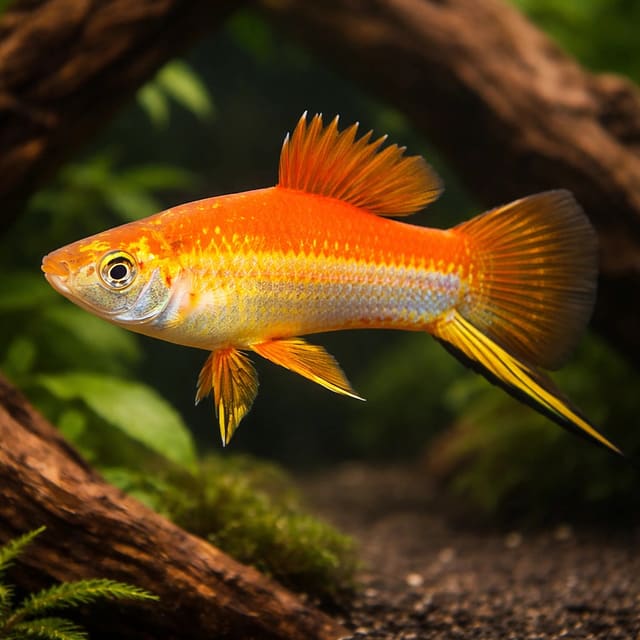
This ornamental form combines orange-red, white and irregular black koi-style patterning. Markings can vary between individual fish, while the swordtail body shape makes this an active and conspicuous livebearer.
This fish belongs to the livebearing family Poeciliidae. FishBase now lists it as Xiphophorus hellerii and records a maximum of 14 cm total length. Its notes on the wild species describe adults in flowing streams and rivers, warm springs, weedy canals and ponds, often around heavy vegetation. Wild fish eat worms, crustaceans, insects and plant matter, which helps explain why varied animal and plant-based foods suit aquarium care.
The aquarium decision is driven by adult size and swimming room. A Seriously Fish species profile recommends a base of at least 120 × 30 cm or equivalent and a volume of about 108 litres. Its 16–28°C, pH 7.0–8.0 and 10–25 dGH range overlaps with OATA’s platy and swordtail guidance at 22–27°C, pH 7.0–8.0 and 10–12 dGH; use that overlap for routine care.
| Suits | Not suited to |
|---|---|
| A mature, filtered aquarium with a base of at least 120 × 30 cm or equivalent | A small aquarium that lacks the required swimming length |
| Water held at 22–27°C, pH 7.0–8.0 and 10–12 dGH | Acidic water below pH 7.0 or water outside the routine hardness range |
| A planned group of at least three with open water and planted cover | Confined quarters where male dominance behaviour can intensify |
| Keepers prepared to test water and maintain the biological filter | An immature or unfiltered aquarium |
One purchase supplies one animal. Make every space, filtration and compatibility decision around the maximum recorded 14 cm length.
Sex is guaranteed only when the selected option explicitly states male or female. This Xiphophorus helleri koi sanke listing has no sex-guaranteed option.
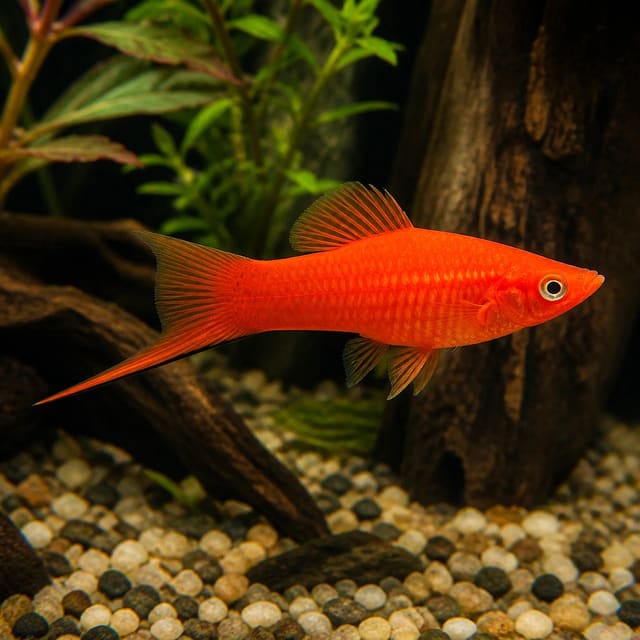
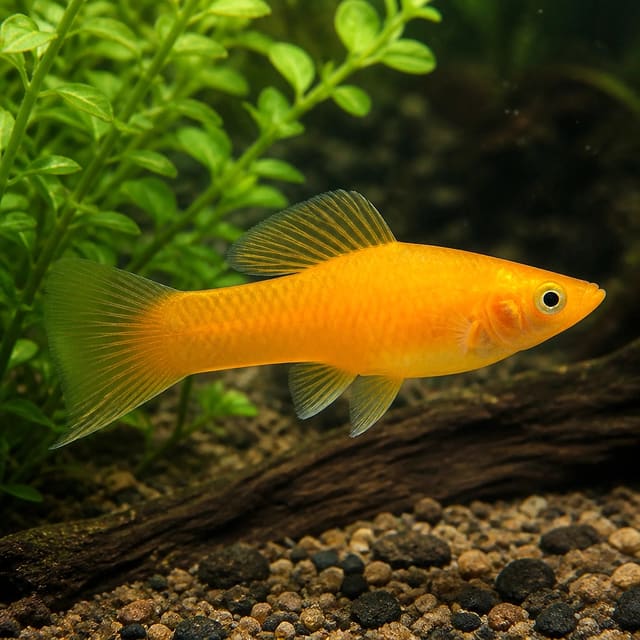
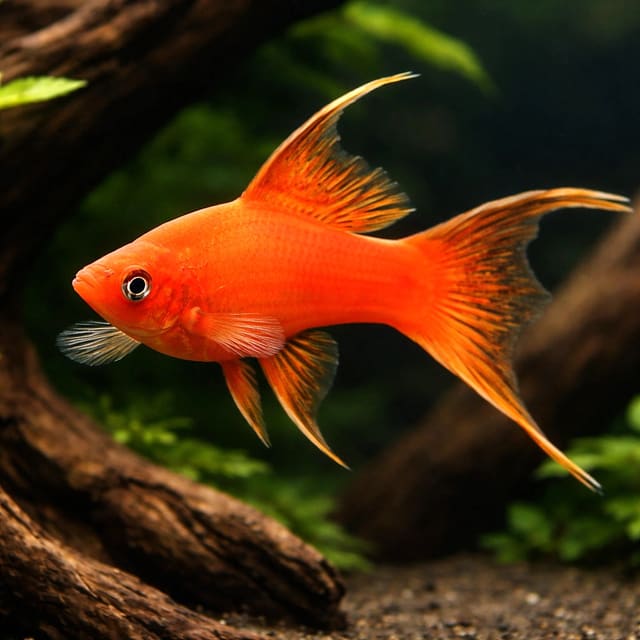
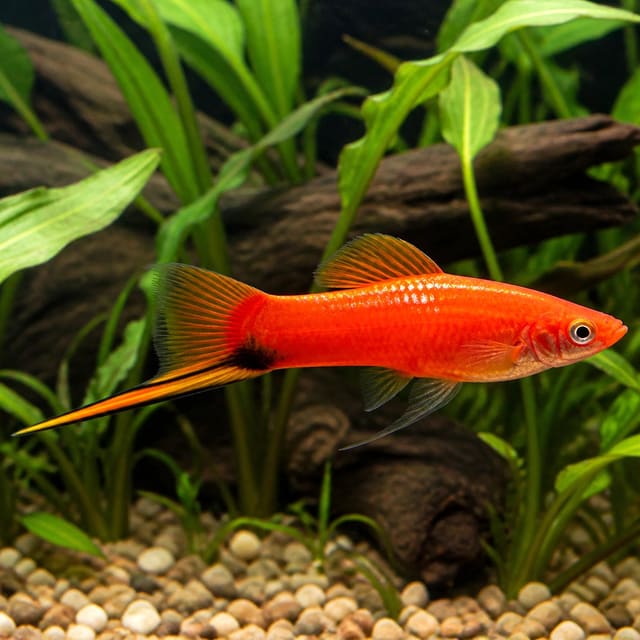
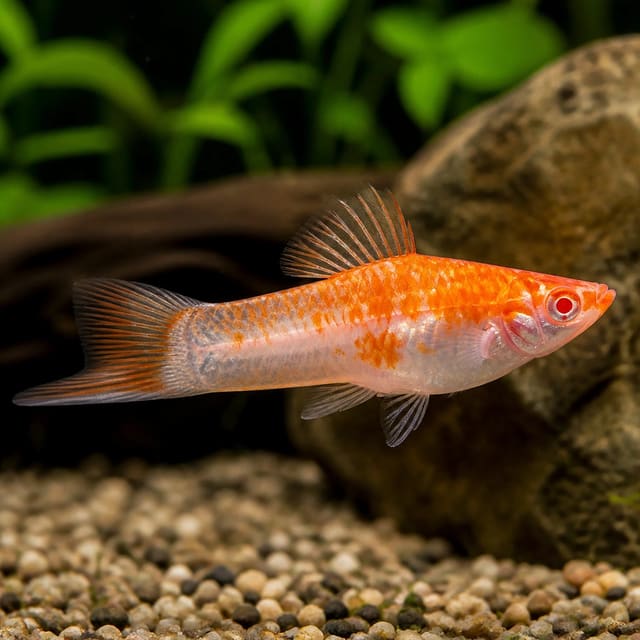
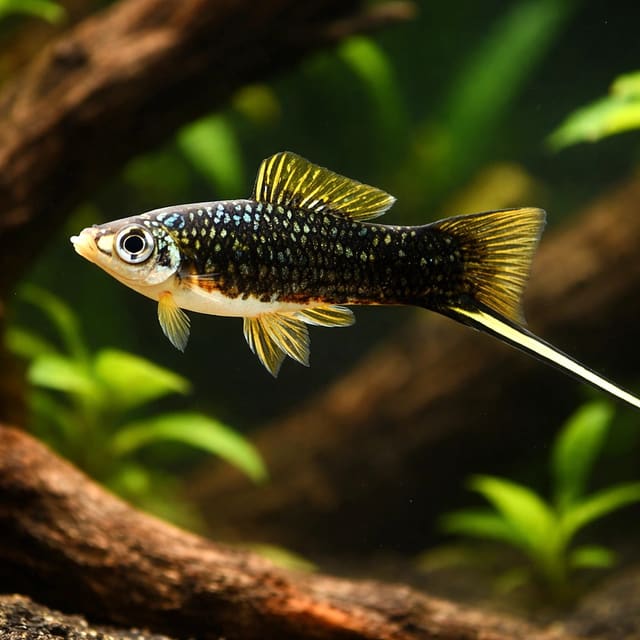
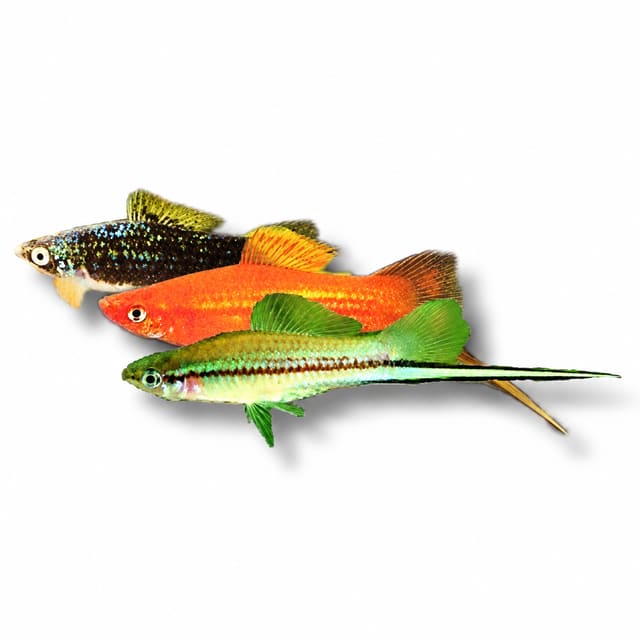
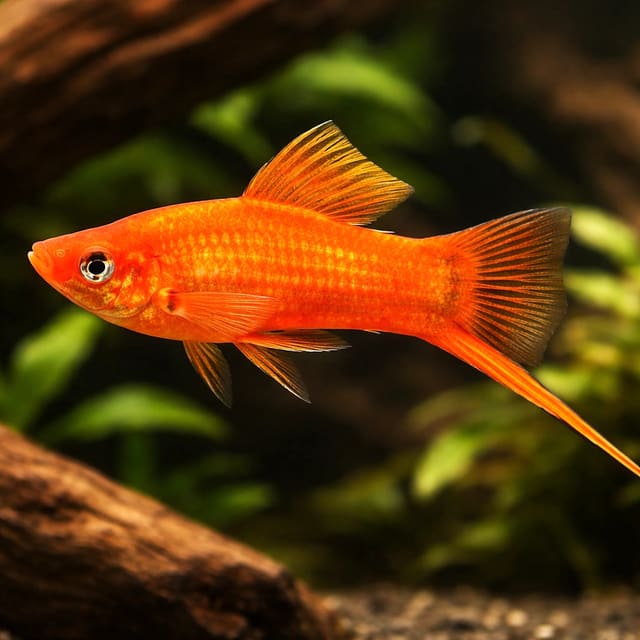
The gallery images are representative, based on reference photographs of this species, so colours can look slightly different from the live animal.
That distinction matters when planning a swordtail group. OATA advises keeping at least three swordtails and suggests two females for each male to reduce pressure on females and other inhabitants. Treat that ratio as a stocking goal rather than an assumption about an individual fish. Several males can form dominance hierarchies, especially in confined quarters, so the aquarium must provide both open swimming room and planted cover.
A keeper with a mature, filtered aquarium and naturally compatible water should find the daily routine straightforward. A small new tank, an acidic soft-water community or a crowded group of males needs a different plan before this fish is chosen. Browse the livebearers collection when comparing other fish built around similar aquarium styles, but screen each animal by its own adult needs rather than by collection placement alone.
Start with an aquarium base of at least 120 × 30 cm or an equivalent footprint and about 108 litres. This is the smallest arrangement recommended by the species profile, while FishBase gives a shorter minimum aquarium length of 80 cm. Use the more generous 120 cm planning length because it accounts better for a fish that can reach 14 cm and needs open swimming room.
Footprint and volume solve different problems. Length gives an active swordtail room to move, while water volume makes temperature and water quality more stable. A tall aquarium may hold a similar number of litres without giving the same swimming run, so compare the base dimensions before relying on the volume label.
| Example | Practical target |
|---|---|
| About 108 litres | Filter turnover of roughly 430–540 litres per hour |
| 150 litres | Using the same four-to-five-times guide, roughly 600–750 litres per hour |
| Room near 20°C | The 108-litre example uses roughly 75–125 W of heating capacity |
Rated filter flow is a starting point. Check the filter for blockages and make sure some water movement remains after media, plants and décor are in place. Swordtails appreciate a degree of movement, although particularly forceful filtration is unnecessary. Arrange the outlet so that the aquarium retains calmer planted areas as well as an open route for swimming.
Extra fish require extra capacity. OATA recommends at least 80 litres for swordtails as broad group guidance, but the species profile sets the stronger footprint and volume decision for this animal. Begin with about 108 litres, then increase the aquarium when adding a larger swordtail group or a community whose adult bodies and waste place greater demand on the filter.
Review the full adult plan before adding décor. Substrate, wood, rocks and equipment all occupy water and floor space, while the fish still needs a clear route through the tank. The result should be a stable filtered aquarium with usable length, shelter and unobstructed swimming room rather than a nominal litre figure alone.
Use 22–27°C, pH 7.0–8.0 and 10–12 dGH as the routine target. These figures are the overlap between the Seriously Fish species range and OATA’s narrower swordtail guidance. Measure your tap water and the aquarium rather than judging hardness or pH by appearance.
Temperature is only one part of suitability. Water at 25°C can still be unsuitable if it is too acidic, too soft or carrying toxic nitrogen waste. Read our water chemistry guide for the purpose of each test, then use the water matcher to compare measured values with this target.
| Reading | Decision |
|---|---|
| 24°C, pH 7.4, 11 dGH | All three routine values fall within the target |
| 27°C, pH 8.0, 12 dGH | At the upper boundaries; keep testing for stability |
| 21°C | Below the routine temperature target; correct the setup before adding the fish |
| pH 8.2 or 9 dGH | Outside the practical overlap; revise the water plan first |
Ammonia and nitrite must remain at 0 mg/l. OATA advises keeping nitrate no more than 20 mg/l above the normal tap-water level. Test ammonia and nitrite at least weekly and test again when swimming, breathing, appetite or appearance changes. A measured result tells you whether the first action belongs with water quality rather than guesswork.
Use a reliable thermometer to check the heater rather than relying on its dial. In the 108-litre example, the species profile estimates roughly 75–125 W where the room is around 20°C, but the aquarium’s dimensions and room conditions determine the final equipment choice. Place the target before livestock: establish the temperature, pH, hardness and biological readings, confirm that they remain suitable, and only then add the fish gradually.
Keep a short weekly record of temperature, pH, hardness, ammonia, nitrite and nitrate. Four comparable entries show whether the aquarium is holding steady and make a gradual change easier to notice than a single isolated test.
A working biological filter is essential. The RSPCA’s aquarium welfare guidance explains that fish release toxic ammonia, which filter bacteria convert first to nitrite and then to the safer nitrate. Ammonia and nitrite are both dangerous, so an aquarium is ready for livestock only when its established biological filter can keep both at 0 mg/l.
Prepare and mature the aquarium before arranging the fish’s arrival. Our first tropical tank guide sets out that preparation in order. Fit the filter, heater and décor, establish the intended water values and confirm the nitrogen-cycle readings with tests rather than treating clear water as proof of readiness.
Add fish slowly because every addition increases waste and feeding. The bacterial population must grow with that extra load. Adding too many animals at once can overwhelm the filter and cause new tank syndrome, with ammonia or nitrite rising before the bacteria can process the waste.
Filter maintenance must preserve those bacteria. Check the unit for restricted flow during weekly maintenance. If the filter needs cleaning, do not run it under the tap. Rinse it lightly in aquarium water removed during the water change because this reduces the amount of bacteria lost.
A larger aquarium gives more stability, but volume does not replace testing or maintenance. The dependable setup combines suitable space, an established filter, gradual stocking, controlled feeding and weekly checks.
Build the layout around two needs: planted shelter and a clear swimming route. Swordtails suit a heavily planted aquarium, while their active shape and adult length call for open space. Place taller planting and branches around the back or sides instead of filling the entire 120 cm swimming length.
A dark substrate can make the ornamental pattern easier to see without changing the fish’s care requirements. Aquarium gravel or sand are both suitable base materials. Live plants are ideal for cover; where live plants are not used, plastic plants and suitable ornaments such as caves can provide shelter.
| Area | Purpose |
|---|---|
| Back and sides | Plants and branches provide visual cover |
| Surface | Floating plants can diffuse incoming light |
| Central length | Open water preserves the main swimming route |
| Lower areas | Gravel or sand, with stable rocks or wood, completes the structure |
Driftwood roots or branches can create a more natural feel and break up sight lines. A layout inspired by a flowing stream may use water-worn rocks and small boulders, reflecting habitats occupied by the wild species. Keep each piece within the footprint plan so that décor does not reduce the usable swimming length below what an adult group needs.
Some water movement is appropriate, but particularly strong filtration is unnecessary. Watch the fish throughout the aquarium: it should be able to use the open area while also entering planted sections without being driven continually by the outlet. If plants or debris collect against a blocked filter intake, restore normal flow during maintenance.
Cover also supports compatibility decisions. A timid companion or lower-ranking swordtail needs access to shelter, while open space prevents the aquarium becoming a maze with no sustained swimming route. Increase both space and shelter when the social group grows rather than solving crowding by adding more ornaments to the same footprint.
The wild species consumes worms, crustaceans, insects and plant matter. Aquarium swordtails are similarly omnivorous, so use a good-quality flake or granule with a high algae content as the staple and vary it with small live or frozen foods.
Suitable additions include Daphnia, Artemia, small bloodworm and tubifex. These foods add variety but do not change the portion rule: feed only what the fish can eat within a few minutes, once a day. Food left uneaten breaks down and adds toxic waste to the water.
| Meal type | How to use it |
|---|---|
| Algae-rich flake or granule | Use as the regular dried foundation |
| Daphnia or Artemia | Substitute a small live or frozen portion for variety |
| Small bloodworm or tubifex | Use as another varied meal in an appropriate small size |
A varied rotation means changing the food type, not feeding several full meals together. For example, give the normal small dried portion on one day, Daphnia on another and the dried staple again on the next. Every portion should still disappear within a few minutes.
Observe the whole group while feeding. Reduced intake is one of the health changes worth investigating, while food repeatedly reaching the substrate uneaten shows that the portion is too large. Reduce the next ration and test the water if uneaten food has been accumulating.
Do not assume that an omnivore needs no deliberate provision in a community aquarium. Confirm that the swordtail reaches food and that faster fish do not take the entire ration. At the same time, do not add extra food merely because several species are present; base the total on what the animals actually consume within the stated time.
Consistent portions protect the filter as well as the fish. Overfeeding increases decomposing waste, which raises the demand placed on the biological filter. The daily feeding decision therefore connects directly to the weekly ammonia, nitrite and nitrate results.
Change 25% of the aquarium water at least once every week. Use a siphon to remove solid waste from the gravel or sand, and treat replacement tap water with conditioner to remove chlorine or chloramine before it enters the aquarium.
Test the water at least weekly. Ammonia and nitrite must remain at 0 mg/l, while nitrate should not rise more than 20 mg/l above the normal tap-water level. Record the results alongside temperature, pH and hardness so that a change in behaviour can be compared with an actual water trend.
Look for fish hanging at the surface, sitting on the bottom, swimming erratically, breathing unusually quickly or slowly, hiding more than normal, or showing an unexpected rise in aggression. Physical warnings include white spots, fluffy growths, damaged fins, missing scales, ulcers, bumps or a marked change in body condition. A darker or paler appearance and reduced interest in food also deserve attention.
When a change appears, test water quality first and compare it with the normal record. Correct any husbandry problem that the results reveal. Contact us for further guidance if the concern continues or the fish shows a serious physical or behavioural change.
Do not run biological media under the tap. Rinsing it lightly in water removed from the aquarium clears loose debris while reducing bacterial loss.
At the end of each month, compare the four weekly entries. Repeated nitrate growth, declining filter flow or slowly shifting pH calls for a review of feeding, stocking and maintenance before it becomes an acute problem.
Have the mature aquarium ready before the parcel is opened. Confirm a 22–27°C temperature, pH 7.0–8.0, hardness of 10–12 dGH, and ammonia and nitrite at 0 mg/l. Someone must be present to receive live fish because the parcel cannot be left unattended.
Follow our delivery and Live Arrival Guarantee policy for the applicable reception and claim requirements.
During the first week, follow the normal once-daily feeding limit and watch whether the fish consumes its portion within a few minutes. Check for surface hanging, bottom sitting, erratic movement, unusual breathing, hiding, aggression, colour change, physical marks or reduced appetite. Test the water whenever one of these changes appears and complete the scheduled weekly test even when behaviour looks normal.
Add further fish slowly. Each new animal and each increase in feeding raises the waste load, while the filter bacteria need time to adjust. Use the first week to confirm stable readings and normal behaviour before making another stocking decision.
Place the fish directly into the mature aquarium planned around the 14 cm maximum.
OATA advises keeping at least three platies or swordtails and suggests two females for each male. This group rule aims to reduce pressure on females and other aquarium inhabitants. It also means that one purchase supplies one individual fish, not a complete social group.
Plan the whole group before choosing quantities. Do not infer sex from colour or a gallery image. A sword-like extension is associated with males, but ornamental forms can have other extended fins, including in females, so visible fin shape is not a purchase guarantee.
| Situation | Action |
|---|---|
| Starting a swordtail group | Plan at least three and work towards two females for each male |
| Several males | Allow generous space, cover and close observation for dominance behaviour |
| Existing group | Count the adult fish and sex ratio before adding another individual |
| Mixed community | Include every species in the adult space and filtration calculation |
Males can form dominance hierarchies in confined spaces and may spend substantial time maintaining their positions. A tank that merely reaches the minimum volume can therefore be a poor fit for a male-heavy group if planting, décor and other inhabitants reduce usable swimming room. Increase the footprint and planted cover rather than treating the minimum as a universal capacity.
Swordtails are livebearers and give birth to live young. Females can store viable sperm for months, so a group’s future population may not be determined solely by the fish visibly present at one moment. Leave capacity in the aquarium and filter plan rather than stocking to the limit.
Watch for persistent chasing, hiding, unusual aggression, reduced feeding or a fish remaining at the surface or bottom. Test the water when behaviour changes, then reassess the group composition, cover and swimming room. Social pressure and poor water quality can occur together, so checking only one factor can miss the practical cause.
Swordtails are generally peaceful, but larger individuals can be boisterous and may chase timid tank mates. Male swordtails may also show aggression towards one another. Compatibility therefore depends on the particular adults, aquarium footprint, group composition and water requirements rather than a universal list of named companions.
| Check | Pass condition |
|---|---|
| Water | The companion is comfortable at 22–27°C, pH 7.0–8.0 and 10–12 dGH |
| Adult space | All fish fit the 120 cm swimming length and total filtered volume when grown |
| Temperament | The companion can cope with an active, sometimes boisterous swordtail |
| Group pressure | The layout and sex ratio do not concentrate chasing on one fish |
For a worked example, a candidate fish whose care range includes 24–26°C, pH 7.2–7.8 and 10–12 dGH passes the water-overlap check. If that fish is notably timid, the behaviour check still needs caution because a large swordtail may chase it. Passing chemistry alone is not enough.
A candidate restricted to acidic water below pH 7.0 does not share this routine range, even if its temperament appears calm. Combining the two would force at least one animal outside its stated water conditions. Choose a different community plan instead of compromising between incompatible targets.
Count adult bodies. This swordtail can reach the recorded 14 cm maximum, and the aquarium must retain open swimming room after every companion and piece of décor is included. Filter capacity must also cover the combined waste load.
Use cover while preserving the central swimming route. Monitor timid fish, lower-ranking swordtails and groups containing several males for persistent chasing or hiding. Contact us with the aquarium dimensions, measured water values, existing adult stock and proposed addition if you want a stocking and compatibility assessment.
This screening rule is the honest basis for community planning: choose fish with overlapping water requirements, enough adult space and temperaments that can share the same layout, then continue observing the actual group.
FishBase records a maximum of 14 cm total length for Xiphophorus helleri koi sanke, so plan the aquarium around that adult measurement.
Use a mature, filtered aquarium with a base of at least 120 × 30 cm or equivalent and a volume of about 108 litres or more for Xiphophorus helleri koi sanke.
OATA’s swordtail group guidance advises planning at least three and suggests two females for each male; several males need careful monitoring because dominance behaviour can intensify in confined spaces.
Xiphophorus helleri koi sanke can suit beginners who provide a mature, filtered aquarium of about 108 litres, test the water weekly and keep ammonia and nitrite at 0 mg/l.
Feed Xiphophorus helleri koi sanke a quality flake or granule with a high algae content, varied with small Daphnia, Artemia, bloodworm or tubifex; offer only what it eats within a few minutes once daily.
Use the Seriously Fish and OATA overlap of 22–27°C, pH 7.0–8.0 and 10–12 dGH for routine care, with ammonia and nitrite kept at 0 mg/l.
The main concern is chasing: swordtails are generally peaceful, but larger individuals may be boisterous and chase timid tank mates, while males may also show aggression towards one another.
Choose fish whose water requirements overlap with 22–27°C, pH 7.0–8.0 and 10–12 dGH, whose adult bodies fit the aquarium, and whose temperament can cope with an active, sometimes boisterous swordtail.
Start filming every delivery while the parcel is still sealed, then open it in one continuous take with the fish still visible inside the sealed bag. Someone must be present to receive it; float the bag for 20–30 minutes, then release the fish without pouring the bag water into the aquarium.
No reviews for this item yet. Bought one? Honest reviews only, good or bad.
What customers say about ordering from us
I have a small group of long finned mountain minnows. So was delighted to be able to order ten of this variety to increase the genetics in my tank . The ones I recieved are healthy but it’s to early to give a verdict on wether they are of a long finned type since they are small currently.
Gordon Walker · 23 Sept 2026
100% success travel and "installation". Pleased with quality of purchase. The Siamese fighter a bit "shy" so have not yet seen him at his best yet but looking good. Happy customer. GG
George E Garratt · 21 Sept 2026
Reviews of our shop, collected by Judge.me, an independent third-party review collector. Newest first.