Easy
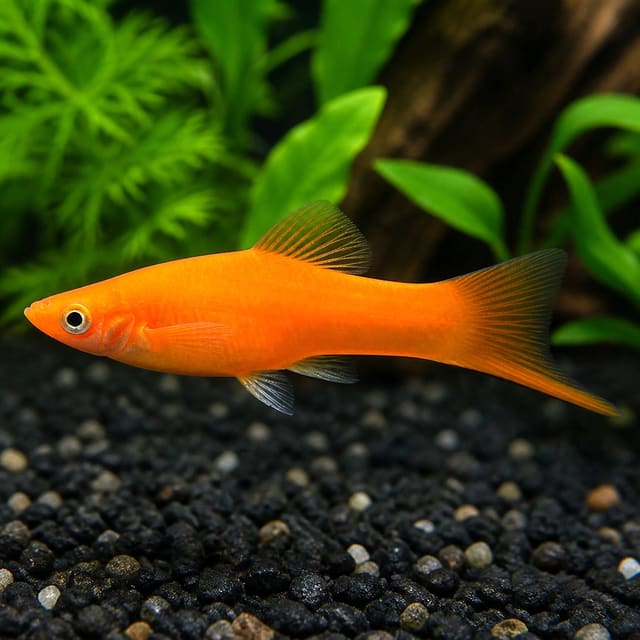
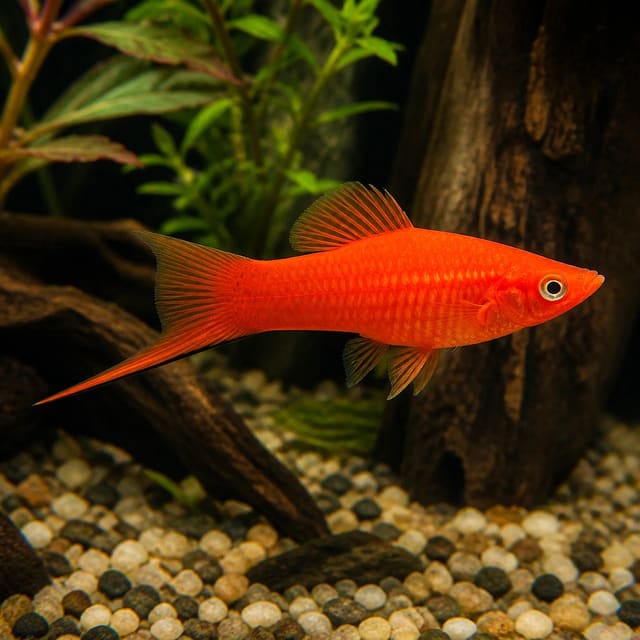
Swordtail Red (Xiphophorus helleri red)
22–27°C · pH 7–8 · 108L
£3.99

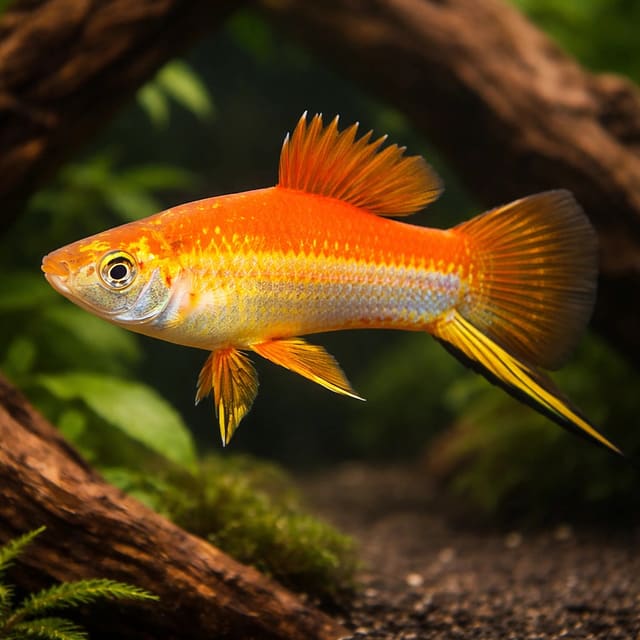
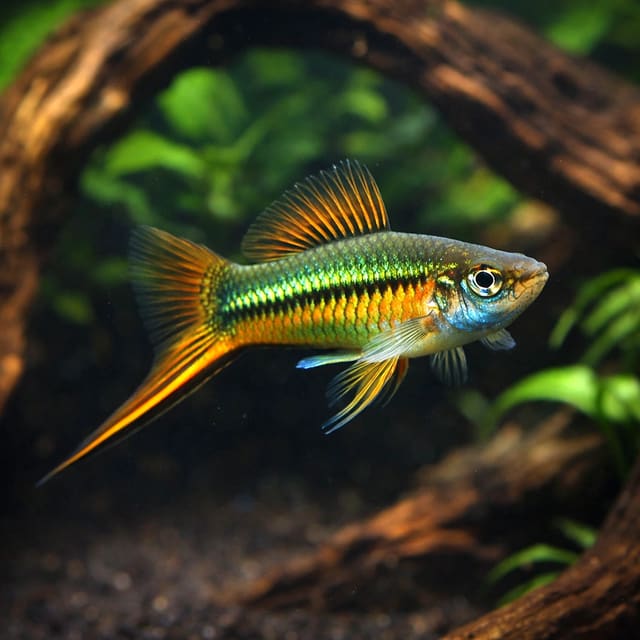
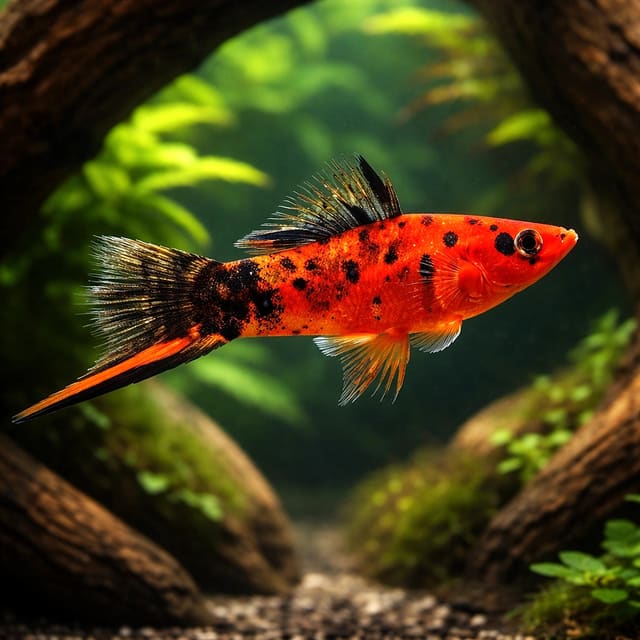
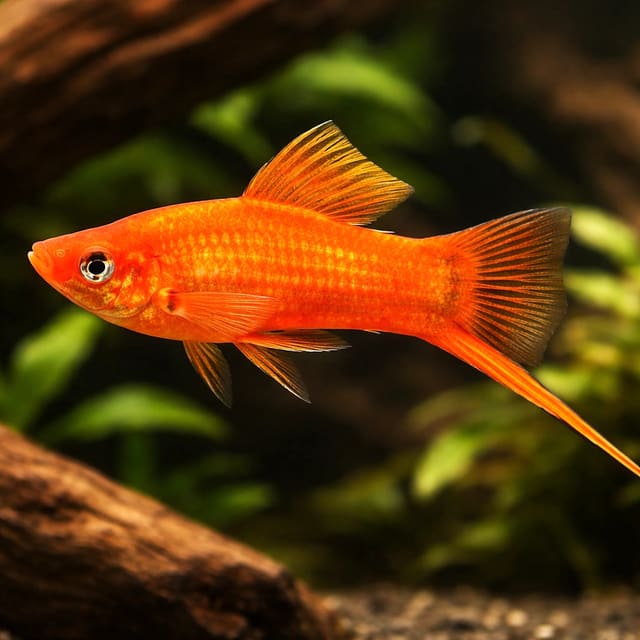
Wien Lyra Swordtail (Xiphophorus hellerii) is an active ornamental livebearer for a mature, planted aquarium with generous open swimming room. Plan around a 14 cm adult, a 120 × 30 cm minimum footprint and possible male rivalry. One unsexed live fish is supplied at 4–5 cm.
Adult size is the maximum length this species reaches at full maturity (scientific sources). The livestock you receive will be younger and smaller. Product-photo provenance and any image-specific limitations are stated on the listing.
Xiphophorus hellerii
Shoaling fish: kept in a group they feel safer, stay calmer and show their best colour.
Wien Lyra Swordtail (Xiphophorus hellerii) is an active ornamental livebearer for a mature, planted aquarium with generous open swimming room. Plan around a 14 cm adult, a 120 × 30 cm minimum footprint and possible male rivalry. One unsexed live fish is supplied at 4–5 cm.
Adult size is the maximum length this species reaches at full maturity (scientific sources). The livestock you receive will be younger and smaller. Product-photo provenance and any image-specific limitations are stated on the listing.
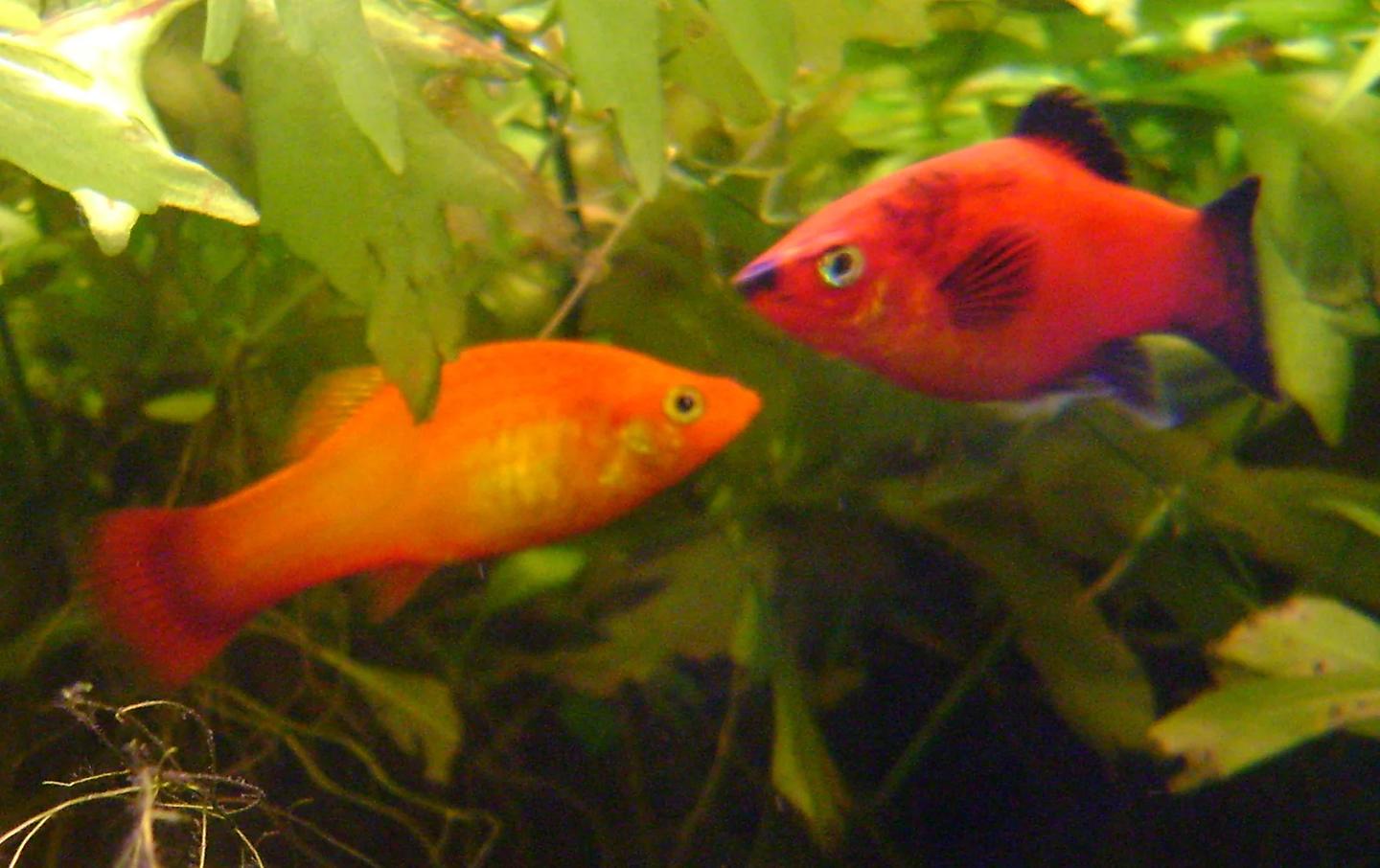
Platy is a trade name used for Xiphophorus maculatus, X. variatus and domestic forms. Start with at least three in a mature aquarium of at least 45 litres, verify the exact fish and measured water, and plan extra capacity before mixing sexes.
Maintain these water conditions for optimal health and vibrant colors
The Wien Lyra Swordtail is an ornamental form of Xiphophorus hellerii, the accepted scientific name for the green swordtail. The older spelling Xiphophorus helleri is also widely encountered; FishBase treats that spelling as a synonym. Wien Lyra remains a trade-form description outside the scientific name, not a separate species.
One purchase supplies one live fish at a dispatch size of 4–5 cm. That grade describes the fish when supplied. It is not the adult length. The FishBase species summary records a maximum of 14.0 cm total length, while the Seriously Fish species profile gives 140 mm standard length. The different measurement methods matter, but both lead to the same practical decision: build the aquarium around a substantial adult swordtail rather than a small arrival.
| Suits | Needs reconsidering when |
|---|---|
| A keeper who wants an active livebearer and can provide a 120 × 30 cm minimum footprint with open swimming room | The aquarium is planned only around the 4–5 cm juvenile dispatch size rather than adult swimming room |
| A mature, filtered, planted aquarium with stable neutral-to-alkaline water | The tank is newly set up, uncycled or subject to abrupt changes in temperature and chemistry |
| A thoughtfully composed group or community whose social balance is watched over time | Several unsexed fish are expected automatically to produce the recommended female-to-male ratio |
| A varied omnivore diet and routine observation at feeding time | Very timid companions are likely to lose food or open-water access to a boisterous adult |
The species is native to the Atlantic slope of Mexico and adjacent Central America, extending to north-western Honduras. Wild adults occur mainly in flowing streams and rivers with heavy vegetation, as well as warm springs, effluents, weedy canals and ponds. These habitat records support an aquarium with vegetation, open movement and some water flow. They do not require a wild-biotope replica or turn every environmental endpoint into a daily target.
Seriously Fish gives species-level aquarium guidance of 16–28 °C, pH 7.0–8.0 and 10–25 dGH, with a 120 × 30 cm base and about 108 litres as the smallest aquarium to consider. The temperature span is wide. Choose a steady point that suits the whole stocking plan instead of allowing daily movement between its endpoints. The broad UK OATA platy-and-swordtail sheet offers a narrower routine framework of 22–27 °C, pH 7.0–8.0 and 4–12 dGH. Its hardness guidance is group-level rather than a replacement for the species profile.
This is usually an approachable fish in environmental terms, yet social planning is more nuanced than the old ‘peaceful community’ label suggests. Seriously Fish notes that males in confined spaces can form dominance hierarchies and spend considerable time maintaining position. OATA describes swordtails as generally peaceful but warns that large individuals can be boisterous and may chase timid tank mates. A long-finned ornamental form deserves the same attention to swimming room, social pressure and clean water as any other swordtail.
Sex is guaranteed only when the selected option explicitly states male or female. This Swordtail Wien Lyra listing has no sex-guaranteed option. Do not infer sex from a gallery image, present size or a single fin feature. Seriously Fish explains that ornamental strains can carry extended fins in forms that complicate simple assumptions, while adult sexing relies on a combination of reproductive anatomy and mature traits.
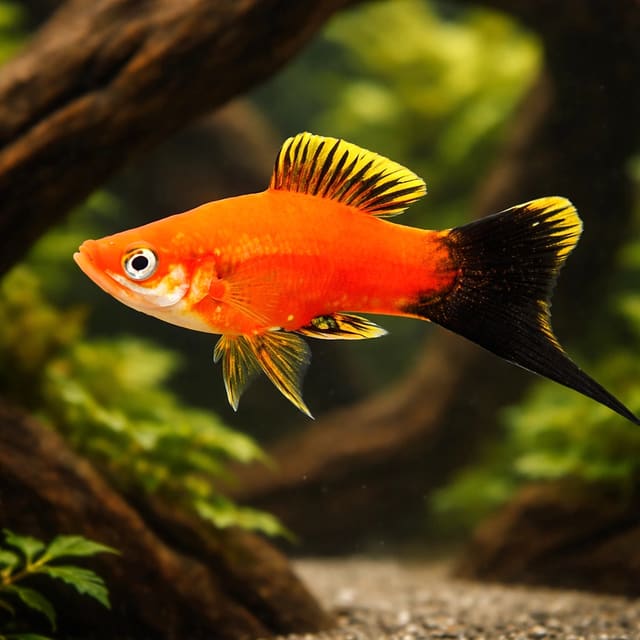
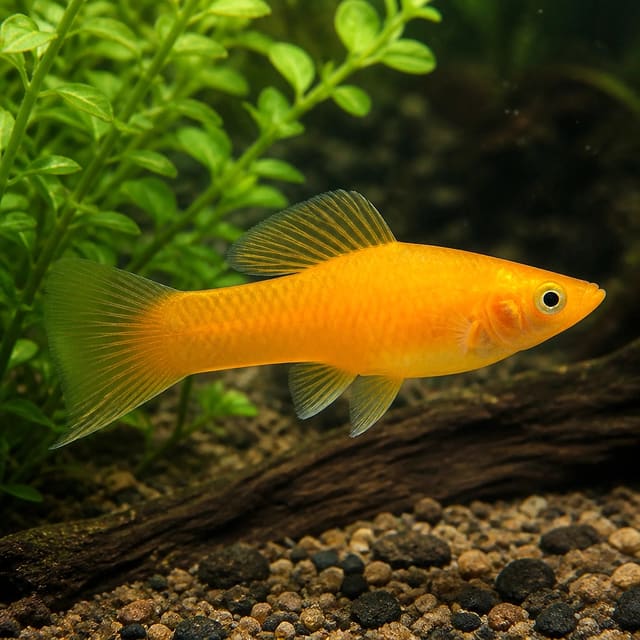
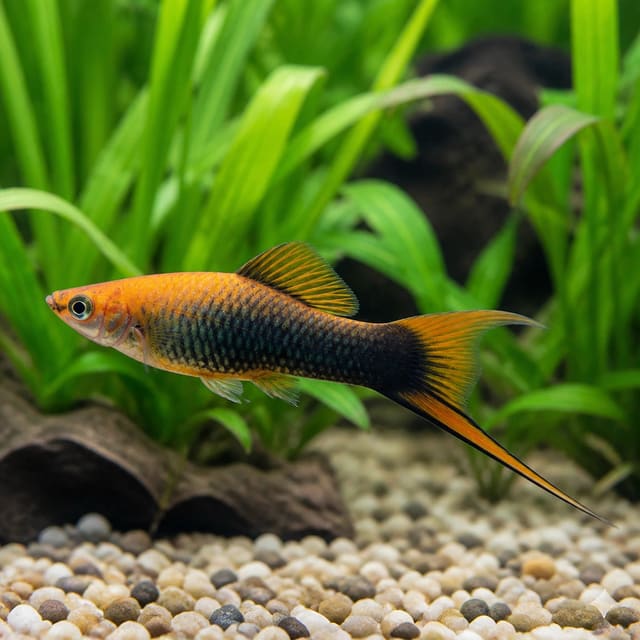
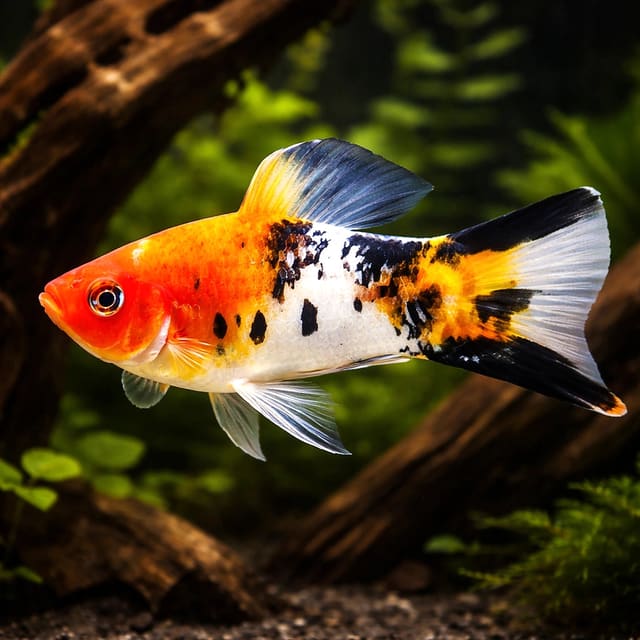
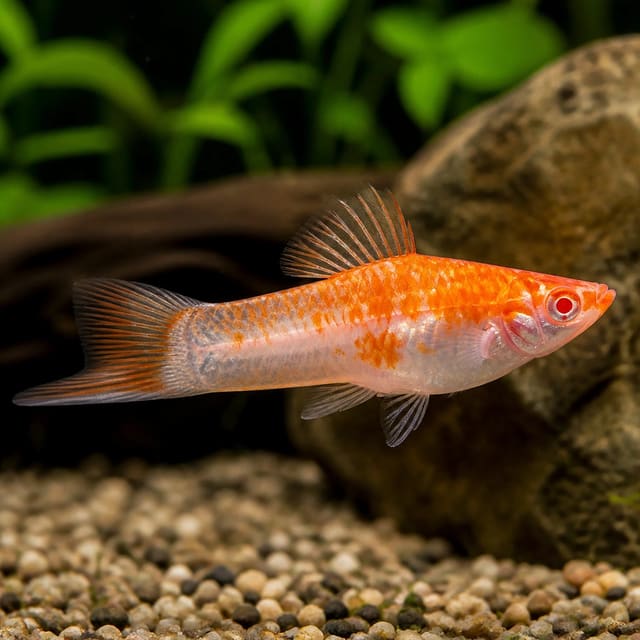
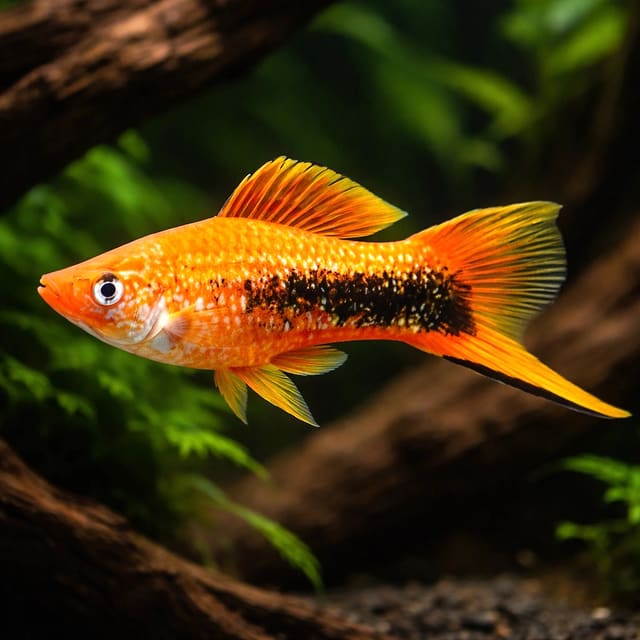
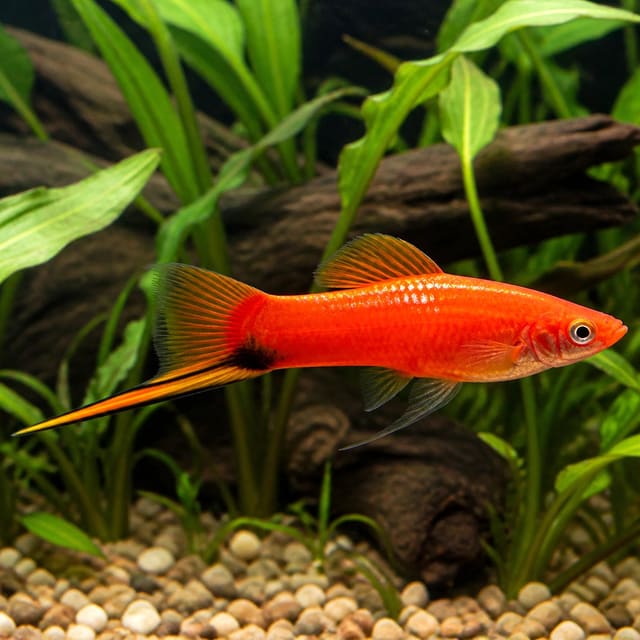
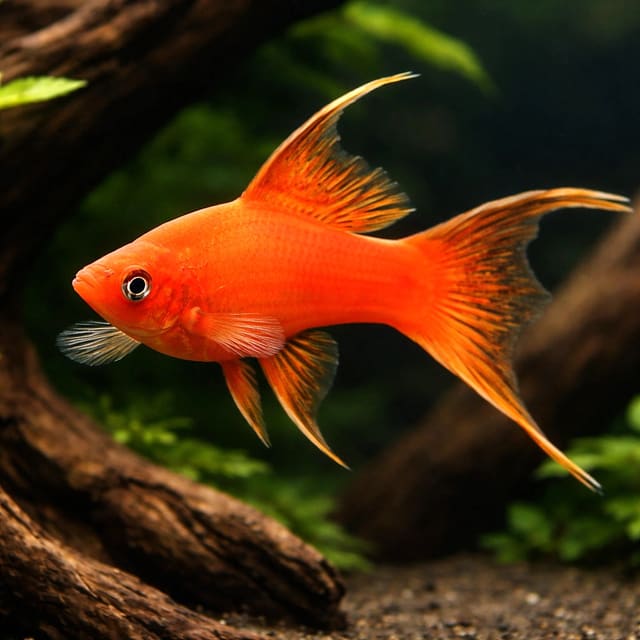
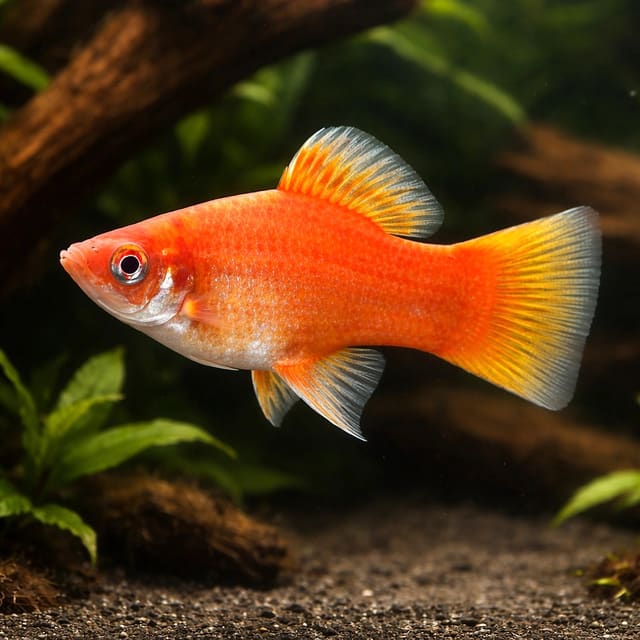
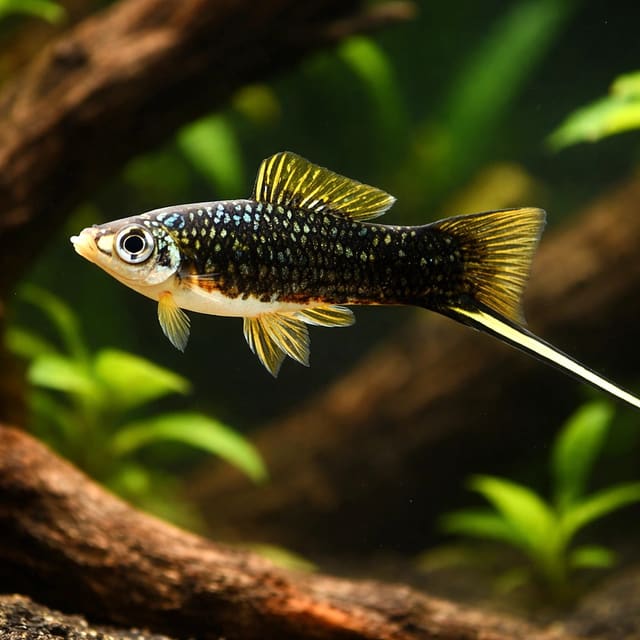
Gallery images have been digitally enhanced to improve image quality. Natural colour, pattern, size and maturity can vary between live animals. Treat the images as an introduction to the ornamental form, not a promise that one individual will match every shade, marking or fin proportion. If the Wien Lyra appeals but the adult social plan does not, compare other options in the livebearers collection before deciding.
Seriously Fish recommends a 120 × 30 cm aquarium base or an equivalent footprint, about 108 litres, as the smallest to consider for Xiphophorus hellerii. The word ‘equivalent’ should preserve swimming length and useful horizontal space, not justify a tall narrow tank with the same volume. Swordtails are active open-water fish. A long front-to-back route lets them move without turning every few body lengths and gives social interactions room to end.
Read the footprint figures as a planning sequence, not three interchangeable labels. The 80 cm FishBase entry is a minimum length record; the 80-litre OATA figure is broad group guidance; and the 120 × 30 cm Seriously Fish base combines length and front-to-back room for this species. For this active, potentially social fish, the more informative footprint should lead the decision. Measure the usable inside space after filters, wood and dense planting are in place, and check that an adult can cross open water without every movement passing through another fish's resting area. A nominally large aquarium can still be poorly arranged if equipment and furnishings divide it into short dead ends.
FishBase also records a minimum aquarium size of 80 cm, while OATA gives a broad group recommendation of at least 80 litres for swordtails. The 120 × 30 cm species profile is the more complete planning figure because it combines footprint with approximate volume. Use it as the minimum considered, then increase space for a larger group, multiple males or additional community fish. Extra volume is valuable only when the layout leaves it usable; an aquarium filled edge-to-edge with hard décor can have litres without offering enough open swimming room.
Create a planted margin or several sheltered areas around a generous open lane. Seriously Fish says décor is not especially critical and suggests heavy planting, a dark substrate, floating plants and driftwood roots or branches; it also notes that some water movement is appreciated. OATA recommends gravel or sand, live or artificial plants and suitable shelter while emphasising open space for swordtails. These sources point towards balance rather than a crowded jungle or a bare box.
Check that long or extended fins can pass comfortably around wood, heater guards, filter intakes and rockwork. Stable decorations should not create narrow traps. Floating cover can soften light, but leave sufficient open surface and flow for gas exchange. A secure lid is a sensible part of containing active livebearers, while cables and pipe gaps should be checked whenever equipment is moved.
The Seriously Fish species profile spans 16–28 °C, pH 7.0–8.0 and 10–25 dGH. FishBase gives wild environmental values of 22–28 °C, pH 7.0–8.0 and 9–19 dH. The OATA group sheet gives routine swordtail guidance of 22–27 °C, pH 7.0–8.0 and 4–12 dGH. Taken together, pH 7.0–8.0 is consistent, while the temperature and hardness ranges differ by purpose and scope.
Do not treat 16 °C and 28 °C as two settings to alternate between. The broad species span shows tolerance reported by a husbandry profile; the narrower OATA temperature range is a practical group framework for a typical heated tropical aquarium. Choose a stable temperature that suits every inhabitant, then keep daily variation small. In the same way, use source-water hardness you can maintain consistently rather than chasing a precise number through repeated chemical adjustment.
Measure before changing. The water chemistry guide explains pH, hardness and nitrogen waste, and the water matcher can help compare actual readings with the stated guidance. A test result is useful when it leads to a repeatable plan. Unmeasured additives and abrupt corrections can be more disruptive than a stable value within the documented species range.
Ammonia and nitrite should be zero. OATA advises keeping nitrate no more than 20 mg/l above the normal tap-water level, testing regularly and changing a partial 25% at least once every week. That wording means the water change should happen at least weekly; it does not turn 25% into a compulsory minimum amount for every unusual situation. Match replacement water sensibly for temperature and treat tap water for chlorine or chloramine before it enters the aquarium.
The RSPCA aquarium guidance explains why a working biological filter is essential: fish release ammonia, beneficial bacteria convert it to nitrite and then to the safer nitrate. A clear tank can still be biologically unprepared. The first tropical tank guide is useful for planning the maturation sequence before livestock is added.
Seriously Fish does not call for exceptionally powerful filtration, though it says the species appreciates some water movement. Its example for an aquarium of about 108 litres uses a turnover of four to five times the volume per hour. Treat that as equipment-planning guidance rather than a reason to blast the entire aquarium. Arrange the outlet so open water moves while planted and resting areas remain usable.
Check filter intakes for reduced flow and blockages. If media needs cleaning, OATA says to rinse it lightly in water removed during a partial change rather than under the tap, where chlorine or chloramine can harm the bacterial population. Return the filter to operation promptly and confirm it has restarted. Avoid combining a major filter clean, complete substrate disturbance and large stocking change on the same day.
Wild stomach analyses summarised by Seriously Fish show a generalised omnivore feeding on aquatic and terrestrial invertebrates, organic detritus, algae and other plant material. In the aquarium, the profile recommends a balanced diet of quality dried products with small live and frozen foods such as daphnia, Artemia and bloodworm. OATA similarly recommends quality flake or granules with a high algae content plus small live or frozen items.
Use a suitable staple rather than treating every frozen food as a complete diet. Choose particle size for a 4–5 cm arrival and adjust as it grows. Offer only what the fish can consume within a few minutes; OATA warns that uneaten food breaks down and adds toxic waste. Remove leftovers and judge body condition over time instead of trying to accelerate growth with oversized meals.
Feeding is also a social check. Watch whether every fish reaches food and whether a dominant animal patrols the whole surface. Spread an appropriate portion across more than one point if needed, but do not disguise overcrowding with extra food. A timid tank mate that waits until everything is gone is signalling a compatibility problem, not merely a feeding-technique problem.
Observe before opening the lid: normal swimming, breathing, colour, fin position and appetite provide a baseline. Test the water, complete the partial change, remove accessible waste and inspect the filter. After refilling, confirm temperature, flow and the behaviour of every fish. A short record of readings and unusual behaviour helps distinguish a one-off disturbance from a trend.
OATA advises looking for changes in swimming, colour, temperament, breathing, skin, fins, condition and feeding. Those signs do not diagnose one disease by themselves. When something changes, test the water and check social pressure first. A treatment choice should follow an informed diagnosis; this listing does not establish a medication, dose or duration.
Long fins deserve close observation for splits, clamping or repeated contact with décor. Damage can have several causes, including social pursuit, poor water quality or a physical snag. Inspect the full aquarium before blaming a particular tank mate. Correct the cause, maintain clean stable water and seek appropriate aquatic-veterinary or specialist advice if the fish is unwell.
Be present for the confirmed delivery and have the mature aquarium ready. Tropical Fish Co's delivery and Live Arrival Guarantee policy says to open and inspect the parcel on the day it arrives. If a claim is needed, the evidence must be a continuous video beginning with the sealed parcel, showing the outer box, the opening and the fish still in its sealed bag. Record this before opening the fish bag or beginning acclimatisation.
Keep the first hours calm, but do not mistake quietness for permission to stop observing. An active fish may initially shelter after travel. Check that it can orientate, swim without obstruction and avoid immediate harassment. Delivery handling protects the transfer; mature filtration, correct water and a workable group plan protect everything that follows.
OATA describes platies and swordtails as generally peaceful and recommends companionship. Seriously Fish adds an important species-level detail: in confined spaces, groups of male swordtails form dominance hierarchies and may spend substantial time maintaining their position. Both statements can be true. A swordtail can coexist well in a considered community while still being boisterous or competitive within its own group.
This distinction matters more than a simple peaceful/aggressive label. Watch how often a fish chases, whether the recipient can end the encounter and whether every animal continues to feed and use the whole aquarium. Brief display and movement across open water is different from one fish being pinned behind equipment, excluded from food or pursued whenever it leaves shelter.
OATA's broad platy-and-swordtail guidance suggests keeping at least three, using two females for each male to reduce stress on females and other inhabitants. This listing supplies one unsexed fish and offers no male-or-female guarantee. Buying three unsexed fish therefore does not guarantee the recommended ratio. That practical limit belongs at the centre of the group decision.
Seriously Fish explains that mature males possess a gonopodium and that ornamental strains can complicate assumptions based on extended fins alone. Sexing should rely on mature reproductive anatomy, not a photograph, colour or the name Lyra. If a precise ratio is essential to the plan, confirm how sex will be established before adding multiple fish rather than hoping the group happens to balance itself.
Multiple males require enough length and visual separation for the hierarchy to operate without one fish controlling every route. More space can reduce pressure, but it does not guarantee compatibility. Record which fish eats, which starts pursuit and which yields. A fish that remains in good condition and freely uses the tank is coping; one that is progressively confined is not.
OATA says swordtails are generally compatible with other species but warns that large individuals can be boisterous and chase more timid tank mates. That supports a conditional community approach. Consider animals that share compatible water, are not so timid that open-water activity prevents them feeding and have enough room to use their own preferred area.
| Positive sign | Warning sign |
|---|---|
| Every fish feeds without being driven to one hidden corner | A timid animal waits until food is gone or stops emerging |
| Pursuit is brief and the recipient can disengage | Chasing runs the full length repeatedly or causes fin damage |
| Open swimmers and sheltered fish retain usable areas | One swordtail patrols the whole aquarium and blocks movement |
| Water, temperature and hardness suit all inhabitants | A companion needs softer, more acidic or otherwise conflicting conditions |
Avoid treating related products or another livebearer label as a compatibility guarantee. An alternative swordtail may help a buyer compare appearance, but it occupies the same general swimming zone and can add to social pressure. Other products shown elsewhere on the page are for comparison, not an instruction to combine them.
OATA explains that swordtails are livebearers and give birth to live young. Seriously Fish describes internal fertilisation and notes that females can store viable sperm for months. These facts affect stocking because a group may increase without the keeper planning a breeding project. The correct response is to decide in advance how population growth will be prevented or managed humanely, not to assume every young fish can remain in the display.
This listing does not provide a home-breeding recipe. It also does not guarantee sex, prior reproductive history or a particular outcome. Use the reproductive facts to understand why sex ratio, adult space and future capacity matter. A mature aquarium that is appropriate for today's adults may become overcrowded if every surviving juvenile is retained.
A backup aquarium should be mature, heated appropriately and able to support the fish, not an improvised container assembled after injury. Separation is ordinary welfare management for animals with individual social dynamics. It is better to prepare unused capacity than to discover that every litre in the home is already occupied.
Review the social plan at predictable changes rather than waiting for visible injury. A 4–5 cm arrival may not show the same sex traits or dominance behaviour it will display at maturity. Recheck the group when the fish grows, when mature sex becomes clearer, after a new animal is added and if live young appear. Observe from normal feeding distance and again when the room is quiet: note who starts pursuit, where it ends, which fish reaches food and whether every animal uses more than one area. Those observations make the decision practical. Repeated full-length chasing, a fish confined behind equipment, missed meals or damaged fins require action; ordinary brief display that ends with both fish resuming normal movement carries a different level of concern.
The final compatibility test is sustained normal behaviour: steady feeding, intact fins, free movement, normal breathing and the ability to rest. A combination that looks colourful but deprives one fish of those basics is unsuccessful. A quieter, less crowded aquarium often shows the Wien Lyra form more effectively because the fish can swim naturally rather than spend the day negotiating pressure.
Xiphophorus hellerii is recorded at 14.0 cm total length by FishBase, while Seriously Fish gives 140 mm standard length. Those measurements are taken differently, but both support planning for a roughly 14 cm adult rather than treating the 4–5 cm dispatch grade as full size.
Seriously Fish gives a 120 × 30 cm base, about 108 litres, as the smallest aquarium to consider. Preserve that horizontal swimming footprint and increase space for a group, multiple males or community companions.
Broad OATA guidance suggests at least three swordtails with two females for each male. This product supplies one unsexed fish and does not guarantee that ratio, so plan how mature sex will be confirmed and how rivalry or excess males will be managed.
Its feeding and water care are approachable, but the keeper still needs a mature filter, a 120 × 30 cm adult footprint and a credible social plan. Unsexed group composition and male dominance make observation and backup space important.
It is a generalised omnivore. Offer a balanced quality dried staple with plant content and add suitably sized live or frozen foods such as daphnia, Artemia or bloodworm. Feed only what is eaten promptly so waste does not accumulate.
Seriously Fish gives a species aquarium range of 16–28 °C, pH 7.0–8.0 and 10–25 dGH. Choose a stable temperature within that span that suits all tank mates; OATA's broader group routine is 22–27 °C and pH 7.0–8.0.
Swordtails are generally peaceful, but large fish can be boisterous and chase timid companions. Males may form dominance hierarchies in confined space. The available species guidance centres on boisterous chasing and male rivalry; judge actual pursuit, damage and feeding access.
Consider peaceful, similarly robust fish that share pH 7.0–8.0 and can feed confidently around active open-water swimmers. No species is a universal match. Avoid combinations in which a timid fish is repeatedly displaced or water requirements conflict.
Tropical Fish Co hand-packs live fish in oxygen with insulation and a heat pack when weather calls for it, then uses a tracked licensed live-animal courier on the confirmed delivery day. Be present, record the continuous sealed-parcel opening before other steps, inspect that day and contact the store the same day if a Live Arrival Guarantee claim is needed.
Identity, distribution, environmental records and maximum total length come from FishBase. The Seriously Fish profile supplies species-level aquarium footprint, water, diet, behaviour and reproductive context. Routine UK group guidance comes from the OATA platy and swordtail care sheet. RSPCA filtration guidance and Tropical Fish Co delivery policy are linked beside the advice they support.
No reviews for this item yet. Bought one? Honest reviews only, good or bad.
What customers say about ordering from us
I have a small group of long finned mountain minnows. So was delighted to be able to order ten of this variety to increase the genetics in my tank . The ones I recieved are healthy but it’s to early to give a verdict on wether they are of a long finned type since they are small currently.
Gordon Walker · 23 Sept 2026
100% success travel and "installation". Pleased with quality of purchase. The Siamese fighter a bit "shy" so have not yet seen him at his best yet but looking good. Happy customer. GG
George E Garratt · 21 Sept 2026
Reviews of our shop, collected by Judge.me, an independent third-party review collector. Newest first.