Easy
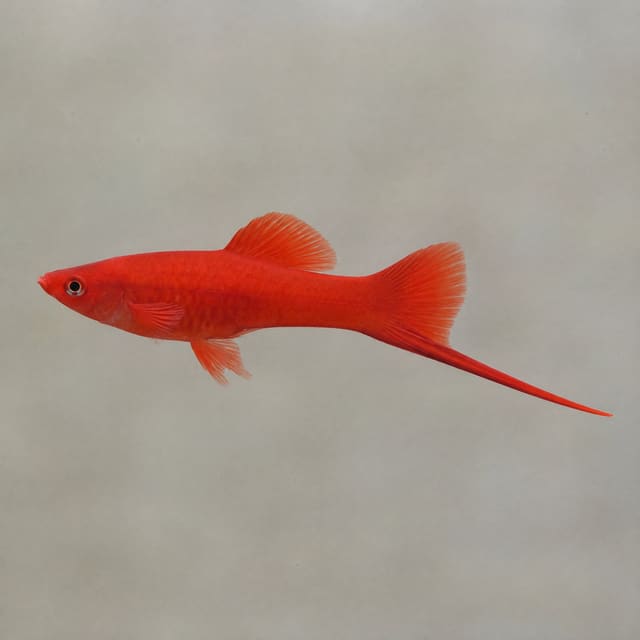
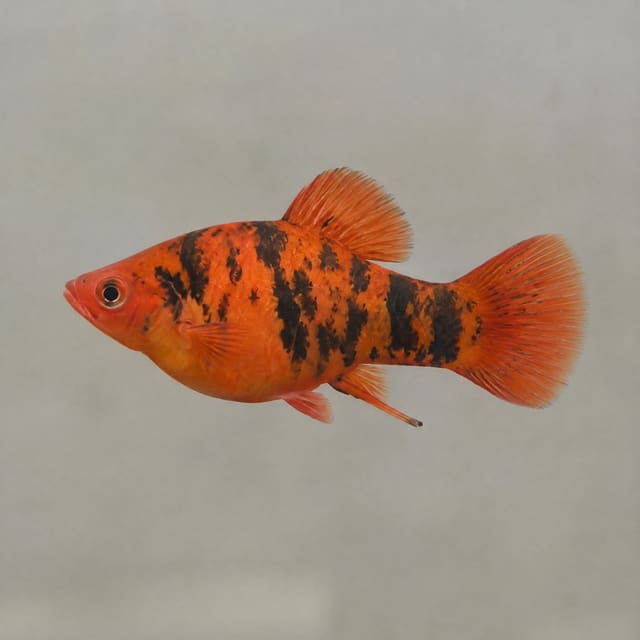
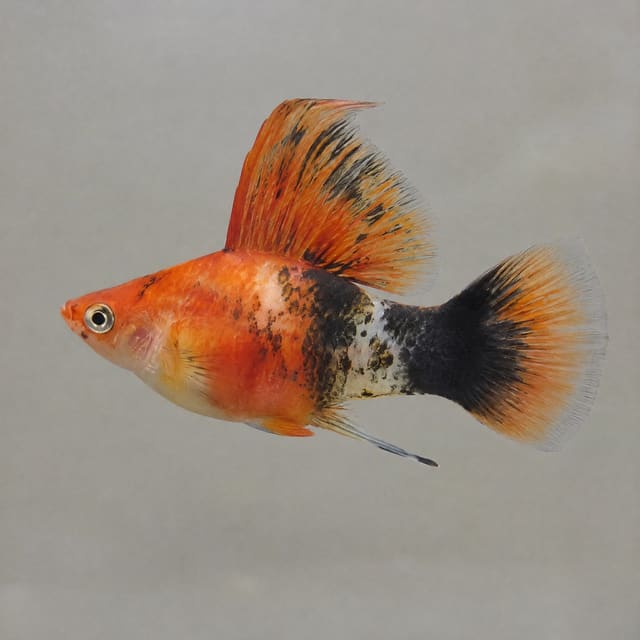
Red Calico Swordtail (Xiphophorus hellerii)
£5.19
The Golden Swordtail is a yellow-gold, aquarium-bred form of Xiphophorus hellerii; males carry a long orange-red sword edged in black. A hardy, easy-to-feed livebearer for a cycled tank of 80 litres or more with hard, alkaline water at 22–27°C. Sold individually as one live fish, medium size.
Adult size is the maximum length this species reaches at full maturity (scientific sources). The livestock you receive will be younger and smaller. Product-photo provenance and any image-specific limitations are stated on the listing.
Xiphophorus hellerii
Quantity discounts are pricing offers, not a group-size recommendation. Check the full care guidance and your existing animals before choosing a quantity.
The Golden Swordtail is a yellow-gold, aquarium-bred form of Xiphophorus hellerii; males carry a long orange-red sword edged in black. A hardy, easy-to-feed livebearer for a cycled tank of 80 litres or more with hard, alkaline water at 22–27°C. Sold individually as one live fish, medium size.
Adult size is the maximum length this species reaches at full maturity (scientific sources). The livestock you receive will be younger and smaller. Product-photo provenance and any image-specific limitations are stated on the listing.
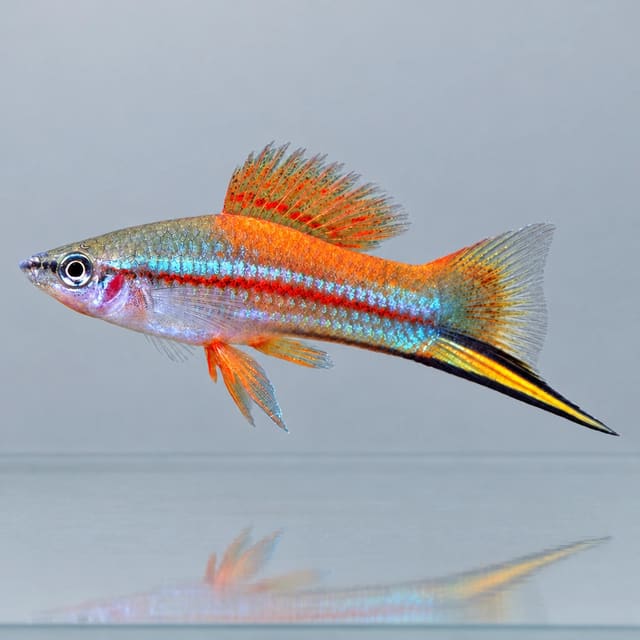
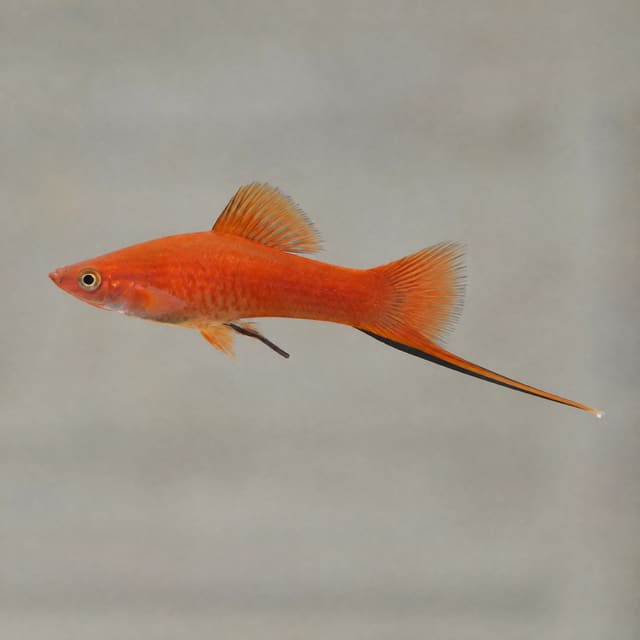
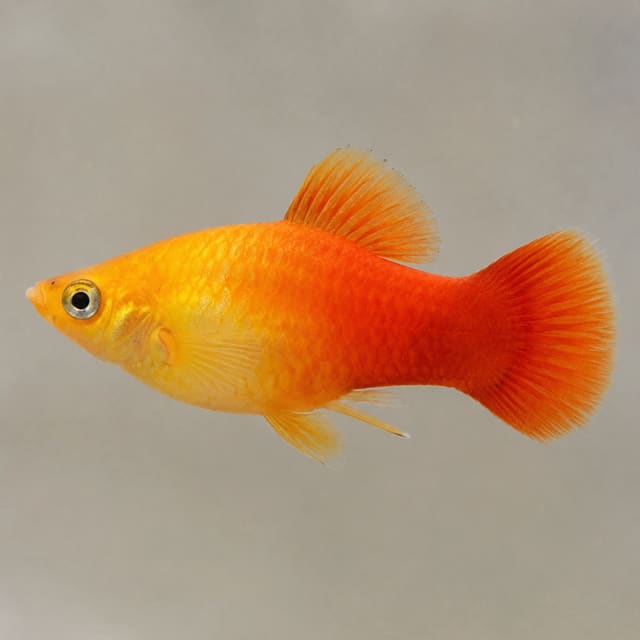
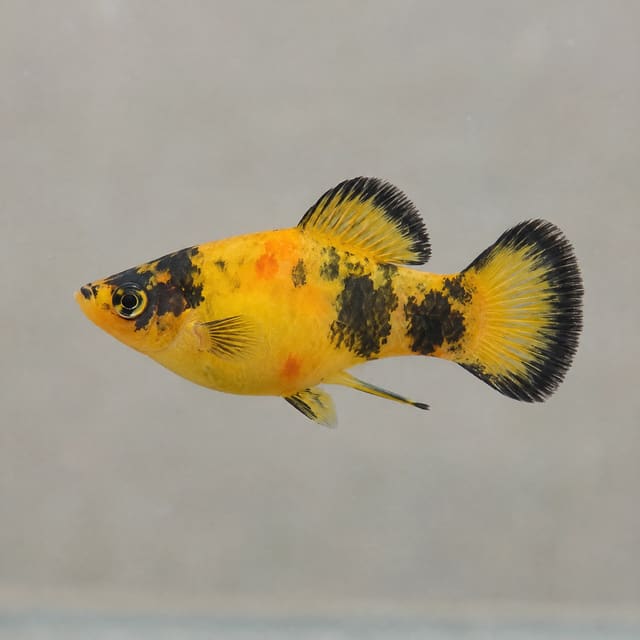
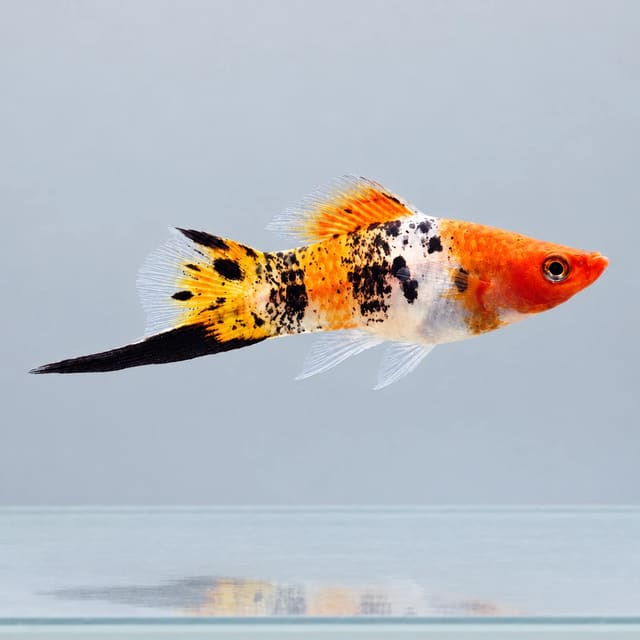
The Golden Swordtail is a gold-coloured form of Xiphophorus hellerii, one of the best-known aquarium fish in the world. It is a simple, striking fish: the body is a warm yellow-gold with a net of shining scale edges, the eye is pale and bright, the dorsal and pelvic fins are clear yellow, and the tail fades to orange. In mature males the lower edge of the tail grows into a long orange-red sword, edged above and below in black, which catches the eye from across the room.
Swordtails suit keepers who want an active, robust fish that is easy to feed and will breed without special effort. They swim in open water all day, take most foods and adapt to hard tap water that would trouble many soft-water tetras. In return they need room: an adult swordtail is a substantial fish, and a group needs a long aquarium and a sensible balance of males and females.
| Golden Swordtails do well with | Golden Swordtails struggle with |
|---|---|
| 80 litres or more, ideally a 120 cm tank | Small tanks and bowls |
| Hard, alkaline tap water | Soft water with a falling pH |
| Several females for each male | Two or more males in a small space |
| A cycled, mature filter | A brand-new, uncycled tank |
| Robust community fish | Very shy fish and soft-water specialists |
Browse our livebearers for sale, the swordtails category and every colour of Xiphophorus helleri we keep.
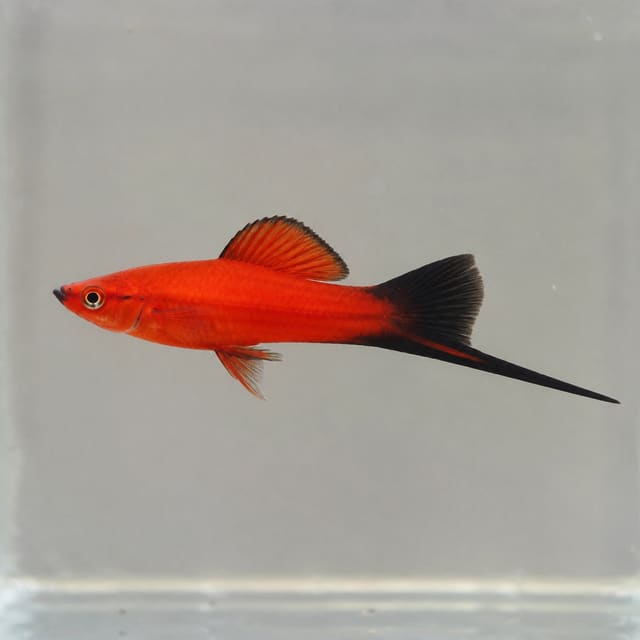
One purchase quantity supplies one live Golden Swordtail in the size grade Medium. Sex is not chosen or guaranteed. The photographs show a mature male; females are larger and deeper in the body, have a fan-shaped anal fin instead of the male’s pointed gonopodium, and have no sword. Young males may not yet show the full sword, which grows as they mature.
Colour strengthens as a fish settles, so expect a paler fish straight out of the bag. Our delivery days and Live Arrival Guarantee page explains when fish travel and what to do on the day.
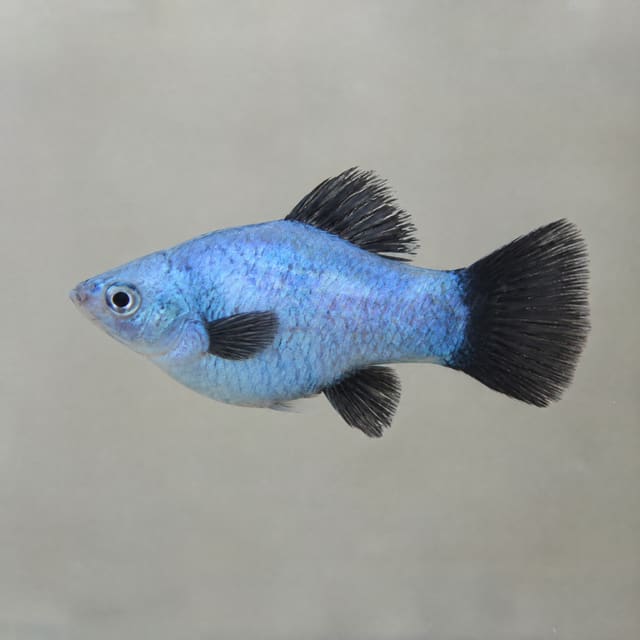
Breeders have produced many yellow, gold and orange swordtails, and their names vary between farms and shops. Seriously Fish explains that ornamental forms come from selective breeding and from crosses with the platies X. maculatus and X. variatus, and that they show colours and fin shapes never seen in the wild, olive-green fish. Golden is used for a plain yellow-gold body like the fish in our photographs; other names describe added red, orange marbling or black markings.
| Form we sell | How to compare |
|---|---|
| Golden Swordtail (this listing) | Plain yellow-gold body, yellow fins, orange-red sword edged black |
| Marigold Swordtail | Another gold-toned line; compare the photographs |
| Pineapple Swordtail | A golden-orange line; compare the photographs |
| Red Swordtail | Solid red body |
All these forms are one species with the same care, and they can share a tank. Mixed colours breed together, and their young often show a mixture of their parents’ colours.
Swordtails are hardy, but OATA warns that they can be stressed by even small amounts of ammonia and nitrite. A new tank has no colony of the bacteria that break down fish waste, and adding a group of swordtails too soon leads to what OATA calls new tank syndrome: ammonia and nitrite rise, and fish fall ill. Run the filter, heater and lights for several weeks first and feed the bacteria with a fishless cycle until tests show zero ammonia and nitrite. Our guide to the aquarium nitrogen cycle explains each stage, and our first tropical tank guide lists the kit you need.
OATA advises increasing the number of fish slowly, because the bacteria need time to grow every time more fish and food are added. Add the swordtails as one group, then wait two weeks and test before adding the next group of fish.
Swordtails are strong, fast swimmers. OATA gives an adult size of 8–12 cm, Seriously Fish a maximum of 140 mm standard length, and FishBase 14 cm for males and 16 cm for females. OATA asks for at least 80 litres for swordtails, FishBase gives a minimum tank length of 80 cm, and Seriously Fish considers a 120 × 30 cm base, about 108 litres, the smallest it would recommend.
| Equipment | Guide figure | Source |
|---|---|---|
| Tank volume | 80 litres minimum | OATA |
| Tank length | 80 cm minimum; 120 cm recommended | FishBase; Seriously Fish |
| Filter | 430–540 litres per hour for about 108 litres | Seriously Fish |
| Heater | roughly 75–125 W for about 108 litres | Seriously Fish |
| Lid | optional but recommended | OATA |
Measure your tank with our tank volume calculator before choosing how many fish to add.
Seriously Fish suggests a heavily planted aquarium with a dark substrate, some floating plants and driftwood roots or branches to diffuse the light. A gold fish looks brightest against a dark background and deep green plants. Leave a long, open swimming lane along the front glass, and plant thickly at the back and sides so females can rest away from a persistent male.
Wild swordtails live in streams, springs, ponds and rivers from south-eastern Mexico to north-western Honduras. Seriously Fish notes that adults gather where the current is stronger and young fish in quiet margins, so a filter outlet that creates a moving area at one end and calm water at the other suits all ages.
The sources agree that swordtails need alkaline water, pH 7.0–8.0, and a tropical temperature, but give different hardness ranges.
| Value | OATA | FishBase | Seriously Fish | We aim for |
|---|---|---|---|---|
| Temperature | 22–27°C | 22–28°C | 16–28°C | 23–26°C |
| pH | 7.0–8.0 | 7.0–8.0 | 7.0–8.0 | 7.2–8.0 |
| Hardness | 4–12 °dH | 9–19 dH | 10–25 dGH | about 10–15 dGH |
| Ammonia and nitrite | zero | not given | zero | |
| Nitrate | no more than 20 mg/l above tap water | not given | as low as possible | |
Much of southern and eastern England has hard, alkaline tap water that suits swordtails once it is treated with a dechlorinator. Where the supply is soft, as in much of Scotland, Wales and north-west England, raise and hold hardness with a livebearer mineral salt or crushed coral in the filter, and test KH so the pH does not slide. Our water matcher compares your water with this fish.
OATA recommends a partial water change of 25% at least once a week, siphoning solid waste from the gravel, and testing ammonia, nitrite, nitrate, pH and hardness every week, especially while the tank is new and after adding fish. Treat new water with a tap water conditioner, and clean filter media only in water taken from the tank so the bacteria survive.
In the wild, swordtails eat worms, crustaceans, insects and plant matter (FishBase), and Seriously Fish adds detritus and algae. OATA recommends a good flake or granule with a high algae content, plus small live or frozen foods such as Daphnia or bloodworm. Feed once a day, only what is eaten within a few minutes, because uneaten food breaks down into toxic waste.
| Food | How often |
|---|---|
| Spirulina or vegetable flake | Daily staple |
| Frozen Daphnia or brine shrimp | Two or three times a week |
| Bloodworm | Once a week as a treat |
| Blanched vegetables such as courgette | Occasionally; the fish graze them |
Turn the aquarium lights off. Float the unopened bag for about 10 minutes so the temperature matches, then add small amounts of tank water to the bag over up to 20 minutes, as OATA describes. Net the fish into the tank and throw the bag water away. Our acclimatisation guide has photos of each step. Leave the lights off until the next day and feed a small meal then.
Watch the group over the first week. Some chasing is normal as males display, but a female that is pinned in a corner all day needs more cover or more female company.
OATA describes swordtails as generally peaceful and compatible with other species, though large swordtails can be boisterous and chase timid fish. FishBase records that males are aggressive towards each other, and Seriously Fish that males in confined spaces form dominance hierarchies.
| Good tank mates | Think twice about |
|---|---|
| Other swordtails, such as the Green Swordtail | Several males in a tank under 120 cm |
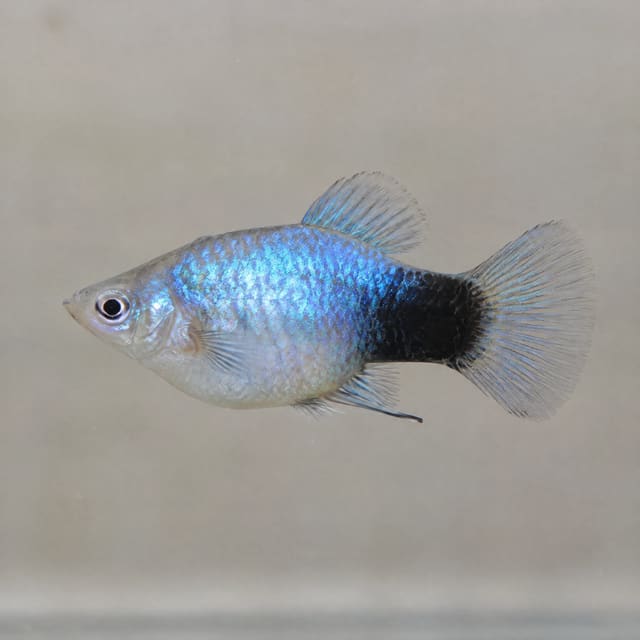
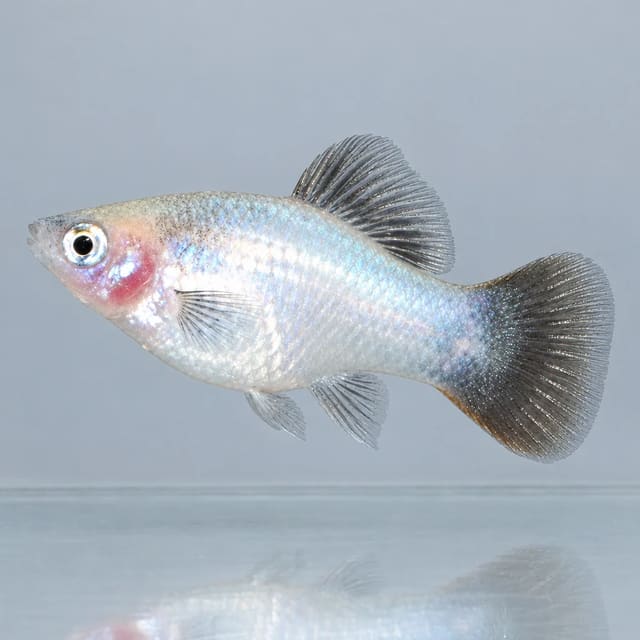
| Platies, which need the same water | Mixing with platies if you want pure golden young: they can interbreed |
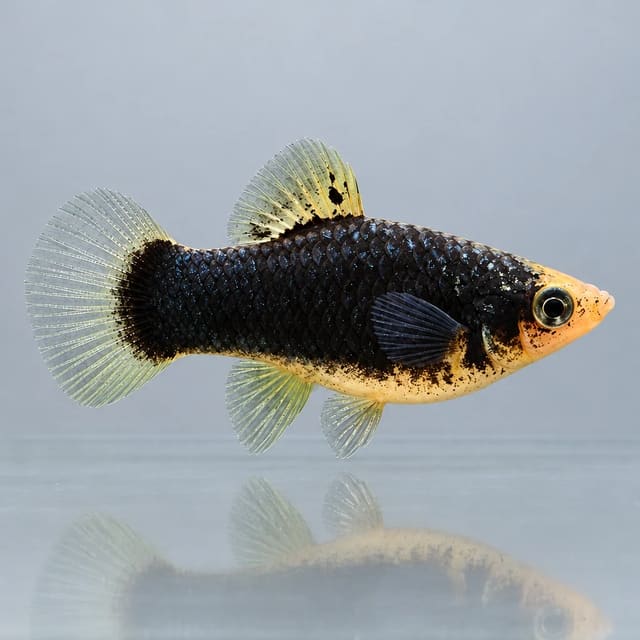
| Mollies such as the Gold Black Lyretail Molly | Shy fish that need a quiet tank |
| The Bristlenose Pleco on the bottom | Soft-water fish such as discus |
Check any mix with our tank mates checker.
OATA lists the signs to watch for in any fish: unusual swimming at the surface or on the bottom, a colour much paler or darker than usual, more hiding or aggression, changed breathing, white spots or fluffy growths, missing scales or fins, weight change and poor appetite. On a gold fish, white spots and fungus stand out less than on dark fish, so look closely at the fins at feeding time.
| What you see | Probable cause | What to do |
|---|---|---|
| Fish swaying on the spot, fins clamped | Soft water or a falling pH | Test pH and KH; raise them slowly |
| Split fins on females | A single male chasing too few females | Add females or plants |
| Fish gasping at the surface | Ammonia, nitrite or low oxygen | Test and change water at once |
Swordtails are livebearers: the male uses his gonopodium, a modified anal fin, to fertilise the female internally, and she gives birth to free-swimming young. OATA gives a pregnancy of 24–30 days and 20–80 fry; FishBase gives 20–200 young and sexual maturity at eight to twelve months. Seriously Fish notes that females can store sperm for months, so a female bought on her own may still give birth.
Adults eat fry, so thick plants and floating cover give the young a chance. To raise more, move a heavily pregnant female into a large breeding net, return her after the birth, and feed the fry crushed flake and newly hatched brine shrimp several times a day. FishBase also notes that some females change sex and become males later in life.
A cycled 120 cm aquarium with a group of Golden Swordtails, a few platies and a bristlenose is one of the easiest colourful set-ups for hard-water areas. Our list of the best beginner tropical fish suggests more companions, and our swordtail guide covers the species in detail.
It is a gold-coloured, aquarium-bred form of the swordtail, Xiphophorus hellerii. Our photographs show a bright yellow-gold body with a shining scale pattern, yellow fins and, in the male, a long orange-red sword edged in black.
Yes, if the tank is big enough and the water is hard. Swordtails are hardy, eat almost anything and breed readily. The usual mistakes are a tank that is too small, too many males and soft, acidic water.
OATA gives 8–12 cm for adult swordtails. Seriously Fish gives the species up to 140 mm standard length, and FishBase records 14 cm for males and 16 cm for females.
At least 80 litres (OATA) and 80 cm long (FishBase). Seriously Fish recommends a base of 120 × 30 cm, about 108 litres, which gives a group room to swim.
Hard, alkaline water at 22–27°C and pH 7.0–8.0. Hardness figures differ: OATA 4–12 °dH, FishBase 9–19 and Seriously Fish 10–25 dGH. Hard tap water in much of southern and eastern England suits it once dechlorinated.
At least three, two females to each male (OATA). Males are aggressive towards each other (FishBase), so add more females rather than more males.
They are omnivores. Feed an algae-rich flake or granule once a day, only what is eaten in a few minutes, with small frozen or live foods such as Daphnia, brine shrimp or bloodworm a few times a week.
FishBase notes that swordtails can change sex from female to male under certain conditions. A female that develops a sword and a gonopodium has become a functional male; it is not a disease.
One live fish of medium size. Sex is not chosen or guaranteed; our photographs show a male, and females have no sword.
No reviews for this item yet. Bought one? Honest reviews only, good or bad.
What customers say about ordering from us
Easy website plenty of info on fish your buying great to pick a time slot
TRACEY DURRANT · 7 Oct 2026
Got some lovely fish thank you
Kevin Mackie · 7 Oct 2026
Reviews of our shop, collected by Judge.me, an independent third-party review collector. Newest first.
Moved by UK carriers licensed to handle live animals
Hand-packed with oxygen bags, poly box, heat pack
Email photos the same day; an optional unboxing video helps us review problems faster — claim terms apply
Klarna & PayPal Pay in 3 at checkout