Easy
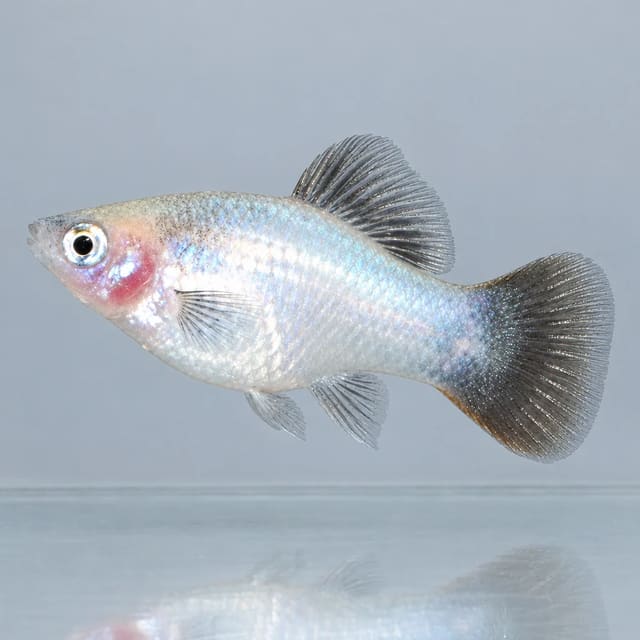
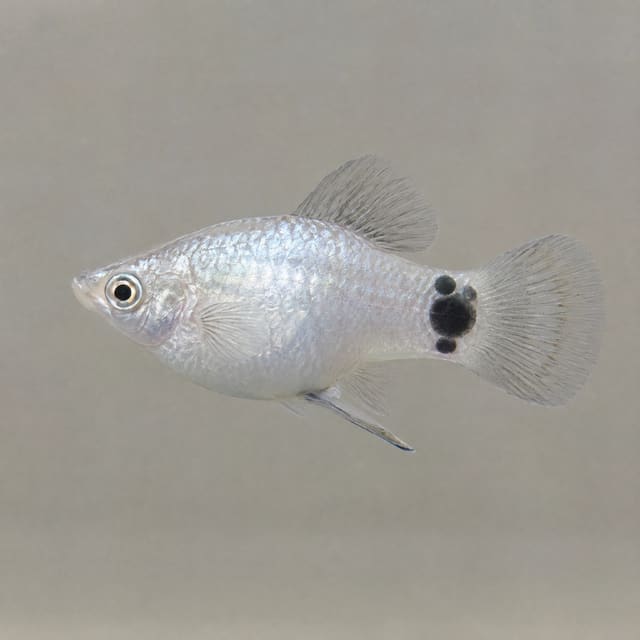
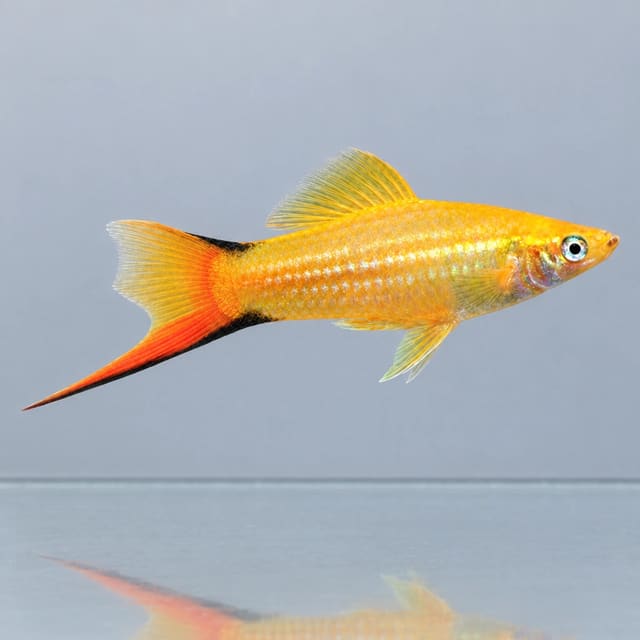
Golden Swordtail (Xiphophorus hellerii)
£5.19
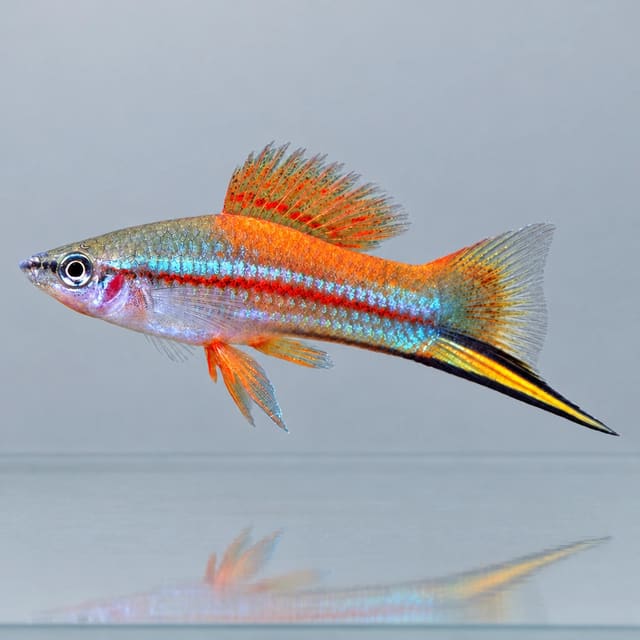
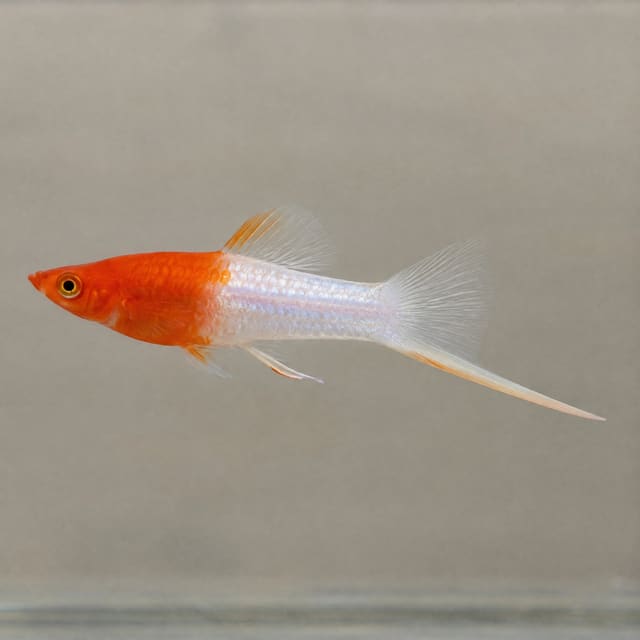
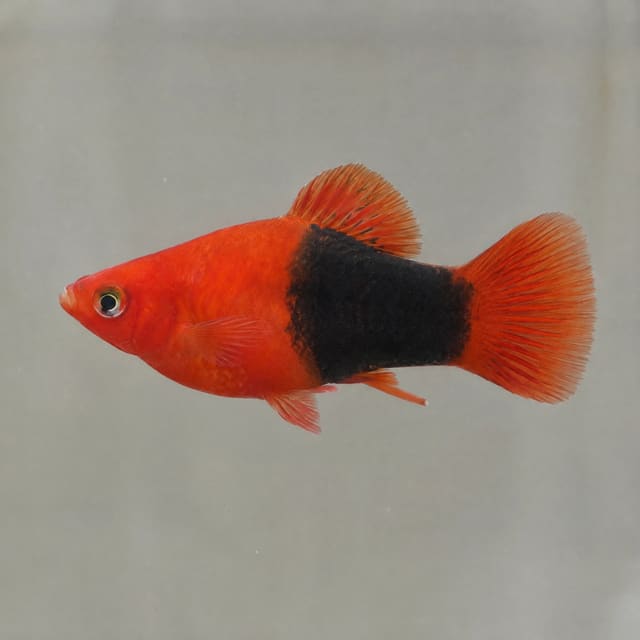
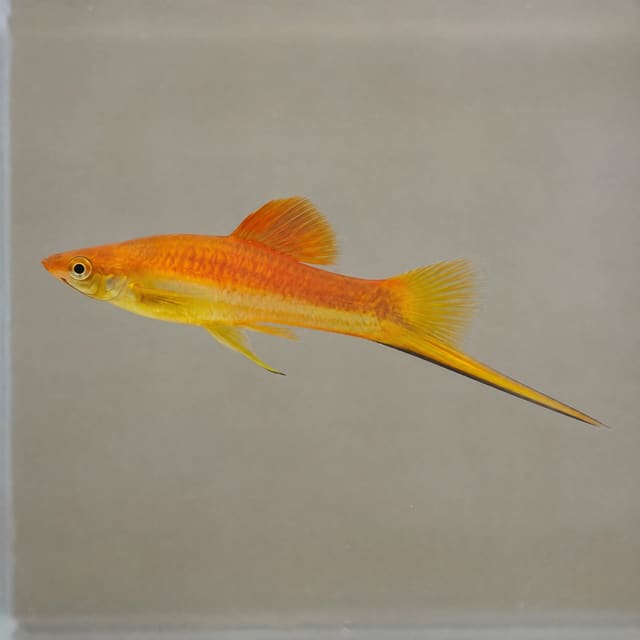
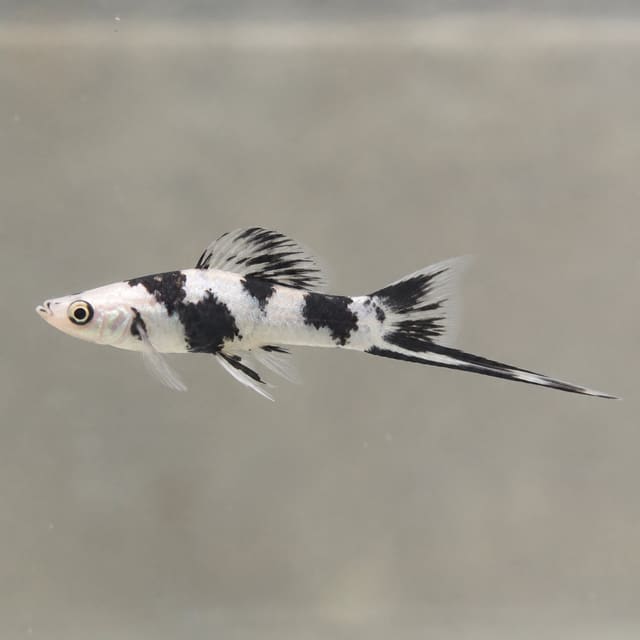
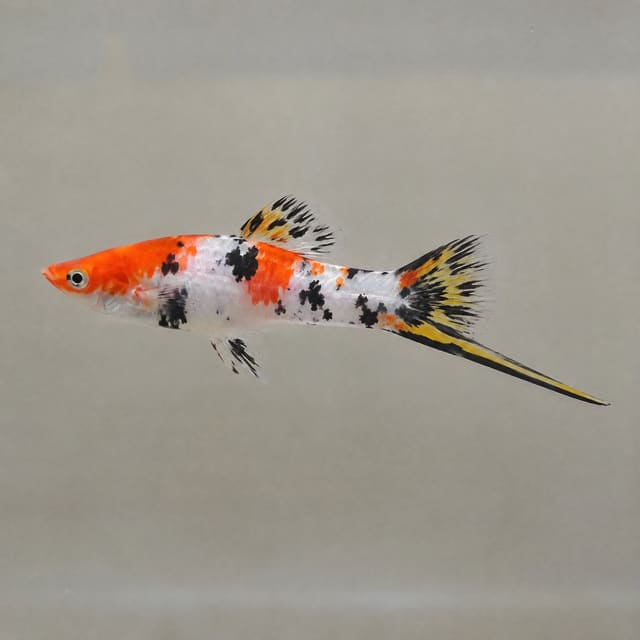
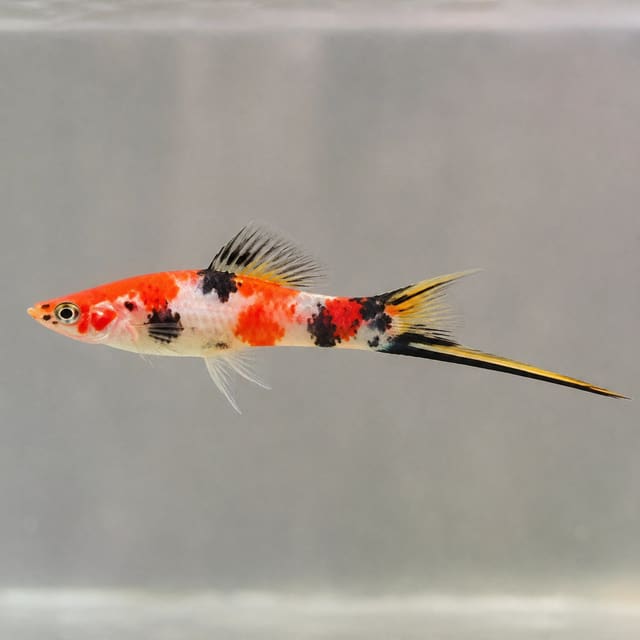
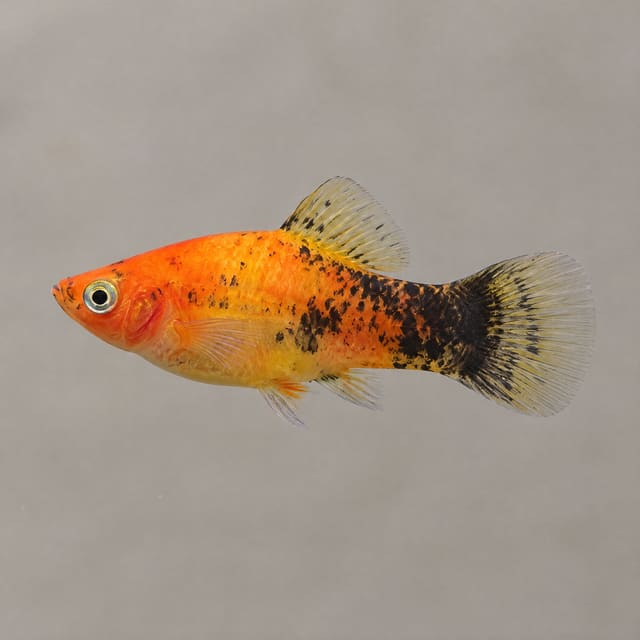
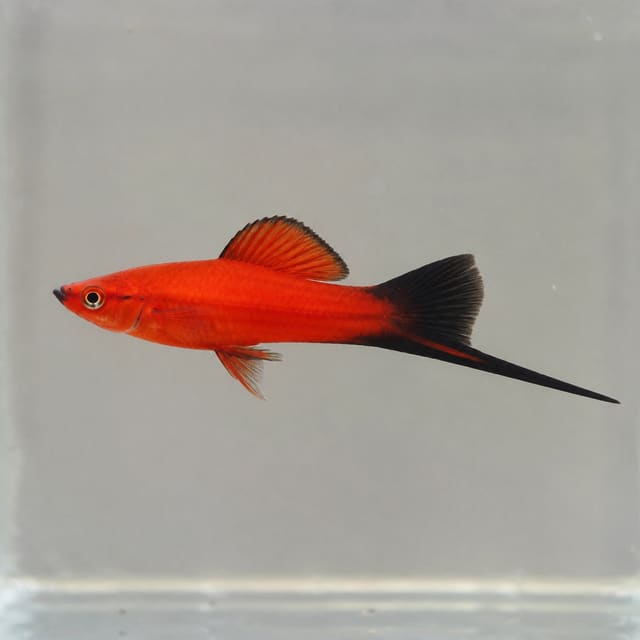
The Red Calico Swordtail is an aquarium-bred colour form of Xiphophorus hellerii with a red head, a white and orange body splashed with black, yellow-orange fins and, in males, a black sword. Keep one male to two or more females in 80 litres or more of hard, alkaline water at 22–27°C. Sold individually as one live fish, medium size.
Adult size is the maximum length this species reaches at full maturity (scientific sources). The livestock you receive will be younger and smaller. Product-photo provenance and any image-specific limitations are stated on the listing.
Xiphophorus hellerii
Quantity discounts are pricing offers, not a group-size recommendation. Check the full care guidance and your existing animals before choosing a quantity.
The Red Calico Swordtail is an aquarium-bred colour form of Xiphophorus hellerii with a red head, a white and orange body splashed with black, yellow-orange fins and, in males, a black sword. Keep one male to two or more females in 80 litres or more of hard, alkaline water at 22–27°C. Sold individually as one live fish, medium size.
Adult size is the maximum length this species reaches at full maturity (scientific sources). The livestock you receive will be younger and smaller. Product-photo provenance and any image-specific limitations are stated on the listing.
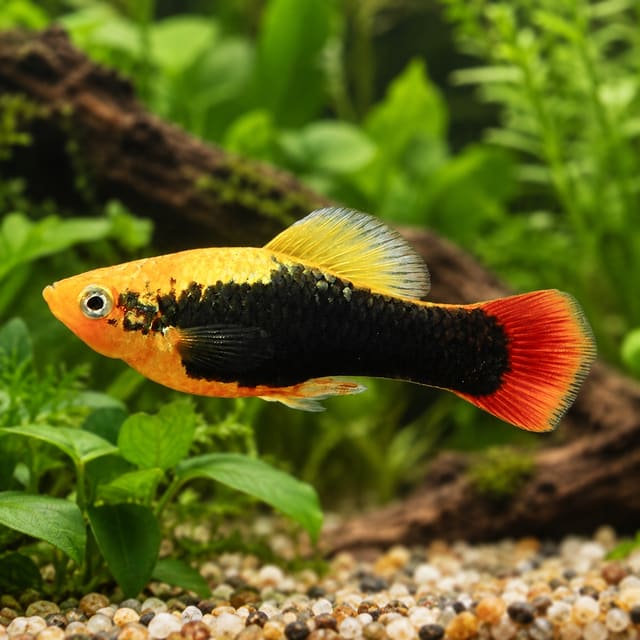
The Red Calico Swordtail is an aquarium-bred colour form of Xiphophorus hellerii, the classic swordtail livebearer. It stands out in any community aquarium: the head is solid red, the body is a patchwork of white and bright orange splashed with irregular black blotches and speckles, and the dorsal and tail fins glow yellow-orange with black spots. Mature males carry the long lower tail extension that gives swordtails their name, here coloured black, which makes a sharp line under the bright tail.
Swordtails are active, hardy fish that cruise the middle and upper water in open view, so the colour is on show all day. They give birth to live young, which makes them a favourite for keepers who want to watch a group grow. The Red Calico Swordtail needs the same care as every swordtail: a long tank, hard alkaline water, a sensible ratio of males to females and companions that can cope with its energy.
| Suits | Not suited to |
|---|---|
| A tank of 80 litres or more, ideally 120 cm long | Nano tanks and short, tall tanks |
| Hard, alkaline water | Soft, acidic blackwater set-ups |
| One male with two or more females | Several males crowded together |
| Lively community fish of similar size | Very timid or slow fish that are easily chased |
| Keepers happy to see fry appear | Tanks where unplanned young are a problem |
See all our livebearers, the full swordtail category and every colour form on our Xiphophorus hellerii swordtails page.
One purchase quantity supplies one live Red Calico Swordtail in the size grade Medium. Sex is not chosen or guaranteed. Our photographs show an adult male; females are deeper-bodied, have no sword and carry the same kind of calico pattern.
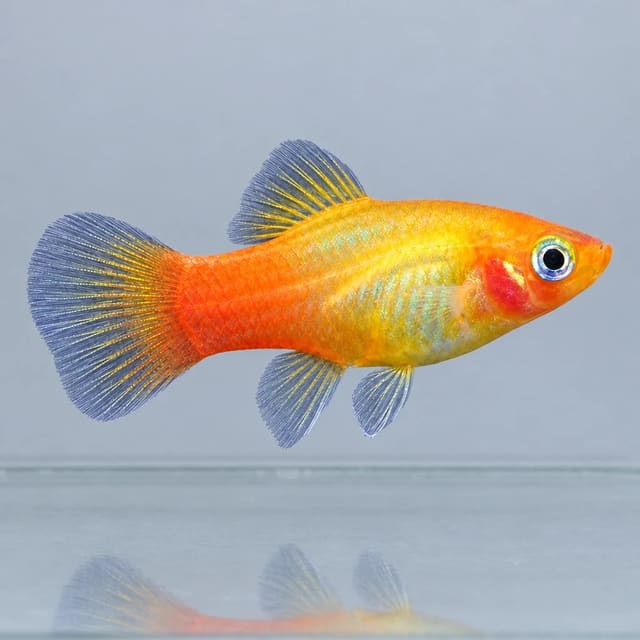
Because calico is a patterned form, every fish is marked differently. Some show more black, some more orange or white, and young fish often develop more colour as they mature. If you are building a matching group, order the fish together so they arrive at a similar size. Read our delivery and Live Arrival Guarantee information before ordering.
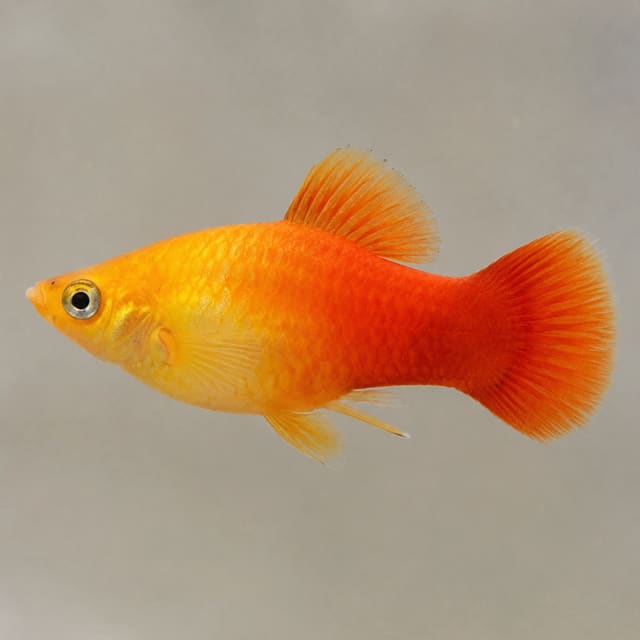
Swordtail colour names are trade names, not scientific terms, and different breeders and shops use them in different ways. Calico usually describes a white or pale body patched with orange or red and splashed with black. Koi names borrow from Japanese koi carp: Kohaku for red on white, Sanke for red and black on white. Tricolour simply means three colours. The fish behind all of them is the same species, Xiphophorus hellerii, with the same care needs.
Seriously Fish explains that selective breeding and crosses with the platies X. maculatus and X. variatus have produced a bewildering range of ornamental swordtails with colours and fin shapes not found in wild fish. The wild fish is olive-green with a red or brown stripe; FishBase notes that red varieties are especially popular in the hobby. The species name honours the Austrian naturalist Karl Heller and is often misspelt helleri with a single i.
| Form | Typical look |
|---|---|
| Red Calico Swordtail (this listing) | Red head, white and orange body with black blotches, yellow-orange fins, black sword |
| Koi Sanke Swordtail | Orange, white and black markings on a pale body |
| Koi Kohaku Swordtail | Red-orange and white with little or no black |
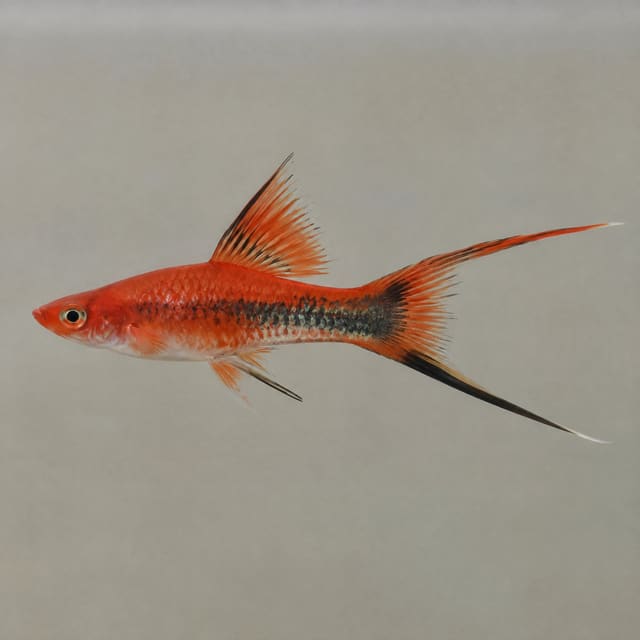
| Green Swordtail | The olive wild-type colour with a red stripe |
Swordtails are bigger than many buyers expect. OATA gives 8–12 cm for adults, Seriously Fish a maximum of 140 mm standard length and FishBase 14 cm for males and 16 cm for females. They are strong swimmers that use the whole length of the tank. OATA asks for at least 80 litres and open swimming space, FishBase gives a minimum tank length of 80 cm, and Seriously Fish considers a 120 × 30 cm base, about 108 litres, the smallest suitable.
| Item | Guide figure | Source |
|---|---|---|
| Minimum volume | 80 litres | OATA |
| Minimum tank length | 80 cm | FishBase |
| Recommended base | 120 × 30 cm, about 108 litres | Seriously Fish |
| Filter turnover for 108 litres | 430–540 litres per hour | Seriously Fish |
| Heater for 108 litres | roughly 75–125 W in a room near 20°C | Seriously Fish |
Our tank volume calculator works out the real capacity of your aquarium from its dimensions.
Seriously Fish notes that décor is not critical but that swordtails look best in a heavily planted tank with a dark substrate, with some floating plants and driftwood to soften the light. In the wild, the species lives from sea level to about 1,500 m in streams, springs, ditches, ponds and rivers, usually less than 1.5 m deep. Seriously Fish describes most sites as having no aquatic plants, while FishBase says adults prefer heavily vegetated habitats, so both open water and planted cover have a place.
A dark substrate makes the white and orange of a calico swordtail glow. Plant the back and sides with fast-growing stems that suit hard water, add floating plants for shade and fry cover, and leave a long open run at the front. Hardy plants from our aquarium plants range cope well with alkaline water.
OATA lists a secure lid as optional but recommended. Swordtails are fast and can leap when chased, so a cover is worth having.
Swordtails need hard, alkaline water. The sources agree on pH and broadly on temperature, but give different hardness ranges, as the table shows.
| Value | OATA | FishBase | Seriously Fish | Our target |
|---|---|---|---|---|
| Temperature | 22–27°C | 22–28°C | 16–28°C | 22–27°C |
| pH | 7.0–8.0 | 7.0–8.0 | 7.0–8.0 | 7.0–8.0 |
| General hardness | 4–12 °dH | 9–19 dH | 10–25 dGH | 10–12 dGH or harder |
| Carbonate hardness | 3–10 °dKH | not given | not given | steady, never near zero |
| Nitrate | no more than 20 mg/l above tap water (OATA) | as low as possible | ||
Hard tap water in much of southern and eastern England suits swordtails well once it is treated with a conditioner. In soft-water areas such as much of Scotland, Wales and north-west England, the water may need buffering with a mineral salt made for livebearers, or crushed coral in the filter, to hold pH and hardness up. Change any water gradually. Our water matcher shows how your supply compares, and our water chemistry guide explains GH and KH.
OATA notes that swordtails can be stressed by even small amounts of ammonia and nitrite. Change about 25% of the water every week with conditioned water at the same temperature, siphon the substrate and test ammonia, nitrite, nitrate, pH and hardness weekly, especially in a new tank or after adding fish. Seriously Fish says filtration need not be particularly strong but the fish appreciate some water movement. Rinse filter media only in old tank water.
A breeding group adds fish quickly. Plan where young swordtails will go before they appear: a second tank, friends with aquariums or your local shop. Overstocking is one of the most common reasons for poor water in livebearer tanks.
Seriously Fish describes wild swordtails as generalised omnivores, eating aquatic and land insects and other invertebrates, detritus, algae and plant material; FishBase lists worms, crustaceans, insects and plant matter. OATA recommends a good flake or granule with a high algae content, with small live or frozen foods such as Daphnia and bloodworm, fed once a day in amounts eaten within a few minutes.
| Step | What to do |
|---|---|
| Staple | Spirulina or vegetable flake once a day |
| Extras | Frozen Daphnia, brine shrimp or bloodworm two or three times a week |
| Amount | Only what the group clears in two to three minutes |
| Females carrying young | Slightly more often in smaller portions |
Switch off the tank lights, float the sealed bag for about 10 minutes, then add small amounts of tank water over up to 20 minutes, as OATA describes, and net the fish into the aquarium without the bag water. Our guide on how to acclimatise new fish walks through it. Keep the lights off for the rest of the day and offer a small meal the next morning.
When a new male joins an established group, expect a few days of display and chasing while the order is settled. Rearranging some décor before you add him breaks up existing territories.
OATA describes platies and swordtails as generally peaceful and compatible with other species, but notes that large swordtails can be boisterous and may chase timid tank mates. Seriously Fish adds that males in confined spaces form dominance hierarchies and spend much of their time keeping their place, and FishBase that males are aggressive towards each other.
| Good companions | Use with care or avoid |
|---|---|
| Bristlenose Pleco and other peaceful bottom dwellers | Platies such as the Bumblebee Platy, which may interbreed with swordtails |
| Mollies such as the Gold Black Lyretail Molly | Very timid fish that are easily chased |
| Other swordtails such as the Red Simpson Swordtail | Soft-water species such as discus |
| Hard-water rainbowfish and robust community fish | Predators large enough to eat swordtails or their fry |
Our tank mates tool checks a whole stocking list for water and temperament.
OATA lists the changes to watch for: hanging at the surface or lying on the bottom, unusual colour, hiding, changed breathing, white spots or fluffy growths, damaged fins or scales, and changes in feeding or body condition. Test the water first whenever you see any of these.
| Sign | Likely cause | First action |
|---|---|---|
| Torn fins on a female or second male | Chasing by a dominant male | Add females, plants or a larger tank |
| Fins clamped, swaying in place | Water too soft or poor quality | Test pH, KH and nitrate; correct slowly |
| Salt-like white dots | White spot parasite | Treat the whole tank promptly |
Breeding is highly likely if you keep both sexes. Males fertilise females internally with the gonopodium, a modified anal fin, and Seriously Fish notes that females can store sperm for months, so a female can give birth several times without a male. OATA gives a pregnancy of 24–30 days and broods of 20–80 fry; FishBase records 20–200 young and sexual maturity at eight to twelve months.
Adults eat fry, so give dense plants and floating cover, or move a heavily pregnant female to a large breeding net and return her once she has given birth. Feed the fry finely crushed flake and baby brine shrimp several times a day. Calico patterns vary in the young, and some fry may look quite different from their parents.
FishBase notes that swordtails have a tendency to change sex from female to male under certain conditions. An older female that grows a short sword and a gonopodium is not ill; she has become a functional male.
A long, planted tank with a group of Red Calico Swordtails, a few platies or mollies and a bristlenose makes a colourful, easy community. Our green swordtail guide covers the species in depth, and our platy care guide explains the close relatives that share its water. Browse community tank fish for more hard-water companions.
It is an aquarium-bred colour form of the swordtail, Xiphophorus hellerii, a livebearer from Mexico and northern Central America. “Red calico” is a trade name for its patchwork pattern: a red head, a white-and-orange body splashed with black, yellow-orange fins and, in males, a black sword.
No two calico swordtails are marked the same. The amount of red, white, orange and black varies from fish to fish, and young fish often develop more black and colour as they grow. The photographs show the colour form, not the individual.
OATA gives swordtails as 8–12 cm. Seriously Fish gives the species a maximum of 140 mm standard length, and FishBase records 14 cm for males and 16 cm for females. Females are the larger sex; the sword adds to a male’s length.
OATA asks for at least 80 litres for swordtails and FishBase gives a minimum tank length of 80 cm. Seriously Fish recommends a 120 × 30 cm base, about 108 litres, as the smallest it would consider, which is what we suggest for a group with more than one male.
At least three, with two females to every male, as OATA advises. FishBase notes that males are aggressive towards each other, so one male with several females is the calmest start.
Hard, alkaline water at 22–27°C and pH 7.0–8.0. For hardness OATA gives 4–12 °dH, FishBase 9–19 and Seriously Fish 10–25 dGH; about 10–12 dGH meets all three, and harder water suits it well.
Yes, they share the same water needs and temperament. Be aware that swordtails and platies can interbreed; Seriously Fish notes that many ornamental swordtail strains came from crosses with platies. If you want pure calico offspring, keep only swordtails together.
Very likely, if you keep both sexes. Females give birth to live young after 24–30 days; FishBase records 20–200 young per brood and OATA 20–80. Dense plants or a breeding net protect the fry, because adults eat them.
One live fish of medium size. Sex is not chosen or guaranteed; our photographs show a male, and females have no sword.
No reviews for this item yet. Bought one? Honest reviews only, good or bad.
What customers say about ordering from us
Easy website plenty of info on fish your buying great to pick a time slot
TRACEY DURRANT · 7 Oct 2026
Got some lovely fish thank you
Kevin Mackie · 7 Oct 2026
Reviews of our shop, collected by Judge.me, an independent third-party review collector. Newest first.
Moved by UK carriers licensed to handle live animals
Hand-packed with oxygen bags, poly box, heat pack
Email photos the same day; an optional unboxing video helps us review problems faster — claim terms apply
Klarna & PayPal Pay in 3 at checkout