Easy
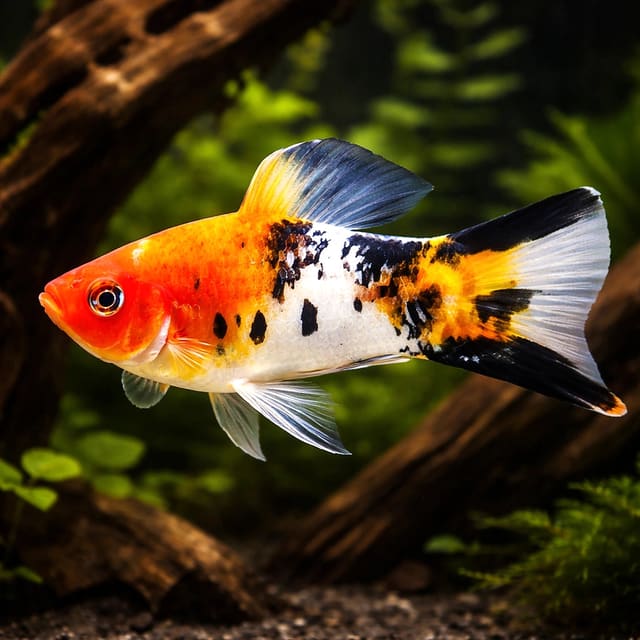
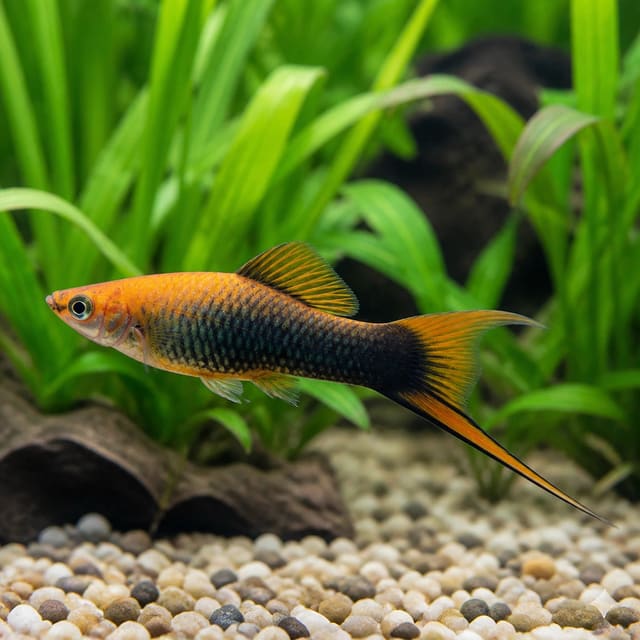
Xiphophorus helleri koi sanke
22–27°C · pH 7–8 · 108L
£14.99

A 4-5 cm Koi Tricolour Swordtail, Xiphophorus helleri, for active planted community aquariums. Bright koi-style markings, active livebearer behaviour, UK live-animal courier and Live Arrival Guarantee.
Adult size is the maximum length this species reaches at full maturity (scientific sources). The livestock you receive will be younger and smaller — pick a size variant above for the actual shipping size. Product-photo provenance and any image-specific limitations are stated on the listing.
Xiphophorus helleri
Save when buying multiple fish. Each quantity is one fish; sex and pair formation are not guaranteed unless the selected variant explicitly states them.
A 4-5 cm Koi Tricolour Swordtail, Xiphophorus helleri, for active planted community aquariums. Bright koi-style markings, active livebearer behaviour, UK live-animal courier and Live Arrival Guarantee.
Adult size is the maximum length this species reaches at full maturity (scientific sources). The livestock you receive will be younger and smaller — pick a size variant above for the actual shipping size. Product-photo provenance and any image-specific limitations are stated on the listing.
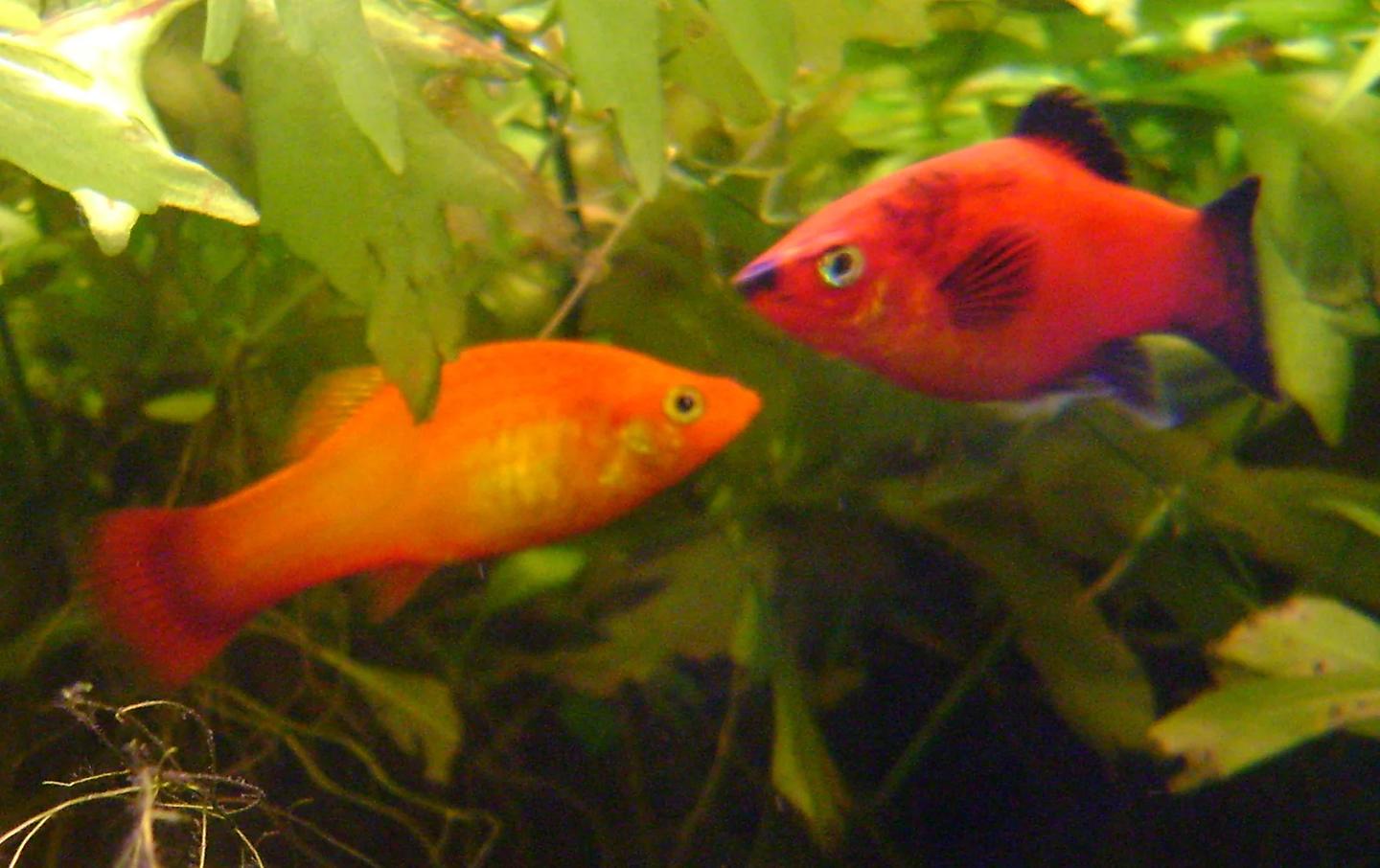
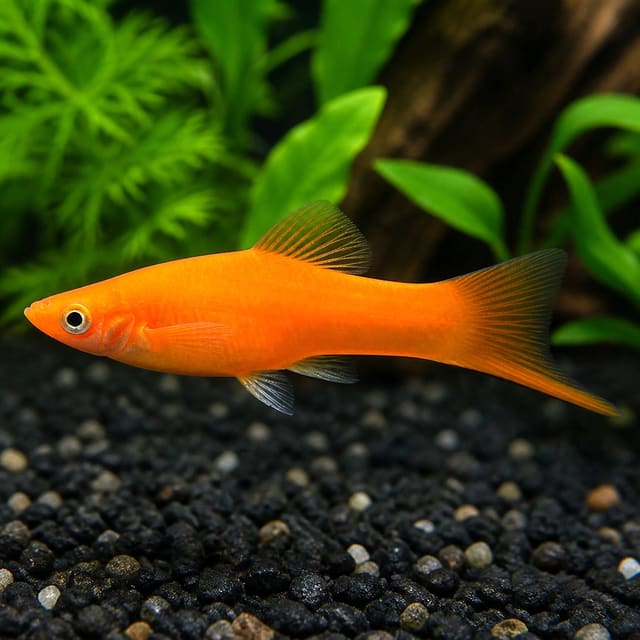
Platy is a trade name used for Xiphophorus maculatus, X. variatus and domestic forms. Start with at least three in a mature aquarium of at least 45 litres, verify the exact fish and measured water, and plan extra capacity before mixing sexes.
Maintain these water conditions for optimal health and vibrant colors
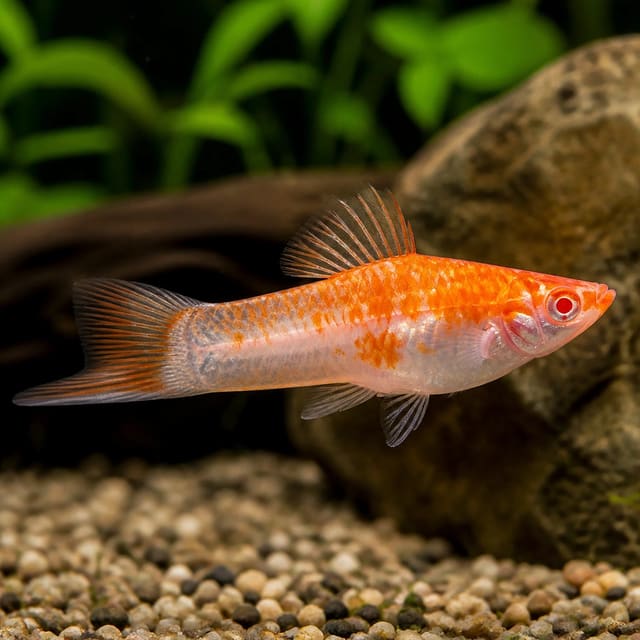
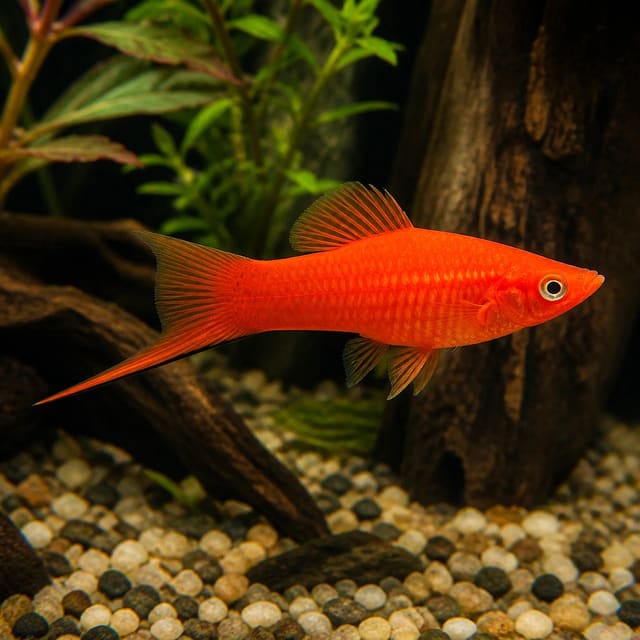
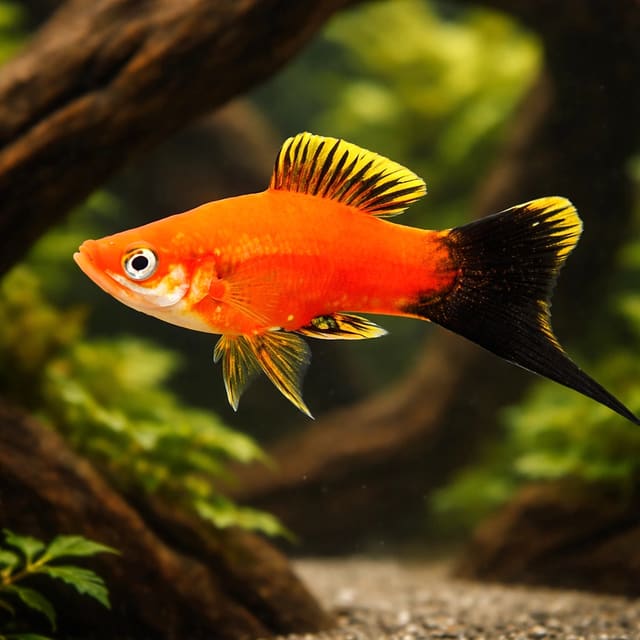
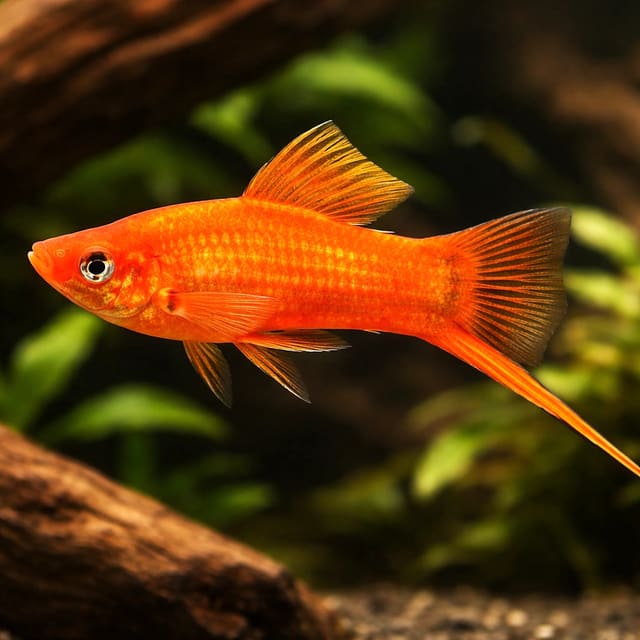
The Koi Tricolour Swordtail is a striking ornamental form of Xiphophorus helleri, the well-known swordtail livebearer. It has the long, active swordtail profile aquarists love, with a koi-inspired mix of red, white and darker markings that gives it much stronger display value than a plain green swordtail. This listing is for the 4-5 cm size, a good young-adult shipping size for a mature tropical community aquarium.
This is not a delicate display fish that sits still in a corner. Swordtails are lively, confident swimmers that bring movement to the middle and upper areas of the tank. The Koi Tricolour form keeps the same basic care needs as the species: stable warm water, good oxygenation, a covered aquarium, plant cover and peaceful tank mates that will not nip fins or bully them.
Because colour pattern can vary naturally between individual fish, use the name as a guide to the strain rather than a promise that every fish will have identical markings. The appeal is the contrast: pale body areas, warm koi-style colour, darker patterning and the classic extended lower tail on mature males.
Koi Tricolour Swordtails work especially well in planted aquariums because their colours stand out against green plants and dark wood. The koi-style pattern gives a broken, high-contrast look rather than one flat body colour, so the fish catches the eye as it turns, feeds and moves through open water. In a group, the visual effect is active and bright rather than subtle.
Compared with many guppies, this swordtail has a stronger, longer body and more direct swimming style. Compared with platies, it usually looks more streamlined and athletic. Compared with mollies, it normally needs less brackish-style thinking but still appreciates mineral-rich, stable water. If you want a livebearer that gives both colour and movement, Koi Tricolour Swordtails are a strong choice.
Swordtails are active swimmers that appreciate room to explore, open swimming space and areas of cover. A mature heated aquarium with stable filtration, regular maintenance and plenty of oxygenation is ideal. Because these fish are lively and can be territorial at times, enough space helps reduce chasing and gives less dominant fish places to retreat.
We do not like undersized swordtail setups. A 40 litre tank is the absolute small-fish safety floor used across parts of the catalogue, but for this species an 80 litre or larger aquarium is the better target, especially if you plan to keep a group. A longer tank footprint is useful because swordtails use horizontal swimming space.
Use live plants, floating cover, wood, smooth rocks and open midwater areas. Floating plants can soften bright lighting and help nervous fish settle, but keep enough open surface area for oxygen exchange. A secure lid is important because swordtails can jump, particularly after transport or when startled.
Our stock records for this SKU list a temperature range of 23-27 C, pH 7.0-8.5 and hardness of 5-30 dGH. That suits the general livebearer preference for stable, mineral-bearing water. Swordtails usually do best when the aquarium is not too soft or acidic for long periods.
If your water is very soft, very acidic or unstable, check your local water report and test kit before ordering. Do not make sudden corrections on delivery day. It is safer to prepare the aquarium in advance, keep the filter mature and make any water adjustments gradually before livestock arrives.
Koi Tricolour Swordtails are omnivores. Feed a quality tropical flake or livebearer pellet as the staple, then add small portions of frozen daphnia, brine shrimp or bloodworm for variety. Some vegetable matter, spirulina or algae-based food helps support digestion and condition.
Offer small amounts once or twice daily, only as much as the fish can comfortably eat in a short time. Overfeeding is one of the easiest ways to damage water quality in a livebearer tank, so light feeding and regular maintenance are better than large meals. A varied diet supports colour, activity and breeding condition without making the water dirty.
This swordtail suits peaceful community fish that enjoy similar water values. Good companions include other swordtails, platies, mollies, robust small tetras, rasboras, Corydoras catfish and other calm livebearers. Avoid fin-nippers, large cichlids, aggressive or predatory fish, and very delicate species that dislike active tank mates.
Males can chase, especially in cramped aquariums or unbalanced groups. If you keep mixed sexes, provide plant cover and avoid too many males in a small space. A sensible group structure makes the fish look more natural and reduces pressure on individual females. Compatibility still depends on tank size, aquascape and the temperament of the actual fish, so always stock with care.
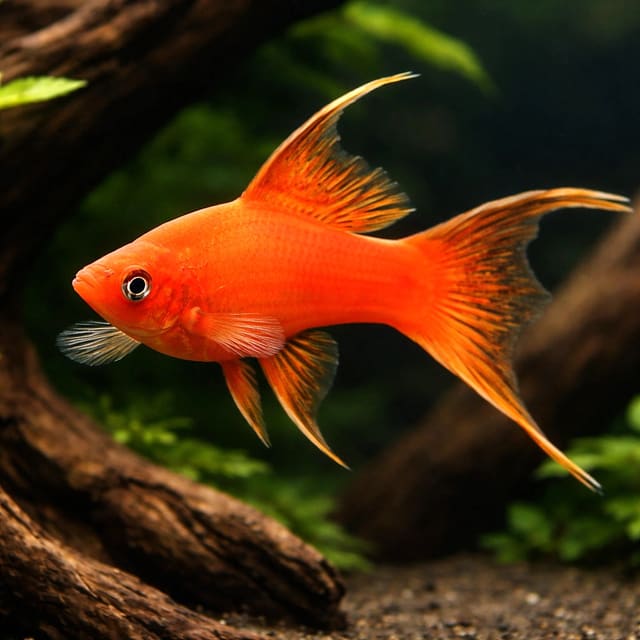
If you are choosing between livebearers, this Koi Tricolour Swordtail is best for aquarists who want a more active, streamlined fish with a larger adult size than many guppies and platies. Guppies often give more fine tail colour, platies are usually stockier and calmer, and mollies can be bulkier with slightly different water preferences. Swordtails sit neatly between them: hardy, colourful, active and very visible in a planted community tank.
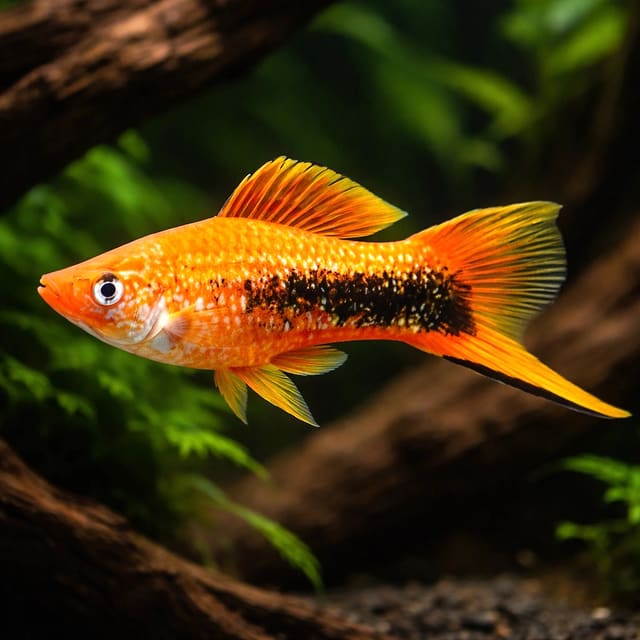
For a related look, compare this listing with Wagtail Simpson Swordtails, Koi Sanke Swordtails and other peaceful livebearers. Build the group around compatible water requirements and tank space, not just colour. The best community tanks look good because the fish are comfortable as well as colourful.
As a livebearer, Xiphophorus helleri can breed readily when males and females are kept together in suitable conditions. Females give birth to free-swimming young rather than laying eggs, and fry may be eaten by adults if they are not given dense plant cover or a separate rearing space.
If you do not intend to breed them, think carefully about the sex mix. Females may already be carrying young before purchase, and a mixed group can produce fry even when breeding was not the aim. Dense plants and floating cover help fry survive if you want that outcome; otherwise, plan your stocking so the aquarium does not become overcrowded.
Swordtails are generally hardy, but their health is closely tied to water quality, diet, stable temperature and avoiding overcrowding. Stress from poor conditions can lead to clamped fins, fading colour, reduced appetite and increased susceptibility to disease. Stable, clean water and careful acclimation are the best defences against common problems.
Watch for frayed fins, flashing, loss of appetite, white spots, rapid breathing, unusual hiding or bullying. These signs can point to water quality issues, stress or disease. Test the aquarium promptly if behaviour changes. Quarantine new arrivals where possible before mixing them with established stock.
Your Koi Tricolour Swordtail will be dispatched by UK live-animal courier at around 4-5 cm. We pack live fish carefully for transit and support eligible livestock orders with our Live Arrival Guarantee. Please have a mature heated aquarium ready before dispatch, with stable water that matches the needs of the fish.
On arrival, keep the lights low, float the sealed bag to equalise temperature, then acclimate slowly to your aquarium water. Avoid heavy feeding on the first day and give the fish time to settle. A covered tank, peaceful companions, clean water and patient acclimation give this active livebearer the best start.
Max adult size is the length this species reaches at full maturity (from scientific sources). The livestock you receive will be younger and smaller — pick a size variant on the buy box for the actual shipping size. Product-photo provenance and any image-specific limitations are stated on the listing.
An active but generally peaceful swordtail for planted community aquariums. Give it open swimming room, plant cover, a secure lid and tank mates that are not aggressive or fin-nippy.
Always research specific species before adding them to your tank. Consider:
No reviews for this item yet. Bought one? Honest reviews only, good or bad.
What customers say about ordering from us
I have a small group of long finned mountain minnows. So was delighted to be able to order ten of this variety to increase the genetics in my tank . The ones I recieved are healthy but it’s to early to give a verdict on wether they are of a long finned type since they are small currently.
Gordon Walker · 23 Sept 2026
100% success travel and "installation". Pleased with quality of purchase. The Siamese fighter a bit "shy" so have not yet seen him at his best yet but looking good. Happy customer. GG
George E Garratt · 21 Sept 2026
Reviews of our shop, collected by Judge.me, an independent third-party review collector. Newest first.
22–27°C · pH 7–8 · 108L
22–27°C · pH 7–8 · 108L
22–27°C · pH 7–8 · 108L
22–27°C · pH 7–8 · 108L

16–28°C · pH 7–8 · 108L
22–27°C · pH 7–8 · 108L
16–28°C · pH 7–8 · 108L
22–27°C · pH 7–8 · 108L
22–27°C · pH 7–8 · 108L
16–28°C · pH 7–8 · 108L
22–27°C · pH 7–8 · 108L
22–27°C · pH 7–8 · 108L
22–27°C · pH 7–8 · 108L
22–27°C · pH 7–8
22–27°C · pH 7–8 · 108L
22–27°C · pH 7–8 · 108L

22–28°C · pH 7–8 · 41L

21–25°C · pH 5–7
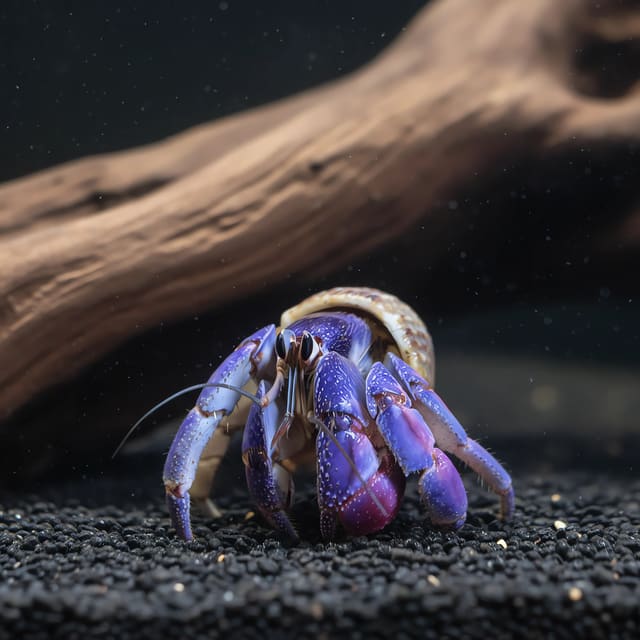
24–29°C

24–27°C · pH 6.5–6.5

22–27°C · pH 6–8 · 72L
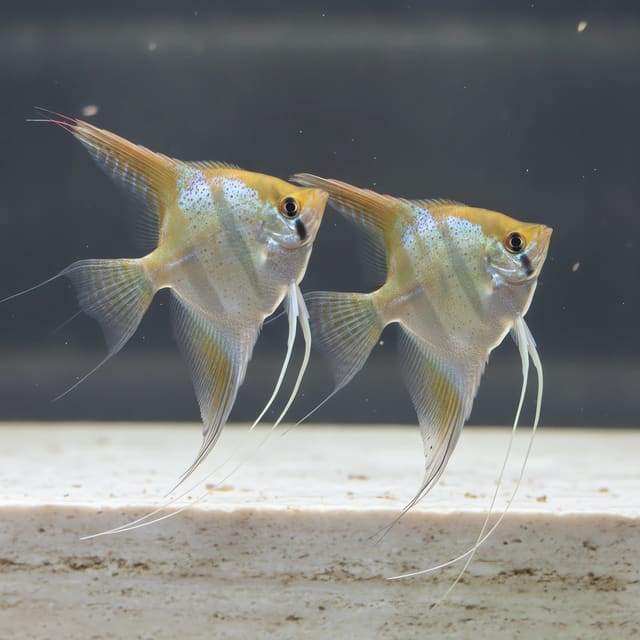
24–27°C · pH 6.5–8 · 200L

23–27°C · pH 5.5–7 · 60L

22–27°C · pH 6–8