Easy
Black Molly (Poecilia sphenops black molly)
21–28°C · pH 7–8.5 · 81L
£3.99

Gold Black Lyretail Molly (Poecilia sphenops) is an active social livebearer for mature hard-water aquariums. One purchase supplies one fish in the chosen size; plan a 90 × 30 cm footprint, mineral-rich water and peaceful companions with matching requirements.
Poecilia sphenops
Shoaling fish: kept in a group they feel safer, stay calmer and show their best colour.
Gold Black Lyretail Molly (Poecilia sphenops) is an active social livebearer for mature hard-water aquariums. One purchase supplies one fish in the chosen size; plan a 90 × 30 cm footprint, mineral-rich water and peaceful companions with matching requirements.
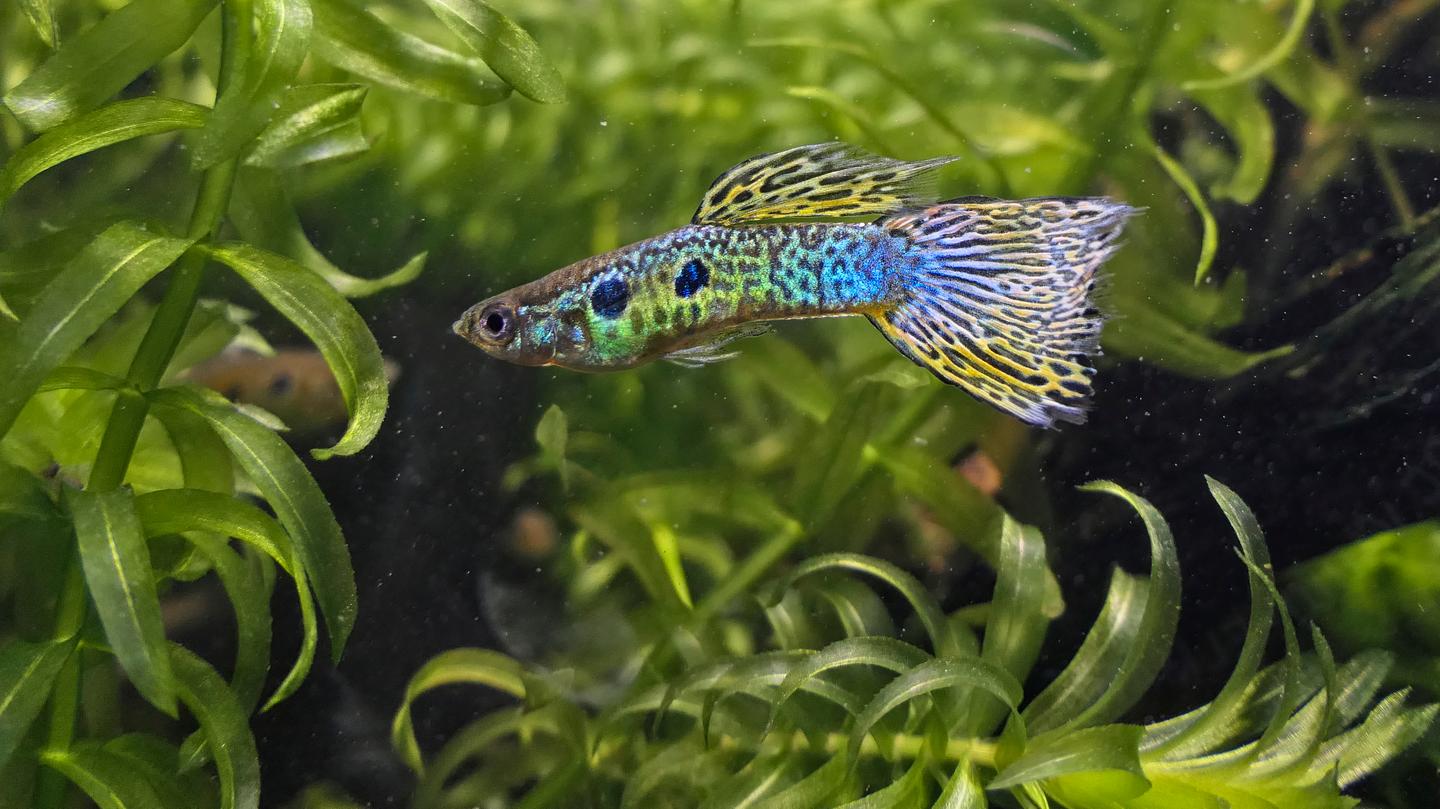
Guppies are social livebearers suited to a prepared beginner, not a fish-per-litre formula. Use a mature filtered aquarium, tested neutral-to-alkaline mineral-bearing water, deliberate sex and population planning, open swimming room, cover and a separation option.
Maintain these water conditions for optimal health and vibrant colors
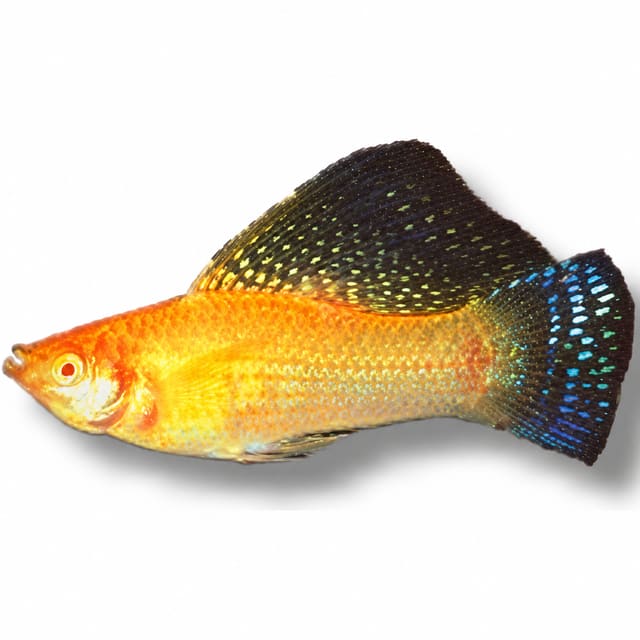
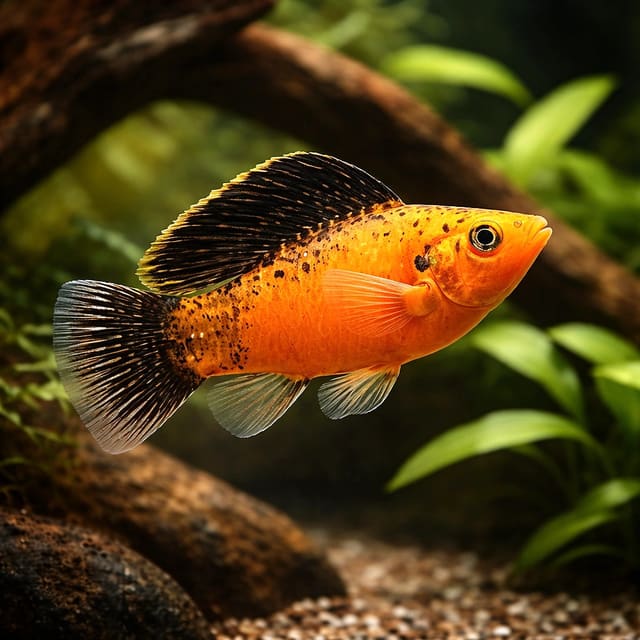
Gold Black Lyretail Molly (Poecilia sphenops) is an aquarium-bred livebearer selected for a gold front, a darker rear half and an extended lyre-shaped tail. It is a lively, conspicuous fish, but its real suitability is decided by water chemistry rather than colour. This molly needs a mature, filtered aquarium with dependable mineral content, a basic pH and room for a social group. It is a poor match for a soft, acidic community assembled simply because all the fish are described as peaceful.
One purchase supplies one live fish in the chosen size. This parent listing carries two genuine size choices: 3–4 cm and XL. The size you select is the size supplied, not the adult size. Those labels describe the dispatch offer and should never be confused with the species' recorded adult measurements. Sex is guaranteed only when the selected option explicitly states male or female. This Gold Black Lyretail Molly listing has no sex-guaranteed option.
The simplest buying question is therefore not “will a molly live in my tropical tank?” but “does my aquarium already provide the hard, alkaline conditions this species needs?” The species-level husbandry profile gives 21–28°C, pH 7.0–8.5 and 15–30°dGH. A keeper whose tap water naturally sits within that broad band has an easier job than someone trying to harden very soft water after every change. Test the aquarium itself, not just a regional water-company average.
FishBase places Poecilia sphenops in the family Poeciliidae and records its native range from Mexico to Colombia. The Gold Black Lyretail is a cultivated colour and fin form sold under that species identity; the listing does not claim that the supplied fish came from the wild. Wild distribution helps explain the animal's identity, but the practical aquarium targets on this page come from a species husbandry profile rather than from turning field records into a care recipe.
Adult-size records need their labels kept intact. FishBase gives 7.5 cm standard length for a male or unsexed record, while Seriously Fish gives 8 cm standard length. Standard length, abbreviated SL, excludes the tail. That matters particularly for a lyretail form, whose tail rays can make the fish look longer than the body measurement. These figures are planning references, not promises that every fish will reach one exact length.
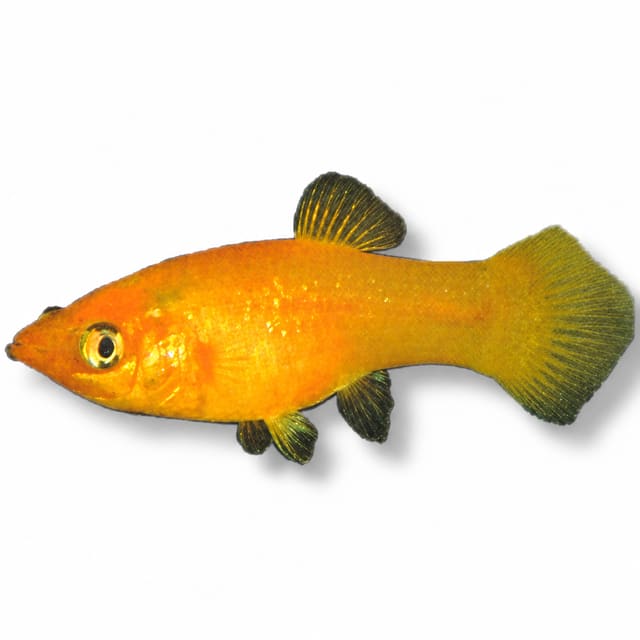
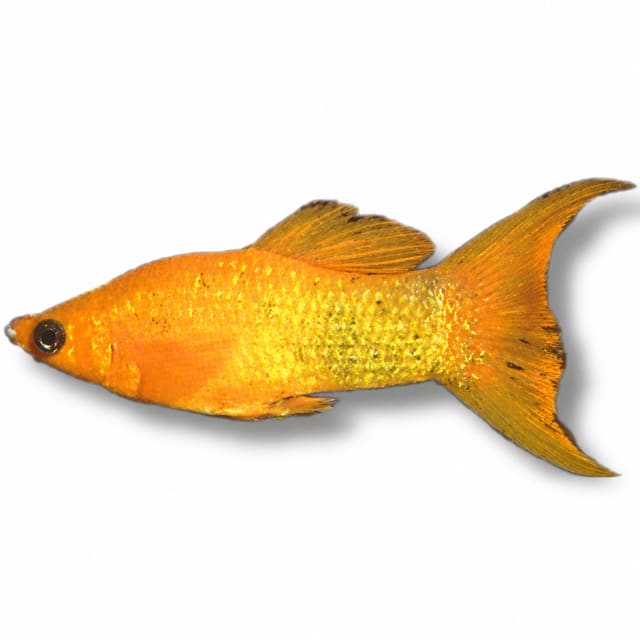
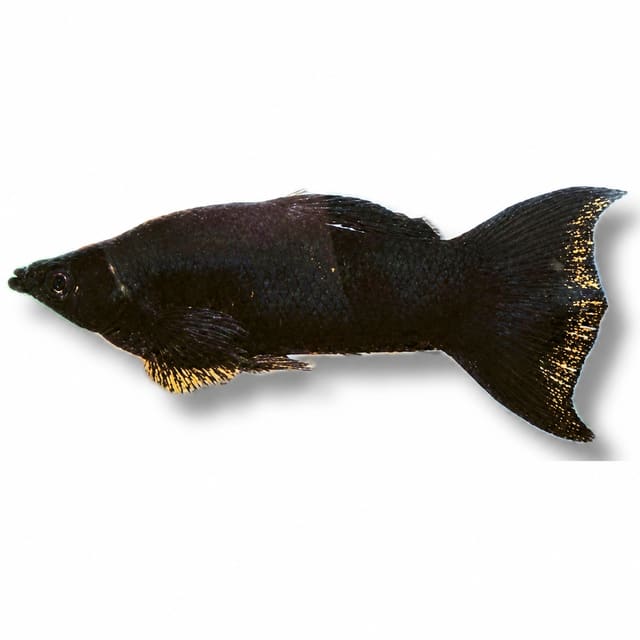
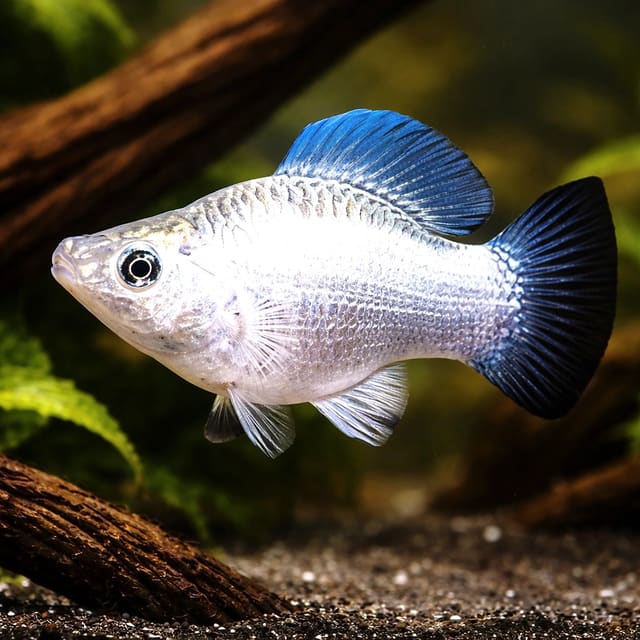
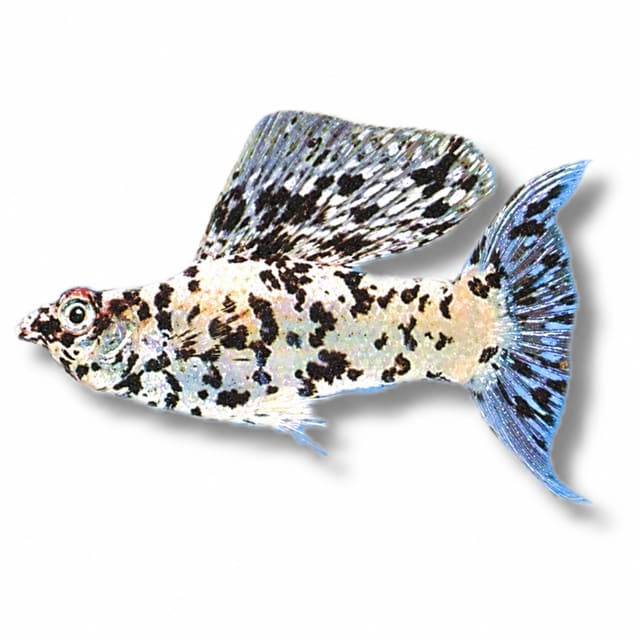
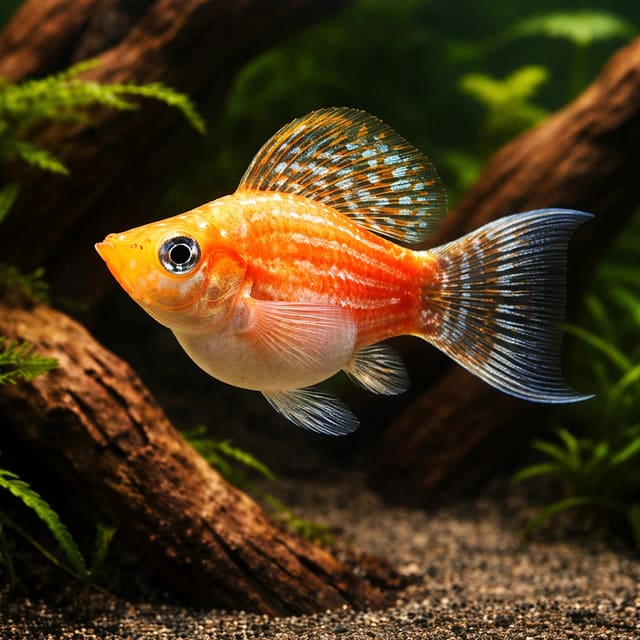
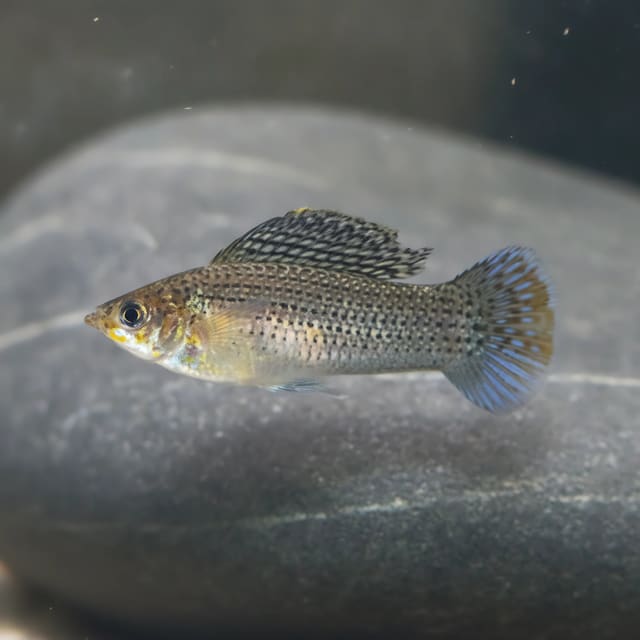
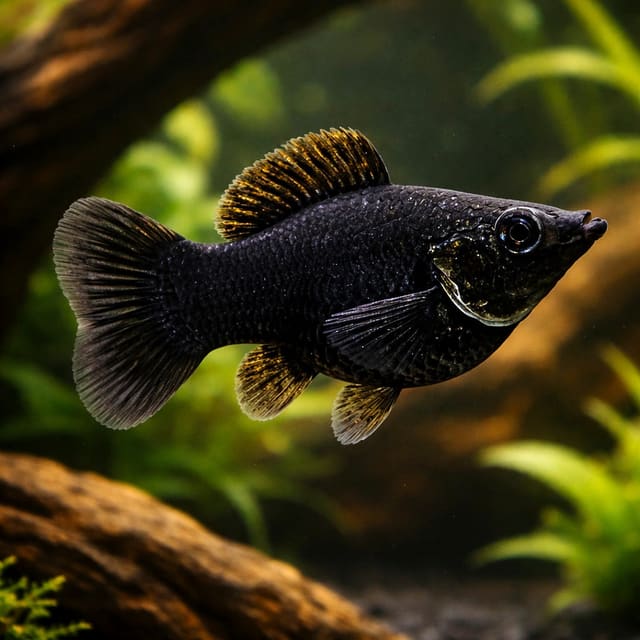
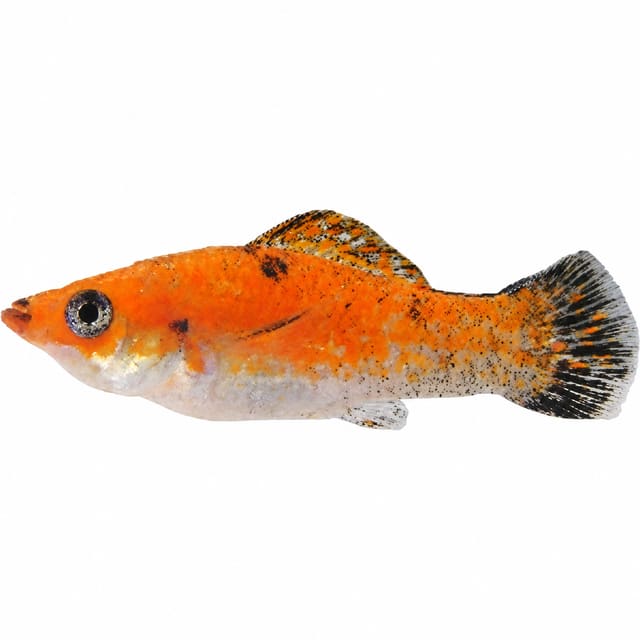
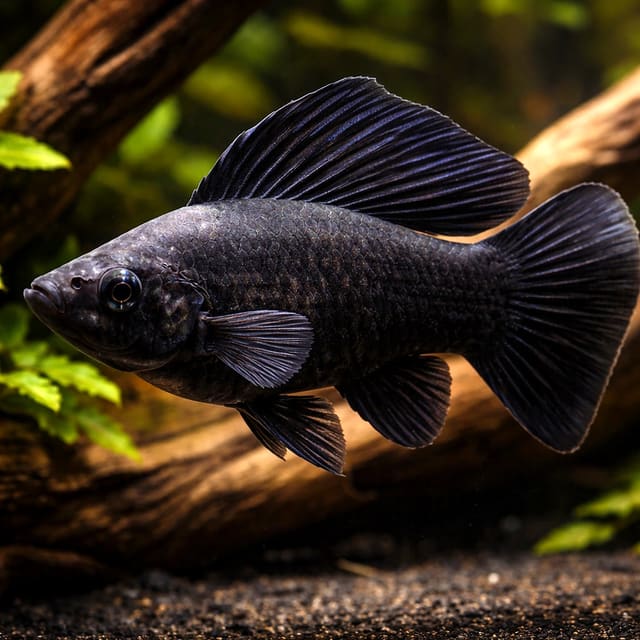
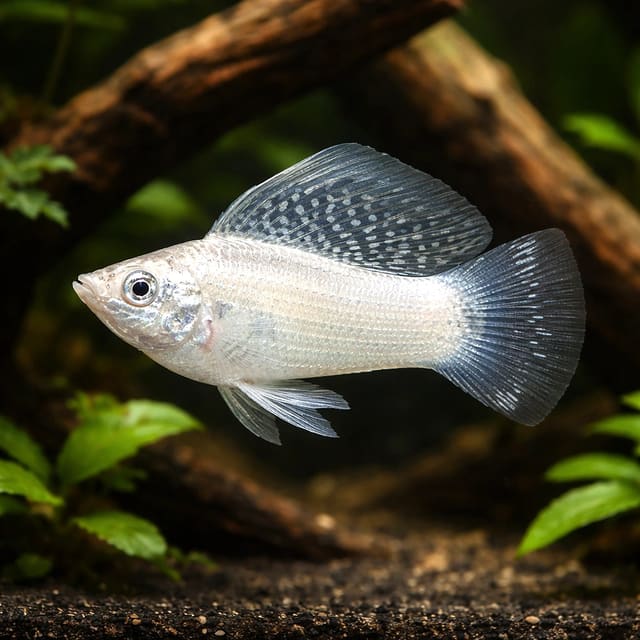
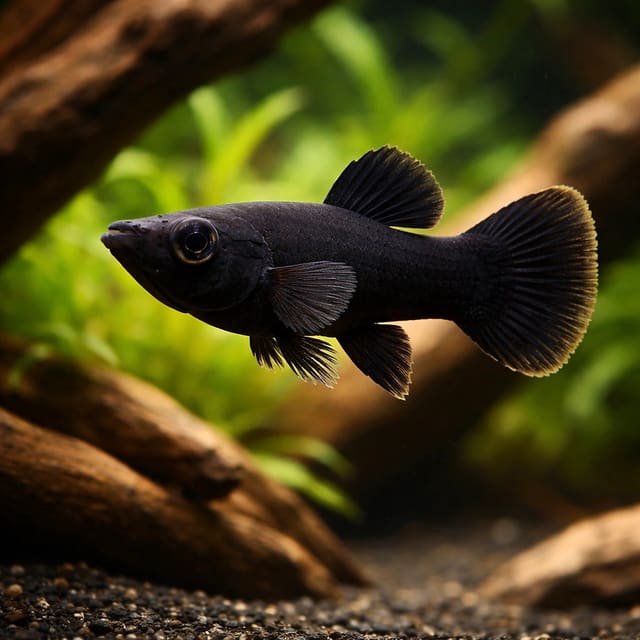
Gallery images have been digitally enhanced to improve image quality. Natural colour, pattern, size and maturity can vary between live animals. The four supplied views show gold-and-black fish in profile, including one two-fish scene and several single-fish views. They are useful for understanding the intended colour contrast and tail form, but natural variation, age, lighting and the individual fish supplied can change how the colours appear.
| A good fit | Measured hard, alkaline water; a mature filter; room for a social group; peaceful companions sharing the same chemistry. |
|---|---|
| A poor fit | Persistently soft, acidic water; an immature aquarium; a cramped display; or a community chosen only from generic peaceful labels. |
If those foundations are in place, this is an engaging fish that spends much of its time in view, investigates food readily and brings strong contrast to a planted hard-water display. Browse the livebearers collection when comparing forms, but assess each listing on its own adult size, water needs and sold unit.
Measure temperature, pH and general hardness; confirm ammonia and nitrite are zero; allow enough floor length for the group; and decide how mixed sexes would be managed if the fish later prove to include males and females. Also check every existing tank mate against the same mineral-rich water. A peaceful fish kept in the wrong chemistry is not a successful community choice.
| Scientific identity | Poecilia sphenops, family Poeciliidae |
|---|---|
| Recorded body length | 7.5 cm SL in FishBase; 8 cm SL in the species husbandry profile |
| Aquarium footprint | At least 90 × 30 cm; about 81 litres at the profile's example dimensions |
| Routine aquarium range | 21–28°C; pH 7.0–8.5; 15–30°dGH |
| Social plan | OATA's broad molly guidance suggests at least three; where sexes are mixed, two females per male |
| Diet | Omnivorous; include vegetable or algae-based food alongside varied suitable foods |
| Temperament | Generally peaceful, with persistent male pursuit possible |
The Seriously Fish profile recommends a 90 × 30 cm base and illustrates it as roughly 81 litres at 90 × 30 × 30 cm. The footprint is useful because mollies are active horizontal swimmers. A tall vessel with the same advertised volume but a short base does not provide the same usable route through the aquarium. When choosing between tanks, favour length and stable water volume over decorative height.
Eighty-one litres is a species-profile starting point, not a promise that every group and every community fits. Add more room when stocking a larger group, mixing several active species or keeping fish whose adult bodies occupy the same swimming zone. The filter, décor and maintenance routine must also handle the total biological load. A sensible tank is one in which adults can turn and pass without constant crowding and weaker fish can leave a persistent pursuer's line of sight.
Set the aquarium up and mature its biological filter before livestock arrives. The first tropical tank guide explains the preparation sequence. A newly filled aquarium may look clear while lacking enough nitrifying bacteria to process fish waste. Adding the molly slowly to a stable system is safer than trying to cycle around it.
Run this species at 21–28°C, pH 7.0–8.5 and 15–30°dGH using the species-level aquarium profile. The range is deliberately broad; it does not mean the fish should be moved repeatedly from one extreme to another. Choose a point your source water can support, acclimatise carefully and keep routine changes close to the established aquarium. Sudden swings in pH, temperature or hardness can be stressful even when the before and after readings both fall inside a published range.
General hardness measures dissolved calcium and magnesium. It is not interchangeable with pH, and neither number tells you ammonia or nitrite. Use separate, appropriate tests and learn what each result means through the aquarium water-parameters guide. The water matcher can help compare measured values with the reviewed guidance, but a tool does not replace repeated testing in the actual tank.
This molly should not be treated as a soft-water fish that happens to tolerate a higher pH. Seriously Fish warns that P. sphenops weakens in soft or acidic water and may show shimmying, clamped fins or fungal problems. It also states that salt is not necessary: the important requirement is mineral-rich water. Do not add salt automatically as a substitute for measuring general hardness or correcting the underlying setup.
A biological filter is essential because ammonia from fish waste is toxic. Beneficial bacteria convert ammonia to nitrite and then nitrate, but that process only works when the filter is established, oxygenated and protected from chlorine. Size the filter for the whole community, keep its intake safe for the fish present and make sure circulation reaches the tank without turning it into an exhausting torrent.
For the profile's example 81-litre aquarium, Seriously Fish suggests four to five turnovers per hour and a filter in the region of 325–405 litres per hour. Treat that as a starting calculation, not a guarantee of real delivered flow: media, head height and dirt reduce performance. Observe whether waste gathers in dead spots and whether the mollies can swim normally throughout the tank.
Check the filter for blockages during maintenance. When media needs cleaning, do not rinse it under the tap; rinse it lightly in water removed from the aquarium. That protects the established bacterial population from chlorine or chloramine. Do not replace every mature medium at once merely because it looks brown; the biofilm is functional, not cosmetic dirt.
A planted aquarium suits this species well. Combine open swimming lanes with planted margins, floating cover or other visual breaks. Cover helps a lower-ranking fish step out of a pursuer's sight, while open space prevents an active group from being funnelled through a single narrow route. Gravel or sand can both work when kept clean and compatible with the chosen plants.
Long lyre-shaped tail rays make décor inspection worthwhile. Avoid rough rock, sharp plastic leaves and narrow gaps that can snag fins. Run a finger over artificial ornaments before use and leave enough clearance around wood and filter fittings. Natural-looking complexity is helpful only when fish can move through it safely.
OATA's guidance for guppies and mollies as a group suggests at least three companions and, when sexes are mixed, two females for each male. The aim is to spread persistent attention rather than allowing one female to receive it continuously. Because this offer does not guarantee sex, do not promise yourself a precise ratio at purchase. Watch actual interactions as the fish mature and be prepared to adjust the group or layout if one individual is chased without respite.
A larger group requires more space and filtration. “Social” never means unlimited stocking. Count the adult community, not only the number arriving today, and leave capacity for livebearer reproduction if both sexes are present. Dense plant growth can provide refuge, but plants do not cancel the need for an appropriate footprint or sensible ratios.
A practical setup includes a suitably sized aquarium, a mature filter, a heater capable of holding the chosen temperature, a thermometer, a secure lid, lighting appropriate to any live plants, water conditioner and tests for ammonia, nitrite, nitrate, pH and hardness. A dedicated siphon and bucket keep aquarium maintenance separate from household cleaning products. Equipment should be selected for the aquarium's real volume and room conditions rather than bought from a one-size label.
Place the tank on a level, suitable support away from direct sunlight, radiators, draughts, loud vibration and sudden movement. Direct sun can drive temperature and algae changes; a draught or heat source can make the heater work against the room. Leave access around the filter and lid so weekly work is straightforward. Maintenance skipped because the aquarium is awkward to reach soon becomes a welfare problem.
Before purchase, confirm that the heater and filter have been running reliably, that test results have settled and that the tank can accommodate the whole intended community at adult size. Check décor for sharp edges, verify that the lid and cables are safe, and make sure replacement water can be conditioned consistently. These ordinary preparations matter more than adding a last-minute supplement.
Test tap or source water as well as the aquarium. If it is naturally hard and alkaline, regular changes can help restore the minerals the molly needs. If it is very soft, the long-term plan needs to be understood before buying the fish; improvised correction at every change is prone to inconsistency. Any mineral-adjustment method should be measurable and repeatable, not based on an occasional guess.
Compare readings before and after a normal water change. That shows whether the tank is consuming buffering capacity, whether décor is altering chemistry and how large a change can be made without a sharp swing. Keep notes on temperature, pH and GH alongside ammonia, nitrite and nitrate. A stable trend is more informative than one apparently perfect test taken immediately before ordering.
Poecilia sphenops is omnivorous. FishBase records worms, crustaceans, insects and plant matter in the natural diet, while the aquarium profile says it accepts most foods and should receive a good proportion of vegetable matter such as blanched spinach or vegetable flake. Build the routine around a reputable dried staple plus an algae- or vegetable-based food, with suitable small live or frozen foods used for variety.
OATA's broader molly guidance gives a practical feeding limit: offer only what the fish can finish within a few minutes, once a day. Portion size matters more than enthusiasm at the glass. Uneaten food breaks down, raises the load on the filter and can push water quality in the wrong direction. If food reaches the substrate untouched, reduce the next portion and remove what remains.
Distribute food so shy or lower-ranking fish can reach it. Watch body condition over time rather than judging one meal. A fish that suddenly stops eating, spits food repeatedly or loses condition deserves a water-quality check and closer observation. Do not use rich treats to mask a persistent refusal to feed.
OATA recommends a 25% partial water change at least weekly for guppies and mollies as a group, alongside weekly testing. Siphon settled waste where it collects, condition replacement tap water against chlorine or chloramine, and match its temperature reasonably closely. Consistency makes changes routine rather than disruptive.
Test ammonia, nitrite, nitrate, pH and hardness, especially after adding fish or altering the filter. Ammonia and nitrite should remain at zero. OATA frames nitrate relative to source water, advising it should not exceed normal tap-water levels by more than 20 mg/l. A written log is valuable: gradual drift is easier to see across several weeks than from memory.
Prepare before the parcel arrives. The tank should already be heated, filtered and tested, with no last-minute chemistry adjustment underway. Follow the shop's current delivery and Live Arrival Guarantee policy rather than improvising. The policy says to float the sealed bag for 20–30 minutes before release and not to pour bag water into the aquarium.
Move calmly and avoid exposing the bag to bright light or temperature extremes. After release, allow the fish to find cover. Monitor breathing, posture, swimming and the response of established tank mates. The first week is a useful observation period, but it is not a reason to chase the fish constantly with nets or make daily changes without evidence.
Healthy behaviour varies between individuals, so look for changes: hanging at the surface, sitting unusually on the bottom, erratic swimming, faster or slower gill movement, clamped or damaged fins, white spots, fluffy growths, fading or darkening colour, hiding, weight loss or reduced feeding. A single sign does not diagnose a disease. Start by testing the water and reviewing recent stocking, maintenance and temperature changes.
Shimmying has special relevance in mollies because it can accompany unsuitable soft or acidic conditions. It is still a sign to investigate, not a diagnosis to medicate blindly. Confirm pH and hardness, check ammonia and nitrite, and seek informed help when the cause is unclear. Avoid adding treatments or salt without identifying what problem they are meant to address.
Mollies are livebearers and can reproduce readily when males and females share suitable conditions. The species profile reports persistent male pursuit and recommends several females per male, with dense planting to help. It also notes that adults may eat young. This background matters for capacity planning even if breeding is not the keeper's goal.
The offer does not guarantee sex, pregnancy, fertility, pair formation or a brood. Do not buy one fish expecting a particular reproductive outcome. If mixed sexes later become evident, plan for ongoing fry management and avoid distributing unwanted fish irresponsibly.
This molly is generally peaceful, but that does not make it compatible with every peaceful tropical fish. The first screen is 21–28°C, pH 7.0–8.5 and 15–30°dGH. A soft-water species may behave calmly beside a molly while one or both are being maintained outside suitable chemistry. Reject that combination before debating colour or swimming level.
The species profile names other Poecilia, some rainbowfish, and hard-water-tolerant barbs and tetras as possible tank mates. These are categories, not blanket approvals. Check the exact species for adult size, group number, fin-nipping tendency, feeding speed and the overlap of its preferred water range. A hard-water-tolerant tetra may be sensible; “any tetra” is not the same claim.
Other livebearers can share broadly similar water, but reproductive and behavioural consequences still matter. Closely related mollies may interbreed; Seriously Fish specifically advises keeping one of P. sphenops and P. latipinna if unwanted hybridisation matters. Mixed livebearer displays can also grow quickly when both sexes are present.
Add fish gradually so the biological filter can respond to the increased waste. Rearrange or add cover if one area becomes monopolised, and make sure food reaches every fish. Persistent chasing, clamped fins, hiding, missed meals or surface-hanging call for investigation. Test the water before deciding the problem is personality.
When comparing another colour form, treat appearance and husbandry as separate decisions. The related products field lists checked alternatives without suggesting that buying a second form automatically creates a compatible group. The aquarium must still meet the needs of every individual animal.
FishBase records 7.5 cm standard length for male or unsexed Poecilia sphenops, while the Seriously Fish husbandry profile lists 8 cm standard length. Standard length excludes the tail, so neither figure should be treated as a total-length promise for every individual.
Use a tank with at least a 90 × 30 cm base; the Seriously Fish profile equates that footprint to about 81 litres. Increase space when the social group or total community is larger, because a longer footprint gives active mollies room to move and helps water conditions stay stable.
OATA's broad guidance for guppies and mollies recommends at least three, with two females for each male when sexes are mixed. This listing does not guarantee sex, so plan the social group conservatively and observe whether any individual is being persistently chased.
It can suit a prepared keeper, but the store assessment is intermediate because hard, alkaline water is essential rather than optional. Check your source water first; a mature, filtered aquarium that already holds the correct hardness is a much safer starting point than trying to correct unsuitable soft water after the fish arrive.
Offer a quality dried staple with a meaningful vegetable or algae-based component, and vary it with suitable small live or frozen foods. Feed only what the fish can finish within a few minutes and remove leftovers so decomposing food does not add avoidable waste.
The species-level aquarium profile gives 21–28°C, pH 7.0–8.5 and 15–30°dGH. Stability matters, but so does mineral content: Poecilia sphenops should not be kept in persistently soft, acidic water.
Poecilia sphenops is described as peaceful, although males can pursue females repeatedly. The more common welfare problem is an unsuitable social ratio or cramped stocking rather than routine fin-nipping, so provide space, cover and enough companions to spread attention.
Choose peaceful fish that genuinely share hard, alkaline water. The species profile names other Poecilia, some rainbowfish, and hard-water-tolerant barbs and tetras; each proposed species still needs its own adult-size, behaviour and water checks before it is added.
Tropical Fish Co hand-packs live fish in sealed, oxygenated bags inside an insulated box, using a heat pack when conditions call for it, and uses a licensed live-animal courier. For a Live Arrival Guarantee claim, contact the shop on the day of delivery with the order number and a continuous unboxing video that begins with the parcel sealed and shows the fish still in its sealed bag.
The identity and labelled maximum measurement come from FishBase's Poecilia sphenops summary. Aquarium footprint, standard length, water, diet and compatibility guidance come from the Seriously Fish species profile.
The OATA guppy and molly care sheet supplies broad UK group guidance on social keeping, maintenance, feeding and monitoring. The RSPCA aquarium guidance supports the general welfare role of a mature biological filter. Group-level advice is labelled as such rather than presented as a species-specific optimum.
No reviews for this item yet. Bought one? Honest reviews only, good or bad.
What customers say about ordering from us
I have a small group of long finned mountain minnows. So was delighted to be able to order ten of this variety to increase the genetics in my tank . The ones I recieved are healthy but it’s to early to give a verdict on wether they are of a long finned type since they are small currently.
Gordon Walker · 23 Sept 2026
100% success travel and "installation". Pleased with quality of purchase. The Siamese fighter a bit "shy" so have not yet seen him at his best yet but looking good. Happy customer. GG
George E Garratt · 21 Sept 2026
Reviews of our shop, collected by Judge.me, an independent third-party review collector. Newest first.