Moderate
Marble Sailfin Molly (Poecilia velifera)
22–28°C · pH 7–8 · 104L
£12.99

The Gold Molly (Poecilia sphenops) is a Poeciliidae livebearer from Central and South America, from Mexico to Colombia, reaching 8 cm. It suits keepers with a mature hard-water aquarium of about 81 litres or more; OATA suggests at least three, and the FishBase, Seriously Fish and OATA overlap is 21–28°C, pH 7.5–8.0 and 15–18 dGH. Sold individually in 2.5–3 cm, 3–4 cm and XL sizes.
Adult size is the maximum length this species reaches at full maturity (scientific sources). The livestock you receive will be younger and smaller — pick a size above for the actual shipping size. Product-photo provenance and any image-specific limitations are stated on the listing.
Poecilia sphenops
Save when buying multiple fish. Each quantity is one fish; sex and pair formation are not guaranteed unless the selected variant explicitly states them.
Minimum of 2 per order.
The Gold Molly (Poecilia sphenops) is a Poeciliidae livebearer from Central and South America, from Mexico to Colombia, reaching 8 cm. It suits keepers with a mature hard-water aquarium of about 81 litres or more; OATA suggests at least three, and the FishBase, Seriously Fish and OATA overlap is 21–28°C, pH 7.5–8.0 and 15–18 dGH. Sold individually in 2.5–3 cm, 3–4 cm and XL sizes.
Adult size is the maximum length this species reaches at full maturity (scientific sources). The livestock you receive will be younger and smaller — pick a size above for the actual shipping size. Product-photo provenance and any image-specific limitations are stated on the listing.
Maintain these water conditions for optimal health and vibrant colors
The Gold Molly (Poecilia sphenops) is a colourful livebearer in the Poeciliidae family. FishBase places the species in Central and South America, from Mexico to Colombia, and records a maximum of 7.5 cm standard length. This fish suits a keeper who can provide a mature, filtered aquarium with hard, alkaline water and space for a small social group.
Keep it at 21–28°C, pH 7.5–8.0 and 15–18 dGH. These routine values are the overlap of the Seriously Fish species profile, FishBase and OATA’s broad guppy-and-molly guidance, not a species-specific optimum. OATA suggests keeping at least three mollies, with two females to each male, while Seriously Fish advises that males may pursue females persistently.
| Suits | Not suited to |
|---|---|
| Mature aquariums with hard, alkaline water | Soft or acidic aquarium conditions |
| A group plan for at least three mollies | A solitary setup without companionship |
| Peaceful fish sharing the same water conditions | A general community assembled without matching water needs |
| Keepers prepared to test and maintain water weekly | An aquarium without an established biological filter |
We rate this fish easy when those conditions are met. Its peaceful nature and acceptance of prepared foods make daily care straightforward, but stable mineral content is central to long-term health.
One purchase supplies one Gold Molly in the selected size. The live size selector uses the labels 2.5–3 cm, 3–4 cm and XL. The centimetre labels describe the dispatch measurement, while XL is a non-numeric grade without a fixed centimetre measurement. The size you select is the size supplied, not the adult size.
Choose the dispatch size to suit the aquarium’s existing inhabitants, feeding plan and filter intake, then plan permanent space around the species’ 7.5 cm adult length. A smaller dispatch measurement does not reduce the mature aquarium requirement. Adding more than one fish also increases the demand on space, filtration and the social plan.
Sex is guaranteed only when the selected option explicitly states male or female. This Gold Molly listing has no sex-guaranteed option. Build any intended female-to-male ratio around fish whose sex can be identified directly rather than assuming that size, colour or fin shape in a gallery scene determines the animal supplied.
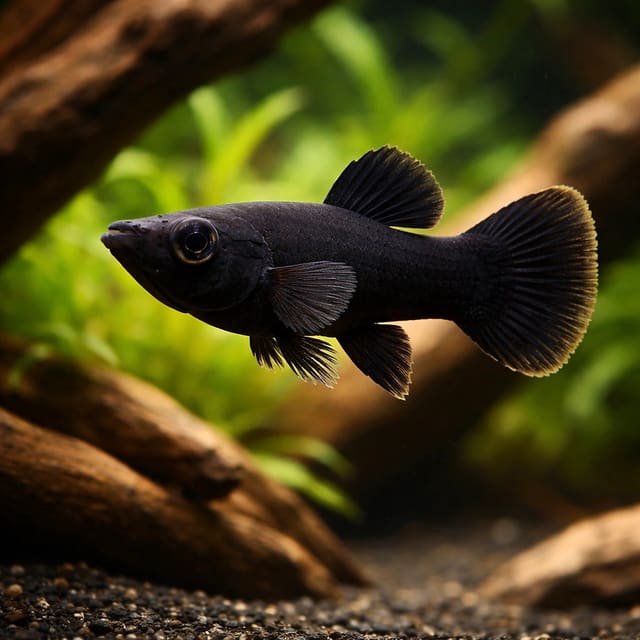
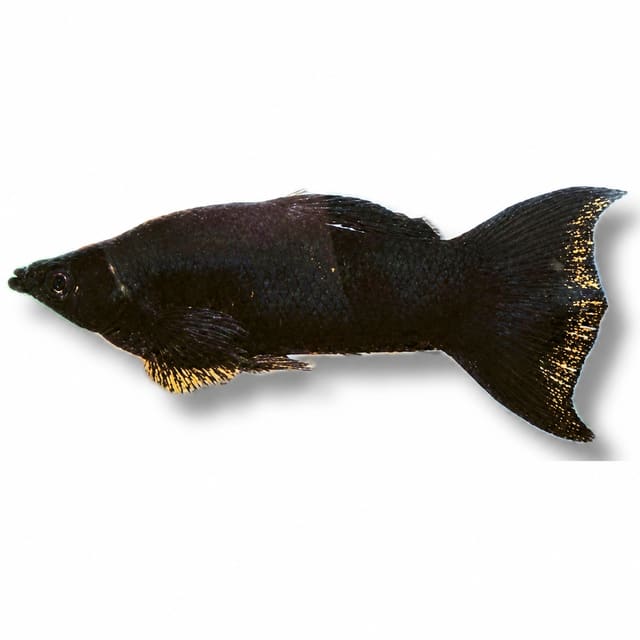
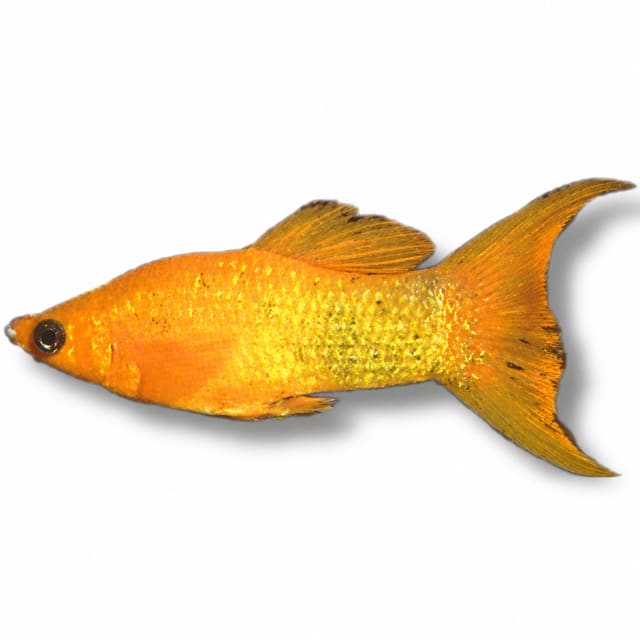
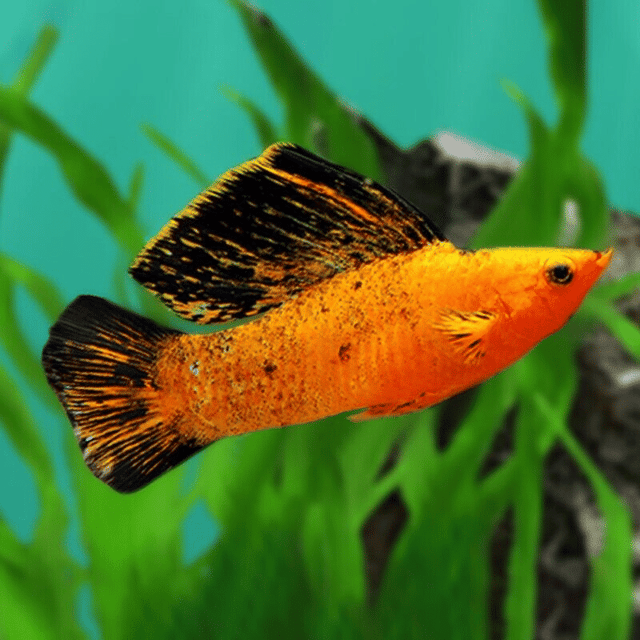
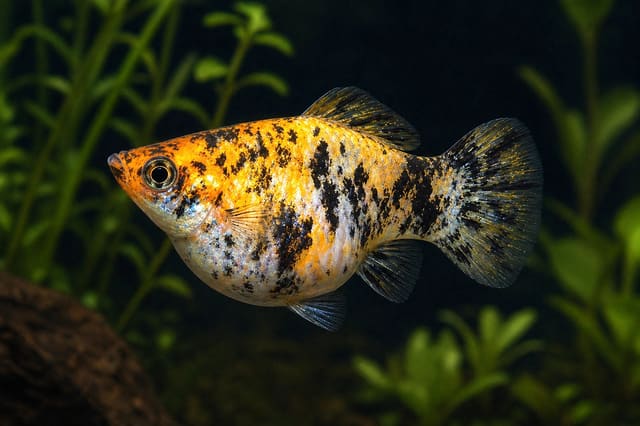
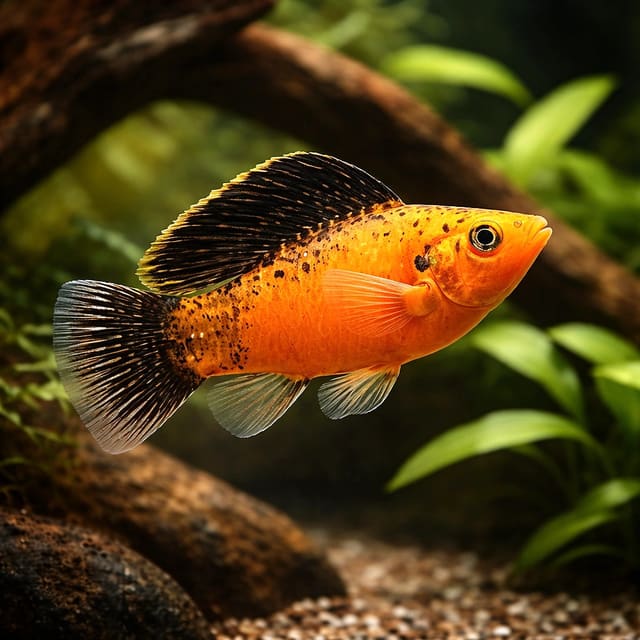
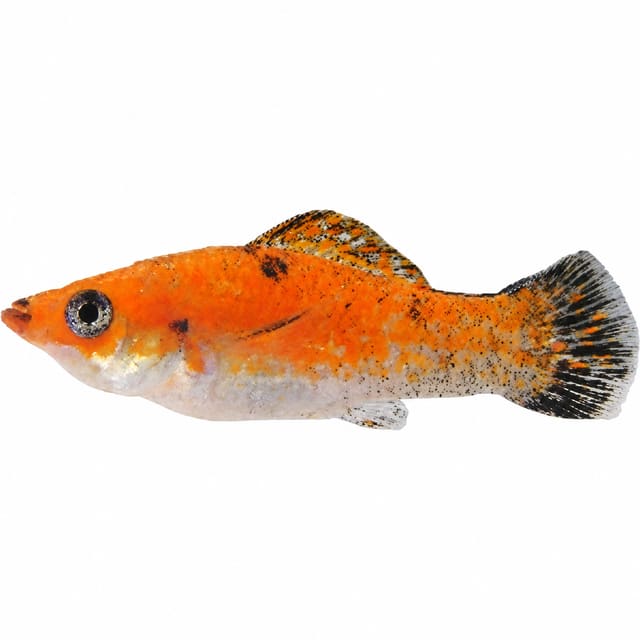
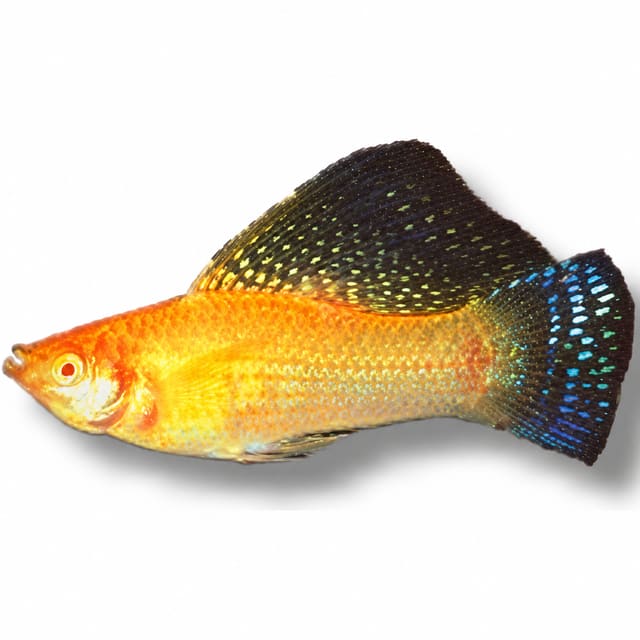
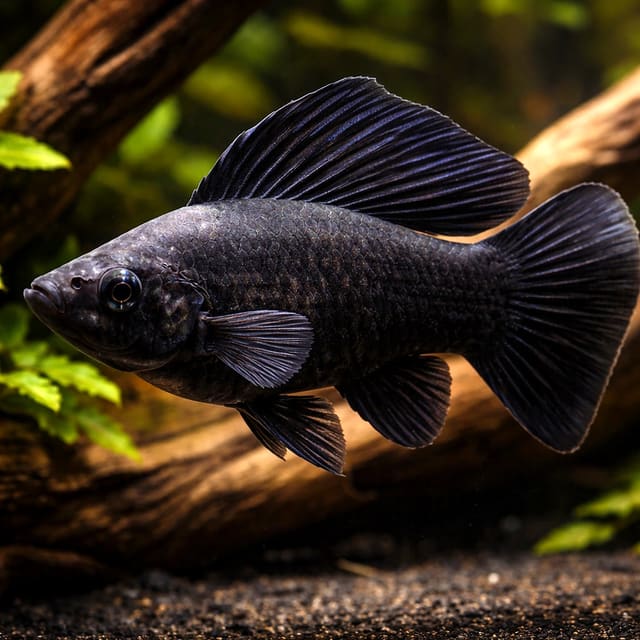
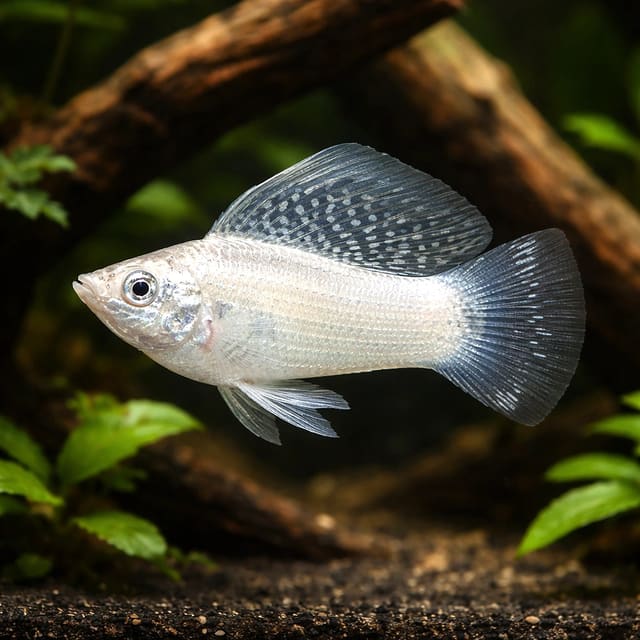
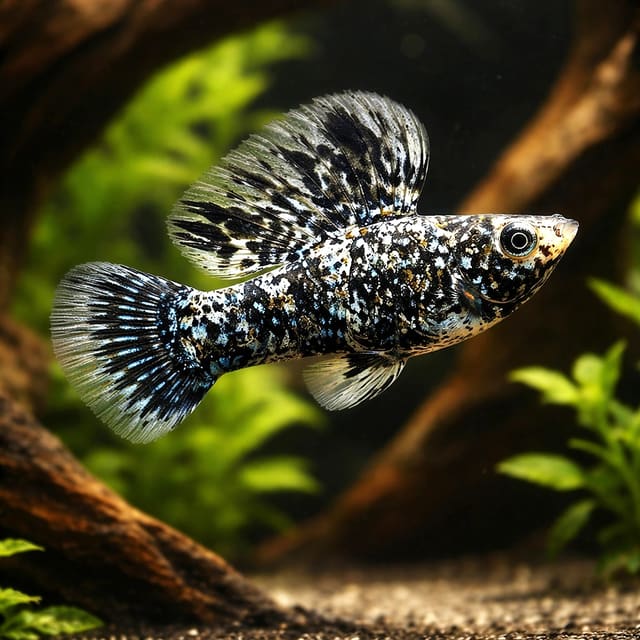
Some gallery images have been digitally enhanced to improve image quality. They show the listed type of animal rather than guaranteeing the exact markings of the individual supplied, so natural colour and pattern can vary. They are representative scenes showing the listed colour form, not individual animals reserved for a particular order. Explore the wider Molly Fish collection when comparing this form with other mollies.
Plan for an adult length of 7.5 cm standard length. Seriously Fish uses 8 cm standard length as its aquarium-planning figure, while the care specification here follows FishBase’s recorded 7.5 cm maximum. Standard length excludes the tail, so give the fish open room to swim rather than treating its body measurement as the complete space it occupies in motion.
Use an aquarium with a 90 × 30 cm base and a volume of about 81 litres. Seriously Fish associates those dimensions with this species. Increase the aquarium’s capacity when adding more mollies or compatible companions because every animal adds waste, feeding competition and demand on the swimming footprint.
At about 81 litres, Seriously Fish gives a filter turnover of four to five times the aquarium volume each hour, equivalent to a filter rated around 325–405 litres per hour. Its heater reference is approximately 75–100 W for maintaining 21–28°C when the room is around 20°C. Select equipment by the aquarium’s actual volume and conditions, then confirm performance with regular tests rather than relying only on the rating printed on the box.
Maintain 21–28°C, pH 7.5–8.0 and 15–18 dGH. Check temperature and chemistry before adding the fish, then test regularly enough to notice movement before it becomes a health problem. Use the aquarium water chemistry guide to understand the measurements and the water matcher to compare tested aquarium values with this range.
| Check | Required action |
|---|---|
| Temperature | Keep it within 21–28°C and investigate unexpected movement. |
| pH | Maintain an alkaline reading between 7.5 and 8.0. |
| General hardness | Keep 15–18 dGH so the water remains mineral-rich. |
| Ammonia | Maintain zero mg per litre. |
| Nitrite | Maintain zero mg per litre. |
| Nitrate | Do not let it exceed 20 mg per litre above the normal tap-water level. |
Do not judge molly water by pH alone. Seriously Fish explains that calcium and magnesium are crucial to long-term health and says that mollies weaken rapidly in soft or acidic water, often showing shimmying, fungus or clamped fins. Test hardness as well as pH when a fish rocks in place, clamps its fins or loses condition.
Routine aquarium salt is not necessary. Seriously Fish states that the hard minerals are the important requirement, so salt is not a substitute for suitable general hardness, a stable pH or a working biological filter. Make measured changes through properly prepared replacement water rather than trying to correct several readings at the same time.
Use a fully established biological filter before adding a Gold Molly. The RSPCA explains that fish release toxic ammonia and that filter bacteria convert it first to toxic nitrite and then to safer nitrate. A filter is therefore life-support equipment, not simply a way to clear visible debris.
Prepare and mature the aquarium before livestock arrives. The first tropical aquarium guide sets out the practical setup sequence. Confirm zero ammonia and zero nitrite with tests before adding fish; clear water alone does not show whether enough beneficial bacteria are present.
OATA warns that adding too many fish too quickly can produce new tank syndrome because the established bacteria cannot process the increased waste. The result may be harmful ammonia and nitrite levels that make fish ill or cause death. Test after each addition and pause further stocking whenever either reading rises above zero.
Judge the filter by stable test results and reliable flow. If the aquarium will contain a group of mollies plus companions, calculate capacity for the complete adult community rather than the first fish alone. Increasing the number of animals without increasing biological capacity creates pressure even when the aquarium still looks spacious.
Carry out a 25% partial water change at least once every week. OATA recommends that frequency and amount for guppies and mollies, together with water testing at least weekly. Use a siphon to remove solid waste from the gravel while taking out the old water.
Clean filter media without destroying the bacterial population that processes waste. Do not run it under the tap. OATA instructs keepers to rinse it lightly in aquarium water removed during the partial water change, reducing the number of beneficial bacteria lost. Clean only when necessary to restore function rather than trying to make mature media look new.
Weekly records make gradual changes easier to see. Compare ammonia and nitrite with the required zero reading, and keep nitrate within 20 mg per litre above the normal tap-water level. If a result moves in the wrong direction, review stocking, feeding, blocked flow and the maintenance interval before adding more fish.
Watch the Gold Molly during and after the routine. Changes in swimming, colour, breathing, temperament, body condition or feeding can indicate stress. A repeated response after water changes is a reason to compare the aquarium and replacement water carefully, while a group-wide change calls for immediate testing of temperature, ammonia and nitrite.
Feed a varied omnivorous diet with a substantial vegetable component. FishBase records worms, crustaceans, insects and plant matter in the wild diet, and notes that aquarium mollies feed on green algae and accept dried food. Seriously Fish likewise describes Poecilia sphenops as omnivorous and recommends that a good proportion of its aquarium diet consists of vegetable matter.
| Food | How to use it |
|---|---|
| High-algae flake or granule | Use as the regular prepared food recommended by OATA for mollies. |
| Quality dried food and algae-based food | Use the combination identified by Seriously Fish for this species. |
| Vegetable flake or blanched spinach | Rotate these to provide the vegetable matter the species needs. |
| Daphnia, small bloodworm or tubifex | Offer small live or frozen items for dietary variety. |
Feed only what the fish can eat within a few minutes, once a day. OATA gives that schedule for guppies and mollies and warns that overfeeding leaves uneaten food to break down and release toxic waste. Reduce the amount at the next feed whenever food remains after the group has stopped eating.
Match particle size to the mouth of the animal supplied without making assumptions about age or sex. Crush flake or choose an appropriately sized granule when the whole pieces cannot be swallowed cleanly. Spread a small feed so each fish can reach it, then observe whether one individual is repeatedly missing food.
Use body condition, interest in food and weekly water tests together. A fish eating eagerly can still be overfed, while uneaten food can raise ammonia or nitrate even when portions look small. Natural algae grazing contributes variety, but continue providing a measured and nutritionally varied diet.
Plan a group of at least three Gold Mollies when the aquarium has enough adult capacity. OATA suggests this minimum for guppies and mollies because they require companionship. Add further fish only when the aquarium volume, footprint and filter can support the resulting group.
For a mixed-sex group, OATA suggests two females to each male. Seriously Fish explains that males can be somewhat incessant in pursuing females and recommends several females for every male to spread that attention. Dense planting can also help by giving fish visual cover and places to move away from persistent pursuit.
| Observation | Response |
|---|---|
| Brief social movement without injury | Continue monitoring the whole group during feeding and rest periods. |
| One fish hides more than normal | Check pursuit, access to food, water quality and available cover. |
| A fish is chased persistently | Reassess the sex ratio, group capacity and planting immediately. |
| Aggression increases after adding fish | Pause stocking and check whether the aquarium can support the changed social load. |
Males possess a specialised anal fin called a gonopodium. This is the supported physical distinction to use when assessing a ratio; do not use the dispatch size or the colour shown in a representative gallery image as a substitute for examining the fish itself.
Gold Mollies are livebearers and give birth to live young. Seriously Fish notes that adults may prey on fry, so mixed-sex planning can change both stocking pressure and maintenance demands. Make room for the possible increase before deliberately assembling a mixed-sex group.
Test water promptly when behaviour, breathing, colour, condition or appetite changes. OATA identifies surface hanging, sitting on the bottom, erratic swimming, unusual hiding, changing aggression, faster or slower gill movement, weight change and reduced feeding as warning signs that need investigation.
| What you see | What to do first |
|---|---|
| Shimmying or clamped fins | Test pH, general hardness, ammonia, nitrite and temperature. |
| Surface hanging or rapid breathing | Test ammonia and nitrite and check filter flow without delay. |
| White spots or fluffy growths | Record which fish are affected and test the aquarium conditions. |
| Loss of fins or scales | Inspect group behaviour and aquarium furnishings as well as water quality. |
| Reduced appetite or body weight | Watch feeding access and compare the fish with its normal condition. |
Soft or acidic water needs particular attention. Seriously Fish associates those conditions with rapid weakening, shimmying, fungus and clamped fins in this species. Restore attention to the required hard, alkaline range and investigate any ammonia or nitrite reading rather than treating one visible symptom as the complete problem.
Observe all animals, not only the most visibly affected fish. A group-wide change points towards an environmental cause such as water quality or filter performance, while one fish missing every meal may be facing social pressure. Written test results and observations make it easier to see whether the problem followed maintenance, feeding or a stocking change.
If you remain concerned after testing the aquarium, contact us for further guidance. Give the current temperature, pH, hardness, ammonia, nitrite and nitrate readings together with a concise description of the change.
Before the fish arrives, confirm that the aquarium is mature, filtered and within 21–28°C, pH 7.5–8.0 and 15–18 dGH. OATA advises checking that ammonia and nitrite are zero before adding fish and increasing the aquarium population slowly so the biological filter can adjust.
The fish is hand-bagged in pure oxygen and placed in an insulated poly box, with a heat pack when the weather calls for one. A licensed live-animal courier carries the parcel. Read the current delivery and Live Arrival Guarantee policy before the delivery date so the receiving and video requirements are clear.
For a Live Arrival Guarantee claim, retain the continuous video that begins with the sealed parcel and shows it being opened and the fish still inside the sealed bag. Report the issue on the day the fish arrives with the order number and video.
After release, concentrate on the supported settling checks: swimming behaviour, breathing, appearance and interest in food. Test the aquarium if the fish hangs at the surface, sits on the bottom, swims erratically or develops clamped fins. Add no further livestock while ammonia or nitrite is above zero.
Keep Gold Mollies only with peaceful fish that tolerate the same hard, alkaline water conditions. Seriously Fish describes the species as peaceful but does not recommend it for a general community assembled without this water match. The practical screening range is 21–28°C, pH 7.5–8.0 and 15–18 dGH.
| Decision | Animals or conditions |
|---|---|
| Suitable after screening | Other Poecilia, some rainbowfish, and hard-water-tolerant barbs and tetras. |
| Avoid | Poecilia latipinna, because it can interbreed readily with Poecilia sphenops. |
| Avoid | Fish that cannot tolerate the same hard, alkaline water conditions. |
| Assess individually | Any fish or invertebrate outside the named groups, where the outcome remains uncertain. |
Check every proposed companion’s complete temperature, pH and hardness requirements rather than relying on a general community label. A shared temperature alone is insufficient if one fish needs soft, acidic water and the Gold Molly needs hard, alkaline conditions.
Adult space remains part of the decision. Start with the 90 × 30 cm base and about 81 litres specified for Poecilia sphenops, then add capacity for every companion. The filter must also process the complete group’s waste while maintaining zero ammonia and zero nitrite.
Food access matters even within a peaceful combination. Gold Mollies take dried food readily, so watch each feeding to ensure companions receive their portion. Reassess any mix in which one fish hides more than normal, loses condition, misses meals or suffers repeated pursuit.
Screen a proposed community in a fixed order: water first, adult space second, temperament third and feeding access fourth. Reject the combination at the first failed requirement instead of trying to average incompatible needs.
Some rainbowfish and hard-water-tolerant barbs or tetras pass the first screening step because Seriously Fish names them as good tank mates. The word some matters: it does not extend compatibility to every species carrying those group names. Check the exact animal’s water and space requirements before combining it with mollies.
Other Poecilia may also fit, but exclude Poecilia latipinna. Seriously Fish reports that the two species interbreed readily and suggests keeping only one of them in an aquarium. Do not treat a colour difference as a barrier to interbreeding.
For fish and invertebrates outside the named groups, the result is uncertain until their specific requirements and behaviour have been assessed. Aquarium volume, planting and a strong filter can improve conditions, but they do not turn incompatible water requirements into a suitable match.
FishBase records Gold Molly (Poecilia sphenops) at a maximum 7.5 cm standard length. Plan the aquarium, filter and companions around 7.5 cm, not the dispatch measurement.
Use a 90 × 30 cm base and about 81 litres for a Gold Molly; Seriously Fish gives these as the species aquarium dimensions and volume. Increase capacity as the total stocking level grows.
OATA’s broad guppy-and-molly guidance suggests keeping at least three Gold Mollies, with two females to each male. Make each addition only when the aquarium has enough adult capacity.
We rate the Gold Molly easy when kept in a mature, filtered aquarium with hard, alkaline water. Weekly tests and a 25% water change at least once every week remain essential.
Feed a Gold Molly high-algae flake or granules with vegetable flake or blanched spinach, plus small live or frozen daphnia, bloodworm or tubifex for variety. Give only what it eats within a few minutes, once daily.
Keep it at 21–28°C, pH 7.5–8.0 and 15–18 dGH; these routine values are the FishBase, Seriously Fish and OATA overlap. Maintain zero ammonia and zero nitrite.
It is generally peaceful, although males may pursue females persistently. Provide planting and an appropriate ratio, then reassess repeated chasing, hiding, missed meals or fin damage.
It can live with other Poecilia except Poecilia latipinna, some rainbowfish and hard-water-tolerant barbs and tetras when they share the same conditions. Avoid P. latipinna because the two species interbreed readily.
Start filming the sealed parcel before opening it or floating the bag. The Tropical Fish Co policy says fish are hand-bagged in pure oxygen, packed in an insulated box and carried by a licensed live-animal courier; receive the parcel in person, open it that day and float the bag for 20–30 minutes before release. Contact us the same day with the order number and continuous video if making a Live Arrival Guarantee claim.
No reviews for this item yet. Bought one? Honest reviews only, good or bad.
What customers say about ordering from us
I have a small group of long finned mountain minnows. So was delighted to be able to order ten of this variety to increase the genetics in my tank . The ones I recieved are healthy but it’s to early to give a verdict on wether they are of a long finned type since they are small currently.
Gordon Walker · 23 Sept 2026
100% success travel and "installation". Pleased with quality of purchase. The Siamese fighter a bit "shy" so have not yet seen him at his best yet but looking good. Happy customer. GG
George E Garratt · 21 Sept 2026
Reviews of our shop, collected by Judge.me, an independent third-party review collector. Newest first.