Easy
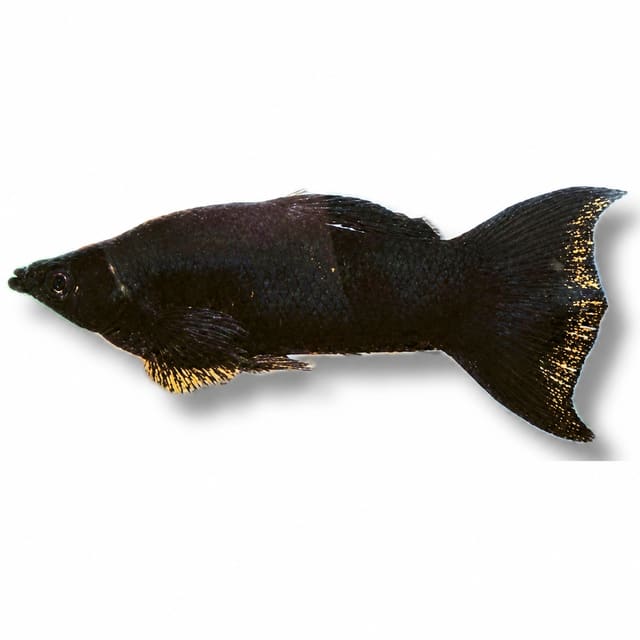
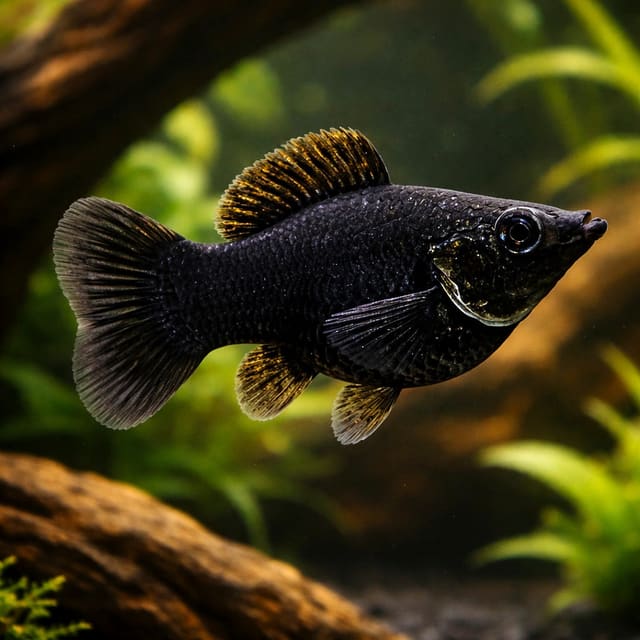
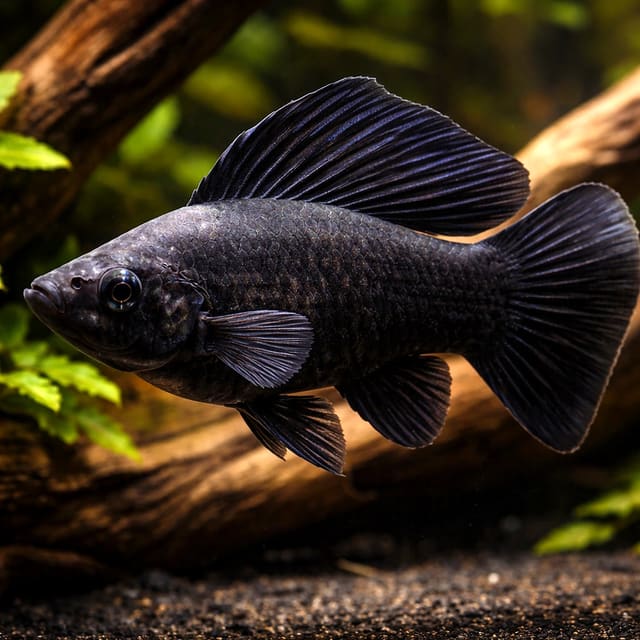
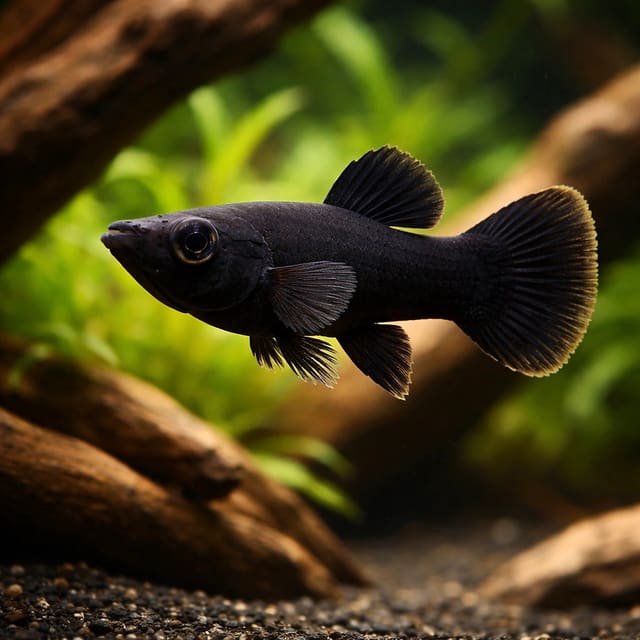
Black Molly (Poecilia sphenops black molly)
21–28°C · pH 7–8.5 · 81L
£3.99
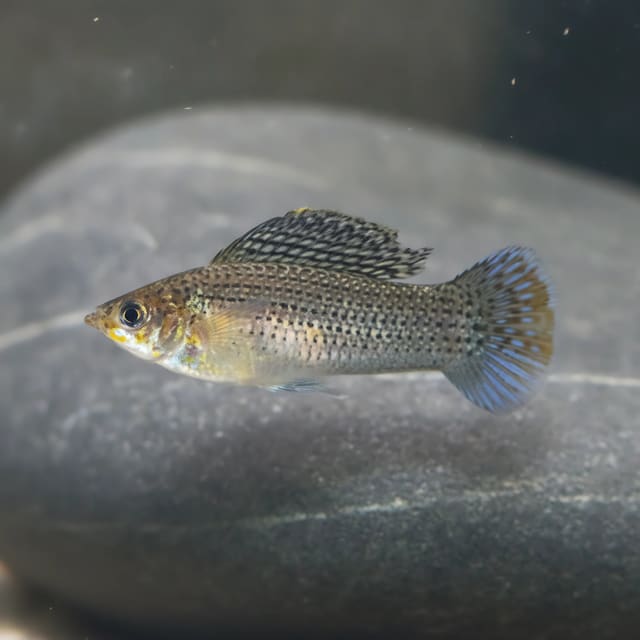
Sail-Fin Molly assorted (Poecilia velifera) is a peaceful livebearer from south-eastern Mexico that can reach about 15 cm and needs hard, alkaline water. Each purchase is one fish at 6–7 cm or 7–9 cm, in assorted colours, and the sex of each fish is not chosen.
Adult size is the maximum length this species reaches at full maturity (scientific sources). The livestock you receive will be younger and smaller — pick a size above for the actual shipping size. Product-photo provenance and any image-specific limitations are stated on the listing.
Poecilia velifera
Shoaling fish: kept in a group they feel safer, stay calmer and show their best colour.
Sail-Fin Molly assorted (Poecilia velifera) is a peaceful livebearer from south-eastern Mexico that can reach about 15 cm and needs hard, alkaline water. Each purchase is one fish at 6–7 cm or 7–9 cm, in assorted colours, and the sex of each fish is not chosen.
Adult size is the maximum length this species reaches at full maturity (scientific sources). The livestock you receive will be younger and smaller — pick a size above for the actual shipping size. Product-photo provenance and any image-specific limitations are stated on the listing.
Maintain these water conditions for optimal health and vibrant colors
The Sail-Fin Molly assorted is Poecilia velifera, a livebearing fish from the family Poeciliidae and the molly best known for the tall, sail-like dorsal fin carried by mature males. This listing supplies one live fish per purchase, in the dispatch size you choose and in a mix of colour forms. It is a genuinely large molly: FishBase records a maximum length of 15 cm, so it needs a spacious, well-planted aquarium with hard, alkaline water rather than a small starter tank.
Water hardness is the single most important thing to check before ordering. Seriously Fish, which publishes a species profile for Poecilia velifera, warns that in soft or acidic water the fish weakens fairly rapidly, often showing shimmying, fungus or clamped fins. If your tap water is soft, work out how you will raise and hold its hardness before the fish arrives, or choose a species that suits the water you already have.
| Scientific name | Poecilia velifera |
|---|---|
| Family | Poeciliidae (livebearers) |
| Native range | Yucatán–Quintana Roo and the lower Usumacinta–Laguna de Términos systems, Mexico |
| Maximum recorded length | 15 cm total length |
| Supplied as | One fish per purchase, at 6–7 cm or 7–9 cm |
| Aquarium water | 22–28 °C, pH 7.0–8.5, 15–35 dGH |
| Temperament | Peaceful; males pursue females vigorously |
| Suits | Keepers with a large, mature, hard-water community aquarium |
| Conservation status | Vulnerable on the IUCN Red List |
Each purchase is a single fish. Pick 6–7 cm or 7–9 cm on the product page, then set the quantity to the number of fish you want, because every unit is one molly. The size you select is the size supplied, not the adult size. A sailfin molly bought at 6–7 cm may still have a lot of growing to do, so plan the aquarium for the adult rather than for the fish in the bag.
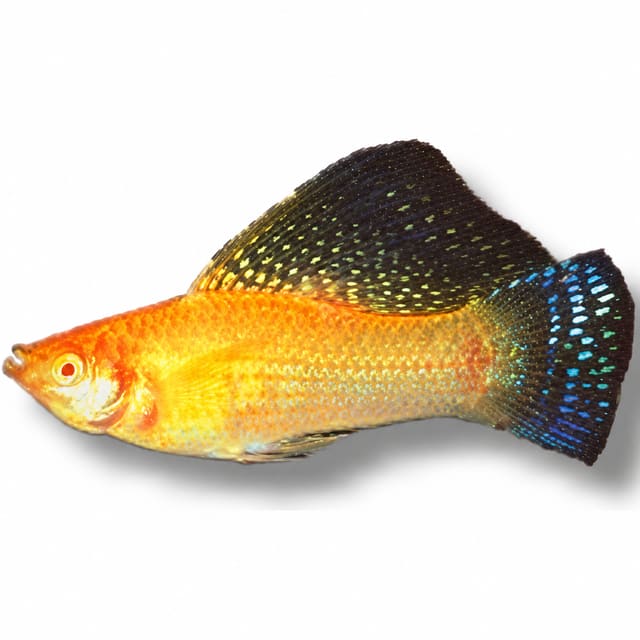
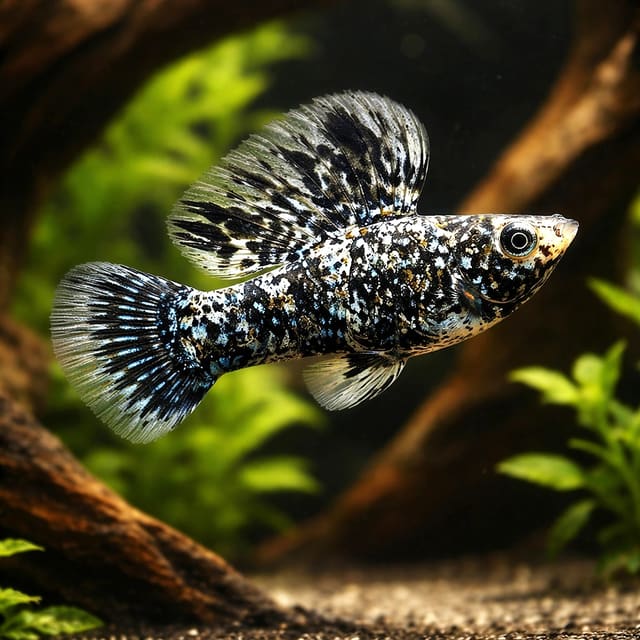
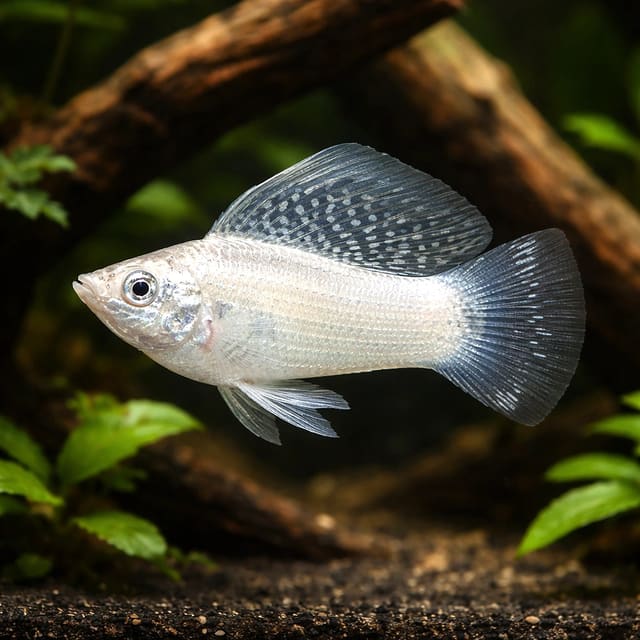
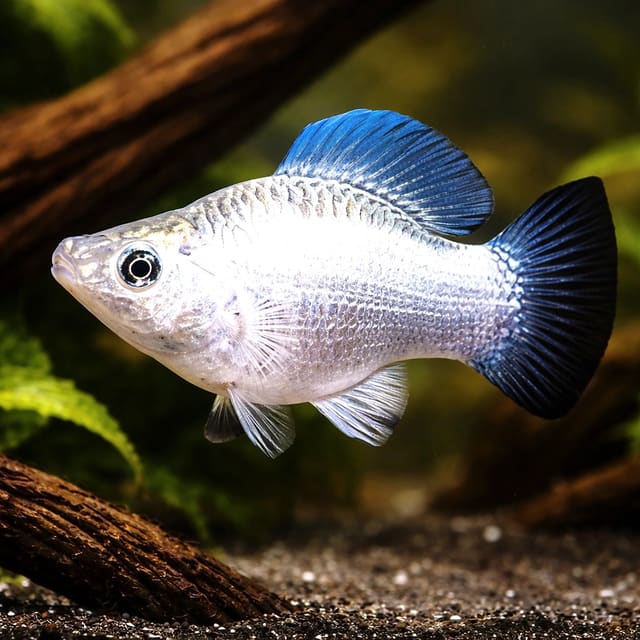
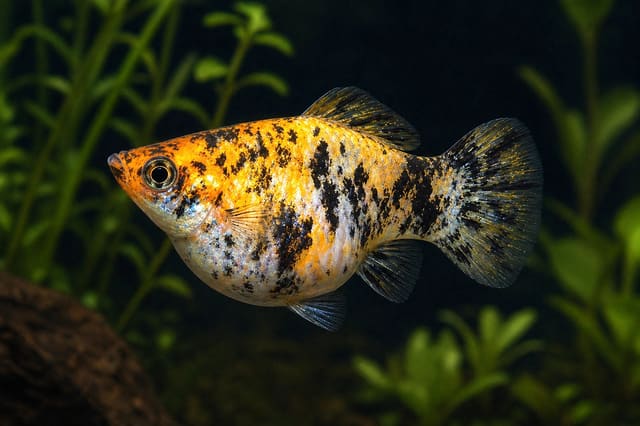
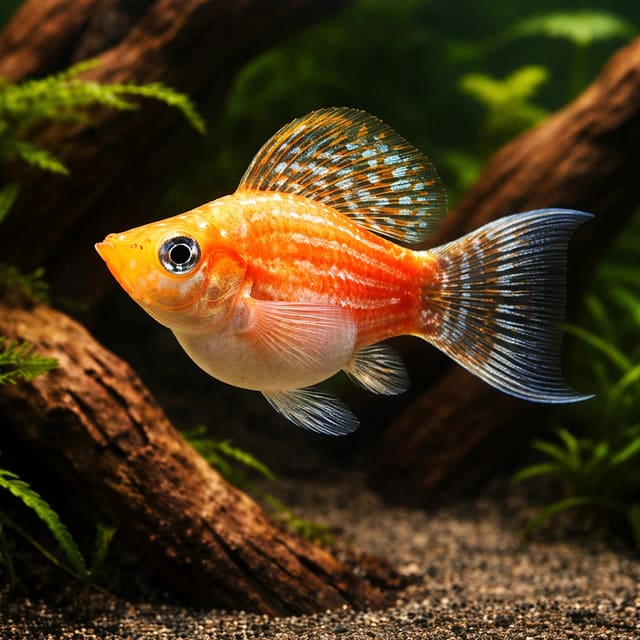
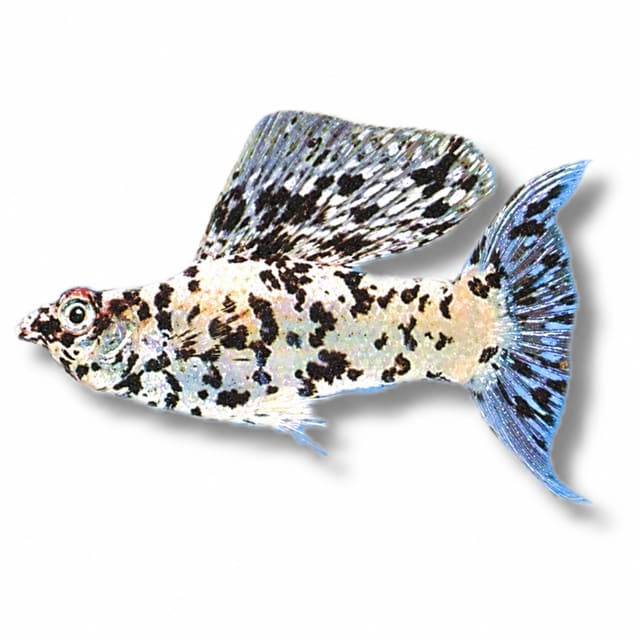
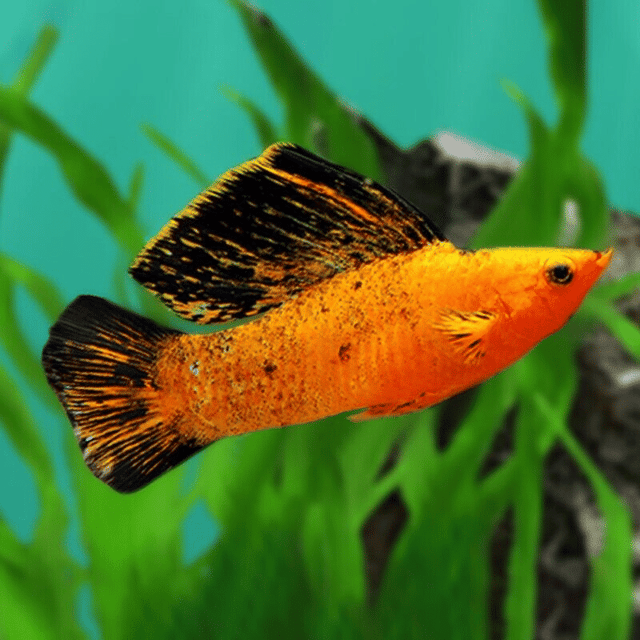
This is an assorted listing, which means colour and pattern are not chosen for you. Sailfin mollies have been selectively bred into several varieties, including albino, black and red forms, and the fish in an assorted batch can differ from each other and from the photographs. The gallery shows orange fish with dark speckling and black-edged dorsal fins as an example of the look this range can include. Gallery images have been digitally enhanced to improve image quality. Natural colour, pattern, size and maturity can vary between live animals.
Both sizes are well short of the 15 cm this species can reach, and both need the same adult-sized aquarium. The practical difference is how much growing is left: a 6–7 cm fish has further to go than a 7–9 cm fish before it approaches adult size. Pick whichever suits your plans, and size the tank for the adult either way.
Sex is guaranteed only when the selected option explicitly states male or female. This Sail-Fin Molly assorted listing has no sex-guaranteed option. That matters when you plan a group, because mollies settle best when females outnumber males; the stocking advice further down this page explains how to handle it.
If your aquarium is smaller than that, or your water is soft, compare the other fish in our molly fish collection before deciding. OATA describes two commonly traded types: mollies that stay below 10 cm, and sailfin mollies that can reach approximately 15 cm.
In the wild, Poecilia velifera lives in fresh and brackish water in south-eastern Mexico, and adults feed on worms, crustaceans, insects and plant matter. FishBase lists the species as Vulnerable on the IUCN Red List. A sailfin kept in the right water, with room to grow its fins and a varied diet, makes a striking centrepiece for a hard-water community aquarium.
Plan the aquarium around a fish that can reach 15 cm. Seriously Fish recommends an aquarium base of 91 × 38 cm (36 × 15 in); at 30 cm deep that holds roughly 104 litres. The OATA care sheet for guppies and mollies recommends at least an 80 litre aquarium for sailfin mollies and adds that the more groups you keep, the larger the volume required. FishBase lists 60 cm as a minimum aquarium length. For a group of adults with fully developed fins, the larger Seriously Fish footprint is the better planning figure.
Size is not only about swimming room. Seriously Fish notes that the development of the males' dorsal fin may be impaired in small aquariums, and that the same can happen in overcrowded ones. If you want to see the sail at its best, give the fish more room than the minimum and stock the tank sensibly. A bigger volume also holds temperature and water quality more steadily, as OATA points out.
Leave a clear stretch of open water along the front or middle of the tank for swimming space, and let the planted areas give females cover from persistent males.
A filter is essential in any aquarium. The RSPCA explains that fish release ammonia, which is toxic, and a working biological filter lets beneficial bacteria convert it to nitrite, which is also toxic, and then to nitrate, which is safer. Seriously Fish suggests a turnover of four to five times the tank volume an hour, which for about 104 litres means a filter rated at roughly 415–520 litres per hour.
To hold 22–28 °C in a tank of that size, Seriously Fish estimates a heater of roughly 100–150 W, assuming the room sits at around 20 °C. A cooler room or a larger tank needs more heating capacity, so check the heater against your own set-up.
If this will be your first aquarium, our step-by-step guide to setting up a tropical fish tank explains how to mature the filter before any fish go in. That maturing period is what keeps ammonia and nitrite at zero once the sailfins start eating.
Hardness is the part of sailfin care that needs the most attention. Seriously Fish states that Poecilia velifera must be kept in moderately hard or harder water with a basic pH, and that the hard minerals, calcium and magnesium, are crucial to its long-term health. Salt is not necessary.
| Temperature | 22–28 °C |
|---|---|
| pH | 7.0–8.5 |
| General hardness | 15–35 dGH |
| Ammonia | Zero |
| Nitrite | Zero |
| Nitrate | No more than 20 mg per litre above your tap water |
The temperature, pH and hardness rows are the aquarium ranges in the Seriously Fish species profile. The ammonia, nitrite and nitrate rows come from OATA's water-quality guidance for guppies and mollies, and are the water-quality targets OATA sets for these livebearers.
General hardness (GH) measures dissolved minerals such as calcium and magnesium, the minerals Seriously Fish describes as crucial for this species. Carbonate hardness (KH) measures how well the water resists changes in pH; OATA suggests 5–15 °dKH for guppies and mollies. Water with healthy carbonate hardness is less prone to drifting acidic between water changes, which matters for a fish that weakens in acidic conditions. Test both values, not just pH, when you check a sailfin tank.
FishBase describes the species' natural environment as 25–28 °C, pH 8.0 and 13–19 dH. Those figures record the warm, hard, alkaline water the fish comes from, not a routine aquarium target, but they point the same way as the Seriously Fish ranges: steady warmth, plenty of dissolved minerals and a pH above neutral.
The OATA sheet covers guppies and mollies together and suggests 20–28 °C, pH 7.0–8.0, general hardness of 8–18 °dH and carbonate hardness of 5–15 °dKH as broad guidance for the group. The softer end of that hardness range sits below the 15 dGH that Seriously Fish gives as the floor for this species, so keep a sailfin towards the harder, more alkaline side of any range you read.
Seriously Fish lists shimmying, fungus and clamped fins as typical signs of a sailfin molly weakening in soft or acidic water. Shimmying is a side-to-side wobbling on the spot. If you see these signs, test pH and general hardness before anything else and correct the water gradually.
FishBase records Poecilia velifera from both fresh and brackish water, and Seriously Fish notes that it can be kept in a brackish set-up with chromides and gobies. For most keepers a hard freshwater community aquarium is the simpler choice, and Seriously Fish is clear that salt is not needed when the water is hard. Only move towards brackish conditions if every fish in the tank suits them.
OATA recommends testing at least once a week so that ammonia and nitrite never build up. Our guide to aquarium water parameters explains what each reading means, and the water parameter matcher lets you compare your own results with the ranges above. If your tap water is soft, find a reliable way to raise and hold general hardness, then test the result over a few weeks before you order. Keep replacement water within the same hardness and pH range as the tank so that routine water changes do not swing conditions.
FishBase places Poecilia velifera in the Yucatán–Quintana Roo and lower Usumacinta–Laguna de Términos systems of Mexico, between about 16° and 21° north. It records the species from both fresh and brackish water and describes it as benthopelagic, a fish that lives near the bottom but also uses open water, in a tropical environment of 25–28 °C.
Three practical lessons follow from that home:
FishBase also lists the species as Vulnerable on the IUCN Red List. Selective breeding has produced many colour varieties for the aquarium, and Seriously Fish observes that wild-type fish behave differently in one notable way: they are much less likely to eat their young than the domestic forms. Whichever variety you keep, the same water, space and diet apply.
Sailfin mollies are omnivores. FishBase records wild adults feeding on worms, crustaceans, insects and plant matter, and Seriously Fish describes a natural diet of zoobenthos and detritus. In the aquarium they accept most foods, whether live, frozen or dried, but they need vegetable matter as well as protein.
Rotating these foods through the week keeps the diet varied. The vegetable portion matters as much as the protein: plant matter is part of the wild diet FishBase records, and Seriously Fish lists vegetable foods as something that should be provided.
When sailfins share the tank with hardy corydoras or loricariid catfish, check at each meal that some food reaches the bottom-dwelling companions rather than being taken entirely in mid-water. Spreading the food across the surface also gives females and smaller fish a fair chance to eat.
OATA advises feeding guppies and mollies only what they can eat within a few minutes, once a day. Take care not to overfeed: uneaten food breaks down and releases toxic waste into the water. Remove any blanched vegetables that are left after the fish lose interest, for the same reason.
Watch body shape as well as appetite. A healthy sailfin looks full-bodied without a swollen belly, and OATA lists a change in body weight or a lack of interest in food among the early signs of a problem. A gravid female carrying young will look fuller, so compare each fish with how it looked a week or two before rather than with its tank mates.
Good husbandry is essential, because OATA notes that guppies and mollies can be stressed by even the smallest amounts of ammonia. Seriously Fish adds that water quality must be maintained rigorously for this species, particularly if the males are to develop their dorsal finnage to its fullest extent.
OATA suggests keeping an eye on changes in these areas, which can reveal a problem before it becomes a real health issue:
For sailfins, add the soft-water signs from Seriously Fish: shimmying, fungus and clamped fins. If you are concerned about any fish, test your water quality first, then contact us with your readings and a description of what you have seen.
Note each weekly test result and water change in a notebook or phone. A slow drift in pH or hardness is easier to spot in a list of numbers than by looking at the tank, and the record shows at a glance whether a change in behaviour followed a change in the water.
Get the aquarium ready before you order. OATA advises checking that ammonia and nitrite are at zero and increasing the number of fish slowly, because the bacteria in a matured filter must grow each time more fish are added and feeding increases. Stocking too many fish too quickly can cause new tank syndrome, where the bacteria cannot keep up with the extra waste and ammonia and nitrite rise to harmful levels.
Every order is hand-packed by our team: fish are bagged in pure oxygen and placed in an insulated poly box, with a heat pack when the weather calls for it. We email the tracking number and your confirmed delivery date, and a courier licensed to carry live fish takes the parcel to your door. Someone must be at the address to receive it, because live fish cannot be left unattended. The full terms are on our delivery and Live Arrival Guarantee page.
Healthy fish, OATA notes, have clear bright eyes, undamaged fins, intact scales and no ulcerations or bumps, and they swim normally. Watch your new sailfins against that picture over the following days, keep up the weekly testing routine, and hold off adding more fish until the readings stay steady. When you do extend the group, add fish in small numbers so the filter bacteria can keep pace.
Adult sailfin mollies are straightforward to sex. Seriously Fish notes that the male is slightly smaller and has both a gonopodium and a large, long sail-like dorsal fin. OATA explains that the gonopodium is a specialised anal fin, which is why adult mollies are easy to sex. Because sex cannot be chosen on this listing, check the anal fin of each fish once they have settled so you know what your group contains.
Young sailfins can be hard to tell apart from Poecilia latipinna. Seriously Fish states that the only reliable method is to count the dorsal fin rays: P. velifera has 18–19, while P. latipinna has only 14. It also notes that some of the selectively bred colour varieties are the result of crossbreeding with P. latipinna.
Seriously Fish describes breeding as relatively difficult compared with some livebearers, though the species reproduces in the usual livebearer fashion and gives birth to live young. Its notes include:
If your group contains both sexes, be ready for gravid females. Decide in advance whether you have space to move them to a separate, heavily planted tank and raise the fry.
Seriously Fish describes Poecilia velifera as a peaceful fish in a community aquarium, with one firm condition: it should only be kept with species that can tolerate hard water. OATA agrees that mollies are generally peaceful and compatible with many other fish, but adds that sailfin mollies should not be kept with timid fish species, so choose confident, peaceful companions.
| Swordtails and platies | Other livebearers named as good hard-water companions |
|---|---|
| Some gouramis | Suitable when the kind you choose is happy in hard water |
| Hardy corydoras and loricariid catfish | Named as good choices; pick hardy kinds |
| Some barbs and tetras | Suitable when the kind you choose tolerates hard, alkaline water |
| Chromides and gobies | Only in a brackish aquarium where every fish suits brackish conditions |
All of these suggestions come from the Seriously Fish compatibility notes for this species. Check the adult size and water needs of each companion before buying, because a kind of fish named here still has to match your tank.
Seriously Fish advises against keeping other mollies with Poecilia velifera because they may crossbreed, and it notes that some domestic sailfin varieties already come from crosses with P. latipinna. If you already keep common or short-finned mollies, give the sailfins an aquarium of their own rather than mixing them. Swordtails and platies are not mollies, and Seriously Fish names them as good livebearer companions for this species.
Males can be quite vigorous in their pursuit of mates, so Seriously Fish recommends keeping this species in trios of two females to a single male. OATA gives the same advice for guppies and mollies: keep at least three together, two females to each male, to reduce stress on the females and other tank inhabitants, and add more fish in that ratio if the tank has room.
Since the sex of each fish is not selected here, treat the ratio as a goal rather than something fixed at the point of purchase. Once the fish have settled and the males show their gonopodium and sail, count males and females. If males outnumber females, add fish until the females are in the majority, and make sure the planted areas give females space to rest.
Keep an eye on the total as well. Overcrowding can hold back the males' dorsal fins in the same way as a small tank, and OATA reminds keepers that more fish need more volume. A modest group in a big aquarium shows off the sails far better than a crowded one.
A sailfin molly is a poor fit for an aquarium under 80 litres, for soft or acidic water, or for a quiet tank built around shy species. In those cases the fish would struggle and its companions might too, so it is better to choose a species that suits the aquarium you already have.
FishBase records a maximum length of 15 cm, and OATA describes sailfin mollies reaching approximately 15 cm. Plan the aquarium for that adult length rather than for the size of the fish when it arrives.
Seriously Fish recommends an aquarium base of 91 × 38 cm, which holds about 104 litres at 30 cm deep, and OATA recommends at least 80 litres for sailfin mollies. More room helps males develop their full dorsal fin, which can be held back in small or overcrowded tanks.
Keep at least three, with about two females to each male, as both OATA and Seriously Fish advise, because males pursue females vigorously. Larger groups can be built in the same ratio if the tank has room.
It can suit a careful newcomer who already has a large, mature aquarium with hard, alkaline water. Seriously Fish considers it more difficult to maintain than its relatives in the genus Poecilia, because water quality must be kept rigorously and soft or acidic water weakens it quickly.
It is an omnivore. Offer a quality flake or granule with a high algae content, vegetable matter such as blanched spinach, cucumber or vegetable flake, and small live or frozen foods such as daphnia or small bloodworm. OATA advises feeding only what is eaten within a few minutes, once a day.
Seriously Fish gives 22–28 °C, pH 7.0–8.5 and a general hardness of 15–35 dGH for this species. Hardness matters most: the calcium and magnesium in hard water are crucial to its health, and salt is not necessary.
No. Seriously Fish describes them as peaceful community fish. The main pressure in the tank comes from males chasing females to mate, which is why a ratio of two females to each male is recommended, and OATA advises against keeping them with timid species.
Choose peaceful fish that tolerate hard water, such as swordtails, platies, some gouramis, hardy corydoras or loricariid catfish, and some barbs and tetras. Do not add other molly species, as they may crossbreed.
They are hand-packed in bags of pure oxygen inside an insulated poly box, with a heat pack when the weather calls for it, and carried by a licensed live-animal courier with tracking. Someone must be in to receive the parcel. Film a continuous unboxing video from the sealed parcel to the fish still in the bag, then float the bag for 20–30 minutes before releasing them; our Live Arrival Guarantee needs that video for any claim.
These public sources informed the care advice on this page:
No reviews for this item yet. Bought one? Honest reviews only, good or bad.
What customers say about ordering from us
Easy website plenty of info on fish your buying great to pick a time slot
TRACEY DURRANT · 7 Oct 2026
Got some lovely fish thank you
Kevin Mackie · 7 Oct 2026
Reviews of our shop, collected by Judge.me, an independent third-party review collector. Newest first.