Easy
Gold Molly (Poecilia sphenops)
21–28°C · pH 7.5–8 · 81L
£4.99

The Marble Sailfin Molly (Poecilia velifera) is a poeciliid livebearer from south-eastern Mexico that reaches 15 cm. It suits intermediate keepers with a 91 × 38 cm aquarium base and approximately 104 litres; the overlap of Seriously Fish and OATA group guidance is 22–28°C, pH 7.0–8.0 and 15–18 dGH. OATA’s group guidance suggests at least three; sold individually at approximately 6–7 cm.
Adult size is the maximum length this species reaches at full maturity (scientific sources). The livestock you receive will be younger and smaller. Product-photo provenance and any image-specific limitations are stated on the listing.
Poecilia velifera
Save when buying multiple fish. Each quantity is one fish; sex and pair formation are not guaranteed unless the selected variant explicitly states them.
The Marble Sailfin Molly (Poecilia velifera) is a poeciliid livebearer from south-eastern Mexico that reaches 15 cm. It suits intermediate keepers with a 91 × 38 cm aquarium base and approximately 104 litres; the overlap of Seriously Fish and OATA group guidance is 22–28°C, pH 7.0–8.0 and 15–18 dGH. OATA’s group guidance suggests at least three; sold individually at approximately 6–7 cm.
Adult size is the maximum length this species reaches at full maturity (scientific sources). The livestock you receive will be younger and smaller. Product-photo provenance and any image-specific limitations are stated on the listing.
Maintain these water conditions for optimal health and vibrant colors
The Marble Sailfin Molly (Poecilia velifera) is a poeciliid livebearer from the Yucatán–Quintana Roo and lower Usumacinta–Laguna de Términos systems of south-eastern Mexico. It reaches 15 cm and suits an intermediate keeper prepared to maintain hard, alkaline water, rigorous water quality and enough open space for a comparatively large molly.
FishBase records the species from freshwater and brackish environments and gives a maximum length of 15 cm. Its wild adults eat worms, crustaceans, insects and plant matter, which explains the need for a varied omnivorous aquarium diet rather than one food alone. FishBase also records the wild species as Vulnerable; that status describes its natural populations rather than the origin of an ornamental animal.
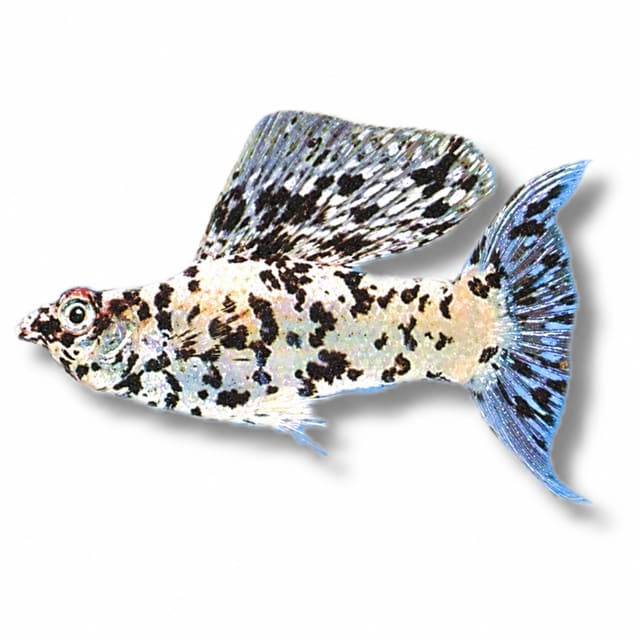
“Marble Sailfin Molly” is the trade-form name attached to this fish. The decisive identity for care planning is Poecilia velifera, a sailfin molly that becomes substantially larger than many familiar livebearers. Its eventual length, deep body and raised dorsal fin all favour a broad aquarium footprint instead of a short decorative tank.
This is a good choice when you already understand biological filtration, can measure pH and general hardness, and want an active community fish for mineral-rich water. It is a poor match for a new, chemically unstable aquarium, a soft acidic community or a plan based only on its dispatch length. The intermediate rating is our store assessment because this species combines demanding mineral requirements with a relatively large adult size and a need for careful social planning.
Use an aquarium base of 91 × 38 cm with approximately 104 litres as the species planning point, and choose more room when the group or community adds extra adult fish. Seriously Fish gives that footprint and volume for Poecilia velifera, alongside a 15 cm adult length. Its advice also favours an aquarium as large as possible because cramped or overcrowded conditions may impair development of the males’ dorsal fins.
Keep the aquarium at 22–28°C, pH 7.0–8.0 and 15–18 dGH. These routine values are the overlap of the Seriously Fish species guidance and OATA’s guppy and molly guidance. OATA’s figures are group-level values, not a species-specific optimum, and its social guidance suggests keeping at least three mollies, using two females to each male where sex is known.
| Suits | Not suited to |
|---|---|
| A hard, alkaline aquarium maintained within 22–28°C, pH 7.0–8.0 and 15–18 dGH | Soft or acidic water, where the fish may weaken rapidly |
| A base of 91 × 38 cm with approximately 104 litres or more | A cramped or overcrowded aquarium |
| A planned group or compatible hard-water community | Timid fish or species that cannot tolerate hard water |
| An intermediate keeper who tests water and maintains a mature filter | An immature or unfiltered aquarium |
Treat these numbers as one connected plan. A suitable volume cannot compensate for soft water, and correct hardness cannot compensate for crowding. Confirm the adult stock list, footprint, water chemistry and filter capacity together before introducing the fish.
Each purchase supplies one Marble Sailfin Molly at approximately 6–7 cm. That measurement is the dispatch size, not the adult size or an indication of age. Plan from the 15 cm adult figure even though the fish supplied is smaller.
Sex is guaranteed only when the selected option explicitly states male or female. This Marble Sailfin Molly listing has no sex-guaranteed option. Build any social plan so it remains workable if the eventual male-to-female balance differs from the preferred ratio, and provide enough cover and space to separate fish if courtship becomes persistent.
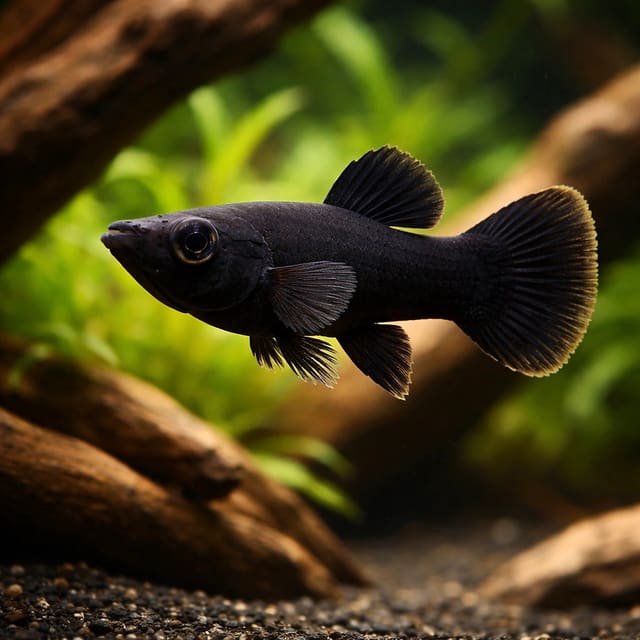
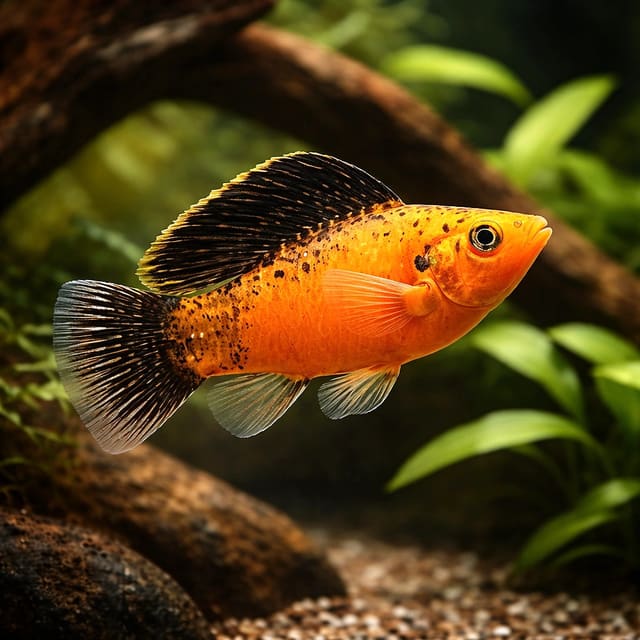
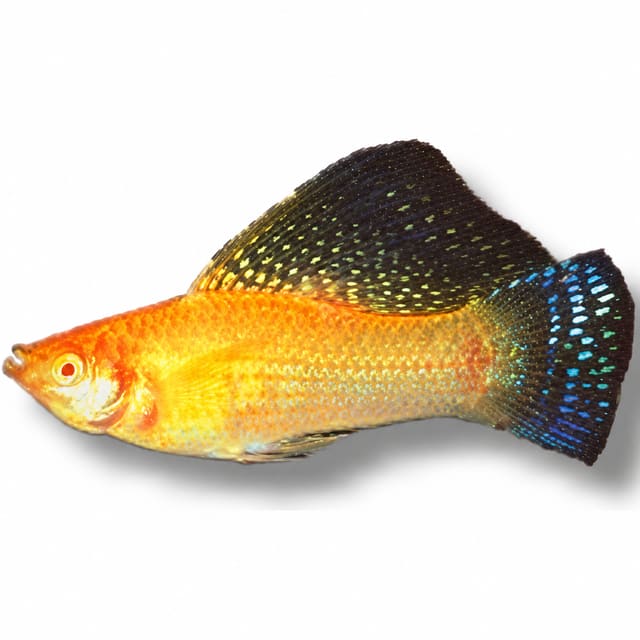
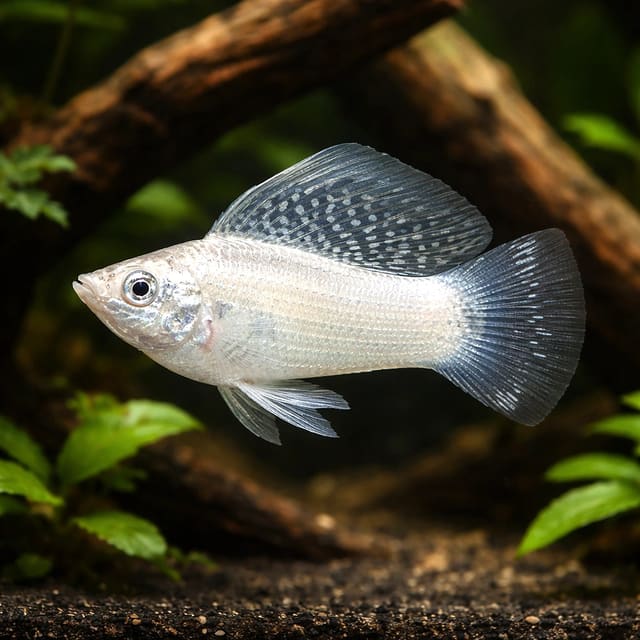
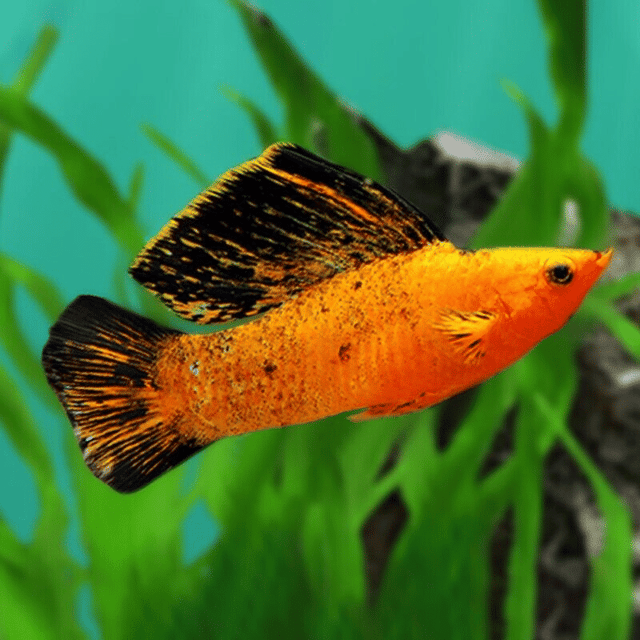
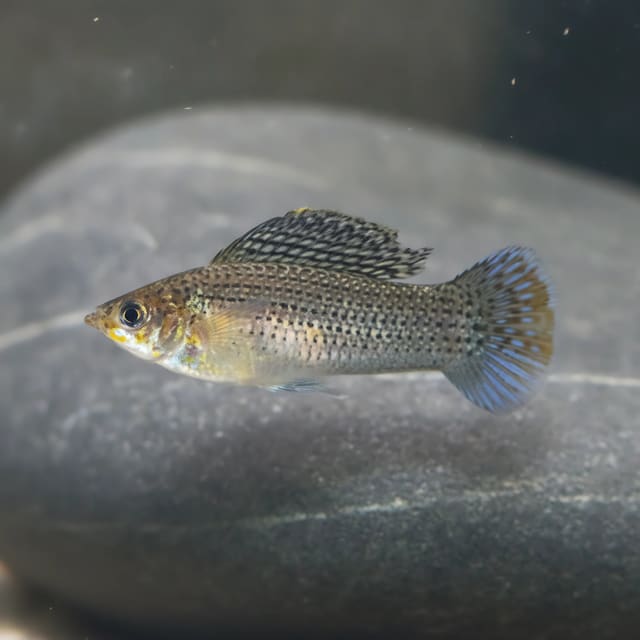
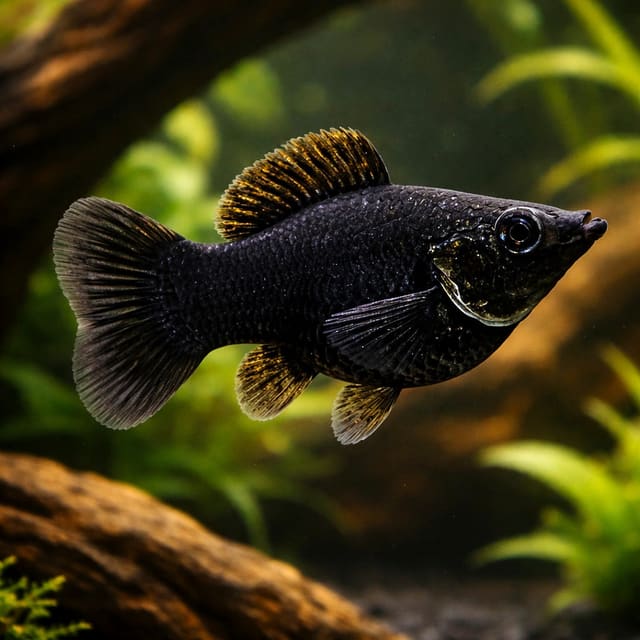
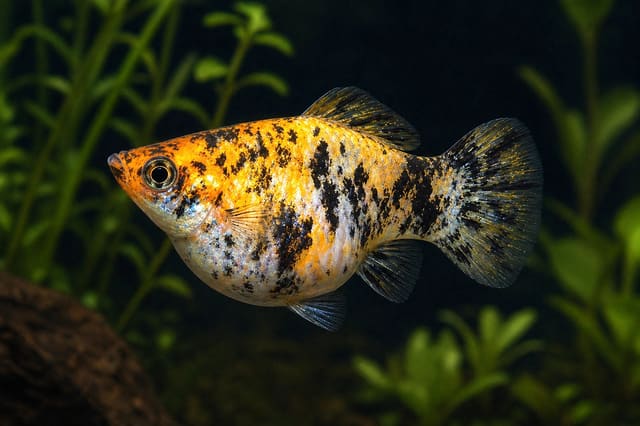
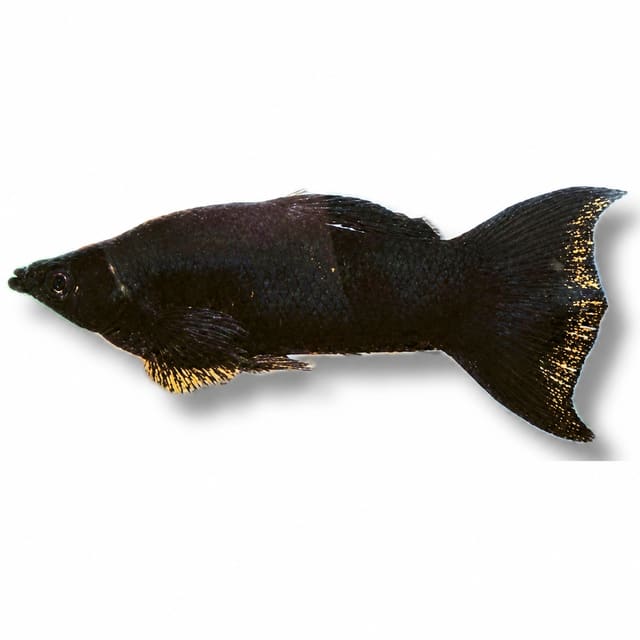
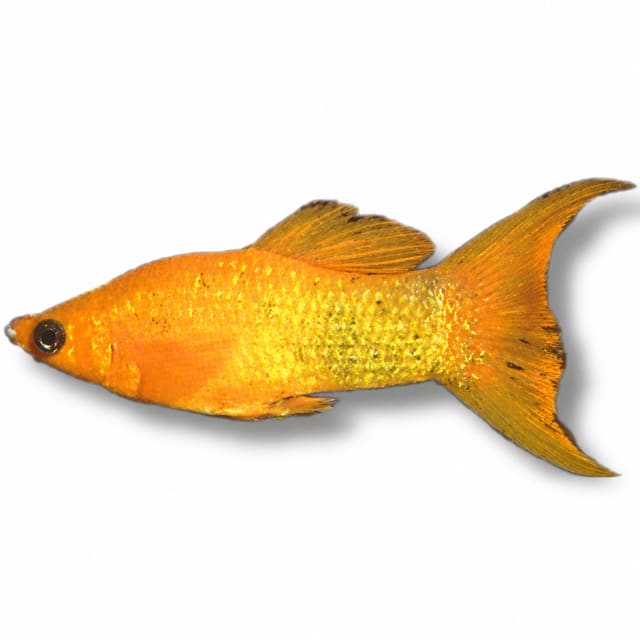
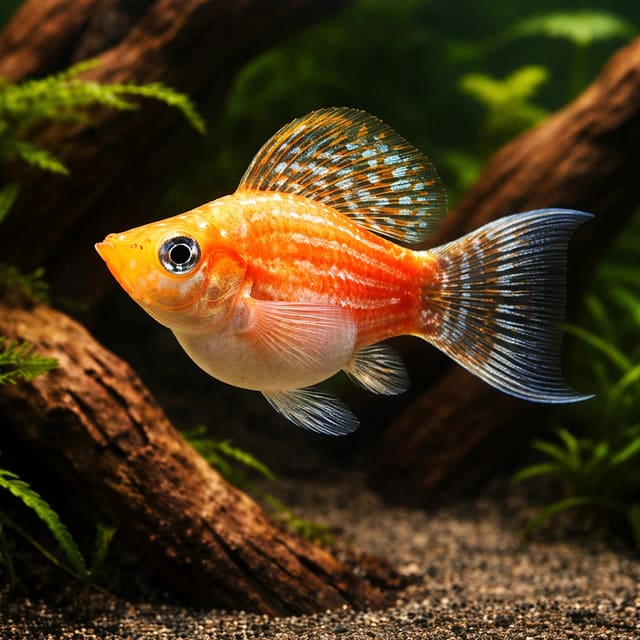
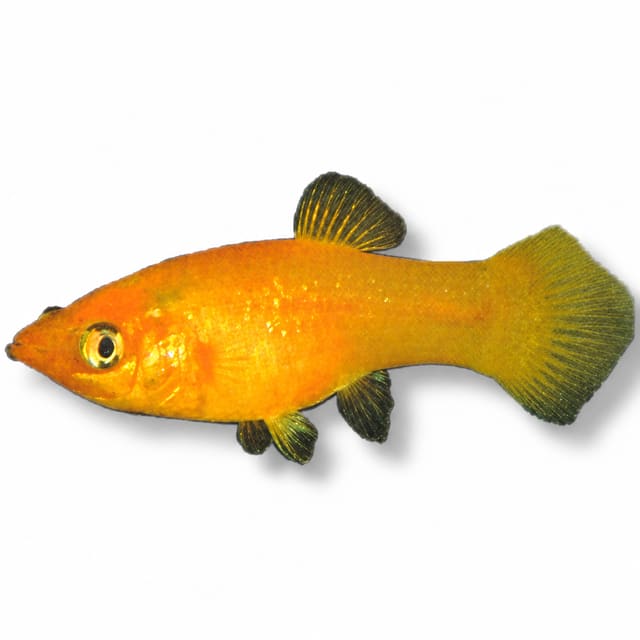
Some gallery images have been digitally enhanced to improve image quality. They show the listed type of animal rather than guaranteeing the exact markings of the individual supplied, so natural colour and pattern can vary. One gallery scene shows two animals, but the number pictured does not change the purchase unit. The images show representative marble-patterned sailfin forms rather than the exact individual supplied.
If you are comparing forms rather than building a shared aquarium, browse our current molly fish collection. A shared category does not make every molly compatible, because other mollies should be avoided with this species where crossbreeding could occur.
Start with a base measuring 91 × 38 cm and approximately 104 litres. Floor area and swimming length matter because Poecilia velifera is active, reaches 15 cm and needs both open water and planted shelter. A taller aquarium with a shorter base does not reproduce the same usable footprint.
Larger is the safer direction when keeping the OATA-suggested group of at least three or adding companions. The 104-litre figure is a species planning point, not a promise that every combination of three mollies and community fish will fit. Adult body size, the final sex balance, companion numbers, decoration and the filter’s biological capacity all affect how much additional space is needed.
A first aquarium must be matured before livestock is added. Follow our first tropical aquarium guide to prepare the filter and confirm that ammonia and nitrite remain at zero. Do not use this fish to test whether a newly installed filter has developed enough beneficial bacteria.
At approximately 6–7 cm, the animal may look comfortable in a smaller space, but that observation says nothing about permanent housing. Set up the adult aquarium before arrival so the fish does not need to pass through a sequence of undersized homes.
Keep this molly at 22–28°C, pH 7.0–8.0 and 15–18 dGH. That range is the overlap of the Seriously Fish species guidance and OATA’s group guidance, so all three routine values sit within both. Seriously Fish gives 22–28°C, pH 7.0–8.5 and 15–35 dGH for Poecilia velifera; OATA gives 20–28°C, pH 7.0–8.0 and 8–18 dGH for guppies and mollies.
FishBase records the wild environment at 25–28°C, pH 8.0 and 13–19 dH. Those environmental figures describe where the species has been recorded, while the routine aquarium range above remains inside the wider species husbandry range. Avoid abrupt corrections: stability within the stated aquarium range is preferable to repeatedly pushing the water towards a single reading.
| Measurement | Keeper’s action |
|---|---|
| Temperature | Hold 22–28°C with a thermostatically controlled heater and check the reading regularly. |
| pH | Keep 7.0–8.0 and investigate any repeated movement rather than dosing for a quick correction. |
| General hardness | Maintain 15–18 dGH so calcium and magnesium remain within the routine range. |
| Carbonate hardness | Monitor its role in pH stability; OATA’s group guidance gives 5–15 dKH. |
| Ammonia and nitrite | Keep both at zero mg per litre. |
Seriously Fish warns that soft or acidic conditions can weaken this species rapidly, with shimmying, fungus or clamped fins among the possible signs. Salt is not necessary for routine freshwater care: calcium and magnesium are the important minerals for long-term health. Do not use sodium chloride as a substitute for an appropriate general-hardness value.
Test the aquarium and the replacement water rather than judging hardness from pH alone. Our water chemistry guide explains what the measurements mean, while the water matcher helps compare measured values with the range above.
Use a mature biological filter continuously. At approximately 104 litres, Seriously Fish recommends turnover of four to five times the aquarium volume each hour, corresponding to a filter rated around 415–520 litres per hour. Account for the reduction in real flow caused by media, pipework and accumulated debris, then check that water still circulates through the aquarium without eliminating calm resting areas.
The RSPCA explains that fish release toxic ammonia and that a working biological filter supports bacteria which convert ammonia to nitrite and then to the safer nitrate. OATA requires ammonia and nitrite to remain at zero mg per litre and advises that nitrate should not exceed 20 mg per litre above the normal tap-water level.
If the filter needs cleaning, do not run it under the tap. Rinse it lightly in aquarium water removed during the partial water change. This protects more of the beneficial bacterial population than washing the media in chlorinated or chloraminated tap water.
A clear aquarium can still contain ammonia or nitrite, so visual appearance never replaces testing. If either becomes detectable, pause additions to the aquarium, check the filter and feeding load, and restore safe water through appropriately matched partial changes. A rising nitrate trend calls for a review of stocking, food quantity and maintenance frequency rather than a larger single clean after weeks of neglect.
Record results in a simple log. Temperature, pH, hardness and nitrogen readings become more useful when you can see direction over time, especially after a fish is added or tap-water chemistry changes.
Create a heavily planted aquarium with some floating cover and generous open water. Seriously Fish recommends that combination for Poecilia velifera, while OATA advises gravel or sand and live plants where practical. Artificial plants and suitable ornaments can provide shelter when live planting is not used.
Arrange cover around the sides and rear so the central footprint remains usable. This gives the fish room to cruise while creating places where an individual can move out of another fish’s immediate line of approach. Floating growth should still leave open surface areas and should not obstruct the filter outlet.
| Area | What to provide |
|---|---|
| Open water | A clear route long enough for an adult 15 cm molly to swim, turn and pass companions. |
| Side and rear areas | Dense planting or shelter that divides the aquarium visually without crowding it. |
| Surface | Some floating cover alongside open water for circulation and feeding access. |
| Substrate | Aquarium gravel or sand maintained as part of the weekly cleaning routine. |
| Equipment | A layout that allows filter inspection and does not create a trap behind pipes or ornaments. |
Avoid overcrowding with either fish or decoration. Seriously Fish notes that a male’s dorsal development may be impaired in small or overcrowded aquaria, making space an aspect of physical development as well as swimming comfort.
Review the aquascape when plants mature. Growth that initially offered cover can eventually consume open water or reduce filter circulation. Trim or reposition it while retaining the shelter that helps fish move away from persistent attention.
Feed once a day, offering only what the fish can eat within a few minutes. Remove uneaten food before it breaks down, because overfeeding increases the waste that the biological filter and weekly maintenance must process.
The wild diet recorded by FishBase includes worms, crustaceans, insects and plant matter. Seriously Fish likewise describes the species as omnivorous, feeding on zoobenthos and detritus, and advises including vegetable matter. Build the aquarium diet around quality dried food and an algae-based food, then rotate suitable plant and animal items for variety.
| Food type | How to use it |
|---|---|
| Quality flake or granule | Use an appropriately sized complete food as part of the regular ration. |
| Algae-based prepared food | Include it regularly to maintain the plant component of this omnivorous diet. |
| Blanched spinach or cucumber | Offer a controlled portion as vegetable variety and remove any uneaten remainder. |
| Daphnia, small bloodworm or tubifex | Use small live or frozen items as animal-food variety rather than the entire ration. |
Watch the whole group during the short feeding period. Every fish should approach food and swallow normally. Reduced intake, no interest in food or a sudden change in body condition is a reason to test the water and inspect behaviour rather than adding a larger meal.
Adjust the portion, not the daily schedule, when leftovers remain. A ration that disappears in a few minutes is the stated limit; repeated extra pinches undermine the water-quality plan even if the fish continue to respond. If a vegetable portion remains after feeding, remove it before it softens and adds organic waste.
Natural browsing can occupy the fish between meals, but it does not replace a balanced ration. The species’ recorded diet spans animal and plant matter, so relying on incidental aquarium growth alone would omit important nutritional variety.
Plan for an adult length of 15 cm. FishBase records 15 cm total length, and Seriously Fish also uses 15 cm standard length when setting out the aquarium footprint. The dispatch length of approximately 6–7 cm is therefore only a starting measurement.
OATA suggests keeping at least three guppies or mollies for companionship. Where sex is known, its stated ratio is two females to each male, and more fish can be added in the same ratio. Seriously Fish similarly recommends trios of two females to one male because males can be vigorous in pursuing mates.
The sex balance cannot be chosen through this offer, so prepare a group plan that tolerates a different eventual ratio. Useful safeguards are a larger footprint, planted cover and the ability to separate an individual if pursuit becomes continuous. Do not assume that purchasing three animals creates the advised trio.
Males develop a gonopodium and a large, long, sail-like dorsal fin; OATA describes females as having a paddle-shaped anal fin. Those features can inform later group management, but they do not change the purchase disclosure.
This livebearer can produce substantial broods. Seriously Fish gives a gestation of four to eight weeks and says up to 200 young may be produced, although 20–60 is more common. Anyone keeping mixed sexes should plan space, filtration and responsible homes for fry before numbers increase.
Prepare the mature aquarium before the parcel arrives. Confirm 22–28°C, pH 7.0–8.0, 15–18 dGH, zero ammonia and zero nitrite, and make sure the filter is running normally. The arrival procedure then begins before the parcel is opened.
These steps come from the Tropical Fish Co delivery and Live Arrival Guarantee policy. The fish is hand-bagged in pure oxygen and placed in an insulated box, with a heat pack used when the weather calls for it.
OATA advises checking the water before introducing fish and adding livestock slowly so the filter bacteria can adjust to the increased waste and feeding. Observe swimming, breathing, colour, appetite, body condition, hiding and fin condition each day. Test the water promptly if behaviour changes.
Shimmying, clamped fins or fungus can accompany unsuitable soft or acidic conditions in this species. First check temperature, pH, general hardness, ammonia and nitrite, then correct environmental changes gradually. For other health changes, test the water and seek guidance rather than choosing a treatment from appearance alone.
At the end of the first week, complete the normal tests and at least the weekly 25% water change. Continue the same measured routine through the first month instead of responding to every minor variation with a major clean or abrupt chemistry adjustment.
Keep the Marble Sailfin Molly only with species that can tolerate hard water. Seriously Fish describes it as peaceful in a community aquarium and names swordtails and platies as good choices, provided the complete aquarium meets the adult space and social needs of every fish.
Avoid other mollies because they may crossbreed. Avoid timid fish because OATA specifically advises that sailfin mollies should not be kept with them. Species that require soft or acidic water also fail the central compatibility test, even if their temperament appears peaceful.
| Candidate | Decision |
|---|---|
| Swordtails and platies | Suitable after confirming the exact temperature, adult size, group needs and remaining footprint. |
| Some gouramis | Screen the particular species for hard-water tolerance and compatible temperature. |
| Hardy corydoras or loricariids | Consider only species that tolerate the same hardness and pH. |
| Some barbs and tetras | Assess the exact species; the broad group name alone is not enough. |
| Other mollies | Avoid because they may crossbreed. |
| Timid fish | Avoid. |
Suitability within gouramis, corydoras, loricariids, barbs and tetras remains a species-by-species decision. Check water chemistry first, then adult size, activity, feeding access, social structure and the combined use of the aquarium footprint.
Do not turn a list of possible companions into a target stocking list. One carefully selected group may use the aquarium more effectively than several species competing across the same open water. The approximately 104-litre planning point does not reserve space for an unlimited community.
The species is peaceful in a suitable community, but males can be vigorous in their pursuit of females. Brief display and approach behaviour must not become continuous pressure that prevents another fish from eating, resting or using open water.
Fin damage, clamped fins, repeated hiding, appetite loss or a fish remaining at the surface or bottom calls for action. Test water quality first, then observe which fish initiates each interaction. Separate animals when continued contact is causing harm rather than waiting for visible condition to deteriorate.
A candidate that passes only the temperature test has not passed compatibility. Hardness is especially important because this molly weakens in unsuitable soft or acidic water, while a soft-water companion should not be forced into the opposite compromise.
For a stocking and compatibility assessment, contact us with the aquarium dimensions, measured temperature, pH and dGH, current livestock and number of proposed fish. Those details allow a whole-aquarium decision instead of a judgement based on common names alone.
Review the group again as the mollies approach 15 cm. A combination that appeared spacious around smaller fish can become crowded as adult body mass and social activity increase. Reduce pressure by changing the stock plan, not by allowing permanent pursuit or impaired feeding to become normal.
The Marble Sailfin Molly reaches 15 cm. FishBase records 15 cm total length, so plan the permanent aquarium around that adult figure rather than the approximately 6–7 cm dispatch length.
Use a base measuring 91 × 38 cm with approximately 104 litres as the species planning point. Seriously Fish advises an aquarium as large as possible, and a group or community may need more room according to its full adult stock.
OATA’s group guidance suggests keeping at least three mollies, using two females to each male where sex is known. Build the plan around at least three, but do not assume that buying three through an offer without a sex guarantee creates that ratio.
The Marble Sailfin Molly is rated intermediate by Tropical Fish Co. It suits a keeper who can maintain a mature filter, hard alkaline water, a 91 × 38 cm footprint and approximately 104 litres, while monitoring a planned social group.
Feed once daily with only what it can eat within a few minutes. Use quality dried and algae-based foods, include vegetable matter such as blanched spinach or cucumber, and add small live or frozen foods such as daphnia, bloodworm or tubifex for variety.
Keep Poecilia velifera at 22–28°C, pH 7.0–8.0 and 15–18 dGH. These values are the overlap of the Seriously Fish species guidance and OATA’s group guidance; keep ammonia and nitrite at zero mg per litre.
It is described as a peaceful community fish, but males can vigorously pursue females. Provide space and cover, watch for damaged or clamped fins, persistent hiding or missed meals, and separate fish when continued pursuit is causing harm.
Consider swordtails, platies, some gouramis, hardy corydoras or loricariids, and some barbs or tetras only after checking that the exact species tolerates hard water and shares the temperature range. Avoid other mollies because they may crossbreed, and avoid timid fish.
Start filming the sealed parcel before opening it, continue until the fish is visible inside the sealed bag, then float the bag for 20–30 minutes before releasing the fish. Tropical Fish Co packs it in pure oxygen inside an insulated box and uses a heat pack when the weather calls for it.
No reviews for this item yet. Bought one? Honest reviews only, good or bad.
What customers say about ordering from us
I have a small group of long finned mountain minnows. So was delighted to be able to order ten of this variety to increase the genetics in my tank . The ones I recieved are healthy but it’s to early to give a verdict on wether they are of a long finned type since they are small currently.
Gordon Walker · 23 Sept 2026
100% success travel and "installation". Pleased with quality of purchase. The Siamese fighter a bit "shy" so have not yet seen him at his best yet but looking good. Happy customer. GG
George E Garratt · 21 Sept 2026
Reviews of our shop, collected by Judge.me, an independent third-party review collector. Newest first.