Easy
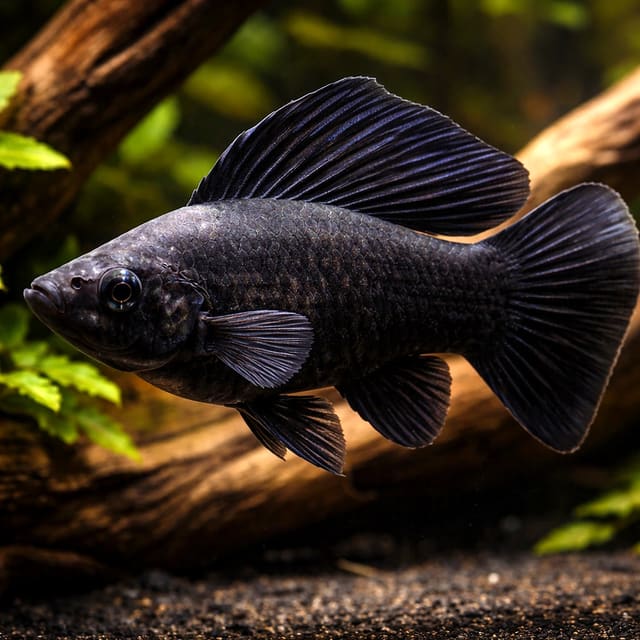
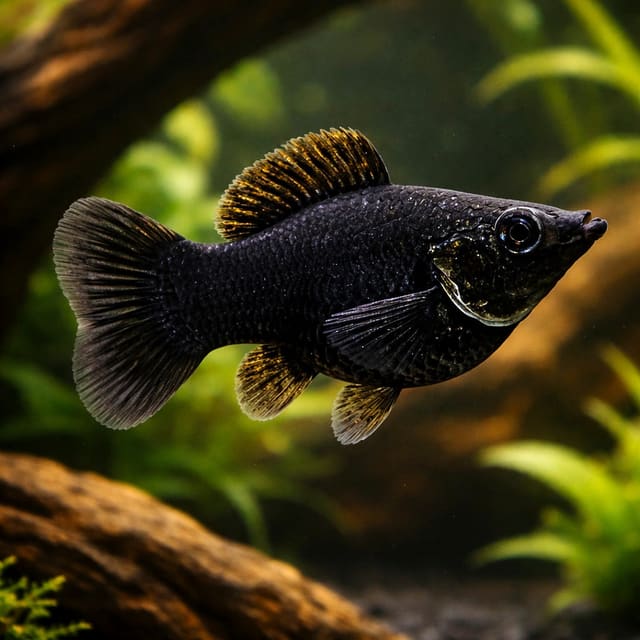
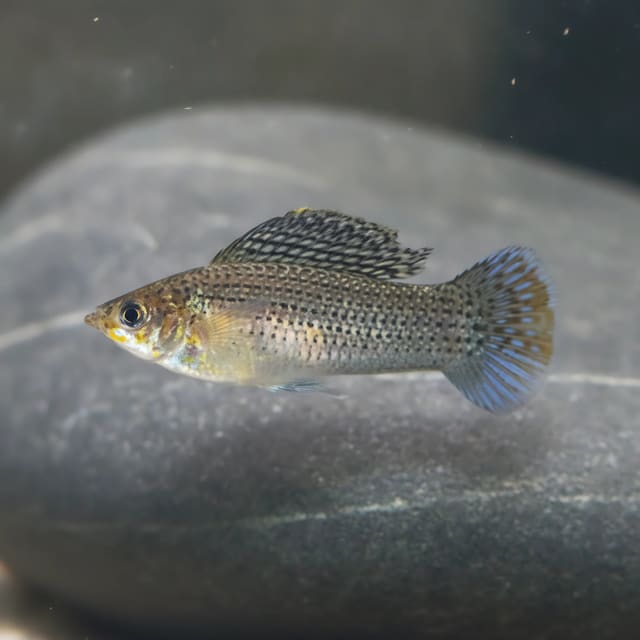
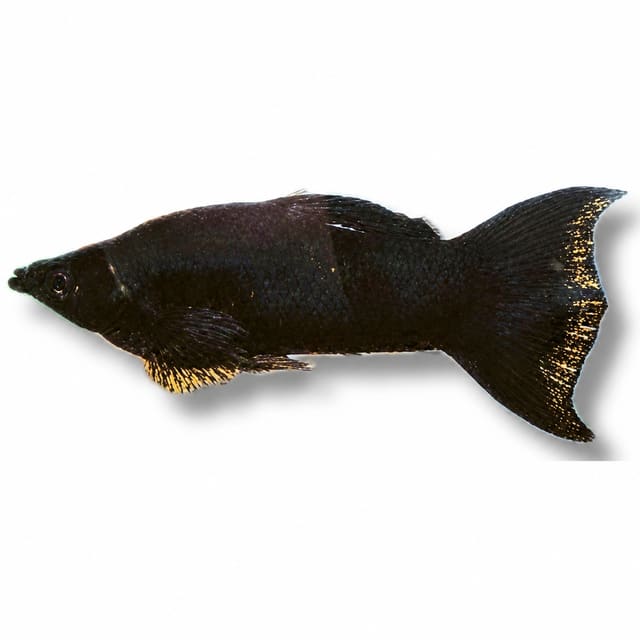
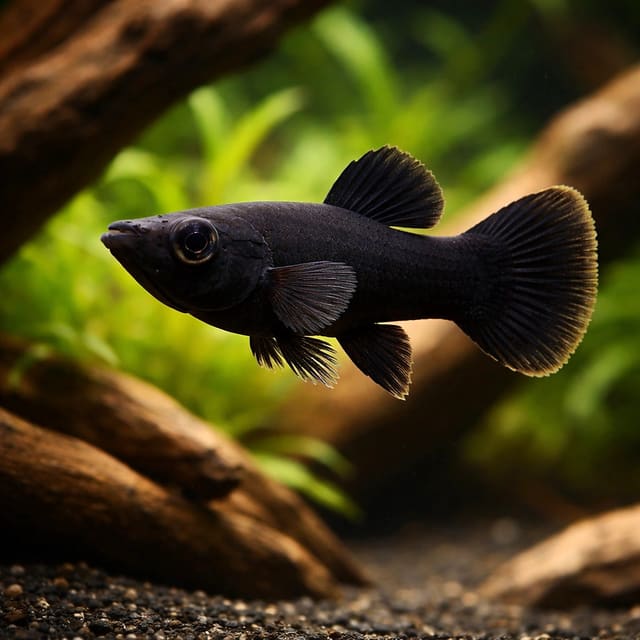
Black Molly (Poecilia sphenops black molly)
21–28°C · pH 7–8.5 · 81L
£3.29
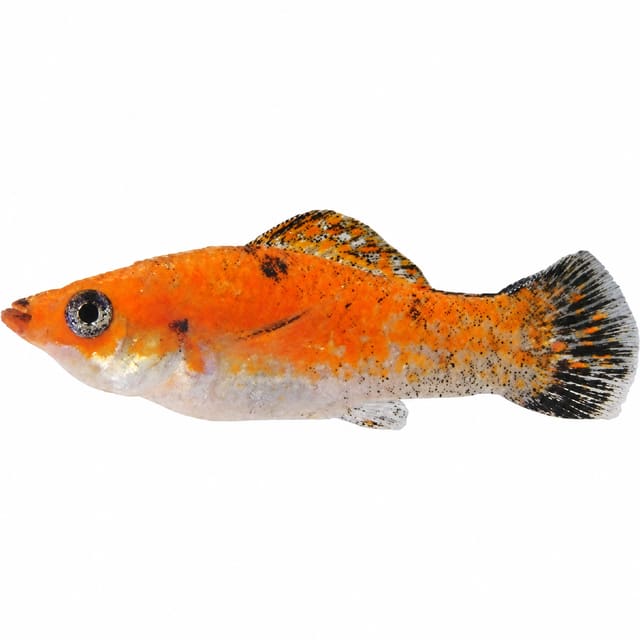
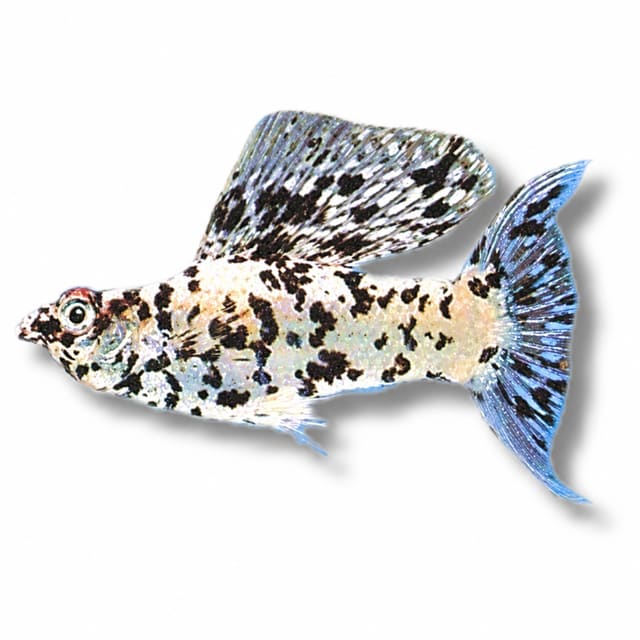
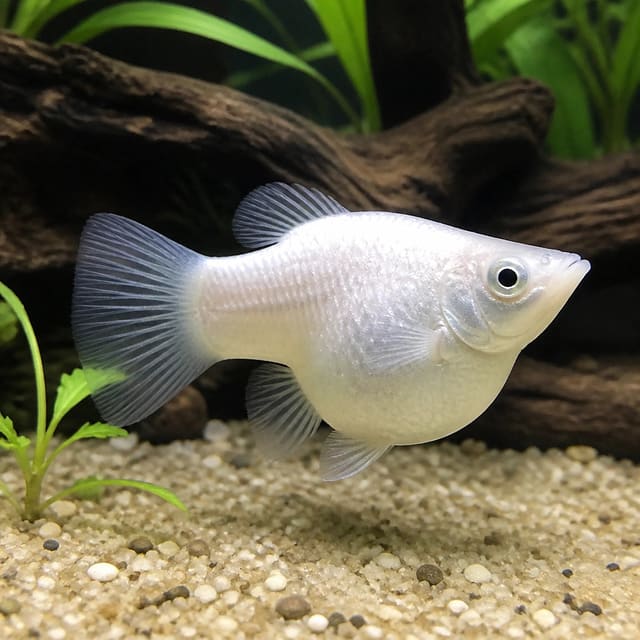
Poecilia latipinna balloon calico marble golden molly is a rounded domestic sailfin molly form supplied as one 2.5 cm fish, with no sex guarantee. It needs a mature hard-water aquarium, a plant-rich diet and attentive long-term care because the balloon body shape can carry additional welfare risks.
Adult size is the maximum length this species reaches at full maturity (scientific sources). The livestock you receive will be younger and smaller. Product-photo provenance and any image-specific limitations are stated on the listing.
Poecilia latipinna
Shoaling fish: kept in a group they feel safer, stay calmer and show their best colour.
Poecilia latipinna balloon calico marble golden molly is a rounded domestic sailfin molly form supplied as one 2.5 cm fish, with no sex guarantee. It needs a mature hard-water aquarium, a plant-rich diet and attentive long-term care because the balloon body shape can carry additional welfare risks.
Adult size is the maximum length this species reaches at full maturity (scientific sources). The livestock you receive will be younger and smaller. Product-photo provenance and any image-specific limitations are stated on the listing.
Maintain these water conditions for optimal health and vibrant colors
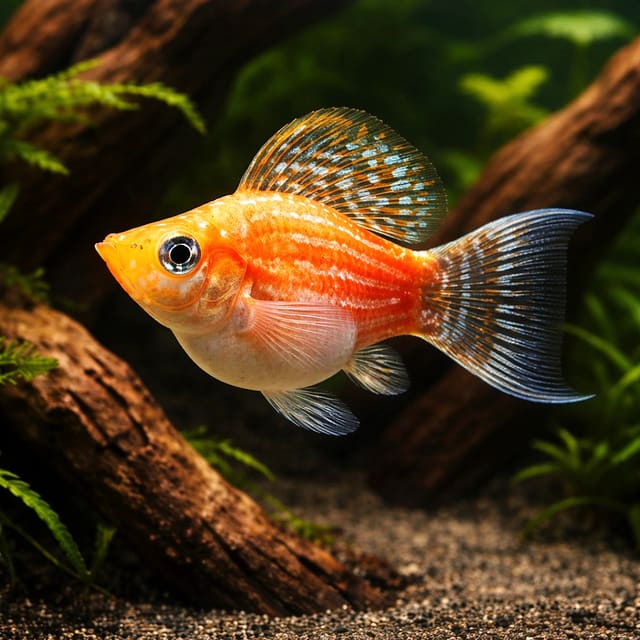
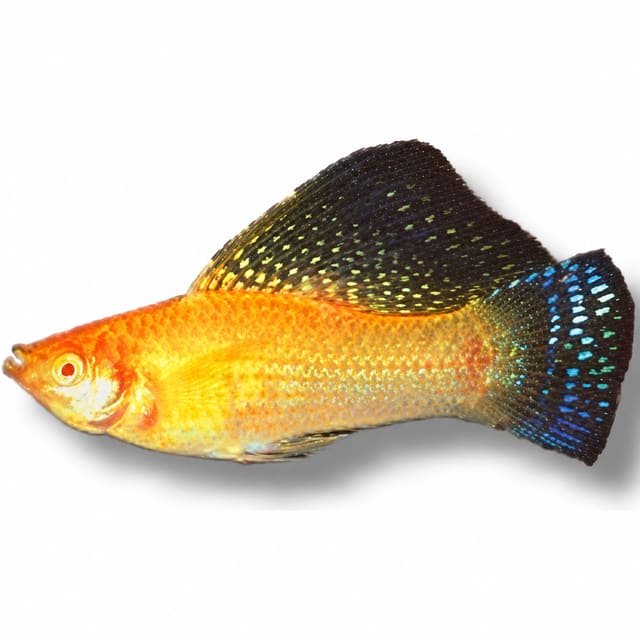
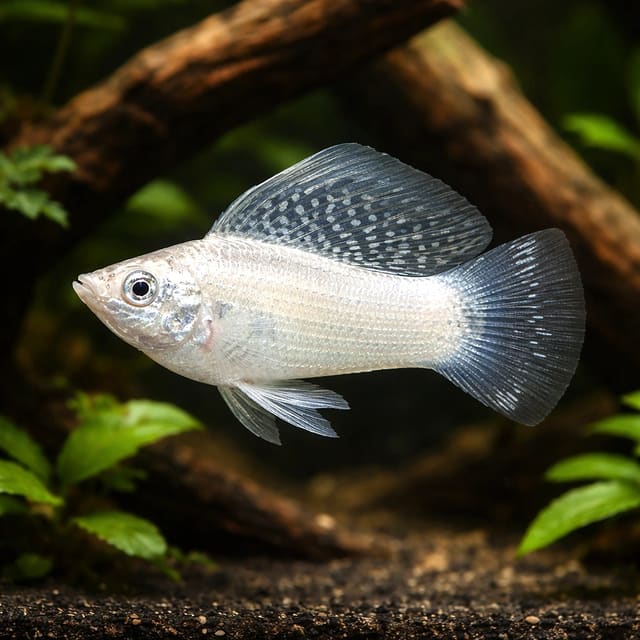
This listing is for one live balloon calico marble golden molly supplied at a 2.5 cm dispatch grade. The accepted species is Poecilia latipinna, the sailfin molly, a poeciliid livebearer native from the Cape Fear drainage in North Carolina southwards to Veracruz, Mexico. Calico, marble and golden describe the cultivated colour pattern, while “balloon” describes the rounded domestic body form. Colour placement varies naturally from fish to fish, so the offer is the named form rather than a promise that every individual will carry an identical arrangement of gold, pale and dark markings.
Dispatch size is not adult size. FishBase records P. latipinna to 15 cm total length. Plan the aquarium around that maximum adult record and the needs of a social group, not around the compact proportions of a newly supplied fish.
The rounded balloon form deserves candid treatment. In this form the body is shortened and rounded rather than following the usual sailfin-molly outline. That altered shape can be associated with swim-bladder and digestive problems and may contribute to premature death. It does not mean that every fish will become unwell, but it does make close observation, stable water and restrained feeding especially important. A keeper should be comfortable monitoring swimming, buoyancy, appetite and body condition rather than treating this as a carefree ornament.
Poecilia latipinna is a hard-water fish. Its reliable home is a mature, filtered freshwater aquarium at 21–26 °C, pH 7.0–8.5 and 15–35 dGH. Salt is not required: the important feature is an adequate concentration of hard-water minerals, particularly calcium and magnesium, with a basic pH. Soft or acidic water is not a suitable compromise. Test the supply before choosing this molly, because appearance cannot reveal whether a tank has the mineral content it needs.
This is best considered an intermediate-care choice. The species itself is adaptable within the right hard-water conditions, yet the adult size, social behaviour, strongly plant-biased diet and additional balloon-form welfare consideration demand more planning than the 2.5 cm grade suggests. A prepared keeper with compatible tap water, a properly matured filter and room for a group can build a good environment; a new or soft-water aquarium is not ready merely because it is heated.
Browse the current molly fish collection if you are comparing forms. This product has no male or female option, so sex is not guaranteed. Male sailfin mollies can develop a large, elongated dorsal fin and possess a gonopodium, but the supplied size and domestic body form can make confident sexing impractical at dispatch. Buy with a plan that remains workable whichever sex arrives, then review the group as the fish mature.
Before choosing this fish, check three practical points together: whether the source water reaches the required mineral hardness, whether the mature aquarium has the stated footprint, and whether its present residents can live with an active adult sailfin molly. A match on temperature alone is not enough. This early check is particularly valuable for a balloon-form fish because stable, appropriate conditions remove stresses that are within the keeper’s control. If the aquarium is still cycling, the water is soft and acidic, or the final social group would exceed the available space, prepare a different setup or choose a better-matched animal.
Sex is guaranteed only when the selected option explicitly states male or female. This Poecilia latipinna balloon calico marble golden molly listing has no sex-guaranteed option.
Gallery images have been digitally enhanced to improve image quality. Natural colour, pattern, size and maturity can vary between live animals.
| Suits | Best fit |
|---|---|
| Keeper and aquarium | An intermediate keeper with tested hard water, a mature filter and room for a social group |
| Sold unit | One live fish per purchase |
| Dispatch grade | 2.5 cm |
| Sex | Not guaranteed |
| Recorded adult size | Up to 15 cm total length |
| Species aquarium minimum | 76 × 38 cm base, approximately 87 litres |
| Routine water | 21–26 °C; pH 7.0–8.5; 15–35 dGH |
| Social plan | At least three; after reliable sexing, aim for two females per male |
Use an aquarium with a base of at least 76 × 38 cm and a volume of approximately 87 litres for Poecilia latipinna. This is a species-level minimum, not a universal capacity for every possible group or community. Sailfin mollies are active fish, and a 15 cm maximum record is large in relation to the 2.5 cm dispatch grade. Add space when keeping a larger group, mixing them with other fish or using décor that reduces open swimming room.
Footprint matters as well as litres. A reasonably long, broad base gives the fish room to cruise, turn and move away from social pressure. Tall litres that do not improve horizontal space are less useful. Leave a clear swimming route from end to end and avoid filling the centre with hardscape. Check that the adult fish will be able to pass behind and around décor without squeezing its rounded body through narrow gaps.
A newly supplied fish can make an adult-sized tank look empty, but that is temporary. Plants grow, companions mature and the biological load increases. Review capacity at each stage rather than waiting until the fish look crowded. If one fish repeatedly patrols the whole aquarium, prevents others reaching food or corners a group member, the practical capacity has already become inadequate even if the nominal volume meets the minimum.
The aquarium must be fully matured before livestock arrives. A working biological filter houses bacteria that convert toxic ammonia to nitrite and then to the less harmful nitrate. Both ammonia and nitrite should read zero. A clear-looking new tank can still be biologically unsafe, because clarity does not show whether the bacterial population can process fish waste.
If this is your first setup, follow the first tropical tank guide and verify the cycle with liquid tests. Add livestock gradually so the filter can adapt to the increased waste and feeding. Do not use this molly to test whether an immature aquarium is ready. Its rounded body gives an additional reason to remove avoidable environmental strain.
Keep the filter running continuously and choose a flow that circulates the whole tank without forcing the fish to struggle in one fast jet. Check the intake and outlet for obstruction during the weekly routine. If filter media requires cleaning, do not run it under the tap. Rinse it lightly in water removed from the aquarium so the established bacterial population is protected.
Maintain 21–26 °C, pH 7.0–8.5 and 15–35 dGH. These are the aquarium values for P. latipinna, and hardness is not an optional extra. The fish can live in freshwater provided that it is not soft or acidic. There is no need to add salt simply because mollies are sometimes associated with brackish habitats; hard-water minerals are the relevant long-term requirement for this aquarium form.
Use a thermometer and appropriate water tests rather than relying on the heater dial or the reputation of a local water supply. The water chemistry guide explains the values worth measuring, and the water matcher can help compare real results with this care range. Test tap water and aquarium water, since décor, substrates, water changes and household supply changes can all affect the values experienced by the fish.
Do not chase a single “perfect” number with abrupt chemical corrections. Choose a stable point inside the routine range and make any necessary change gradual, measurable and repeatable. If the source water is distinctly soft and acidic, selecting livestock suited to it is usually safer than constantly adjusting every new batch. A molly kept outside its mineral range may show shimmying, clamped fins or increased susceptibility to fungal problems; those signs call for immediate water testing and informed help, not a guessed treatment.
| Water value | Routine target and use |
|---|---|
| Temperature | 21–26 °C. Choose a stable point shared by all residents and confirm it with a thermometer. |
| pH | 7.0–8.5. Keep the aquarium neutral to alkaline and avoid acidic conditions. |
| General hardness | 15–35 dGH. Moderately hard or harder water supplies the mineral context this species needs. |
| Ammonia | 0 mg/l. Any detectable reading requires prompt investigation and corrective husbandry. |
| Nitrite | 0 mg/l. Any detectable reading is unsafe and indicates inadequate biological processing. |
Measure general hardness as well as pH before ordering. A neutral pH reading does not, by itself, show that the aquarium contains enough calcium and magnesium for this species. Likewise, a hard-water result does not replace ammonia and nitrite tests in a newly established aquarium. The useful decision comes from the values together: mature biological filtration, zero ammonia and nitrite, a stable 21–26 °C temperature, pH 7.0–8.5 and 15–35 dGH.
Compare those readings with the requirements of every established resident. Altering a soft-water community to suit a molly may move the aquarium away from what its existing fish need. In that situation, a separate hard-water aquarium or a different livestock choice is more coherent than trying to split the difference. The same principle applies to replacement water: a maintenance routine must be able to reproduce the chosen conditions week after week.
Retest after meaningful changes, including a new water source, a different substrate or a long gap between water changes. Make changes because the measurements and animal behaviour justify them, not because mollies are casually described as tolerant. P. latipinna has a broad reputation, but its dependence on mineral-rich, basic water is a firm boundary for this care plan.
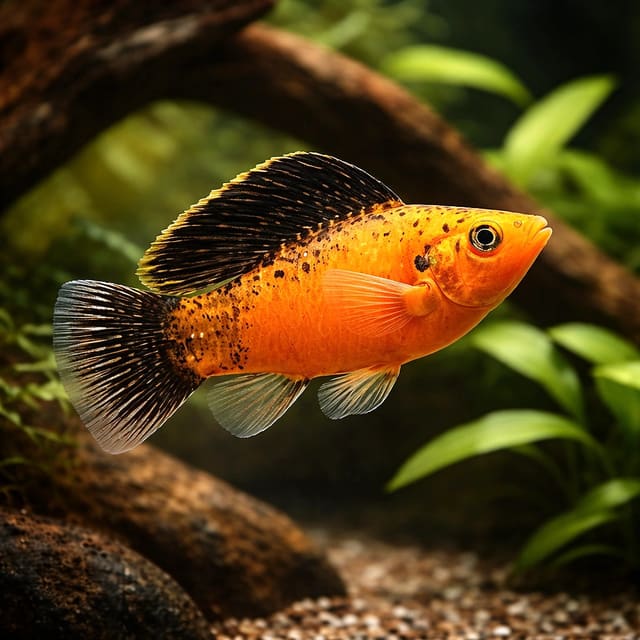
Create a densely planted aquarium with open swimming space. Planting around the back and sides can provide retreat, while the central or front area remains open for movement. Secure hardscape carefully and avoid sharp projections or tiny openings that could catch the body or fins. The visible individual in the gallery is shown among plants and wood, but the photograph does not prove the exact appearance, sex or future colour pattern of the fish supplied.
Mollies graze extensively, and soft-leaved plants may be damaged. That behaviour is not automatically a feeding failure: it is part of keeping a highly plant-oriented fish. Choose robust planting where possible and accept some grazing. A modest growth of common green algae on suitable surfaces can provide additional browsing material, while routine husbandry should still prevent the aquarium from becoming neglected.
Provide cover without sealing every route. Dense edges allow a subordinate fish to move out of direct sight, but a wall of plants can reduce usable swimming space and make it harder to observe feeding or buoyancy. Prune with adult movement in mind. When changing the layout, preserve familiar cover and avoid turning the entire aquarium into a bright, exposed space in one session.
Poecilia latipinna feeds heavily on algae and plant material, with some animal material also recorded in its natural diet. In the aquarium, use a good-quality dried food together with a clearly algae- or vegetable-based component. Vegetable flake or another appropriately formulated green food can form part of the staple rotation. Suitable blanched vegetable matter, such as spinach, can add variety when prepared and portioned so it does not foul the water.
Small live or frozen foods can supplement the plant-rich base, but they should not displace it. The aim is nutritional variety, not an animal-protein-heavy menu. Adequate green food is particularly relevant to male dorsal-fin development. Choose a particle size the 2.5 cm fish can take easily, and distribute food so quieter individuals get a fair share instead of allowing one confident fish to intercept everything.
A broad UK molly routine is one feed a day, limited to what the fish consume within a few minutes. Begin conservatively and use observation to refine the portion for the group. A rounded fish should not be encouraged to gorge. Uneaten food adds waste, and overfeeding can obscure genuine changes in body condition or digestion. Remove food that is clearly being ignored and do not keep topping up because one fish continues searching.
Watch the whole feeding event. Note whether the fish reaches food, swallows normally, remains level in the water and resumes ordinary swimming afterwards. Persistent loss of appetite, trouble maintaining position, repeated floating or sinking, swelling, stringy waste or difficulty passing food warrants a water-quality check and informed advice. The balloon form’s additional digestive and swim-bladder risk makes a consistent observation routine more useful than occasional large meals.
Plan for at least three mollies. Once the fish can be sexed reliably, aim for two females per male, because males can be vigorous in their pursuit of females and can also be aggressive with one another, particularly around reproduction. This listing supplies one unsexed fish, so a single purchase cannot guarantee a balanced group. Count and sex the residents already in the aquarium, allow for uncertainty at the 2.5 cm grade and leave the capacity to adjust the group later.
Do not treat the ratio as a substitute for space. A larger group creates more waste and needs more room for subordinate fish to withdraw. Observe whether every individual can rest and feed without continuous pursuit. If one fish is repeatedly displaced, adding random unsexed fish is not automatically the solution; first assess sex, aquarium footprint, cover and the existing social pattern.
Mollies are livebearers. Males possess a gonopodium, while mature male sailfins can develop a large dorsal fin. Pregnancy and fry are possible when both sexes are present, even when breeding was not the keeper’s aim. A community plan should therefore allow for population control without relying on precise brood counts or schedules. Keeping only one molly species in the aquarium also reduces the risk of interbreeding between molly species.
The 2.5 cm dispatch grade is a starting point, so keep the long-term plan visible as the fish grows. Recheck the usable footprint, swimming lane and feeding access rather than focusing only on litres. A larger dorsal fin, a clearer gonopodium or stronger pursuit behaviour may also change what you know about sex and the social balance. Update the group plan from what is actually observed, while remembering that adding more fish also increases waste and competition.
Body form should be assessed against the individual’s own normal baseline. Note how the fish holds itself when resting, how readily it changes depth, how its abdomen looks before and after a modest feed, and whether it can graze without tiring or being displaced. A single photograph is a poor substitute for repeated observation. Short, consistent notes make it easier to distinguish a genuine deterioration from ordinary variation in posture, colour or appetite.
Keep welfare ahead of appearance. A large sail-like dorsal fin or striking marbled pattern does not compensate for persistent buoyancy difficulty, poor condition or social exclusion. Stable water, a plant-rich diet, room to move and prompt response to changes are the practical standards by which this form should be kept.
Carry out a partial water change of about 25% at least weekly as a broad UK molly-care routine, adjusting only when measured conditions and stocking justify a more frequent schedule. Treat replacement tap water with an appropriate conditioner before it enters the aquarium, match temperature sensibly and avoid sudden shifts in pH or hardness. Siphon accumulated solid waste while preserving enough established surfaces for biological stability.
Test ammonia and nitrite at least weekly and whenever behaviour changes. Both should remain at zero. Broad molly guidance advises keeping nitrate no more than 20 mg/l above the normal level in the tap supply. Record results so a slow trend is visible; a single reassuring number does not explain what has happened over several weeks. Rising nitrate, falling hardness or repeated ammonia traces all call for investigation of stocking, feeding, source water and filter function.
Use the water change as a structured health check. Look for clear eyes, intact fins and scales, normal colour, steady breathing, balanced swimming and an appropriate appetite. Compare each fish with its own normal behaviour. Hanging at the surface, sitting on the bottom, erratic swimming, darker or paler colour, unusual hiding, faster gill movement, white spots, fluffy growths, damage or changing body condition are reasons to test water promptly and seek knowledgeable advice.
For this balloon form, add buoyancy and digestion to the weekly notes. Record repeated tilting, struggling to descend, inability to stay level or a marked change in waste or abdominal profile. Do not diagnose from appearance alone and do not add medication merely because a fish looks different for a few minutes. Confirm environmental values first, isolate only when a suitable prepared facility exists and obtain qualified help for persistent problems.
Prepare and test the aquarium before dispatch. Read the current delivery and Live Arrival Guarantee policy in full, arrange for someone to be at the delivery address and open the parcel on the day it arrives. Tropical Fish Co hand-packs fish in oxygenated bags inside an insulated box, using a heat pack when conditions call for it, and uses a licensed live-animal courier.
Introduce fish only after checking the mature aquarium’s present stocking and water results. Refresh a small amount of established cover if necessary, then monitor the full group through feeding and resting periods. Compatibility is successful when every animal can perform normal behaviour over time, not merely when no fight occurs during the first few minutes.
Keep the first period calm and make sure filtration, heating and lighting are operating normally. Observe breathing, balance and the ability to find cover before offering a normal portion. Do not use a large feed as an arrival test. Over the following days, confirm that the molly grazes, maintains position and can reach food without persistent pursuit. Early notes give a useful baseline for recognising a real change later.
Poecilia latipinna is generally suitable for a hard-water community, but “community” is a set of shared requirements rather than a promise that every individual will mix peacefully. Choose companions that also thrive at 21–26 °C, pH 7.0–8.5 and 15–35 dGH, can cope with an active 15 cm livebearer and feed confidently beside it. Fish that need distinctly soft, acidic water are not suitable merely because their temperature range overlaps.
Other livebearers and some catfish are named as possible companion types for this species, provided their own adult size, water and social needs also match. Do not interpret that as approval for every fish in either group. Research the exact animal, use adult rather than shop size and check whether it occupies the same space or competes for the same food. A bottom-dwelling fish still shares the same water and waste load.
Sailfin mollies may pick on smaller fish as they mature, and broad UK guidance advises against keeping them with timid fish. Avoid companions that can be intimidated, outcompeted or swallowed, as well as predatory or strongly aggressive fish. Long-finned or slow-feeding residents require particular observation even where no direct conflict is expected, because persistent competition can be harmful without obvious injury.
Male mollies can be aggressive with one another, especially during reproductive activity. Provide a broad footprint, planted shelter and more than one route to food. Watch for repeated chasing rather than judging the group from a quiet moment. Normal brief interaction differs from one fish being prevented from feeding, resting or occupying most of the aquarium.
When both sexes are present, aim for two females per male after reliable sexing. Because this product is unsexed, build flexibility into the stocking plan. A newly added 2.5 cm fish may not reveal the final sex ratio immediately. Do not crowd the aquarium to force the arithmetic; sufficient space and the ability to separate or reorganise fish matter as much as the nominal ratio.
Keep only one molly species in the same aquarium because domestic mollies can interbreed readily. Colour-form names do not create reproductive barriers. This also makes later identification clearer. The advice concerns molly species, not a claim that different colour forms are automatically incompatible.
A companion can match the molly yet conflict with another resident, so assess the aquarium as a whole. Check each species’ adult size, water chemistry, feeding speed and normal social group. Then consider where they spend time: several active fish competing in the same open zone can create pressure even when the nominal stocking count appears modest.
Observe at more than one point in the day. Feeding reveals competition, while quieter periods show whether every fish can rest and occupy cover. Repeatedly missing food, remaining hidden, rapid breathing or being driven away from a preferred area are meaningful warning signs. Respond to the pattern early by reviewing space, sex ratio, cover and stocking rather than waiting for damaged fins.
| Compatibility decision | What to check |
|---|---|
| Potentially suitable | Hard-water livebearers or appropriate catfish with matching temperature, adult size and behaviour. |
| Use caution | Smaller, timid, long-finned or slow-feeding fish; multiple males; any crowded social group. |
| Avoid | Soft-acidic-water specialists, predatory fish, strongly aggressive fish or animals small enough to be persistently harassed. |
| Observe | Access to food, resting space, balanced swimming and whether chasing is brief or continuous. |
FishBase records Poecilia latipinna at up to 15 cm total length. Plan around that maximum adult record; the 2.5 cm supplied grade is a dispatch size, not an adult-size promise.
Use an aquarium with a base of at least 76 × 38 cm and a volume of approximately 87 litres. That is a species minimum; use more space for a larger social group, additional community fish or a layout that reduces open swimming room.
Plan for at least three. Once the fish can be sexed reliably, aim for two females per male because males can pursue females vigorously and can be aggressive with one another. This listing is not sex-guaranteed, so keep enough space and flexibility to adjust the group as it matures.
It is better treated as an intermediate-care fish. Poecilia latipinna needs mature, hard, alkaline water, a plant-rich diet and enough room for a social group; the rounded balloon form can also be associated with swim-bladder and digestive problems, so careful daily observation matters.
Use a good-quality dried food with a strong algae or vegetable component, supplemented with suitable plant matter and modest live or frozen foods. A broad UK molly routine is one daily feed limited to what the fish consume within a few minutes; avoid large meals and watch digestion and buoyancy.
Maintain 21–26 °C, pH 7.0–8.5 and 15–35 dGH. This species needs moderately hard or harder, neutral-to-alkaline water. Freshwater is suitable when those mineral conditions are met; salt is not required.
Sailfin mollies are generally hard-water community fish, but they may pick on smaller fish as they mature and males can be aggressive with one another, especially around reproduction. Use planted shelter and intervene if chasing repeatedly prevents another fish from feeding or resting.
Other suitably sized hard-water livebearers and some catfish can be considered when their exact temperature, hardness, adult size and behaviour match. Avoid timid or very small fish, predators, strongly aggressive species and animals that require soft acidic water.
Tropical Fish Co hand-packs live fish in oxygenated bags inside an insulated box, using a heat pack when conditions call for it, and sends them with a licensed live-animal courier. Be present to receive the parcel; for any Live Arrival Guarantee claim, make a continuous unboxing video from sealed parcel to fish still in the sealed bag and contact the team the same day.
Tropical Fish Co delivery and Live Arrival Guarantee — current packing, receipt, acclimatisation and claim requirements. The policy is linked in the arrival guidance above.
No reviews for this item yet. Bought one? Honest reviews only, good or bad.
What customers say about ordering from us
Easy website plenty of info on fish your buying great to pick a time slot
TRACEY DURRANT · 7 Oct 2026
Got some lovely fish thank you
Kevin Mackie · 7 Oct 2026
Reviews of our shop, collected by Judge.me, an independent third-party review collector. Newest first.