Chocolate Cherry Shrimp (Neocaridina davidi)
18–26°C · pH 6.5–8 · 30L

Gold Leopard Sailfin Molly Mix is a colourful Poecilia latipinna livebearer for hard, alkaline aquariums, plant-rich feeding and peaceful group planning.
Adult size is the maximum length this species reaches at full maturity (scientific sources). The livestock you receive will be younger and smaller — pick a size variant above for the actual shipping size. Photos are AI-enhanced, so the animal may show subtle colour or marking differences.
Poecilia latipinna domestic sailfin molly mix
Gold Leopard Sailfin Molly Mix is a colourful Poecilia latipinna livebearer for hard, alkaline aquariums, plant-rich feeding and peaceful group planning.
Adult size is the maximum length this species reaches at full maturity (scientific sources). The livestock you receive will be younger and smaller — pick a size variant above for the actual shipping size. Photos are AI-enhanced, so the animal may show subtle colour or marking differences.

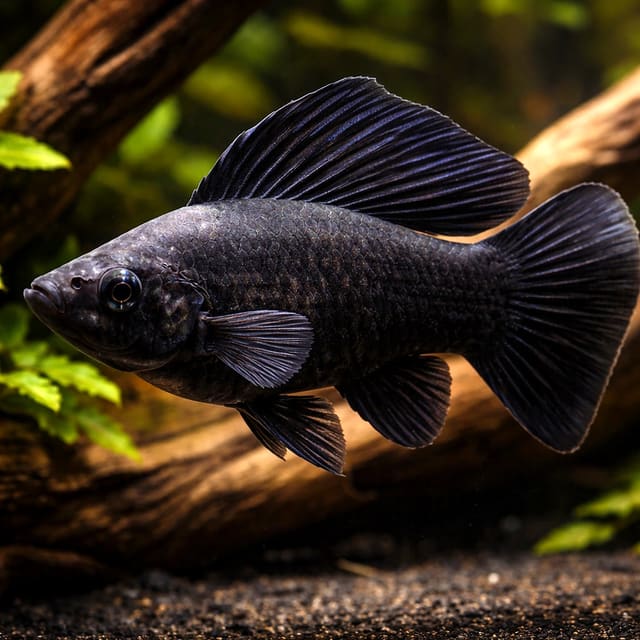
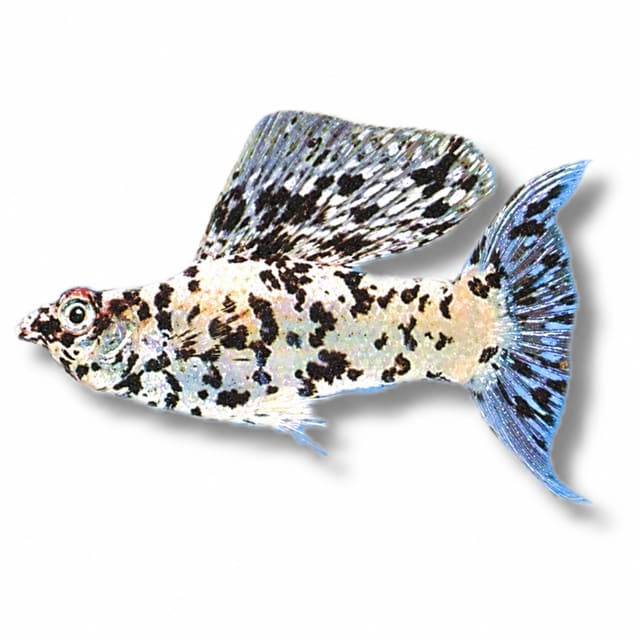
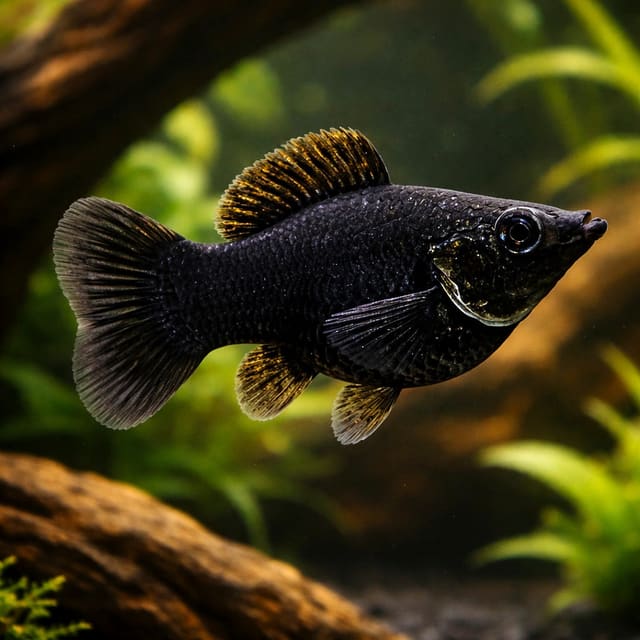
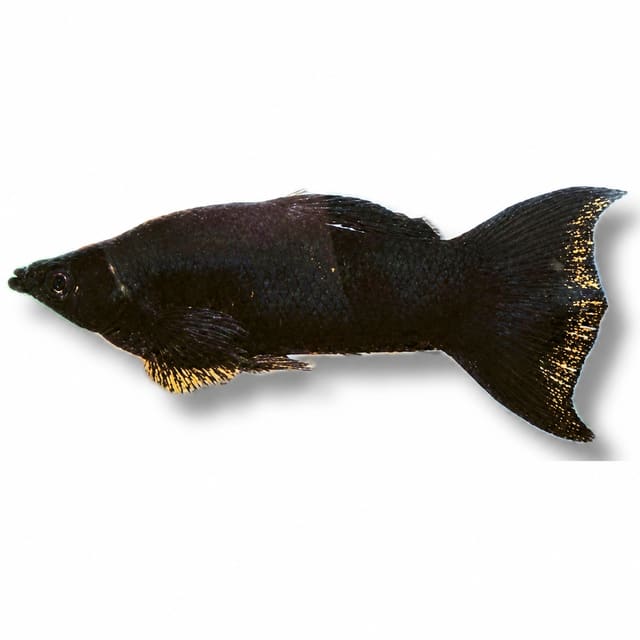
Lively, colourful livebearers for hard UK water, including black, dalmatian, sailfin and lyretail varieties with careful UK dispatch available.
Maintain these water conditions for optimal health and vibrant colors
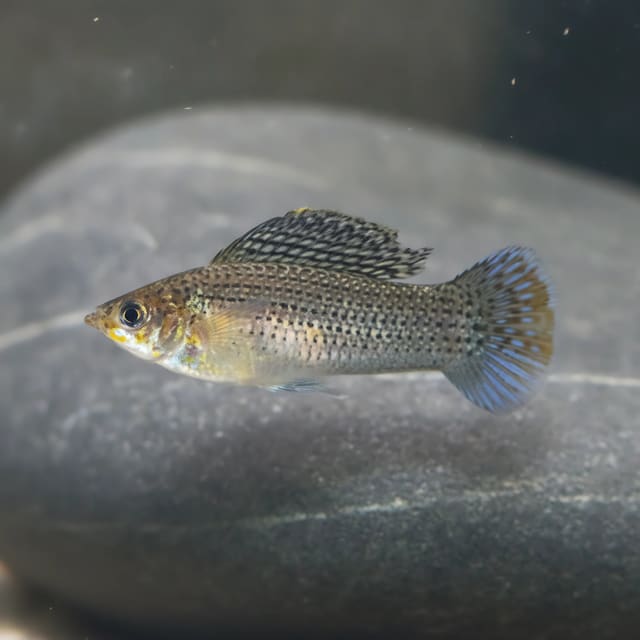
Gold Leopard Sailfin Molly Mix (Poecilia latipinna) is a colourful domestic sailfin molly mix for aquariums with hard, alkaline water, open swimming room and plenty of vegetable-based feeding. This listing is best understood as a Poecilia latipinna care anchor rather than a wild-type locality fish: the gold leopard pattern is a domestic aquarium strain, but its long-term care still follows the needs of sailfin mollies. Expect active, social fish with strong grazing behaviour, a broad body, and males that can show a taller sail-like dorsal fin when settled and confident.
Choose this molly if you want a lively livebearer for a mature community aquarium rather than a soft-water nano tank. It works well for aquarists who already keep, or are planning, a hard-water livebearer setup with mollies, platies, swordtails and other peaceful companions. The page keeps the existing gallery images and adds the source-style product image so shoppers can judge the real colour form as well as see how the fish can look in a planted display.
| Care point | Best range for this listing |
|---|---|
| Scientific care anchor | Poecilia latipinna domestic sailfin molly mix |
| Adult size | Usually 8-12 cm depending on sex, line and growing conditions |
| Care level | Easy to moderate: hardy when minerals, oxygen and water quality are right |
| Minimum aquarium | 120 litres or larger for a social group with swimming space |
| Temperature | 22-28 C, with stable oxygen-rich water |
| pH and hardness | pH 7.0-8.5; hard water preferred, roughly 10-25 dGH |
| Diet | Algae, vegetable matter, spirulina foods, quality flakes and small frozen foods |
| Temperament | Peaceful and active; best kept in a group |
Gold Leopard Sailfin Molly Mix is a strong choice when the aquarium is designed around the fish rather than forcing it into the wrong water. Sailfin mollies naturally suit mineral-rich, alkaline conditions and do best when nitrate is kept low, the filter is mature, and the tank has a good amount of open water. In the wild, Poecilia latipinna is associated with quiet, vegetated water including ponds, sloughs, backwaters, coastal ditches and brackish canals. FishBase also notes an algae-heavy diet with small animal foods, which is why a plant-rich feeding plan is so important.
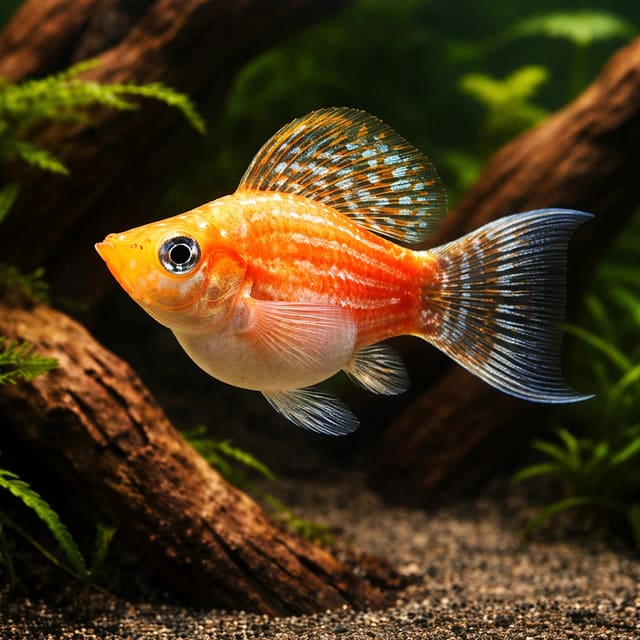
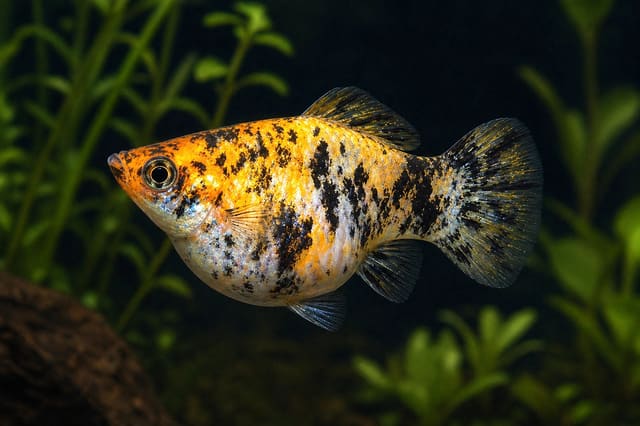
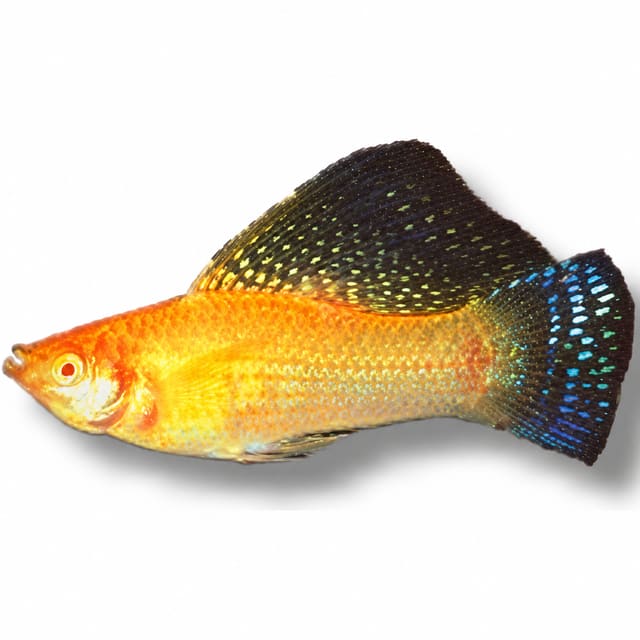
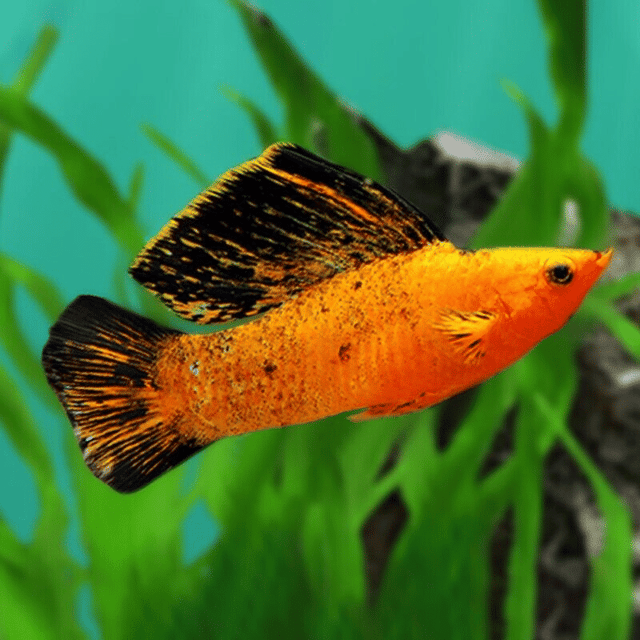
The gold leopard pattern gives the fish a warm yellow-orange base with darker spotting and a showy dorsal profile. That makes it useful as a visible mid-to-upper water fish in a livebearer display. It is not a shy bottom dweller and it should not be hidden in a cramped tank. Give it space, minerals, oxygen and a varied diet, and it becomes one of the more rewarding community fish in the aquarium.
A good setup starts with volume and footprint. A single pair can survive in smaller quarters, but a proper group deserves a longer aquarium of around 120 litres or more. This gives males room to display without constantly chasing females, and it gives the group enough swimming space to behave naturally. Keep the aquarium mature before adding mollies; they are hardy fish, but they do not forgive unstable new-tank water as well as many people assume.
| Setup choice | Recommended approach | Why it matters |
|---|---|---|
| Water chemistry | Hard, alkaline, stable water with good carbonate hardness | Soft acidic water is the common reason mollies decline long term. |
| Filtration | Oversized mature filtration with steady surface movement | Sailfin mollies like oxygen-rich water and low dissolved waste. |
| Layout | Open swimming lane plus planted edges, wood or rock breaks | They need space to move but also calmer zones for females. |
| Substrate | Sand or fine gravel, with optional mineral-supporting decor if appropriate | Easy to clean and suits livebearer community maintenance. |
| Plants | Hard-water tolerant plants, floating cover and algae-grazing surfaces | Plants help fry survival, reduce stress and support grazing behaviour. |
Salt is not required as a default fix. Mollies can tolerate brackish conditions and some keepers use low salinity in specialist setups, but a healthy freshwater aquarium with enough GH/KH is normally the better route for a planted community. Do not add salt casually if you keep salt-sensitive plants, Corydoras or other tank mates. The safer everyday goal is stable mineral content, clean water and enough oxygen.
This is a grazing livebearer, so the diet should not be built only around high-protein foods. Use a quality flake or small pellet as the base, but make sure vegetable content is present. Spirulina flakes, algae wafers, blanched courgette, shelled peas and occasional frozen foods all help maintain body shape and colour. Overfeeding rich frozen foods can lead to fatty condition and water-quality problems.
| Food type | How to use it | Benefit |
|---|---|---|
| Spirulina flake or vegetable flake | Daily staple in small portions | Supports the algae-grazing side of the natural diet. |
| Fine pellets | Alternate with flake so all fish feed confidently | Useful for mixed livebearer groups. |
| Blanched vegetables | Small pieces, removed before they foul the water | Adds fibre and keeps mollies busy. |
| Frozen brine shrimp or daphnia | Occasional conditioning food | Provides variety without making the diet too heavy. |
| Algae growth | Allow some grazing surfaces where it is safe and tidy | Encourages natural picking behaviour. |
Gold Leopard Sailfin Molly Mix is peaceful, but it is active and social. Keep it with fish that enjoy similar hard-water conditions. Other mollies, platies, swordtails, rainbowfish, larger peaceful tetras that tolerate harder water, and robust community fish can work well. Avoid soft-water specialists, delicate fin-nippers, aggressive cichlids and tiny fish that may be intimidated by a busy livebearer group.
| Good fit | Use with care | Avoid |
|---|---|---|
| Other mollies and similar livebearers | Corydoras only if the setup is not salted and suits them | Soft acidic blackwater species |
| Platies and swordtails | Small peaceful tetras in harder water | Fin nippers and aggressive barbs |
| Peaceful rainbowfish in larger tanks | Dwarf cichlids only if water needs overlap | Large predatory fish |
| Hard-water community fish | Shrimp only if losses are acceptable | Cramped nano-tank communities |
For group balance, more females than males usually works better. Males can display and chase, especially in warm water, so a mixed group needs space and cover. If you want fry, add fine plants, floating cover or dedicated fry refuge areas. Adults may not reliably protect young.
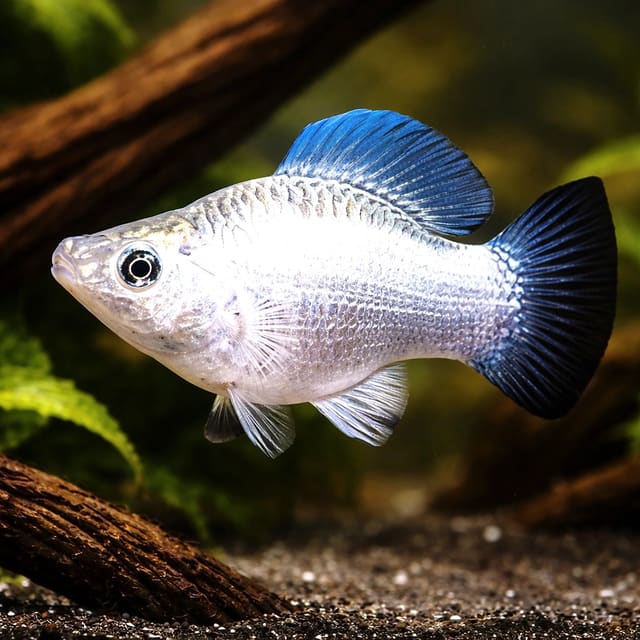
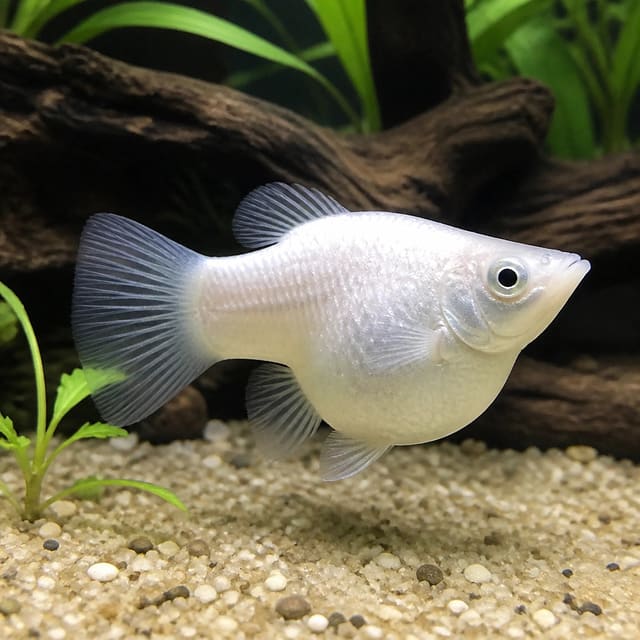
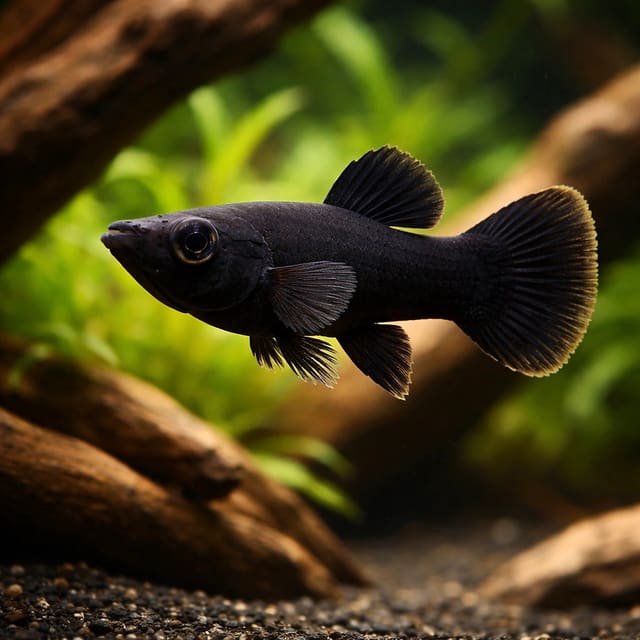
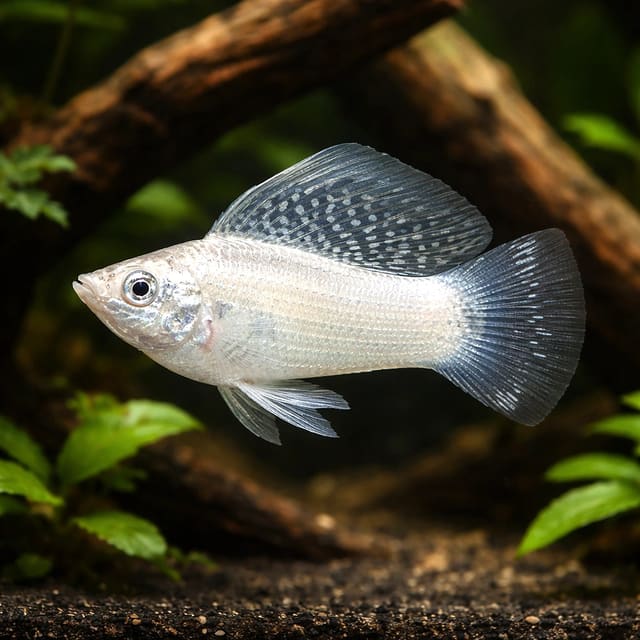
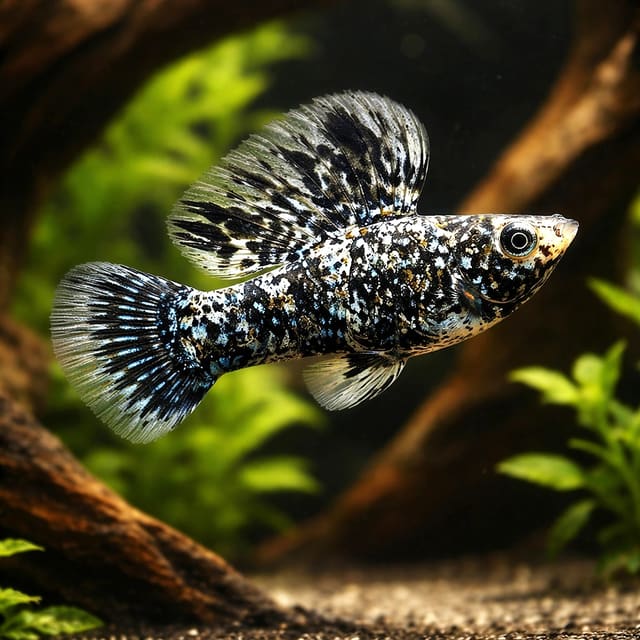
The gallery should show two useful things: the real source-style product image for body shape and pattern, and aquarium-style images that help customers imagine the fish in a planted hard-water community. The source image is important because this is a domestic colour mix; it anchors expectations better than a staged scene alone. The existing AI aquarium images should stay because they add visual context, but they should not replace the real product-style image.
| Image type | Why it stays on the page |
|---|---|
| Source profile image | Shows gold leopard colour, body shape and sailfin character more honestly. |
| Planted aquarium scene | Helps shoppers picture the fish in a finished livebearer display. |
| Pair or group view | Supports the recommendation to keep mollies socially. |
| Side detail | Shows dorsal shape, spotting and scale pattern. |
| Scale or plant reference | Reinforces that adult sailfin mollies need more room than small mollies. |
Order this fish when the size option you want is available. The current variants represent the same product family at different sizes, so choose based on your tank and existing stock. First-time customers can use WELCOME10 where the code is active and eligible for the basket. Livestock orders are covered by the Tropical Fish Co Live Arrival Guarantee when the policy conditions are followed.
For best results, prepare the aquarium before dispatch day. Check temperature, GH/KH, pH and nitrate, and avoid adding mollies to a newly filled tank. On arrival, float and acclimate carefully, keep lights low at first, and feed lightly after the fish have settled.

18–26°C · pH 6.5–8 · 30L

23–27°C · pH 7.4–8.4 · 500L

20–27°C · pH 6–7 · 54L

23–27°C · pH 7.4–8.4 · 150L

24–28°C · pH 6.5–7.8 · 300L

20–24°C · pH 7–8 · 45L

24–28°C · pH 6.5–7.5 · 2000L

24–28°C · pH 7.5–8.5 · 200L

24–28°C · pH 5.5–7 · 60L

18–25°C · pH 6–8 · 100L

24–28°C · pH 7–8 · 120L

18–28°C · pH 6.5–8 · 20L

24–27°C · pH 7.5–8.8 · 150L

22–26°C · pH 6–7.5 · 60L

24–28°C · pH 7.5–8.5 · 40L

24–28°C · pH 7.5–8.5 · 500L