Easy
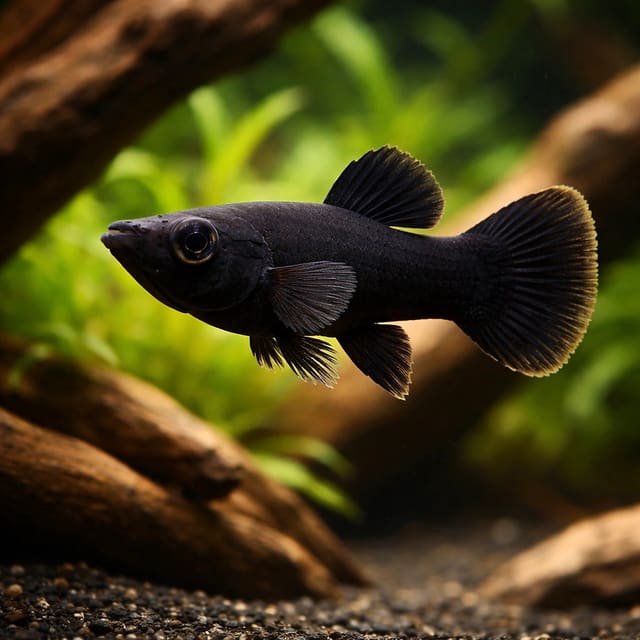
Black Molly (Poecilia sphenops black molly)
21–28°C · pH 7–8.5 · 81L
£3.99

Photo coming soon
The size, price and care details on this page are for this listing.
Assorted Molly (Poecilia sp.) is one unsexed domestic Molly selected from the available colour mix and supplied at approximately 3–4 cm. The stock source links it to a Poecilia sphenops mix, but the exact species and ancestry are not identified. Plan a mature, filtered aquarium for a social group using broad Molly care guidance, and be ready to manage sex ratio and possible fry.
Poecilia sp.
Save when buying multiple fish. Each quantity is one fish; sex and pair formation are not guaranteed unless the selected variant explicitly states them.
Minimum of 2 per order.
Assorted Molly (Poecilia sp.) is one unsexed domestic Molly selected from the available colour mix and supplied at approximately 3–4 cm. The stock source links it to a Poecilia sphenops mix, but the exact species and ancestry are not identified. Plan a mature, filtered aquarium for a social group using broad Molly care guidance, and be ready to manage sex ratio and possible fry.
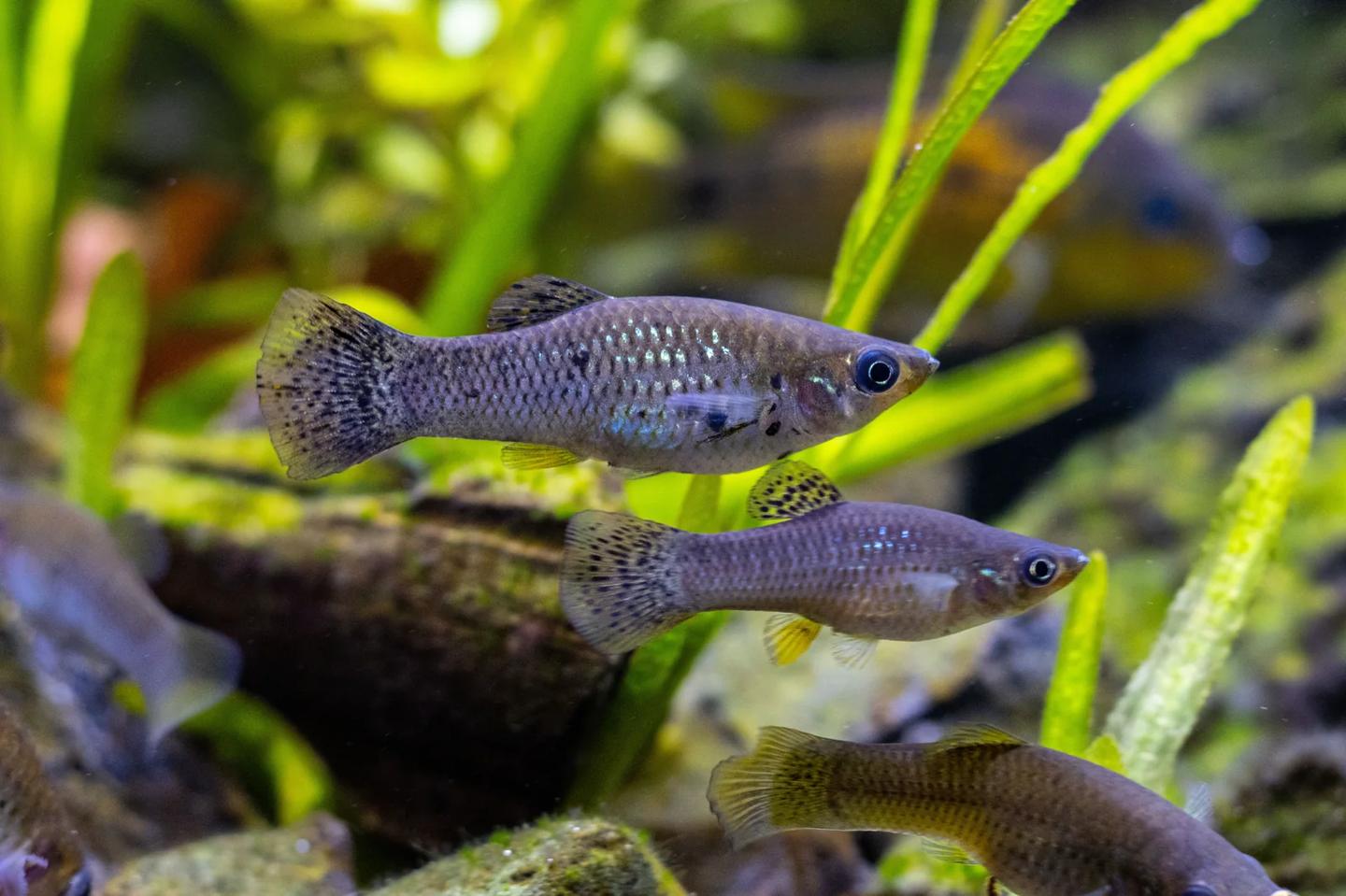
Mollies are social livebearers sold under a broad trade name. Identify the species or domestic form first; plan at least 45 litres for a small group of smaller mollies or 80 litres for sailfins, then verify adult size, water, sex ratio and the complete community.
Maintain these water conditions for optimal health and vibrant colors
Assorted Molly is a livebearer offer for a keeper who enjoys colour variation and is comfortable receiving one fish from the mix available when the order is prepared. Each quantity buys one unsexed fish. The source size is approximately 3–4 cm, which is a dispatch-stage band rather than a promised adult length. Colour, pattern, tail shape, sex, pregnancy and an exact match to a pictured fish are not guaranteed.
The stock arrives under the label Poecilia shpenops / mix. The word “shpenops” is a misspelling of sphenops, a valid species name used for a familiar Molly, so that supplier link should not disappear. At the same time, the assortment carries no individual species or pedigree documentation. The honest customer identity is therefore Poecilia sp.: a Molly in the accepted genus Poecilia, with the supplier's P. sphenops mix label explained as the trade anchor rather than treated as proof that every fish is pure P. sphenops. The exact species has not been identified, so the care advice here follows the genus Poecilia and its care group.
This uncertainty changes how the aquarium is planned. Molly species and domestic forms vary in adult size and body shape, and OATA separates the smaller species from sailfin Mollies in its tank guidance. A buyer should not use the 3–4 cm arrival band to choose a small aquarium or assume the pictured body form fixes the adult outcome. Start with a mature, filtered aquarium that has generous swimming room for a social group, then confirm that the exact holding fish and the planned companions fit the available space and water.
| What one quantity buys | One unsexed fish selected from the available Assorted Molly colour mix |
|---|---|
| Dispatch size | Approximately 3–4 cm from the stock source; not adult size |
| Identity | Poecilia sp., with a retained supplier link to a misspelled P. sphenops mix label |
| Suits | A keeper with a mature filtered aquarium, measured medium-hard to hard water and room for a social group |
| Reconsider if | A specific colour, sex, pregnancy status, tail shape, pure strain or fixed adult form is essential |
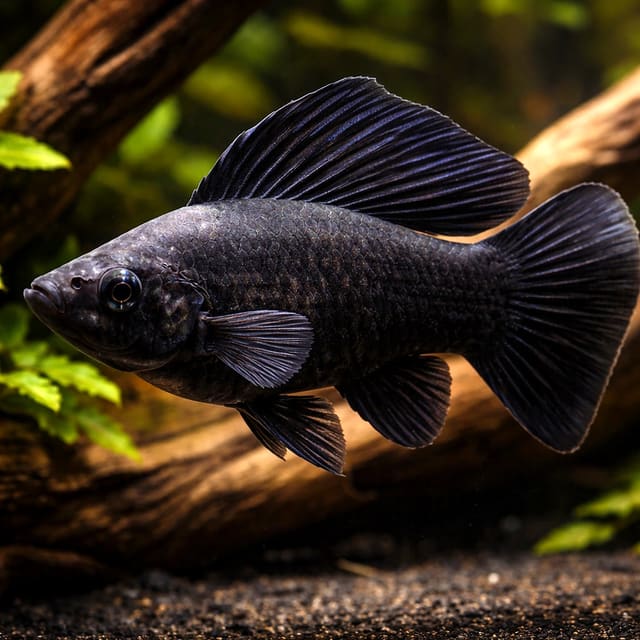
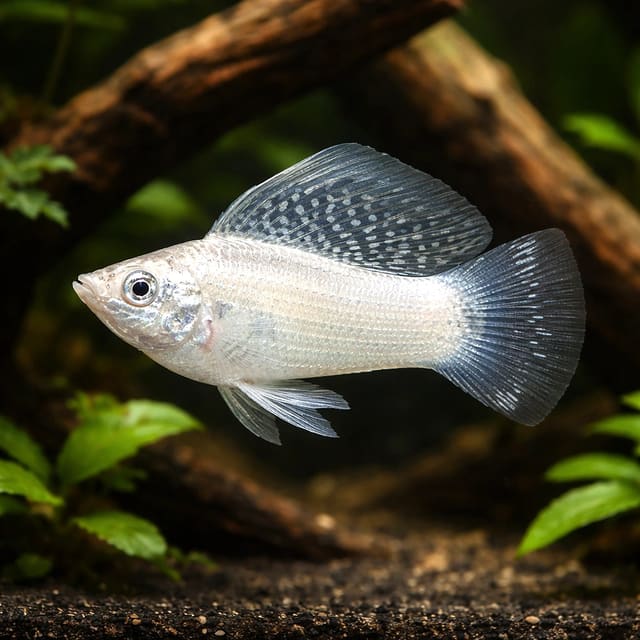
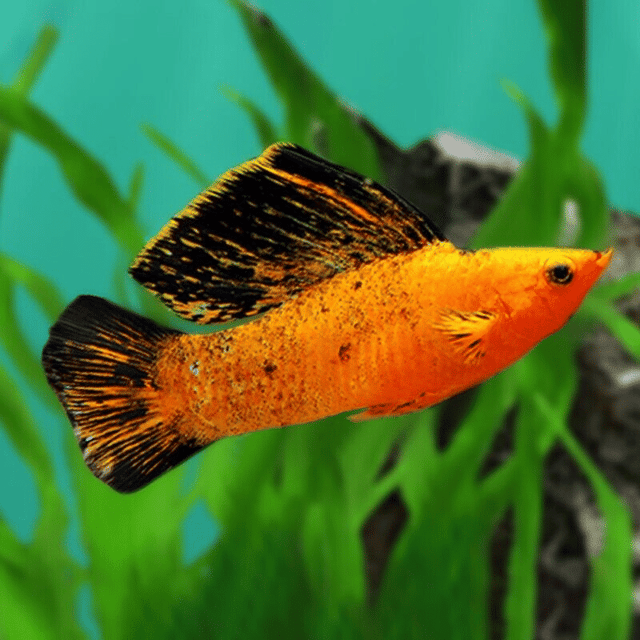
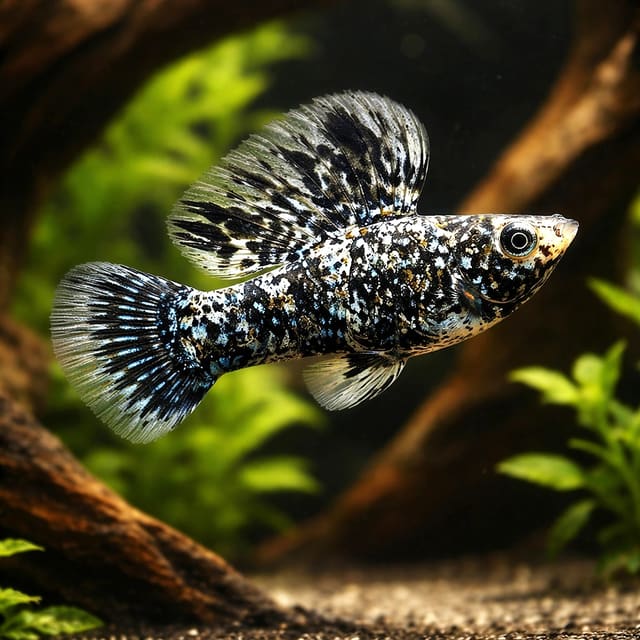
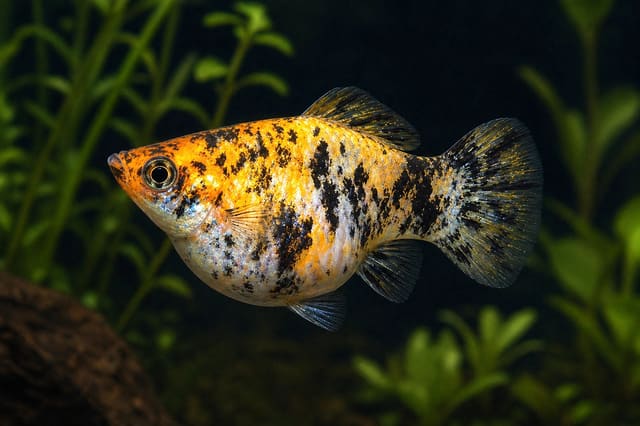
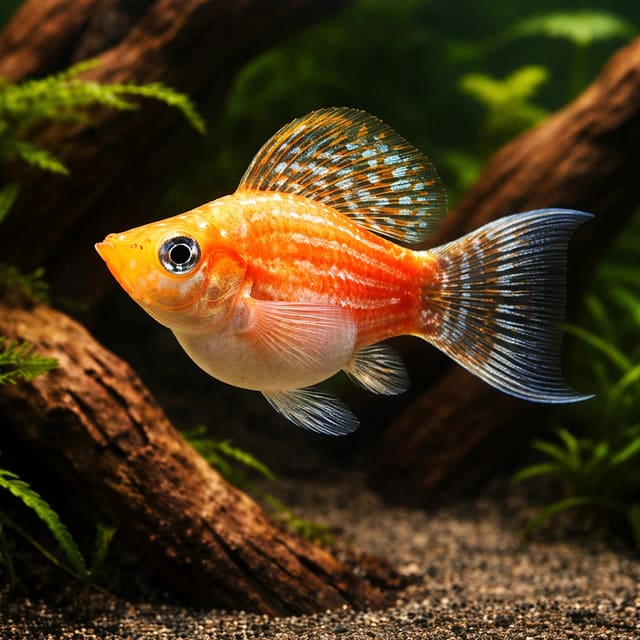
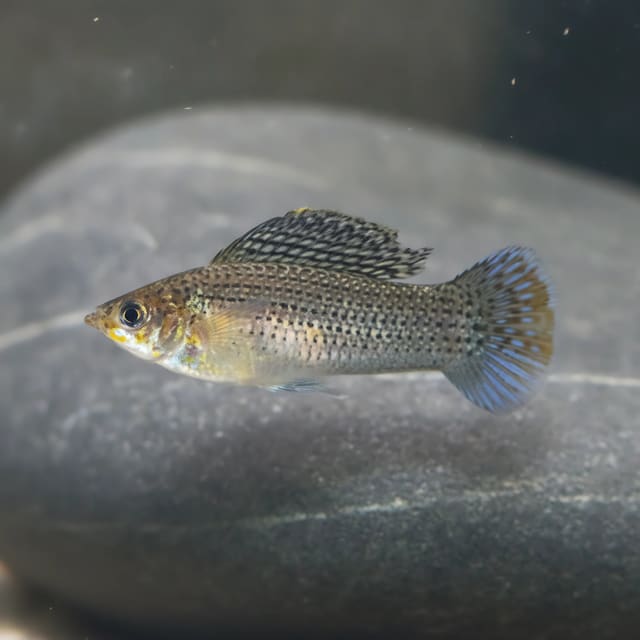
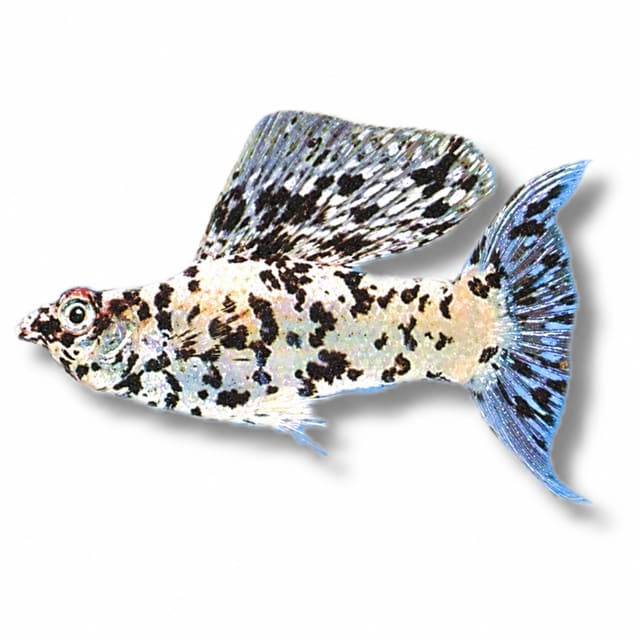
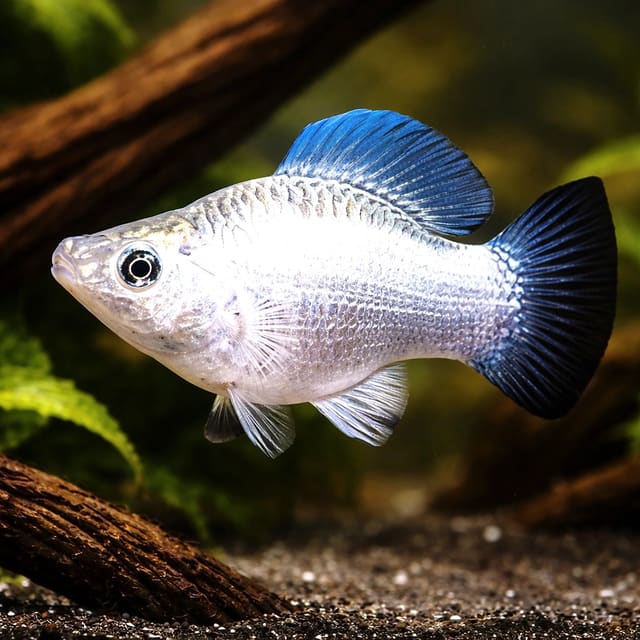
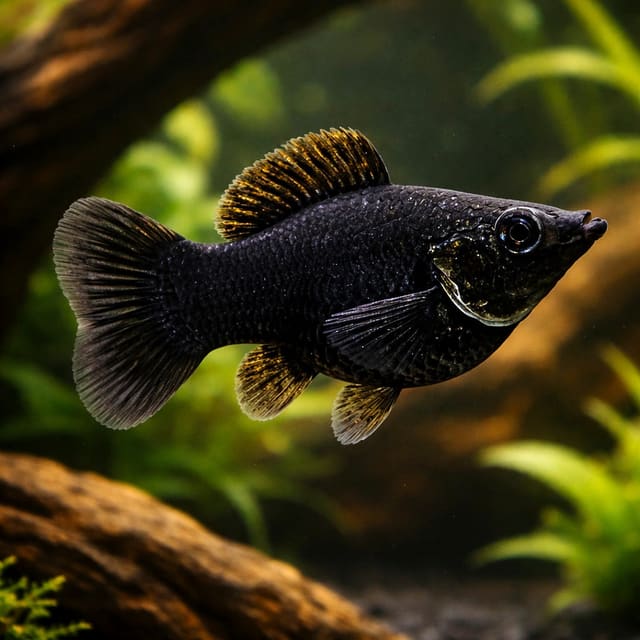
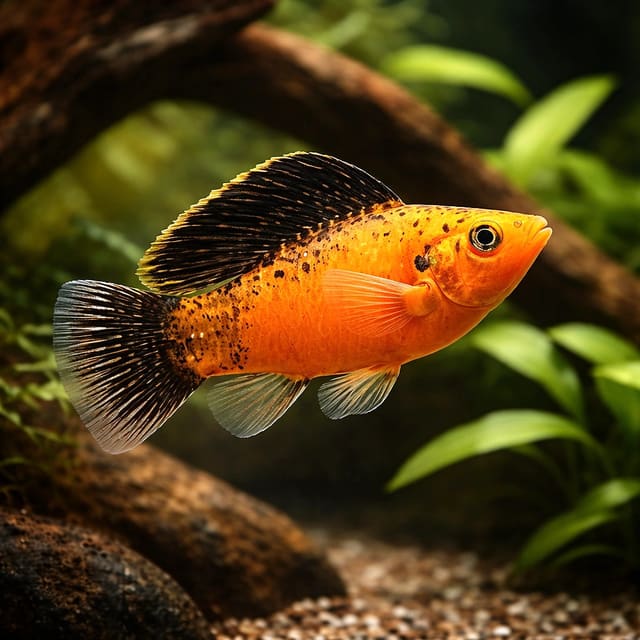
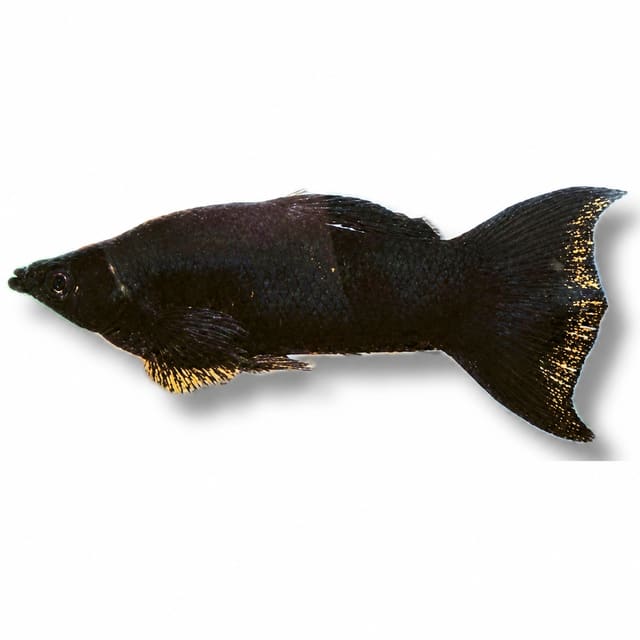
The gallery shows four fish on a black background: orange, silver, black-and-white spotted, and black-and-gold. It demonstrates possible visual variety; it does not show a four-fish sale unit or promise one of those exact combinations. A different domestic colour may be selected. Lighting, age, transport and condition also affect how a live fish looks, so colour should be allowed to settle before it is judged.
Sex is guaranteed only when the selected option explicitly states male or female. This Assorted Molly listing has no sex-guaranteed option. Young Mollies can also be difficult to sex confidently, and a female may already have mated before arrival. Plan the group so that an unexpected male-heavy ratio or future fry can be handled without using an uncycled container.
This offer can be rewarding for a keeper who values lively behaviour more than a fixed strain. Mollies use open water confidently, investigate food quickly and benefit from plant cover without needing every centimetre filled. They are often described as peaceful, but males can pursue females and bold fish can dominate feeding. Space, cover, multiple feeding areas and a willingness to adjust the group matter.
The Molly fish collection is the right place to compare current named alternatives when a defined colour is more important than surprise. Those products are shopping alternatives only; a shared category does not prove aquarium compatibility.
Gallery images have been digitally enhanced to improve image quality. Natural colour, pattern, size and maturity can vary between live animals.
A reliable Molly aquarium begins with biological maturity, measured water and enough space for a group whose exact adult form is still uncertain. “Hardy” is not a substitute for cycling. Before ordering, use the first tropical tank guide to establish the filter and practise testing. Ammonia and nitrite should be zero before fish enter the aquarium.
OATA's combined guppy-and-molly care sheet recommends at least 45 litres for a small group of the smaller species and at least 80 litres for sailfin Mollies. Those are broad group figures, not a species identification for this assortment. Because the exact species and adult body form have not been established, neither number should be converted into a precise minimum for every fish in this listing. A larger footprint gives more room to cope with adult development, a mixed community and social pursuit.
Use horizontal swimming space as well as volume. Substrate, wood, rocks and internal filters reduce usable water. Plants can provide cover and break up direct pursuit, but retain open middle and upper water where the group can swim and where every fish can be watched. A secure lid, suitable heater, independent thermometer and correctly sized filter form the practical equipment base.
OATA advises keeping at least three guppies or Mollies and suggests two females for each male to reduce pressure. That is combined care-group guidance, not a guarantee of harmony. This offer is unsexed, so an order cannot be used to build a known ratio. As fish mature, watch anal-fin shape and behaviour, but avoid making a promise from colour, body depth or one photograph. Have a mature separation route if the resulting group is persistently imbalanced.
OATA gives 20–28 °C, pH 7.0–8.0 and 8–18 dGH for its guppy-and-molly group sheet. These are broad husbandry values rather than a species-specific optimum for an unidentified Poecilia. They are still useful for screening: Mollies are generally associated with medium-hard to hard, neutral-to-alkaline freshwater, and a very soft acidic aquarium is a poor starting point for an assorted fish whose exact form is unknown.
Test the actual tap and aquarium water. The water chemistry guide explains pH, GH, KH and the nitrogen cycle, while the water matcher helps compare measured values with the broad guidance. Avoid guessing water hardness from geography. Supplies vary, can be blended and may change over time.
| Measure | Broad Molly-group guidance |
|---|---|
| Temperature | 20–28 °C |
| pH | 7.0–8.0 |
| General hardness | 8–18 dGH |
| Ammonia | Zero |
| Nitrite | Zero |
| Nitrate | No more than 20 mg/l above the normal tap-water level |
Choose a stable working point inside the broad group guidance that also suits every companion, and learn the water in which the exact fish are held before making changes. Rapidly chasing pH can cause more stress than a small stable variation. If remineralisation is needed, use a measured repeatable method and check both new water and the aquarium.
Filters are essential because fish release ammonia, which is toxic. A mature biological filter converts ammonia to nitrite and then nitrate. Clear water is not proof that this process is working, so test regularly and whenever behaviour changes. Provide enough surface movement for gas exchange without turning the whole aquarium into a current that exhausts the fish.
OATA strongly recommends changing about 25% of the water at least weekly, adjusting the routine to test results, stocking and feeding. Treat replacement water for chlorine or chloramine and bring it close to aquarium temperature. If filter material needs cleaning, rinse it lightly in removed aquarium water; do not run it under the tap. Check impellers and inlets for reduced flow, and protect an intake that could trap a small fish or fry.
Plants can help use nutrients and provide cover, but they do not replace a filter or water changes. Trim growth so it does not block the outlet or every swimming lane. Keep a simple log of test readings and maintenance. A rising nitrate pattern or recurring debris is easier to correct early than after fish begin gasping or clamping their fins.
OATA describes guppies and Mollies as omnivorous and recommends a good-quality flake or granule with a high algae content. It also suggests small live or frozen foods such as daphnia, small bloodworm or tubifex as variety. Use a complete prepared food as the staple, with an appropriate plant or algae component, rather than relying on occasional vegetables or visible algae.
Choose pieces that the smallest fish can swallow cleanly. Offer a measured portion that the group can finish within a few minutes, following OATA's once-daily group guidance while adjusting for the chosen complete food and the condition of the fish. Spread food across more than one area so a bold individual cannot take everything. Watch each fish eat; an active group can hide a subordinate that is losing weight.
Natural grazing can occupy Mollies, but algae and biofilm are not a balanced ration. Blanched vegetables are optional enrichment, not a cure for poor prepared food. Remove any uneaten piece before it decays. Avoid rich feeding intended simply to make fish grow faster; steady body condition and clean water are more useful goals.
Some Poecilia occur in fresh, brackish or saline environments, but a genus fact does not create one salt requirement for an unidentified domestic assortment. Routine aquarium salt is not needed merely because the fish is called a Molly. Keep this offer in stable, mineral-rich freshwater and use salt only for a clearly defined purpose that is safe for every resident and guided by appropriate professional advice.
Salt does not replace general hardness, a mature filter or clean water. It may be unsuitable for some plants and companions. If a fish shimmies, gasps or clamps its fins, first test temperature, ammonia, nitrite, nitrate, pH and hardness and check heater and filter operation. Treating a symptom without identifying the cause can delay the change the fish actually needs.
A settled Molly should swim steadily, breathe regularly, hold its fins normally and take food. Concern signs include surface gasping, persistent hiding, loss of balance, clamped or damaged fins, spots, wounds, swelling, weight loss or an abrupt loss of appetite. These signs can have many causes. Test the water first, review recent additions and maintenance, and seek an aquatic vet or experienced specialist when a problem is serious or persistent.
Use a separate mature quarantine aquarium and dedicated equipment where possible. Never release unwanted fish, fry, plants, snails or aquarium water outdoors. Plan permanent care or responsible rehoming before reproduction creates more fish than the aquarium can support.
The assortment removes control over sex as well as colour. Before buying several fish, decide what will happen if most mature as males, if several are female, or if fry appear. OATA's suggestion of two females per male can reduce pressure in a known-sex group, but an unsexed order cannot guarantee that outcome. The useful safeguard is enough space, careful observation and access to another mature aquarium or a responsible rehoming route.
As fish mature, the anal fin is more useful than colour for sexing: males develop a narrow gonopodium, while females retain a broader fan-shaped anal fin. Young fish can remain difficult to judge, and body depth alone does not prove pregnancy. Treat sexing as an observation that may need revisiting rather than labelling a fish from one early glance.
Brief courtship or a short chase can occur in a livebearer group. Persistent pursuit is different. Look for a fish that cannot rest, is repeatedly pushed behind equipment, misses food, loses weight or develops fin damage. Test water first because poor conditions can intensify stress across the whole aquarium. Then assess swimming routes, cover and feeding access before deciding whether the group needs separation or carefully chosen additional fish.
Adding fish solely to fix a ratio can overload the aquarium. Confirm that the filter and footprint can support the larger adult group and that any new fish can be quarantined appropriately. A ratio is not a cure for insufficient space, an aggressive individual or unsuitable water. Sometimes a mature separate group is safer than repeatedly expanding the original aquarium.
Mollies are livebearers. A female can arrive after previous contact with a male and later produce free-swimming young, so the absence of a male in the current aquarium does not remove the need for a population plan. Fine plants and floating growth can give fry cover, but increased survival also increases demand on filtration, food and space.
If fry appear, test ammonia and nitrite, count how many fish are feeding and reassess the biological load. Use correctly sized complete food and avoid moving young into an uncycled container. Begin arranging permanent suitable homes early. Retailers, established aquarium societies and experienced keepers may help with responsible rehoming, but no route should be assumed at the last moment.
Never release fry, adult fish, plants, snails, water or substrate outdoors. Domestic aquarium stock does not belong in a pond, drain or natural waterway. Prevention, permanent suitable care and planned rehoming are the responsible choices.
The 3–4 cm source band describes arrival, not the completed aquarium plan. Reassess swimming room, filter flow and social behaviour as body size and confidence change. Plants grow and can close useful lanes; decor can trap waste; a once-quiet group can become more competitive at feeding. Regular observation makes it possible to adjust the setup before a small issue becomes injury or chronic stress.
Keep notes on water tests, maintenance, additions and unusual behaviour. A pattern of rising nitrate, missed meals or repeated pursuit is easier to act on when dates are clear. Good Molly care is less about memorising one perfect number and more about maintaining stable suitable water while responding to the animals in front of you.
OATA describes Mollies as generally peaceful and compatible with many other fish, but a community still needs species-by-species screening. An unidentified assortment makes that discipline more important. Check temperature, pH, hardness, adult form, feeding speed, group size and the usable aquarium footprint before any companion is added.
Choose companions that are comfortable in medium-hard to hard, neutral-to-alkaline freshwater within the broad Molly-group range. Very soft-water or strongly acidic-water specialists make a poor compromise because either the Molly or the specialist will be pushed away from appropriate long-term conditions. Test the source water and aquarium rather than assuming two “community fish” labels are enough.
Adult size and mouth size matter too. Avoid fish capable of swallowing a Molly and aggressive residents that may injure it. Persistent fin nippers can damage fins and create constant stress. At the other end of the spectrum, a very timid or slow feeder may fail to compete with a confident Molly group even when no direct attack occurs.
| Compatibility screen | What to check |
|---|---|
| Water | Long-term overlap in temperature, pH and hardness |
| Adult form | Safe mouth size, swimming strength and enough horizontal room |
| Feeding | Every animal can reach suitable food without being displaced |
| Social needs | The aquarium can hold the complete group required by each species |
| Backup | A mature alternative is available if pursuit or competition persists |
Other Mollies may share an aquarium when water, adult form, group size and sex ratio all fit. Mixing domestic colour forms means offspring will not preserve a named line, so do not combine an assortment with a breeding project intended to maintain predictable colour or finnage. Platies or swordtails are often considered for harder-water livebearer communities, but the evidence provided for this listing does not name them as guaranteed companions; assess their own adult size and care before making a choice.
Sex ratio deserves continued attention. OATA suggests two females per male for its guppy-and-molly group guidance, while this product supplies an unsexed fish. If several fish mature as males, pursuit may increase. If females are present, possible fry add biological load and rehoming responsibility. Cover and multiple feeding points help, but they cannot make an overcrowded or badly balanced group safe.
OATA specifically says sailfin Mollies should not be kept with timid fish. This listing does not promise a sailfin form, yet the exact adult form is unresolved, so the warning is useful when choosing a cautious companion. Avoid building a community that depends on every Assorted Molly remaining small-bodied and restrained. Leave enough room to respond if the fish becomes larger or bolder than expected.
No shrimp-safe promise is made. Small shrimp and shrimplets may be eaten, and active Mollies may compete at feeding time. Adult robust shrimp or snails might coexist in some aquariums when water and space suit both, but check mineral, temperature and diet requirements separately. Invertebrates are not a cleanup substitute.
Mollies are livebearers, so a female can produce free-swimming young. Previous contact with males may matter even when no male is now present. Fine plants can increase fry survival, which may be welcome only when the aquarium and keeper are prepared. Do not rely on adult fish eating fry as population control. Arrange mature capacity or responsible rehoming before the group expands.
Observe the community while food is offered, not only when the aquarium is quiet. A subordinate fish may swim normally all day yet miss every meal. Look for repeated displacement, torn fins, weight loss, surface gasping or a fish held behind equipment. Test water and intervene early. A prompt layout change or safe separation is better than waiting for injury.
Molly species and domestic forms vary, and this offer has no confirmed species or strain. The 3–4 cm source band is the dispatch size, not an adult promise. Plan generous group space and confirm the exact holding fish rather than sizing the aquarium from arrival length.
OATA gives at least 45 litres for a small group of smaller Molly species and at least 80 litres for sailfin Mollies. Because this assortment is not identified to species or adult form, those broad group figures cannot become one precise minimum; choose a generous footprint with mature filtration and room for the whole group.
OATA advises at least three in its combined guppy-and-molly guidance. It also suggests two females per male when sex is known, but this offer is unsexed, so monitor the maturing group and keep a safe adjustment plan.
It can suit a prepared beginner with a cycled filter, measured medium-hard to hard water and enough room for a social group. The unresolved adult form and sex ratio make planning more important than the word hardy suggests.
Use complete flake or small granules with a plant or algae component, plus modest portions of suitable small frozen or live foods for variety. Watch every fish eat and remove repeated leftovers.
OATA's broad guppy-and-molly guidance gives 20–28 °C, pH 7.0–8.0 and 8–18 dGH, with zero ammonia and nitrite. These are group values, not a species-specific optimum for this unidentified assortment, so test the actual water and make changes gradually.
Mollies are generally peaceful, but males may pursue females and bold individuals can dominate feeding. Provide space, cover and multiple feeding points, and act if one fish is repeatedly cornered, injured or losing weight.
Consider peaceful fish that share medium-hard to hard, neutral-to-alkaline water and cannot swallow or outcompete the Molly. Avoid aggressive fish, persistent fin nippers, very timid feeders and very soft acidic-water specialists.
Tropical Fish Co hand-bags fish in pure oxygen, uses an insulated box and a heat pack when conditions call for it, and sends them with a licensed live-animal courier. For a Live Arrival Guarantee claim, keep a continuous unboxing video from the sealed parcel through opening to the fish still in the sealed bag, and contact the store the same day.
The accepted genus and family are recorded by the World Register of Marine Species: Poecilia is an accepted genus in Poeciliidae. That establishes the genus, not the exact species of this domestic mix. The supplier's misspelled shpenops label is retained as the trade connection and explained as a likely sphenops reference, without upgrading the assortment to a pure-species claim.
Care values come from the OATA guppy-and-molly care sheet and remain clearly labelled as combined group guidance. The RSPCA's aquarium environment guidance supports mature biological filtration and water-quality monitoring. No exact species adult size, lifespan or breeding output is promised.
Read the current delivery and Live Arrival Guarantee policy before ordering and be present for the parcel. If a guarantee claim may be needed, keep one continuous unboxing video beginning with the parcel sealed and continuing through opening to the fish still inside the sealed bag. Contact Tropical Fish Co the same day with the order number.
Prepare and test the aquarium before dispatch. On arrival, check breathing, balance and fins, verify the aquarium temperature and water quality, and use the current support route promptly if the fish's condition causes concern. Transport colour may be subdued, but abnormal behaviour should not be dismissed as colour stress alone.
No reviews for this item yet. Bought one? Honest reviews only, good or bad.
What customers say about ordering from us
I have a small group of long finned mountain minnows. So was delighted to be able to order ten of this variety to increase the genetics in my tank . The ones I recieved are healthy but it’s to early to give a verdict on wether they are of a long finned type since they are small currently.
Gordon Walker · 23 Sept 2026
100% success travel and "installation". Pleased with quality of purchase. The Siamese fighter a bit "shy" so have not yet seen him at his best yet but looking good. Happy customer. GG
George E Garratt · 21 Sept 2026
Reviews of our shop, collected by Judge.me, an independent third-party review collector. Newest first.