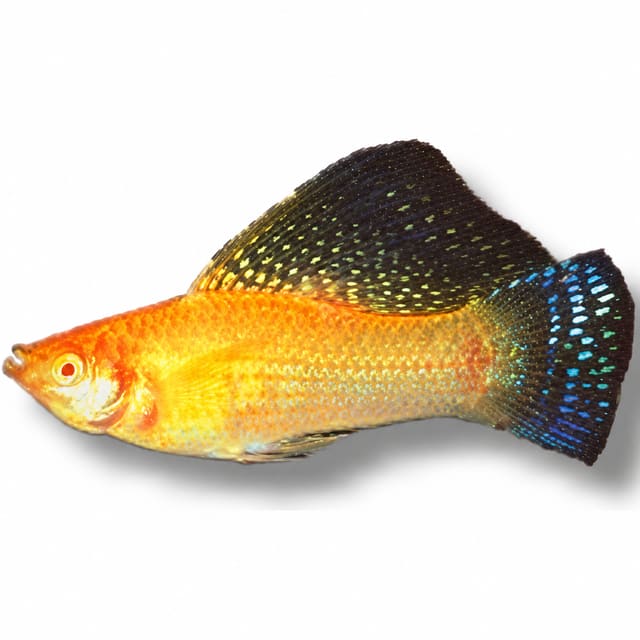
Gold Black Molly (Poecilia sphenops gold black molly)
21–28°C · pH 7.5–8 · 81L
£5.99

One Black Balloon Molly (Poecilia latipinna), supplied at approximately 2.5–3 cm with no sex guarantee. This social hard-water livebearer needs a mature aquarium, plant cover, open swimming room and attentive welfare monitoring because of its shortened balloon body form.
Adult size is the maximum length this species reaches at full maturity (scientific sources). The livestock you receive will be younger and smaller. Product-photo provenance and any image-specific limitations are stated on the listing.
Poecilia latipinna
Save when buying multiple fish. Each quantity is one fish; sex and pair formation are not guaranteed unless the selected variant explicitly states them.
One Black Balloon Molly (Poecilia latipinna), supplied at approximately 2.5–3 cm with no sex guarantee. This social hard-water livebearer needs a mature aquarium, plant cover, open swimming room and attentive welfare monitoring because of its shortened balloon body form.
Adult size is the maximum length this species reaches at full maturity (scientific sources). The livestock you receive will be younger and smaller. Product-photo provenance and any image-specific limitations are stated on the listing.
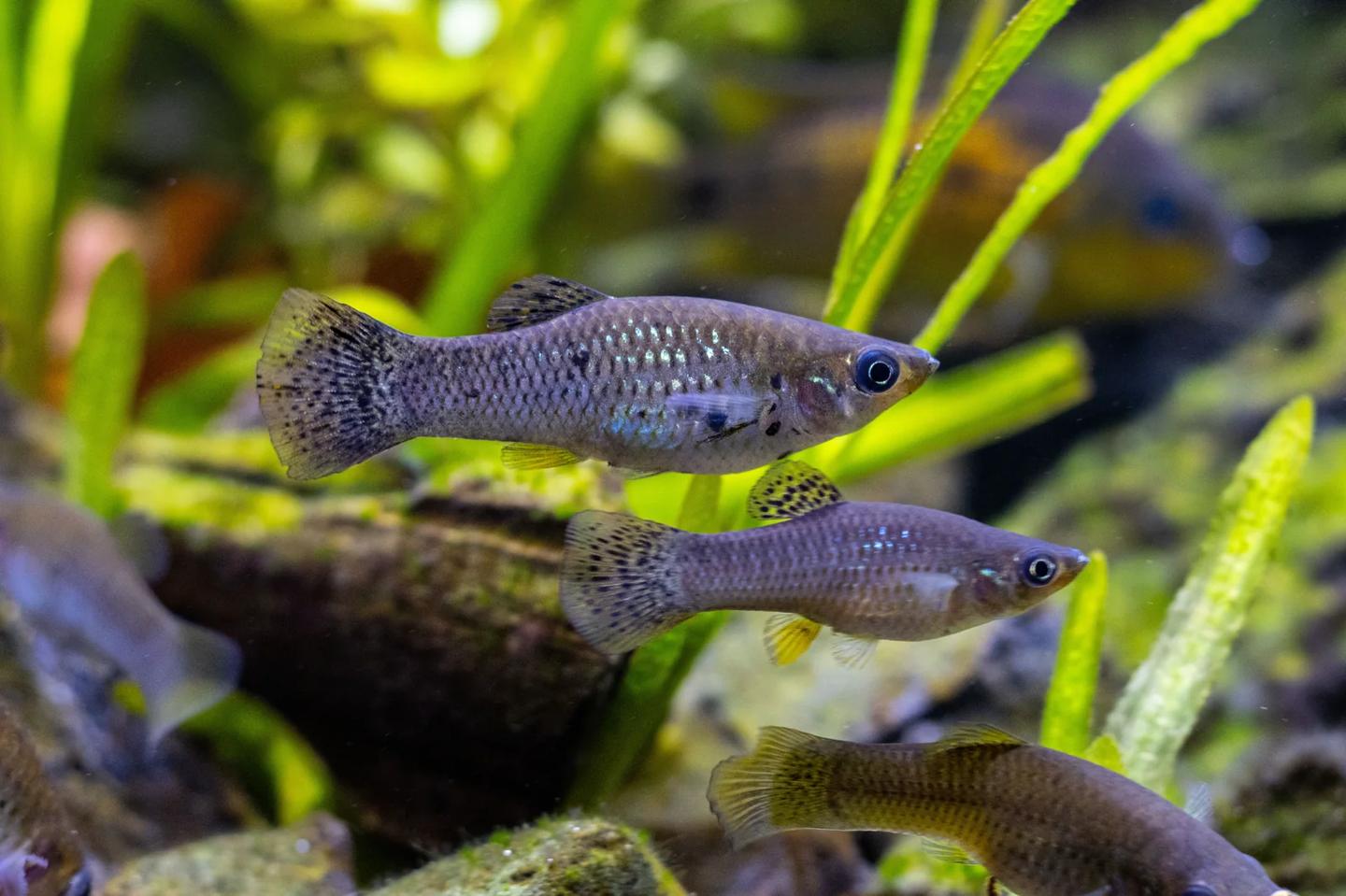
Mollies are social livebearers sold under a broad trade name. Identify the species or domestic form first; plan at least 45 litres for a small group of smaller mollies or 80 litres for sailfins, then verify adult size, water, sex ratio and the complete community.
Maintain these water conditions for optimal health and vibrant colors
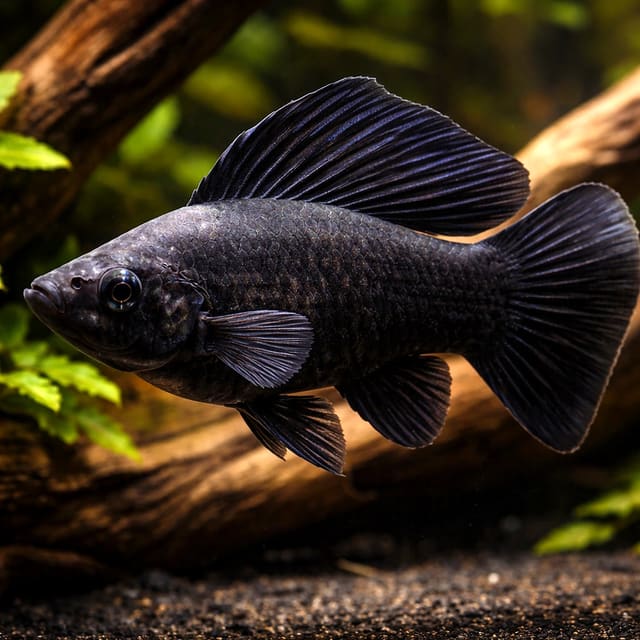
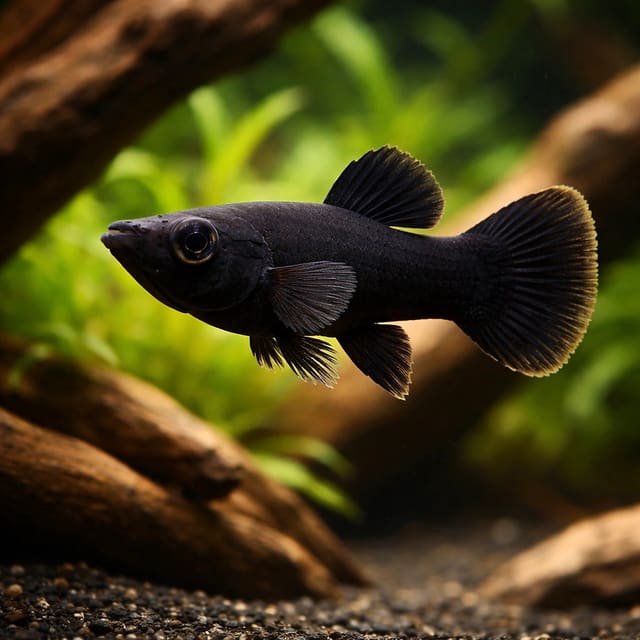
The Black Balloon Molly is a dark ornamental livebearer with the compact, deep outline associated with balloon-form mollies. The supplier identifies this line as Poecilia latipinna, the sailfin molly, in the family Poeciliidae. It is a lively, social fish for a mature aquarium with mineral-rich water, steady filtration and enough open room to swim without fighting the current.
One purchase supplies one live fish at approximately 2.5–3 cm. Sex is guaranteed only when the selected option explicitly states male or female. This Black Balloon Molly listing has no sex-guaranteed option. Do not plan a fixed male-to-female ratio on the assumption that a particular sex will arrive.
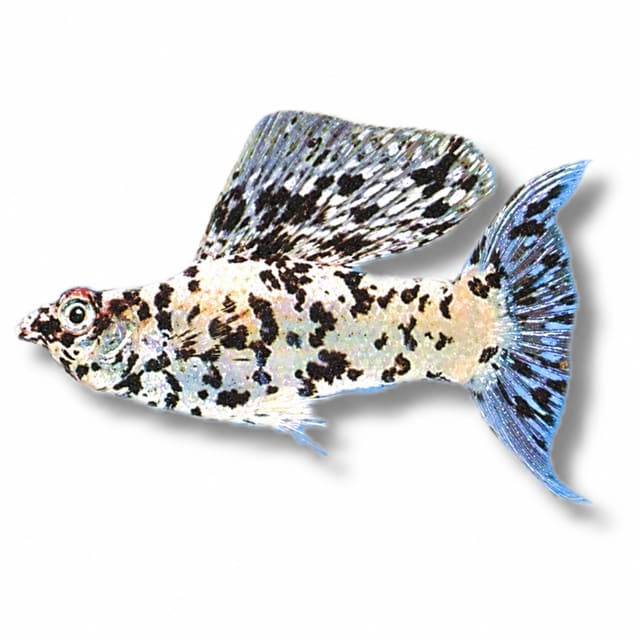
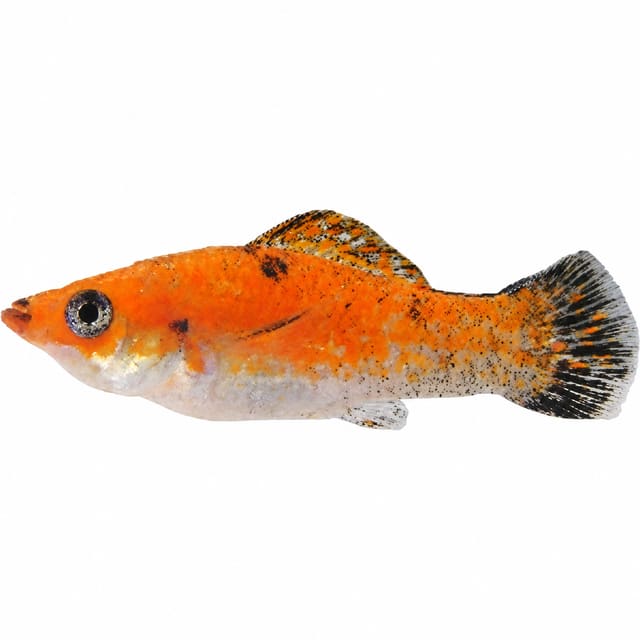
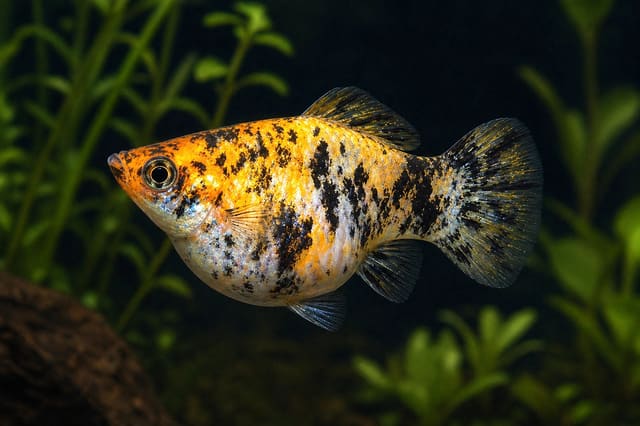
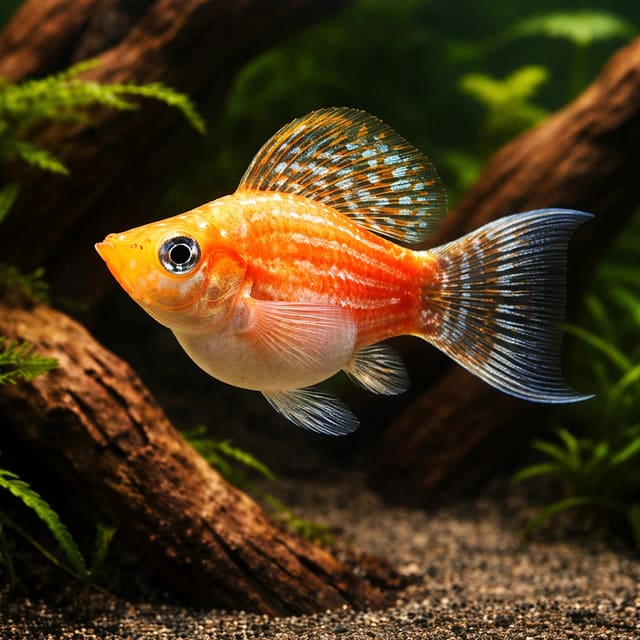
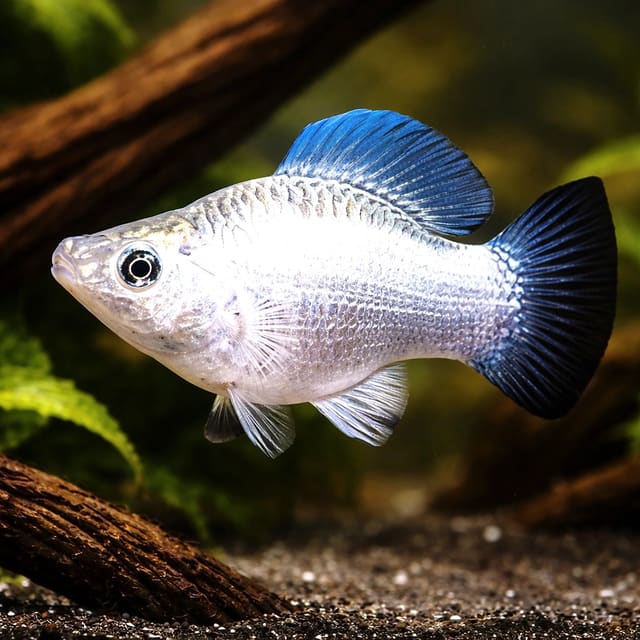
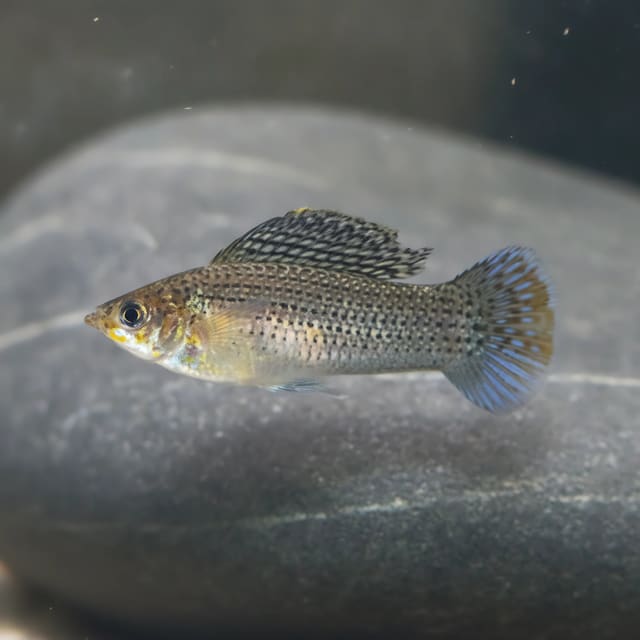
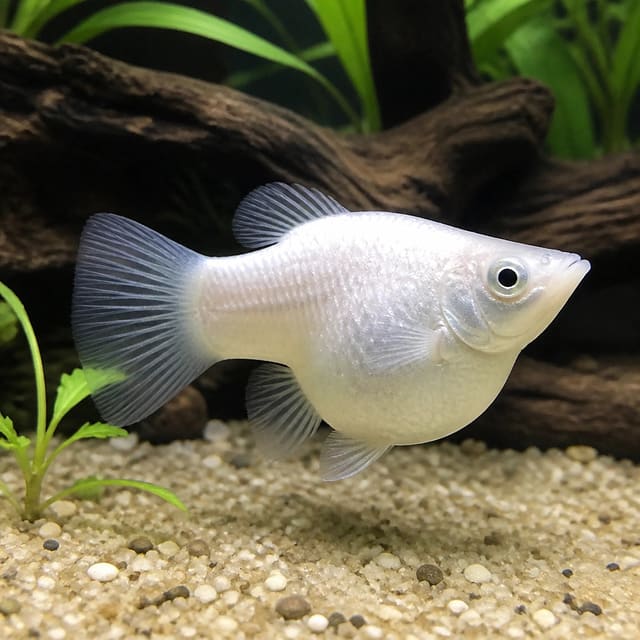
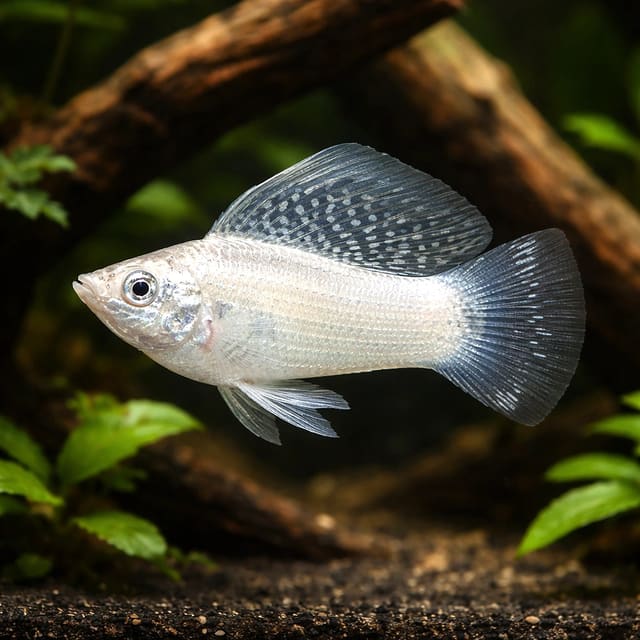
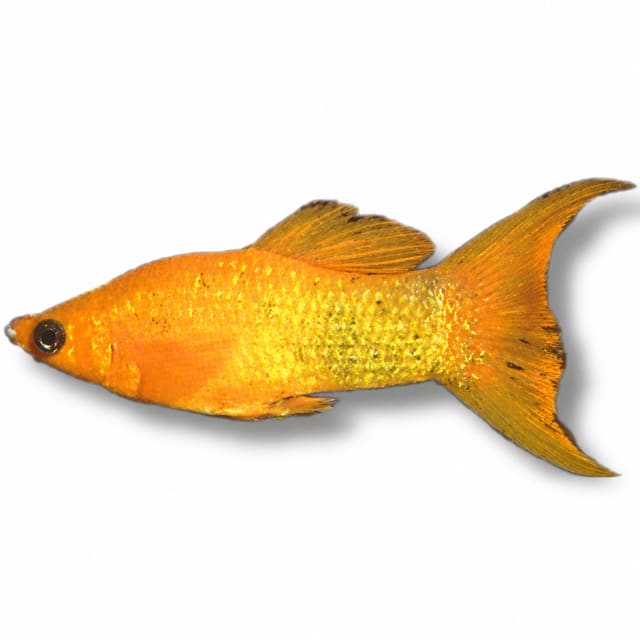
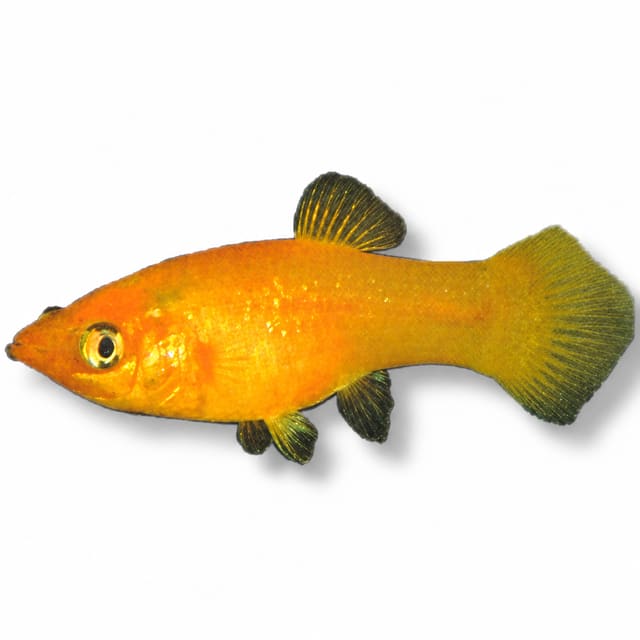
Gallery images have been digitally enhanced to improve image quality. Natural colour, pattern, size and maturity can vary between live animals. The images show a black, short-bodied molly form, but a living fish may differ in shade, fin development, body depth and small markings. The pictures are useful for recognising the intended variety, not for promising an identical individual.
The word balloon describes the deliberately shortened, rounded body. It does not mean the fish is pregnant and it is not a separate wild species. This shape deserves an informed choice: it can make efficient swimming, feeding access and body-condition assessment more demanding. A keeper should be comfortable watching posture, buoyancy and feeding closely and providing a simple layout that the fish can navigate easily.
| Offer | One live fish, approximately 2.5–3 cm |
|---|---|
| Sex | No male or female guarantee |
| Source identity | Poecilia latipinna, sailfin molly group |
| Recorded size context | 12.5 cm standard length in species husbandry guidance; FishBase records 15 cm total length for male/unsexed fish |
| Routine aquarium range | 21–26 °C, pH 7.0–8.5 and 15–35 dGH from species-level husbandry guidance |
| Social plan | A small group, with one male to two females when sexes are known |
| Store care assessment | Intermediate, because hard-water matching and balloon-form observation matter |
The juvenile sale size is not an adult-size promise. Seriously Fish reports 125 mm standard length, which excludes the tail, and FishBase records a maximum of 15 cm total length for male/unsexed P. latipinna. Those measurements have different scopes, so they should stay labelled rather than being blended into a vague average. Plan the aquarium around a substantial adult molly and the needs of its group.
This fish suits a keeper whose tap water is naturally moderately hard or harder, or who already uses a measured and stable remineralisation routine. It is a poor choice for a very soft, acidic community assembled around species that need those conditions. If the aquarium is still being prepared, use the first tropical tank guide before livestock arrives, and browse the molly fish collection when deciding whether a standard-bodied molly would suit you better.
If the black colour appeals but the deliberately shortened outline does not, compare the standard-bodied Black Molly. It is a different product choice with a conventional body form, not a promise that the two listings make suitable tank mates.
A well-planned Black Balloon Molly aquarium is calm rather than complicated: stable mineral content, useful plant cover, open swimming lanes, moderate flow and several small feeding points. The difficulty comes from matching those basics consistently and noticing quickly when the compact body makes ordinary tasks harder.
This black balloon stock is linked to Poecilia latipinna. Wild sailfin mollies occur from the Cape Fear drainage in North Carolina to Veracruz in Mexico and use warm ponds, quiet backwaters, drains, streams and brackish canals. Domestic ornamental mollies have been selected and crossed for generations, so colour and silhouette cannot prove the full ancestry of an individual strain. The source identity remains the sensible care anchor without pretending that a gallery image is genetic evidence.
Two useful adult measurements appear in the published species records. Seriously Fish lists 125 mm standard length, while FishBase gives 15 cm total length for male/unsexed fish. Standard length stops at the base of the tail and total length includes it. Both figures describe the species-level identity, not a guaranteed final measurement for every balloon-form individual. Use them to avoid undersizing the aquarium, not to promise an exact adult length.
The compact outline is structural. A fish that looks naturally deep-bodied may still be healthy and active, but the form can make a sudden swelling, poor posture or loss of condition harder to spot. Learn the individual’s normal swimming angle, breathing rate and feeding response. A short phone video taken when the fish is settled can be useful for comparison if its movement later changes.
Species-level husbandry guidance for P. latipinna gives 21–26 °C, pH 7.0–8.5 and 15–35 dGH. FishBase records a broader wild environmental temperature band of 20–28 °C; that is not the same as a recommended day-to-day aquarium target. Use the narrower aquarium range for routine care and keep changes gradual.
| Measure | Practical use |
|---|---|
| Temperature | Keep 21–26 °C for routine aquarium care; favour stability and good oxygenation. |
| pH | Keep 7.0–8.5 and avoid repeated chemical swings made to chase a single number. |
| General hardness | Maintain 15–35 dGH according to the species husbandry source; calcium and magnesium matter more than routine salt. |
| Ammonia and nitrite | Keep both at 0 mg/l in a mature, functioning biological filter. |
| Nitrate | Track the trend against the tap-water baseline and control it through sensible stocking, feeding and water changes. |
Hardness and salinity are not interchangeable. The species can live in freshwater when it is hard and alkaline; adding aquarium salt is not a substitute for adequate calcium and magnesium. Salt can also be unsuitable for some plants and companions. Measure GH and KH, understand the starting water, and avoid improvised spoonfuls that create an unstable salinity.
If local water is soft, choose a fish that naturally fits it or use a deliberate remineralisation method that can be repeated at every water change. Do not keep a hard-water molly and soft-water species at an unhappy compromise. The aquarium water chemistry guide explains the measurements, while the water matcher helps compare tested values with stated ranges.
Seriously Fish gives a base of 76 × 38 cm and about 87 litres for the species. Treat that as a starting point for a suitable small group, not a promise that any tank with that nominal volume is automatically adequate. Adult group size, male behaviour, companions, filtration and the usable swimming footprint all change the real capacity. A longer tank gives a pursued fish more room to disengage than a tall narrow aquarium of similar volume.
Use a secure cover, mature biological filtration and moderate movement. Arrange plants, wood or smooth rock around the sides and rear while leaving an open route through the middle and to the surface. A balloon-form molly should not have to squeeze through sharp gaps or work against a powerful outlet every time it reaches food. Diffuse the flow if the fish is continually swept aside or hides behind equipment.
Dense planting is not required across the whole aquarium. Broad-leaved cover, fine stems and floating roots can break sight lines and give a pressured fish somewhere to pause, while open areas support normal cruising. Choose plants that tolerate the same hard water. Leave clear surface area for gas exchange and use a regular day-night cycle rather than continuous bright lighting.
Sand or smooth gravel can both work. Choose the substrate for planting and maintenance, keep exposed debris under control and avoid sharp ornaments. The fish spends much of its time in open water, so a beautifully decorated floor does not compensate for poor swimming room or weak filtration.
Mollies are social livebearers. Species husbandry guidance recommends a trio with two females to one male because males can be persistent in courtship, and males may also be aggressive towards one another. This listing does not guarantee sex, so that ratio cannot be ordered precisely. Build enough space and cover to manage the group that develops, and be prepared to separate a relentless pursuer or protect a pressured fish.
Short chases and displays may be ordinary. Continuous pursuit, cornering, missed meals, clamped fins or a fish remaining hidden are not behaviour to ignore. More fish do not always solve the problem: adding animals to an already crowded aquarium can increase stress. Review the number of males, tank length, cover and feeding access together.
Mixed-sex livebearers can produce fry. Do not buy this listing expecting a non-breeding group, and do not assume that one fish’s sex can be guaranteed from size or a gallery pose. Plan what will happen if young appear before the aquarium becomes overstocked. Dense fine-leaved plants may shelter fry, but they do not create extra adult capacity.
Wild P. latipinna feeds mainly on algae and plant material, with small crustaceans, rotifers and aquatic insects also recorded. Domestic fish accept prepared foods, but plant matter should remain a meaningful part of the diet. Start with a complete algae-rich flake or small granule and rotate modest portions of vegetable-based foods. Daphnia, brine shrimp and other appropriately sized frozen or live foods can add variety.
| Food | How to use it |
|---|---|
| Complete algae-rich flake or small granule | Use as the regular staple in pieces the juvenile can take easily. |
| Spirulina or vegetable-based food | Rotate regularly so plant material is not an occasional afterthought. |
| Blanched vegetable | Offer occasionally and remove leftovers before they spoil the water. |
| Daphnia or brine shrimp | Give modest portions for variety rather than making rich animal food the base diet. |
| Natural algae and biofilm | Encourage grazing, but do not treat it as a complete diet or a substitute for maintenance. |
Feed small portions and adjust them to the group, food type and water quality. Spread food over more than one point if fast companions dominate. Watch whether the balloon-form fish can reach, grasp and swallow the food without repeated missed strikes. A rounded abdomen is not, by itself, proof that the fish needs more food.
The RSPCA’s general aquarium guidance stresses that every fish needs a well-set-up and maintained filter because ammonia and nitrite are toxic. Clear water is not evidence that the biofilter is working. Test results, stable behaviour and consistent maintenance tell you far more than appearance alone.
Look for changes rather than trying to diagnose from one feature. A settled fish should hold position without constant correction, reach the feeding area without exhaustion, show steady gill movement and take food with interest. Investigate persistent rolling, sinking, floating, shimmying, gasping, sudden isolation, clamped fins, sores or repeated inability to feed.
| Observation | First checks |
|---|---|
| Several fish distressed together | Test temperature, ammonia, nitrite, pH and oxygenation immediately. |
| One fish repeatedly chased | Review sex ratio, line-of-sight breaks, swimming length and access to food. |
| Posture or buoyancy changes | Compare with the fish’s normal movement, test water and seek qualified advice if persistent. |
| Loss of appetite | Check food size, competition, water quality and any other physical change. |
| Frayed fins or damage | Inspect companions, decor and water quality rather than assuming a single cause. |
Avoid blind medication or sudden salt dosing. Water-quality problems, social pressure, injury and disease can produce overlapping signs. If a problem persists after immediate husbandry checks, use a qualified aquatic veterinarian or experienced aquatic professional rather than combining treatments.
Consistency begins before new water reaches the aquarium. Test the tap supply occasionally because seasonal or supplier changes can alter hardness and pH. Dechlorinate the replacement water, bring it close to the aquarium temperature and reproduce any measured remineralisation recipe accurately. Adding minerals by eye makes each water change a new experiment. If a large correction is genuinely needed, make it gradually and observe the fish rather than forcing a rapid number change.
Use test results as a trend. A single reading can be affected by technique, an expired reagent or a contaminated tube, so repeat an unexpected result before taking drastic action. Write down temperature, pH, GH and any ammonia or nitrite finding when something changes. A simple record helps distinguish a one-off error from a real drift and prevents several family members from making separate corrections.
Body condition is best judged over time. Look along the back for steady muscle, check that the abdomen is neither abruptly enlarged nor hollow, and watch the fish turn in both directions. Compare the same individual under similar lighting rather than comparing it with a stylised gallery image. The balloon outline means shape alone is an unreliable feeding guide, so combine appearance with appetite, waste, activity and access to food.
Make changes one at a time where the situation is not an emergency. If a fish misses food, first reduce competition or offer smaller pieces in a calmer area. If it avoids the current, redirect the outlet before redesigning the whole aquarium. If several animals show the same problem, prioritise water and oxygen checks. This measured approach makes it easier to see which husbandry change helped and avoids piling extra stress onto an already unsettled fish.
Warm water carries less dissolved oxygen, while active livebearers continue to place demand on it. Keep the surface moving and make sure plant cover does not seal it completely. During unusually hot weather, check the thermometer rather than assuming the heater setting reflects the real temperature. If flow stops during a power interruption, protect oxygenation and avoid feeding heavily until filtration is running normally again.
A thermometer, a working filter and a basic liquid test kit are more useful than a shelf of speculative remedies. Know where the filter intake can be cleared, keep spare dechlorinator available and have a plan for safe aeration during a longer outage. Preparedness is part of routine welfare, especially for a fish whose swimming efficiency may already be reduced by its body form.
Prepare the aquarium before dispatch: cycle the filter, confirm temperature and mineral content and clear a calm swimming route. Float the sealed bag for 20–30 minutes, keep handling brief and transfer the fish without adding shipping water to the aquarium where practical. Offer shelter and avoid a heavy first meal.
For the first week, check breathing, position and feeding at least daily. Test water promptly if behaviour changes. Quarantine from established livestock when a suitable mature quarantine aquarium is available; a bare uncycled container is not safer merely because it is separate.
Read the current delivery and Live Arrival Guarantee policy before dispatch day. If there is an arrival problem, keep the parcel sealed until filming begins and make one continuous unboxing video that shows the outer box, the parcel being opened and the fish still in the sealed bag. That video is evidence for a claim, not part of biological fish care.
A peaceful label is only the start. Black Balloon Mollies require moderately hard or harder, alkaline water, so tank mates must share that chemistry and a similar temperature range. A soft-water fish is not a sound companion simply because neither species is aggressive. The aquarium should also give the shorter-bodied molly fair access to food and somewhere to move away from courtship.
Seriously Fish describes P. latipinna as generally suitable for a hard-water community, while noting that adults may pick on smaller fish and that males can be aggressive with one another. It names other livebearers and some catfish as possibilities. Those are categories to investigate, not universal approvals: check the exact animal’s adult size, temperature, hardness, activity and diet.
| Possible companion | Decision points |
|---|---|
| Other mollies | Often the clearest social match when body size, water and sex ratio are planned; domestic lines may interbreed. |
| Other hard-water livebearers | Potentially suitable when adult size, activity and feeding speed are compatible. |
| Suitable catfish | Species dependent; verify hardness, temperature, adult size, flow and feeding needs for the exact catfish. |
| Very small or timid fish | Use caution because an adult sailfin molly may intimidate or outcompete them even without persistent attack. |
| Fin nippers or aggressive fish | Avoid; a short-bodied molly should not face repeated damage or high-speed pursuit. |
| Soft-water specialists | Avoid forcing both species into middle-ground chemistry outside their healthy ranges. |
Compatibility can fail at mealtimes even when no fish is openly aggressive. Watch the whole group eat. If quick companions take every flake before the molly reaches it, use several feeding points or choose slower tank mates. Do not compensate by overfeeding the entire aquarium, because uneaten food raises the waste load.
Likewise, do not rely on total litres alone. A tank can be below a stocking calculator’s limit but still have too many fish using the same upper-water lane. Swimming footprint, cover, filter capacity and social pressure are all part of the decision.
Where sexes are known, one male with two females is the species-level husbandry recommendation. This particular offer is not sexed, so a balanced group cannot be guaranteed at purchase. Observe the developing group and act if one fish receives relentless attention. Plant cover can interrupt pursuit, but it cannot solve severe crowding or an unsuitable ratio by itself.
Livebearers reproduce readily. Keep a realistic plan for fry and do not treat repeated pregnancy as a harmless decoration. If capacity is limited, a securely sexed single-sex group may be easier, but this unsexed offer cannot provide that certainty. Never use a small permanent trap as the answer to routine social pressure.
The practical rule is simple: choose peaceful, similarly sized fish that thrive at 21–26 °C in hard, alkaline water, then confirm that the aquarium offers enough adult space and fair feeding access. Avoid predators, persistent fin nippers, very timid companions and species that need soft acidic water. Reassess the plan as juveniles grow.
Seriously Fish reports 12.5 cm standard length for Poecilia latipinna, while FishBase records 15 cm total length for male/unsexed fish. Standard length excludes the tail, so keep both measurements labelled and plan for a substantial adult molly rather than the 2.5–3 cm sale size.
Species-level husbandry guidance gives a 76 × 38 cm base and about 87 litres. Treat that as a starting point for a suitable small group and increase space when companions, multiple males or a heavier stocking plan demand it.
They are social livebearers. Species-level husbandry guidance recommends a trio of one male to two females when sexes are known, but this listing does not guarantee sex, so plan enough space and cover to manage the group that develops.
We class it as intermediate rather than easy. Basic feeding is straightforward, but the fish needs reliably hard, alkaline water and its shortened body form deserves closer observation of swimming, buoyancy and feeding access.
Use a complete algae-rich flake or small granule as the staple, add regular plant-based variety and offer modest amounts of suitable small frozen or live foods such as daphnia or brine shrimp.
For routine aquarium care, use the species husbandry range of 21–26 °C and pH 7.0–8.5, with hardness of 15–35 dGH. Keep the values stable and do not replace mineral hardness with guessed salt dosing.
It is generally suitable for a hard-water community, but adults may pick on smaller fish and males can be aggressive with one another. Avoid persistent fin nippers and intervene if courtship or competition leaves one fish cornered or unable to feed.
Other compatible livebearers and some catfish can be considered, but only after checking the exact species for hard-water tolerance, temperature, adult size and feeding speed. Do not treat a broad category as a universal tank-mate approval.
Tropical Fish Co hand-packs livestock with oxygen and insulation as conditions require and uses a licensed live-animal courier. Someone must receive the parcel; for a Live Arrival Guarantee claim, contact the store the same day with the order number and one continuous video showing the sealed parcel opened and the fish still in its sealed bag.
Identity, distribution, wild habitat, diet and the 15 cm total-length record were checked against FishBase: Poecilia latipinna. Species-level aquarium dimensions, 12.5 cm standard length, water ranges, diet and behaviour were checked against Seriously Fish: Poecilia latipinna. Broader UK livebearer care was cross-checked with the OATA guppy and molly care sheet, and filtration context with the RSPCA aquarium environment guidance.
This offer’s identity and dispatch grade come from its trade record; the care parameters come from the public species sources. Standard length excludes the tail; total length includes it. Aquarium recommendations describe planning ranges rather than guaranteed outcomes for every domestic individual.
No reviews for this item yet. Bought one? Honest reviews only, good or bad.
What customers say about ordering from us
I have a small group of long finned mountain minnows. So was delighted to be able to order ten of this variety to increase the genetics in my tank . The ones I recieved are healthy but it’s to early to give a verdict on wether they are of a long finned type since they are small currently.
Gordon Walker · 23 Sept 2026
100% success travel and "installation". Pleased with quality of purchase. The Siamese fighter a bit "shy" so have not yet seen him at his best yet but looking good. Happy customer. GG
George E Garratt · 21 Sept 2026
Reviews of our shop, collected by Judge.me, an independent third-party review collector. Newest first.