Easy
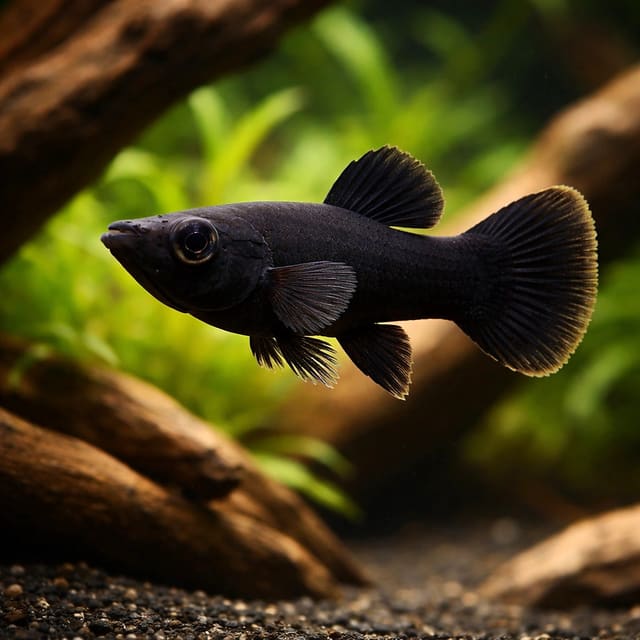
Black Molly (Poecilia sphenops black molly)
21–28°C · pH 7–8.5 · 81L
£3.29
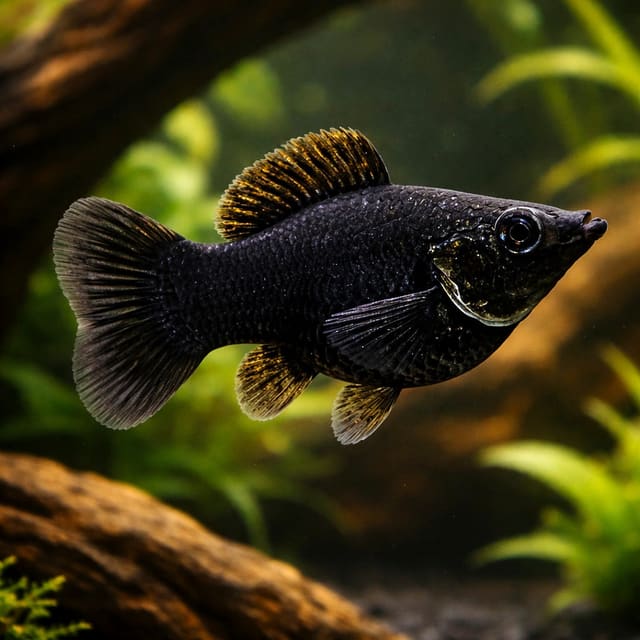
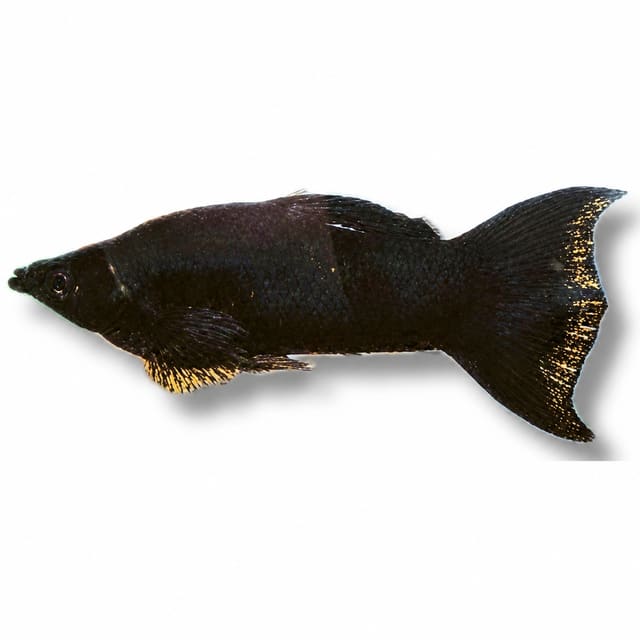
Poecilia latipinna black molly is the all-black form of the sailfin molly, a livebearer that needs hard, alkaline water and room to grow to 15 cm. Each purchase is one live fish supplied at 4–5 cm, and sex cannot be chosen.
Adult size is the maximum length this species reaches at full maturity (scientific sources). The livestock you receive will be younger and smaller. Product-photo provenance and any image-specific limitations are stated on the listing.
Poecilia latipinna
Shoaling fish: kept in a group they feel safer, stay calmer and show their best colour.
Poecilia latipinna black molly is the all-black form of the sailfin molly, a livebearer that needs hard, alkaline water and room to grow to 15 cm. Each purchase is one live fish supplied at 4–5 cm, and sex cannot be chosen.
Adult size is the maximum length this species reaches at full maturity (scientific sources). The livestock you receive will be younger and smaller. Product-photo provenance and any image-specific limitations are stated on the listing.
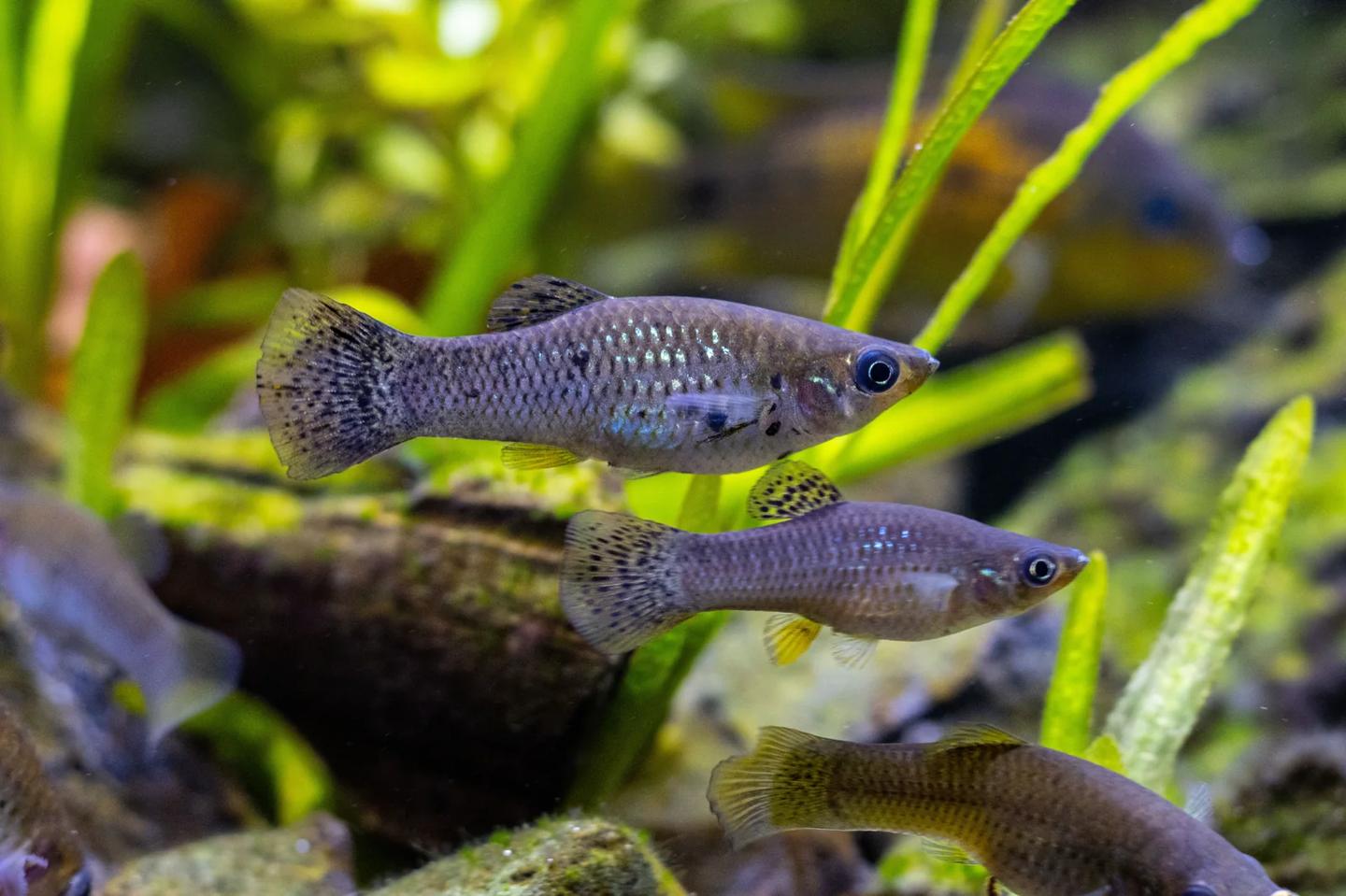
Mollies are social livebearers sold under a broad trade name. Identify the species or domestic form first; plan at least 45 litres for a small group of smaller mollies or 80 litres for sailfins, then verify adult size, water, sex ratio and the complete community.
Maintain these water conditions for optimal health and vibrant colors
Poecilia latipinna black molly is the all-black colour form of the sailfin molly, a livebearing fish of the family Poeciliidae whose wild range runs along the coast of North America from the Cape Fear drainage in North Carolina to Veracruz in Mexico. Each purchase is one live fish, supplied at 4–5 cm. The condition that matters most is water chemistry: this species needs moderately hard to hard, alkaline water and weakens in soft or acidic tanks.
Plan for the adult rather than the youngster in the bag. FishBase records a maximum of 15 cm total length, and the tall, sail-like dorsal fin of adult males, which gives the species its common name, needs a diet rich in greens to develop well. That makes this a fish for a roomy, planted, hard-water community rather than a small starter tank.
| Scientific name | Poecilia latipinna |
|---|---|
| Common name | Sailfin molly, black colour form |
| Family | Poeciliidae (livebearers) |
| Supplied size | 4–5 cm |
| Recorded maximum | 15 cm total length |
| Aquarium water | 21–26 °C, pH 7.0–8.5, 15–35 dGH |
| Group | At least three: one male to two females |
| Suits | Hard-water community aquariums of about 80 litres or more |
| Diet | Algae-rich foods and greens, plus small live or frozen foods |
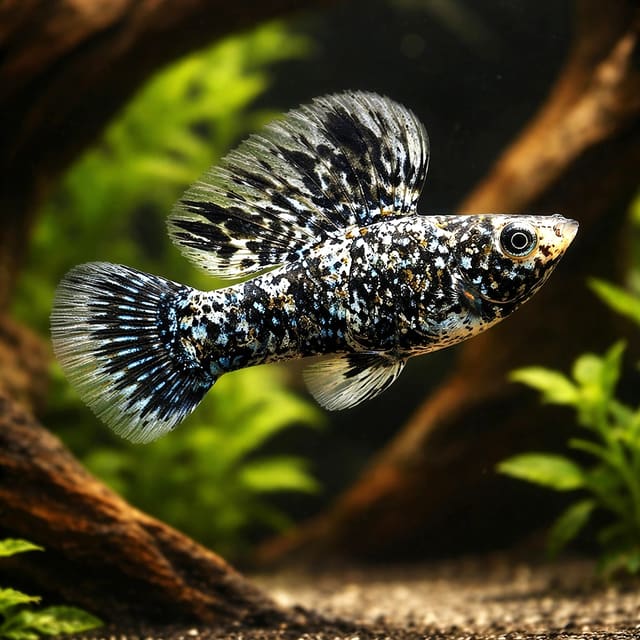
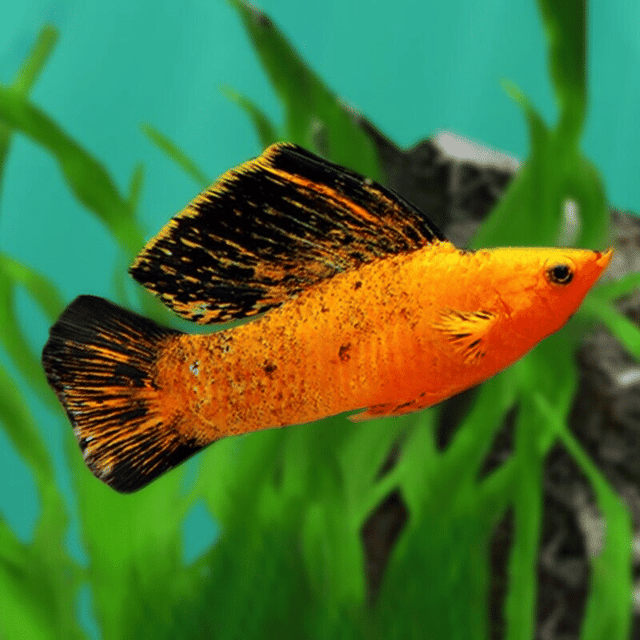
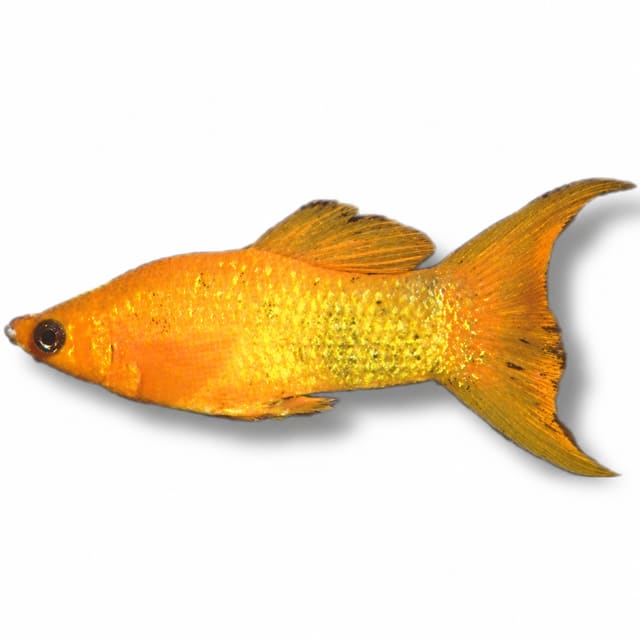
One purchase supplies one live Poecilia latipinna black molly at its 4–5 cm dispatch size. That is a young fish well short of the adult length in the table, so expect it to keep growing in your aquarium. If you want a group, the quantity you order is the number of fish you receive, whatever number of fish appears in a photograph.
Sex is guaranteed only when the selected option explicitly states male or female. This Poecilia latipinna black molly listing has no sex-guaranteed option. Adult males are easy to recognise once mature, as the care section explains, but plan on the basis that the balance of males and females in your group is unknown until the fish grow up.
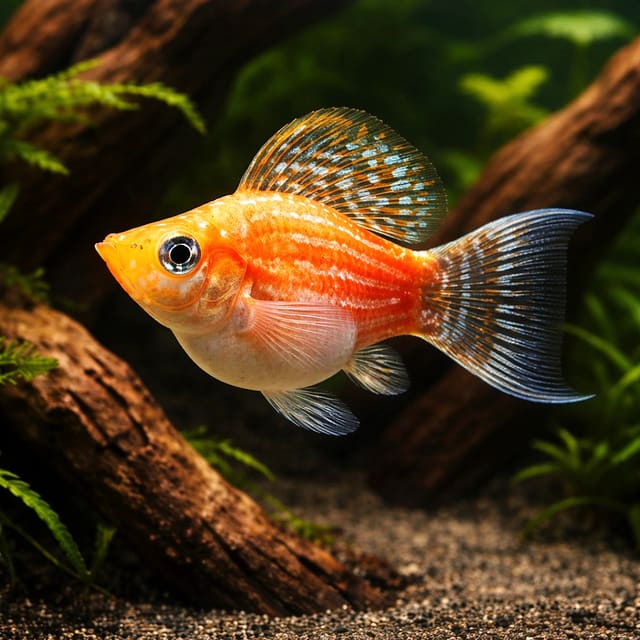
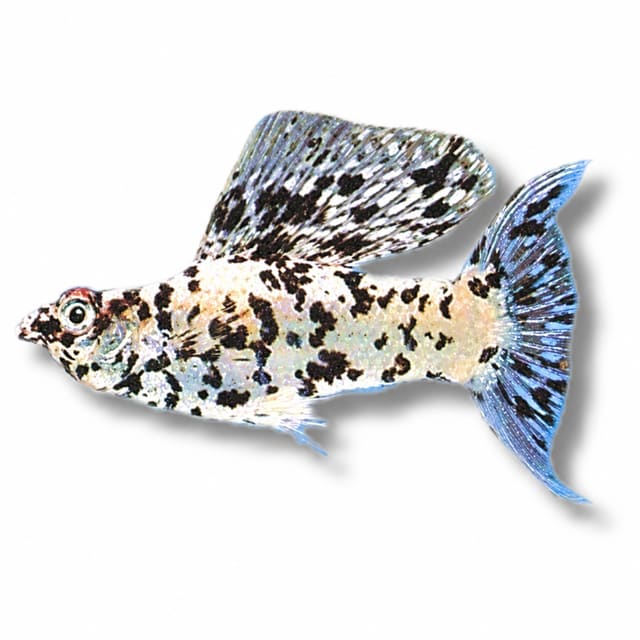
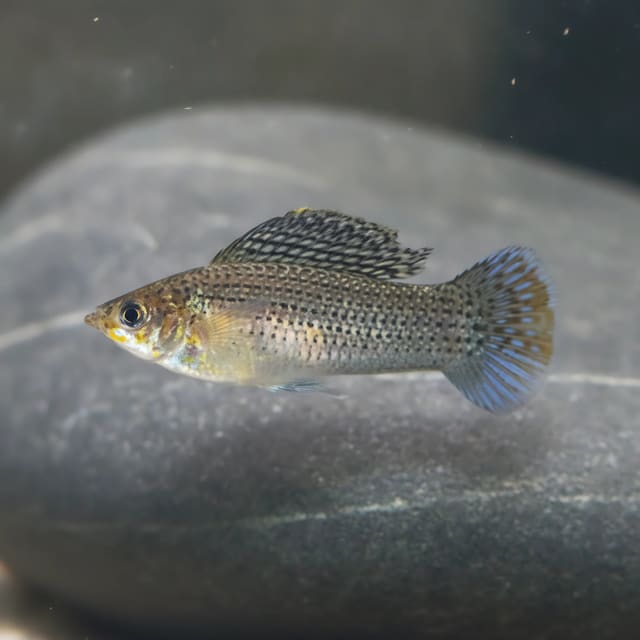
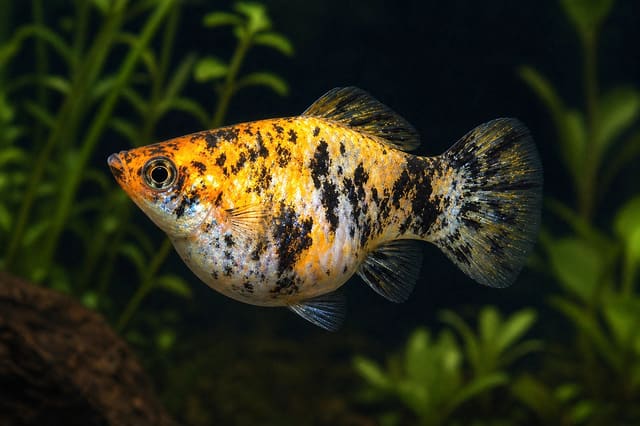
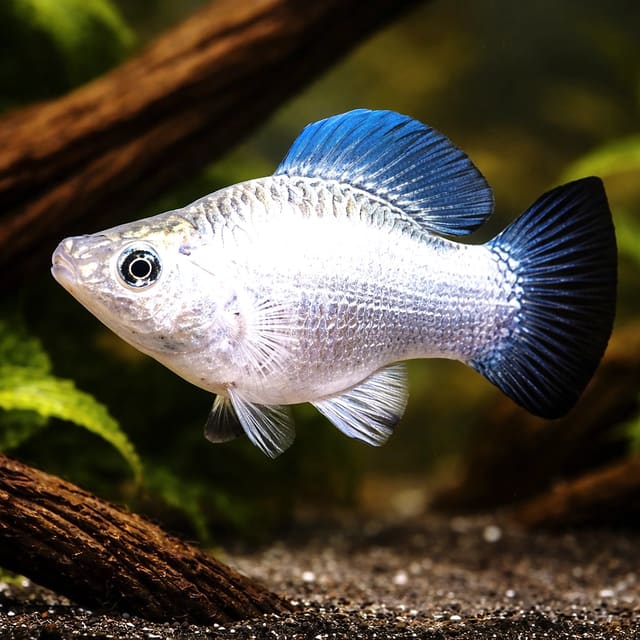
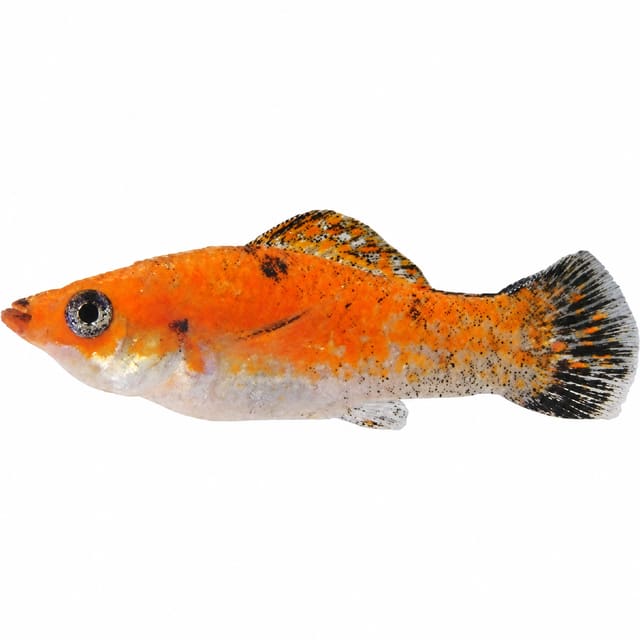
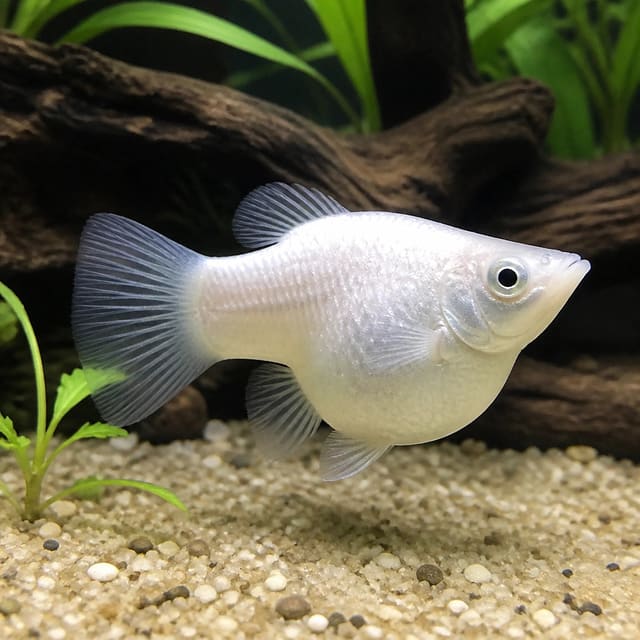
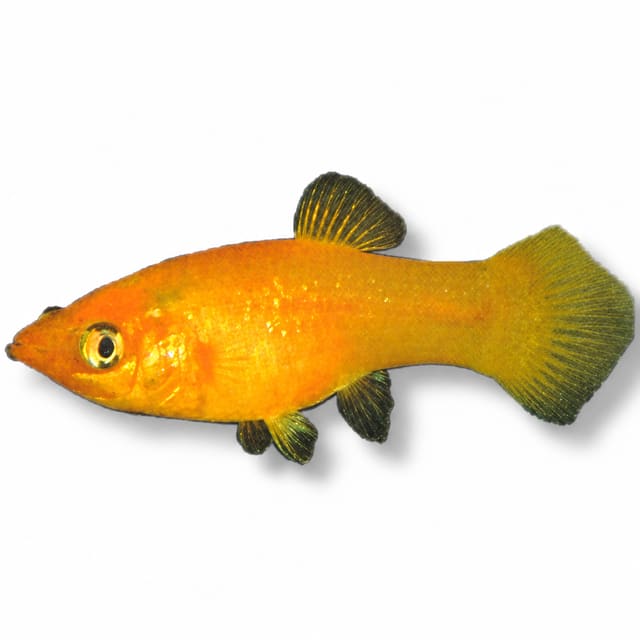
Gallery images have been digitally enhanced to improve image quality. Natural colour, pattern, size and maturity can vary between live animals. Use the gallery as a guide to the colour form and fin shape of this molly, and allow time for a young fish to fill out.
Wild sailfin mollies live in still or gently flowing warm water: small creeks and drains, ponds, lakes, sloughs and quiet, often vegetated backwaters and pools, as well as coastal waters, where they are abundant in tidal ditches and brackish canals. They feed mainly on algae there. That background explains the two things this fish asks of an aquarium: plenty of plant and algae growth to graze, and water that stays hard and alkaline. The species is assessed as Least Concern on the IUCN Red List.
"Black molly" is a trade name for all-black mollies, and it is used for more than one species. This fish is the sailfin species, Poecilia latipinna, so it is the one to choose if you want the tall dorsal sail and can give it the space and hard water it needs. Seriously Fish notes that Poecilia latipinna has been selectively bred into many colour forms for the aquarium trade and has also been crossed with other mollies, particularly Poecilia sphenops, so tank-bred strains are far removed from their wild ancestors in colour and in diet.
If you are still deciding between mollies, you can compare body shapes, colours and adult sizes across our molly fish collection before settling on one species for your tank.
It is a poor match for soft, acidic aquariums, for tanks built around shy species and for small tanks where a 15 cm fish would be cramped. The sections below cover water, tank set-up, feeding, arrival, maintenance, breeding and tank mates in the order most keepers need them.
Most problems with sailfin mollies are decided before the fish arrives. Work through these points first, and each one is covered in more detail in the sections that follow.
Water chemistry decides how well this molly does. Seriously Fish gives aquarium ranges of 21–26 °C, pH 7.0–8.5 and a general hardness of 15–35 dGH for Poecilia latipinna, and stresses that the species must be kept in moderately hard or harder water with a basic pH. Kept in soft or acidic water, the fish weakens fairly rapidly, and the usual signs are shimmying, fungus and clamped fins.
| Temperature | 21–26 °C |
|---|---|
| pH | 7.0–8.5 |
| General hardness | 15–35 dGH |
| Ammonia | Zero |
| Nitrite | Zero |
| Nitrate | No more than 20 mg per litre above your tap water level |
The first three rows are the ranges for this species. The ammonia, nitrite and nitrate limits come from the OATA care sheet for guppies and mollies and apply to every fish in the tank.
The OATA sheet covers guppies and mollies as a group. It suggests 20–28 °C, pH 7.0–8.0, a medium-hard general hardness of 8–18 °dH and a carbonate hardness of 5–15 °dKH. Those figures overlap the sailfin molly's own ranges, but this species sits at the harder, more alkaline end, so when the two differ, follow the species figures and keep general hardness at 15 dGH or above rather than at the soft end of the group band.
FishBase records the species in waters of 20–28 °C across its wild range. Treat that as a description of the climate the fish comes from, not a reason to run the heater at either extreme. A steady temperature in the middle of 21–26 °C is the practical aquarium target.
Sailfin mollies are often described as brackish-water fish, and FishBase records wild fish in fresh, brackish and coastal marine water. Seriously Fish is clear that salt is not necessary in the aquarium: the fish lives perfectly well in freshwater provided the water is not soft or acidic, because it is the hard minerals, calcium and magnesium, that are crucial to its long-term health.
In practice, if your tap water is already hard and alkaline you may need to do very little beyond good maintenance. If it is soft, work out how you will raise and hold the hardness before you buy, and do not rely on salt to make up the difference.
Our guide to aquarium water parameters explains what general hardness, carbonate hardness and pH measure and why they change. Once you have readings, the water parameter matcher compares your own numbers with the ranges above, which is the quickest way to see whether your tap water suits a sailfin molly as it comes.
A 4–5 cm molly looks small in the bag, but it can reach 15 cm, and a mature sailfin needs length to swim and room for its fins. Seriously Fish suggests an aquarium base of 76 × 38 cm, a volume of about 87 litres, for this species. The OATA care sheet recommends at least an 80 litre aquarium for sailfin mollies and adds that the more fish you keep, the larger the volume required. Treat 80 litres as the starting point for a small group and go larger for a busier community. A bigger volume also keeps temperature and water quality more stable, which suits a fish this sensitive to chemistry.
The RSPCA's aquarium guidance is plain that no fish should be kept without a well set up and maintained filter. Fish release ammonia, which is toxic, and a working biological filter lets beneficial bacteria convert it to nitrite, which is also toxic, and then to nitrate, which is safer. For an aquarium of about 87 litres, Seriously Fish suggests a filter rated at 350–435 litres per hour, turning the water over four to five times an hour, and a heater of roughly 50–75 W, assuming a room of around 20 °C. If the room where the tank stands is colder, allow more heating capacity.
| Aquarium base | 76 × 38 cm (about 87 litres) |
|---|---|
| Minimum volume on the OATA sheet | 80 litres for sailfin mollies |
| Filter rating | 350–435 litres per hour |
| Heater | About 50–75 W in a room of around 20 °C |
| Substrate | Aquarium gravel or sand |
Seriously Fish recommends a densely planted aquarium with some open space for swimming. Choose plants with the fish's appetite in mind: this is a highly vegetarian molly, and soft-leaved plants may be destroyed, so tougher-leaved plants are the safer choice. Allowing some common green algae to grow on decor and glass gives the fish extra food to graze between meals, which is close to how it feeds in the wild.
OATA advises aquarium gravel or sand and, ideally, live plants to provide cover. If you use plastic plants and ornaments instead, the same sheet flags the risk of injuries to long fins, so pick smooth pieces that will not snag a tall dorsal fin, and arrange them so that a clear swimming lane remains along the front of the tank.
Set the aquarium up and mature the filter before any fish goes in. Our step-by-step guide to setting up a tropical tank covers the equipment, filter maturation and the checks to make before livestock arrives. OATA advises confirming that ammonia and nitrite both read zero before adding fish, then increasing numbers slowly, because the beneficial bacteria in the filter have to catch up each time more fish are added and feeding increases.
Adding too many fish too quickly can cause new tank syndrome, where there are not enough nitrifying bacteria to cope with the extra waste and ammonia and nitrite rise to levels that may cause fish to become ill or die. With a fish that can grow to 15 cm and produce young, it pays to stock the tank lightly at first and build up over several weeks.
In the wild, FishBase records the sailfin molly feeding mainly on algae, while also taking animal food such as rotifers, small crustaceans including copepods and ostracods, and aquatic insects. Seriously Fish describes wild fish as almost exclusively herbivorous. Tank-bred strains accept most foods offered, but vegetable matter still needs to be a regular part of the diet.
Seriously Fish warns that if too little greenstuff is provided, male dorsal fin development may be impaired. The vegetable part of the menu is therefore not a garnish: it is what lets a male grow the sail this species is kept for.
OATA advises feeding guppies and mollies only what they can eat within a few minutes, once a day, and taking care not to overfeed, because uneaten food breaks down and releases toxic waste into the water. Watch the fish at feeding time: food still drifting or lying on the substrate after a few minutes means the portion was too large.
A varied routine might use the algae-rich flake on most days, swap in vegetable flake or blanched spinach on others and offer a small portion of frozen daphnia or bloodworm now and then. Keep portions small whichever food you use, and remove any spinach the fish have not eaten before it starts to break down.
Feeding time is the easiest moment to check every molly. OATA lists reduced intake or lack of interest in food, and any increase or decrease in body weight and condition, among the early signs that something is wrong. A fish that hangs back from food it normally takes deserves a closer look and a water test, and a steady loss of condition across the group is a reason to review both the diet and the tank chemistry rather than simply feeding more.
Your fish is hand-packed by our team, hand-bagged in pure oxygen and sent in an insulated poly box, with a heat pack when the weather calls for it. A licensed live-animal courier carries the parcel on a tracked service, and we email the tracking number and your confirmed delivery date so you know when to be in. The full terms are on our delivery and Live Arrival Guarantee page.
The video is what lets a Live Arrival Guarantee claim be settled quickly and fairly. Our courier may ask for continuous unboxing evidence when we raise a claim, and the guarantee requires someone to have been at the address to receive the parcel, the parcel to be opened and inspected the same day, and a continuous video showing it still sealed.
OATA describes a healthy fish as having clear, bright eyes, undamaged fins, intact scales and no ulcers or bumps. Check for those once the fish is in the tank, then keep watching over the following days for the early warning signs OATA lists:
With a sailfin molly, shimmying, fungus or clamped fins are also the signs Seriously Fish links with water that is too soft or acidic, so test pH and hardness first if you see them. If you are concerned about any fish, test your water quality straight away and get in touch for guidance.
Hard water only helps if it also stays clean. The weekly routine OATA sets out for guppies and mollies is simple and worth following closely:
OATA adds that good husbandry is essential because guppies and mollies can be stressed by even the smallest amounts of ammonia. For a sailfin molly there is one more point to watch: make sure the replacement water matches the hardness and pH you are maintaining, so that a routine water change never swings the tank towards soft or acidic conditions.
| Every feed | Check temperature and look over each fish |
|---|---|
| Once a week | Test ammonia and nitrite; change 25% of the water |
| At each water change | Condition new water and match its hardness and pH |
| When flow drops | Rinse filter media in removed tank water |
Keep a note of your readings. A pH or hardness figure that creeps down from week to week is easier to correct early than after the fish start to show clamped fins or shimmying.
Mollies are livebearers, so females give birth to live young rather than laying eggs. Adult males are easy to tell apart: according to Seriously Fish, a male has a gonopodium and a large, long, sail-like dorsal fin, and OATA explains that the gonopodium is a specialised anal fin, which makes guppies and mollies very easy to sex once they are grown.
Seriously Fish recommends keeping this species in trios of two females to a single male, because males can be quite vigorous in their pursuit of mates. OATA likewise suggests keeping at least three together, two females to each male, to reduce stress on females and on other fish in the tank, and more can be kept as long as they are added in that ratio. Males can also be aggressive to one another, particularly when spawning, so give a group with several males enough room.
Because you cannot choose the sex of the fish you order, check the balance of your group once the fish mature and plan any additions to bring it back to one male for every two females.
A group of males and females is likely to breed. Seriously Fish rates breeding as easy and describes a gestation of around two months, a little longer than in some livebearers, after which up to 50 young may be born. The fry are relatively large and accept brine shrimp nauplii, microworm or powdered flake from birth.
Young fish face predation from their parents and other fish, so the breeding tank should be heavily planted if you want them to survive. Seriously Fish's preferred method is to move a gravid female to a separate tank until she gives birth. It also notes that wild-type fish are much less likely to eat their young than the domestic colour forms.
If you would rather not raise young, remember that a mixed group will keep producing them, so plan homes for any that survive. Never release unwanted young, or any aquarium fish, into ponds, rivers or drains: FishBase notes that this species has been introduced to many countries outside its native range, and several report adverse ecological impact.
Seriously Fish describes Poecilia latipinna as generally suitable for a hard-water community, although it may pick on smaller fish as it matures. OATA's view of mollies is similar, generally peaceful and compatible with many other species, with the specific warning that sailfin mollies should not be kept with timid fish. Together, those describe a fish best matched with companions of similar confidence that share its need for hard, alkaline water.
| Good matches | Other livebearers that are not mollies, and some catfish, provided they suit hard, alkaline water |
|---|---|
| Use caution | Noticeably smaller fish, which a maturing sailfin may pick on, and several males in a small tank |
| Avoid | Timid species, other molly species, and fish that need soft or acidic water |
Mollies interbreed readily in the aquarium, and Poecilia latipinna has already been crossed with other molly species, particularly Poecilia sphenops, in the trade. Seriously Fish therefore suggests keeping only one molly species per tank. If you like the look of several black mollies, choose one species and build your group from it.
Seriously Fish suggests other livebearers and some catfish as tank mates. Check each candidate species individually rather than assuming a whole group fits, using three questions:
A fish that needs soft, acidic water fails the first test however peaceful it is, because the conditions that suit it will weaken the molly. A small, shy fish fails the second, as OATA's warning about timid species makes clear.
Take extra care before combining adult sailfins with the smallest livebearers. OATA advises that Endler guppies should not be kept with any species large enough to eat them, and Seriously Fish notes that a maturing sailfin may pick on smaller fish. A tank of grown sailfin mollies is therefore a poor home for tiny fish, even though both are livebearers.
Watch new combinations closely for the first few weeks. The OATA warning signs apply to every fish in the tank, not only the mollies: a companion that hides more than normal, changes colour, loses fins or scales, or stops coming up for food is under stress. Among the mollies themselves, repeated chasing of females or constant sparring between males points to too few females or too little space. Adjusting the ratio or rehoming the fish concerned is kinder than waiting to see whether things settle.
OATA suggests getting advice on whether your aquarium is the right size for the number of fish you want before you add any, and building numbers up slowly so the filter can keep pace. Add mollies in their one-male-to-two-females ratio, and leave room in your plans for a 15 cm adult size and for any young that survive in a planted tank. Introducing the mollies into an established community of suitable fish, rather than adding smaller fish to a tank of grown mollies later, also reduces the chance of newcomers being picked on.
FishBase records a maximum of 15 cm total length for the species, and Seriously Fish gives 12.5 cm standard length. Plan the aquarium, the filter and the stocking around that adult size rather than around a young fish.
Seriously Fish suggests an aquarium base of 76 × 38 cm, about 87 litres, for Poecilia latipinna, and OATA recommends at least 80 litres for sailfin mollies. Go larger if you plan a bigger group or a busy community.
Keep at least three, in a ratio of one male to two females. Seriously Fish recommends trios for Poecilia latipinna because males pursue females vigorously, and OATA notes that more can be kept as long as they are added in that ratio.
It can be, provided your water is hard and alkaline and the aquarium is mature and at least 80 litres. OATA describes guppies and mollies as generally undemanding, but Seriously Fish warns that this species weakens fairly rapidly in soft or acidic water, so test your tap water before you commit.
Use an algae-rich flake or granule as the everyday food, add vegetable matter such as vegetable flake or blanched spinach, and offer small live or frozen foods such as daphnia or small bloodworm now and then. Poecilia latipinna feeds mainly on algae in the wild, and too little greenstuff may impair male dorsal fin development. Feed only what the fish eat within a few minutes, once a day.
Keep the water at 21–26 °C, pH 7.0–8.5 and a general hardness of 15–35 dGH, the ranges Seriously Fish gives for this species. Salt is not necessary, but soft or acidic water is harmful, so keep hardness and pH steady through every water change.
It is generally suitable for a hard-water community, but it may pick on smaller fish as it matures, and males can be aggressive to one another, particularly when spawning. Keep one male to two females and do not house it with timid species.
Seriously Fish suggests other livebearers and some catfish, as long as they share its need for hard, alkaline water. Avoid timid fish, as OATA advises for sailfin mollies, and keep only one molly species per tank because mollies interbreed readily.
It is hand-bagged in pure oxygen and packed in an insulated poly box, with a heat pack when the weather calls for it, then carried by a licensed live-animal courier on a tracked service. Someone must be at the address to receive it. Open and inspect the parcel the same day while filming a continuous unboxing video from the sealed box to the fish still in its bag, float the bag for 20–30 minutes before releasing the fish, and contact us the same day with your order number and the video if anything has gone wrong, as our Live Arrival Guarantee requires.
No reviews for this item yet. Bought one? Honest reviews only, good or bad.
What customers say about ordering from us
Easy website plenty of info on fish your buying great to pick a time slot
TRACEY DURRANT · 7 Oct 2026
Got some lovely fish thank you
Kevin Mackie · 7 Oct 2026
Reviews of our shop, collected by Judge.me, an independent third-party review collector. Newest first.